High Court rules allegations about Chris Packham are defamatory, trial to commence

A High Court judge has this morning ruled that 19 separate articles, tweets and videos containing allegations about Chris Packham are defamatory at common law and that Chris’s lawsuit for libel damages against three defendants can proceed to trial.

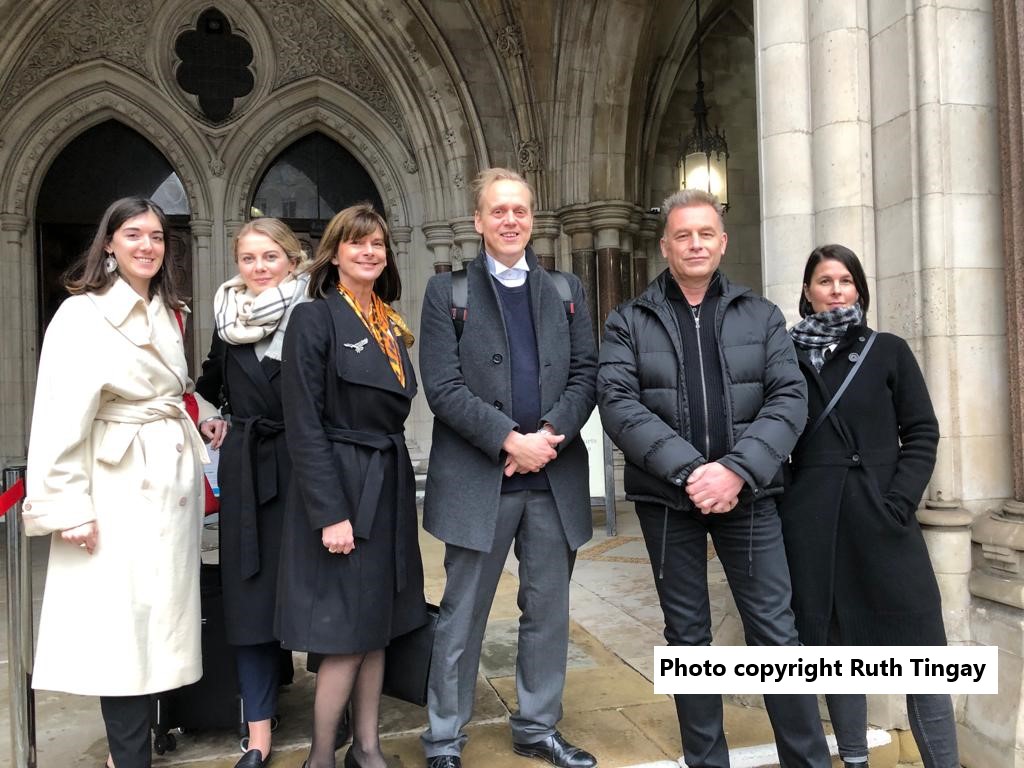
[Chris, his partner Charlotte, and some of his legal team at the High Court in February 2022. Photo by Ruth Tingay]

The ruling relates to a preliminary ‘meanings’ hearing held at the Royal Courts of Justice on 15th February 2022. During that hearing, amongst other things, Mr Justice Johnson considered the ‘natural and ordinary’ meanings of the allegations made by the defendants in the 19 articles, tweets and videos and whether their allegations were written as ‘opinion’ or ‘fact’. If found to be ‘opinion’ that could provide a defence for the three defendants.

Today’s ruling comprehensively states that each of the ‘meanings’ are defamatory of the claimant [Chris Packham] at common law and that they all amount to statements of fact rather than expressions of opinion.

At the forthcoming trial the burden of proof will be on the defendants to provide a lawful defence for their defamatory statements.

Today’s judgement can be read here:

UPDATE 15.30hrs:

Press release from Chris’s solicitors at Leigh Day –

A series of nine articles in Country Squire magazine, two videos on YouTube and eight tweets about Chris Packham were defamatory, according to a judgment handed down today.

An initial trial of preliminary issues about the meaning of the articles, videos and tweets rejected the contention that all were expressing an opinion.

The defendants claimed that when they contended that Mr Packham misused his role as a BBC presenter to defraud the public into making charitable donations on the false pretext that tigers had been mistreated by a circus and rescued by a zoo, they were expressing an opinion. 

They relied on question marks, reference to the need for clarifications, an invitation to the reader to “make up your own mind” as part of their case.

However Mr Justice Johnson held that the meaning of each article is defamatory of Mr Packham at common law and amounts to a statement of fact. 

He rejected arguments that serious allegations of fraud were mitigated. References to the police and other investigating bodies “were not presented in a way to suggest that the reader should keep an open mind. They again reinforce the central theme of the publications that the claimant has perpetrated a fraud on the public”.

He said the parts of the publications that express opinions were ancillary to the defamatory meanings that the articles convey.

Following the determination of the meanings of the publications, it is expected that a substantive trial will be held towards the end of the year.

Mr Packham began proceedings following repeated allegations in Country Squire magazine that he defrauded the public into donating funds for the Wildheart Trust, where he is a trustee, by falsely claiming that it had rescued emotionally and physically broken tigers from European circuses.

The claims were independently investigated by the Fundraising Regulator and found to be unsupported [Ed: RPUK blog on that here], but the defendants refused to remove the articles, tweets and videos from the public domain and since the proceedings were issued, repeated the allegations. 

Following the judgment, Chris Packham said:

Truth and love, and a love of truth are things we cherish. They give us the ability to proceed, to become better people. They give us a chance of making a better world. So we must protect them, sometimes at great  personal cost. And that is why I have no choice but pursue this course of litigation. In this case the three defendants have proactively sought to damage my reputation. There is a line in the sand and it’s been crossed and I aim to ensure that they and any others who seek to employ such methods cross back again. And stay there.”

Chris Packham is represented by Leigh Day partner Tessa Gregory and solicitor Carol Day, who said: 

Our client is pleased the judge has recognised these very serious allegations are defamatory at common law. The burden of proof is now on the defendants to show a lawful defence to these claims in a substantive trial.”

ENDS

UPDATE: The trial is due to take place in May 2023.

RSPB records peatland fires on grouse moors in supposedly protected areas

Last autumn the RSPB launched an online reporting system for members of the public to document moorland fires (muirburn) to help build a picture of where heather moorland is being set alight as part of so-called grouse moor ‘management’ (see here).

In February 2022 the RSPB renewed its call for muirburn reports from the public with the aid of a free APP to make it a simple process (see here).

[Gamekeepers setting fire to a grouse moor in Aberdeenshire in February 2022]

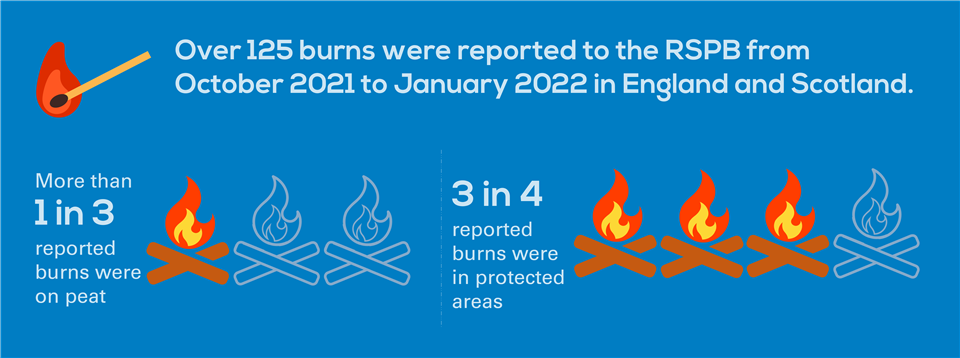
The RSPB also provided this infographic analysing the reports it had received between October 2021 – January 2022, providing evidence that muirburn was taking place on peat, which is obviously of huge concern in this period of climate crisis. There was also evidence that burning was taking place in protected areas which is now illegal unless an individual licence has been granted:

The grouse shooting lobby was furious that the RSPB was asking people to report these fires (see here).

They’re going to be even more furious today because the RSPB has just published even more analysis of even more fires, showing that 82% of all reported fires on what is believed to be peatland (32 of 39 reports) were also in supposedly protected landscapes designated for conservation: Sites of Special Scientific Interest (SSSIs), Special Areas of Conservation (SACs), and Special Protection Areas (SPAs). Oops.

Today the RSPB in England has released another press release (see below) urging members of the public to continue to report moorland fires until the end of the burning season (April 15th). A similar request is expected from the RSPB Scotland team next week.

Press release from RSPB England (9th March 2022):

Public have reported 137 burns to the RSPB this season in England

  • The RSPB’s new upland burning reporting app has documented over 137 reports of burning in our uplands from 1 October 2021 to 28 February 2022.
  • More than 1 in 4 reported burns in England were on likely peat.
  • Of the burns reported on likely peat, 4 out of 5 (or more than 80%) were in a protected area (Sites of Special Scientific Interest, Special Areas of Conservation or Special Protected Areas).
  • The RSPB is calling on members of the public to continue to report incidents of burning in our uplands using their Survey 123 app before the end of the burning season on 15th April.
  • The data collected will help make the case for better protection of our globally important blanket bog and support the RSPB’s call for Governments across the UK to ban burning on peatland and to licence all moorland and grass burning to protect people, nature and our climate. 

This burning season, the RSPB launched their Burning Reporting App, allowing members of the public to simply and anonymously submit evidence of burning in our upland areas.

The burning season, which runs from October until April is undertaken across our moors, hillsides and valleys. The practice is used by gamekeepers and farmers to remove old heather and grass, with new growth preferred by grouse and sheep to eat.

In response to environmental concerns, DEFRA has taken steps to end rotational burning on peatland (>40cm deep), limiting where and when it can take place within Special Areas of Conservation and Protected Areas

However, burn reporting evidence collected by RSPB and our partners demonstrates that this legislation does not go far enough with burning still being recorded on peaty soils.

Dr Pat Thompson, Senior Policy Officer for RSPB UK said, ‘We have had a great response from the public to our app, with over 130 reports of burning it’s clear that people from across our upland communities are eager to help to do their part to protect these internationally significant landscapes.’  

‘It is clear from the reports we have received so far that burns are being conducted on our peatlands and in our protected areas.’

‘Our peatlands vital carbon stores and home to some of our most precious wildlife with their protection vital to tackling the climate crisis and in light of the latest IPCC report it is clear that we must take action to protect them.’

‘The evidence collected by our app demonstrates that the actions taken so far by government in Westminster to regulate burning does not go far enough. If we are to protect these internationally important landscapes and we must put a stop to burning on our peatlands and ensure that licencing is brought in for all heather and grass burning.’

Oriole Wagstaff, Casework Officer for RSPB UK said, ‘We cannot protect our uplands if we do not have a full picture of the land management undertaken throughout them. With many burns taking place in remote areas, we need the public to support us and report these burns.’  

‘Our new burning app is providing vital information on the extent and location of burning in the English uplands.  Information gathered to date shows that burning on peatlands is still happening, despite regulation intended to stop it on areas of deep peat.’

Burning can take place until the 15th April in England. To anonymously report a burn and download the app (available on iOS and Android), members of the public can visit the RSPB Burning website. There they can find instructions on how to download the app, as well as information on how to spot a burn and to stay to safe when reporting when reporting a burn.

By downloading the app and reporting evidence of burning you can play a vital role in helping to show the UK Government that despite current legislation, burning on carbon-rich blanket bogs is still taking place across our uplands. Ending burning will be a key step in ensuring we can turn round the fate of this globally important habitat in the UK.

ENDS

UPDATE 24th March 2022: RSPB Scotland encouraging the public to continue to report upland fires this season (here)

67 hen harriers confirmed ‘missing’ or illegally killed since 2018, most of them on or close to UK grouse moors

For anyone who still wants to pretend that the grouse shooting industry isn’t responsible for the systematic extermination of hen harriers on grouse moors across the UK, here’s the latest catalogue of crime that suggests otherwise.

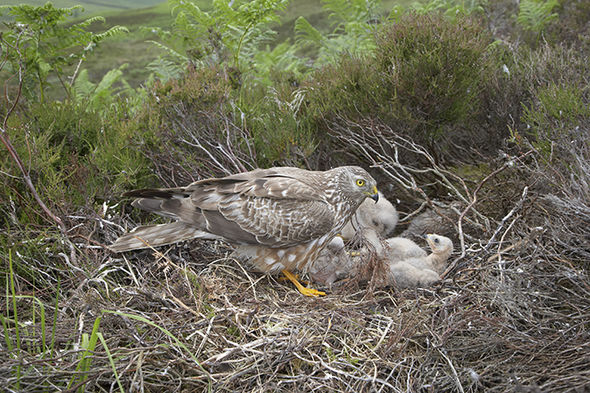
[This male hen harrier died in 2019 after his leg was almost severed in an illegally set trap that had been placed next to his nest on a Scottish grouse moor (see here). Photo by Ruth Tingay]

This is the blog I now publish after every reported killing or suspicious disappearance.

They disappear in the same way political dissidents in authoritarian dictatorships have disappeared” (Stephen Barlow, 22 January 2021).

Today the list has been updated to include the most recently reported victims, six young hen harriers whose satellite tags inexplicably stopped transmitting and whose corpses vanished into thin air between November 2021 and January 2022 (see here).

I’ve been compiling this list only since 2018 because that is the year that the grouse shooting industry ‘leaders’ would have us believe that the criminal persecution of hen harriers had stopped and that these birds were being welcomed back on to the UK’s grouse moors (see here).

This assertion was made shortly before the publication of a devastating new scientific paper that demonstrated that 72% of satellite-tagged hen harriers were confirmed or considered likely to have been illegally killed, and this was ten times more likely to occur over areas of land managed for grouse shooting relative to other land uses (see here).

2018 was also the year that Natural England issued a licence to begin a hen harrier brood meddling trial on grouse moors in northern England. For new blog readers, hen harrier brood meddling is a conservation sham sanctioned by DEFRA as part of its ludicrous ‘Hen Harrier Action Plan‘ and carried out by Natural England (NE), in cahoots with the very industry responsible for the species’ catastrophic decline in England. For more background see here.

Brood meddling has been described as a sort of ‘gentleman’s agreement’ by commentator Stephen Welch:

I don’t get it, I thought the idea of that scheme was some kind of trade off – a gentleman’s agreement that the birds would be left in peace if they were moved from grouse moors at a certain density. It seems that one party is not keeping their side of the bargain“.

With at least 67 hen harriers gone since 2018, I think it’s fair to say that the grouse shooting industry is simply taking the piss. Meanwhile, Natural England pretends that ‘partnership working’ is the way to go and DEFRA Ministers remain silent.

‘Partnership working’ according to Natural England appears to include authorising the removal of hen harrier chicks from a grouse moor already under investigation by the police for suspected raptor persecution (here) and accepting a £10K bung from representatives of the grouse shooting industry that prevents Natural England from criticising them or the sham brood meddling trial (see here).

[Cartoon by Gill Lewis]

So here’s the latest gruesome list. Note that the majority of these birds (but not all) were fitted with satellite tags. How many more [untagged] harriers have been killed?

February 2018: Hen harrier Saorsa ‘disappeared’ in the Angus Glens in Scotland (here). The Scottish Gamekeepers Association later published wholly inaccurate information claiming the bird had been re-sighted. The RSPB dismissed this as “completely false” (here).

5 February 2018: Hen harrier Marc ‘disappeared’ on a grouse moor in Durham (here)

9 February 2018: Hen harrier Aalin ‘disappeared’ on a grouse moor in Wales (here)

March 2018: Hen harrier Blue ‘disappeared’ in the Lake District National Park (here)

March 2018: Hen harrier Finn ‘disappeared’ near Moffat in Scotland (here)

18 April 2018: Hen harrier Lia ‘disappeared’ in Wales and her corpse was retrieved in a field in May 2018. Cause of death was unconfirmed but police treating death as suspicious (here)

8 August 2018: Hen harrier Hilma ‘disappeared’ on a grouse moor in Northumberland (here).

16 August 2018: Hen harrier Athena ‘disappeared’ on a grouse moor in Scotland (here)

26 August 2018: Hen Harrier Octavia ‘disappeared’ on a grouse moor in the Peak District National Park (here)

29 August 2018: Hen harrier Margot ‘disappeared’ on a grouse moor in Scotland (here)

29 August 2018: Hen Harrier Heulwen ‘disappeared’ on a grouse moor in Wales (here)

3 September 2018: Hen harrier Stelmaria ‘disappeared’ on a grouse moor in Scotland (here)

24 September 2018: Hen harrier Heather ‘disappeared’ on a grouse moor in Scotland (here)

2 October 2018: Hen harrier Mabel ‘disappeared’ on a grouse moor on the edge of the Yorkshire Dales National Park (here)

3 October 2018: Hen Harrier Thor ‘disappeared’ next to a grouse moor in Bowland, Lanacashire (here)

23 October 2018: Hen harrier Tom ‘disappeared’ in South Wales (here)

26 October 2018: Hen harrier Arthur ‘disappeared’ on a grouse moor in the North York Moors National Park (here)

1 November 2018: Hen harrier Barney ‘disappeared’ on Bodmin Moor (here)

10 November 2018: Hen harrier Rannoch ‘disappeared’ on a grouse moor in Scotland (here). Her corpse was found nearby in May 2019 – she’d been killed in an illegally-set spring trap (here).

14 November 2018: Hen harrier River ‘disappeared’ on a grouse moor in the Nidderdale AONB (here). Her corpse was found nearby in April 2019 – she’d been illegally shot (here).

16 January 2019: Hen harrier Vulcan ‘disappeared’ in Wiltshire close to Natural England’s proposed reintroduction site (here)

7 February 2019: Hen harrier Skylar ‘disappeared’ next to a grouse moor in South Lanarkshire (here)

22 April 2019: Hen harrier Marci ‘disappeared’ on a grouse moor in the Cairngorms National Park (here)

26 April 2019: Hen harrier Rain ‘disappeared’ on a grouse moor in Nairnshire (here)

11 May 2019: An untagged male hen harrier was caught in an illegally-set trap next to his nest on a grouse moor in South Lanarkshire. He didn’t survive (here)

7 June 2019: An untagged hen harrier was found dead on a grouse moor in Scotland. A post mortem stated the bird had died as a result of ‘penetrating trauma’ injuries and that this bird had previously been shot (here)

5 September 2019: Wildland Hen Harrier 1 ‘disappeared’ on a grouse moor nr Dalnaspidal on the edge of the Cairngorms National Park (here)

11 September 2019: Hen harrier Romario ‘disappeared’ on a grouse moor in the Cairngorms National Park (here)

14 September 2019: Hen harrier (Brood meddled in 2019, #183704) ‘disappeared’ in the North Pennines (here)

23 September 2019: Hen harrier (Brood meddled in 2019, #55149) ‘disappeared’ in North Pennines (here)

24 September 2019: Wildland Hen Harrier 2 ‘disappeared’ on a grouse moor at Invercauld in the Cairngorms National Park (here)

24 September 2019: Hen harrier Bronwyn ‘disappeared’ near a grouse moor in North Wales (here)

10 October 2019: Hen harrier Ada ‘disappeared’ on a grouse moor in the North Pennines AONB (here)

12 October 2019: Hen harrier Thistle ‘disappeared’ on a grouse moor in Sutherland (here)

18 October 2019: Member of the public reports the witnessed shooting of an untagged male hen harrier on White Syke Hill in North Yorkshire (here)

November 2019: Hen harrier Mary found illegally poisoned on a pheasant shoot in Ireland (here)

January 2020: Members of the public report the witnessed shooting of a male hen harrier on Threshfield Moor in the Yorkshire Dales National Park (here)

23 March 2020: Hen harrier Rosie ‘disappeared’ at an undisclosed roost site in Northumberland (here)

1 April 2020: Hen harrier (Brood meddled in 2019, #183703) ‘disappeared’ in unnamed location, tag intermittent (here)

5 April 2020: Hen harrier Hoolie ‘disappeared’ on a grouse moor in the Cairngorms National Park (here)

8 April 2020: Hen harrier Marlin ‘disappeared’ on a grouse moor in the Cairngorms National Park (here)

19 May 2020: Hen harrier Fingal ‘disappeared’ on a grouse moor in the Lowther Hills, Scotland (here)

21 May 2020: Hen harrier (Brood meddled in 2019, #183701) ‘disappeared’ on a grouse moor in Cumbria shortly after returning from wintering in France (here)

27 May 2020: Hen harrier Silver ‘disappeared’ on a grouse moor on Leadhills Estate, Scotland (here)

day/month unknown: Unnamed male hen harrier breeding on RSPB Geltsdale Reserve, Cumbria ‘disappeared’ while away hunting (here)

9 July 2020: Unnamed female hen harrier (#201118) ‘disappeared’ from an undisclosed site in Northumberland (here).

25 July 2020: Hen harrier Harriet ‘disappeared’ on a grouse moor in the Yorkshire Dales National Park (here)

14 August 2020: Hen harrier Solo ‘disappeared’ in confidential nest area in Lancashire (here)

7 September 2020: Hen harrier Dryad ‘disappeared’ on a grouse moor in the Yorkshire Dales National Park (here)

16 September 2020: Hen harrier Fortune ‘disappeared’ from an undisclosed roost site in Northumberland (here)

19 September 2020: Hen harrier Harold ‘disappeared’ on a grouse moor in the Yorkshire Dales National Park (here)

20 September 2020: Hen harrier (Brood meddled in 2020, #55152) ‘disappeared’ next to a grouse moor in North Yorkshire (here)

24 February 2021: Hen harrier Tarras ‘disappeared’ next to a grouse moor in Northumberland (here)

12th April 2021: Hen harrier Yarrow ‘disappeared’ near Stockton, County Durham (here)

18 May 2021: Adult male hen harrier ‘disappeared’ from its breeding attempt on RSPB Geltsdale Reserve, Cumbria whilst away hunting (here)

18 May 2021: Another adult male hen harrier ‘disappeared’ from its breeding attempt on RSPB Geltsdale Reserve, Cumbria whilst away hunting (here)

24 July 2021: Hen harrier Asta ‘disappeared’ at a ‘confidential site’ in the North Pennines (here)

14th August 2021: Hen harrier Josephine ‘disappeared’ at a ‘confidential site’ in Northumberland (here)

17 September 2021: Hen harrier Reiver ‘disappeared’ in a grouse moor dominated region of Northumberland (here)

24 September 2021: Hen harrier (Brood meddled in 2021, R2-F-1-21) ‘disappeared’ in Northumberland (here)

15 November 2021: Hen harrier (brood meddled in 2020, #R2-F1-20) ‘disappeared’ at the edge of a grouse moor on Arkengarthdale Estate in the Yorkshire Dales National Park (here)

19 November 2021: Hen harrier Val ‘disappeared’ in the Lake District National Park in Cumbria (here)

19 November 2021: Hen harrier Percy ‘disappeared’ in Lothian, Scotland (here)

12 December 2021: Hen harrier Jasmine ‘disappeared’ on a grouse moor (High Rigg Moor on the Middlesmoor Estate) in the Nidderdale AONB in North Yorkshire (here)

9 January 2022: Hen harrier Ethel ‘disappeared’ in Northumberland (here)

26 January 2022: Hen harrier Amelia ‘disappeared’ in Bowland (here)

10 February 2022: An unnamed satellite-tagged hen harrier ‘disappeared’ in a grouse moor dominated area of the Peak District National Park (here)

To be continued……..

Not one of these 67 incidents has resulted in an arrest, let alone a prosecution. I had thought that when we reached 30 dead/missing hen harriers then the authorities might pretend to be interested and at least say a few words about this national scandal. We’ve now reached SIXTY SEVEN hen harriers, and still Govt ministers remain silent. They appear not to give a monkey’s. And yes, there are other things going on in the world, as always. That is not reason enough to ignore this blatant, brazen and systematic destruction of a supposedly protected species being undertaken to satisfy the greed and bloodlust of a minority of society.

Please consider sending a copy of this list of dead/missing hen harriers to your elected representative. Ask them for their opinion, tell them your opinion, and demand action (politely please). We know where these crimes are happening and we know why they’re happening. The Government’s own data, published three years ago, have provided very clear evidence (see here). MPs need to know how many of us care about this issue and how we will not be fobbed off by disingenuous platitudes from DEFRA Ministers (e.g. see here, here and here for repeated recent examples of this).

Not sure who is your MP? Click here to find out.

Don’t be put off by thinking, ‘Well my MP is a grouse shooter, he/she won’t bother responding so why should I bother?’. Do not give these politicians an easy option out. As your elected representative they have a duty to listen to, and respond to, constituents’ concerns, whether they agree with them or not.

If you use social media, please share this post.

If you fancy scribbling a few sentences to your local newspaper or even a national one, please do.

Please talk to friends, family and colleagues about these 67 birds. They will be horrified about what’s being allowed to go on.

We MUST increase public awareness. It’s up to all of us.

Thank you

Six more satellite-tagged hen harriers ‘disappear’ in suspicious circumstances

Six more satellite-tagged hen harriers have gone missing in suspicious circumstances, according to the most recent data published by Natural England last Friday, 4th March.

Natural England’s previous hen harrier update, published in December 2021 (here), identified three other tagged harriers that had vanished in the summer/autumn of 2021.

Now there are six more. Three disappeared in November 2021, one in December 2021 and two in January 2022. Neither the police or Natural England have issued any media press releases or made any public appeals for information about any of them.

Here are the details of the latest six to vanish, in chronological order:

Brood meddled hen harrier R2-F1-20, female, hatched in 2020 at nest site BM R2 Cumbria, last known satellite tag fix on the edge of a grouse moor (believed to be on Arkengarthdale Estate) in the Yorkshire Dales National Park on 15th November 2021, grid ref: NY959039.

Hen harrier Val (Tag ID 213849), female, hatched in North Pennines in 2021, last known satellite tag fix in Cumbria, west of Coniston Water on 19th November 2021, grid ref: SD256921.

Hen harrier Percy (Tag ID 213847), male, hatched in Northumberland (nest site Northumberland 1) in 2021, last known satellite tag fix in the Scottish Borders nr Fala Moor on 19th November 2021, grid ref: NT410615.

Hen harrier Jasmine (Tag ID 213848), female, hatched in Cumbria in 2021, last known satellite tag fix on a grouse moor (High Rigg Moor, Middlesmoor Estate) in the Nidderdale AONB, North Yorkshire on 12th December 2021, grid ref: SE034733.

Hen harrier Ethel (Tag ID 213852), female, hatched in Northumberland (nest site Northumberland 2) in 2021, last known satellite tag fix in Hexham on 9th January 2022, grid ref: NY936632.

Hen harrier Amelia (Tag ID 213846), female, hatched Bowland in 2021, last known satellite tag fix in Bowland on 26th January 2022, no grid reference provided.

These suspicious disappearances are no longer shocking, not even when six of them are reported at the same time.

The complete lack of media appeals about any of them from Natural England and the various police forces is no longer shocking.

The lack of prominence in the recent update blog that Natural England has given these latest disappearances is no longer shocking.

The zero prospect of any so-called investigation progressing to a prosecution is no longer shocking.

The complete silence from the grouse-shooting industry about this continued organised crime is no longer shocking.

It’s all just so routine, isn’t it?

It doesn’t have to be. It’s up to you, as blog readers, to bring this scandal to the attention of your elected representative(s) and demand that they put pressure on the Government to take action.

I’ll update the ever-increasing list of hen harriers known to have been illegally killed in the UK or that have vanished in suspicious disappearances since 2018, most of them on or close to grouse moors, and will post it here shortly. It would be good if you could then send that list to your local MP so they can’t claim to be ignorant of what’s going on.

UPDATE 9th March 2022: 67 hen harriers confirmed ‘missing’ or illegally killed since 2018, most of them on or close to UK grouse moors (here)

Brood meddled hen harrier siblings in incestuous relationship

It seems Natural England has some (more) explaining to do.

In the latest NE update on satellite-tagged hen harriers published last Friday, buried amongst the spreadsheet notes and carefully not mentioned in NE’s accompanying blog, I found the following information:

Two sibling hen harriers, both hatched in the same nest in 2020 (nest site: BM R2 Cumbria) and both brood meddled as part of NE and DEFRA’s sham conservation project, apparently ‘bred successfully‘ in Co Durham in 2021 (see lines 43 & 46 in the March 2022 spreadsheet).

The two incestuous individuals are Male R2-M1-20 and Female R2-F3-20.

Isn’t that interesting? Two young hen harriers, removed from their nest (along with two other siblings), raised under artificial conditions in captivity, released back to the wild just after reaching fledging age, pair up the next breeding season and produce offspring.

I don’t know what Natural England means by ‘bred successfully‘. I wouldn’t call an incestuous breeding attempt ‘successful’ by any stretch of the imagination. I’d call it deeply concerning, at the very least.

I haven’t heard of incestuous hen harriers before. Quite a bit has been written by several authors on the intimate details of the hen harrier’s love life (which is why we know that polygyny can be common) but I haven’t been able to find any reference to incest.

I spoke about it this morning to my colleague Mark Avery, who said that incestuous relationships are probably very common in the uplands of England but I don’t think he was referring to hen harriers.

I wonder how Natural England will explain this behaviour? It’s clear they’re not that keen to explain anything, because otherwise they would have already drawn attention to this incestuous pair.

One for the brood meddling scientific committee to answer, perhaps.

Meanwhile, standby for more news of vanishing hen harriers; yet another indication that this brood meddling trial is utterly futile.

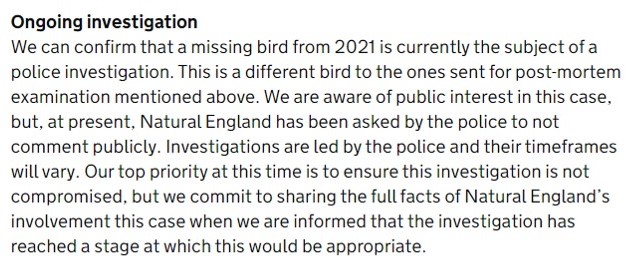
Natural England still silent, apparently on police orders, about hen harrier whose wings were torn off

Natural England is maintaining its silence about the gruesome fate of one of its satellite-tagged hen harriers whose wings were torn off in an act of inconceivable violence in March last year.

I first blogged about this criminal investigation in December 2021 (here), where I discussed how Natural England had remained silent about it for months and months and months, even when the grouse shooting industry was wheeling out its annual propaganda-fest claiming to be the hen harrier’s best friend. Natural England, knowing full well what had happened to this young harrier, said nothing to challenge the shooting industry’s claims.

On 20th December 2021 Natural England tweeted that the incident (crime) was the subject of a police investigation so refused to comment further at that stage. I argued that this was a cop-out by Natural England because this particular investigation had begun over 9 months ago but nobody had been interviewed, let alone arrested or charged, and the likelihood of a prosecution was precisely zero, just as in the 60 other police investigations relating to hen harrier persecution in the last three years alone (see here).

Nothing further was heard until Natural England published a hen harrier update blog last Friday (4th March 2022) which included the following statement about this crime:

I still think this is a cop out by Natural England, backed up by the police – commentary could easily be given that would not compromise the supposedly ‘ongoing investigation’.

At the end of this month it’ll be one year since this crime was committed. Unless there is a significant statement from the police that somebody has been charged (there won’t be, believe me), I intend to blog about some of the details of this case in early April because I believe it’s in the public interest to do so.

UPDATE 25th August 2022: Hen harrier’s ‘wings removed’ & its satellite tag fitted to a crow in sick ploy to disguise the crime (here)

Natural England publishes post-mortem summaries of two brood meddled hen harriers

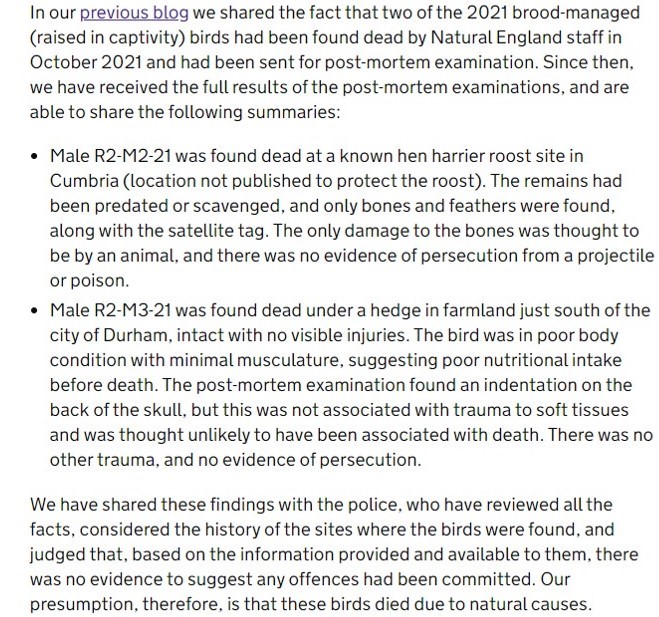
Natural England has finally published the post-mortem results of two brood meddled hen harriers found dead in October 2021.

You’ll recall I’ve been chasing Natural England for these results for months (see here and here) and I last heard from them on 23 February 2022 telling me they couldn’t provide the results just yet because of the ‘complex nature’ of my request. It wasn’t ‘complex’ at all, it was a straightforward question.

On Friday 4th March 2022 Natural England posted these summary PM results:

There isn’t any reason to doubt the PM results in these two cases and accept NE’s presumption that both harriers died of natural causes.

In the same blog published on Friday, Natural England also discussed a number of other satellite-tagged hen harriers and I’ll be writing about those in separate blogs.

Standby….

REVIVE coalition for grouse moor reform at Scottish Labour conference

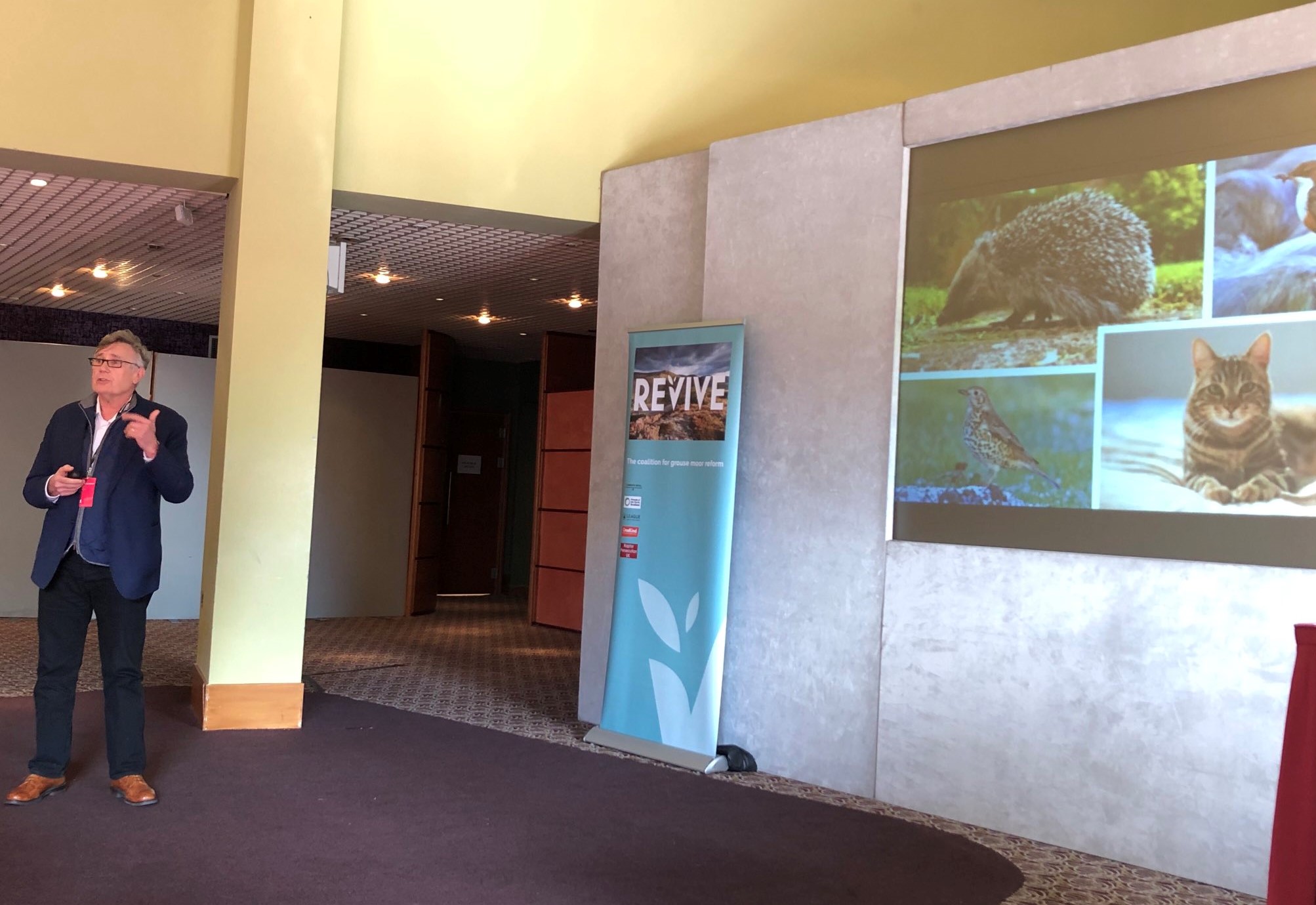
REVIVE, the coalition for grouse moor reform, held a fringe event at the Scottish Labour conference in Glasgow yesterday.

The REVIVE coalition comprises five organisations (League Against Cruel Sports, OneKind, Common Weal, Friends of the Earth and Raptor Persecution UK), employing Max Wiszniewski as its Campaigns Manager.

Colin Smyth MSP, Scottish Labour’s Shadow Cabinet Secretary for Net Zero, Energy, Transport and Rural Affairs and a long-time supporter of REVIVE hosted the fringe event.

[Max Wiszniewski (Revive), Colin Smyth MSP, Robbie Marsland (League Against Cruel Sports) and Kirsty Jenkins (OneKind) at yesterday’s fringe event. Photos by Bob Elliot]

It’s good to be able to return to these in-person events post-Covid and have face-to-face conversations with policy makers, especially as the Scottish Government gears up to finally introducing a licensing scheme to regulate grouse moor management after decades of criminal and environmental abuse by the game-shooting industry.

Peak District mountain hares: abundance or a struggling population? Guest blog by Bob Berzins

The following is a guest blog written by Bob Berzins, a conservation campaigner from the Peak District who has previously featured on this blog here and here.

Peak District Mountain Hares: Abundance or a struggling population?

The Peak District holds England’s only Mountain Hare population and there has been a great deal of concern in recent years about an apparent decline in numbers.

However the National Gamekeepers Organisation, Peak District Moorland Group, Moorland Association, British Association of Shooting and Conservation and the Game and Wildlife Conservancy Trust have combined to produce their own research into Mountain Hare populations in the Peak District National Park. Against a deafening torrent of negative publicity over grouse and pheasant shooting, the full set of English shooting organisations have responded with a PR exercise that sets out to show them as cuddly conservationists providing ideal conditions for a massive hare population. In this blog I’ll drill down into the accuracy of the shooting organisation’s claims and look closer at the motivation for producing the research now.

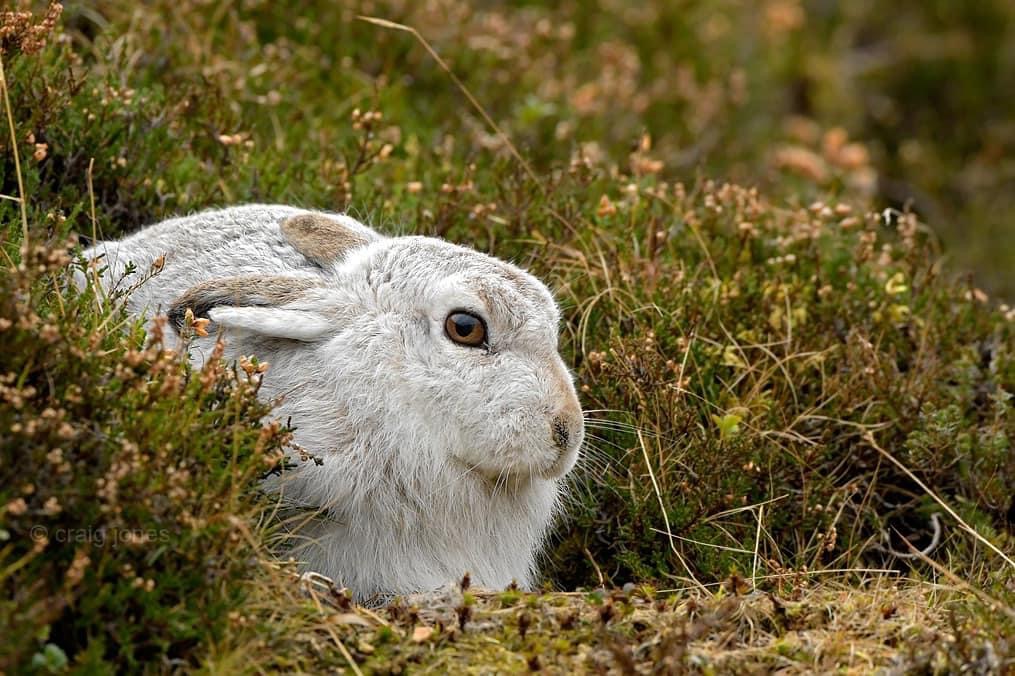
[Mountain hare in the Peak District. Photo by Craig Jones]

University sponsored research

Carl Bedson of Manchester Metropolitan University has been researching Peak District mountain hare density. He’s been awarded his PhD and his research is currently being peer reviewed, so not published yet. GWCT have got in first with their own research, see here:

and accompanying video that does its best to discredit Bedson’s work before its even been published.

The main criticism is under reporting of mountain hare numbers and methodology used by Bedson as published in this paper. Bedson points out his study may not be representative as it includes areas where higher than average hare populations have been reported (so Peak-wide numbers may be lower).

Bedson’s survey area was Holme Moss with varied blanket bog habitat of heather, bilberry and cotton grass. Three recording methods are compared: daylight visual surveys detected 14.3 hares per sq km, night time thermal imaging detected 12.1 hares sq km and camera traps detected 22.6 hares sq km. There is a robust academic discussion of the pros and cons of each method but the overall conclusion is a much lower density of hares than has been reported in Scotland.

In the Peak we haven’t seen large scale culls like those observed in Scotland leading Watson & Wilson (2018) to conclude catastrophic declines in Scottish mountain hare populations were due to intensive culling. This paper is relevant because it’s disputed by the shooters.

Shooting sponsored research

The GWCT paper is based on Scottish National Heritage methodology of walking parallel transects at night with a powerful torch. Twelve survey sites and 108km of transect were covered, on heather dominated driven grouse moors. This produced an astonishing average of 7.8 hares per km which they say equates to a density of 52 -125 hares per sq km. The paper references Hesford et al 2019, which is a study of hare numbers on Scottish shooting estates, when hares are disturbed during grouse counts and results show abundant hare numbers even after intensive culling – in contradiction to Watson & Wilson 2018.

Also in contradiction is Hesford et al 2020 which shows mountain hares expanding their range with data based on questionnaires sent to grouse moor managers. These papers along with National Gamekeepers blog and video make the case that grouse moor management is essential for healthy mountain hare populations. The reintroduction of mountain hares to the Peak District in 1870 coincides with almost 100% of Peak uplands subject to historic and current grouse moor management. Hare numbers we see today are a result of that management.

Vested Interests?

I can’t help but notice that GWCT’s Peak District paper along with Hesford et al 2019 and 2020 are all essentially gamekeepers and grouse moor managers marking their own homework.

Night time transects

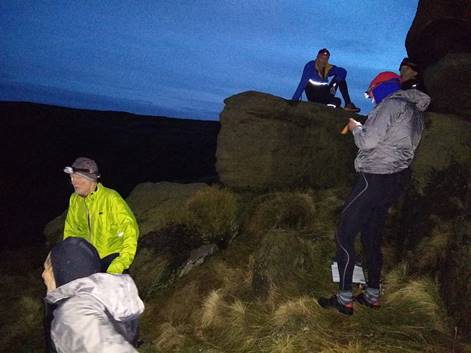
[Dark Peak Fell Runners (DPFR) on Kinder Scout, 2022. Photo by Bob Berzins]

Walking a straight line in darkness across pathless moorland may seem like an extreme activity but for me and members of DPFR it’s a completely normal occurrence. Our fell running club is the largest in the country and has been around since 1976. Winter nights see the true athletes train on the road but those seeking adventure get out on the moors with a head torch. We have an aversion to paths and a typical 10km run involves traversing pathless moorland following a compass bearing. There’s always a few who think they can spot easier terrain so they run parallel to the rest of us. This is pretty much the exact methodology that GWCT recommend to count hares.

But that night on Kinder, the nature count was one short-eared owl and one mountain hare. If we see 3 or 4 hares on a run, that’s a cause for celebration. Seeing 8 hares is a once per year event. Our runs take us over almost all the areas surveyed by the gamekeepers. A mountain hare density of 100 per sq km means we’d expect one hare per hectare (100m x 100m area) so we’d see dozens on every run. That doesn’t happen and it hasn’t happened in the 40 years I’ve been running with this club. Where are all the hares the gamekeepers have counted?     

Recent History

In 2015 snare sites and other traps were routinely baited with mountain hare carcasses and annual (daylight counting) surveys by a Natural History society showed local extinctions of mountain hares.

[Mountain hare carcass at snare site. Photo by Bob Berzins]

[Mountain hare used to bait large crow cage trap. Photo by Bob Berzins]

Predator Control

We hear the usual mantra from gamekeepers that predator control of “pest” species is essential for healthy populations of “rare” wildlife. However snare traps that are frequently used in the Peak District catch hares around the abdomen. The Hunt Investigation Team filmed this apparently unscathed mountain hare caught in a snare in 2017. The hare died shortly afterwards and a post mortem revealed the cause as internal bleeding and shock.

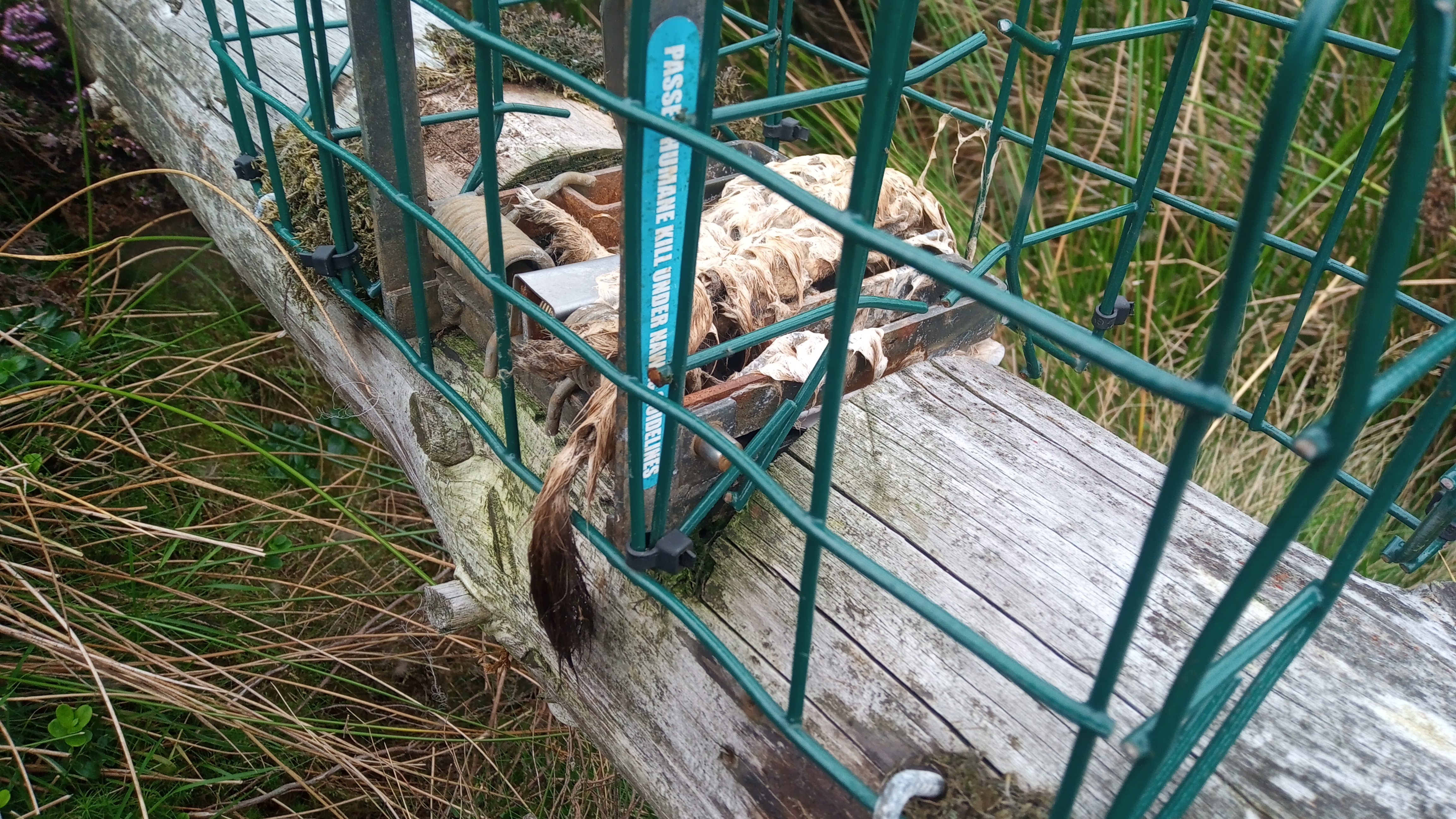
The gamekeeper video shows a stoat attacking a mountain hare with the implication that gamekeepers perform essential work to eliminate these mustelids. This is a photo of a decomposed stoat in one of the new AIHTS approved “humane” DOC traps. A police officer confirmed the stoat had a crushed front paw only. The traps are supposed to ensure instant death by crushing the head or spine but the only conclusion I can reach is this stoat died from an injury to the front paw, likely to have caused suffering for a considerable time.

Natural England could only say: “It is possible that on occasions, due to a specific set of circumstances, a certified trap will not kill an animal as swiftly and humanely as it usually does.” Not exactly cuddly conservation then.

Dogs

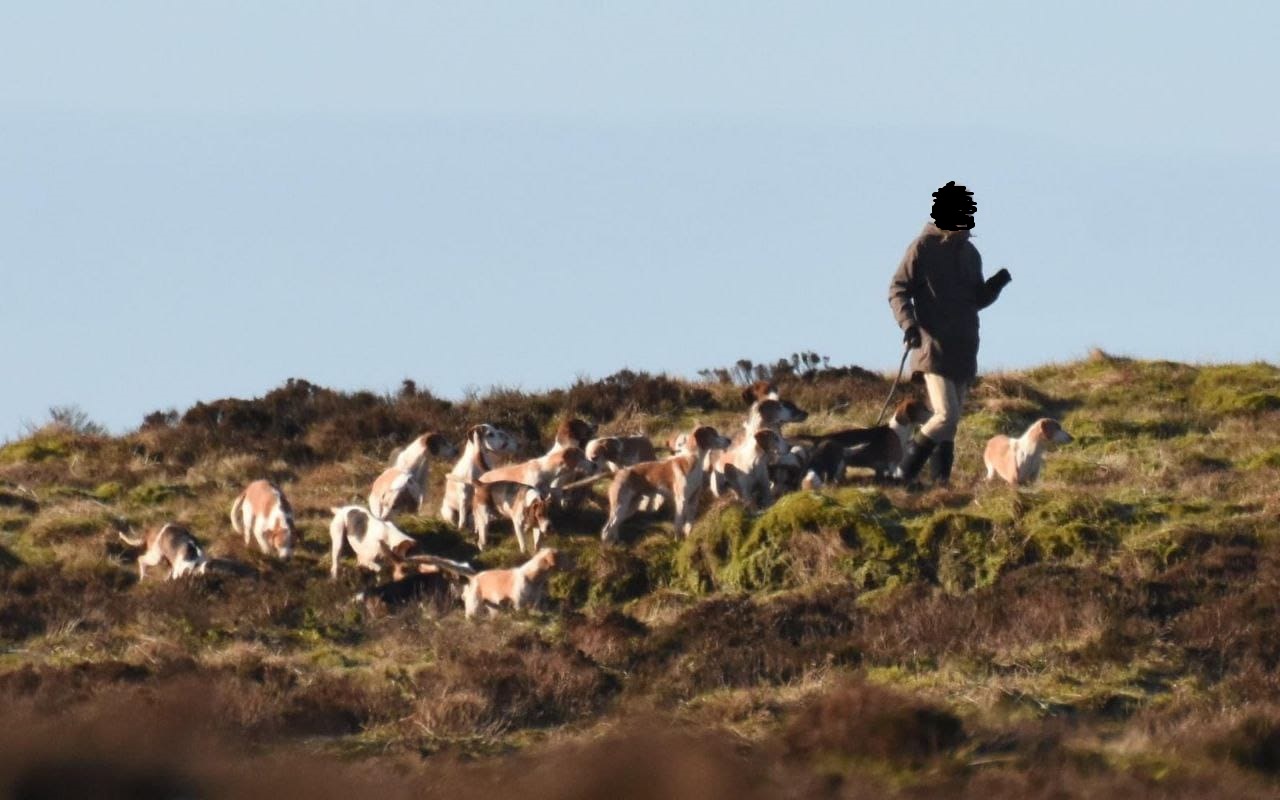
Another message from the gamekeeper video condemns hare poaching. I’m sure we’d all agree with that. However those who take an interest in compliance with the 2004 Hunting Act will have noticed that police forces around the country devote resources to stopping hare poaching with dogs on farmland and almost no resource to stop fox hunting with dogs. We don’t see fox hunts on Peak District moorland but packs of beagles operate in a similar way with a traditional quarry of hares. This incident in 2020 involved several vehicles, around 30 people and 30 beagles chasing around protected moorland with no dog handler in sight.

It’s not in dispute that the landowner allowed access for this activity. For me it seems totally wrong that this type of activity should happen on around 2 sq km of conservation site where according to the GWCT research we’d expect to find between 100 and 250 mountain hares. The local Natural England Officer seemed to agree by saying this was an Operation Likely to Damage the SSSI. This opens the possibility of enforcement action and a heavy fine under Cross Compliance legislation. However after numerous emails and FOIs I found out an unnamed NE manager declared NE had provided consent but then failed to provide me with any details. The Information Commissioner is investigating.

So is it the case that hare poaching is condemned but packs of beagles chasing around protected moorland get grouse moor owner and Natural England consent?

To illustrate this type of incident is not a one off, this beagle pack and handler were spotted on Bleaklow near A57 Snake summit on Thursday 20th January 2022 in the area where one of the GWCT transects is located. Just to be clear in this example there’s no implication that any landowner gave permission. Natural England are investigating and if you have any further information please contact them quoting NE ref 0102221556EC.

Possible Motivation

Gamekeepers don’t want mountain hares to be moved onto Schedule 5 of the Wildlife & Countryside Act 1981, in other words to make them a protected species in England. If mountain hares were protected this would leave a snare operator liable to prosecution if a mountain hare died in one of those traps. So I would say this PR exercise is directed towards the Government, particularly DEFRA.

I’m not the only one who has found it virtually impossible to get Natural England to enforce conservation legislation on grouse moors. And of course in the Peak District we have that other arm of the Government, the National Park Authority (PDNPA). Cosy meetings between PDNPA officials and shooting representatives at Chatsworth are not minuted.

Over the last 10 years I’ve tried to change PDNPA from within as member of the Peak District a Local Access Forum which is a statutory committee linked to PDNPA. This led to me attending meetings about the running of the National Park such as the Management Plan Advisory Group. I offered to stand for the position of LAF Chair but soon had a phone call from a senior manager who told me this would only be possible if I was gagged from speaking out about grouse shooting, not just during Peak Park business but through all aspects of my life. The reason for this gagging order: complaints from moorland owners. The National Park doesn’t want to hear any dissenting voices.

In my eyes in the Peak District we have a National Park for the benefit of 100 rich landowners, not for the benefit of 13 million visitors who want to see a natural landscape full of wildlife. That wildlife includes the “iconic” mountain hare. We’d all like to see these animals thriving and I hope Carl Bedson’s research points the way to an increased population. As far as the gamekeepers’ claims are concerned, I need to see these demonstrated on the ground because at the moment I don’t believe those numbers of mountain hares exist.

ENDS

Dave Dick wins Donald & Jeff Watson Award for his efforts tackling raptor persecution

Many congratulations to Dave Dick who has won the Scottish Raptor Study Group‘s coveted Donald & Jeff Watson Award for his work tackling raptor persecution and supporting raptor conservation in Scotland over several decades.

[Dave collecting his award from Mark Rafferty at the SRSG annual conference last weekend]

Working for the RSPB’s Investigations Unit in Scotland between 1984-2006, Dave was involved in approximately 350 raptor persecution cases resulting in court action, participated in approx 1,000 land searches and was responsible for catching and convicting more wildlife criminals in Scotland than anyone else.

In addition to his professional role, Dave was also involved in raptor monitoring fieldwork (particularly eagles and peregrines, which he continues to this day) and along with a few others, set up the SRSG network and helped it to expand across the country.

He’s also been a huge supporter of this blog (thanks v much!).

For anyone who wants to learn more about Dave’s experience and expertise, I recommend reading his book, Wildlife Crime, published in 2012 by Whittles (see here).

Huge congratulations, Dave, and well-deserved recognition for a lifetime’s work.