A new report has been published today outlining the findings of what looks to me like yet another pseudo ‘partnership’, supposedly tackling the illegal killing of raptors, this time in Yorkshire, the UK’s worst hotspot for bird of prey persecution.
[Photo by Ruth Tingay]
Calling itself the Yorkshire Dales Birds of Prey Partnership, it involves the usual suspects including representatives from BASC, CLA, Moorland Association, National Gamekeepers Organisation as well as conservationists from the Northern England Raptor Forum and the RSPB, two police authorities (North Yorkshire and Cumbria), Natural England, Nidderdale AONB and the Yorkshire Dales National Park Authority. The area covered by the ‘partnership’ includes the Yorkshire Dales National Park and the neighbouring Nidderdale AONB.
If this sounds at all familiar then you’d be right. It appears to be an almost carbon copy of the failed ‘partnership’ in the Peak District National Park, where the game-shooting organisations have done their level best to disrupt and distort the reporting of the scale of the persecution problem there, for years, and that so-called ‘partnership’ has failed to deliver time and time again (e.g. see here, here, here, here, here).
It’s hard not to be cynical about the Yorkshire version of the failed partnership, especially when essentially it appears to be many of the same players involved. Perhaps this time it’ll be different?
Who am I kidding.
The new report published today, called an ‘Evidence Report’, relates to 2020 and documents the status of raptor populations and the recorded persecution incidents from that year. It’s data-poor for most species, carefully avoids telling the public certain things (e.g. the Marsh harrier overview on page 7 is laughably coy about this incident) and tellingly, ‘Publication of the report was delayed to ensure the accuracy and completeness of bird of prey persecution data collated by the RSPB and audited by the police’s National Wildlife Crime Unit‘ according to the accompanying press release. Yep, this is a common tactic deployed by certain shooting organisations who routinely challenge the RSPB’s official and carefully curated data, with the clear intention of discrediting the figures.
Here’s the report for anyone who can be bothered to read it:
UPDATE 29th June 2023: RSPB walks out of Yorkshire Dales sham Birds of Prey ‘Partnership’ due to Moorland Association’s usual media antics (here)
UPDATE 5th September 2024: Northern England Raptor Forum (NERF) latest to walk away from Yorkshire Dales/Nidderdale sham bird of prey ‘partnership’ (here)
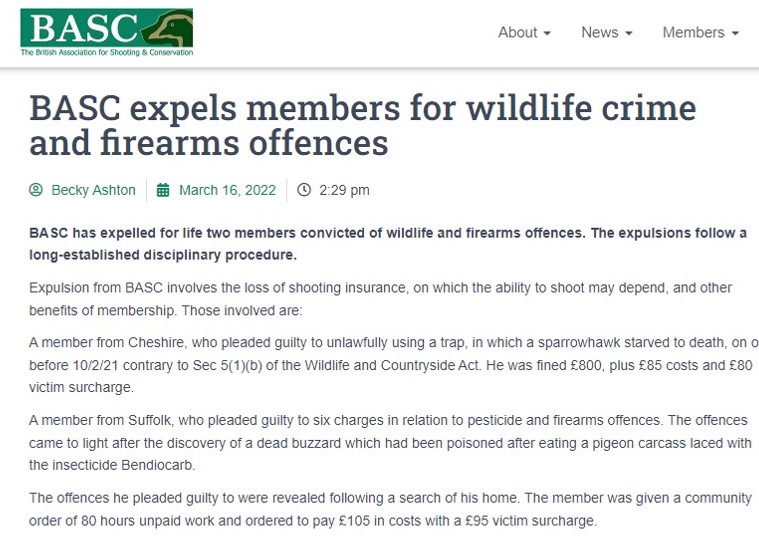
The British Association for Shooting & Conservation (BASC) has expelled two of its members following convictions for wildlife crimes.
The two expelled members are gamekeeper Hilton Prest from Cheshire who was convicted in December 2021 and gamekeeper Shane Leech from Suffolk who was convicted in November 2021.
Unusually, BASC posted an announcement about the expulsions on its website last week:
I say ‘unusually’ because although I’m aware of previous expulsions from game-shooting organisations following wildlife crime convictions, these are not common and when they do happen we tend to see vague statements sometime later, such as, ‘The Scottish Gamekeepers Association has expelled five members in recent years‘, but there’s rarely any evidence provided by which to authenticate the claim.
I’d argue that this rare open & transparent statement from BASC is as a result of long-term campaigning by conservationists to get the shooting organisations to back up their claims of having ‘zero tolerance of raptor persecution’. I also see it as a sign that the shooting organisations are feeling the increasing pressure imposed by campaigners, forcing the shooting industry to show Government policy-makers that it can self-regulate and thus avoid the inevitable enforced regulation that is hurtling towards them in the near distance, following on the heels of the forthcoming regulation in Scotland.
Good work, everybody, and especially to the multi-agency teams (Suffolk & Cheshire Police, RSPB Investigations, Natural England, National Wildlife Crime Unit, Crown Prosecution Service) that secured the convictions of these two gamekeepers after months of painstaking work.
Lochan Estate, a pheasant and grouse-shooting estate in the notorious Strathbraan region of Perthshire has lost its appeal against a General Licence restriction that was imposed on the estate in January 2022 after Police Scotland provided the licensing authority (NatureScot) with evidence of wildlife crime against birds of prey on the estate.
Regular blog readers will know that the three-year General Licence restriction on Lochan Estate took effect on 25th January 2022, prohibiting the use of General Licences 01, 02 and 03 on the estate until 25th January 2025 (see here).
NatureScot stated the restriction was imposed after the discovery of a dead hen harrier (named Rannoch) on the estate’s grouse moor in May 2019. Her foot was still caught in the jaws of a spring trap (see here).
[Photo by RSPB Scotland]
Lochan Estate’s response to the restriction came swiftly and an unnamed spokesperson was quoted as follows:
“The estate categorically rejects any suggestion of wrongdoing in relation to the welfare of wildlife.
We made very robust representations five months ago and only received the notification this week, which we found surprising given the material we produced.
We will therefore be appealing this decision.”
On 1st March I noticed that the official restriction notice on NatureScot’s website had disappeared so I assumed that was an indication that the estate had formally appealed the decision (NatureScot’s protocol seems to be to retract the restriction during the appeal process). This was confirmed when I contacted NatureScot’s licensing team to query the missing restriction notice and I was told the estate’s appeal had been lodged on 22nd February 2022.
Yesterday, the official restriction notice re-appeared on NatureScot’s website, which I assume to mean that the estate’s appeal has been rejected and the restriction now stands until it expires on 25th January 2025.
This is the area of restriction:
As many of you already know, this restriction is barely worth the paper it’s written on, because the estate can simply apply for ‘individual licences’ (instead of relying on the General Licences) to continue its activities as before, albeit with the minor inconvenience of having to have a bit of a paper trail. This has been a major criticism of the General Licence restriction process ever since it began in 2014. This, combined with the shooting industry’s apparent reluctance to shun any estates where restrictions have been imposed for wildlife crime, means that the General Licence restriction is an utterly ineffective sanction (e.g. see here).
You may remember that last month Scottish Greens MSP Mark Ruskell asked Parliamentary questions about this absurd so-called sanction (see here); more on that shortly.
Meanwhile, the General Licence restriction imposed on Invercauld Estate in January 2022 (following the discovery of a poisoned golden eagle and poisoned baits (see here) has also been challenged by the estate and a decision on that appeal is due imminently.
UPDATE 7th April 2022: Invercauld Estate in Cairngorms National Park loses appeal against General Licence restriction imposed for wildlife crime (here).
Earlier today, BBC’s Crimewatch Live programme featured the arson attack on Chris Packham’s home last October (see previous blogs here and here).
The programme showed new evidence, previously unseen by the public, and it was very clear that this was a targeted and orchestrated attack by individuals intent on sending Chris a sinister message.
You can watch the Crimewatch Live episode here and the arson attack is the first feature, but this recording is only available on BBC iPlayer until 10.45hrs tomorrow morning (seems a bit ridiculous that a programme relying on help from the general public to solve crimes is only available online for 24hrs) so I’ve also transcribed the discussions and screen grabbed some of the images. [UPDATE: thanks to the blog reader who sent a link to the archived recording on YouTube here].
Transcript:
Presenter Rav Wilding: Last October, TV presenter and conservationist Chris Packham was the target of an arson attack right outside his home in the New Forest. Earlier I spoke to Chris and also Detective Inspector Howard Broadribb from Hampshire Police to find out more about what happened that night.
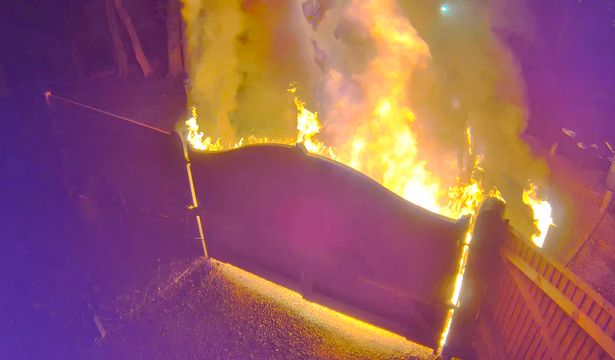
Chris Packham: Yes, October 8th, myself and the dogs went to bed, rather early for us at just before midnight, and then shortly after half past 12 there was an enormous explosion, that was the first I knew of the incident. The car had clearly exploded, the bang was tremendous, I mean the dogs flew off the bed and started yelping and barking straight away. Where I live we’re not prone to any sort of loud interruptive noises at night so it was quite startling, and then of course it came to pass that this vehicle had been parked outside the gate and was ablaze, thankfully attended by the fire service and the police of course, who manged to douse the flames. It had by that stage destroyed the gates, damaged a lovely old tree that’s by the gates there which obviously saddened me as well. But it wasn’t until the morning that we were able to fully assess the damage. The car was completely burned out, it got so hot the engine block had melted so it was quite an explosion.
Rav: Goodness me. I know that since this happened, Chris, you have upgraded security at your home but this clearly must have had a big impact on not only you, your family, your animals as well?
Chris: Yeah, I mean since the threats started a few years ago, and they’ve been manifold in different forms, so we’ve had death threats, initially in the post, we’ve had people posting us human excrement, and animal excrement, and other offensive items, I’ve worked really closely with Hampshire Police, they’ve been absolutely superb, I cannot commend them enough for the care, attention and diligence that they’ve shown, and they’ve also offered a lot of advice about how to improve the security.
A long time ago I remember listening to a Yoko Ono song, one of the lyrics was, ‘A neurotic builds a castle, a psychotic lives in it’. I’ve never wanted to live enclosed, I’ve wanted the freedom to express my views and ask people to change their minds, but subsequent to this upscaling of the threats we have again taken police advice and increased the security at the property.
But as you say, it’s quite frightening, it’s a direct attack if you like, rather than dead animals being left outside which I’m afraid has become quite commonplace. It’s an upscaling and yes, my partner, who is relatively resolute, was certainly perturbed. My step-daughter, who’s grown up in a theatre where I have been campaigning and has perhaps been even more used to the threats, is concerned about my welfare more than anything else, to be quite honest with you.
Rav: Oh Chris, it’s just awful, everything you described and I really hope today we can get some answers for you, but thank you for joining us.
Chris: Thank you.
Rav: I’m going to go now and speak to the officer dealing with this case right now, this is Detective Inspector Howard Broadribb from Hampshire Constabulary. Awful, what we’re hearing from Chris there, so what do you know about what happened on the night of this incident?
Detective Inspector Howard Broadribb: So, Chris mentioned the 8th October but we’ve put together a time line and what we know is it actually started on the 7th October, where a Mitsubishi Shogun [the get-away vehicle] was purchased from an address in Somerset. That then came into Southampton on the 7th and during the course of the afternoon/evening it’s made several trips between Hampshire and Dorset.
Just after 7pm it uses a petrol forecourt in Bournemouth, which is a Co-op forecourt, where it draws petrol into that vehicle.
Rav: And we can just see images of that now, so what do you know happened after that?
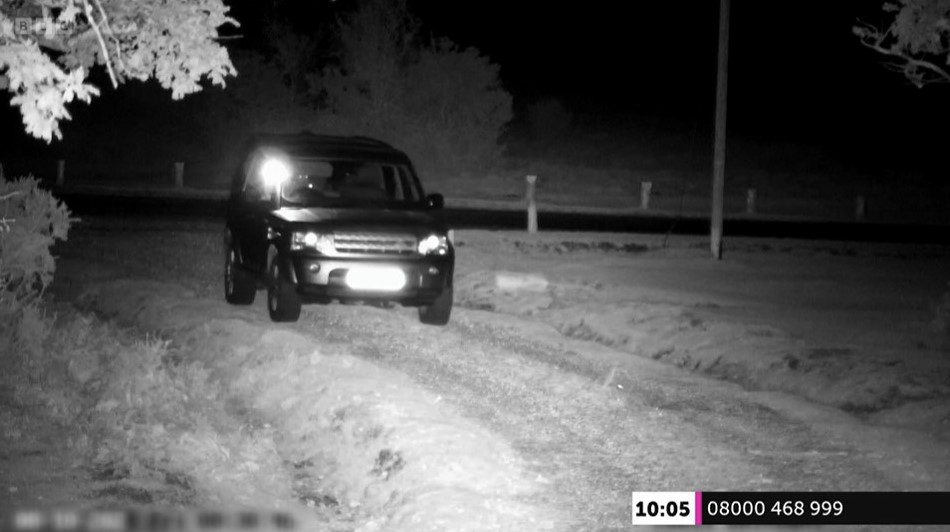
DI Broadribb: So we also know now that on the evening of the 7th around 11 o’clock at night and midnight a Land Rover Discovery was stolen from an address in Marchwood, which is also in Southampton. We know that the Land Rover Discovery and the Shogun travelled in convoy and at 22 minutes past midnight the Shogun is seen to drive past the entrance to Chris’s house, shortly followed by the Discovery, where the driver’s turned the lights off, drives down and parks directly outside the gates to Chris’s home.
He [the driver of the Discovery] then spends three minutes and 40 seconds, which is a long time, setting fires inside that vehicle. He’s not afraid of being caught, he’s not panicking, he then very casually walks away towards the direction of where the Shogun was parked up. You can see, the Land Rover’s been completely destroyed as Chris has described, destroying his gates, absolutely terrifying.
Rav: Yeah, we can see that now, the devastation, and it’s just awful what happened, let alone the amount of damage that was caused to this property.
So, at the time, you didn’t have any witnesses that had come forward, this is a very rural location, but you’re still hopeful that someone can help today?
DI Broadribb: Yeah, you’re right, this is a very rural location but again, going back to that time line, what we do know is this began with the Shogun being purchased in Somerset. When it was bought, the people who bought it loaded it onto a Ford Transit low loader and that was then used to bring the car back to Southampton.
What’s unusual is the low loader is a Ford Transit bearing the number plate BU06 HDY; actually that’s not the number plate for that vehicle. That belongs to another completely different low loader. So, I’m looking for anyone who saw that low loader with the Shogun on the back, being driven, who was driving it, any passengers, on that day?
Rav: That would be really significant – so the number plate that was on that low loader is not what it should be?
DI Broadribb: Correct.
Rav: Ok, and we’ve got details of that on the screen. Also, you would like to know about who was actually putting the fuel in that car. We’ve got a still image of that person there.
DI Broadribb: Absolutely, and it’s a really clear image of someone putting petrol into that car, so I want to know who that is. That is on the 7th October but equally if you saw someone driving that vehicle [Shogun] around the 7th/8th or even since then, I’d like a name of who that is, and also if you’ve seen that vehicle since I’m really keen to find that vehicle. Equally the low loader, we’d like to recover that as well. If you’ve seen who’s driving it, passenger, again, contact me.
Rav: Could be some crucial info there. Have a good look, do you recognise any of the vehicles? Or do you recognise this driver? If you have any information it really could help police catch the people responsible. If so, please do get in touch, our number is 08000 468999.
Press release from Cambridge University (16th March 2022)
Birds of prey populations across Europe suppressed by lead poisoning from gun ammunition – study
Toxic lead ammunition used by hunters has long been shown to kill raptors – or birds of prey – by contaminating their food.
New study uses data on lead levels in the livers of thousands of dead raptors to calculate the impact of lead poisoning on their population size.
Europe is missing at least 55,000 adult raptors because of lead poisoning, with populations of White-tailed Eagles 14% lower and Golden Eagles 13% lower than they would otherwise be.
Poisoning caused by preying on or scavenging animals shot by hunters using lead ammunition has left the populations of many raptors – or birds of prey – far smaller than they should be, according to the first study to calculate these impacts across Europe.
When birds like eagles and Red Kites scavenge carcasses or eat injured animals with fragments of toxic lead from gun ammunition embedded in their bodies they can become poisoned, suffering slow and painful deaths. Smaller doses have been shown to alter behaviour and physiology.
Now, scientists from the University of Cambridge have used data on lead levels in the livers of over 3,000 raptors found dead in more than a dozen countries to calculate the extent to which poisoning by lead ammunition has affected Europe’s raptor populations.
Researchers estimate that, for ten raptor species, poisoning from lead ammunition alone has resulted in an absence of around 55,000 adult birds from European skies.
Worst affected are species like eagles that are naturally long-lived, rear few young per year and breed later in life. However, even populations of species familiar to bird-watchers across countries like the UK, such as the Common Buzzard and Red Kite, would be significantly bigger were it not for lead ammunition.
For example, the study suggests that Europe’s White-tailed Eagle population is 14% smaller than it would have been without more than a century of exposure to lethal levels of lead in some of its food.
This is closely followed by the Golden Eagle and Griffon Vulture with populations 13% and 12% smaller than they would otherwise have been. Northern Goshawk numbers are 6% smaller, and both Red Kite and Western Marsh Harrier populations are 3% smaller.
Common Buzzard populations are 1.5% smaller, but this equates to almost 22,000 fewer adults of this widespread species, say the researchers.
They estimate that the overall European population of ten raptor species is at least 6% smaller than it should be, solely as a result of poisoning from lead ammunition. The findings are published today in the journal Science of the Total Environment.
The scientists say that a range of alternatives to lead shotgun cartridges and rifle bullets are widely available to hunters and work well. However, efforts by UK hunters’ organisations to instigate voluntary bans on lead shot in hunting have had almost no effect.
Research by the same Cambridge authors published just last month shows over 99% of pheasants killed in the UK are still shot with lead, despite hunting groups urging members to switch to non-toxic gunshot in 2020, with the aim of phasing out lead use by 2025.
“The continued blanket use of lead ammunition means that hunting as a pastime simply cannot be considered sustainable unless things change,” said lead author Prof Rhys Green, a conservation scientist at the University of Cambridge and RSPB.
“Unfortunately, efforts to encourage voluntary shifts away from lead shot have been completely ineffective so far,” he said.
“The kinds of reductions in raptor populations suggested by our study would be considered worthy of strong action, including legislation, if caused by habitat destruction or deliberate poisoning.”
Currently, only two European nations – Denmark and the Netherlands – have banned lead shot. Denmark plans to follow this up with a ban on lead rifle bullets. Both the European Union and the UK are considering legal bans on all lead ammunition due to effects on wildlife and the health of human consumers of game meat, but many hunting groups oppose this, according to researchers.
Some raptors are poisoned when they scavenge from dead animals killed with lead ammunition. This can be a whole carcass lost or abandoned by hunters, or – for example – the guts of a hunted deer, discarded to reduce carrying weight.
As well as vultures, which rely on scavenging, many other raptors also scavenge when the opportunity arises, including eagles, buzzards and kites. Many dead pheasants at UK roadsides carry lead shot and fragments in their bodies and are scavenged by buzzards and kites.
Other species, such as falcons and goshawks, are exposed through preying upon live animals with lead embedded in their bodies from being shot and injured but not killed. X-ray studies of wild ducks in the UK have shown that about a quarter of live birds have shot in their bodies. Injured ducks or pigeons are less likely to be able to evade predatory birds.
“It’s taken decades for researchers from across Europe to amass sufficient data to enable us to calculate the impacts of lead poisoning on raptor populations,” said study co-author Prof Debbie Pain from the University of Cambridge.
“We can now see just how substantial population impacts can be for some of our most charismatic and vulnerable species – species that are protected by EU Regulation and the UK Wildlife & Countryside Act.”
“The avoidable suffering and death of numerous individual raptors from lead poisoning should be sufficient to require the use of non-toxic alternatives. These population-level impacts make this both doubly important and urgent.”
For the latest study, researchers used population modelling to calculate how big Europe’s raptor populations would have been were it not for the destructive impact of a single “additional mortality factor”: lead poisoning from ammunition.
They took data gathered since the 1970s from the livers of thousands of dead raptors in 13 nations and tracked the relationship with “hunter density”: average numbers of hunters per square kilometre in each country, using data from the European Federation for Hunting and Conservation.
Unsurprisingly perhaps, places with a higher density of hunters had more poisoned raptors. Scientists used this relationship to predict rates of poisoning in countries without data from bird livers, but where “hunter density” is known. Their results indicate that a country with no hunters using lead ammunition would have virtually no lead-poisoned raptors.
Scientists say their estimates are conservative, not least as data on poisoned raptors is limited and hugely difficult to gather. For many European raptor species, including some of the rarest ones, there were insufficient data to estimate how great the risk is.
ENDS
The full paper is due to be published online today and when that happens I’ll post a link to it here. [Update: read the paper here]. Meanwhile, here is the paper’s citation and abstract:
In October last year, a stolen Land Rover was packed with fuel cannisters, driven to the front gates of Chris Packham’s house just after midnight and set alight. The vehicle exploded and the subsequent inferno caused considerable damage to Chris’s property (see here). Two masked individuals were caught on security cameras and were seen to escape in a second vehicle.
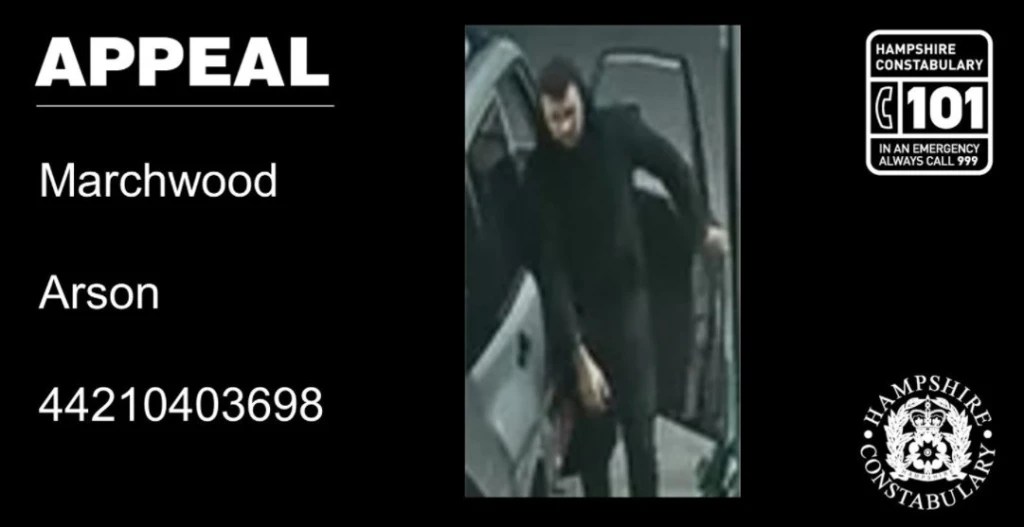
Hampshire Constabulary has been investigating this arson attack and in December 2021 an appeal was issued asking the public to help identify an individual caught on CCTV at a petrol station:
The police investigation is ongoing and on Wednesday 16th March, Chris will join Detective Inspector Howard Broadribb on the BBC’s Crimewatch programme at 10am as new evidence is revealed.
I’ll add a link here for those who want to watch it later on BBC iPlayer. [Ed: click here]
If anyone has any information about this criminal attack please call Hampshire Constabulary on 101 and quote incident reference number 44210403698.
UPDATE 16th March 2022: Police describe arson attack at Chris Packham’s home as ‘absolutely terrifying’ & appeal for information (here)
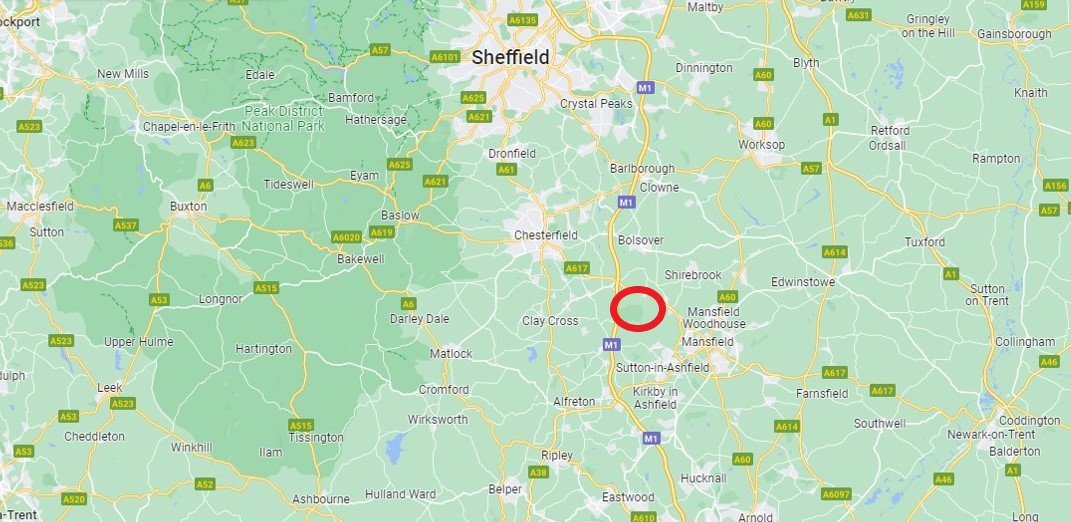
Multi-agency searches were conducted last week at a raptor-poisoning hotspot in Derbyshire.
Since 2015, at least eight illegally poisoned birds of prey including buzzards and kestrels, as well as poisoned pheasant baits, have been uncovered on farmland in the Glapwell / Ault Hucknall / Rowthorne / Pleasley area of north east Derbyshire. Toxicology analysis has confirmed they were killed by the poisons Aldicarb and Alphachloralose (see here).
[A dead buzzard found in the area. Photo by Derbyshire Constabulary]
Last week police officers from Derbyshire Police’s Rural Crime Team were joined by staff from the RSPB Investigations Team, Natural England and the National Wildlife Crime Unit to undertake a series of land searches. A number of follow-up investigations are now continuing as a result of those searches.
Derbyshire’s Rural Crime Team posted the following statement on Facebook yesterday:
‘Consider this post both an appeal for information and a public safety warning.
Over recent years there has been a concerning number of dead buzzards found to have died as a result of poisoning on land around the Glapwell / Ault Hucknall / Rowthorne / Pleasley area.
In response to this issue, last week Derbyshire Rural Crime Team, RSPB Birders , the NWCU and Natural England were involved in a day of action in the area. Land searches were conducted and other lines of enquiry pursued in what proved to be a very positive day.
Clearly these beautiful birds are being targeted. Killing birds of prey in any way is ILLEGAL but laying poison on land that can be easily accessed by the public poses a significant risk to public safety.
When out and about, should you find anything suspicious it is important that you contact the Police immediately. DO NOT touch or handle anything and do not let children or animals go near.
If you have any information that may aid this enquiry please contact Derbyshire Rural Crime Team’.
This is the latest in a surge of multi-agency investigations in response to raptor persecution crimes over the last 14 months, including a raid in Suffolk on 18th January 2021 (here), another raid in Nottinghamshire in January 2021 (here, resulting in a conviction of a gamekeeper in 2022 here), a raid in Lincolnshire on 15th March 2021 (see here), a raid in Dorset on 18th March 2021 (here), a raid in Devon on 26th March 2021 (see here), a raid in Teesdale on 21st April 2021 (here), a raid in Shropshire on 2nd August 2021 (here), a raid in Herefordshire on 12th August 2021 (here), a raid in Norfolk on 14th September 2021 (here), a raid in Wales in October 2021 (here), a raid in Humberside on 10th December 2021 (here) and a raid in North Wales on 8th February 2022 (here).
Another white-tailed eagle has died in southern England and another police investigation has been launched. This is the third one since October 2021 and all three investigations are focused on eagles from the Isle of Wight Reintroduction Project.
Hampshire Police have become involved after this latest eagle’s ‘sudden death’ on 24th February 2022. A post-mortem has revealed the eagle was carrying avian flu but this has not been confirmed as the cause of death and other evidence, not yet in the public domain, suggests there may be more to this than meets the eye.
Forestry England and the Roy Dennis Wildlife Foundation, partners on the eagle reintroduction project, have issued a very carefully-worded statement:
‘A satellite-tracked White-tailed Eagle from the Isle of Wight reintroduction scheme was found dead on the Isle of Wight on 24 February 2022. Circumstances surrounding the sudden death of the bird are being investigated by Hampshire Police and partners.
During a post mortem examination it has been identified that the bird was carrying avian influenza, although it is unknown at this stage if this is related to the bird’s death and enquiries are continuing‘.
A spokesperson for Hampshire Constabulary said:
‘We were called shortly after 5pm on Thursday 24 February to a report of a dead sea eagle on Bowcombe Road on the Isle of Wight.
The investigation into the circumstances surrounding the animals death is ongoing.
We are not linking this to any other investigations at this time‘.
We are still waiting for the post-mortem and toxicology results to be published from the two other young sea eagles that have died in suspicious circumstances (see here). Both eagles were found dead on game-shooting estates, one in Sussex in October 2021 and one in Dorset in January 2022. Neither of them tested positive for avian flu.
There is ongoing police activity on both these cases, which may account for Dorset and Sussex police’s reluctance to release the post mortem results, but the longer this secrecy goes on, the more damaging to those force’s reputations when the results do finally emerge. And emerge they will, you can be sure of that.
UPDATE 9th February 2023: Death of white-tailed eagle on Isle of Wight recorded as ‘uncertain’ as presence of avian flu restricted toxicology tests (here)
Last month conservation campaign group Wild Justice started legal proceedings against DEFRA over changes that DEFRA had apparently slipped in to General Licence #42 in January, extending the definition of ‘livestock’ which meant permitting the killing of so-called ‘pest’ species to protect pheasants when they were classified as ‘livestock’ (see here and here).
Wild Justice nicknamed this Schrodinger’s pheasant, with a nod to Schrodinger’s cat, because the pheasant’s status seemed to be ‘livestock’ and ‘wildlife’ simultaneously, according to whatever seemed to suit the shooting industry at any given time:
Earlier this week, DEFRA wrote back to Wild Justice to acknowledge that the extension of the definition of ‘livestock’ in this case would not be not lawful and that the terms of General Licence #42 have now been amended to clarify the status of pheasants.
Tom Short, one of Wild Justice’s lawyers at Leigh Day, simplifies the arguments very well with this explanation:
When GL42 was published in January, it appeared that Defra had deliberately sought to extend the definition of “livestock” as set out in 27(1) Wildlife and Countryside Act 1981 by way of footnote 7. This meant that certain Pheasants released from their pens by shooting estates would now be counted as “livestock” rather than wild birds. That matters because as “livestock”, GL42 authorisers user to kill or take Carrion Crows, Jackdaws, Magpies or Rooks to protect the Pheasants.
In particular, Wild Justice was concerned that GL42 went beyond the definition of “livestock” in the WCA 1981, to now include gamebirds “kept in an enclosure or which are free roaming but remain significantly dependent on the provision of food, water or shelter by a keeper for their survival”. The WCA 1981 definition by contrast only includes gamebirds which remain “kept” “for the provision or improvement of shooting”. On that definition, once a Pheasant is let out of the release pens ready for the shooting season, it is no longer kept for the provision of shooting and so its protection cannot be a lawful reason to kill or take Carrion Crows, Jackdaws, Magpies or Rooks under GL42.
Wild Justice asked Defra to justify the extension of the definition. In their response, Defra has agreed to revise the definition, has conceded that it is the WCA 1981 definition that applies and that they cannot extend that definition by including additional wording in the general licences. DEFRA also says that “The Secretary of State does not consider pheasants to be livestock within the meaning of the WCA 81 once they cease to be kept”.
Defra’s agreement to amend footnote 7 also clarifies that gamekeepers cannot claim that Pheasants they have released are “kept” simply by virtue of providing supplementary food “out into the environment”. Supplementary food does not make a wild Pheasant a kept Pheasant. Defra says that “In principle, there is a significant and clear difference between the feeding of dependent kept birds and the provision of supplementary food in the environment”. We might doubt quite how clear that difference is, but certainly it is a reasonable argument (to be judged on the facts of each case) that a “dependent kept bird” would be one that is largely dependent on food in or by the pen.
Related to this, Defra has also confirmed that only shelter that is provided by a gamekeeper “by or within the release pen” is a factor in assessing whether a Pheasant is kept or wild. Any shelter that is provided further away does not bring a Pheasant back into a gamekeeper’s keeping.
Defra has also confirmed that lethal control is a method of last resort and alternatives must always be tried first.
Wild Justice challenged the expansion of the definition of “livestock” footnote 7 and the Secretary of State has conceded that the definition cannot be extended past what is set out in primary legislation. Any gamekeepers hoping to kill Carrion Crows, Jackdaws, Magpies or Rooks to protect Pheasants are only permitted to do so where those Pheasants are still “kept” and not yet wild birds, and only where they have explored non-lethal alternatives. No amount of spreading “supplementary food” or extra bits of shelter away from the release pen can make a wild Pheasant a kept Pheasant.
There’s a piece in today’s Guardian about this latest win for Wild Justice (here) and a Wild Justice blog (here).
Wild Justice has three co-directors (Mark Avery, Chris Packham, Ruth Tingay) who work unpaid as volunteers. Their work to get a better deal for wildlife relies entirely on donations so if you’d like to support their work please consider a donation here. If you’d like to hear more about their legal challenges and campaign work, please sign up for their free newsletter here.
Even though the pheasant-shooting season ended over a month ago, shot and dumped pheasants are still being discovered by shocked members of the public.
Many thanks to the blog reader who sent in this photo of shot & dumped pheasants, found last Monday chucked behind a hedge at the T-junction of Green Lane and Barnburgh Lane, just outside Goldthorpe, Barnsley, South Yorkshire.
So yet another dumping incident to add to the long list of those found in Cheshire, Scottish borders (here), Norfolk (here), Perthshire (here), Berkshire (here), North York Moors National Park (here) and some more in North York Moors National Park (here) and even more in North Yorkshire (here), Co. Derry (here), West Yorkshire (here), and again in West Yorkshire (here), N Wales (here), mid-Wales (here), Leicestershire (here), Lincolnshire (here), Somerset (here), Derbyshire’s Peak District National Park (here), Suffolk (here), Leicestershire again (here), Somerset again (here), Liverpool (here), even more in North Wales (here) even more in Wales, again (here), in Wiltshire (here) and in Angus (here).
I really hope Liam Stokes is paying attention to this. Liam is the Chief Executive of British Game Assurance (formerly British Game Alliance), the game-shooting industry’s version of a marketing board but not without its problems (e.g. see here).
Last month (Feb) Liam spoke at the BGA’s symposium, recorded here. After referring to the recent discussion in the House of Lords between Lord Newby and Lord Benyon (when Newby asked Benyon about shot gamebirds being dumped and Benyon claimed to have no knowledge of this happening – see here), here is what Liam Stokes had to say about shot & dumped gamebirds (starts at 4.24 min in the video link above):
“He [Lord Newby] then goes on to ask this question – ‘In many cases game birds are shot and not used for food’. Now, as Lord Benyon is going to respond here, the evidence for this is vanishingly thin, this is, I mean, this, this is something that goes round in rural circles all the time, you know, that this, this is happening. We don’t see the evidence for it. So please don’t think that I’m sharing this because I also think this is happening, this is, this is something that goes around rural rumour mills and the evidence does not appear“.
Such forthright denial might seem convincing if you’re new to this. But if you’ve been around a while you might remember Liam Stokes in his former job at the Countryside Alliance when he had to respond to press enquiries when evidence appeared of shot & dumped pheasants (e.g. see here and here).
It’s also worth pointing out that Liam’s denial at the recent symposium came just a few days after national press coverage (including by ITV news) of a gamekeeper filmed by undercover investigators from the League Against Cruel Sports flinging shot gamebirds into a mineshaft in North Wales (see here) leading to an ongoing investigation by the police, Natural Resources Wales and a local council authority.
Surely, as CEO of the game shooting industry’s own self-styled marketing board, Liam Stokes would have been well aware of this very clear evidence of gamebird dumping, and yet he was prepared to go on camera and deny there’s any evidence of this happening?!
Crikey, you’d think that the CEO of a marketing board, reliant on consumers’ trust, would do a bit better than this, wouldn’t you?












 Raptor Persecution UK