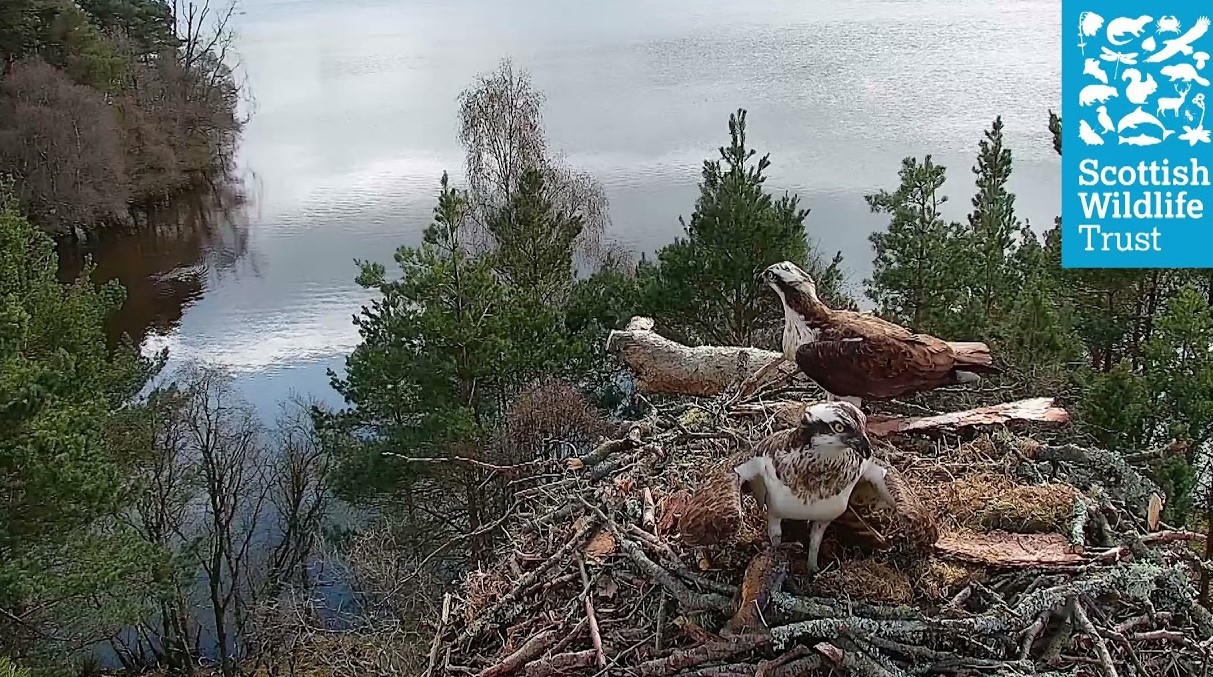
Job vacancy: Species Protection Officers x 4 (ospreys), Scottish Wildlife Trust

Job announcement from Scottish Wildlife Trust

Title: Species Protection Officer (x 4 posts)
Status: April 2022 – June 2022, 17.5 hours per week
Salary: £17,290 pro rata per annum
Location: Loch of the Lowes, Dunkeld
Closing date: 31 January 2022, 12 noon

Scotland’s leading nature conservation charity is looking for enthusiastic individuals to undertake the role of Species Protection Officer (SPO) based at Loch of the Lowes. This paid role includes free accommodation, invaluable training and the opportunity to develop experience in nature conservation, working with volunteers and public engagement!

A substantial portion of Osprey Watch duties will require SPOs to work night shifts. The role will also require working closely with the Perthshire Ranger, the Volunteer Nest Protection Team and Visitor Centre staff.

During this 8-week role, candidates will focus on providing an ‘Osprey Watch’ nest protection programme based at Loch of the Lowes. This will be a combination of paid working hours and voluntary unpaid hours. Successful candidates will work under a 17.5 hour temporary employment contract, the remainder of the 35 hours each week will be under a volunteer agreement. Successful candidates will receive invaluable training, practical experience, and free accommodation, in a loch-side, wooden eco-bothy for the duration of the role.

Duties include:
• Monitor and record breeding ospreys’ behaviour
• Provide round the clock ‘osprey watch’ protection of resident ospreys, their nest and eggs during the critical part of the breeding season
• Monitor additional webcams for beaver activity and other wildlife footage
• Create interesting social media and blog posts about the osprey breeding season

Training and Support:
The candidate will have the fantastic opportunity to gain experience in;
• Species ID
• Managing data
• Use of webcam and security camera software
• Use of Adobe Premier Elements editing software
• Use of WordPress and other social media platforms
• Working with volunteers
• Public engagement

The successful candidate(s) will ideally have:

• An interest and passion in nature conservation
• Good knowledge of natural history and species ID
• Experience of bird monitoring or species protection work is beneficial
• The willingness to live in shared accommodation with colleagues
• The ability to work unsociable hours, including nightshift
• A reasonable standard of physical fitness and resilience to undertake shifts in the hide in cold conditions
• A positive and flexible approach to work and other team members
• The ability to communicate with volunteers, staff and members of the public in a confident manner
• A high level of self-motivation, personal responsibility and organisational skills
• Good computer literacy skills, including a working knowledge of Excel

Please note the Species Protection Officer role is dependent on the return of breeding ospreys. Strict Covid-19 procedures will be in place, particularly with regards to the bothy accommodation.

To apply, please click here

ENDS

Convicted gamekeeper to escape 3-year General Licence restriction for killing birds of prey?

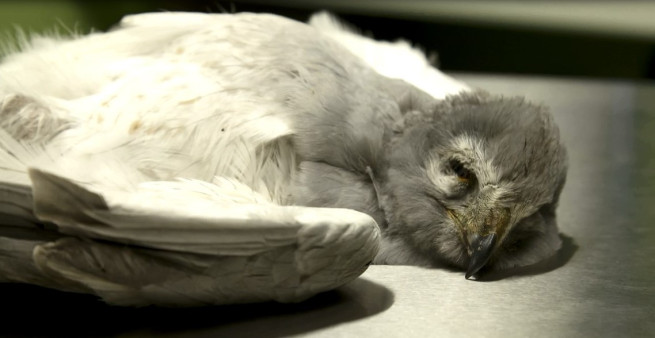
On 30th November last year, gamekeeper Peter Givens from the Cathpair Estate in the Scottish Borders was convicted at Selkirk Sheriff Court of recklessly killing a barn owl and a goshawk in September 2020.

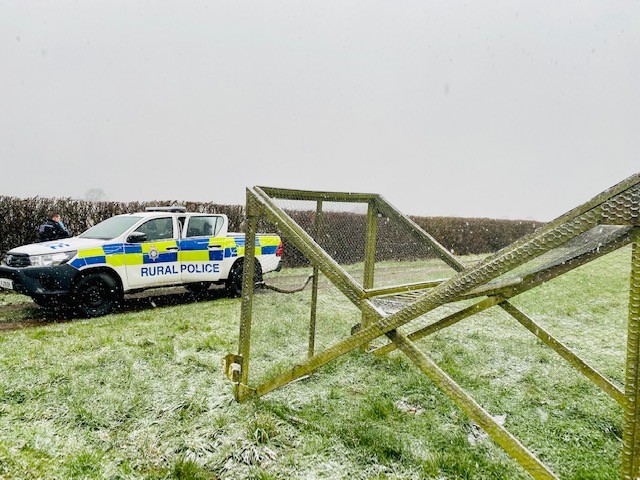
The two supposedly protected species had become caught inside a cage trap operated by Givens but they starved to death because Givens had failed to release them as he was required to do by law.

Givens was fined a pathetic £300 and a £20 victim surcharge (see here).

[Photograph of the unlawfully operated trap on Cathpair Estate. Photo by Stuart Spray]

Givens’ sentence was derisory, there’s no doubt about that, especially when you consider raptor persecution is supposedly a National Wildlife Crime Priority.

But the £300 fine from the court wasn’t Givens’ only sanction. On conviction, Givens was automatically banned from using the General Licences, including those which permit the killing of some birds (especially corvids) but also GL14, the licence that permits a person to use certain traps to kill stoats in Scotland for the conservation of wild birds or the prevention of serious damage to livestock.

This automatic ban on using the General Licences came in to force the day gamekeeper Givens was convicted, because General Licences ‘cannot be used by those convicted of a wildlife crime on or after 1 January 2017 unless, in respect of that offence, they are a rehabilitated person (for the purposes of the Rehabilitation of Offenders Act 1974 and that conviction is spent), or a court discharged them absolutely‘, according to the terms of the General Licences.

If Givens is the only gamekeeper on Cathpair Estate (and I have no information about that) then being prevented from killing crows and stoats would probably have a negative impact on the estate’s ability to host a gamebird shoot, unless the estate employs other gamekeepers to conduct those duties. Although, as ridiculously as ever, a convicted gamekeeper may still apply to use an Individual Licence to carry on operating traps and guns to kill corvids and stoats as if he’d never committed his crimes at all.

When gamekeeper Givens’ sentence was announced, I was interested in how this automatic ban on using the General Licences would apply, and I especially wondered whether it would extend for three years, as per the usual General Licence restriction imposed on estates where evidence of wildlife crime is apparent but insufficient to result in a prosecution.

However, when I looked up how long it would be before Givens’ conviction could be considered spent, I found it was only 12 months (according to the Rehabilitation of Offenders Act 1974 as amended by the Management of Offenders (Scotland) Act 2019). So this means Givens would not be allowed to use the General Licences to kill corvids and stoats for a period of only 12 months (unless he applied for an Individual Licence) but after those 12 months had expired (30th November 2022) he’d be able to return to killing wildlife under the conditions of the General Licences.

Eh? That seems a bit counter-intuitive, doesn’t it? On the one hand, regulator NatureScot can impose a three-year General Licence restriction on an estate where the police have evidence of criminal activity but insufficient evidence to pin it on any named individual. But when the authorities secure an actual conviction for wildlife crime on an estate, then the General Licence sanction only applies for one year, instead of three, if the criminal has been convicted and handed a ludicrously tiny fine that is likely to have been paid by his employer anyway!

That didn’t make sense to me so I contacted NatureScot and asked them about it. They agreed that it was counter-intuitive and that this scenario hadn’t really been considered before, probably due to the incredibly low prosecution/conviction rates for raptor persecution, especially in recent years. However, now that this ridiculous situation had been brought to their attention, NatureScot advised that they would be looking at tightening up the terms of the General Licences to better reflect the lack of trust that a conviction for a wildlife offence implies.

This will probably come too late to be applied to gamekeeper Givens, and to be fair to NatureScot they can only work with the existing terms and conditions that apply at any one time, but I was encouraged to hear that part of the planned review will also be to consider how Fiscal Fines and Fixed Penalty Notices for wildlife offences impact the ability of an individual to operate under General Licences.

Meanwhile, if anyone is out and about for a walk on the Cathpair Estate in the next ten months it may well be worthwhile having a look to see whether any traps are being operated to kill corvids and stoats. If they are and you’re suspicious of their legality, take photographs and a grid reference/What3Words and report them to Police Scotland on 101. Please share your report with the RSPB’s Investigations team so they can follow up with the police.

[The Cathpair Estate boundary (in blue), from Andy Wightman’s Who Owns Scotland website]

“These grouse moors are wildlife crime hotspots” – Mark Avery tells it straight in new podcast

The Bunker is an independent political podcast examining the big issues of the UK.

In this week’s episode, Wild Justice Co-Director Mark Avery discusses driven grouse shooting with host Arthur Snell, with a particular focus on the illegal killing of birds of prey that takes place on many driven grouse moors.

This is a good, clear introductory summary of the issues, ideal for the new audiences that The Bunker will attract.

You can listen to the 25 minute podcast here : https://kite.link/BK1201Raptor

Chris Packham talks about impact of internet trolls

Please just watch these two videos.

The first one was published on Chris’s twitter feed on New Year’s Eve, the second one was an interview he did with Channel 5 News on 5th January 2022.

Gamekeeper pleads guilty to killing buzzards in Nottinghamshire

Further to the blog post on 4th January 2022 (here), a gamekeeper has pleaded guilty to five offences committed in Nottinghamshire in January 2021, including the illegal killing of two buzzards, the unlawful use of a trap, the unlawful possession of two stock doves and a firearms offence.

[Nottinghamshire Police visited the crime scene to collect evidence with the RSPB Investigations Team in January last year. Photo via Nottinghamshire Police Rural Crime Team]

His guilty plea means he has avoided a trial (and thus saved the court time) for which he’ll no doubt be rewarded when it comes to sentencing.

Sentencing has been deferred until later this month. I expect the full horror of his crimes, and his identity, to be publicised at that time. It’ll be interesting to see whether he has any ‘professional’ affiliations to any of the shooting organisations that claim to operate a ‘zero tolerance’ policy on raptor persecution.

A Raptor Forensic Fund, established in 2020 by Wild Justice to help provide financial support to police investigations into alleged raptor persecution crime, has played a part in this conviction.

This is the 4th gamekeeper to be convicted of wildlife crimes/raptor persecution since November 2021. The three others were gamekeeper Shane Leech (33) in Suffolk (here), gamekeeper Peter Givens (53) in the Scottish Borders (here) and gamekeeper Hilton Prest (58) in Cheshire (here).

Kudos to Nottinghamshire Police Rural Crime Team, the RSPB Investigations Team and the CPS for their hard work in securing this result. Excellent partnership working in action!

UPDATE 28th January 2022: Gamekeeper to be sentenced for beating to death two buzzards in a trap (here)

Leadhills Estate wants to keep details of its General Licence restriction appeal a secret

As many blog readers will know, the notorious Leadhills Estate, a grouse-shooting estate in South Lanarkshire that has been at the centre of police wildlife crime investigations at least 70 times since the early 2000s, is currently serving two General Licence restrictions imposed by NatureScot after ‘clear evidence’ of wildlife crime was provided to the statutory regulator by Police Scotland (see here and here).

For new blog readers, a General Licence restriction is a light-touch sanction for estates in Scotland where there is sufficient evidence of wildlife crime taking place but insufficient evidence to prosecute a specific individual. It’s not really a sanction at all though, because an estate can simply apply to NatureScot for ‘individual’ licences instead of a General Licence which allows them to continue the activities they were supposedly restricted from doing, just with a tiny bit of scrutiny attached (e.g. 1,000 birds were legally killed on a shooting estate despite being under a General Licence restriction, see here).

Nevertheless, a General Licence restriction is useful for campaigners for highlighting to the law makers that wildlife crime persists and further regulation/enforcement is therefore required.

So, back to Leadhills Estate. The reason why this grouse moor estate is currently serving an unprecedented double General Licence restriction is because of police reports relating to the illegal killing of a short-eared owl, two buzzards and three hen harriers that were ‘shot or caught in traps’ on Leadhills Estate in the last few years (see here), the discovery of banned poisons on the estate in May 2019 (see here), the alleged shooting of a(nother) short-eared owl by a masked gunman on a quad bike as witnessed by a local resident and his eight year old son in July 2020 (see here) and the discovery of yet another batch of banned poisons, also in July 2020 (here). A satellite-tagged hen harrier (Silver) also vanished in suspicious circumstances on the estate in May 2020 (here), and although NatureScot don’t consider missing satellite-tagged raptors as sufficient evidence for a General Licence restriction, the disappearance can be used as supportive evidence if further alleged offences are also being considered.

Incredibly, Leadhills Estate with its double General Licence restriction is STILL a member of the lobby group Scottish Land & Estates, which claims to have a ‘zero tolerance’ approach to raptor persecution. Hmm.

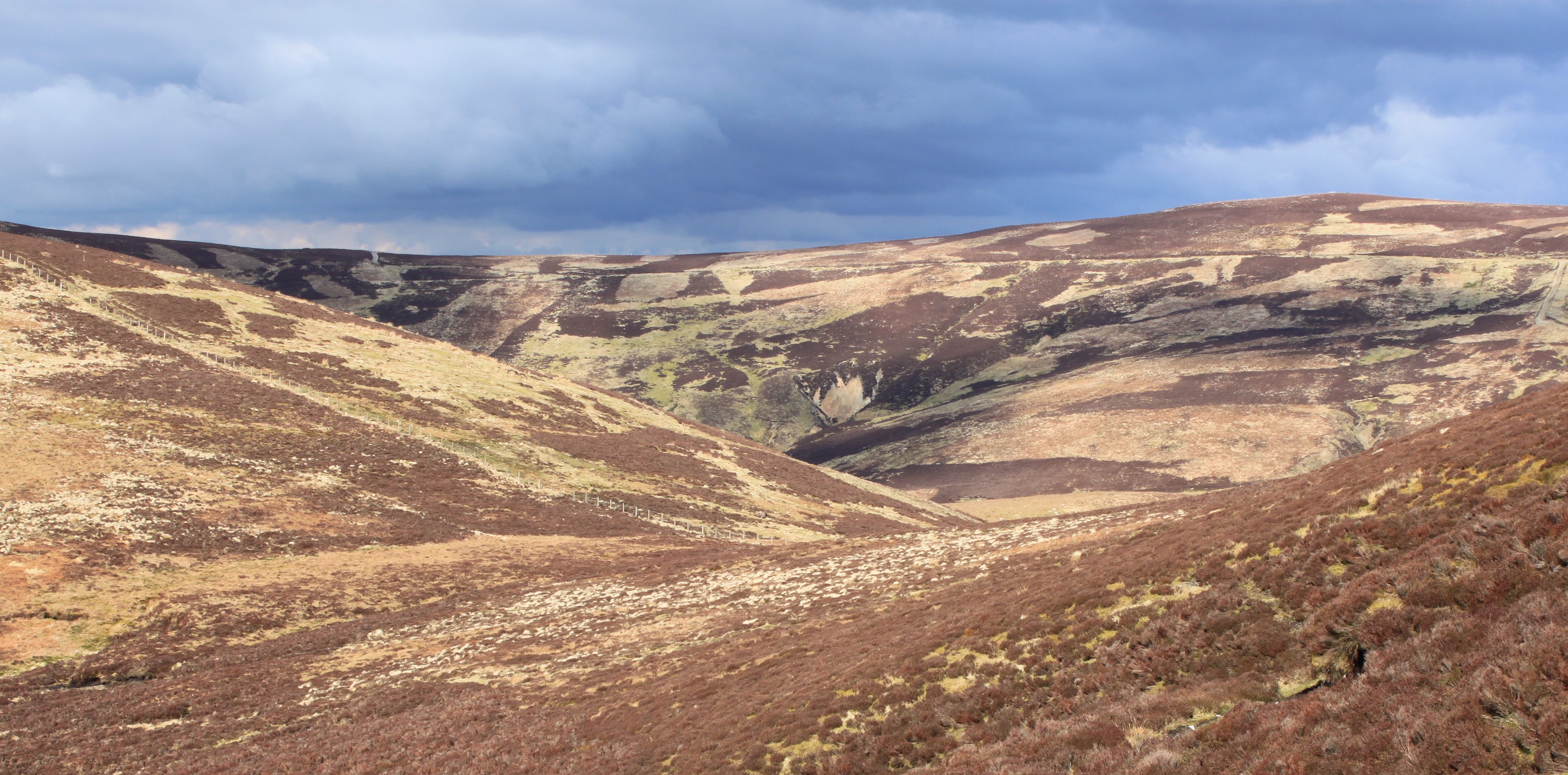
[Grouse moor on the Leadhills Estate. Photo by Ruth Tingay]

As you may recall, Leadhills Estate’s second General Licence restriction was announced by NatureScot in late September 2021 (here) and the estate was reported to be considering an appeal (here).

Having seen the estate’s previous (failed) appeal against its first General Licence restriction in 2019 (here), I was keen to see the arguments it would make for an appeal against a second restriction.

On 30th September 2021 I submitted an FoI to NatureScot to request copies of Leadhills Estate’s appeal.

On 3 November 2021 NatureScot responded as follows:

We have withheld a letter from an agent acting on behalf of Leadhills Estate, pending an appeal against NatureScot’s decision to restrict General Licence. This information is of a sensitive nature and disclosure into the public domain could prejudice the applicant’s right to a fair hearing’.

I didn’t see how public disclosure could possibly prejudice a hearing given that it’s all done in-house at NatureScot but fine, I could wait.

In December 2021 it was announced that Leadhills Estate had lost its appeal against the second General Licence restriction (here) so I wrote back to NatureScot on 3rd December as follows:

You told me in the letter dated 3 November 2021 that you were withholding a letter from an agent who was acting on behalf of Leadhills Estate, and the reason you gave for withholding it was that releasing it may prejudice the applicant’s right to a fair appeal. As the appeal process has now concluded and therefore the applicant’s right to a fair hearing cannot be affected, please can you send me the agent’s letter that was previously withheld‘.

Yesterday (5th January 2022) NatureScot responded to my latest FoI request, as follows:

We have completed our information searches, and we have identified eight documents comprising 126 pages relevant to your request. We shared a redacted version of these documents with the solicitors acting on behalf of Leadhills Estate, who have provided additional legal arguments as to why certain information should be withheld. We will need additional time to assess these arguments and, potentially, take further legal advice.

Regulation 7 of the EIRs allows public authorities to extend the time for compliance with requests for up to an additional 20 working days. This means we must respond to your information request by 3 February 2022 at the latest‘.

That’s interesting. Why might Leadhills Estate not want the details of its appeal to be made public? And what legal arguments might it use to block the transparency of the decision-making process of a statutory agency?

I guess we’ll find out on 3rd February.

UPDATE 23rd February 2022: NatureScot refuses to publish details of Leadhills Estate’s general licence restriction appeal (here)

More pheasants shot & dumped – Liverpool this time

It’s that time of year again, when pheasants and red-legged partridges have been released into the countryside in their millions (approx 60 million of these non-native species, in fact), they’re then shot for a bit of a laugh and then some of them are simply dumped.

Unfortunately for the game shooting industry, this is an ongoing, criminal and widespread problem, much like illegal raptor persecution is, and it’s drawing even more attention to an industry already under intense pressure to clean up its act.

Previous examples include dumped gamebirds in Cheshire, Scottish borders (here), Norfolk (here), Perthshire (here), Berkshire (here), North York Moors National Park (here) and some more in North York Moors National Park (here) and even more in North Yorkshire (here), Co. Derry (here), West Yorkshire (here), and again in West Yorkshire (here), N Wales (here), mid-Wales (here), Leicestershire (here), Lincolnshire (here), Somerset (here), Derbyshire’s Peak District National Park (here), Suffolk (here) and Leicestershire again (here).

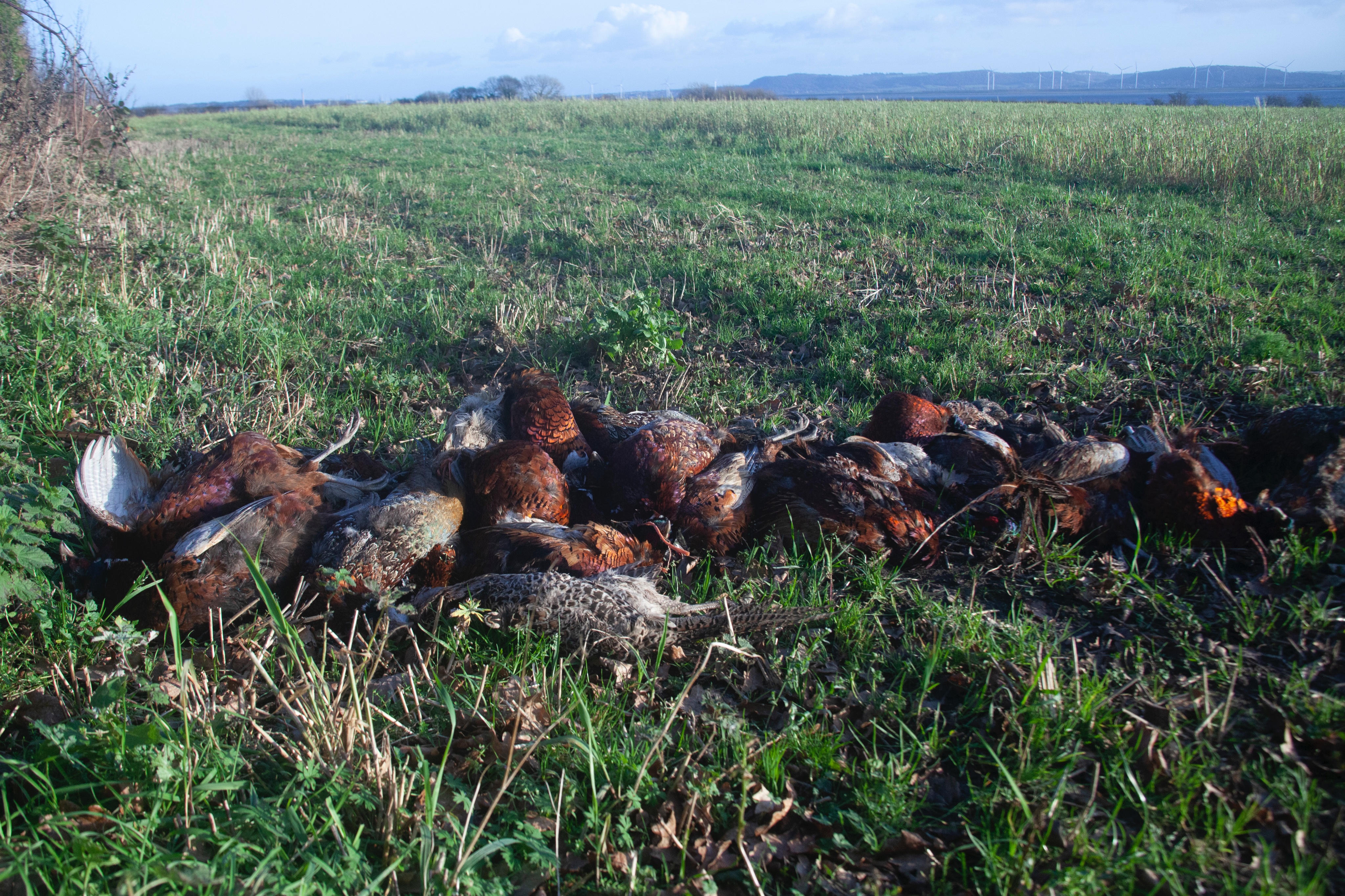
Yesterday this photograph of shot and dumped pheasants in a field near Oglet, Liverpool, was posted on social media by the Hunt Saboteurs:

This obscene behaviour will continue to receive attention on this blog for as long as the gamebird shooting industry demands licences to kill protected birds of prey for the purpose of ‘saving’ gamebirds.

Trial due to start for gamekeeper accused of killing buzzards

The trial of a gamekeeper accused of killing buzzards is due to begin this week almost a year to the day of the alleged offences.

On 12th January 2021 Nottinghamshire Police, working in partnership with the RSPB Investigations Team, attended a location in the Kneeton area following reports of concern (see here). A gamekeeper was later arrested and charged with the alleged killing of buzzards (here).

[Police attending the scene of a crow cage trap in January 2021. Photo via Nottingham Police]

The gamekeeper appeared in court in August and entered a plea of not guilty (see here) so a trial date was set for January 2022.

The trial is due to begin on Thurs 6th January 2022.

This is the 4th gamekeeper to be brought before the courts since November 2021 – the three others were all convicted of various offences including gamekeeper Shane Leech (33) in Suffolk (here), gamekeeper Peter Givens (53) in the Scottish Borders (here) and gamekeeper Hilton Prest (58) in Cheshire (here).

Please note, as this is a live case no further detail will be provided here until the case has concluded or there is official commentary from the court reporter. Comments on this particular blog also won’t be accepted until the case concludes so as not to prejudice proceedings. Thanks for your understanding.

DEFRA confuses wildlife with livestock in latest iteration of General Licence

DEFRA has published its latest General Licences which permit the killing of some bird species for some approved purposes, such as protecting crops, protecting livestock, for public health and for nature conservation.

This time the General Licences (for England only) have been extended to two years instead of one, and DEFRA has applied some dodgy licence conditions that allow the killing of some wild, native bird species in order to protect gamebirds (non-native pheasants and red-legged partridge, of which approx 61 million are released into the countryside every year to be shot). DEFRA reckons that these gamebirds can be classed as ‘livestock’ at certain times (when it suits the shooting industry) and as ‘wildlife’ at other times (also when it suits the shooting industry).

Conservation campaign group Wild Justice has been at the forefront of challenging the lawfulness of General Licences across the UK for the last two years with some success. Today they’ve published a blog (here) about DEFRA’s latest General Licences and Wild Justice’s intention to take legal advice, again, on whether DEFRA’s definition of gamebirds as livestock/wildlife is lawful.

Wild Justice has also produced this helpful flowchart:

Wild Justice is a not-for-profit company and its three Directors (Chris Packham, Mark Avery, Ruth Tingay) work voluntarily to take legal cases and advocate for a better deal for wildlife. If you’d like to make a donation to support their work please click here. If you’d like to receive news directly from Wild Justice please sign up for their free e-newsletter here.

60 hen harriers confirmed illegally killed or ‘missing’ since 2018, most of them on or close to UK grouse moors

For anyone who still wants to pretend that the grouse shooting industry isn’t responsible for the systematic extermination of hen harriers on grouse moors across the UK, here’s the latest catalogue of crime that suggests otherwise.

[This male hen harrier died in 2019 after his leg was almost severed in an illegally set trap that had been placed next to his nest on a Scottish grouse moor (see here). Photo by Ruth Tingay]

This is the blog I now publish after every reported killing or suspicious disappearance.

They disappear in the same way political dissidents in authoritarian dictatorships have disappeared” (Stephen Barlow, 22 January 2021).

Today the list has been updated to include the most recently reported victims, three young hen harriers whose satellite tags inexplicably stopped transmitting and whose corpses vanished in to thin air in July, August and September 2021 (see here).

The disgraceful national catalogue of illegally killed and ‘missing’ hen harriers will continue to grow – I know of at least one more on-going police investigation which has yet to be publicised.

I’ve been compiling this list only since 2018 because that is the year that the grouse shooting industry ‘leaders’ would have us believe that the criminal persecution of hen harriers had stopped and that these birds were being welcomed back on to the UK’s grouse moors (see here).

This assertion was made shortly before the publication of a devastating new scientific paper that demonstrated that 72% of satellite-tagged hen harriers were confirmed or considered likely to have been illegally killed, and this was ten times more likely to occur over areas of land managed for grouse shooting relative to other land uses (see here).

2018 was also the year that Natural England issued itself with a licence to begin a hen harrier brood meddling trial on grouse moors in northern England. For new blog readers, hen harrier brood meddling is a conservation sham sanctioned by DEFRA as part of its ludicrous ‘Hen Harrier Action Plan‘ and carried out by Natural England (NE), in cahoots with the very industry responsible for the species’ catastrophic decline in England. For more background see here.

Brood meddling has been described as a sort of ‘gentleman’s agreement’ by commentator Stephen Welch:

I don’t get it, I thought the idea of that scheme was some kind of trade off – a gentleman’s agreement that the birds would be left in peace if they were moved from grouse moors at a certain density. It seems that one party is not keeping their side of the bargain“.

With at least 60 hen harriers gone since 2018, I think it’s fair to say that the grouse shooting industry is simply taking the piss. Meanwhile, Natural England pretends that ‘partnership working’ is the way to go.

‘Partnership working’ appears to include authorising the removal of hen harrier chicks from a grouse moor already under investigation by the police for suspected raptor persecution (here) and accepting a £10K bung from representatives of the grouse shooting industry that prevents Natural England from criticising them or the sham brood meddling trial (see here).

[Cartoon by Gill Lewis]

So here’s the latest gruesome list. Note that the majority of these birds (but not all) were fitted with satellite tags. How many more [untagged] harriers have been killed?

February 2018: Hen harrier Saorsa ‘disappeared’ in the Angus Glens in Scotland (here). The Scottish Gamekeepers Association later published wholly inaccurate information claiming the bird had been re-sighted. The RSPB dismissed this as “completely false” (here).

5 February 2018: Hen harrier Marc ‘disappeared’ on a grouse moor in Durham (here)

9 February 2018: Hen harrier Aalin ‘disappeared’ on a grouse moor in Wales (here)

March 2018: Hen harrier Blue ‘disappeared’ in the Lake District National Park (here)

March 2018: Hen harrier Finn ‘disappeared’ near Moffat in Scotland (here)

18 April 2018: Hen harrier Lia ‘disappeared’ in Wales and her corpse was retrieved in a field in May 2018. Cause of death was unconfirmed but police treating death as suspicious (here)

8 August 2018: Hen harrier Hilma ‘disappeared’ on a grouse moor in Northumberland (here).

16 August 2018: Hen harrier Athena ‘disappeared’ on a grouse moor in Scotland (here)

26 August 2018: Hen Harrier Octavia ‘disappeared’ on a grouse moor in the Peak District National Park (here)

29 August 2018: Hen harrier Margot ‘disappeared’ on a grouse moor in Scotland (here)

29 August 2018: Hen Harrier Heulwen ‘disappeared’ on a grouse moor in Wales (here)

3 September 2018: Hen harrier Stelmaria ‘disappeared’ on a grouse moor in Scotland (here)

24 September 2018: Hen harrier Heather ‘disappeared’ on a grouse moor in Scotland (here)

2 October 2018: Hen harrier Mabel ‘disappeared’ on a grouse moor on the edge of the Yorkshire Dales National Park (here)

3 October 2018: Hen Harrier Thor ‘disappeared’ next to a grouse moor in Bowland, Lanacashire (here)

23 October 2018: Hen harrier Tom ‘disappeared’ in South Wales (here)

26 October 2018: Hen harrier Arthur ‘disappeared’ on a grouse moor in the North York Moors National Park (here)

1 November 2018: Hen harrier Barney ‘disappeared’ on Bodmin Moor (here)

10 November 2018: Hen harrier Rannoch ‘disappeared’ on a grouse moor in Scotland (here). Her corpse was found nearby in May 2019 – she’d been killed in an illegally-set spring trap (here).

14 November 2018: Hen harrier River ‘disappeared’ on a grouse moor in the Nidderdale AONB (here). Her corpse was found nearby in April 2019 – she’d been illegally shot (here).

16 January 2019: Hen harrier Vulcan ‘disappeared’ in Wiltshire close to Natural England’s proposed reintroduction site (here)

7 February 2019: Hen harrier Skylar ‘disappeared’ next to a grouse moor in South Lanarkshire (here)

22 April 2019: Hen harrier Marci ‘disappeared’ on a grouse moor in the Cairngorms National Park (here)

26 April 2019: Hen harrier Rain ‘disappeared’ on a grouse moor in Nairnshire (here)

11 May 2019: An untagged male hen harrier was caught in an illegally-set trap next to his nest on a grouse moor in South Lanarkshire. He didn’t survive (here)

7 June 2019: An untagged hen harrier was found dead on a grouse moor in Scotland. A post mortem stated the bird had died as a result of ‘penetrating trauma’ injuries and that this bird had previously been shot (here)

5 September 2019: Wildland Hen Harrier 1 ‘disappeared’ on a grouse moor nr Dalnaspidal on the edge of the Cairngorms National Park (here)

11 September 2019: Hen harrier Romario ‘disappeared’ on a grouse moor in the Cairngorms National Park (here)

14 September 2019: Hen harrier (Brood meddled in 2019, #183704) ‘disappeared’ in North Pennines (here)

23 September 2019: Hen harrier (Brood meddled in 2019, #55149) ‘disappeared’ in North Pennines (here)

24 September 2019: Wildland Hen Harrier 2 ‘disappeared’ on a grouse moor at Invercauld in the Cairngorms National Park (here)

24 September 2019: Hen harrier Bronwyn ‘disappeared’ near a grouse moor in North Wales (here)

10 October 2019: Hen harrier Ada ‘disappeared’ on a grouse moor in the North Pennines AONB (here)

12 October 2019: Hen harrier Thistle ‘disappeared’ on a grouse moor in Sutherland (here)

18 October 2019: Member of the public reports the witnessed shooting of an untagged male hen harrier on White Syke Hill in North Yorkshire (here)

November 2019: Hen harrier Mary found illegally poisoned on a pheasant shoot in Ireland (here)

January 2020: Members of the public report the witnessed shooting of a male hen harrier on Threshfield Moor in the Yorkshire Dales National Park (here)

23 March 2020: Hen harrier Rosie ‘disappeared’ at an undisclosed roost site in Northumberland (here)

1 April 2020: Hen harrier (Brood meddled in 2019, #183703) ‘disappeared’ in unnamed location, tag intermittent (here)

5 April 2020: Hen harrier Hoolie ‘disappeared’ on a grouse moor in the Cairngorms National Park (here)

8 April 2020: Hen harrier Marlin ‘disappeared’ on a grouse moor in the Cairngorms National Park (here)

19 May 2020: Hen harrier Fingal ‘disappeared’ on a grouse moor in the Lowther Hills, Scotland (here)

21 May 2020: Hen harrier (Brood meddled in 2019, #183701) ‘disappeared’ on a grouse moor in Cumbria shortly after returning from wintering in France (here)

27 May 2020: Hen harrier Silver ‘disappeared’ on a grouse moor on Leadhills Estate, Scotland (here)

day/month unknown: Unnamed male hen harrier breeding on RSPB Geltsdale Reserve, Cumbria ‘disappeared’ while away hunting (here)

9 July 2020: Unnamed female hen harrier (#201118) ‘disappeared’ from an undisclosed site in Northumberland (here).

25 July 2020: Hen harrier Harriet ‘disappeared’ on a grouse moor in the Yorkshire Dales National Park (here)

14 August 2020: Hen harrier Solo ‘disappeared’ in confidential nest area in Lancashire (here)

7 September 2020: Hen harrier Dryad ‘disappeared’ on a grouse moor in the Yorkshire Dales National Park (here)

16 September 2020: Hen harrier Fortune ‘disappeared’ from an undisclosed roost site in Northumberland (here)

19 September 2020: Hen harrier Harold ‘disappeared’ on a grouse moor in the Yorkshire Dales National Park (here)

20 September 2020: Hen harrier (Brood meddled in 2020, #55152) ‘disappeared’ next to a grouse moor in North Yorkshire (here)

24 February 2021: Hen harrier Tarras ‘disappeared’ next to a grouse moor in Northumberland (here)

12th April 2021: Hen harrier Yarrow ‘disappeared’ near Stockton, County Durham (here)

18 May 2021: Adult male hen harrier ‘disappeared’ from its breeding attempt on RSPB Geltsdale Reserve, Cumbria whilst away hunting (here)

18 May 2021: Another adult male hen harrier ‘disappeared’ from its breeding attempt on RSPB Geltsdale Reserve, Cumbria whilst away hunting (here)

24 July 2021: Hen harrier Asta ‘disappeared’ at a ‘confidential site’ in the North Pennines (here)

14th August 2021: Hen harrier Josephine ‘disappeared’ at a ‘confidential site’ in Northumberland (here)

17 September 2021: Hen harrier Reiver ‘disappeared’ in a grouse moor dominated region of Northumberland (here)

24 September 2021: Hen harrier (Brood meddled in 2021, R2-F-1-21) ‘disappeared’ in Northumberland (here)

To be continued……..