Essex Police & RSPB investigate death of red kite found in suspicious circumstances

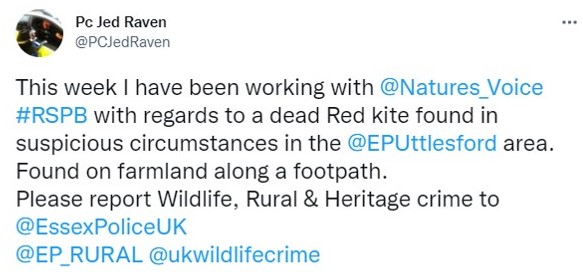
Essex Police is working with the RSPB to investigate the death of a red kite found in suspicious circumstances in the Uttlesford District.

Police wildlife crime officer Jed Raven posted the following photograph and tweet on Twitter this morning:

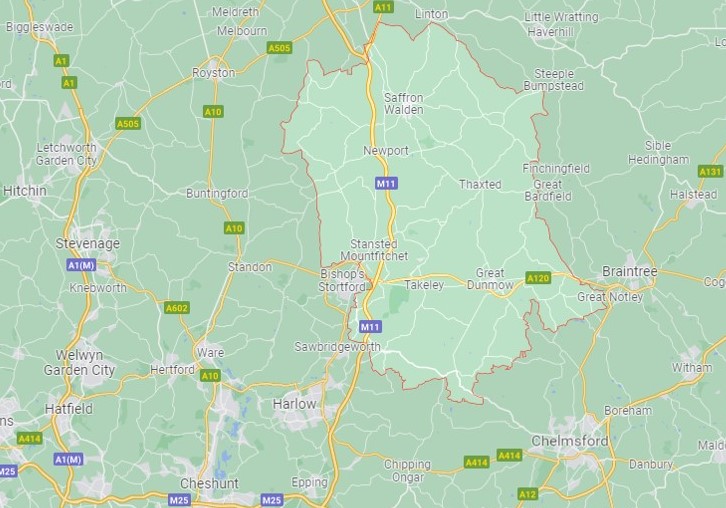
This is a map showing the Uttlesford district in Essex:

There aren’t any further details at the moment.

It’s good to see yet another example of partnership working between the RSPB and the police. What was it that Lord Masham, the poorly-informed Chair of the Moorland Association said a couple of weeks ago?

Ah yes, that the RSPB ‘seem to avoid the police and the authorities and the law‘ (see here).

Had he been paying attention he’d have known that the RSPB has been working with police forces across the UK in a series of multi-agency raids relating to suspected raptor killing (e.g. see here).

It’s not really that Lord Masham is poorly-informed. I don’t think he is at all. I think rather his statement was a deliberate attempt to try and discredit the reputation of the RSPB and thus undermine the credibility of the RSPB’s latest damning Birdcrime report, which showed that 2020 was the ‘worst year on record’ for bird of prey persecution in the UK, with more than half of the crimes linked to land managed for game bird shooting.

If a post-mortem reveals that this latest red kite has been illegally killed, let’s hope the joint Police & RSPB investigation leads to a heightened level of public awareness in the local area, if not a prosecution.

More pheasants shot & dumped – Leicestershire this time

It’s that time of year again, when pheasants and red-legged partridges have been released into the countryside in their millions (approx 60 million of these non-native species, in fact), they’re then shot for a bit of a laugh and then some of them are simply dumped.

Unfortunately for the game shooting industry, this is an ongoing, criminal and widespread problem, much like illegal raptor persecution is, and it’s drawing even more attention to an industry already under intense pressure to clean up its act.

Previous examples include dumped gamebirds in Cheshire, Scottish borders (here), Norfolk (here), Perthshire (here), Berkshire (here), North York Moors National Park (here) and some more in North York Moors National Park (here) and even more in North Yorkshire (here), Co. Derry (here), West Yorkshire (here), and again in West Yorkshire (here), N Wales (here), mid-Wales (here), Leicestershire (here), Lincolnshire (here), Somerset (here), Derbyshire’s Peak District National Park (here) and Suffolk (here).

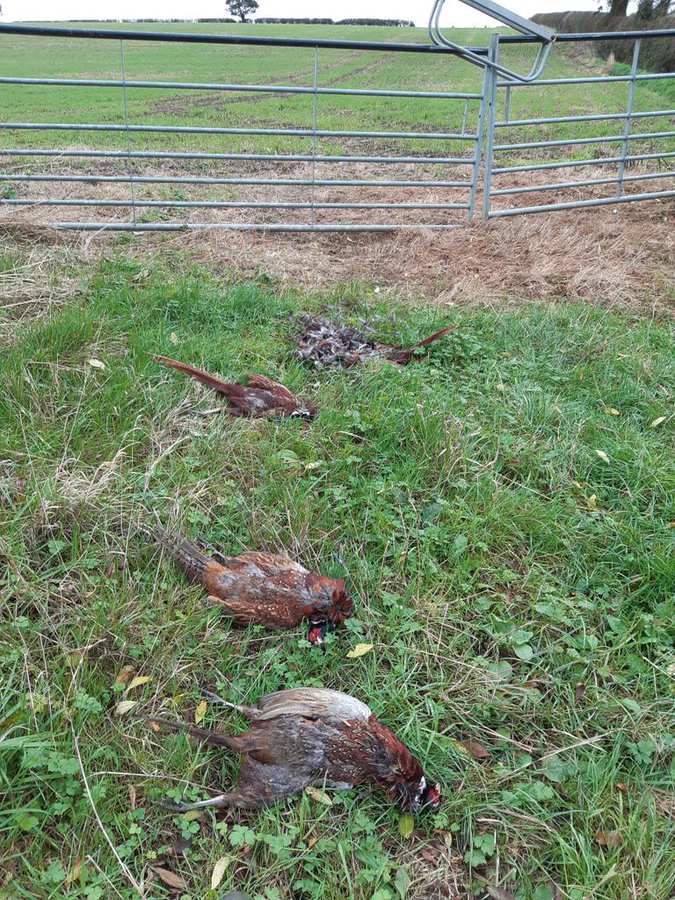
Yesterday this photograph of shot & dumped pheasants at the edge of a field was published on Twitter by Toby Carter (@_TCartz):

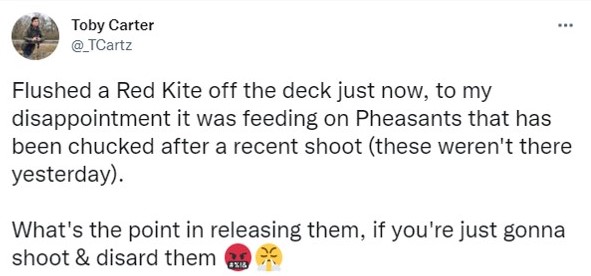
Some of the comments in response to Toby’s tweet have been quite interesting.

Some people believe that lead ammunition was banned years ago (at the same time as lead was banned from petrol, paint, pipes etc, because lead is a poison) and are amazed that it’s still legally in use. Blimey, imagine what they’d think if they knew that there aren’t any Government restrictions on the amount of lead that they could be exposed to if they ate a shot gamebird, for example one sold by Sainsbury’s, because unlike all other types of meat, gamebirds are exempt from lead testing, even though these birds have all been killed with lead ammunition! Bonkers, eh? It’s almost as though the lawmakers had a vested interest when they passed that bit of legislation, eh??

Others have been unaware of the threat of lead poisoning to the red kite seen feeding on one of the pheasants. Others have suggested the pheasants may be being used as baits to poison raptors. Some people can’t believe that birds of prey are still poisoned by gamekeepers given that these birds have been protected in UK law for almost 70 years.

One thing is clear. Shooting and then dumping gamebirds is a brilliant way for the game-shooting industry to draw the public’s attention to its many, many malpractices. Keep sharing on social media folks, we’re reaching new people every day.

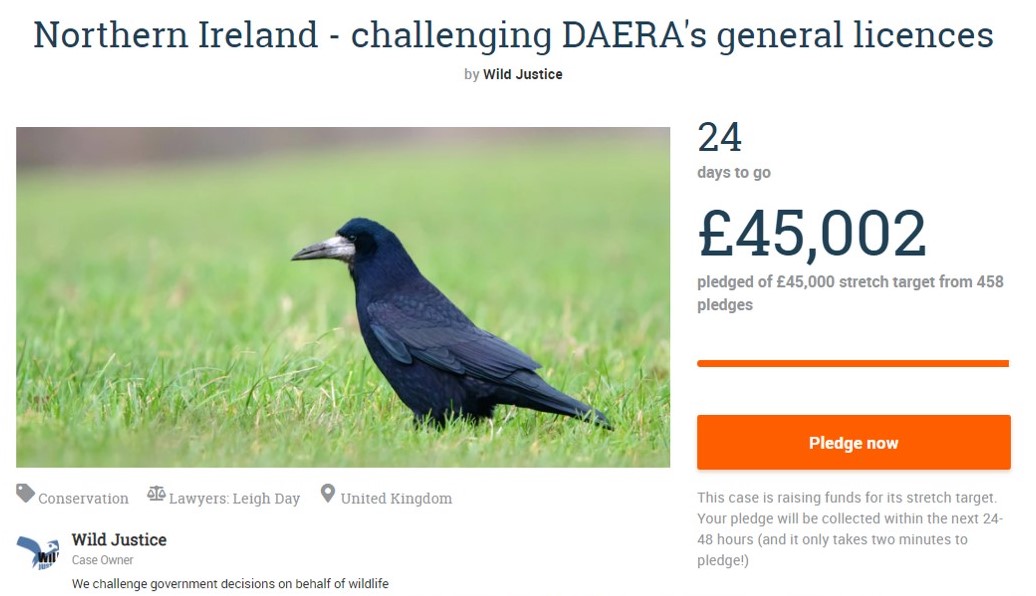
Wild Justice secures funds for legal challenge of Northern Ireland’s general licences

Last week conservation campaign group Wild Justice launched a crowdfunder appeal to raise funds for a legal challenge against what the group says are unscientific and unlawful General Licences in Northern Ireland (see here).

Yesterday evening the crowdfunder reached its target of £45,000 – thank you to the blog readers who supported this appeal.

Wild Justice has sent what’s called a Pre-action Protocol (PaP) letter to the Northern Ireland Executive’s Department of Agriculture, Environment and Rural Affairs (DAERA), which is responsible for issuing General Licences.

The PaP letter is a formal legal document explaining the six grounds on which Wild Justice is challenging the General Licences and it also documents all the earlier correspondence between Wild Justice and DAERA about these unlawful licences.

A copy of the PaP letter can be read here.

DAERA is required to respond to the PaP letter by 11 November 2021.

For more updates on this case and other Wild Justice activities, you may like to join 50,000 others and sign up for the group’s free e-newsletter HERE

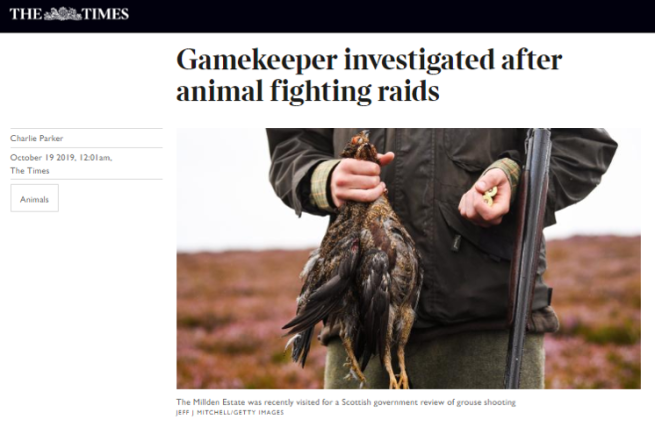
New trial date for Millden Estate gamekeeper accused of animal fighting offences

A new trial date has been set for a gamekeeper from the Angus Glens who is accused of multiple offences relating to alleged animal fighting and animal suffering.

Property on the Millden Estate was searched under warrant in October 2019 in a joint SSPCA and Police Scotland investigation (see here), as well as a simultaneous search at another property in Aberdeenshire (more on that fascinating case once the Millden case has finished).

A number of dogs were seized during the raid and a Millden Estate spokesperson later stated the gamekeeper had been suspended pending further investigation (see here and here).

The gamekeeper was charged with animal cruelty offences and was due in court in December last year but the case was continued to May 2021 with a trial date set for June 2021 (see here).

[Headline from The Times in October 2019]

The trial date in June 2021 came and went (see here) and was further delayed. The new trial date is 3rd December 2021.

A number of dead buzzards were also reportedly found during the raid at Millden and I am currently waiting for Police Scotland to provide an update on that investigation. (The SSPCA is dealing with the alleged animal fighting offences, Police Scotland is dealing with the dead raptors).

As there are still live court proceedings, blog comments are restricted until the case has concluded. Thanks.

Gamekeeper due in court next week accused of poisoning a buzzard

A gamekeeper is due in court on Monday 8th November accused of poisoning a buzzard.

He has already pleaded guilty to a number of firearms offences and a number of pesticide storage offences.

At an earlier hearing in August, the gamekeeper pleaded not guilty to poisoning the buzzard so the case was sent for trial.

This case stems from a multi-agency raid, led by Suffolk Police, at a property last January (see here).

[Police officers seized a number of firearms during the raid. Photo via Suffolk Police]

Please note, as this is a live case no further detail will be provided here until the case has concluded or there is official commentary from the court. Comments on this particular blog also won’t be accepted until the case concludes so as not to prejudice proceedings. Thanks for your understanding.

UPDATE 9th November 2021: Gamekeeper convicted for pesticide and firearms offences but buzzard-poisoning charge is dropped (here)

Yorkshire Dales National Park Authority reacts to 2020 being ‘worst year on record’ for raptor persecution crimes

Last week the RSPB published its latest annual Birdcrime report which showed that 2020 was the ‘worst year on record’ for confirmed crimes against birds of prey in the UK (see here).

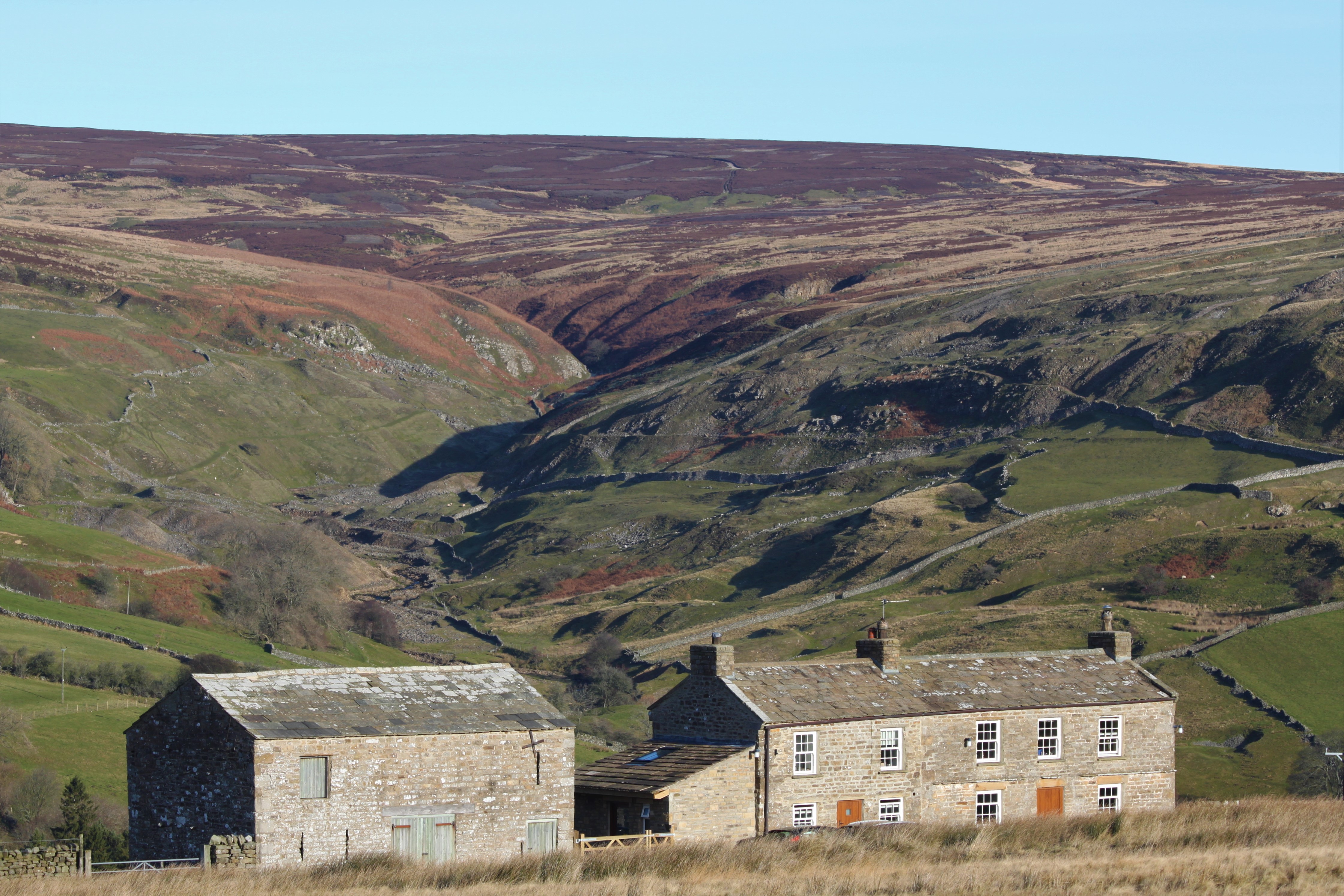
For the seventh year in a row, North Yorkshire had more confirmed raptor persecution crimes than any other county in the UK. Twenty-six of the 137 confirmed UK incidents occurred in North Yorkshire. Of these two thirds were directly related to grouse shooting and a further four incidents to other types of shooting. Victims in the county included 16 buzzards, two peregrine falcons, two red kites and one goshawk.

[Grouse moor landscape in the Yorkshire Dales National Park. Photo by Ruth Tingay]

In response to the damning Birdcrime report, the Yorkshire Dales National Park Authority has issued this pretty unequivocal statement:

YORKSHIRE DALES NATIONAL PARK AUTHORITY REACTION TO LATEST RSPB BIRDCRIME REPORT

Commenting on the RSPB Birdcrime Report 2020, Yorkshire Dales National Park Authority Chief Executive David Butterworth said:

“This report makes grim reading for all landscape authorities, landowners, managers and other partners who are working hard to call out and tackle illegal raptor persecution, and it’s embarrassing and humiliating to see North Yorkshire yet again topping the league table with the highest number of confirmed incidents.

“As we’ve said before, the continuing issue of bird of prey persecution in North Yorkshire demands maximum exposure, as do the activities of those who take part in this criminality. People need to know what is happening here and the devastating impact this is having on our protected species. This report lays that bare.

”The Yorkshire Dales National Park Authority condemns raptor persecution in the strongest possible terms and, as highlighted in this report, we will continue to work closely with partners and others to stamp out this crime once and for all.

“I would appeal to anyone, local or visitor, who witnesses any suspicious activity while they’re out and about in the countryside, or anyone who is made aware of it through their networks, to contact the Police”.

The Yorkshire Dales National Park Management Plan objective C5 on illegal persecution of raptors can be viewed here.

For concerns about a possible wildlife crime, you should call 101. If you witness a suspected wildlife crime in action, call 999 immediately and ask for the Police. Finally, you can speak in confidence about raptor persecution directly with the RSPB on 0300 9990101

ENDS

Langholm community launches bid to double size of its crowdfunded nature reserve

Last year the community of Langholm in the Scottish Borders successfully raised £3.8 million to buy a knackered old grouse moor from the Duke of Buccleugh and transform it into a vast new nature reserve for the benefit of wildlife and the local community (see here).

Many blog readers supported and contributed to this fundraising challenge (thank you) and helped create what is now called the Tarras Valley Nature Reserve.

This year the community is fundraising once again, to ‘finish what we started’, and has launched stage two of the biggest community buyout scheme in south Scotland to buy the remainder of Langholm Moor which would effectively double the size of the Tarras Valley Nature Reserve.

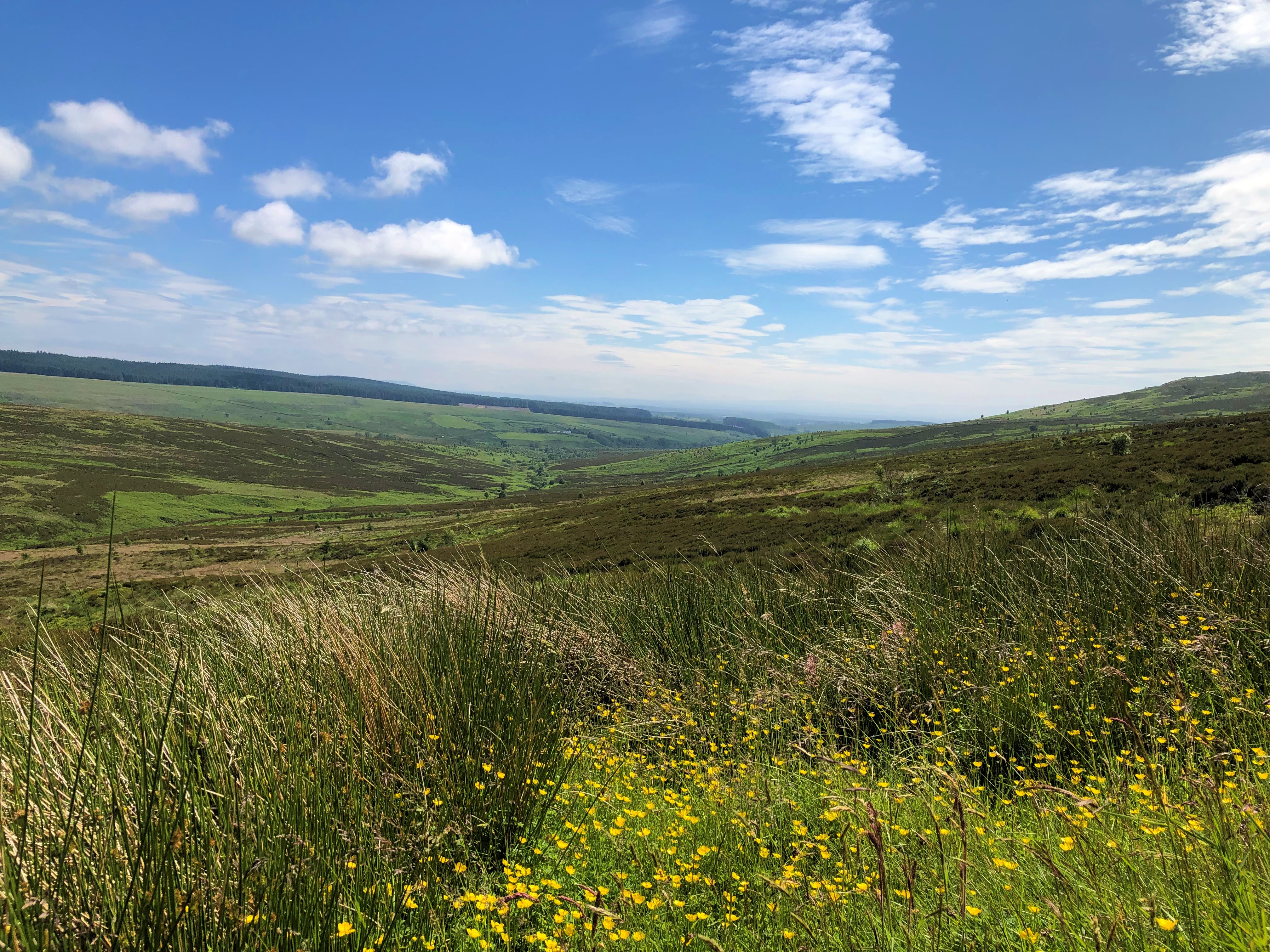
[Part of the Tarras Valley Nature Reserve photographed in June this year. Photo by Ruth Tingay]

The Langholm Initiative charity issued this press release last week:

Second phase of South of Scotland’s biggest community buyout launches to double size of vast new nature reserve

A community in Dumfries and Galloway is setting out to raise £2.2 million to double the size of a vast new nature reserve, in stage two of the South of Scotland’s biggest ever community land buyout. 

The Langholm Initiative charity aims to buy 5,300 acres of Langholm Moor and three residential properties from Buccleuch, and so expand the Tarras Valley Nature Reserve to 10,500 acres.

Success would boost plans for community regeneration, including nature-based tourism opportunities, and for tackling the nature and climate emergencies.

“We’re aiming to repeat the impossible and open a new chapter in this inspiring story of hope and community by doubling the size of Tarras Valley Nature Reserve – and so doubling the benefits for people, nature and climate,” said Jenny Barlow, the reserve’s Estate Manager.

The nature reserve was created earlier this year after the community’s historic purchase of a similar-sized swathe of the wildlife-rich and culturally important land from Buccleuch, in a fundraising drive described as an “impossible dream”.

There is now a race against time to secure the additional 5,300 acres. Buccleuch’s offer of keeping the land off the open market is time limited, and the community needs to raise the funds by next May.

A public crowdfunder launched today on Go Fund Me at bit.ly/LangholmMoorAppeal aims to raise at least £150,000 of the £2.2m needed to bring the land into community ownership.

The crowdfunder is being accompanied by applications to major grant-funding bodies. The ambitious plan has already been given a huge kick-start by a generous £500,000 pledge from a private donor. 

“We need all the help we can get to achieve a big win for wildlife, climate action and community regeneration – and a legacy for future generations. Scotland is one of the world’s most nature-depleted countries and it desperately needs projects like this,” said Jenny Barlow.

“But the pressure is on. This is the last opportunity to bring this land into community ownership. If the land goes onto the open market, its price will probably surge beyond our reach – with the risk it will be bought by corporate investment firms, which are currently banking large amounts of land in the area.”

The first phase of the community buyout in 2021 ended in success following one of the most ambitious community fundraising campaigns ever seen, although at times it seemed seriously at risk. 

Thanks to the support of thousands of people worldwide, the Langholm Initiative and Buccleuch reached a landmark agreement of £3.8 million for 5,200 acres of land and six residential properties last October, with the funding target only reached in the final 48 hours. 

In March this year, the community took ownership of the land for the first time in its history. Work began immediately on creating the Tarras Valley Nature Reserve.

Benny Higgins, Buccleuch’s Executive Chairman, said: “We were delighted that The Langholm Initiative was able to purchase the initial area from Buccleuch last year, having shown such tenacity and vision. Having reached agreement on timeline and value, we wish them every success with this next exciting phase, both for the initiative and the community.”

Globally important peatlands and ancient woods are being restored, native woodlands established, and a haven created for wildlife. The moor is home to wildlife such as black grouse, short-eared owls and merlin, and is a stronghold for hen harriers – the most persecuted bird of prey in the UK.

Plans to create social and economic benefits include development of appropriate renewable energy and responsible nature-based tourism.

Langholm was once a thriving textile centre, but this industry has declined in recent years. Local people have a deep connection to the land concerned, which had never been sold before the first phase of the community buyout.

Leading charities that have supported the buyout include Borders Forest Trust, John Muir Trust, Rewilding Britain, RSPB Scotland, Scottish Wildlife Trust, Trees for Life, and the Woodland Trust.

A video about new appeal can be viewed on YouTube at bit.ly/LangholmVideo.

To support the new appeal, visit langholminitiative.org.uk.

ENDS

If you can support this crowdfunder, please click here. Thank you.