
Earlier this year I wrote two blogs as part of a series on the harassment and abuse hurled by gamekeepers at those of us who dare challenge and question the wildlife crime and environmental damage associated with grouse moor management (see here and here but be warned, it’s very nasty, offensive and unpleasant).
What follows is the third instalment in the series, this time written as a guest blog by Bob Berzins (@BerzinsBob) who lives in Sheffield and through fell running has come to know the nearby Peak District grouse moors only too well.
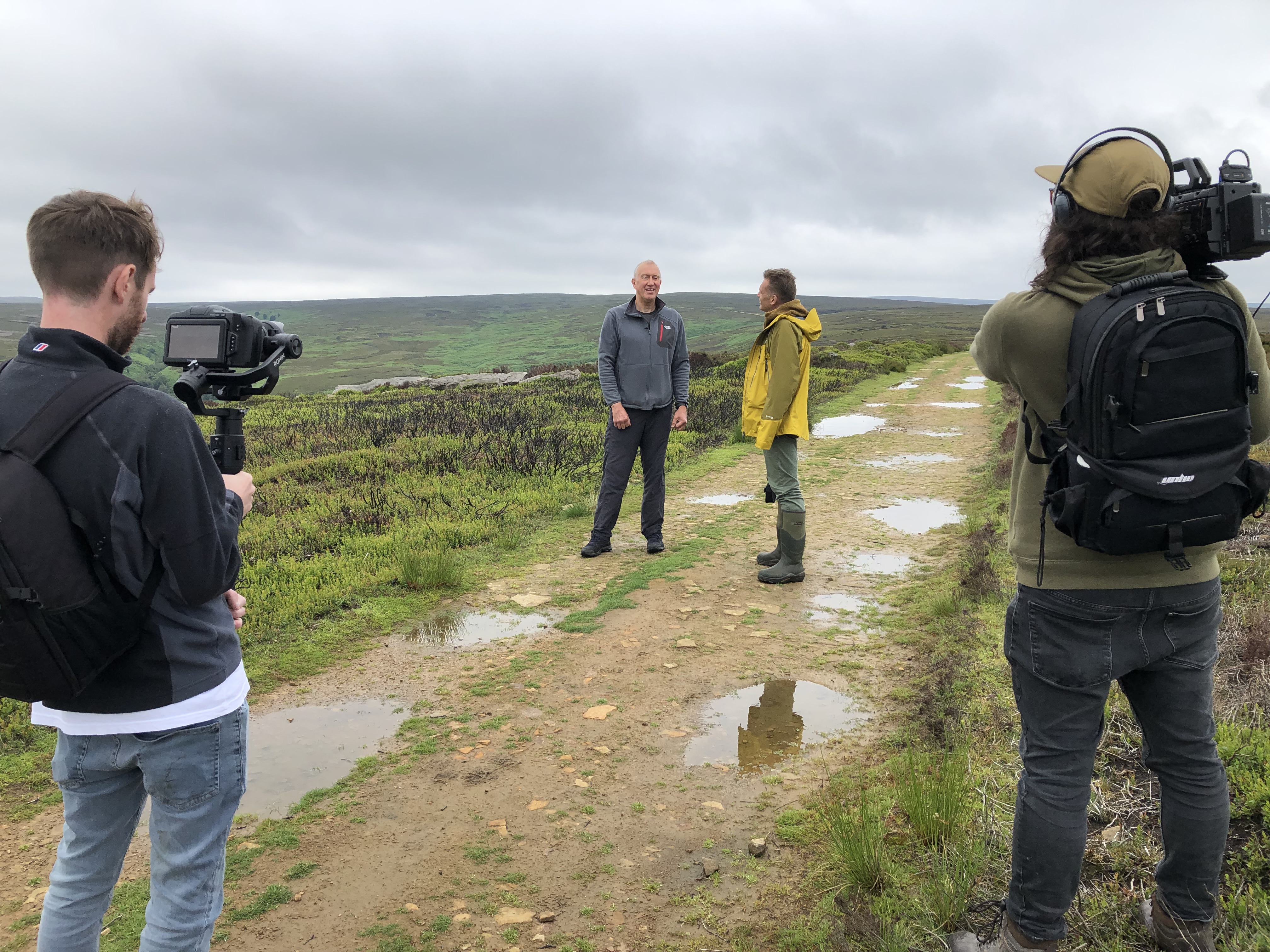
[Bob being interviewed by Chris Packham. Photo by Ruth Tingay]
Organised crime, harassment and intimidation – another day on the grouse moors
Guest blog by Bob Berzins
In December 2020, along with around 20 other people I featured in what can only be described as an online ‘Advent Calendar of Hate’ which was published by a group purporting to be a ‘grassroots moorland community’ in the north of England but who had been exposed as an astroturfing group set up by the grouse shooting industry, paying a London media agency to promote vicious, personal online attacks about anyone who had dared speak out against grouse shooting (e.g. see here).
My own profile is mainly around the Peak District-based Moorland Monitors which is an actual community, grassroots group that lawfully monitors and records what’s happening in the Pennine uplands.
In my case the abuse has continued since December 2020 in various forms, for several months.
Why the interest in me?
A consistent message from countryside interests is that local communities are 100% behind shooting. But that’s not the case at all and Moorland Monitors gives a voice to local people who are otherwise afraid to speak out on their own. There’s increasing interest from the media, local or national, to publish stories about the traps that are used, the wildlife that’s killed and also to touch on animal welfare issues. The audience here doesn’t know or care about “vermin” and they are horrified to see wildlife killed in this way. As this compassionate outlook gains traction, it exposes the lies that underpin the shooting industry.
Tapping out a message on social media isn’t really a crime is it?
Well, yes it can be. Following the Euros final, the hate spewn out on social media has been appalling. Facebook’s definition of hate speech is broad and covers “violent or dehumanising speech, harmful stereotypes, statements of inferiority, expressions of contempt, disgust or dismissal, cursing and calls for exclusion or segregation.”
“Bob the nob”, “Please can you tell us where Bob lives”, “Looks as moronic as a few others I could mention” are just a few of the comments written about me on Facebook but the social media platform failed to delete anything after I complained.
We also have to look at the online articles which drove these comments (written by the same anonymous grouse shooting reps as the advent calendar of hate) and to consider if these constitute ‘incitement’ (to harass). Certainly the abuse started after the publication of their offensive commentaries. I’ve reported everything to the Police but they concluded that the abusive publications were within ‘Human Rights’.
Free speech is a cornerstone of our society but not if it incites hatred and violence.
Harassment escalates
The online abuse, with very obvious photos of me, soon led to the identification of my vehicle.
During lockdown earlier this year we were allowed to exercise locally with one other person. I arranged with 3 friends that we would arrive at different times on a local grouse moor, set off separately and do a timed run. This was as near as we could get to doing a race.
At the end of my run I saw 3 gamekeepers near my vehicle. I didn’t think anything of it.
However, the next day I was at home painting our kitchen and my wife answered the door to a police officer who was making allegations of damage to traps. I was called over and the first thing the officer said to me was that the farmer whose traps had been damaged wouldn’t pursue the case if I paid compensation.
My mind was racing and I could only imagine this was something to do with my run the day before, when I hadn’t seen any traps at all. I did manage to ask what evidence there was and the reply was there was no evidence apart from my car being spotted!
So I was being asked to pay compensation when there was no evidence that any traps had been damaged at all and no evidence that I’d been involved in any criminal damage. None of my friends, who had parked at the same place and who had run over the same area were contacted so it’s clear I was being targeted.
Police Professional Standards Part 1
I knew I hadn’t done anything wrong and it was obvious to me the allegation was a complete fabrication. So I complained to South Yorkshire Police Professional Standards, asking if officers had attended the scene of the alleged damage to gather evidence and requesting that the person who made the allegation be investigated for making a false report, which is the criminal offence of ‘wasting police time’ (knowingly making false reports to the police).
South Yorkshire Police have previously been involved in a similar incident of harassment and false reporting (see here) but don’t seem to have learnt anything from that.
The reply from South Yorkshire Police Professional Standards is sloppy, fails to answer my concerns and is a case study in obfuscation:
“I can see that we received a call from the victim who was put straight throught to the crime recording bureau who determine if there are relevant lines of enquiries and will attach an OIC (officer in charge), if this is the case and on this occasion Pc XXX was allocated.”
Did the alleged ‘victim’ (the farmer) dial 101 or phone an officer direct? The spelling mistake is theirs and indicative of an unprofessional response.
“It was Pc XXX who received a VRM and continued to investigate the allegations….. It was then that you also told Pc XXX that you used the vehicle and often visited the location where the victim had allegedly seen your car. As the victim was unable to provide evidence that would prove your car had been in the area where the damage had occurred and as you had provided reasonable excuse as for your whereabouts the investigation was filed as evidential differences.”
A VRM is a car registration (but that’s not explained). This is the only piece of “evidence” and it’s not actually evidence at all because the alleged ‘victim’ (the farmer) couldn’t show my vehicle was anywhere near where the alleged damage took place.
“Pc XXX states that he/she does not believe he/she investigated a false allegation”
But there’s no evidence of any damage and no evidence that I or my vehicle were near any alleged damage! My car registration appears to have been plucked out of thin air, but of course it wasn’t and the police made no reference to the earlier online abuse I’d logged with them which would have shown what this allegation was really about.
The reply from Professional Standards continued:
“I did also ask Pc XXX regarding your complaint that he/she suggested that you should pay an amount of money to a famer, Pc XXX states that he/she explained the possible outcomes of criminal damage investigations so when he/she explained a CJU10 process he/she would have used this as an example but did not accuse or request the complainant to do this. It was purely an explanation of how a CJU10 works.”
Any the wiser? Me neither. There was a presumption of guilt, no explanation of possible outcomes and I still don’t know what a CJU10 is.
Given this is a department that oversees the professionalism of a major police force, the detail here is appalling. But it’s important to consider the bigger picture as well. A police officer knocking on the door making accusations is intimidating without doubt. This police force is happy to do that on the basis of no evidence, so who made the report and what influence do they have?
Police Professional Standards part 2 – Not Again
A week after South Yorks Police knocked on my door I had a phone call from Derbyshire Police with a virtually identical allegation.
On the day another abusive article about me was published by the same astroturfing grouse shooting industry reps who’d published the advent calendar of hate, I was on a Derbyshire grouse moor recording environmental damage caused by quad bikes. I’d set off from a busy car park but mine was the last car remaining in the afternoon. The local gamekeeper appeared, there was an altercation and as a result I made a police report for threatening/intimidating behaviour.
The officer assigned to investigate this case later justified the gamekeeper’s abusive behaviour by telling me the gamekeeper “knew” I’d damaged his snares. And once again no evidence was provided that there were any snares at all, no evidence of any damage or how that damage had occurred. But the wildlife crime officer I spoke to was certain these “traps” had been damaged when I was on the moor. This case did seem different because the officer was part of a supposedly experienced, specialist team (Derbyshire Police’s rural crime team).
I asked Derbyshire Constabulary’s Professional Standards department to consider if there was bias and collusion in this officer’s investigation. Four months on my complaint hasn’t yet been answered.
Escalation to Criminal Damage
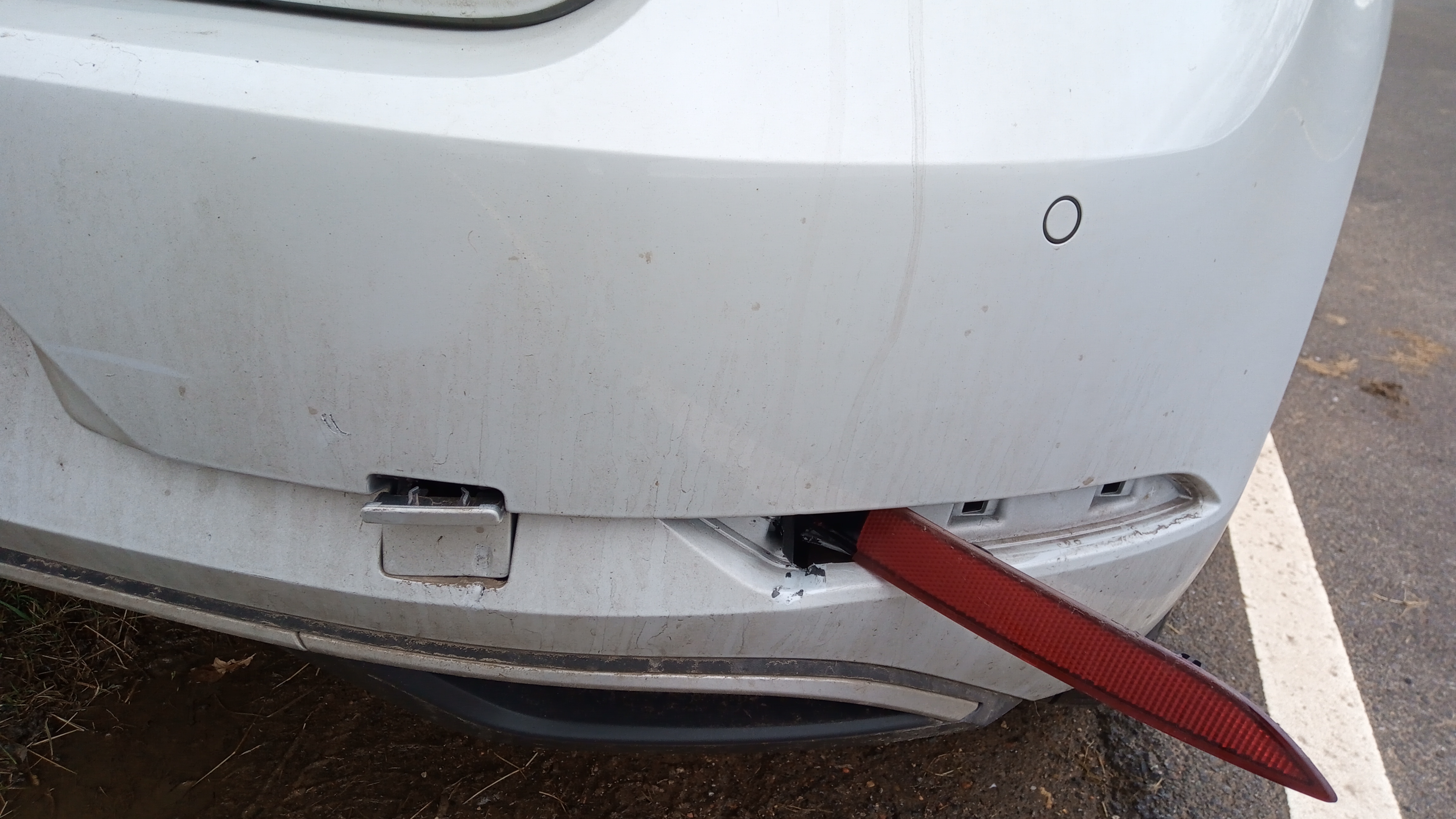
Despite these and other incidents I kept going out on the moors and a few weeks later discovered that someone had stuck a crowbar into the bumper of my vehicle, when it was parked next to a grouse moor.
The car dealer quoted £1200 for a repair – ironic because that will be more than the value of all the snares in the Peak District. I opted for a lesser repair and of course the police had no idea who was responsible.
[Criminal damage caused to Bob’s car when parked next to a Peak District grouse moor. Photo by Bob Berzins]
Policing priorities in the Peak District
Through Freedom of Information requests, I have a redacted copy of the minutes of a May 2019 meeting between Peak District police forces and the gamekeepers of Peak District Moorland Group.
Supposedly dealing with wildlife crime, from the minutes it’s obvious the priority in this meeting was trap tampering.
The minutes document proposals for a national database of trap damage and 360 degree surveillance cameras in car parks which would just happen to put every visitor on a police database. Of course there’s no mention of similar surveillance of vulnerable raptor nests.
The Moorland Monitors group was mentioned but the detail had been redacted. There was also mention of gamekeepers getting direct access to wildlife crime officers.
To me, it seems to be a short step to bypass any evidential-based procedure to targeting individuals because gamekeepers and police apparently “know” who is guilty.
A Criminal Network
It’s clear to me that the range and geographical spread of abusive incidents indicates a number of people are involved who are communicating and sharing information with the aim of harassment, intimidation and criminal damage.
That’s my definition of organised crime – a term often used to describe the widespread raptor persecution we all know about – and that crime has now escalated to targeting anyone who objects to the shooting industry.
ENDS




 Raptor Persecution UK