Police investigate as dead buzzard is found tied & hanging from a tree in Fife

This is a bit bizarre – there’s an article in today’s National about a police investigation, triggered by the discovery of a dead buzzard that had been tied to a tree and found hanging.

Police Scotland say that their enquiries show the buzzard had died of natural causes before being tied to the tree.

Here’s the article, written by Laura Webster:

POLICE have launched an investigation after a dead buzzard was discovered hanging from a tree.

According to investigating officers, the bird, found in Fife, died from natural causes before being strung up.

A member of the public spotted the buzzard close to the cycle path from Tayport to Newport on Monday.

Fife’s wildlife crimes liaison officer, Constable Ben Pacholek, said:

Our enquiries show that the buzzard died from natural causes before being tied to the tree. But this was a reckless and needless act, leaving a dead bird hanging in a public place that has caused distress within the local community.

I would urge members of the public to be respectful and considerate towards wildlife at all times. All wild birds are protected under the Wildlife and Countryside Act 1981.

If anyone knows anything about what happened or saw anything suspicious, then please contact us on 101.”

ENDS

Scottish Minister Fergus Ewing under fire for auctioning Holyrood tour for Scottish Gamekeepers’ fundraiser

Cabinet Secretary Fergus Ewing has been accused of breaching Parliamentary rules by ‘flogging’ access to Holyrood in a silent auction organised by the Scottish Gamekeepers Association (SGA).

Lot #59 in the SGA’s annual auction, donated by Fergus Ewing MSP, is squeezed in between a week’s holiday in a cottage in Strathbraan (a well-known raptor persecution hot-spot) and an offer of a smock and half a pig. Here’s what Fergus Ewing is offering (closing date 7th May 2021):

Amusingly, one of the people who has questioned whether the Minister’s actions are appropriate is Edward Mountain MSP, a Conservative candidate who will be challenging Fergus Ewing for the Inverness and Nairn constituency in the May election.

Along with Fergus Ewing, Ed Mountain is also a long-time supporter of the SGA, and is even a “proud” SGA member (see here).

It isn’t clear who went to the press about this (although as an SGA member, Ed Mountain would certainly have had access to the silent auction lots because the auction booklet was included in the mail out of the SGA’s most recent quarterly rag) but today the Scottish Daily Mail was running a story on it:

‘That tour has not taken place’, says the SNP spokesman. No, because the auction doesn’t close until 7th May!

To be honest, there are much bigger fish to fry than this but the reason I’m blogging about it is because the SGA has been wailing quite a lot recently about how it has been ‘overlooked’ by the Scottish Parliament. In my opinion this is completely untrue – the SGA has just as much access to politicians as any other organisation, illustrated quite well by the players in this latest tale.

I plan to blog a bit more about that shortly.

Peregrine shot & killed in North Wales

North Wales Police have published a tweet about a peregrine that was found dying on Tuesday lunchtime near the Osprey Centre at Porthmadog, North Wales.

It was taken to the RSPCA’s Stapeley Grange Wildlife Centre for a veterinary examination.

According to the Police, the vets said it had ‘probably been shot’ as there was an entry and exit wound. There are no further details.

Unfortunately this young peregrine died of its injuries.

If you have any information that could help this investigation, please contact North Wales Police and quote reference 21000222577.

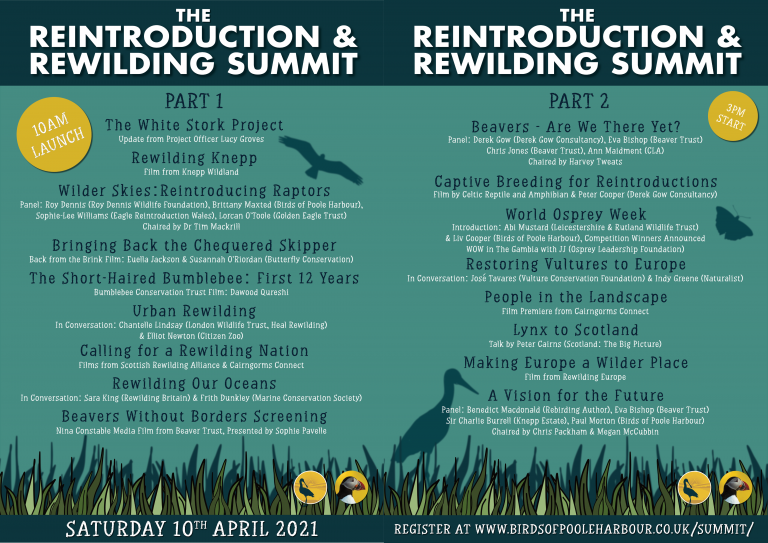
Reintroduction & Rewilding Summit – this Saturday

The exciting Reintroduction & Rewilding Summit takes place this Saturday (10th April), launching online from 10am.

Co-hosted by the Birds of Poole Harbour and the Self isolating Bird Club, the day-long event will be hosted by Chris Packham and Megan McCubbin with a wide variety of guests and speakers.

For more details and to register for this free event, please click here

It’s a packed programme and the schedule has now been released:

Horror for wildlife on a burnt Scottish grouse moor

The environmentally damaging consequences of setting fire to upland heather moorlands as part of the routine ‘management’ for grouse shooting are well documented, with some of these fires leading to increased carbon emissions, increased flood risk, increased air pollution and threats to other ecosystem services.

With the intensification of grouse moor management in some areas of Scotland comes an increase in the extent and intensity of rotational heather burning. These fires have even been lit on areas of deep peat (forbidden by the voluntary Muirburn Code, which many land managers seem to simply ignore) causing damage to protected blanket bog habitat – in fact 40% of the area of land burned for grouse moor management in Scotland is on deep peat (see here).

In November 2020, in response to the Werritty Review on grouse moor management, then Environment Minister Mairi Gougeon announced there would be a statutory ban on burning on peatland except under licence for strictly limited purposes such as habitat restoration. She also said that the Government would revisit the definition of ‘peatland’ and consider whether a tighter and stricter definition was required.

This was an excellent result and we are now all waiting to see the election results in May in the hope that the new Scottish Government can get on with these and other commitments it made, notably the introduction of a licensing scheme for grouse shooting.

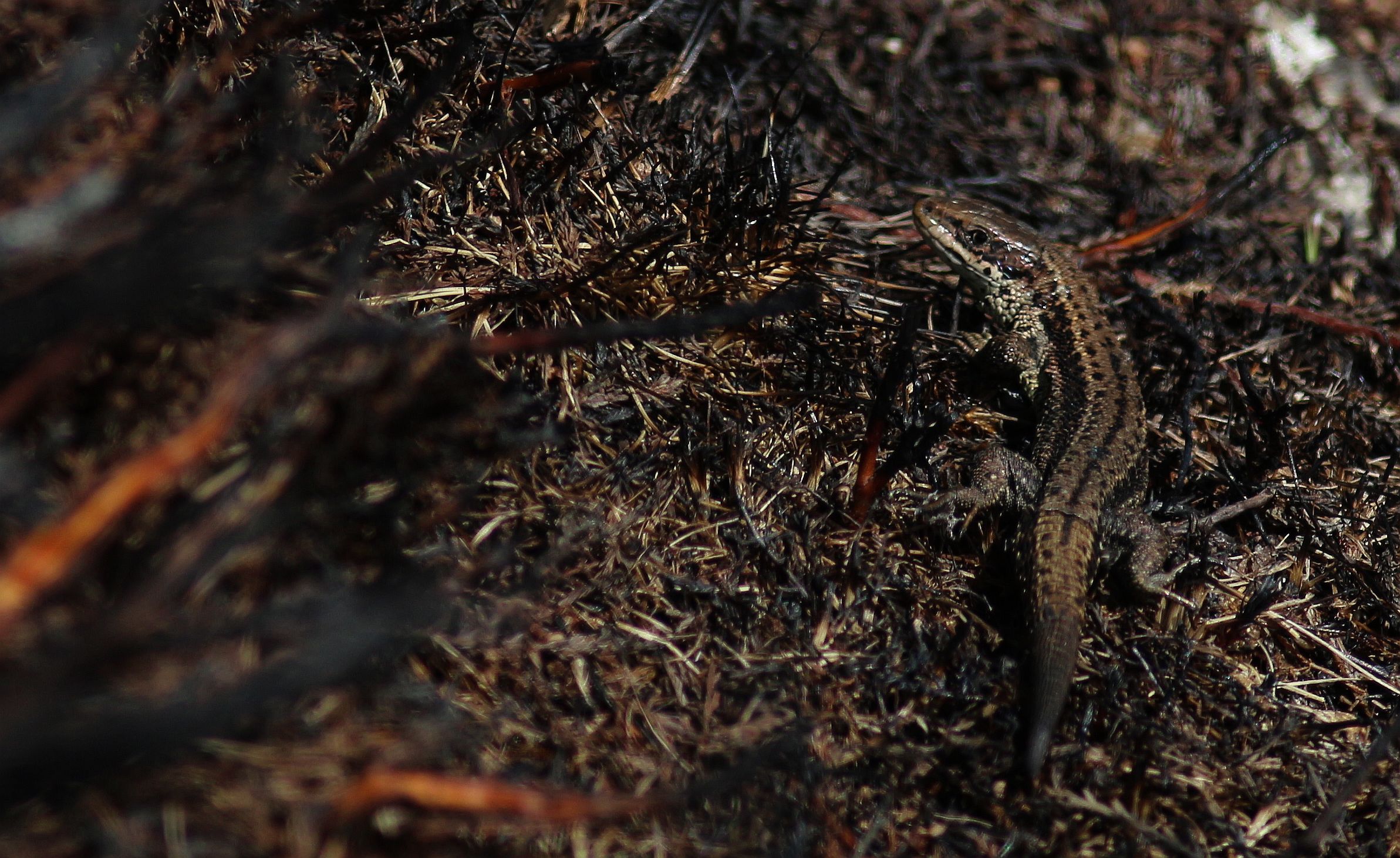
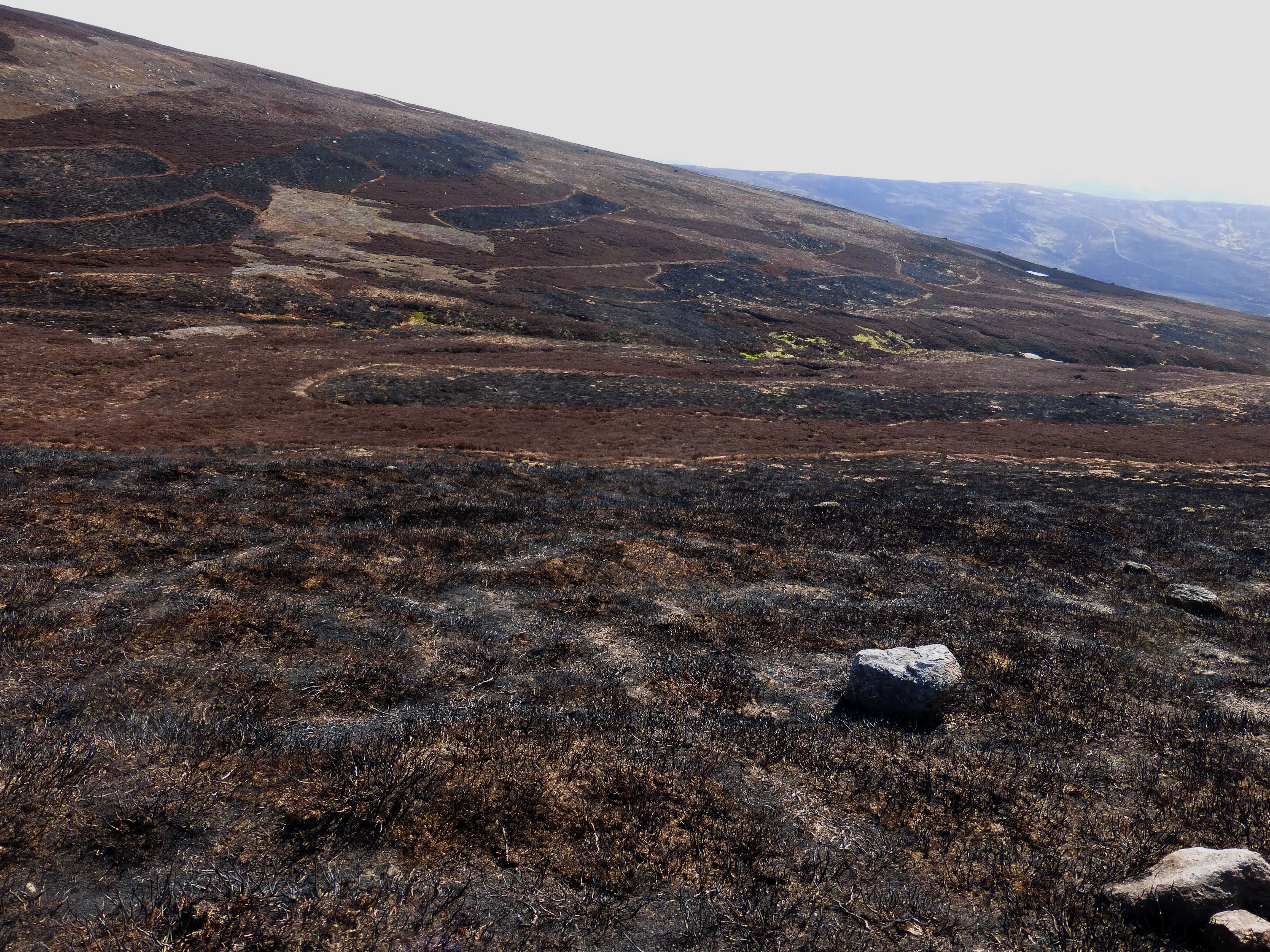
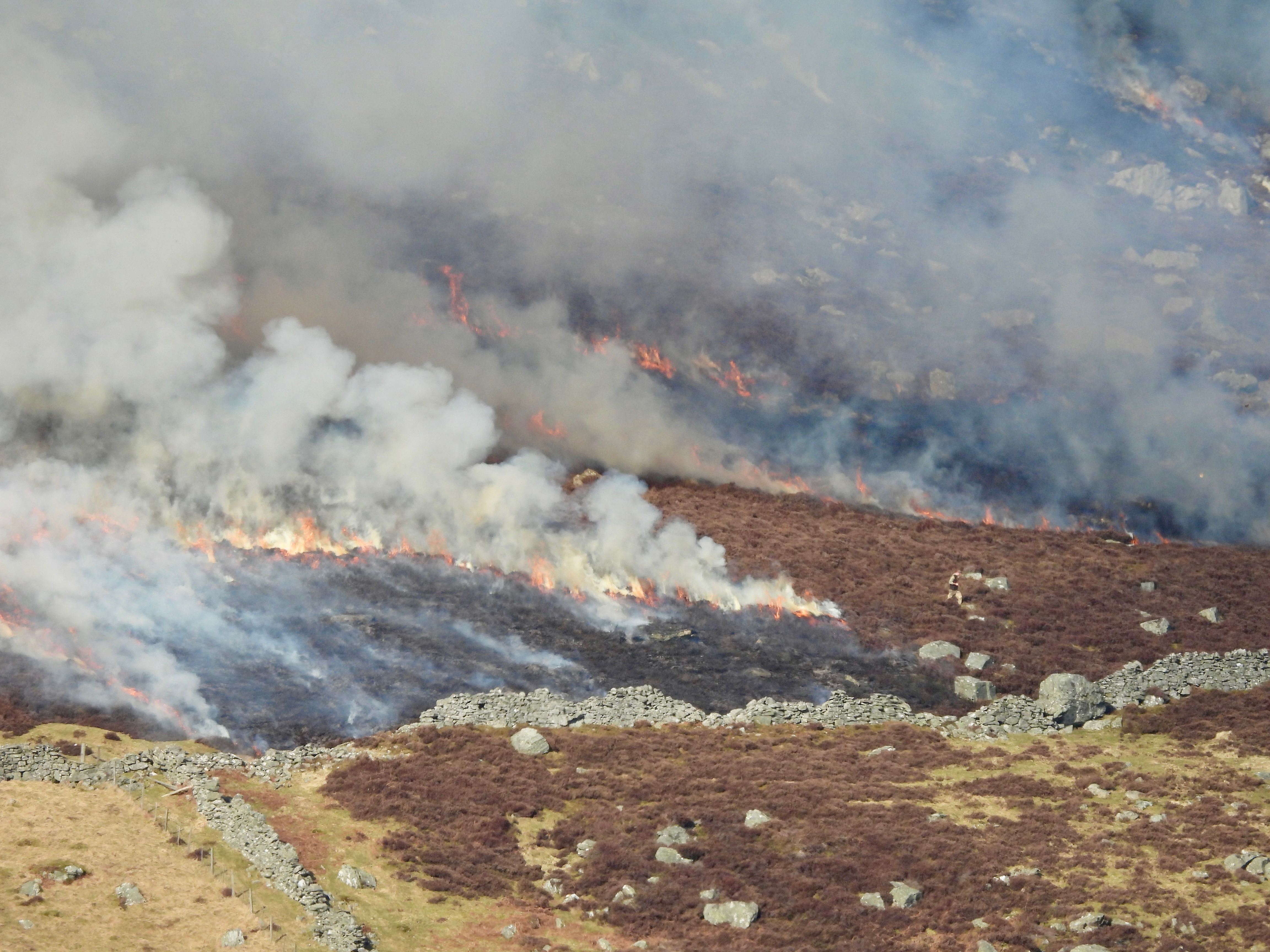
Meanwhile, the horror of grouse moor burning continues apace. These photographs were taken four days ago on a grouse shooting estate in the Angus Glens on 1st April 2021.

I would encourage Scottish readers to send a copy of the photo of the lizard with its singed tail and the photo of the devastated moorland habitat to your local political candidate and ask them whether they support this kind of environmental Armageddon.

Scottish Gamekeepers Association on the attack about ‘misleading’ information – oh, the irony

The latest target in the Scottish Gamekeepers Association’s (SGA) rifle sights is the Scottish Green Party.

I say latest, I’m not sure I can remember the SGA ever supporting any policy of the Greens, and some members of this political party have long been targets for personal abuse by some SGA Committee Members and supporters, so this current attack is just more of the same.

It all stems from a short piece in a regional campaign newsletter, currently being distributed by supporters of the Scottish Greens:

Of course, anybody challenging the status quo of grouse shooting is going to be a target for hatred and it will come as no surprise whatsoever to learn that candidate Maggie Chapman has been subjected to disgraceful misogynistic abuse on Facebook by SGA supporters, on the SGA’s own Facebook page. It appears that real women can’t have short hair AND breasts. It’s all too confusing if you still think it’s the 1950s. I’ll bet she was wearing trousers too. Shocking. The misogyny centred on Maggie’s appearance – god help us if they’d realised she was actually standing for election.

The SGA’s reaction to the Scottish Green Party’s campaign newsletter has been astonishing, although actually it shouldn’t be astonishing at all in light of their recent antics in relation to the death threat received by Chris Packham (see here). It seems they’ll complain about anything in their quest to resist progressive modernisation and so this time they’ve threatened to write to the Electoral Commission to complain about what they call ‘misleading information’ about grouse moors.

Here’s what the SGA published on its website earlier this week:

On the face of it, this SGA statement might seem like reasonable comment, especially as it was citing the results of a recent Government-funded study in to the socio-economic and biodiversity impacts of grouse shooting.

The thing is, the SGA isn’t accurately reporting that study’s findings. At all. In fact some might argue it was deliberately mis-reporting the findings.

How so?

Well, in the summary report of that study being cited by the SGA, the authors are quite clear about how the study results should be interpreted. In fact they couldn’t have been clearer (underlining added by me):

Furthermore, the small set of case study samples that the study used are also kind of skewed in favour of grouse shooting. This is not a criticism of the study authors, they have been totally upfront about it, but it just emphasises the caution urged by the authors on how these results should be interpreted; caution which the SGA has ignored:

There were nine case studies that involved some sort of grouse shooting, but only two involving rewilding/conservation. There’s absolutely no way that the study results can be seen as being representative of these land-use differences across Scotland, as the SGA is trying to claim.

I’d encourage the Scottish Green Party to study the summary report closely, and also read some wider research commissioned by REVIVE (especially this one) to rebut any complaint the SGA may make to the Electoral Commission about so-called ‘misleading information’.

The supreme irony of this latest attack is that the SGA is accusing the Scottish Greens of promoting ‘misleading information’ about grouse moors. The SGA are the masters of ‘misleading information’ (i.e. utter rubbish), and here is a small selection from over the years:

‘Professional gamekeepers do not poison raptors’ (May 2011)

‘It is unfair to accuse gamekeepers of wildlife crime’ (June 2011)

‘Will these very large creatures [white-tailed eagles] differentiate between a small child and more natural quarry?’ (September 2011)

‘Raptors are thriving on game-keepered land’ (July 2013)

‘I strongly believe the goshawk was never indigenous to the United Kingdom and there is absolutely no hard evidence to suggest otherwise’ (September 2013)

When asked whether gamekeepers are involved with the poisoning, shooting & trapping of raptors: ‘No they aren’t. We would dispute that’ (March 2014)

‘In the last ten years we have stamped out poisoning. We’ve absolutely finished it’ (October 2014)

‘We kill animals because probably we’re the doctors and nurses of the countryside’ (January 2015)

‘Grouse moors are a birdwatcher’s paradise’ (December 2020)

‘It’s time to end burning on grouse moors’

The focus remains firmly on the deliberate burning of our uplands with yet another article discussing the environmental damage caused.

This time it’s an opinion piece written by Max Wiszniewski, the Campaign Manager for REVIVE, the coalition for grouse moor reform in Scotland. The article has been published by UK Climbing.

[Muirburn on a Scottish grouse moor, photo by REVIVE]

While the public are implored not to start wildfires, the practise of burning heather for grouse moor management takes place on a huge scale, and is often carried out on peat bogs, a vital carbon store. Ending ‘muirburn’ could boost both biodiversity and the fight against climate change, say environmental campaigners. As Scotland prepares to host the UN Climate Change Conference, it’s time to set an example, says Max Wiszniewski of REVIVE, the coalition for grouse moor reform’.

To read the full article on the UKC website please click here

If you’d like to support REVIVE’s vision for grouse moor reform in Scotland, please consider signing up here

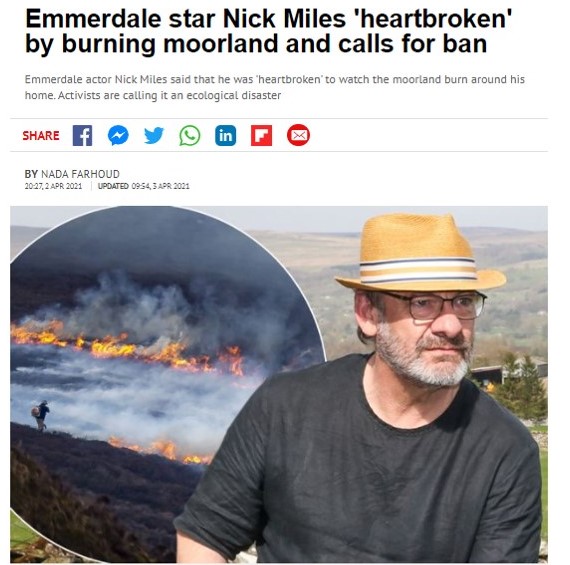
Emmerdale actor speaks out against grouse moor burning & raptor persecution

Hot on the heels of her last article on how burning Britain’s moorland is ‘an environmental disaster’ (here), the Daily Mirror’s Environment Editor, Nada Farhoud has a follow up article out today.

This time she interviews Emmerdale actor Nick Miles, who lives in the Yorkshire Dales National Park and has been a long-time supporter of conservation campaigns such as Hen Harrier Day.

Nick talks about his village ‘disappearing under a blanket of smoke’ when the gamekeepers have set the moors alight and how letters to his MP, Rishi Sunak, have fallen on deaf ears.

He also talks about how few red kites he sees in Upper Wharfdale (hardly surprising given its proximity to Nidderdale, where killing red kites on grouse moors is de rigueur) in comparison to Harewood, where Emmerdale is filmed and from where red kites were reintroduced and are doing well.

Read today’s article in the Mirror here (and watch out for the comedy input from Moorland Association Director Amanda Anderson).

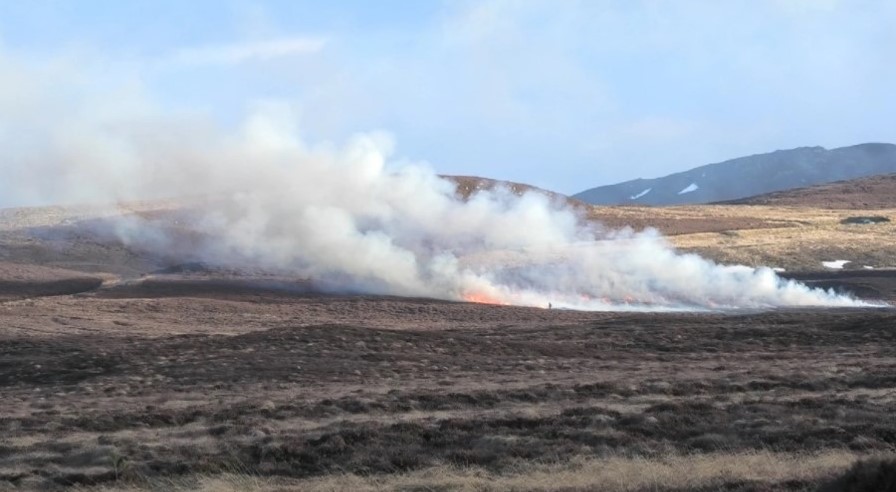
Meanwhile in Scotland the fires also continue. I’ve been sent some horrific photographs that were taken in the Angus Glens two days ago – I’ll be publishing those later this weekend.

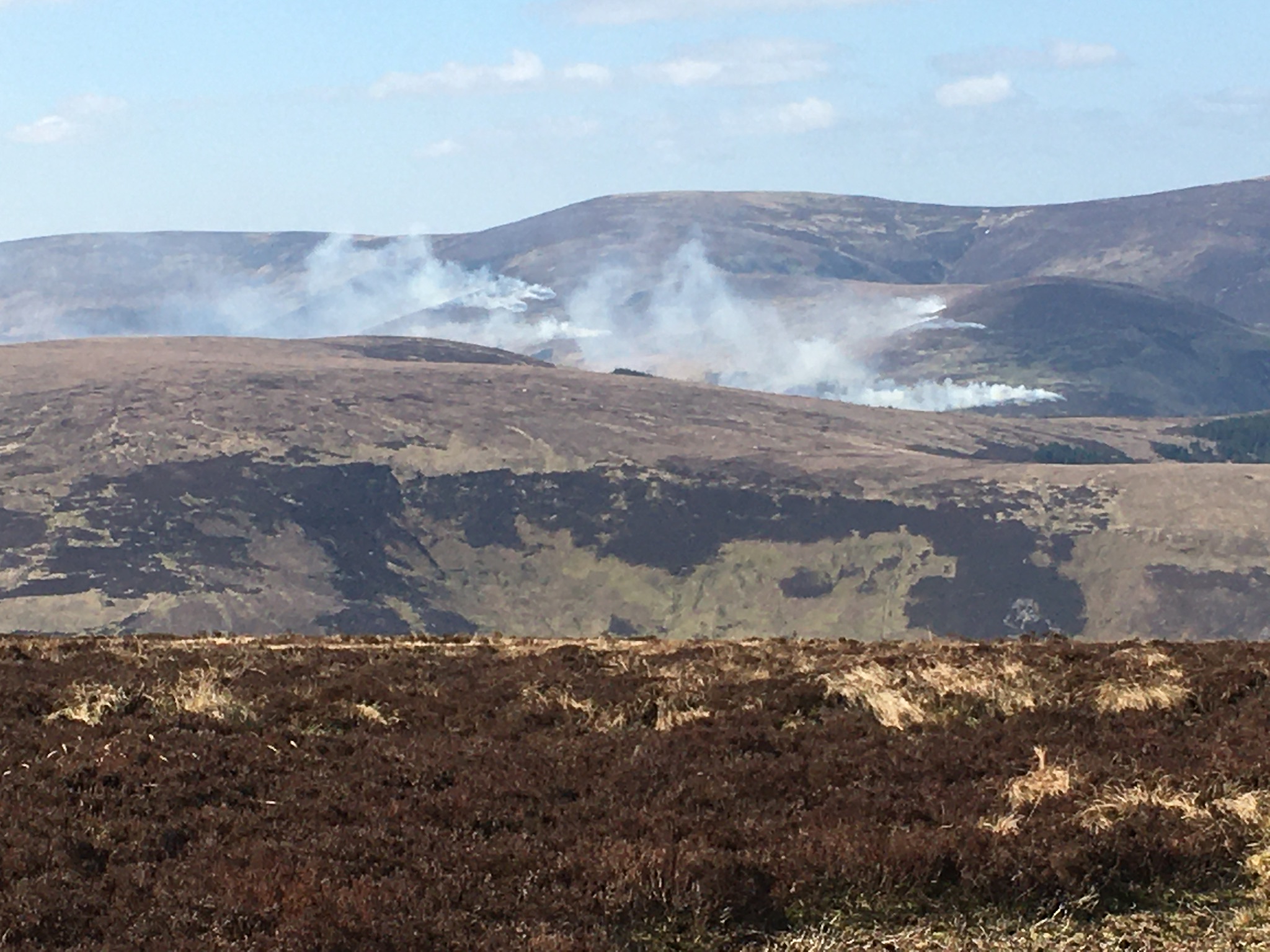
And here’s a photo sent in by another blog reader (thank you) taken yesterday in Manor Valley in the Borders:

It’s astonishing that not only is this burning still legal (although for how much longer remains to be seen) even though we’re in a climate and nature emergency, but that gamekeepers in Scotland can lawfully continue to set the moors alight until 15th April, and then with landowner’s permission can continue to light fires until 30th April.

Still, it’s a cracking wheeze for torching out hen harrier nests, peregrine breeding ledges and golden eagle eyries, which can then be explained away as ‘accidents’ (see here).

Pass the matches.

RSPB blog: Scotland’s uplands going up in smoke in the nature & climate emergency

Further to the blog I wrote about Cabinet Secretary Fergus Ewing’s astonishing recent statement, “It’s essential that we carry on with muirburn” (see here), RSPB Scotland has now published a blog to discuss this burning issue [geddit?].

The RSPB’s Duncan Orr-Ewing and Andrew Midgely explain the charity’s position on moorland burning in the context of the nature & climate emergency and what policy commitments they want to see from the next Scottish Government.

[A grouse moor set alight in Strathbraan in March 2021, photo supplied by a blog reader who wishes to remain anonymous]

The RSPB blog begins…

As one of our key election requests, we are asking Scottish political parties to support the licensing of muirburn, and indeed the banning of muirburn on deep peatland soils (defined as over 30cm in depth). Peatlands are our vital carbon stores, and both their protection and restoration to healthy condition are critical to meeting Scottish Government targets for Net Zero carbon emissions.

Muirburn is the practice of burning vegetation and is mainly associated with managing land for grouse shooting, deer management or for sheep farming. Much of this vegetation burning is visible from plumes of smoke rising from moorland and upland farmland across the country during calm and warm spring days.

In recent years, RSPB Scotland has been receiving messages and photographs from concerned members of the public asking why, in the context of the climate and nature crises, the practice of muirburn is still going on in many of our upland areas across Scotland. Although lowland farmers no longer burn stubble—they have adapted and found alternative ways of managing the land—burning continues in the uplands.  Members of the public appear, quite rightly, to be struggling to reconcile the clear messages about the need to reduce carbon emissions with the locally widespread practice of muirburn.

To read the rest of this blog please click here

Gun, banned poisons & dead birds of prey seized in third multi-agency raid in England

Press release from Dorset Police (1st April 2021)

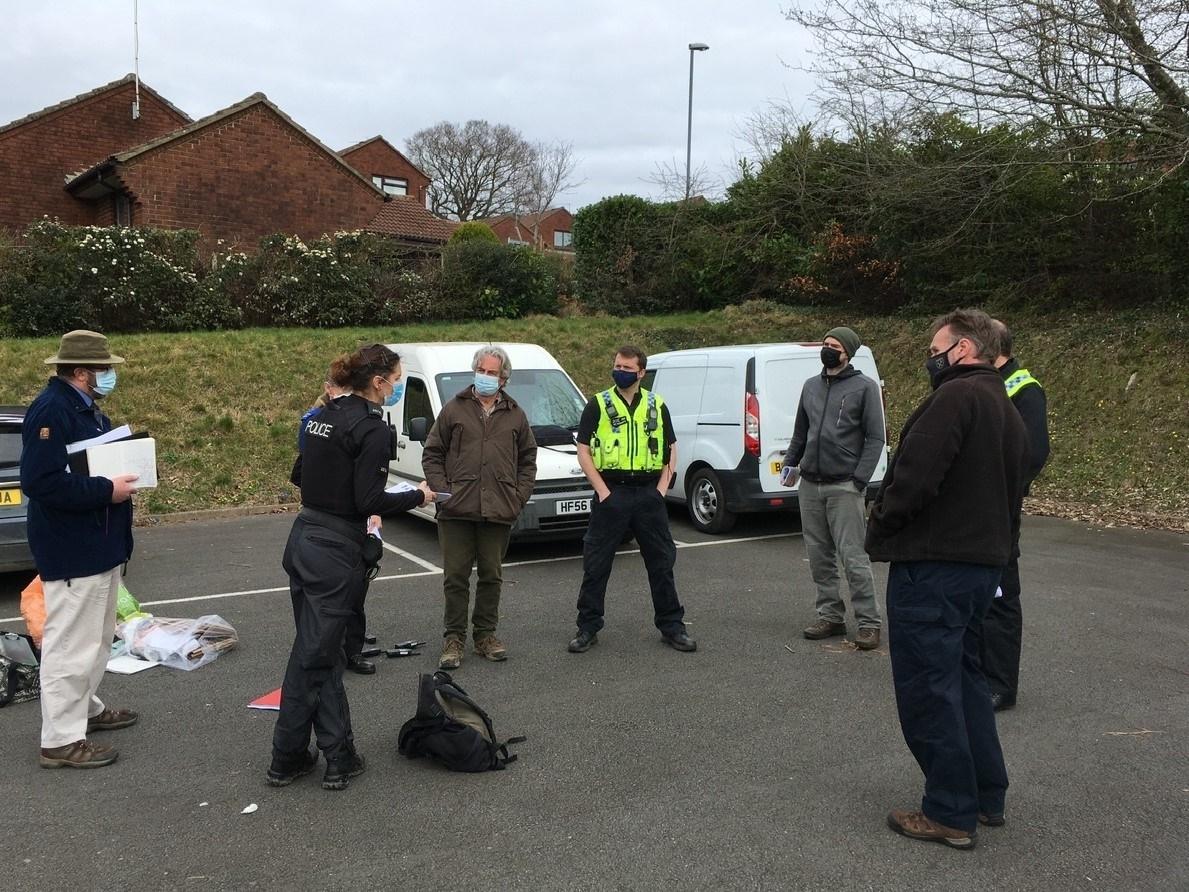
Officers and partners who executed a warrant at a rural property in East Dorset have seized pesticides, dead birds of prey and a firearm.

Dorset Police Wildlife Crime Officers have been working with the Police National Wildlife Crime Unit (NWCU), Natural England and the RSPB to investigate the alleged poisoning of a Red Kite, which was found dead in a field in north east Dorset in November 2020.

The bird of prey was recovered by police following the discovery by a member of the public and sent for forensic analysis at a specialist laboratory. The results of a post mortem examination subsequently indicated that it had been poisoned. 

On Thursday 18 March 2021 officers, accompanied by NWCU, Natural England and RSPB, attended an address in rural north east Dorset, having obtained a warrant and also exercised further powers under the Wildlife and Countryside Act 1981. 

A number of dead birds of prey and several pesticides, including banned substances, were located at the premises. A firearm was also recovered. 

[Photo by Guy Shorrock]

Police Constable Claire Dinsdale, Lead Wildlife Crime Officer for Dorset Police said: “This investigation is ongoing and no further information or comment can be made at this time regards this specific case

The national picture is that the persecution of birds of prey sadly continues in the UK. This is one of our six national priorities for wildlife crime, highlighted on the National Wildlife Crime Unit’s website https://www.nwcu.police.uk/. 

A great deal of work has already been done by police and partner organisations but still there are those who think they are above the law.  The deliberate killing of birds of prey will not be tolerated. We have had previous cases in Dorset of illegal shooting and trapping as well as poisoning. 

I would urge the public to be vigilant and report dead birds of prey to police. Clear evidence of a wildlife crime, such as an illegal trap, shooting or suspected poison bait should be reported immediately to police without delay. A ‘What Three Words’ location or grid reference is really useful.

If a dead bird of prey is located and you are not sure whether it is suspicious or not, still report it to police immediately. We can access assistance from vets to examine and x-ray birds and submit them for forensic testing, therefore ruling out natural causes. Police can access forensic funding for such wildlife crime cases. 

A wildlife crime in progress is a 999 call, an urgent suspicious finding needs to be called in on 101 immediately and for all other non-urgent reports you can email 101@dorset.pnn.police.uk or visit Dorset Police online https://www.dorset.police.uk/do-it-online/. 

If you have any information on the illegal killing of birds of prey or other types of wildlife crime, you can speak to police in confidence by emailing 101@dorset.pnn.police.uk. We do not act in a way that would identify the source of the information to the police.” 

ENDS

This is the third multi-agency raid that’s taken place in England in the space of a couple of weeks, in relation to the suspected persecution of birds of prey.

On 15th March 2021 there was a raid in Lincolnshire (see here), on 18th March this raid in Dorset, and on 26th March a raid in Devon (see here).

It’s alarming that all three raids were triggered by the use of poisons to kill birds of prey.

Well done to all the partners involved – let’s hope their efforts are rewarded with successful prosecutions and convictions.

UPDATE 1st January 2023: Gamekeeper due in court facing multiple charges of raptor persecution, poisons and firearms offences (here)