Animal protection charity reveals worst snaring incidents in UK in 2020

Press release from OneKind (5th March 2021)

New report from animal protection charity reveals some of the worst snaring incidents in the UK in 2020

Scotland’s leading animal campaigns charity, OneKind, has released a new report, SnareWatch Annual Report 2020: Case studies of snare use in the UK, which highlights some of the worst snaring, or suspected snaring, incidents in the UK during 2020.  

A snare is a thin loop of wire, anchored and positioned to catch an animal around the neck. Snares are, quite literally, Stone Age technology and have been used globally for centuries to catch a variety of species. In Scotland today they are mainly used to target foxes on or near grouse moors, due to the species’ perceived threat to the grouse. They may also be used to target rabbits and hares. They are required by law to be ‘free-running’ so that the wire relaxes when the animal stops struggling.  

[A snared mountain hare on a Scottish grouse moor, killed and left to rot. Photo by Ruth Tingay from a few years ago]
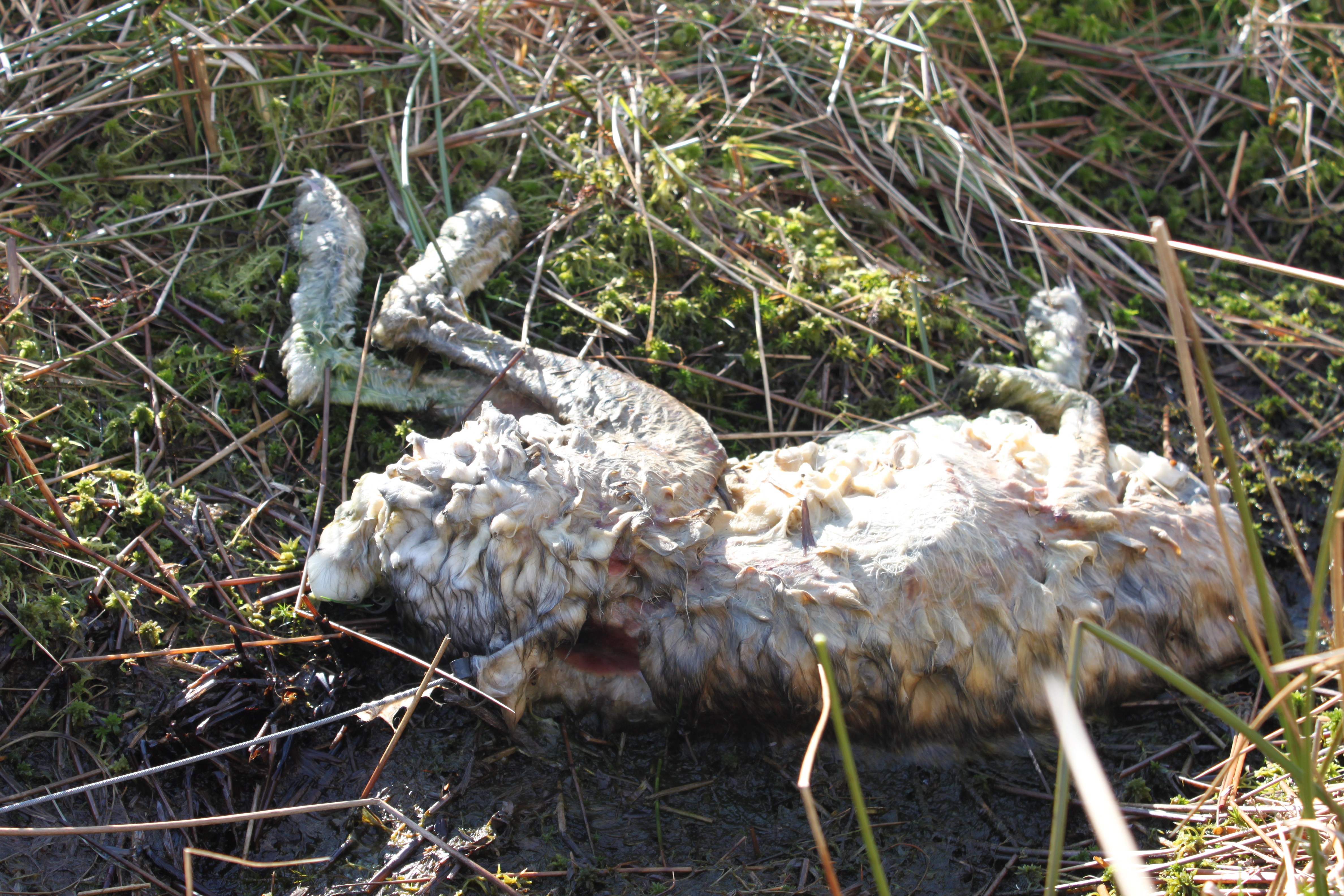
The report encompasses snaring incidents involving target species, such as foxes, and also non-target species including dogs, cats and farmed animals. Most of the animals that were found alive, but injured, required veterinary attention.  

OneKind Campaigner, Eve Massie, said: 

Our new report, SnareWatch Annual Report 2020: Case studies of snare use in the UKraises awareness of the suffering that wire snares inflict upon animals. Snares can cause the animals trapped in them considerable stress and pain, yet astonishingly, are still legal in the UK.  Our report highlights several cases of animals that were found alive in the snares and required veterinary attention. This includes a fox that had to be treated for the fly eggs and parasites on his body after he was trapped in a snare, suggesting he may have been there for an extended time.  

Wire snares are not only cruel but are also indiscriminate as to the species caught in them. Indeed, up to 70% of all animals caught in snares are non-target species. As evidenced in our report, dogs, cats, foxes, badgers and even lambs are caught in snares across the UK. In one particularly upsetting incident, a dog required 25 stitches for a hole in his chest that exposed muscle. The vet who treated him suspected that his injuries were consistent with being entangled in a snare. 

By highlighting snaring incidents in this new report, we aim to show how widespread snaring can be in the UK and just how much suffering these archaic traps can inflict upon animals“.

On OneKind’s snare reporting website, SnareWatch.org, Eve said: 

Since 2011 we have been appealing for reports about snares found by members of the public through our snare reporting tool website, SnareWatch.org. So long as snares are legal in the UK, we believe it is imperative to gather information about the nature and extent of snaring“.  

On calling for a ban on snares, Eve continues: 

OneKind has long-campaigned for a complete ban on the sale, use and manufacture of snares in Scotland. Our Parliamentary petition to assess the welfare risks of wildlife ‘control’ in Scotland, including the use of snares, was closed by the Scottish Parliament. This was, in part, because the Scottish Government is due to review snaring this year. We hope this report will encourage the Scottish Government to reconsider the use of snares in Scotland. In 2017, NatureScot stopped issuing licenses for the snaring of mountain hares. Its time  snares are banned for all species of animal. Suffering is suffering, no matter what species of animal it is inflicted upon

ENDS

Raptor Persecution UK blog is 11 years old

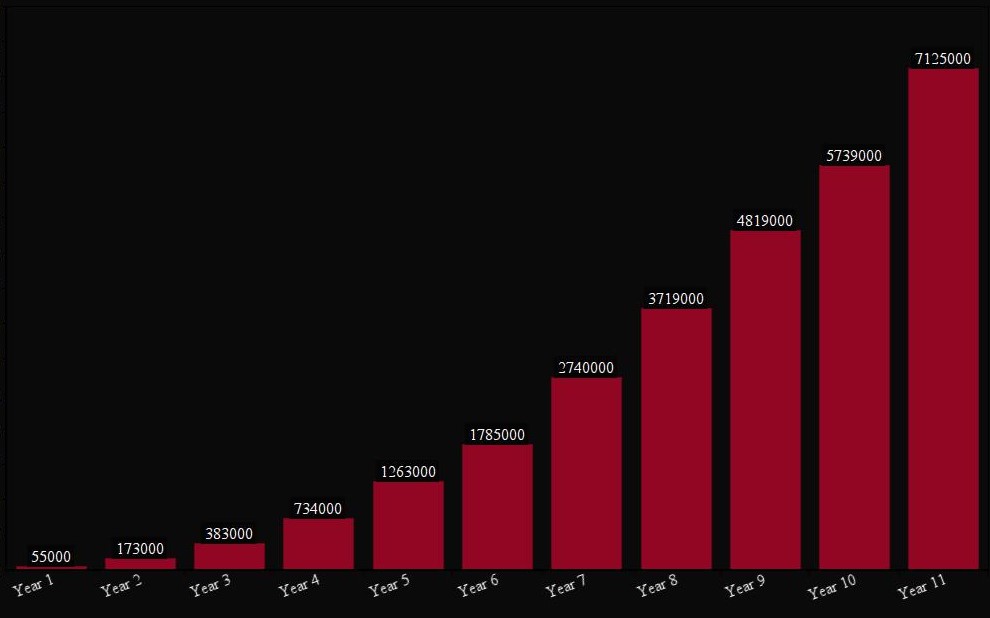
Yesterday this blog passed its 11-year anniversary.

Is it still attracting readers? Yep, it seems to be, looking at these blog viewing stats.

As ever, huge thanks to those who help fund my time, those who work with me behind the scenes (you know who you are), to those who send me information, to those who take the time to comment here, and especially to those who share blog posts on social media channels – raising awareness of the illegal killing of birds of prey was the main driver behind setting up this blog and it continues to be one of its main objectives.

Thanks for your support.

UK wildlife crime legislation & enforcement to be assessed (again)

Press release from DEFRA (2nd March 2021)

Assessment launches to appraise UK wildlife and forest crime legislation and enforcement

New toolkit launched to assess the way we tackle wildlife crime in the UK

A UN backed assessment of UK wildlife and forest crime legislation and enforcement has launched today, using the United Nations Office on Drugs and Crime (UNODC) International Consortium on Combating Wildlife Crime (ICCWC) toolkit.

The toolkit will review wildlife crime policing structures, including the National Wildlife Crime Unit (NWCU) and UK Border Force and efficacy of prosecutions. The toolkit consists of five parts: legislation; enforcement; judiciary and prosecution; drivers and prevention. To date, the toolkit has been implemented in 15 countries. The UK will be the first G20 country to have invited this assessment.

This assessment will comprise a comprehensive analysis of the strengths and weaknesses of our preventive and criminal justice responses, which are crucial to curtailing wildlife and forest crime nationally and internationally.

[51 hen harriers have been confirmed illegally killed or have disappeared in suspicious circumstances, mostly on or close to driven grouse moors, since 2018. There hasn’t been a single prosecution for any of them]

Originally developed in 2012, the Wildlife and Forest Crime Analytic Toolkit was created by the UNODC, in partnership with the UK and other members of ICCWC. The assessments in the UK will run until August this year.

Speaking at the launch today, Environment Minister, Minister Pow, said:

We have made tremendous progress tackling wildlife crime in this country, but we know there is more to do.

We requested this assessment to help build on our progress and will look closely at the recommendations, working with key stakeholder groups to inform a cross-government response.

Together we can reduce these horrific crimes for the benefit of our biodiversity, our precious habitats and our rural communities for generations to come“.

Chief Inspector Kevin Kelly, Head of the UK National Wildlife Crime Unit, said:

I have been immersed in Policing wildlife crime for the entirety of my Police service and I am delighted to see the ICCWC Tool kit coming to Policing UK. This will shine a much needed spotlight on Wildlife Crime and raise the importance of it in the wider Policing picture, as Wildlife Crime often feeds into more serious and organised crime types.

It will be a pleasure for the NWCU to work with colleagues to ensure the success of the tool kit. It’s vitally important that we continue to celebrate our success and highlight the importance of fighting Wildlife Crime. But I welcome the opportunity to reflect on our practices and look to become better and more efficient“.

Since 2016, Defra and the Home Office have jointly committed £300,000 a year to funding the UK National Wildlife Crime Unit (NWCU). The unit plays a valuable role in detecting and preventing wildlife crime by monitoring and gathering intelligence on illegal activities, undertaking analysis and directly assisting law enforcers with their investigations.

The past few years have seen successful launches of police operations such as Operation Galileo, an anti-hare coursing campaign led by Lincolnshire police force and Operation Owl, led by North Yorkshire Police, which aims to raise awareness of raptor persecution amongst the wider public and police officers.

The NWCU is one part of the UK’s network fighting wildlife crime, Police customs officers and other enforcers carry also out vital work on the ground.

In addition, the UK Border Force continues to make successful seizures and work with international partners to ensure illegal wildlife trade products do not enter the market.

Last year, as part of operation Thunder 2020, UK Border Force worked with fellow enforcement agencies across 105 countries to tackle the global illegal wildlife trade. With other targeted operations also taking place throughout the year including checks on exports to South East Asia for movements of illegal ivory, Border Force made 490 seizures of illegally trafficked live specimens or derivative products at numerous UK Border control areas from Grangemouth in Scotland to Southampton port.

There are now over 770 wildlife crime officers in England and Wales and 133 covering Scotland. These officers are specially trained to conduct and support investigations into wildlife crimes.

The UK’s participation in this will help inform recommendations on improving the prevention and enforcement of domestic and international wildlife crime in the UK and will reaffirm our global leadership role in tackling wildlife crime.

ENDS

So Environment Minister Rebecca Pow thinks, ‘We have made tremendous progress tackling wildlife crime in this country….’? Not on tackling raptor persecution, we haven’t. It’s still rampant and the criminals are still escaping justice. What’s tremendous and progressive about that?

Some might argue that this is a good reason for a review of legislation and enforcement, and to some extent that’s fair comment. However, reviews on this topic have been undertaken before, conclusions are drawn, everyone agrees we must improve but then nothing happens and we end up having another review several years later to make everyone think the Government cares about tackling wildlife crime.

Perhaps this review will be different. It’s using a novel approach (a United Nations toolkit). But do we really need it? I’d argue no. We already know full well who is committing the majority of raptor persecution crimes, we know where they’re committing those crimes and we know why they’re committing those crimes.

We don’t need another review, we just need effective enforcement instead of the regulatory authority accepting money with gagging orders attached, from the very industry responsible for these crimes.

Mass poisoning of raptors in south Scotland – this case is still live

On Saturday I blogged about a press announcement from Police Scotland that had indicated there had been a successful conviction in a case involving the illegal mass poisoning of birds of prey in Dumfries & Galloway (see here).

This police statement didn’t ring true because surely, if there had been a successful prosecution in such a high profile case, the police and all the partner agencies who had also been involved in the investigation would have been shouting it from the rooftops.

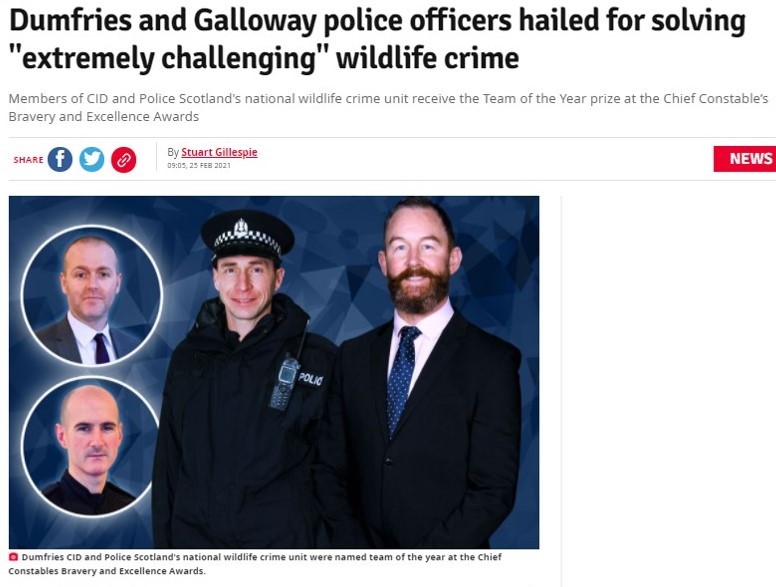
The claim had been made in relation to the police officers winning Team of the Year at the Chief Constable’s Bravery and Excellence Awards on 19th February 2021 and the accompanying statement said, ‘This investigation led to an individual being convicted of wildlife crime offences‘ (see here).

I contacted Police Scotland to ask them for clarification about this case and they got in touch this morning to explain that the case is still live (i.e. there hasn’t been a conviction), the next court hearing is this month, and the inaccurate police statement was a result of a misunderstanding in the police comms team.

As this case is still live comments won’t be accepted until legal proceedings have finished, thanks.

Peregrine found poisoned on grouse moor in Peak District National Park

Press release from RSPB (2nd March 2021)

Peregrine poisoned in Peak District National Park

A peregrine falcon, which was found dead on a driven grouse moor in the Upper Derwent Valley, has just been confirmed as illegally poisoned following official toxicology analysis – adding to the growing list of protected birds of prey illegally killed during 2020’s spring lockdown – many of which were in the Peak District National Park.

The adult male bird was found dead, on top of the remains of a wood pigeon, on 31 May 2020 by a fell runner on National Trust land. This was close to a known nest site which, like several other sites in the Dark Peak, has a long history of poor breeding success.

[The poisoned peregrine, photo by the Peak District Raptor Monitoring Group]

It was reported to Derbyshire Police, who recovered the carcass assisted by raptor workers, and the body was submitted for government toxicology testing. The results have just been published and confirm that the peregrine was illegally poisoned with the toxic insecticide bendiocarb: a substance we know is illegally used to kill birds of prey.

Mark Thomas, Head of RSPB Investigations, said: “This latest incident adds to an appallingly long and growing list of crimes against birds of prey which took place during the first national Covid lockdown in 2020. At the time, the RSPB was working flat-out with police to investigate a high volume of incidents, the details of which are now beginning to emerge.

It is clear that certain criminals took lockdown as an excuse to ramp up their efforts to kill birds of prey, wilfully ignoring lockdown and the laws which protect these birds.

Time and again, we are seeing birds of prey shot, trapped or poisoned on grouse moors. The link between illegal killing of peregrines and other raptor species and driven grouse shooting has never been clearer, and we urge the UK government to implement a licensing system for grouse moors in England, as is proposed in Scotland. Law-abiding estates would have nothing to fear from this, and it would act as a greater deterrent, keeping birds safe, in the sky, for all to enjoy.”

Peer reviewed studies, crime data and court convictions show that raptor persecution is more concentrated on and near driven grouse moors, where birds of prey are seen by some as a threat to commercially managed red grouse stocks. In fact, a recent paper statistically linked crimes against birds of prey in the Peak District National Park with land managed for Driven Grouse Shooting.

It is believed that the wood pigeon was a poison bait, laid deliberately with the intention of killing any bird of prey or raven which fed on it.

Steve Downing, Chair of the Northern England Raptor Forum, said: “Incidents like this are sadly not uncommon in the Dark Peak, where peregrine populations have crashed in recent years. What’s more, a poison bait like this, on open-access land, could easily be picked up by someone’s dog with disastrous consequences.”

Jon Stewart, National Trust General Manager, said: “We protect and care for places so nature and people can thrive. In a year when three pairs of peregrine successfully raised young on Trust land in the Dark Peak, half of all successful pairs on the Peak District moors, we were very upset to hear of this incident.

We continue to work closely with the RSPB, police and statutory agencies to take action to combat wildlife crime. We urge anyone with relevant information about this incident to contact the police and help end the illegal persecution of birds of prey.’’

All birds of prey are protected by the Wildlife and Countryside Act 1981. To intentionally kill or injure one is a criminal offence and could result in an unlimited fine or up to six months in jail.

If you have any information relating to this incident, call Derbyshire Police on 101.

If you find a wild bird of prey which you suspect has been illegally killed, contact RSPB Investigations on crime@rspb.org.uk or fill in the online form: www.rspb.org.uk/birds-and-wildlife/advice/wild-bird-crime-report-form/

If you know of someone killing birds of prey, please don’t stay silent: call the confidential Raptor Crime Hotline on 0300 999 0101.

ENDS

This latest crime should come as no surprise whatsoever to anyone even vaguely familiar with the Dark Peak area of the Peak District National Park. Dominated by driven grouse moors, this Park is notorious for raptor persecution and has been for decades, particularly impacting on goshawk and peregrine populations (e.g. see here), despite all the years of so-called ‘partnership’ efforts that have led to…..well, nothing but more of the same.

What is disappointing is that the poisoned bait and the dead peregrine were found on National Trust land – the NT has worked hard in the Park to restore raptor populations, even booting off a prominent sporting tenant three years ago (see here).

The press release is interesting, though. Once again, Derbyshire Police are conspicuously absent, the RSPB has had to lead on the publicity, and once again there has been a ridiculously long time lag between the commission of the crime and the publicising of it. There was a similar case in Derbyshire not so very long ago (see here) when this police force said that the circumstances of a poisoned buzzard being found dead next to a poisoned bait were ‘inconclusive’!

The 10-month time delay in publicising this latest poisoning case is very poor. The peregrine was found poisoned in May 2020 and the public isn’t made aware until March 2021? Now, we all know that Covid has had an impact on laboratory work and that’s unavoidable but I don’t believe for one second that it has taken the WIIS lab this long to produce the results. I think there’s more to it than that and I just wonder whether Derbyshire Police have played a role in the delay.

Something isn’t right and it needs sorting out, pronto.

UPDATE 11.30hrs: Mark Thomas, Head of RSPB Investigations has just tweeted:

The falcon was found on top of a plucked Wood Pigeon on National Trust land. Despite the investigation being closed, Derbyshire Police declined the opportunity to put this release out, we feel it is critical that the public are made aware due to the risk to them and their dogs‘.

I’ve asked Derbyshire Police’s Rural Crime Team, and the Chief Constable, why they refused to publicise this crime. Not only are there obvious public safety concerns but wildlife crime is supposed to be national wildlife crime priority.

Responses awaited.

Swinton Estate owner (& Chair of Moorland Association) challenged by BBC about raptor persecution on his estate

This is worth a watch.

A BBC documentary series called Amazing Hotels: Life Beyond the Lobby featured the Swinton Estate in Nidderdale, North Yorkshire a couple of weeks ago.

The owner of the estate, Mark Cunliffe-Lister (also known as Lord Masham) also happens to be the Chair of the Moorland Association, the lobby group for grouse moor owners in England.

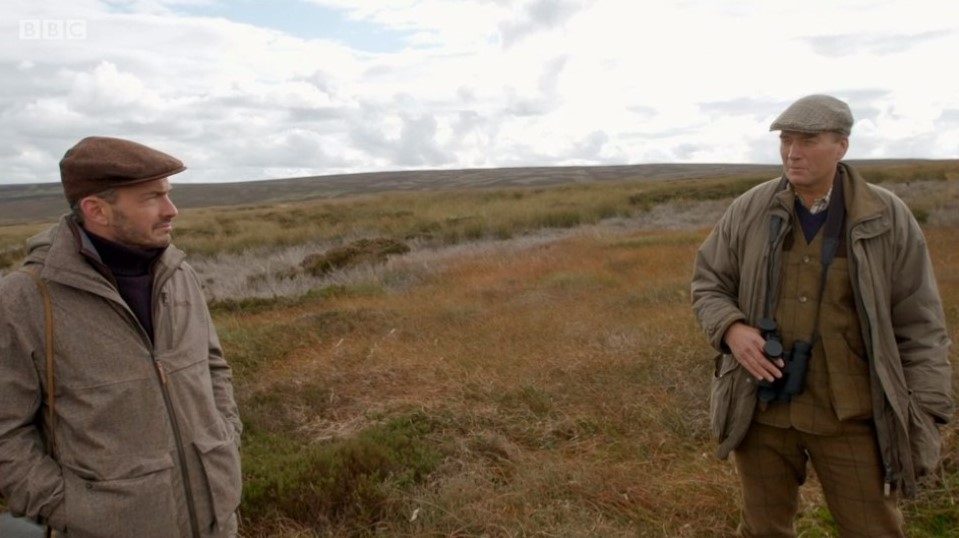
As part of the programme, presenter Giles Coren visited Swinton’s grouse moors with Cunliffe-Lister and Coren asked him straight out about confirmed raptor persecution crimes on Swinton. The change in Cunliffe-Lister’s body language was quite noticeable – he went from confident, open, welcoming hotel owner to cagey, uncomfortable grouse moor owner.

Giles Coren:Have there been instances around here of raptors being killed?

Mark Cunliffe-Lister:Yes, there have been, there was one that was found on Swinton itself, it was found to have some lead in it so, er, clearly had been shot at some stage. There’s nothing that we’re culpable of but clearly there are still instances of it taking place“.

Just the one, Mark? What a forgetful silly billy (and not for the first time).

Kudos to Giles Coren and to whoever was the BBC executive producer of this edition. Good stuff.

The programme is available to watch on BBC iPlayer for a year (the grouse moor stuff starts at 39 mins 15 sec) HERE

National mountain hare day!

Press release from OneKind (1st March 2021)

Protections for mountain hares have come into force from today, in what campaigners are calling National Mountain Hare Day.

The new regulations mean that it is illegal to intentionally kill, injure or take mountain hares without a licence. They were passed after pressure from Scottish Green MSP Alison Johnstone to accept the licensing as part of the new wildlife legislation.

Johnstone said: “Today is an important moment for all those who campaigned for years to end the indiscriminate mass slaughter of mountain hares on Scotland’s grouse moors. These new protections come as a direct result of my amendment to wildlife laws last year, which forced the Government to act after years of delay.

Overwhelming public support for action ensured that Parliament supported this change, and I would like to express my gratitude in particular to the tens of thousands of campaigners who backed my amendment and helped push it over the line.

Now that mountain hares are a protected species, the Scottish Government has a responsibility to protect them. We will be keeping a close eye on them and will challenge any move that suggests they are not fulfilling this duty.

Scotland is in a nature emergency, with one in nine species at threat. The progress we are seeing today is important but we need to do so much more. The Scottish Greens are committed to fighting for Scotland’s nature, ending the persecution of our wildlife and restoring Scotland’s unique and beautiful natural environment.”

Leading animal welfare charity, OneKind, has welcomed the introduction of legal protection.

Director Bob Elliot said: “We are delighted that the day has come when mountain hares have become a protected species and where the mass scale killings of this beautiful animal are put to an end.

We have campaigned for four years for an end to these culls and so today really does feel like a huge triumph. A triumph not just for ourselves, but also for our passionate supporters and all those who campaigned tirelessly for mountain hares.

There has been a great deal of support for making mountain hares a protected species and efforts from animal welfare organisations, such as OneKind, conservation organisations and passionate individuals made this happen.

In particular, Alison Johnstone MSP deserves special recognition for her commitment to her role as the Scottish Parliament’s hare champion.

We are very grateful that she lodged the amendment that is responsible for mountain hares’ new status as a protected species.”

ENDS

Your help needed – new petition calling for Westminster to make nature recovery a binding legal commitment

NEW CAMPAIGN from Wildlife and Countryside Link (1st March 2021)

The Prime Minister has called on world leaders to turn round nature’s decline by 2030. But there’s no commitment in law to do the same here at home. The Environment Bill is the last chance to set this right. 

By writing the recovery of nature into law, the Environment Bill could start to address the nature and climate crisis. But the current wording fails to reflect the ambition or urgency we need. 
 
We’re calling for a change to the Bill to strengthen the law. It would require the UK Government to set a legally binding target to reverse the loss of nature in England by 2030. 
 
This is serious. The most recent ‘State of Nature Report’ showed – once again – the need for urgent action. Almost half of UK wildlife is in long term decline and 15% of species are at risk of extinction.
 
Over 50 nature conservation groups have joined together to urge the Prime Minister to make sure this crucial change gets through. Will you join us?
 
Sign the petition to call on the Prime Minister to write the recovery of nature into the Environment Bill. We must act now! 

Please add your voice to this campaign – SIGN HERE