Grouse shooting debate on STV news programme

STV’s Scotland Tonight programme on Wednesday featured a debate on grouse shooting as part of the programme’s Listen Up debate series.

The debate featured Robbie Marsland, the Director of League Against Cruel Sports (Scotland) and Mark Tennant, Chair of landowners’ lobby group Scottish Land & Estates.

This programme is only available to watch until 16 December (here, starts at 15.37 mins).

It’s hilarious, and well worth a watch.

Here’s the transcript, for posterity, but you really need to watch the video to experience the full Botham-esque effect!

Robbie Marsland: There is no place for a bloodsport like grouse shooting in modern Scotland. Every year hundreds of thousands of these iconic wild birds are shot for entertainment, yet polls show that seven in 10 people in Scotland are against grouse shooting. And it’s not only the grouse that suffer – around 200,000 foxes, stoats and mountain hares are killed each year just to ensure there are enough grouse to kill. The moors used to hunt grouse also create a circle of destruction that depletes biodiversity and harms the environment. These moors take up a huge part of Scotland’s land, yet the industry only contributes a pitiful £23 million to Scotland’s economy each year. It’s time for the Scottish government to end the war against wildlife going on in our Highlands, and stop grouse shooting once and for all. 

Presenter: And Robbie joins us to debate his arguments with Mark Tennant, chairman of the organisation Scottish Land and Estates. Thanks for joining us. Robbie, is grouse shooting not an important part of our rural heritage? 

Robbie Marsland: Well when I first came to look at this issue, I thought grouse shooting was sort of one of those central things in Scotland. I didn’t realise just how new it was. It’s only the last 150 years or so that the land was given up from using for sheep and was turned into this area set aside for intensively managing the land, so that there is an abundance of grouse, so that you can come along and shoot them. So if that’s a part of traditional Scotland then I don’t think it’s a part of traditional Scotland in the 21st Century. 

Presenter: Mark, this is not something that should be happening in the 21st Century, shooting for entertainment. 

Mark Tennant: Well, I mean Robbie comes up with these huge numbers of birds that are shot. I don’t know where he gets the numbers from. 

Presenter: OK Mark, what about the principle of shooting for entertainment, as Robbie describes it? 

Mark Tennant: You’re not shooting for entertainment. At the end of the day, every single one of these grouse, which by the way are not reared, let’s be absolutely clear, you cannot rear grouse. They actually end up in the food chain and are eaten. They are wild birds and I’m not convinced I know how you get them into the food chain unless you shoot them. But maybe Robbie’s got a better way. Maybe we can trap them, Robbie? 

Presenter: Robbie, what’s your response to that? These are wild birds that end up in the food chain. 

Robbie Marsland: I’d like to see the evidence of that. I’ve been working on this issue for some time now and there are no trading standards figures on the amount of grouse that do go into the food chain. So if Mark does have that information, I’d be really interested to see it. 

Mark Tennant: All I’d ask you Robbie is to come down to the restaurants in London. You’ll get them down here. You’ll get them in Germany, in France. 

Robbie Marsland: I know that some grouse certainly goes into high-end restaurants in London, absolutely. 

Mark Tennant: No they all end up in the food chain, they all end up there. 

Robbie Marsland: I’m not at all clear how many grouse are shot. The whole industry is sort of clouded in mystery. 

Presenter: Mark, what’s the attraction of grouse shooting? Why do people do it? I’d like to hear about that. 

Mark Tennant: People do it because man has been hunting wild animals since time immemorial. For food. And that’s what happens. It’s like fishing or anything else. You go out, you shoot birds, they go down and they get eaten and you eat some of them. 

Presenter: Robbie, let’s talk about the importance of the industry to the economy. Jobs and livelihoods depend on this, brings in £23 million or thereabouts to the Scottish economy. 

Robbie Marsland: Yeah, yeah, yeah. And £23 million sounds like a lot of money, but when you compare it to the size of the Scottish economy, I’m afraid it’s 0.02% of the scale of the economy. When it comes to jobs, I’m really really conscious that there is a fear that any changes will result in loss of jobs, and I think it’s our responsibility, the people who are starting to question why it is a good thing to kill all of these animals, that we do have solutions to that. That’s why the Revive Coalition, that the League Against Cruel Sports is a member of, has produced two reports, one called Back To Life, and the other A Better Way, and both of those reports detail that you can get more jobs. And more importantly, I spoke to the new owners of an estate called the Kildrummy Estate. They’re managing that estate for wildlife and for conservation and they stopped using it for killing grouse. They told me last week that they are bringing in several new jobs, they’re doing up the local hotel and producing new tourist accommodation, and all of that is of great benefit to the local community and jobs. 

Presenter: Mark, how important are the jobs to the local economies? 

Mark Tennant: The jobs are very important. It’s all very well to say that it’s 0.04% of the Scottish economy. Actually it’s a little bit less, it’s actually 28 million but let’s not quibble. The simple fact is that this is about 15% of the total take of the Edinburgh Festival every year. And all of it goes into the least populated and the poorest parts of our country. So the 0.04% really is a meaningless statistic. Like so many of the statistics that the League uses. 

Presenter: Very briefly, I’m going to ask you both about the licensing. Scottish government says it is going to bring in a licensing scheme to regulate the industry. What would that mean, how would that protect the birds of prey? Very briefly, Robbie. 

Robbie Marsland: Well, we don’t know yet. We are yet to see the terms of the licence. What we are asking for is that it’s a comprehensive licensing scheme that doesn’t just look at the number of raptors, and the increasing number of birds of prey which are being killed. But it looks at the way that heather is burned and the impact that has on Scotland’s ability to reach its climate change goals. And we are looking at the amount of medicated grit that is put out there. 

Presenter: Mark, I presume that you’re not welcoming this idea of licensing? 

Mark Tennant: I’m not sure what it achieves but the simple fact is it’s going to happen. 

Presenter: So lovely to hear from both of you. Thanks very much indeed for joining us this evening. And that’s all from Scotland Tonight. 

Missing something, Natural England?

Do you need to update this?

And do I need to update this?

Or am I mistaken and you’re not trying to shield an industry riddled with criminals or hide anything that might reflect badly on your choice of ‘partners’?

UPDATE 12th January 2021: This news has eventually been dragged out of Natural England via an FoI request. See: Satellite-tagged hen harrier Harold ‘disappears’ on grouse moor in Yorkshire Dales National Park (here).

[Gunnerside, Yorkshire Dales National Park. Photo by Ruth Tingay]

Buzzard shooting – police appeal for information on drive-by suspects

Press release from National Parks & Wildlife Service, Ireland (9th December 2020)

NPWS appeals for information after buzzard shooting

The National Parks and Wildlife Service is appealing for information relating to a buzzard found dead on the R422, just south of Emo, Co Laois.

The bird was perched on a tree on the roadside when it was shot with a shotgun at around 7.50am on 5 December.

The firearm was discharged from the road on the south side of the village.

The investigating Wildlife Ranger said a shot was heard and the dead buzzard was found by a member of the public.

A spent shotgun cartridge was also found.

The NPWS is interested in information about a vehicle that was recorded on CCTV in the area – it’s believed that individuals may be driving around looking for buzzards and then shooting them from a vehicle.

Anyone with information – particularly about vehicles or persons acting suspiciously in Emo on the morning of 5 December – is asked to contact the NPWS regional office at (0761) 002667, or to contact gardaí.

Buzzards are a protected species. They became extinct in Ireland in the late 19th century but were re-established in Northern Ireland in the 1930s.

ENDS

Moorland burning ‘biggest threat’ to England’s most important places for wildlife

Press release from RSPB (8th December 2020)

New analysis shows that burning of moorlands is the biggest threat to England’s most important places for wildlife

  • New analysis of Government data by the RSPB shows that the burning of moorlands is the biggest identified threat to England’s Sites of Special Scientific Interest (SSSIs).
  • The analysis also shows that no reason has been identified for half of England’s SSSIs that are in poor condition.
  • These findings have been hidden in the data published by Natural England, which is only based on a small subset of the SSSIs that are in poor condition.

A new analysis of Government data by the RSPB shows that the burning of moorlands is the biggest identified threat to England’s most important places for wildlife, known as Sites of Special Scientific Interest (SSSIs).

[Grouse moor managers set their moors alight every year, like this one in northern England, at huge environmental cost. Photo by Ruth Tingay]

The other major finding in the analysis is that Natural England has not identified any reason for half of all the English SSSIs that are in poor condition. This means that we do not know why 316,167 hectares of England’s SSSIs are in poor condition, an area roughly the size of Gloucestershire.

Without this information, it will be impossible for Government and Natural England to put in place the actions needed to achieve the target to restore 75% of SSSIs to good condition.

Whilst burning is the largest known cause of SSSIs in poor condition, the analysis also identifies overgrazing and water pollution (especially from agriculture) as being important contributors to the parlous state of these sites.

Moorlands are burned to create habitat for grouse for shooting and also to make them more productive for grazing. This causes long-lasting damage to highly sensitive peatland habitats and the loss of threatened species. It also results in the release of carbon to the atmosphere (adding to climate change), reduces the quality of drinking water (increasing water bills), increases water run-off (exacerbating the risk of flooding) and adds to air pollution.

Natural England publishes the reasons why SSSIs are in poor condition on their website. However, this data is incomplete and misleading. 61% of SSSIs in England are in poor condition. Natural England’s published data only includes the reasons for the poor condition of 8% of SSSIs. It excludes the reasons why 53% of sites are in poor condition because Natural England considers that these are ‘recovering’.

The RSPB’s head of site policy, Kate Jennings said “Many of these ‘recovering’ sites are not recovering at all. Natural England put many SSSIs into this category a decade ago because it assumed that entering into a plan or agreement with the landowner would automatically lead to the restoration of the site, without considering whether the plan was being funded, implemented or proving effective.

A decade on, the evidence clearly shows that this was a mistake. The little SSSI monitoring that Natural England has carried out in recent years shows that ‘unfavourable recovering’ sites are being downgraded to ‘unfavourable no-change’ or ‘unfavourable declining’. This is despite large amounts of public money being spent on agreements which were never going to drive recovery, including some which allow moorland burning to continue and so perpetuate damage to these precious places.

SSSIs are the best remaining places for England’s wildlife. Studies show that without SSSIs our wildlife would have suffered much worse over the past 50 years. They only cover 6% of England but, if restored, these sites can drive nature’s recovery, contributing to the 30% of land the Government has pledged for nature.

Alongside their role conserving wildlife, protected sites deliver benefits to society of around £1 billion, 9 times the amount of public money spent on them. This includes improving water and air quality, reducing flood risk and storing carbon. They also offer us all a place to access nature, benefiting our mental and physical health.

Natural England’s budget has been slashed by around two thirds over the last decade. As a result, spending on SSSI monitoring fell from nearly £2 million at the start of the decade to £700,000 in 2019 and more than 70% of SSSIs have not been monitored in the last 6 years.

Kate Jennings concludes, “A ban on peatland burning would be a ‘quick win’ in helping to achieve the Government’s target to restore 75% of SSSIs to favourable condition by 2042 (see Note 3), and is also an essential step towards tackling the climate crisis. This is a critical next step in protecting and restoring our internationally important upland peatlands. The Government has repeatedly promised a ban but has not yet done so.

It is also essential that SSSIs are regularly monitored, so that we know what state they are in, what is causing damage to their wildlife and what actions need to be taken. Without this, achieving the Government’s target will be impossible.”.

Case Study – Bowes Moor SSSI, Durham

Bowes Moor SSSI is an extensive tract of moorland in south-west Durham. It has been given international protection for its fragile peatland habitats and diverse moorland bird communities, which include some of our rarest birds of prey – merlin and short-eared owl.

In a 2011 report Natural England used Bowes Moor SSSI as an example of a site that was on track to being fully restored. Almost 10 years on, Natural England’s data now shows that its condition has deteriorated. Parts of the site have been downgraded from ‘unfavourable recovering’ to ‘unfavourable no-change’ due to grouse moor management. The reasons state “Vehicle access damage was evident on the wetter areas of bog, related to the positions of the grit stations and traps (for grouse). Burning has also occurred in the sensitive no burn areas, across a watercourse and on blanket bog where there is an almost continuous cover of sphagnum with frequent bog pools”. This has led to “the exposure of bare peat in places”, resulting in irreversible damage to the habitat and locked up carbon being lost to the atmosphere.

ENDS

Tougher penalties for wildlife crime now enacted in Scotland

Press release from Scottish Government (6 December 2020)

Tougher penalties for animal and wildlife crime

Animals and Wildlife Act comes in to force in Scotland

New measures to increase the maximum available penalties for the worst cases of animal cruelty have come in to force.

Taking effect from 30 November, the Animals and Wildlife (Penalties, Protections and Powers) (Scotland) Act 2020 increases the maximum penalty for the most serious animal welfare and wildlife crimes to five years imprisonment and unlimited fines.

These tougher penalties will be available to courts when convicting those who are involved in animal fighting, causing unnecessary suffering to animals or committing a wide range of serious crimes against wildlife.

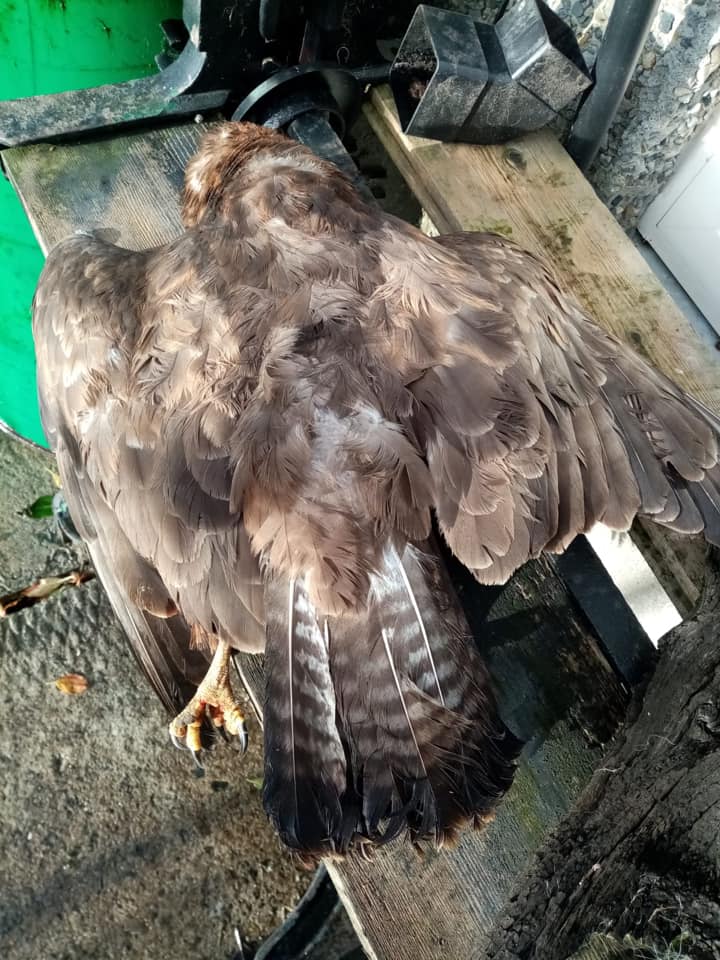
[An illegally poisoned buzzard, found on a notorious grouse moor in the Scottish Borders. Nobody was prosecuted for this crime, or any others that have been uncovered on this estate over a period of many years. Photo by RSPB Scotland]

In addition, the new ‘Finn’s Law’ will prevent those who attack or injure service animals in the course of their duties from claiming they did so in self-defence. The law is named after a police dog called Finn who was injured whilst pursuing a suspect with his handler in England in 2016 and sustained serious injuries.

Other parts of the Act will create flexible new powers to allow various Fixed Penalty Notice (FPN) regimes to be developed for a wide range of less serious animal health, animal welfare and wildlife offences, outwith the court system. These will be introduced in future secondary legislation.

Changes to restrict the licensed killing of seals are due to take effect from 1 February 2021.

The Scottish Government is also preparing a report to be laid before the Scottish Parliament by 1 March 2021 on the use of acoustic deterrent devices on fish farms.

The reclassification of mountain hares as endangered animals, which will protect the species from being killed, injured or taken (except under licence for certain limited purposes) at any time of the year is expected to come into force on 1 March 2021, subject to certain permitted exceptions.

The introduction of new powers to deal more quickly with animals seized to protect their welfare will be brought forward at the earliest opportunity in 2021.

Rural Affairs Minister Mairi Gougeon said:

We take animal welfare and wildlife crime very seriously, and we are committed to ensuring Scotland’s animals have the best possible protection, including our dedicated service animals.

The vast majority of people in Scotland treat animals and wildlife with respect and care, however the small minority who don’t will be held accountable with consequences that reflect the severity of their crime.”

Scottish Society for Prevention of Cruelty to Animals (SSPCA) Chief Superintendent Mike Flynn said:

As Scotland’s animal welfare charity, the Scottish SPCA has long campaigned for harsher sentences for animal and wildlife crime and it is fantastic to see these come in to effect. Sentencing must act as a deterrent and we are hopeful increasing sentences and fines will achieve this.

A number of the proposals due to come in to force will be transformational. We seize thousands of animals for welfare reasons every year, so the prospect of new powers to get these animals in to a home more quickly is welcome. Currently, animals can spend months or even years in our care and we look forward to working with the Scottish Government to implement the reforms as soon as possible. The Act will enhance Scotland’s position as a global leader in animal welfare standards.”

ENDS

The Animals and Wildlife (Penalties, Protections and Powers) (Scotland) Act 2020 was passed by the Scottish Parliament on 17th June 2020 and it’s been a long time coming. Seven years, actually.

In 2013, the then Environment Minister Paul Wheelhouse commissioned a review on whether penalties for wildlife crime should be increased, as a direct response to ongoing illegal raptor persecution. Professor Mark Poustie submitted his report and a series of recommendations, including a penalty increase, in 2015. The then Environment Minister Dr Aileen McLeod broadly accepted those recommendations in 2016 and the Scottish Government committed to progressing them in its 2017/2018 Programme for Government.

The usual foot-dragging exercise followed until 2019 when suddenly the Scottish Government got serious and drafted the Animals and Wildlife Bill, with a public consultation and a number of evidence sessions to bash out the details (e.g. see here).

The new legislation increases the penalties available to a court for a wide variety of animal cruelty and wildlife crime offences. Custodial sentences of up to five years and significant fines are now available for some offences and these include crimes relating to Section 1 of the Wildlife & Countryside Act (Protection of wild birds, their nests & eggs), Section 5 (Prohibition of certain methods of killing or taking wild birds), Section 6 (Sale, possession etc of live or dead wild birds, eggs etc), Section 11 (Prohibition of certain methods of killing or taking wild animals) and Section 15 (Possession of pesticides). NB: Not an exhaustive list, just of significance to this blog.

With this five year custodial threshold comes the re-defining of some of these offences as ‘serious’ (i.e. they attract a custodial sentence of three or more years), which should close some loopholes in relation to the collection of video evidence and its admissibility in court. Effectively it means that Police Scotland now have the authority to apply for permission, under the Regulation of Investigatory Powers (Scotland) Act 2000 (RIPSA), to install covert cameras on private sporting estates for the purpose of detecting wildlife crime. For anyone interested in further detail it was discussed in an earlier blog (here).

The new legislation also widens the use of vicarious liability in relation to wildlife crime. Vicarious liability, where a landowner/sporting agent etc can be held legally responsible for the criminal activity of an employee (e.g. gamekeeper), was introduced on 1st January 2012 for certain crimes against birds of prey. Under the Animals and Wildlife Act, it now also applies to offences under Section 11 of the Wildlife & Countryside Act (Prohibition of certain methods of killing or taking wild animals) and this essentially refers to the use of snares and traps.

To date there have only been two successful prosecutions for vicarious liability for raptor persecution. That’s hardly an indication of success and there have been many cases where vicarious liability might have applied (e.g. see here for most recent case) but for reasons it refuses to divulge, the Crown Office has failed to pursue a prosecution.

However, according to this recent blog by legal firm Brodies, there’s an increased appetite for prosecutions for vicarious liability in wildlife crime cases and conviction rates are expected to increase.

Let’s see.

Grouse moors – ‘a birdwatchers’ paradise’ according to Chair of Scottish Gamekeepers Association

Don’t laugh.

Actually, do laugh.

Alex Hogg, Chair of the Scottish Gamekeepers Association, was interviewed last week and he said some pretty baffling things about gamekeeping and grouse moor management, including the fantastic statement, “This is a birdwatchers’ paradise“.

Yep, he really did.

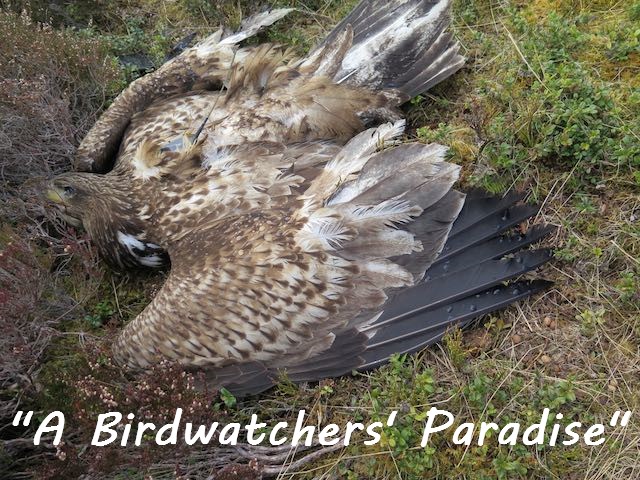
[An illegally poisoned white-tailed eagle, found dead on a grouse moor in the Cairngorms National Park earlier this year – see here and here. What a birdwatchers’ paradise!]

Alex was talking to a presenter on ITV’s regional news programme Representing Border on 2nd December 2020. The programme featured a piece on the Scottish Government’s recent decision to introduce a licensing scheme for driven grouse shooting (here) and it’s well worth five minutes of your time.

The programme is available here (starts at 15.49 mins, ends 22.01).

There was more baffling commentary from Alex, including this unfathomable statement on the effect a licensing scheme would have on gamekeeping:

We’ve done it for 200 years, we’ve kept a balance in the wildlife, and if we, it’s like a three-legged stool, if they take the leg away, we’re gone“.

Eh? I’ve no idea what ‘the leg’ is that he thinks is being ‘taken away’ and why he thinks a licensing scheme means gamekeepers will be ‘gone’. They’ll be gone if they breach the conditions of the licence (assuming it’s effectively enforced) but if they’re not doing anything illegal why would a licence cause them difficulties?

Unfortunately the presenter didn’t follow up on this, or if he did it was edited out. It’s also a shame he didn’t pick up on Alex’s statement about 200 years worth of ‘balancing the wildlife’ and ask him questions about why several species of raptors became extirpated from the UK about 100 years ago? And although some have made a brilliant comeback (with some help), why some populations are still struggling, notably in areas managed for driven grouse shooting? He could also have asked this question of Liz Smith MSP (Scottish Conservatives) who said she didn’t think that “fairly draconian” licensing was needed now!

Other interviewees were much more lucid, including Ian Thomson (RSPB Investigations, Scotland), Claudia Beamish MSP (Scottish Labour) and Mairi Gougeon (Environment Minister), who gave a robust argument for bringing in a licensing scheme now instead of sitting around for another five years doing nothing, including this statement:

There are still persistent problems out there with the illegal persecution of our birds of prey“.

It’s good to see this statement from a Scottish Minister. Can you imagine a similar comment from a Minister at Westminster?

Grouse shoot licensing: fear of ‘wider curbs’ or fear of getting caught?

The Financial Times published an interesting article a couple of days ago, with the header, ‘Scotland’s grouse shooting licence scheme fuels fears of wider curbs’ (see here).

You’ll note the sub-header includes the oft-repeated-but-not-yet-evidenced claim of ‘threats to the economy’, which seems to be the industry’s go-to response at the first hint of regulation (e.g. see discussion here).

And then there are the usual denials about the extent of illegal raptor persecution and its association with driven grouse shooting. This time the chief denier is Dee Ward, vice chair of the landowners’ lobby group Scottish Land and Estates (SLE), owner of Rottal Estate in Angus and Chairman of the Angus Glens Moorland Group. According to the article, Dee claims that ‘while a few estates might still be breaking the law, growing numbers of golden eagles and other raptors across Scotland showed the vast majority would these days never kill birds of prey’.

Now, whilst Dee is undoubtedly overseeing some great conservation work on his own estate and hosts some breeding raptors that struggle in some other areas of the Angus Glens, his suggestion that ‘a few estates might still be breaking the law‘ is a good example of why the Government’s patience has run out and a licensing scheme will be imposed.

There’s no ‘might be‘ about it. The evidence is irrefutable – some estates are most definitely still breaking the law, with impunity, and while golden eagle populations are increasing in some areas, they are still absent from core parts of their range which just happens to be managed for driven grouse shooting. The same for hen harriers, the same for peregrines, the same for red kites. Scientific reports have shown this for years and years and years and current police investigations reflect the ongoing criminality.

I would suggest that the ‘fear of wider curbs’ is actually a fear of getting caught and losing the right to shoot grouse. Those who manage their grouse shooting estates within the law, as Dee Ward does, have nothing whatsoever to fear from a licensing scheme. It’s those who continue to flout the law, in pursuit of large grouse bags at any cost, who will have the most to fear.

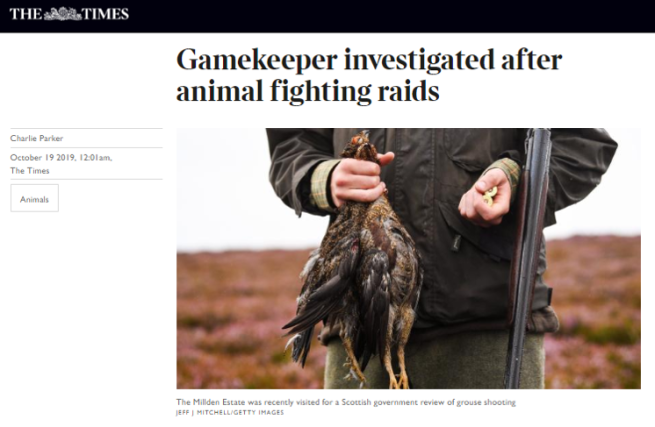
Animal cruelty charges follow SSPCA/Police raid on property at Millden Estate

In October last year the Scottish SPCA, supported by Police Scotland, executed search warrants at a number of addresses in Angus and Aberdeenshire as part of an intelligence-led investigation in to suspected animal fighting at those locations (see here).

A number of dogs were seized and an SSPCA investigator was later quoted as saying the dogs had ‘injuries consistent with animal fighting‘ (see here).

It later emerged that one of those raided properties was on the Millden Estate in the Angus Glens and that the estate had immediately suspended an employee pending further investigation (here). It was later reported that the suspended employee was a gamekeeper (here).

It was also reported that the police had recovered dead buzzards although the number of carcasses and the circumstances of the alleged discoveries were not reported.

[One of several newspaper headlines following the SSPCA/police raid in October 2019]

Since the raids there have been no further updates, until now.

A man has been charged with a number of alleged animal welfare offences. An inspector from the SSPCA’s Special Investigations Unit told me:

We can confirm that a report for Animal Welfare offences under Sec 19, 23 and 24 has been submitted to the Procurator Fiscal following a joint operation with Police Scotland in October of 2019“.

These offences relate to the Animal Health & Welfare (Scotland) Act 2006.

Section 19 concerns offences related to unnecessary suffering.

Section 23 concerns offences related to animal fights.

Section 24 concerns offences related to ensuring the welfare of animals.

This case was due to be heard last week but it has since been continued for another preliminary hearing on 11th May 2021 and a trial date has been set for 2nd June 2021.

In relation to the reported discovery of a number of dead buzzards I asked Police Scotland for an update on the investigation. Here is the statement released by the Police:

“We can confirm that a Police Scotland investigation remains ongoing in relation to search warrants which were executed at an address in Angus in October 2019. As part of these enquires, we can confirm that a 27-year-old man was reported to the Procurator Fiscal in relation to firearms offences. Officers will continue to work with the Scottish SPCA and partner agencies as the investigation continues.”

PLEASE NOTE, as there are live court proceedings and an ongoing investigation into other alleged offences, comments will not be published on this post until criminal proceedings have concluded. Thanks.

UPDATE 2 November 2021: New trial date set for Millden Estate gamekeeper accused of animal fighting offences (here)

Scottish Greens not giving an inch on grouse moor licensing regime

A week ago the Scottish Government finally announced that it had run out of patience with the grouse shooting industry and that it would begin work immediately to bring in a licensing regime for grouse moor management (see here).

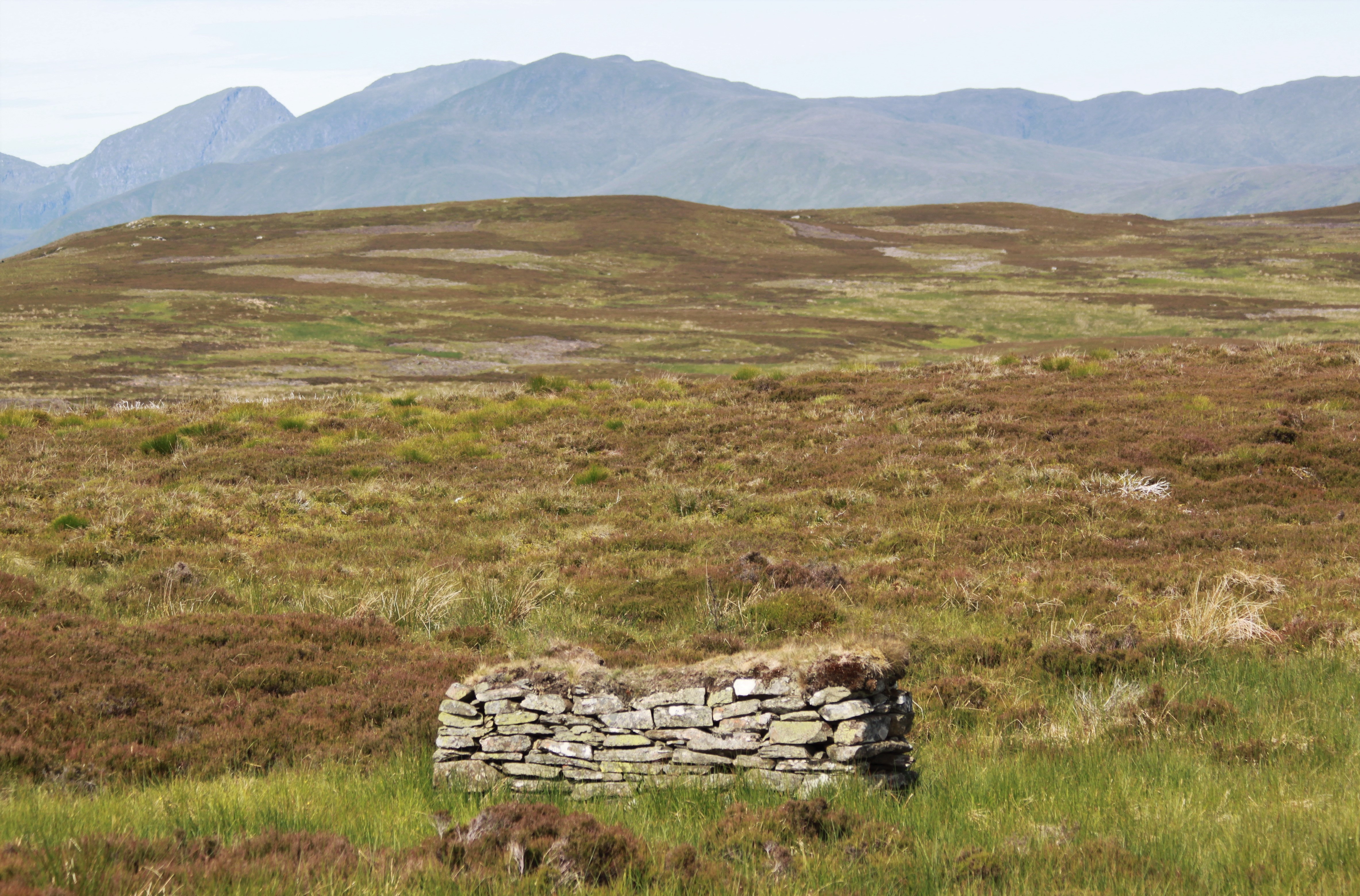
[Grouse-shooting butt on a burnt Scottish moor, photo by Ruth Tingay]

Many of the details of the proposed licensing regime are yet to be thrashed out and consultations will need to take place but the commitment has been made that, if the SNP is re-elected in May 2021 then this licensing regime will be enacted during the next Parliament.

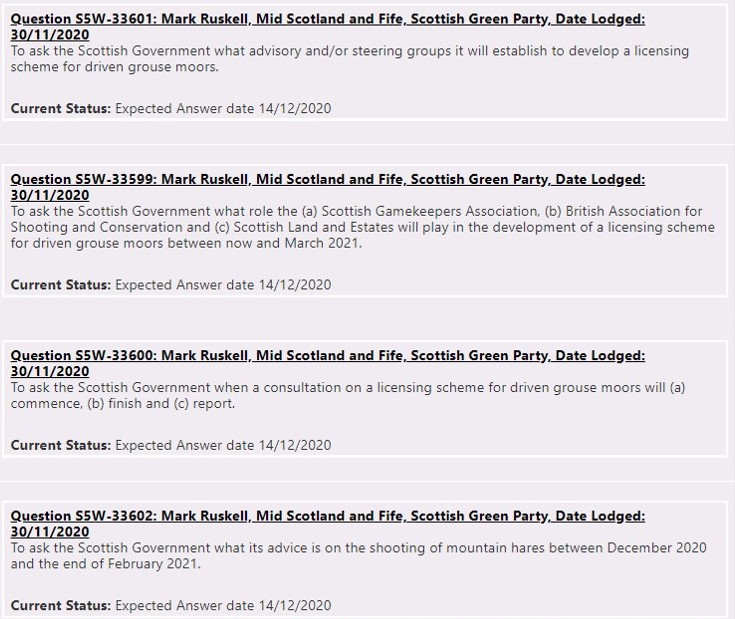
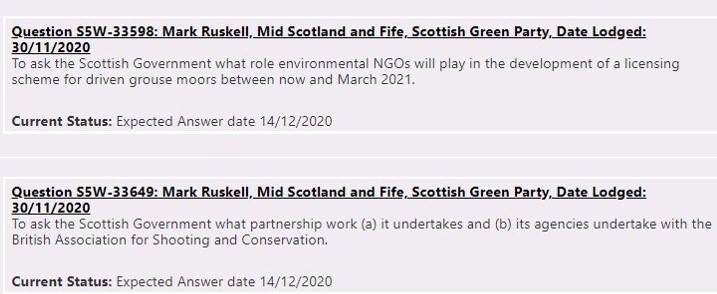
The Scottish Greens reacted to last week’s news with a healthy scepticism (see here) and that is reflected in these very welcome Parliamentary questions lodged two days ago by Mark Ruskell MSP:

Fundraiser for hen harrier satellite tags

The Nidderdale Raptor Study Group, in conjunction with the Northern England Raptor Forum (NERF) is hosting a fundraiser to support the RSPB Investigations Team to buy satellite tags for hen harriers.

In recent years satellite tags have revealed the extent of hen harrier persecution across the UK. In 2019 a damning scientific research paper demonstrated that at least 72% of tagged hen harriers were presumed illegally killed on or close to driven grouse moors (see here).

And a tally of incidents kept by this blog demonstrates that over the last two years alone at least 45 hen harriers, many of them satellite-tagged, are either ‘missing’ in suspicious circumstances or confirmed illegally killed, many on driven grouse moors (see here). It’s my understanding that this number has since risen but official notification is still pending. More on that shortly.

So, in essence, satellite-tagging has proven to be incredibly important in helping to detect a crime that is otherwise too easily hidden (and which explains the grouse shooting industry’s desperate attempts to undermine the science and the integrity of those who fit and monitor the tags).

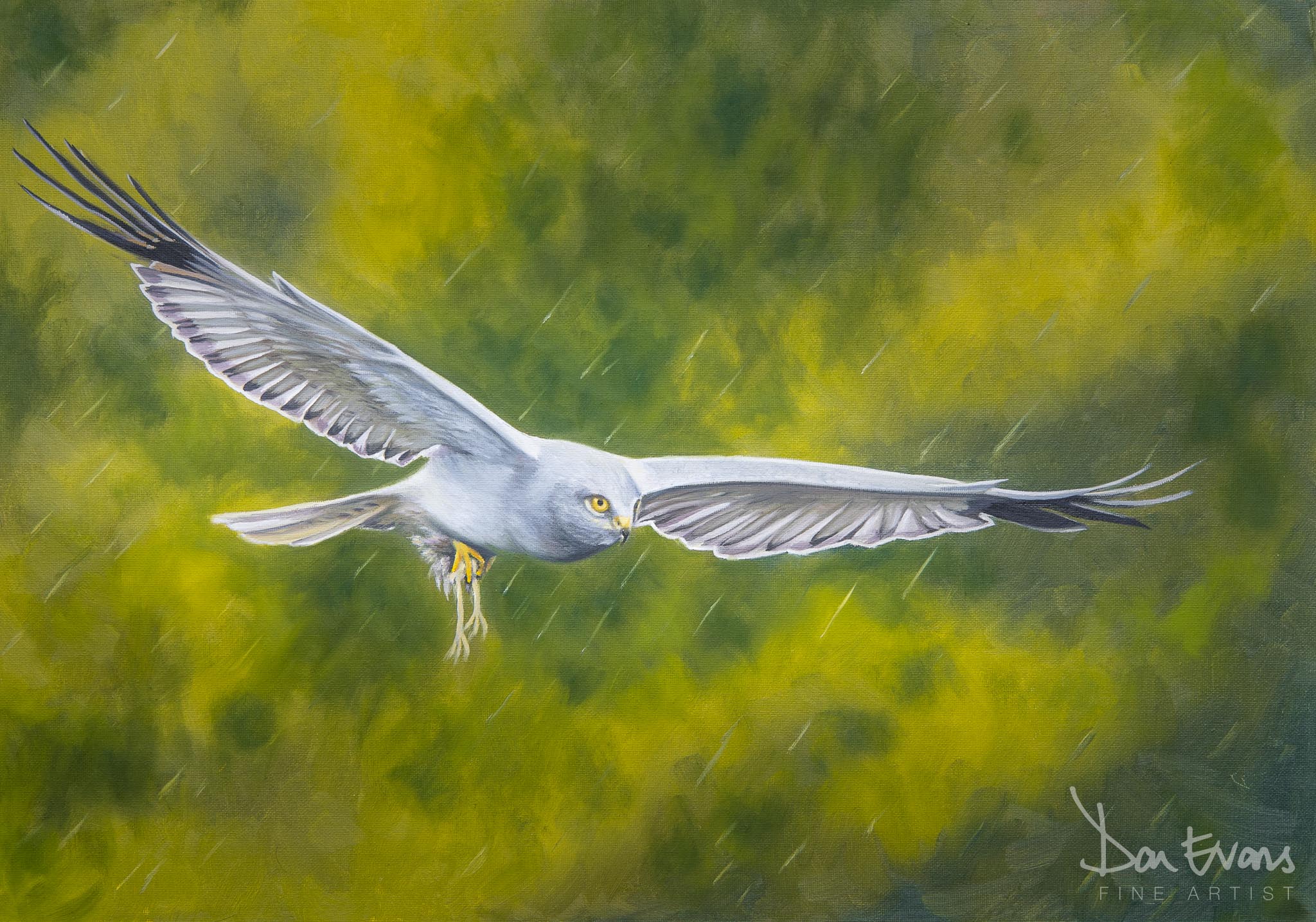
Yorkshire-based artist Dan Evans has donated this A2-sized oil painting for an online auction to help support the purchase of more satellite tags:

If you’d like to bid on this artwork please visit the auction page here. The auction will close on 23 December 2020. There is also an opportunity to buy signed limited edition prints, with all profits being donated to the sat tag fund.

There is also a fundraising page for those who may not want to buy the artwork but who may still be interested in supporting the effort to buy more satellite tags – you can visit the fundraiser page here