Raptor thief Lendrum held in prison facing extradition to Brazil

Article from the Middle East National (22 June 2020)

Notorious wildlife thief loses bid for freedom

A serial criminal notorious for smuggling rare bird eggs to the Middle East has lost a bid to be released from a UK prison.

Jeffrey Lendrum, 59, is eligible for release from jail after serving part of a 37-month sentence for trying to smuggle 19 eagle and kestrel eggs into Britain.

Each of the eggs could have fetched up to £8,000 (Dh36,273/$9,877) on the black market.

[Lendrum with raptor eggs strapped to his body in a sling at Heathrow Airport in June 2018, photo Crown Prosecution Service]

A judge told Lendrum that he must remain in prison because he faces another sentence of four and a half years in Brazil after being caught trying to take eggs from Sao Paulo to Johannesburg in 2015.

He fled the country after his conviction and Brazilian prosecutors are now seeking his extradition so that he could serve his sentence. He also has convictions in Canada and Zimbabwe.

Police believe that the ultimate destination for chicks and eggs smuggled by Lendrum was the Middle East, where they are highly prized in the falcon market.

Called the Pablo Escobar of the egg trade, he is as notorious for the extent of his global crimes as he is for his incompetence in evading capture.

Lendrum was arrested in London in June 2018 after security staff at Heathrow became suspicious of the heavy coat he was wearing on a warm day.

Seven years earlier, the Irish passport holder was arrested at Birmingham Airport when he went into the showers in the Emirates business class lounge but did not use any water.

A cleaner raised the alarm fearing that he was a terrorist.

Lawyers for Lendrum were preparing an appeal when he fled Brazil in 2015. He claimed that he was running out of money and “suffering from spider bites that needed medication”.

Refusing him bail, Mr Justice Fordham told London’s High Court that that Lendrum was a professional criminal who was responsible for a “pattern of unabated offending in the context of wild bird eggs and their export”.

“That is a serious and lucrative crime,” Mr Fordham said.

He said there were serious grounds to believe that if the applicant were released he would commit another offence on bail.

ENDS

For more background on Lendrum’s crimes see here, here, here

High Court grants permission for Wild Justice to pursue legal challenge against mass gamebird release

Wild Justice’s application for judicial review of the impacts of vast releases of non-native gamebirds on sites of high nature conservation importance has been granted.

The Hon Mr Justice Kerr has scrutinised Wild Justice’s application and has agreed that there is a substantive case for DEFRA to answer, and that case should be made in court by the end of October 2020.

Wild Justice is represented by Carol Day and Tessa Gregory, solicitors at Leigh Day, in this legal case.

Carol said “Defra was prompted to launch a review into the release of gamebirds on protected sites following the threat of legal action by Wild Justice in 2019 and on the issue of proceedings sought to argue the case is academic and premature. In granting permission for Judicial Review and ordering a hearing before the end of October, the Judge has clearly recognised the importance and urgency of this case, which will now be given a full and proper airing in Court.

This legal challenge is already fully funded by those who chose to support a Wild Justice crowdfunder last year.

For more information on this case and other Wild Justice legal challenges, both current and forthcoming, check out the Wild Justice blog (here) and subscribe to the free Wild Justice newsletter (here).

Scottish Parliament votes to protect mountain hares

HUGE congratulations to Scottish Greens MSP Alison Johnstone this evening after her amendment calling for protected status to be given to mountain hares (and thus effectively ending the slaughter of 26,000 on grouse moors every year) was passed, 60 votes for, 19 against.

Full credit to Environment Minister Mairi Gougeon for supporting the amendment.

More on this when the official report is published, and more on the finer details of the Animals & Wildlife Bill.

A lot of people have put in a massive effort on this issue over the years. For now, though, lets raise a glass to the late Professor Adam Watson whose meticulous five-decade research on the mountain hare has provided the evidence which finally led to this tangible and hard-fought-for conservation win.

UPDATES:

Report of the meeting of Parliament, 17 June 2020 here: Report of meeting of Parliament 17June2020

New taskforce to consider increased powers for SSPCA (sound familiar?)

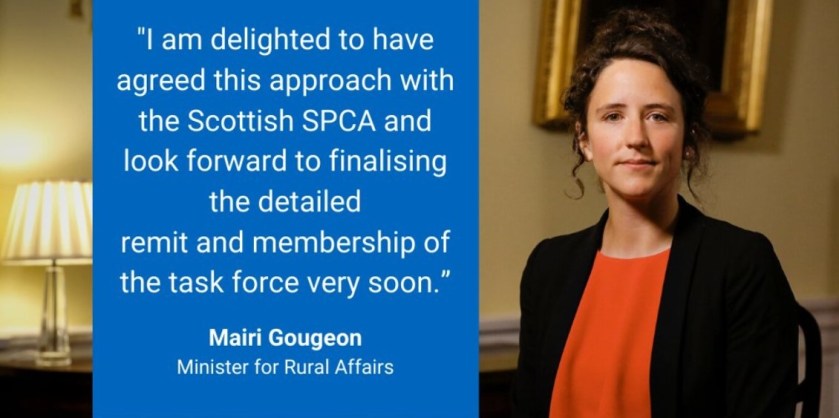
The Scottish Government’s Environment Minister, Mairi Gougeon, has announced a commitment to establish an independent taskforce to consider an extension of powers for the SSPCA which could lead to them being allowed to investigate a wider remit of wildlife crime than at present, including raptor persecution.

This announcement is a result of yet another strong amendment made by the Scottish Greens on the Animals and Wildlife Bill currently passing through Parliament. Mark Ruskell MSP proposed further powers for the SSPCA at Stage 2 during an evidence session of the Environment, Climate Change & Land Reform (ECCLR) Committee on 26 May 2020. Mairi Gougeon persuaded him to withdraw the proposed amendment on the basis that she’d consider establishing a taskforce. You can read their discussion here: ECCLR 26 May 2020_discussion SSPCA increased powers_Ruskell_Gougeon

Mairi Gougeon has now confirmed her commitment to establishing an ‘independent’ taskforce this summer, with a view to seeing it report in the New Year as long as Covid19 and Brexit shenanigans don’t disrupt. You can read her confirmation letter to the ECCLR (and her correspondence with a seemingly very grateful SSPCA) here: Gougeon correspondence to ECCLR SSPCA on proposed taskforce

[The Scottish Government published this on social media last night]
Sounds good, right? We’re all sick of the raptor killing criminals getting away with it so announcing a taskforce to consider extending the SSPCA’s powers so that its officers can investigate a wider remit of wildlife crime (instead of being restricted to investigating crimes that only include live animals, as at present) must be brilliant news, surely.

But is it, really?

For those of you with long memories, you’ll know that the issue of increased powers for the SSPCA to tackle more wildlife crime has been around for many, many years. Since 2011, in fact. It has been debated and consulted to death and yet has gone absolutely nowhere, despite six (yes, six) Environment Ministers presiding over it (Roseanna Cunningham, Stewart Stevenson, Paul Wheelhouse, Aileen McLeod, Roseanna Cunningham [again, but this time as Cabinet Secretary] and now Mairi Gougeon).

For those new to this, here’s a quick recap of how the Scottish Government has dealt with this issue so far:

February 2011: Increased powers for the SSPCA was first suggested by former MSP Peter Peacock as an amendment during the Wildlife & Natural Environment (Scotland) Bill debates. The then Environment Minister Roseanna Cunningham rejected it as an amendment but suggested a public consultation was in order.

September 2011: Seven months later Elaine Murray MSP (Scottish Labour) lodged a parliamentary motion that further powers for the SSPCA should be considered.

November 2011: Elaine Murray MSP (Scottish Labour) formalised the question in a P&Q session and the next Environment Minister, Stewart Stevenson MSP, then promised that the consultation would happen ‘in the first half of 2012’.

September 2012: Nine months later and nothing had happened so we asked Paul Wheelhouse MSP, as the new Environment Minister, when the consultation would take place. The response, in October 2012, was:

The consultation has been delayed by resource pressures but will be brought forward in the near future”.

July 2013: Ten months later and still no sign so we asked the Environment Minister (still Paul Wheelhouse) again. In August 2013, this was the response:

We regret that resource pressures did further delay the public consultation on the extension of SSPCA powers. However, I can confirm that the consultation document will be published later this year”.

September 2013: At a meeting of the PAW Executive Group, Minister Wheelhouse said this:

The consultation on new powers for the SSPCA will be published in October 2013“.

January 2014: In response to one of our blog readers who wrote to the Minister (still Paul Wheelhouse) to ask why the consultation had not yet been published:

We very much regret that resource pressures have caused further delays to the consultation to gain views on the extension of SSPCA powers. It will be published in the near future“.

31 March 2014: Public consultation launched.

1 September 2014: Consultation closed.

26 October 2014: We published our analysis of the consultation responses here.

22 January 2015: Analysis of consultation responses published by Scottish Government. 233 responses (although 7,256 responses if online petition included – see here).

We were told a decision would come from the new Environment Minister, Dr Aileen McLeod MSP, “in due course”.

1 September 2015: One year after the consultation closed and still nothing.

25 February 2016: In response to a question posed by the Rural Affairs, Climate Change & Environment Committee, Environment Minister Dr Aileen McLeod said: “I have some further matters to clarify with the SSPCA, however I do hope to be able to report on the Scottish Government’s position on this issue shortly“.

May 2016: Dr Aileen McLeod fails to get re-elected and loses her position as Environment Minister. Roseanna Cunningham is promoted to a newly-created position of Cabinet Secretary for the Environment.

12 May 2016: Mark Ruskell MSP (Scottish Greens) submits the following Parliamentary question:

Question S5W-00030 – To ask the Scottish Government when it will announce its decision regarding extending the powers of the Scottish SPCA to tackle wildlife crime.

26 May 2016: Cabinet Secretary Roseanna Cunningham responds with this:

A decision on whether to extend the investigatory powers of the Scottish SPCA will be announced in due course.

1 September 2016: Two years after the consultation closed and still nothing.

9 January 2017: Mark Ruskell MSP (Scottish Greens) submits the following Parliamentary question:

Question S5W-05982 – To ask the Scottish Government by what date it will publish its response to the consultation on the extension of wildlife crime investigative powers for inspectors in the Scottish SPCA.

17 January 2017: Cabinet Secretary Roseanna Cunningham responds:

A decision on whether to extend the investigatory powers of the Scottish Society for the Prevention of Cruelty to Animals will be announced in the first half of 2017.

31 May 2017: Cabinet Secretary Roseanna Cunningham rejects an extension of powers for the SSPCA ‘based on legal advice’ and instead announces, as an alternative, a pilot scheme of Special Constables for the Cairngorms National Park (here). It later emerged in 2018 that this pilot scheme was also an alternative to the Government’s 2016 manifesto pledge to establish a Wildlife Crime Investigation Unit as part of Police Scotland – a pledge on which it had now reneged (see here).

November 2019: The pilot scheme of Special Constables in the Cairngorms National Park was an absolute failure as a grand total of zero wildlife crimes were recorded by the Special Constables but plenty were reported by others (see here).

So here we are again, nine years on and the latest Environment Minister has announced a taskforce. Given the unimpressive history, it’s really difficult to be excited by this announcement. That’s no reflection on Mairi Gougeon’s commitment to the issue – her integrity is not in doubt – but this Government’s appalling track record of constant can-kicking on SSPCA powers, on tackling wildlife crime and particularly on raptor persecution within the game-shooting industry, is wearing very thin indeed.

Perhaps a more optimistic perspective would be to say that even after all these years of debate, delays, parliamentary questions, delays, reviews, delays, consultation, delays, alternative schemes, delays, this issue simply refuses to go away, as do those of us determined to hold this Government to account and insist that everything possible is done to bring the raptor killing criminals to justice.

Kudos to the Scottish Greens and especially to Mark Ruskell MSP who has maintained the pressure on this particular issue for all these years.

Peregrine eggs taken from three nest sites in Peak District

From the BBC News website (16 June 2020)

Peregrine falcon eggs taken from three sites in Peak District

Eggs from peregrine falcon nests at three different sites in the Peak District were taken in early spring, Derbyshire Police has revealed.

The force said there could be a number of individuals or groups responsible as part of a “black market trade”.

Derbyshire Wildlife Trust said the eggs may have been removed while volunteers – who patrol the White Peak area – were forced into lockdown in late March.

Rural crime officer PC Karl Webster said the eggs would be worth a lot.

“We believe they’re taking them to hatch,” he said.

“There’s a lucrative Middle Eastern falconry market allied to this country, an investigation two to three years ago confirmed that.”

The birds of prey, which were heavily persecuted in the 1960s and suffered from the impact of pesticides, have recovered in numbers in recent years.

However, they are still illegally killed and targeted for their eggs and chicks, according to the RSPB.

David Savage, from Derbyshire Wildlife Trust, said the taking of eggs was “sickening”.

“We began the season with great hopes and tried to keep an eye on them as much as we could, but unfortunately when we couldn’t watch them 24 hours a day, they were taken,” he said.

“It has been difficult to monitor the site in lockdown – the end of March and early April was when our volunteers were indoors.”

In May, the RSPB said it had been “overrun” by reports of birds of prey being illegally killed since the lockdown across the UK.

ENDS

Original article on BBC website here

UPDATE 7th November 2020: Man charged in relation to alleged theft of peregrine eggs in Derbyshire Peak District (here)

UPDATE 17th November 2020: Derbyshire man due in court in February for alleged theft of peregrine eggs in Peak District (here)

UPDATE 20th February 2021: Trial date set as man pleads not guilty to theft of peregrine eggs in Peak District (here)

UPDATE 26th May 2022: Derbyshire Police criticised as prosecution collapses against alleged peregrine egg thief in Peak District National Park (here)

Scottish gamekeepers desperate to keep slaughtering mountain hares on grouse moors

The Scottish Gamekeepers Association (SGA) has come out all guns blazing to try and prevent the Scottish Parliament from voting to protect the mountain hare in tomorrow’s debate on Stage 3 of the Animals and Wildlife Bill.

Scottish gamekeepers are terrified that they’ll no longer be able to enjoy what everyone else sees as a grotesque bloodbath.

SGA Chairman Alex Hogg has penned a typically deluded letter to MSPs in which he claims to be ‘a representative of the people of all of Scotland‘ (eh?) and how stopping the mass slaughter of mountain hares on grouse moors ‘will affect human beings’ lives’ (er…) and ‘worsen the conservation status of the mountain hare‘. Really?

Oh, and further justification for the slaughter is the protection of walkers, ramblers and mountain bikers from the perils of Lyme disease:

Of course, it’s not the first time the SGA has been accused of making ‘misleading’ and ‘greatly exaggerated’ claims’ about mountain hares (see here and here).

Meanwhile back on planet humanity, support is growing for MSP Alison Johnstone’s amendment to increase protection for the mountain hare that would effectively end the mass killing on grouse moors (see here and here).

The RSPB has published a good blog in support (here), as has animal welfare charity OneKind (here), and the signatures on the Scottish Green’s petition calling for support has now passed 12,000 in just a few days. If you’d like to sign it, please visit HERE.

Please keep writing to your MSPs – we know that mail bags have been inundated on this topic and it’ll be of great interest to see who votes in support of this amendment in tomorrow’s debate.

Parliamentary questions on lead ammunition & medicated grit on grouse moors

The Scottish Greens just keep piling on the pressure.

Some interesting Parliamentary questions from Mark Ruskell MSP on the toxic hazard of lead ammunition and the use of medicated grit on grouse moors:

Question S5W-29820, Date Lodged: 09/06/2020

To ask the Scottish Government what proportion of the active ingredient in the medicated grit that is used on managed grouse moors is excreted by the birds. [Expected answer date 24/6/2020]

Question S5W-29821, Date Lodged: 09/06/2020
To ask the Scottish Government what assessment SEPA has made regarding the wider environmental impacts of the medicated grit that is used on grouse moors. [Expected answer date 24/6/2020]
Question S5W-29822, Date Lodged: 09/06/2020
To ask the Scottish Government what testing is carried out on the levels in the human food chain of the active ingredient in the medicated grit that is used on grouse moors. [Expected answer date 24/6/2020]
Question S5W-29823, Date Lodged: 09/06/2020
To ask the Scottish Government when it expects the use of lead ammunition to be entirely phased out on (a) public and (b) private land. [Expected answer date 24/6/2020]
Question S5W-29824, Date Lodged: 09/06/2020
To ask the Scottish Government what level of lead from shot gameboards [sic] is present in the human food chain, and what regular analysis it carries out of this. [Expected answer date 24/6/2020]
The Scottish Government is going to struggle not to look completely incompetent and/or wholly unconcerned about the unregulated toxic hazards that feature on driven grouse moors. This can be stated with confidence because the answers to Mark’s questions are already known.
The active ingredient in medicated grit is Flubendazole, a drug that has been identified as ‘an emerging environmental contaminant of acute and chronic toxicity’ and has been shown to be particularly toxic to aquatic organisms. Previous Freedom of Information requests submitted by this blog have revealed that the Scottish Government is not monitoring the impact of medicated grit, even though it’s known that some in the industry are using a super-strength dose up to twenty times the original dose! Surveillance undertaken by the Veterinary Medicines Directorate (VMD), responsible for the national (UK) monitoring of veterinary drugs in food products, has been woefully inadequate, and that’s being kind. In a country that shoots an estimated three quarters of a million red grouse each year, the VMD proposed to test just ten birds in 2018 (see here).
The use of lead ammunition to shoot gamebirds in the UK is unregulated, despite the well-documented high toxicity of this metal and the consequential health implications of consuming it. With most of the previously significant sources of lead in the environment now having been eliminated decades ago (e.g. lead-based paints and leaded petrol), lead-based ammunition is the most significant unregulated source of lead deliberately emitted in to the environment. It’s a poison, it’s as simple as that.
If that wasn’t bad enough, the most jaw-dropping revelation is that all gamebirds (including red grouse) appear to be exempt from statutory testing for lead shot, in sharp contrast to other meat types destined for human consumption. Research (here) has shown that shot red grouse destined for the food chain may contain excessive amounts of toxic poisonous lead (over 100 times the lead levels that would be legal for other meat)!
Talk about vested interests! The law makers of the day clearly put their own pleasure and convenience above the health and welfare of the general public and the environment. It’s an absolute shocker that this continues.
The game shooting industry knows that time is up on this issue and earlier this year we saw a high profile media campaign suggesting that the industry supported a ‘voluntary ban’ on the use of lead ammunition (yeah, because this industry’s adherence to voluntary restraint is legendary, right?) and wanted to see it phased out within five years. Unfortunately, not everybody in the industry was singing from the same hymn sheet and it turned in to a bit of a car crash when the Scottish Gamekeepers Association refused to sign up (see here).
It’ll be interesting to see how the Scottish Government responds to Mark’s questions.
For those who want to find out more about the use of medicated grit and lead ammunition, download fully referenced summary report (here) from Revive, the coalition for grouse moor reform.
UPDATE 13 July 2020: Disingenuous parliamentary answers from Scot Gov on toxic hazards of grouse moor management (here)

YOUR vote to end mass slaughter of mountain hares on Scottish grouse moors

As you know, Scottish Greens MSP Alison Johnstone has recently lodged an amendment to the Animals & Wildlife Bill, which would make mountain hares a protected species, effectively ending the mass slaughter on grouse moors (see earlier blog here).

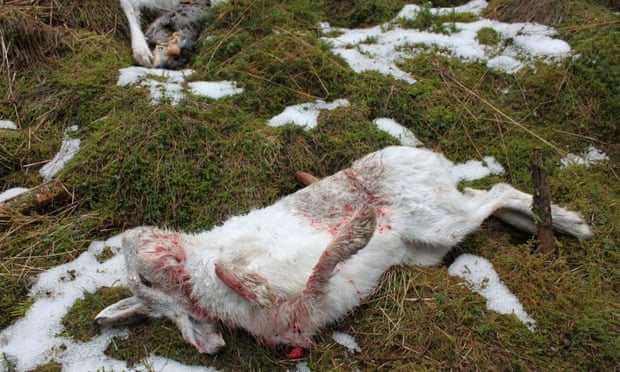
An estimated 26,000 mountain hares are killed on grouse moors every year. Here’s one of them, shot and left to rot on Glenogil Estate in the Angus Glens. Photo by OneKind:

Alison’s amendment is due to be debated and then voted upon by the Scottish Parliament on Wednesday 17 June 2020.

There has been a LOT of activity on social media since the amendment was announced, with many constituents contacting their MSPs and asking for an indication of how they intend to vote on this issue.

As a further demonstration of public support for the amendment, the Scottish Greens have launched a public petition where YOU can have your say. It has gathered over 7,000 votes in the last two days. If you’d like to sign it, please click HERE

For those who want to learn more about the mass killing of mountain hares on Scottish grouse moors, this 2017 report (here) provides a good introduction, as does this video:

Infamous Kildrummy Estate sold to new owners

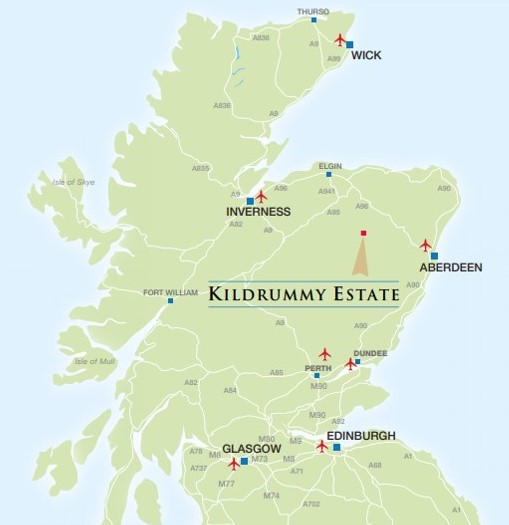
The Kildrummy Estate in Aberdeenshire is infamous for a number of reasons.

Firstly, its gamekeeper became the UK’s first (and so far, the only gamekeeper) to receive a custodial sentence for raptor persecution in 2014 after his conviction on four counts, including the illegal killing of a trapped goshawk which he clubbed to death on the estate in 2012 (see here and here).

Secondly, a vicarious liability prosecution against the gamekeeper’s supervisor/employer wasn’t possible because the police were unable to establish the identity of the management hierarchy because the details of land ownership were concealed in an offshore holding (see here, here and here).

Today it’s been reported on various websites that Kildrummy Estate has been sold for a cool £11 million and the new owners, Americans Chris & Camille Bently, are described as being supporters of ‘animal rights’. For example, see this article on the Insider website, which incidentally also discusses the criminal conviction of the former Kildrummy estate gamekeeper but mistakenly reports he was sentenced to ‘four years for laying poisoned bait’ – that’s wishful thinking, it was only four months and we’re not aware of poisoned baits being laid on this estate.

Blog readers may be interested in reading the sales particulars for Kildrummy Estate, which provide a fascinating insight in to a location that has previously been shrouded in secrecy.

Download the sales document here: Kildrummy Estate sales particulars June 2020

Good luck to the Bentlys – let’s hope their vision for this estate is one centred on rewilding and conservation and not exploitation and criminality.

UPDATE: This blog post was picked up by The Herald 6 July 2020 here

37 hen harriers ‘missing’ or confirmed killed since 2018

It’s getting to that time of year when the grouse shooting industry pumps out its patently misleading propaganda relating to hen harrier conservation in the UK. The aim is to hoodwink the public in to believing that the industry loves hen harriers and is doing all it can to protect and nurture the tiny remnant breeding population (but conveniently forgetting to mention that the breeding population is only in such dire straits because the grouse shooting industry has been ruthless in its maniacal intolerance of this supposedly protected species).

And the industry’s pursuit of the hen harrier is not ‘historical’ or indicative of past behaviour, as some would have us believe. It is on-going, it is current, and it is relentless.

To illustrate this fact, we intend to keep a running tally of all the hen harriers that we know (because most of these victims had been fitted with a satellite tag) to have either ‘disappeared’ in suspicious circumstances or have been confirmed as being illegally killed since 2018.

Why only since 2018 when we know that hen harriers have been a persecution target for years and years and years? Well, 2018 is the year that the grouse shooting industry ‘leaders’ would have us believe that the criminal persecution of hen harriers had stopped and that these birds were being welcomed back on to the UK’s grouse moors (see here).

Having just learned that all five of last year’s brood meddled hen harrier chicks are now ‘missing’ and presumed dead (one, #55147, probably dead from natural causes during a sea crossing so is not classed as ‘suspicious’ but the other four ‘missing’ in highly suspicious circumstances in the UK’s uplands – see here), it’s time to update the death list, which currently stands at 37. We have every expectation that this list will be updated again in the near future.

For now, here are the 37:

February 2018: Hen harrier Saorsa ‘disappeared’ in the Angus Glens in Scotland (here). The Scottish Gamekeepers Association later published wholly inaccurate information claiming the bird had been re-sighted. The RSPB dismissed this as “completely false” (here).

5 February 2018: Hen harrier Marc ‘disappeared’ on a grouse moor in Durham (here)

9 February 2018: Hen harrier Aalin ‘disappeared’ on a grouse moor in Wales (here)

March 2018: Hen harrier Blue ‘disappeared’ in the Lake District National Park (here)

March 2018: Hen harrier Finn ‘disappeared’ near Moffat in Scotland (here)

18 April 2018: Hen harrier Lia ‘disappeared’ in Wales and her corpse was retrieved in a field in May 2018. Cause of death was unconfirmed but police treating death as suspicious (here)

8 August 2018: Hen harrier Hilma ‘disappeared’ on a grouse moor in Northumberland (here).

16 August 2018: Hen harrier Athena ‘disappeared’ on a grouse moor in Scotland (here)

26 August 2018: Hen Harrier Octavia ‘disappeared’ on a grouse moor in the Peak District National Park (here)

29 August 2018: Hen harrier Margot ‘disappeared’ on a grouse moor in Scotland (here)

29 August 2018: Hen Harrier Heulwen ‘disappeared’ on a grouse moor in Wales (here)

3 September 2018: Hen harrier Stelmaria ‘disappeared’ on a grouse moor in Scotland (here)

24 September 2018: Hen harrier Heather ‘disappeared’ on a grouse moor in Scotland (here)

2 October 2018: Hen harrier Mabel ‘disappeared’ on a grouse moor on the edge of the Yorkshire Dales National Park (here)

3 October 2018: Hen Harrier Thor ‘disappeared’ next to a grouse moor in Bowland, Lanacashire (here)

26 October 2018: Hen harrier Arthur ‘disappeared’ on a grouse moor in the North York Moors National Park (here)

10 November 2018: Hen harrier Rannoch ‘disappeared’ on a grouse moor in Scotland (here). Her corpse was found nearby in May 2019 – she’d been killed in an illegally-set spring trap (here).

14 November 2018: Hen harrier River ‘disappeared’ on a grouse moor in the Nidderdale AONB (here). Her corpse was found nearby in April 2019 – she’d been illegally shot (here).

16 January 2019: Hen harrier Vulcan ‘disappeared’ in Wiltshire close to Natural England’s proposed reintroduction site (here)

7 February 2019: Hen harrier Skylar ‘disappeared’ next to a grouse moor in South Lanarkshire (here)

22 April 2019: Hen harrier Marci ‘disappeared’ on a grouse moor in the Cairngorms National Park (here)

11 May 2019: An untagged male hen harrier was caught in an illegally-set trap next to his nest on a grouse moor in South Lanarkshire. He didn’t survive (here)

7 June 2019: An untagged hen harrier was found dead on a grouse moor in Scotland. A post mortem stated the bird had died as a result of ‘penetrating trauma’ injuries and that this bird had previously been shot (here)

5 September 2019: Wildland Hen Harrier 1 ‘disappeared’ on a grouse moor nr Dalnaspidal on the edge of the Cairngorms National Park (here)

11 September 2019: Hen harrier Romario ‘disappeared’ on a grouse moor in the Cairngorms National Park (here)

14 September 2019: Hen harrier (Brood meddled in 2019, #183704) ‘disappeared’ in North Pennines (here)

23 September 2019: Hen harrier (Brood meddled in 2019, #55149) ‘disappeared’ in North Pennines (here)

24 September 2019: Wildland Hen Harrier 2 ‘disappeared’ on a grouse moor at Invercauld in the Cairngorms National Park (here)

10 October 2019: Hen harrier Ada ‘disappeared’ on a grouse moor in the North Pennines AONB (here)

12 October 2019: Hen harrier Thistle ‘disappeared’ on a grouse moor in Sutherland (here)

18 October 2019: Member of the public reports the witnessed shooting of an untagged male hen harrier on White Syke Hill in North Yorkshire (here)

November 2019: Hen harrier Mary found illegally poisoned on a pheasant shoot in Ireland (here)

January 2020: Members of the public report the witnessed shooting of a male hen harrier on Threshfield Moor in the Yorkshire Dales National Park (here)

1 April 2020: Hen harrier (Brood meddled in 2019, #183703) ‘disappeared’ in unnamed location, tag intermittent (here)

21 May 2020: Hen harrier (Brood meddled in 2019, #183701) ‘disappeared’ on a grouse moor in Cumbria shortly after returning from wintering in France (here)

To be continued……..