Muirburn banned in Scotland from tomorrow as emergency legislation receives royal assent

The Coronavirus (Scotland) Bill, agreed by the Scottish Parliament last Wednesday, has today received royal assent and thus as of tomorrow (Tuesday 7th April 2020) becomes enacted.

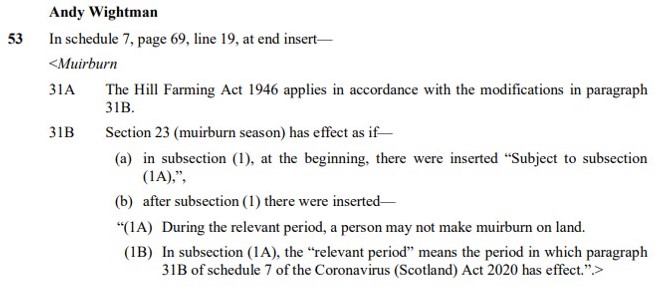
This emergency legislation (Coronavirus (Scotland) Act 2020) incorporated an amendment from Scottish Greens MSP Andy Wightman leading to an immediate halt to all muirburn across Scotland, including on grouse moors, for the remainder of the muirburn season (up to and including 30 April 2020).

If you see any evidence of muirburn please report it to Police Scotland.

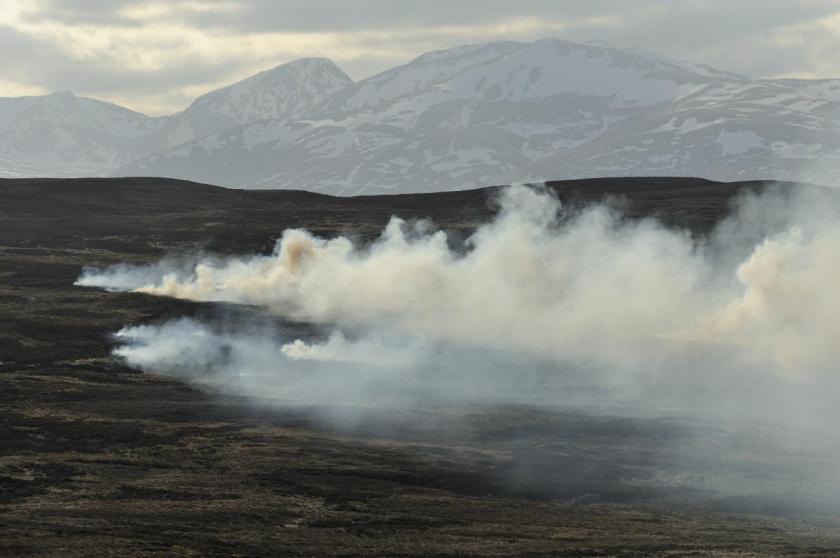
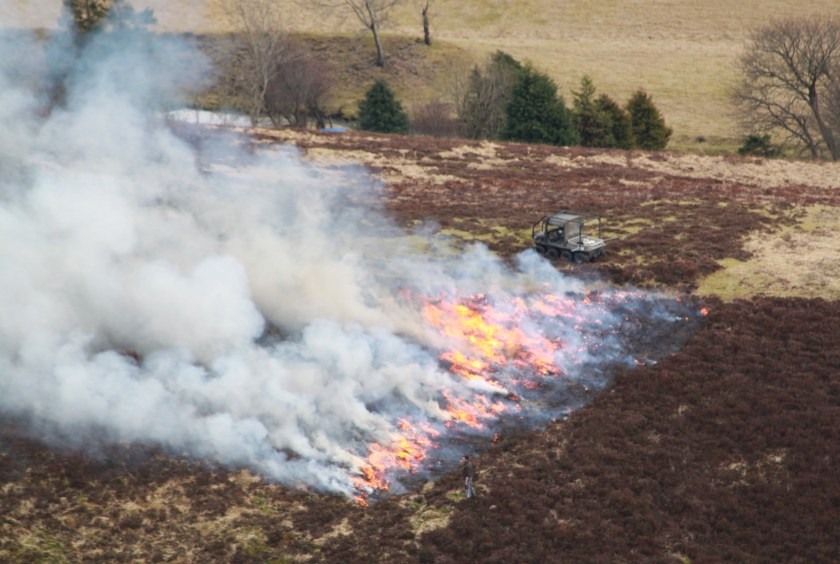
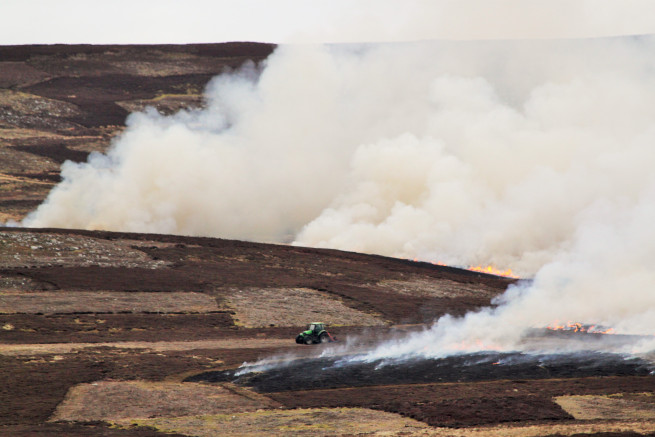
[Muirburn, photo via Scottish Natural Heritage]

More burning restrictions on some grouse moors in northern England

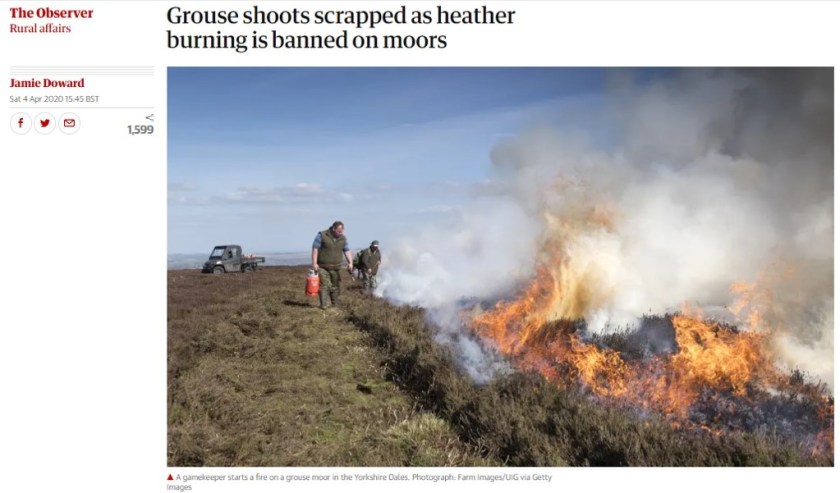
The Guardian has published an Observer article (see here) claiming that ‘grouse shoots scrapped as heather burning is banned on moors’.

Unfortunately the headline is quite misleading. The article relates to some land in the north of England owned by three landowners (Yorkshire Water, United Utilities and National Trust) but there’s no evidence that grouse shooting has been ‘scrapped’ there.

It’s also a bit confusing, throwing around terms such as ‘banned’ and ‘outlawed’, possibly in relation to what is referred to as ‘routine burning’ but then says that written consent is available to some tenants (for routine burning or occasional burning? And how is this defined?), although perhaps this is in relation to historical leases still in play.

The article also says that, in relation to the coronavirus outbreak, the water companies have said that ‘all burning must now cease until further notice’, which we already knew (see here) but ‘until further notice’ suggests that they may permit burning again in the future, right? Or is this simply referring to occasional burning as opposed to the ‘routine burning’ mentioned above?

Whatever, despite the embellished headline and blurry story line, the fact that three major landowners are imposing some sort of restriction on grouse moor burning across the English uplands is really very good news. As Mark Avery has written (here), it is another step in the right direction of travel towards an end to driven grouse shooting and for that reason is warmly welcomed.

Well done Yorkshire Water, United Utilities and National Trust.

BASC’s integrity goes up in smoke

The grouse-shooting industry continues to stamp its feet and wail about Andy Wightman’s success at persuading the majority of legislators to introduce an immediate (but temporary) ban on muirburn across Scotland last night (see here).

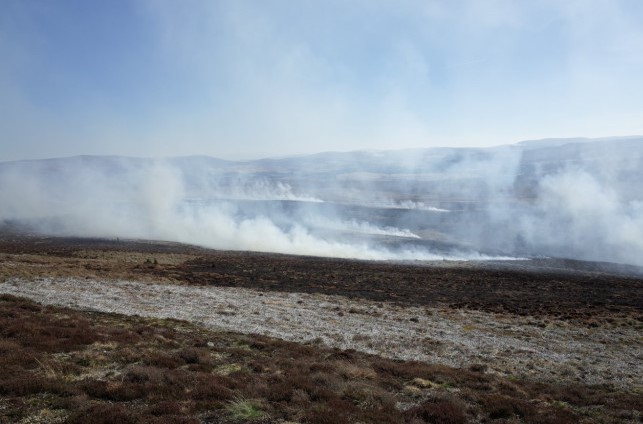
[Muirburn on a Highland grouse moor in April 2017, photo by one of our blog readers]

Today the British Association for Shooting & apparently Conservation (BASC) issued a press release claiming that the Scottish Greens had launched an “unnecessary attack on shooting” and how it was “an exceedingly poor use of parliamentary time“.

Even funnier, BASC argued that Andy Wightman’s amendment was lodged “despite the shooting community instigating a voluntary cessation of burning last week“.

Er, BASC appear to have ‘forgotten’ to mention the widespread evidence that not all landowners were adhering to the call for a voluntary cessation, as published here and here, which is precisely why Andy lodged his amendment and presumably why it gained so much cross-party support (except from the Tories).

Have you ever seen anything so absurd? BASC, who openly admit to endorsing last week’s call for voluntary restraint, objecting to the very legislation that will now force the gamekeepers to stop lighting fires!

It’s even funnier to see BASC trot out its latest soundbite of choice: ‘[The Greens] have proved they are out of touch with the national mood……‘ Yeah, BASC said this about Wild Justice recently, too. Funny, BASC seems to have erased from memory its recent u-turn on using lead ammunition, leading to a meltdown amongst its members (and a reported loss of many many subscriptions), all caused by BASC’s inability to ‘judge the mood’.

What we appear to be seeing now is BASC desperately playing to the gallery to try and make itself look relevant in an attempt to claw back some of those deserters.

Fortunately, the majority of the politicians in the Chamber last night had a far better grasp of the nation’s mood (and its safety) than does BASC.


Who voted for & against a temporary ban on muirburn?

Andy Wightman’s success at getting ‘Amendment 53’ approved in the Scottish Parliament last night, leading to the immediate (but temporary) ban on muirburn across Scotland (see here), has caused some within the grouse shooting world to, how shall we call it, lose their shit.

The vitriol and personal abuse being aimed at Andy on social media is really quite telling and if ever you wanted to see examples of how the mask can slip on people who have previously purported to be ‘voices of reason’ then you need look no further. Then there are the ones who are so out of control they’ve never even tried to appear reasonable and whose tirades of hatred continue without pause for rational thought (or to consider the potential for having their firearms and shotgun certificates removed).

[Muriburn, photo by Ruth Tingay]

For the more sensible, here is a copy of the transcript relating to Andy’s proposed amendment, the ‘debate’ it generated (a bit of ignorance and abuse from Murdo Fraser MSP & a bit of informed support from Michael Russell MSP) and the subsequent vote: amendment 53_debate and vote

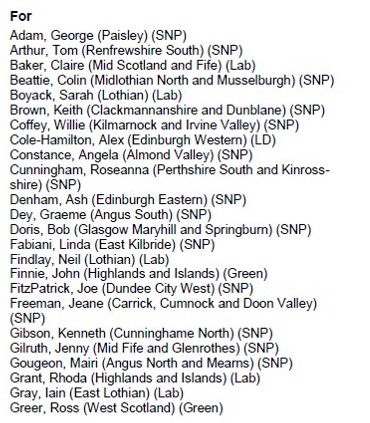
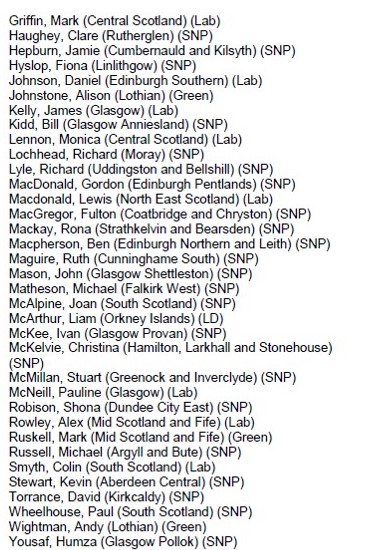
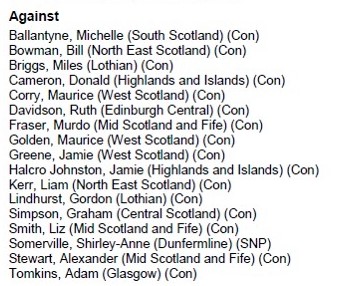
Amendment 53 was passed 59 votes to 17.

It’s interesting and almost entirely predictable (with one small surprise – [Ed: please now see update at foot of blog]) to see who voted for and against:

UPDATE 3rd April 2020: Please read the comments section on this blog. A blog reader contacted Shirley-Anne Somerville’s office about this vote and received the following in return:

Response from Shirley-Anne Somerville’s Office Manager:
Hi Greg

Thank you getting in touch with Shirley-Anne, she has asked me to reply on her behalf.

Shirley-Anne fully supports Amendment 53, in line with the rest of her Scottish Government and SNP colleagues. There appears to be some confusion about the voting, the official record on the Scottish Parliament website indicated to me that Shirley-Anne did in fact vote for the amendment. I have attached a screenshot of the voting record search I performed a short time ago.

Should, when the official reports be published and there has been any kind of error of sorts, Shirley-Anne would only have voted against this amendment purely by mistake and accidentally pushed the wrong voting button.

I hope this helps to clarify things, should you have any other matter you wish to raise, please do not hesitate to get in touch.

Kind regards

Cameron

Cameron Crawford

Office Manager

Shirley-Anne Somerville

MSP for Dunfermline

ENDS


Andy Wightman MSP secures immediate (temporary) muirburn ban

Further to this afternoon’s post (here) outlining Andy Wightman’s proposal to seek a temporary legislative ban on muirburn in Scotland for the duration of the Coronavirus lockdown – he was successful!

After welcoming Scottish Land and Estate’s call for a voluntary halt to setting the moors alight, Andy pointed out that some landowners had ignored the call and were continuing to light fires on grouse moors. He also pointed to the latest wildfire danger assessment published this morning by the Scottish Wildfire Forum which rates the danger of wildfire in the coming week in parts of southern and eastern Scotland as ‘VERY HIGH’ and ‘EXTREME’ (see here).

[Muirburn, photo by Ruth Tingay]

Andy’s amendment was challenged by Murdo Fraser MSP (Conservatives) who claimed, falsely, that there was no evidence of continued muirburn in Scotland (he must have missed this and this) and that even if there was (which there was/is), it still didn’t necessitate legislation because, he argued, that the muirburn season would practically be over by the time the legislation is enacted anyway. He ‘forgot’ to factor in the additional two weeks between 15-30 April during which muirburn may continue at the landowner’s discretion.

Andy came back at him and argued that all he was seeking to do was give some legislative power to Scottish Land and Estate’s call for voluntary restraint.

Minister Mike Russell provided support for Andy’s amendment and said that if burning was continuing it needed to stop now.

The amendment was put to the vote and it passed 59 to 17.

This means that when the Coronavirus (Scotland) Bill (Emergency Bill) gains royal assent (and thus becomes an Act), all muirburn must stop. If anyone continues to light fires on grouse moors (or indeed on any land covered by the muirburn section (23) of the Hill Farming Act 1946) they will be breaking the law and could face prosecution.

Judging by the hysteria being generated by some within the grouse shooting industry this evening (including predictably abusive attacks on Andy’s character and integrity), you’d think that muirburn had been banned forever. If only! However, the reality is it has only been banned for the remainder of this season (up until 30 April). This is emergency legislation and thus it doesn’t ban muirburn for all time. Currently, the legislation bans muirburn for the duration of the Coronavirus crisis (the Bill provides this is currently 30 Sept but with power to extend by six months). However, it’ll provide useful food for thought for the Scottish Government as we continue to wait for its response to the Werritty Review on grouse moor management.

Instead of attacking Andy, who was simply making full use of the democratic process, those critics should be looking at those estates who ignored last week’s call to stop burning…..it’s thanks to them that the legislation passed with such ease!

Well done, Andy and the Scottish Greens – this is a fantastic result!

The transcript and voting record of this amendment can be read here: amendment 53_debate and vote

Andy Wightman MSP seeks muirburn ban during Coronavirus lockdown

Further to the news that grouse moor burning has continued across Scotland (see here and here) despite calls for restraint and in total defiance of the current public health crisis, Scottish Green’s MSP Andy Wightman is seeking a legislative ban on all muirburn as part of the emergency laws going through the Scottish Parliament today.

[Muirburn, photograph by Ruth Tingay]

The Scottish Greens have published the following press release this afternoon:

WIGHTMAN PROPOSES MOOR BURNING BAN DURING LOCKDOWN

The practice of burning moorland to prepare for recreational grouse shooting is continuing in Scotland, despite the coronavirus lockdown.

Witnesses have tweeted pictures of the practice continuing throughout Scotland, even after landowners were told to stop by Scottish Land and Estates on March 25.

In England, one fire got out of control and spread into a one-mile long fire-front, leading to concerns over the pressure this practice can place on the emergency services.

Scottish Green MSP Andy Wightman today sought to include a legislative ban in emergency laws going through the Scottish Parliament.

Commenting, Andy Wightman said: “It is absurd that while the country is told to stay at home, with sporting and cultural events cancelled and businesses compelled to close, some landowners have proceeded to inflict environmental damage on their land in the expectation that a privileged few will still be able to go and shoot birds for a hobby.

There cannot be business as usual for the lairds and lockdown for the rest of us. There is too little scrutiny of grouse moors at the best of times, but damaging the hills during a lockdown and risking putting further pressure on our emergency services is reckless. The practice should end with immediate effect.”

ENDS

The Coronavirus (Scotland) Bill (Emergency Bill) is being debated in the Scottish Parliament this afternoon and is expected to be passed later this evening.

Here is Andy’s proposed amendment, which if passed would result in a ban on all hill fires, including setting the grouse moors alight, with immediate effect:

SNH issues new wildlife-killing licences in Scotland

Scottish Natural Heritage (SNH) has issued its new General Licences today, which mostly focus on permitting the killing of some bird species under some circumstances, but there’s also a new General Licence (#14) with new rules on how stoats can be killed.

We blogged about the (then forthcoming) new General Licences for birds back in February (see here) when SNH published some information about the proposed changes.

Although this widespread killing is still mostly unmonitored, uncapped, too loosely regulated and the trap users generally unaccountable for their actions, some of the changes are to be welcomed, including the removal of some bird species from some licences and the removal of General Licences from some protected areas (to be replaced by individual licences) following legal challenges by Wild Justice south of the border.

We particularly welcome the new rule that individual bird trap operators must now register with SNH. Previously the General Licence conditions had stated that live-catch corvid traps (e.g. Larsen traps, Larsen mate traps and multi-catch crow cage traps) had to display an identification number of the trap owner, but this number did not identify an individual trap operator, only the owner, typically the landowner or sporting agent. So if an alleged breach/offence was detected, and the trap was located on a large grouse shooting estate where multiple gamekeepers were employed, it was virtually impossible for the Police to identify an individual suspect (and thus charge anyone) because the estate and gamekeepers simply closed ranks, offered a ‘no comment’ response and failed to identify the actual trap user. It’ll be interesting to see whether SNH knowing the identity of the trap operator will lead to successful prosecutions for mis-use.

[A multi-catch crow cage trap, baited with a live decoy bird and used to capture hundreds of birds which are then killed, often by being beaten to death with a stick. Photo by OneKind]

However, even though there are some welcome changes in the new General Licences there are still many details in need of drastic improvement, not least the paucity of animal welfare considerations.

Late last year, Revive, the coalition for grouse moor reform published a new report authored by coalition members OneKind and League Against Cruel Sports (Scotland) called Untold Suffering, which documented the scale and type of suffering endured by wildlife (and in some cases domestic pets) in various traps deployed on grouse moors.

Today, OneKind has written a blog about the animal welfare implications of the new General Licences for birds and is calling for a comprehensive welfare review (read the OneKind blog here).

Still on the subject of General Licences for birds, Wild Justice continues its legal challenge of the licences recently issued by Natural Resources Wales (NRW) and has written two more blogs about the glaring errors that make those who sanctioned these licences look like fools (see here and here).

The newest General Licence in Scotland (#14) relates to the permitted killing of stoats for the conservation of wild birds or for prevention of serious damage to livestock. Natural England has also issued one and NRW is due to issue one today. This legislation has been in the pipeline for a few years as the UK has to now comply with the Agreement on International Humane Trapping Standards.

We don’t intend to go in to detail right now but the main point here is that stoat-killers are no longer permitted to use the Mark 4 Fenn (spring) trap for stoats, although apparently it is still a legal trap for rats and weasels as long as the conditions of the Springs Traps Approval Order are met. Instead, five new and apparently humane traps have been authorised by the new General Licence for killing stoats.

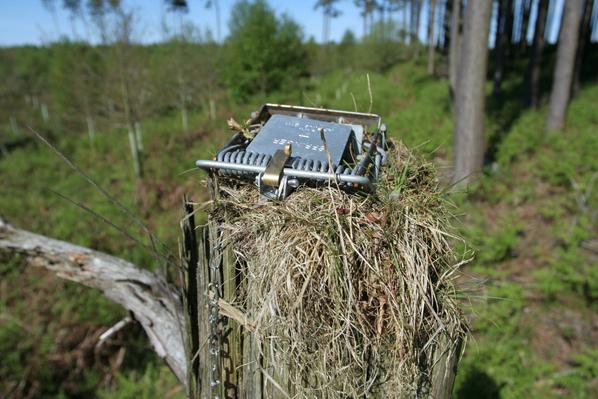
[The Mark 4 Fenn Trap is no longer permitted for catching stoats in the UK]

It’s not clear to us whether gamekeepers are still permitted to set the Mark 4 Fenn traps on the pretence of catching rats or weasels (but really still targeting stoats). If a stoat is captured will the trap operator be able to claim it as ‘accidental by-catch’? Or should the new legislation be interpreted in a way that gamekeepers should not set these traps in areas where the risk of catching stoats is high? And how would that risk be measured?

Time will tell, because inevitably there will be gamekeepers who will ignore the law and use these traps illegally, just as they’re still being used as illegal pole traps over one hundred years after pole-trapping was banned!

[A Mark 4 Fenn trap being used as an illegally-set pole trap, photo by RSPB]