
‘We’re waiting for Werritty’ has been a tedious and tiresome response for months now.
I wrote a long four-page article on this topic back in July, for the September edition of Birdwatch magazine. I wondered at the time whether the article would still be relevant by September because, surely, the Werritty Review would be published before the Sept edition of Birdwatch, right? It was stupid of me to be concerned; of course the Werritty Review hasn’t yet been published.
[Thanks, Birdwatch, for commissioning this work and continuing to highlight illegal raptor persecution with such prominence. The Sept edition is now available in the shops or online].
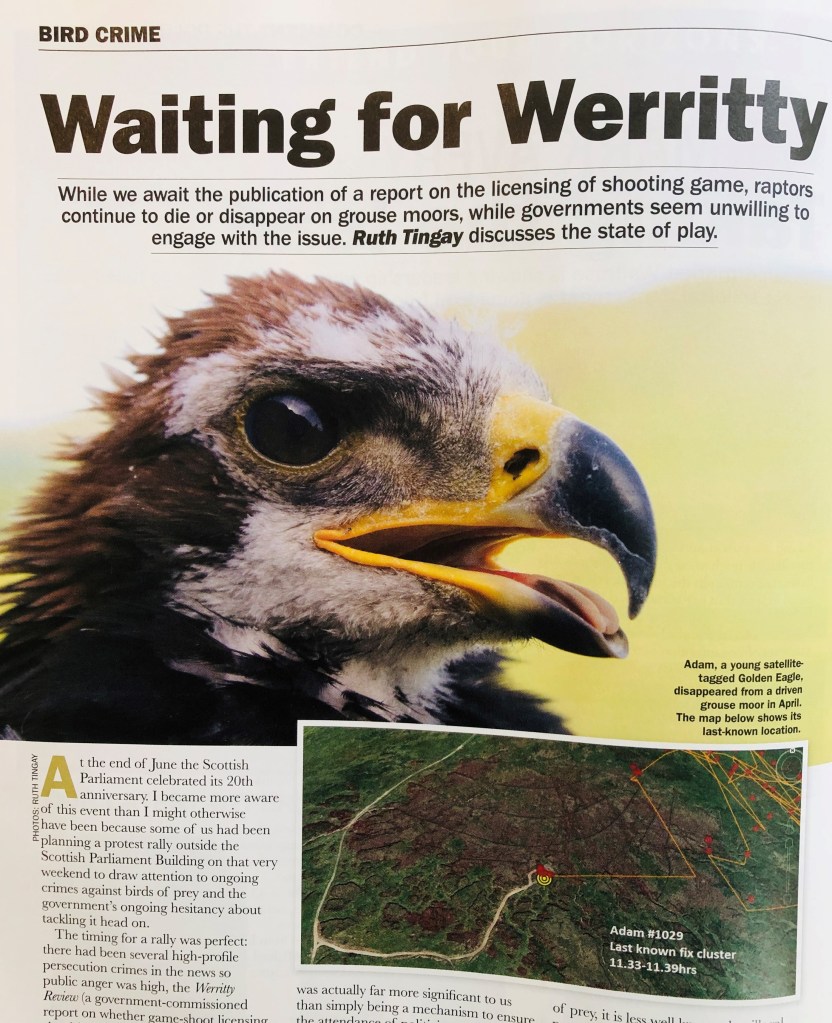

Originally due to report in Spring 2019, the Werritty Review (a Scottish Government-commissioned review of grouse moor management) was initially delayed due to health reasons, which is fair enough. Then we heard it’d report in June, then we heard it’d be in July, then we heard from Professor Werritty himself that it’d be ‘during the summer‘.
At the end of July, in response to public fury about on-going illegal raptor persecution on Scottish grouse moors, a Government spokesperson told us the report ‘was due in the next few weeks’ (see here).
Five weeks on and now in to September (some of us consider this to be autumn) and we’re still ‘waiting for Werritty’.
One of the major concerns about this ongoing delay was that the Scottish Government would have insufficient time to factor the Werritty Review in to its 2019 – 2020 work programme and thus any recommendations that Professor Werritty had made in his review would be kicked further in to the long grass and left to rot and fester for another few more years.
However, somebody in the Scottish Government appears to be on the ball. The Programme for Government has been published today (see here) and tucked away on page 59 is this:
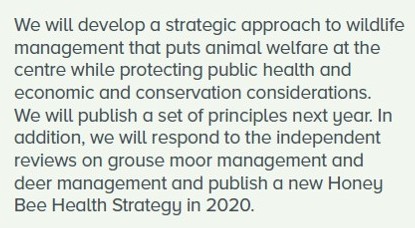
That’s promising, sort of, in that we can expect a response before the end of 2020(!).
 Raptor Persecution UK
Werrity is like Christmas in Narnia – always coming but never quite….
He has no intention of publishing this report, it’s deliberate delay tactics, is this guy in paid employment, if so he should be sacked now.
[Ed: Hi John, it’s not Prof Werritty’s job to publish the report – that responsibility rests with the Scottish Government. Prof Werritty has been commissioned to Chair the Review Group and to submit the report to Scot Gov. He’s an esteemed professional from the world of academia where reputation counts – it’s unlikely that he would have accepted the commission if he had no intention of delivering.]
This does smell like it’s not (at present) giving the information that certain influential stakeholders want to be made public. It smells like some stakeholders want to do some horse trading behind the science.
Remember the pressure that had to be exerted to get the information on Hen Harrier tags in England
My concern is that I cannot see how the increase of wildlife sentences to 5 years with unlimited fines etc has been brought forward for implementation.
I can find the similar animal welfare increase. I hope that a suitable vehicle is there but I don’t see it on my first examination.
The problem with academia having such influence over wildlife welfare is that it’s “not cool”, or open to accusations of over-sentimentality, to tell it like it is. This form of science, based on functionality while virtually ignoring ethics, is deemed sufficient evidence to assess the validity of controlling predators, or even relatively ‘harmless’ interspecific interactions. The worst cases of persecution are often based on hearsay or folklore rather than scientific fact or bona-fide evidence; the historical and continuing massacre directed against Ravens by ‘country folks’ is a particularly typical example of the vivid imagination of keepers of sheep flocks. It always strikes me as odd that humans whose livelihood depends on providing meat for human consumption leads not only to unnecessary cruelty and exploitation of farm animals (albeit relatively rarely), but has to involve the mass slaughter of perceived or imaginary competition. To do so for pleasure is primitive and unacceptable.
When in 2020? December?
More and more I get the feeling this whole enterprise has been framed to keep the status quo rolling along with perhaps a little window dressing. A key point is ensuring we actually know if grouse shooting is really making an economic contribution to rural communities, or if it’s actually suppressing them. Almost certainly the latter, I wonder what odds Ladbrokes would give on a proper, independent economic assessment giving driven grouse shooting in particular a big thumbs up for its role in creating countryside jobs? Is the report going to question this issue or just regurgitate the propaganda/dogma about ‘injecting money into fragile rural communities’? It will be a HUGE failure if it does, because it didn’t begin with the right question.
Iain unfortunately at the recent hugely powerful Revive an MSP on the Animal Welfare cross party group if I heard correctly was also stating that they had been shown pics of the ‘ distressing ‘ damage ravens had done to lambs – having seen intact body of what appeared a naturally dead lamb left at side of field for days until pecked to a near carcass, I feel your frustration
I have great respect for you but puzzled at your final sentences above. Having lived next to a cattle market as a child and had my eyes opened to practices when i took the forbidden shortcut through it,and saw chillingly on every visit the whipping and beating , cramming ,and kicking ,of the poor animals , and kept alert to issues in the subsequent decades I would say unnecessary cruelty and exploitation of farm animals is far from relatively rare. Pictures of the recently – last month- dropped from Tesco supplier and Red Tractor bacon and pork branded Hogwood Farm show what horrific standards can still be deemed acceptable today.
When you have thrived without meat for decades it does seem that there would be much less readiness to accept slaughter or killing for fun on grouse moors & slaughter of wildlife , if there was more questioning of why it’s not deemed primitive and unacceptable to eat bunnies lambs etc that didn’t want to die
Until our government takes off the blindfolds and earmuffs , stops promoting issues like live transport of baby calves to Southern Europe on tortuous journeys etc , then it seems Robert Burns was far more forward thinking on animal welfare in the 18th century than our government today.
Carol – having watched as a difficult calving was resolved by dragging the calf from its mother by using a tractor would suggest to me that you are absolutely correct when you state that cruelty is widespread – not rare! – That the vet (who was subsequently called) took no action against the people involved beggars belief. The calf was crippled and no use to anyone. I never saw it again so I assume it was taken away and shot.
As for sheep, well! I use to ‘help out’ at shearing time when the ‘flock’ was taken down from the hill. I had a menial job (I probably wasn’t trusted to do anything like actually shearing!) Whatever, after the third year of this I got to wondering how they were able to pay me what was a very decent wage for 3 days work, given that they employed about five to six shearers and at least a dozen to gather the sheep off the hill over two days.
With the number of sheep gathered, it didn’t seem to me that there could be any profit at all . But there was profit, because they simply exagerated the number of sheep gathered – by a considerable percentage – and this went on year after year.
I understand that there are tighter controls now.
I can only assume that this was the ‘norm’ throughout the area so, I am afraid, when a crofter complains about ravens, they get no sympathy whatsoever from me. They leave the sheep to lamb out on the hill then the can suffer the consequences – not that they are ever as bad as they make them out to be.