
RSPB press release (15 May 2019)
RSPB announces new Chief Executive
The RSPB has today announced that its new Chief Executive will be Beccy Speight, currently Chief Executive at the Woodland Trust.
She succeeds Dr Mike Clarke who announced he was stepping down late last year.
[Beccy Speight, photo from Woodland Trust]
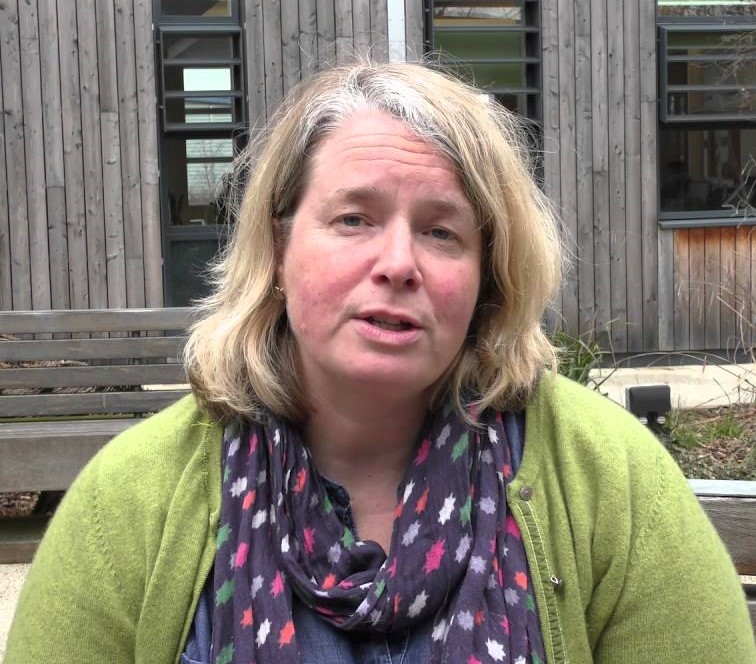 Beccy joins us from the Woodland Trust, where she has been Chief Executive since 2014. At the Woodland Trust Beccy successfully led a period of significant re-focus and expansion, growing income by over 35 per cent. Beccy oversaw the development and implementation of a ten-year strategy which has raised the profile of the Woodland Trust, built many new partnerships and developed a great leadership team, supported by more effective structures and a new culture. Prior to this Beccy worked for the National Trust for 14 years, most recently as Director for the Midlands region.
As the RSPB’s Chief Executive, Beccy will provide the clear vision to drive the development and implementation of a strategy that will successfully deliver the RSPB’s charitable objectives and maximise its mission to save nature. Beccy will also be responsible for the operation and management of more than 200 RSPB nature reserves across England, Wales, Scotland and Northern Ireland, which are visited by around 2.5 million people each year.
Commenting on her appointment, Beccy said: “I am really excited about joining the RSPB. The fight to save nature has never been more important and the RSPB is uniquely positioned to make a difference. This is an interesting and challenging time for the charity and I’m looking forward to getting started in my role and helping to lead our great contribution.”
RSPB Chairman, Kevin Cox, added: “We are delighted to welcome someone of Beccy’s calibre to the RSPB. We’re at a key point in history for nature conservation in the UK when the natural world is coming under increasing threat. At this crucial time of change, the RSPB must evolve to respond to these threats, ensuring that we’re in the best possible shape to make a difference for nature.
The organisation has undergone a period of significant change over the past year and Beccy’s outstanding track record, personal qualities and commitment to the cause of nature conservation will ensure the charity continues to move forward with confidence.
I’d like to thank our outgoing CEO, Mike Clarke, who has been instrumental in driving significant growth in membership, while modernising our mission to ensure we remain relevant in a changing world and fostering a new era of collaboration on behalf of nature conservation. We all wish him the best in his future endeavours.”
The RSPB is the largest conservation organisation in Europe, with more than 1.2 million members, over 2,000 employees and around 12,000 volunteers. It has over 200 nature reserves across the UK, wild havens where everyone can get closer to nature and home to 80 per cent of our rarest or more threatened bird species. The RSPB also works internationally and is a leading player in BirdLife International, a partnership of conservation organisations working to save nature across the world.
ENDS
It’s not clear from this press release when Beccy will take up her new role but obviously we congratulate her on her successful application. Tackling the illegal killing of raptors on driven grouse moors will be one of many issues crossing her desk and we look forward to finding out what her approach will be.
 Raptor Persecution UK
I wish her well and would recommend that before she starts, she uses the time to read and absorb Ben MacDonald’s excellent book Rebirding. The RSPB sorely needs a new direction.
I’m a WT member and there’s nothing about Beccy that makes me worry for the RSPB. The WT has definitely taken quite a strong line against the damage caused by HS2 and the overzealous ‘management’of trees growing alongside the rail network. I doubt she’ll be reluctant to take a pop at anybody or anything if it’s needed. I was heartened last year that in a single issue of their magazine Broadleaf they made two negative references to the shooting fraternity. One was that it was probably the near annihilation of the pine marten by gamekeepers that was responsible for allowing the grey squirrel to establish itself in the UK and displace the red squirrel in most of the country. The second was a major new initiative to tackle non native invasive plants which are driving down biodiversity in many of our woods. Again the magazine pointed out many of these had been planted out originally as cover for game. The ‘evidence’ that raptors or corvids drive down the populations of other birds is non existent or extremely weak with a negligible effect at best. Go to a wood choked with rhododendron or cherry laurel though and see how many songbirds or other wildlife you see? Plants like snowberry and cherry laurel are STILL being sold by nurseries for shooting estates to plant out. Given how Wild Justice is contesting the GL being used to ‘control’ jackdaws, rooks, magpies and jays for conservation purposes it’s ridiculous the same people trying to get them ostensibly for that have turned a blind eye to the collapse of biodiversity caused by rampant game cover. The WT is the one conservation organisation that’s so far recognised this to any extent what so ever and potentially the credibility and ‘moral ‘ high ground the shooting fraternity has in calling for the death of predators for ‘con’servation purposes would be left in tatters if their role in destroying the base of the food pyramid so pheasants have something nice and cosy to hide in becomes publicly known – the public is pretty clued up about the negative role of introduced species so it wouldn’t take much. If Beccy pushes this while at the RSPB that would be a magic start!
I wish Becky well. I am not very familiar with her achievements and actions whilst at the WT but note Les’ positive comments above. However, I am slightly concerned that the weight of the press release’s focus seemed to be on her income raising achievements/capabilities and those of Mike Clarke. Of course this is important – without funds the RSPB can do nothing – but I would have preferred a statement that was more heavily focused on the conservation challenges the RSPB faces and what needs to be done about them – the steady draining of wildlife from our countryside, the alarming state of sea-bird colonies in many parts of our coast, the continuing illegal persecution of raptors and so on.
Having said that, she has not yet got her feet under the table so it will be fair to reserve judgement until she has had time to make her mark on the organisation and the direction it is heading in.