Obituary: Ricky Gladwell Snr

We’re saddened to report the passing of Ricky Gladwell Snr, a long-standing member of the Scottish Raptor Study Group, a field expert in hen harrier ecology and a familiar smiling face at the annual conferences of the SRSG and Northern England Raptor Forum.

A lovely, lovely man who will be dearly missed.

Below is an obituary written by his friend and colleague Chris Rollie:

[Photo of Ricky Gladwell Snr by George Christie]
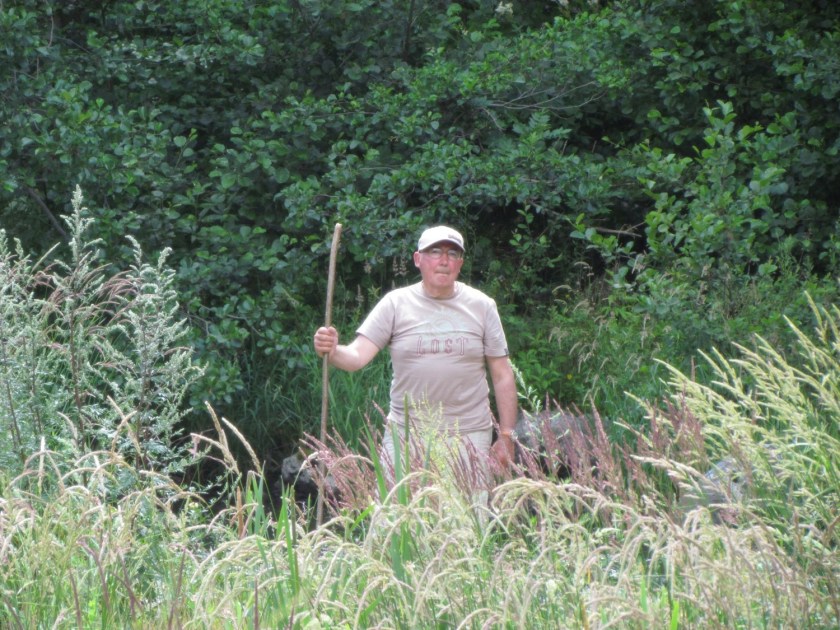
Richard Gladwell Snr

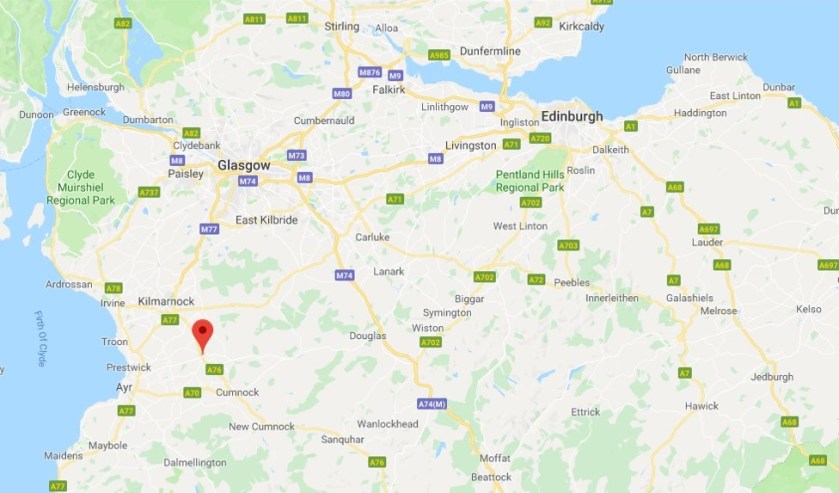
On 16 November 2018 Richard Gladwell died in Crosshouse Hospital, Kilmarnock, of lung failure following recent diagnosis of Motor Neurone Disease, and so Scottish raptor groups lost one of their unsung heroes of dedicated observational fieldwork.

Ricky was born in Darvel, Ayrshire, on 12 February 1945 and, apart from several years in Yorkshire, lived most of his life in Galston near Kilmarnock, where he worked as an engineer with Glazier Metals and latterly Johnnie Walker Whisky. Although he always had a love of walking in the hills and local moors, it was a chance meeting with Dick Roxburgh on the upper Avon Water around 1980 that inspired him to intensively study and record some of the scarcer raptors he encountered in the area. His friendly nature, steady approach and experience of abseiling soon made him a key member of Dick’s developing network of raptor workers. He quickly gained field expertise with breeding peregrines, golden eagles and merlins, but hen harriers became his passion and he studied them intensively throughout the year, becoming a world expert on the species – christened by Dick `the Jock Stein of harriers’.

A meticulous recorder, Ricky was a founding member of the Southwest Scotland Raptor Study Group, becoming Secretary-Treasurer of the South Strathclyde group for many years and a regular attender of Dumfries & Galloway group meetings and national conferences. However, it was his observational skills and fieldcraft that elevated his work on breeding and roosting hen harriers to a level that attracted fellow enthusiasts including Donald Watson and Roger Clarke, who became firm friends. A recurring question in the late 1980s was whether some breeding birds stayed on to overwinter in the same area, resulting in the Southwest group embarking on a wing-tagging programme that attracted the RSPB, who employed Brian Etheridge to successfully broaden this work to other areas of Scotland. Brian, of course, became a close friend and harrier expert in his own right, with a deep appreciation of and respect for Ricky’s advice and deep knowledge of the species.

Ricky’s fieldwork and data gathering over many years made a huge contribution to the designation of Special Protection Areas for breeding and wintering hen harriers and other raptors at Muirkirk and North Lowther Uplands, and for breeding hen harriers at Glen App and Galloway Moors. His friendly and engaging manner impressed farmers, estate owners and even some gamekeepers, whilst his attention to detail in recording greatly facilitated the difficult work of SNH in the successful designation of these impressive moorland areas, which otherwise might well have been lost to forestry or developed as wind farms.

He carried his love of harriers to Auvergne, France annually over some fifteen years, where he watched both hen and Montagu’s harriers enjoying freedom from persecution or even attention from local people, they were so part of the scene, but where increasing silage production reduced their respective populations to a small fraction of their former glory.

Never one for the limelight, sadly Ricky never published his various behavioural findings, but his passion, experience and knowledge of hen harriers is both undoubted and unsurpassed by anyone in the field of hen harrier study in the UK. He recorded important territorial behaviour related to food supply by hen harriers in winter, and his knowledge of roosting behaviour was on a par with his dear friend Donald Watson, who died in 2005. He was also one of nicest, most hospitable, intelligent and helpful people you could hope to know, a dear friend and inspiration to all who knew him in the Southwest of Scotland and beyond. He is survived by his daughter Mary and sons Richard Jnr, Ian and Jim.

Chris Rollie, December 2018

Glasgow school kids learn golden eagle persecution still a thing in their country

How poignant are these?

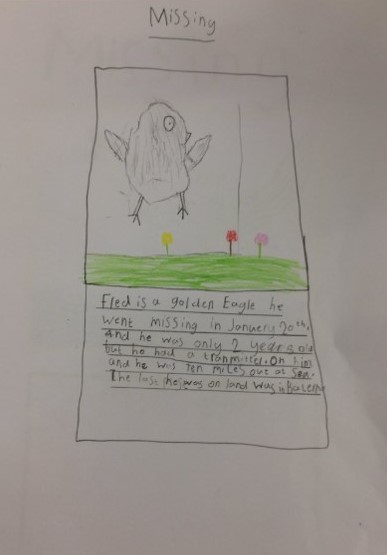
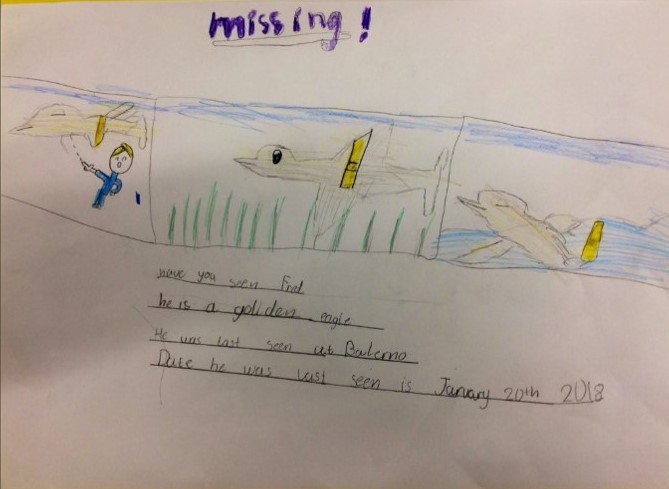
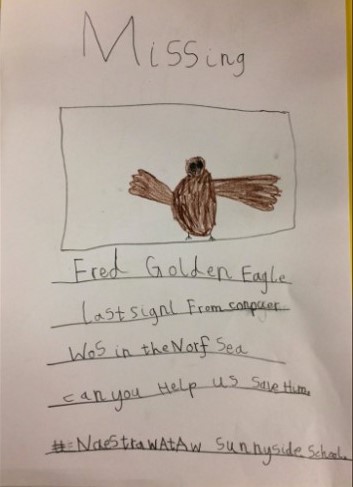
‘Missing’ posters drawn by P4 school children (aged 7-8 years old) from Sunnyside Primary School in Glasgow after learning of the suspicious ‘disappearance’ of golden eagle Fred earlier this year.

Continued inertia from grouse shooting industry reps on illegal raptor persecution

Last week we blogged about two owls (a short-eared and a tawny owl) that had been found shot on moorland in the Peak District National Park (here). West Yorkshire Police and the RSPB issued a joint statement appealing for information.

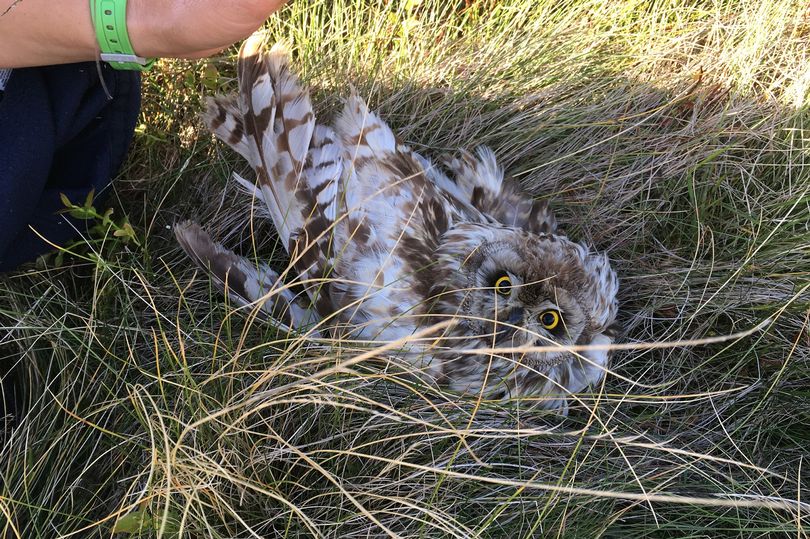
[Photo of the shot short-eared owl from RSPB]

As usual, the Northern England Raptor Forum (NERF) has issued an official response statement on its website (see here).

But what about the other members of the Raptor Persecution Priority Delivery Group (RPPDG), you know, that so-called ‘partnership’ whose main objective includes raising awareness of illegal raptor persecution? How many other ‘partners’ have also issued a statement of condemnation and an appeal for information on their websites?

As we’ve come to expect…… there are no public statements about these two crimes on the websites of the Moorland Association, National Gamekeepers Organisation, BASC or the Countryside Alliance.

There was also silence from the continually failing Peak District Birds of Prey Initiative (of which the Moorland Association is a supposed ‘partner’). This so-called ‘partnership’ is already in the last chance saloon so perhaps the absence of a joint partnership statement is because the Peak District National Park Authority is about to announce the termination of this pointless useless scheme?

Similarly, there are no public statements on the websites of the grouse shooting industry ‘partners’ about the discovery of a shot red kite found on a grouse moor in the Nidderdale AONB at the end of October – one of the worst places for red kite and hen harrier persecution in the entire country but apparently not significant enough to warrant a mention.

Perhaps they’re sleeping partners?

Or perhaps they’re not genuine partners at all, but are just using their membership of the RPPDG as a convenient cover to portray themselves in the media as ‘concerned conservationists’.

It’ll be interesting to see how long Police Supt Nick Lyall (the new RPPDG chair) will tolerate this long-standing inertia before he starts to put his words in to action and boots out from the ‘partnership’ those who are not contributing to tackling this filthy organised criminality.

FoIs reveal mass slaughter of ravens in Scotland, authorised by SNH

If you thought Scottish Natural Heritage’s decision to licence the killing of 69 ravens in Strathbraan was bad…….

Research by Dr Rob Sheldon has now revealed that from Jan 2015 -July 2018, SNH issued 621 licences permitting the killing of over 4,000 ravens in Scotland.

The shocking details can be found on Rob’s blog (here).

Back to Life: new report on alternative visions for Scotland’s grouse moors

Revive: the coalition for grouse moor reform has published its second report.

Revive commissioned Common Weal and Lateral North to examine alternative futures for Scotland’s driven grouse moors, an area covering almost one fifth of Scotland where the current focus is on maximising the number of red grouse to be killed for sport; an environmentally damaging and unsustainable land use underpinned by wildlife crime (here).

The grouse shooting industry’s main argument against any kind of grouse moor reform is that there are no other alternatives that would contribute as much to the economy and employment as driven grouse moor management.

The new report ‘Back to Life’ looks at other potential land use options and concludes that of all the possible uses of this land, grouse shooting is not only the least moral, it is by far the least economically effective. The authors argue that in fact, almost any other use will create more value and more jobs per hectare.

There’s an article on this in today’s edition of The National (here) with the headline ‘Grouse shooting is ‘least effective’ use of Scotland’s land‘.

Download the Back to Life report here

Download a printable map of alternative uses here

Two owls shot in Peak District National Park

Police are appealing for information after the discovery of two shot owls in the Peak District National Park.

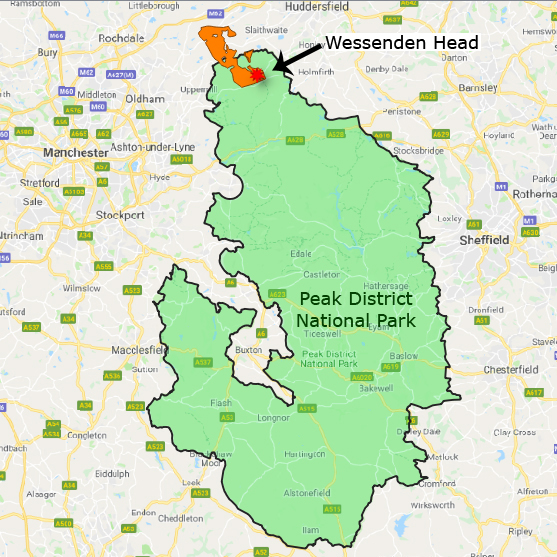
On the evening of 11 September 2018 a local runner witnessed a short-eared owl flying overhead, followed by what sounded like gunshots. The following morning she returned to the moorland near Wessenden Head in the northern Peak District. She found the bird on the ground, still alive. It was taken to a vet but had to be euthanized due to its injuries, which included a shattered wing.

[Photo of the shot short-eared owl, via RSPB]

The runner who saw the short-eared owl said: “I had just got back to my car when I suddenly saw a short-eared owl fly over my head – it’s always fantastic to see one of these gorgeous birds. This however was followed by the sound of a gunshots, coming from the direction of a dark-coloured pickup. I really hoped this wasn’t aimed at the owl I’d just seen.

The next morning I returned to the same spot and, there on the ground, was a short-eared owl, still alive but clearly wounded. I was so upset but also furious to think that someone had done this on purpose.”

The police are wanting to speak to the driver of the dark-coloured pick up truck, described as having two dog cages on the back with a thick wooden cover over the cages.

This land (Marsden Moor Estate) is owned by the National Trust and is a designated Special Protection Area (SPA) for short-eared owls.

[RPUK map showing the location of the Marsden Moor Estate (orange) in the Peak District National Park]

On 1 October the dead body of a tawny owl was discovered close to where the short-eared owl was found. It had been shot and stuffed inside a dry stone wall on the Kirklees Way footpath near Greenfield Road (not on National Trust property).

[RPUK map showing proximity of Wessenden Head and Kirklees Way footpath to areas managed for driven grouse shooting in the Peak District National Park]

If you have any information relating to these crimes, call West Yorkshire Police on 101 quoting police log number 174211/09/2018.

To share information about raptor persecution in your community in confidence, please call the Raptor Crime Hotline: 0300 999 0101.

Hen harrier brood meddling legal challenge: day 1

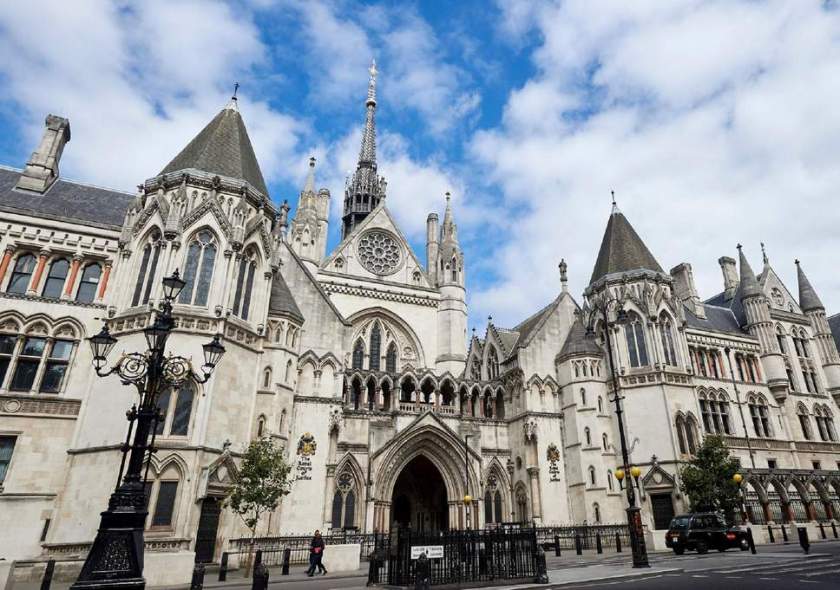
The two-day legal challenge (judicial review) of Natural England’s decision to licence hen harrier brood meddling got underway in the Royal Courts of Justice yesterday.

[Mark Avery with his legal team outside the court at the end of day one. L-R: Lewis Hadler, Tessa Gregory, David Wolfe QC, Zoe Leventhal, Mark Avery. Photo by Ruth Tingay]

This is just a brief summary of proceedings so far and doesn’t go in to great detail – that will have to wait.

The public gallery in Court No. 18 was packed and there were eight lawyers in attendance with more folders, files, notebooks, pens and post-it stickers than a Staples shop.

Most of the day was taken up by David Forsdick QC, presenting the RSPB’s case to Ms Justice Lang. Some of this was hard to follow because (a) he’s quite softly spoken, (b) he kept referring the judge to various exhibits that only she and the lawyers had access to, and (c) a lot of his arguments referred to written arguments made by Natural England which the lawyers have seen but the public has yet to hear.

The RSPB has raised a number of challenges against Natural England’s brood meddling licensing decision but the two issues that received the most attention in court related to diversionary feeding and designated sites for hen harriers, particularly Special Protection Areas (SPAs).

It was argued that as the purpose of the brood meddling licence was to further the protection of the hen harrier by investigating means to reduce grouse predation and thus ‘conflict’ and thus illegal persecution, other options to brood meddling should have been considered. Diversionary feeding is a low impact alternative, proven via research (at Langholm) to reduce grouse predation and causes minimal disturbance. As diversionary feeding is also included in DEFRA’s Hen Harrier Action Plan (to which Natural England was a main party in the drafting and now the implementing of the Plan) and Natural England has issued a generic, England-wide licence to permit diversionary feeding, it follows that Natural England is satisfied that diversionary feeding reduces grouse predation and thus reduces ‘conflict’ and thus illegal persecution.

However, given the “very low” uptake of diversionary feeding by landowners it was argued that Natural England has failed to encourage landowners to take this up as a voluntary option and has also failed to use its statutory powers to require the use of diversionary feeding on designated sites. Natural England’s legal arguments against the use of diversionary feeding as a viable alternative to brood meddling (arguments the lawyers have read but we have yet to hear) were derided when reference was made to a recent public statement made by Natural England’s Chairman on the ‘success’ of the 2018 breeding season in which he referred to the effectiveness of diversionary feeding!

Brood meddling on sites specifically designated for breeding hen harriers (i.e. SPAs) received equal criticism, especially as brood meddling relies on the concept of ‘quotas’ and ‘excess’ nests; this is contrary to the statutory conservation objectives of an SPA and case law was used to highlight this fundamental flaw. The point was made that, theoretically, if there was a single hen harrier nest in the centre of the Bowland Fells SPA, given the brood meddling density threshold (0.0125 pr/km2) this could be the only hen harrier nest permitted in this SPA designated for 12 breeding pairs. It was also argued that removing hen harriers from grouse moors in SPAs and then later releasing them in non-grouse moor areas of the SPA (as permitted by the brood meddling licence) constituted an adverse effect on the integrity of the SPA and was thus unlawful.

The RSPB’s case concluded at 3pm and then David Wolfe QC began his opening arguments on behalf of Mark Avery. David will continue this morning and then the court will hear from Natural England. Both claimants (RSPB and Mark Avery) will then have a right of response before the case is adjourned pending Ms Justice Lang’s ruling on the judicial review, which isn’t expected for several weeks and possibly several months.

UPDATE 12/12/18: Hen harrier brood meddling legal challenge: day two (here)

Legal challenge against hen harrier brood meddling reaches the High Court

Press release from law firm Leigh Day (4 Dec 2018)

Campaign to protect endangered hen harriers to be heard in High Court

The High Court will hear a legal challenge to the brood management of endangered hen harriers on Wednesday 5th and Thursday 6th December 2018.

Leading conservationist Mark Avery, represented by law firm Leigh Day, is bringing the judicial review challenge against Natural England’s decision to grant a licence to allow brood management of the birds. The RSPB have also brought a separate judicial review against the decision.

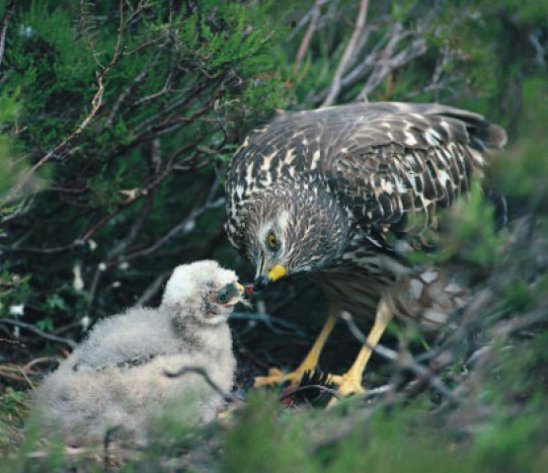
In January 2018 Natural England granted a two-year licence to trial the brood management of hen harriers – one of the rarest birds in England that has the highest possible conservation status for a wild bird and is a protected species under the EU Birds Directive. Brood management involves authorising what is otherwise a criminal offence – the removal of the eggs or chicks of hen harriers from their nests. Under the proposed licences the young birds are reared in captivity before they are reintroduced into the wild.

[Photo by Laurie Campbell]

Campaigners argue that the plan places the precarious English population of hen harriers at further significant risk and fails to address what all agree is the root cause of the hen harrier’s decline, illegal persecution on grouse moors where the bird of prey is known to kill red grouse.  Critics are concerned that the plan will do nothing to boost the hen harrier population and only serves to placate grouse moor owners and the grouse shooting industry. The ongoing problem of the persecution of hen harriers is tragically highlighted by five birds already having been reported missing on or near land managed for grouse shooting in the north of England.  Studies have shown that England should be able to support around 300 hen harrier pairs. But this year (which was a relatively successful year due to high vole numbers which is a main prey species for hen harriers) only 34 chicks fledged from nine English nests, according to a report by Natural England and in 2017 there were only 10 chicks in the whole of England.

Natural England’s stated rationale for the trial is to see whether brood management “could reduce the perceived conflict between hen harriers and grouse management” and thereby lead to fewer attempts to kill hen harriers illegally.

In his legal case Dr Avery argues that Natural England’s decision to grant the licence was unlawful as there were alternative satisfactory solutions available which under the EU Birds Directive had to be considered before Natural England could decide to authorise the taking of eggs and the disturbing of a hen harrier’s nest which is ordinarily a criminal offence. He will argue that the alternative solutions that Natural England should have considered include: licensing grouse shooting; increasing criminal enforcement, introducing vicarious liability for wildlife crime (as recently adopted in Scotland) and considering banning grouse shooting altogether.

Mark Avery said: “The fragile hen harrier population must be protected and allowed to thrive in its natural habitat. It is incredibly sad that Natural England seems to be more interested in serving the grouse shooting industry than the wellbeing of these magnificent birds. In Scotland a range of measures are being pursued which if implemented well and with vigour stand a good chance of making a significant difference, yet in England where the numbers of hen harrier are far fewer the Government has ignored the measures being taken north of the border and chosen to waste its time and money on brood meddling

Tessa Gregory, partner at law firm Leigh Day, added: “Our client believes that there were many alternatives to be considered before deciding on the damaging and pointless measure of allowing brood management of these endangered birds. It is time for the Government to start tackling the real issue: illegal persecution by the grouse shooting industry. Our client has demonstrated that there are many other measures which could be taken that would serve to protect the hen harrier and address criminality in the grouse shooting industry. We hope that the court will agree with our legal arguments and quash Natural England’s decision to allow brood management of hen harriers.”

ENDS

Buzzard found poisoned near Mauchline, south Scotland

From Cumnock Chronicle (29 Nov 2018)

POISONED BIRD OF PREY SPARKS POLICE WARNING

Residents in Mauchline are being warned to be on the look out after a bird of prey was found poisoned.

A member of the public discovered the buzzard, still alive but in a distressed state on land on the outskirts of the town on November 2.

Fortunately, the bird was found quickly and survived. A toxicology report has now confirmed the buzzard ingested poison.

Police Scotland are concerned that this illegal activity is happening in the area and are appealing for any information that may lead to detecting the person responsible for this deliberate act.

PC Sam Briggs, Wildlife Crime Officer, said, “It is a serious concern that someone has targeted wildlife in this illegal and indiscriminate manner. If anything unusual is discovered I would advise not to touch it, but instead cover it if you can and contact the police, giving them the exact location.”

Police are working alongside partner agencies Scottish SPCA, Science and Advice for Scottish Agriculture and Agricultural Officers to fully investigate the matter. Anyone with information on the illegal use of pesticides or who may has seen something suspicious, particularly in the last month or so, can call 101 and quote No: SP-20181120-2194 or Crimestoppers anonymously on 0800 555 111.

ENDS

This is the sixth raptor poisoning in south Scotland this year (that we’re aware of) including four red kites and buzzards that were poisoned in Dumfries & Galloway between Jan-May this year (see here) and a poisoned peregrine found in the Pentland Hills in May this year (see here).

But there’s no need to worry. SNH is “reassured that raptor persecution is not an issue” in this region.

Buzzard & hobby found with horrific spring trap injuries on Isle of Wight

Police press release (4 Dec 2018):

POLICE INVESTIGATION LAUNCHED AFTER BIRDS OF PREY KILLED BY ILLEGAL TRAPS ON ISLE OF WIGHT

Two protected birds of prey, likely to have been caught in illegal spring traps, suffered ‘horrific and traumatic’ injuries.

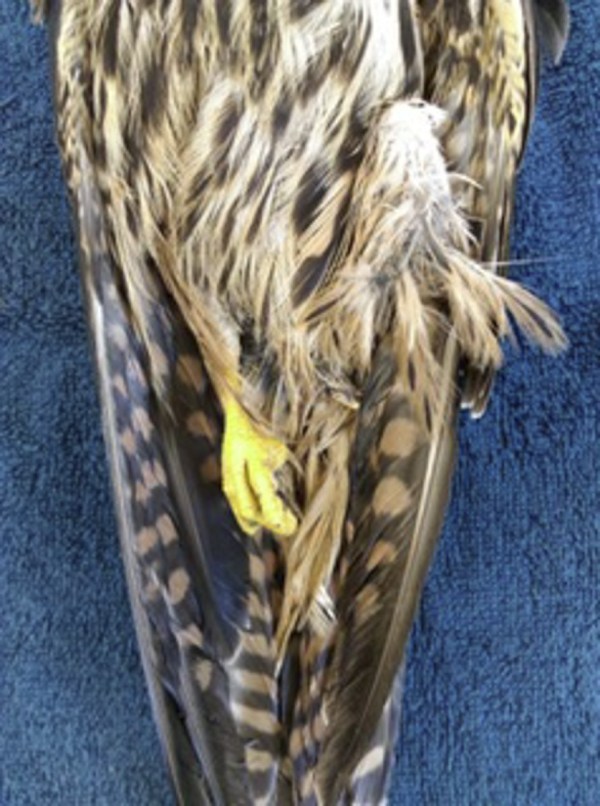
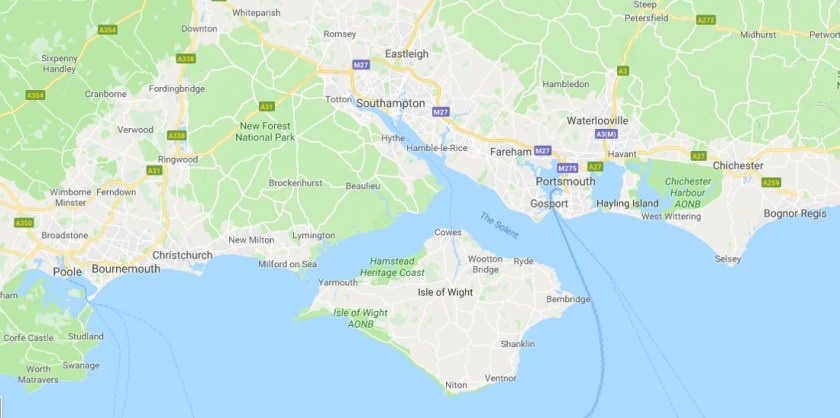
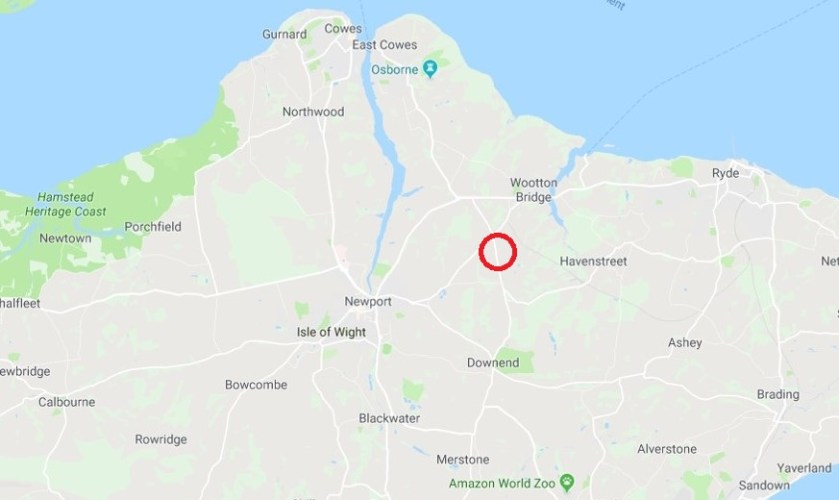
A joint investigation has been launched by Isle of Wight Police and the RSPB after the birds, a buzzard and a hobby, were found with severed legs in woodland at Littletown, near Briddlesford.

The buzzard was found dead, with a missing foot, on March 14. The hobby — a small falcon similar to a kestrel – was found alive, also with its foot missing, on September 23. It was taken to the RSPCA and put down.

[The buzzard with a severed foot]

[The hobby with a severed foot, photo by RSPCA]

The RSPB said today (Tuesday) the birds were likely to have been illegally trapped.

The birds, a hobby and a buzzard, were found with horrific injuries. Both had lost a foot as a result of becoming caught in a spring trap,” said a spokesperson.

Police were alerted and the birds were sent for post-mortem examinations. The report concluded: ‘Both birds suffered traumatic amputations of one lower limb consistent with the affected leg being caught and held in a spring trap.’

All wild birds are protected by law under the Wildlife and Countryside Act 1981 which makes it an offence to intentionally harm them. Anyone found to have done so faces an unlimited fine with up to six months in jail.

Jenny Shelton, from the RSPB’s investigations unit, said: “Spring traps are sometimes used to catch and kill vermin, and are legal if placed in a tunnel, with a restricted entrance, for this purpose. However spring traps set out in the open are illegal, and pose a huge danger to wildlife. 

We have had numerous reports over the years of birds of prey being deliberately caught in these brutal devices. Birds of prey are incredible creatures and it’s devastating that the lives of these two birds have ended in this way. We are grateful to the people who reported these birds. If you find an injured bird of prey, or come across a metal trap set out in the open or on a pole, call the police on 101 immediately.”

PC Tim Campany, from the Country Watch team, said: “We are working closely with our colleagues from the RSPB to establish what happened. One line of enquiry is that the birds may have been caught and held in a spring-type trap.

This is illegal and is a barbaric method of trapping. It leaves the bird, once freed from the trap, unable to land and feed and it will eventually die of starvation.

Raptor persecution is a priority of the National Wildlife Crime Unit and will not be tolerated.

I would urge anyone with information on suspicious vehicles, persons, or traps located in the Bridlesford area to call us now.”

Anyone with information should call Isle of Wight Police on 101, quoting the reference 44180374840.

ENDS

Illegal raptor persecution is a national wildlife crime priority, so why the hell has it taken nine months for the news of this buzzard to emerge, and two and a half months for the hobby? What’s the point of appealing for information so long after the events?

It’s just not good enough.

These incidents will also cast a shadow on the proposed reintroduction of white-tailed eagles to the Isle of Wight.