Hen harrier Mabel ‘disappears’ near grouse moor on Yorkshire Dales National Park boundary

Hot on the heels of this morning’s news that satellite-tagged Hen Harrier Thor ‘disappeared’ in Bowland on 3 October (here), there’s now news of another one.

Hen harrier ‘Mabel’ hatched from the only nest in the Yorkshire Dales National Park earlier this year (you’ll remember, the nest that was declared by the Yorkshire Dales Moorland Group and the National Gamekeepers Organisation as being located on a grouse moor, when actually it wasn’t – see here). She was satellite-tagged by Natural England.

Mabel did a bit of travelling in to Teesdale but her last satellite tag fix came from the Little Smale Gill area, north of Ravenseat Moor, on 2 October 2018. You won’t be surprised to learn that the area is close to some driven grouse moors.

North Yorkshire Police have issued the following appeal for information:

Concerns raised following hen harrier’s disappearance

Concerns have been raised about the welfare of a hen harrier which may have gone missing along the North Yorkshire – Cumbria border.

[RPUK map showing last known location of hen harrier Mabel]
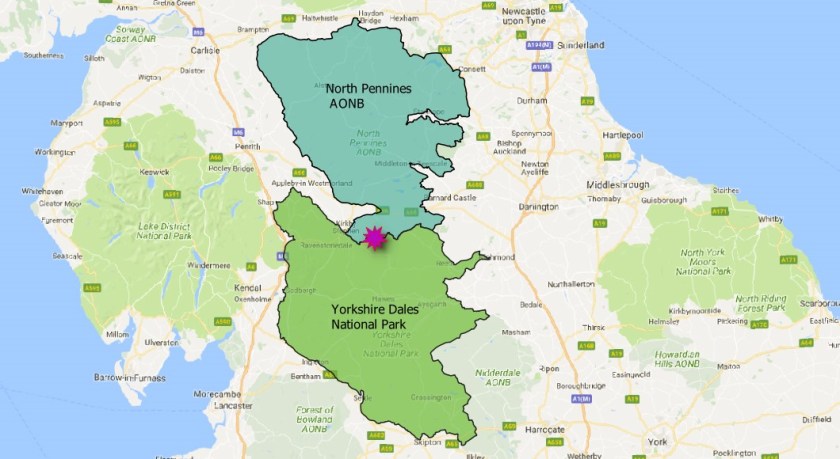
Female hen harrier Mabel was one of four chicks that fledged in July 2018 from a nest site in the Cumbrian area of the Yorkshire Dales National Park. Along with her sibling Tom, she was fitted with a satellite tag on 10 July by Natural England.

Since fledging, Mabel has been into Teesdale and wandered as far north as Allenheads, and also spent time around the Tan Hill area.

The transmitter functioned up until 2 October 2018, with the last signal being received from the Little Smale Gill area in Cumbria, north of Ravenseat Moor – but the bird could have been further afield when something happened to Mabel or the transmitter.

[RPUK map showing the grouse moor habitat close to hen harrier Mabel’s last known location]

Hen harriers are one of the UK’s rarest birds of prey, with just three successful nests recorded in England in 2017. Like all wild birds, they are protected by law under the Wildlife and Countryside Act 1981. However, despite full legal protection, their numbers remain consistently very low.

A search was conducted by Natural England staff but no tag or body was found. Cumbria Constabulary and North Yorkshire Police were informed, and are making enquiries.

Sergeant Stuart Grainger, of North Yorkshire Police’s Rural Taskforce, said: “I was lucky enough to spend some time monitoring Mabel’s nest site, and, despite following birds all my life, this was the very first time I’d ever seen a male or female hen harrier because they are so rare.

It is therefore particularly upsetting that one of the fledglings from the nest has inexplicably gone missing. I would urge anyone with information to come forward.”

PC Helen Branthwaite, Wildlife, Rural and Environmental Crime Co-ordinator at Cumbria Constabulary, said: “It is extremely worrying to hear of Mabel’s disappearance and that we are facing another enquiry into a missing hen harrier. With so few successful nest sites every bird that is lost has a severe impact on the conservation status of this rare bird.”

A spokesperson for Natural England said: “The sudden disappearance of the hen harrier, Mabel, is a matter of grave concern. We urge anyone with information to get in touch with North Yorkshire Police.”

Landowner farmer Andrew Brown said: “It was a pleasant surprise when Natural England staff knocked on my door and let me know these rare birds were likely to breed on my land.

The experience of watching them throughout the spring and early summer from building their nest to fledging four chicks was a real privilege.

NE gave me the chance to see them close up when they were satellite-tagged, and it was an honour to name the tagged birds Mabel and Tom after my grandparents. It is such a shame that something may have happened to Mabel. NE were keeping me regularly updated about Mabel and Tom’s whereabouts, and I was looking forward to hopefully welcoming them back next year.”

David Butterworth, Chief Executive of the Yorkshire Dales National Park Authority, said: “There was delight from all right minded people when four hen harrier chicks fledged earlier this year in the National Park. That has been matched by the despair felt that one of the birds, Mabel, has now gone missing.

The North of England has an unenviable reputation for criminal activity in terms of raptor persecution, so it’s hard not to think the worst in this case. However, for the moment we would strongly support the efforts of North Yorkshire and Cumbria Police to find Mabel, and would urge anyone with information to contact the police as soon as possible.

Anyone with any information about the hen harrier’s disappearance should contact North Yorkshire Police on 101. Alternatively, speak to the RSPB in confidence, by calling the Raptor Crime Hotline on 0300 999 0101.

ENDS

This amounts to blatant and relentless criminality. It’s happening at such a scale that it should now be defined as serious and organised crime.

[RPUK map showing the last known locations of ‘missing’ Natural England satellite-tagged hen harriers in the Yorkshire Dales National Park, Nidderdale AONB and Bowland AONB. Red star = HH found dead & confirmed illegally killed; orange star = last known location of missing hen harriers; Black star: missing hen harrier but grid reference withheld by Natural England; orange stars 1, 2 & 3 = last known locations of RSPB-tagged hen harriers Hope, Sky and Thor; Purple star last known location of hen harrier Mabel].

Here’s the definition of serious and organised crime from the National Crime Agency:

Serious crime planned, coordinated and conducted by people working together on a continuing basis. Their motivation is often, but not always, financial gain‘.

At last week’s wildlife crime conference in London political leaders, including our own, made a commitment to tackle the illegal wildlife trade as ‘a serious crime carried out by organised criminals’ (see here).

How bloody hypocritical when those same political leaders remain wilfully blind to the serious and organised wildlife crime happening on their own doorstep.

It’s abundantly clear to anyone with just a passing interest that the Westminster Government’s vested interests are preventing determined action against these criminals, aka The Untouchables.

UPDATE 20 October 2018: Responses to missing hen harrier Mabel (here)

Hen harrier ‘Thor’ disappears next to grouse moor in Bowland AONB

Just a little over a month ago the RSPB told us that three of this year’s satellite-tagged hen harrier chicks had all ‘disappeared’ in suspicious circumstances on driven grouse moors (here).

This morning they’ve announced the suspicious disappearance of another one. Here’s the RSPB’s report:

Thor is no more: First hatched hen harrier in Bowland for three years disappears in suspicious circumstances.

This summer we were overjoyed to have hen harriers nesting in Bowland for the first time since 2015. Our project team worked round the clock to monitor the three nests there, and the parent birds fledged an amazing 13 chicks between them.

Young hen harriers were fitted with tags as part of the RSPB’s EU-funded Hen Harrier LIFE project and we watched with anticipation as the chicks grew and started to fly away from their nests and make their way into the world. Unfortunately, it was unlucky 13 for one of our brood.

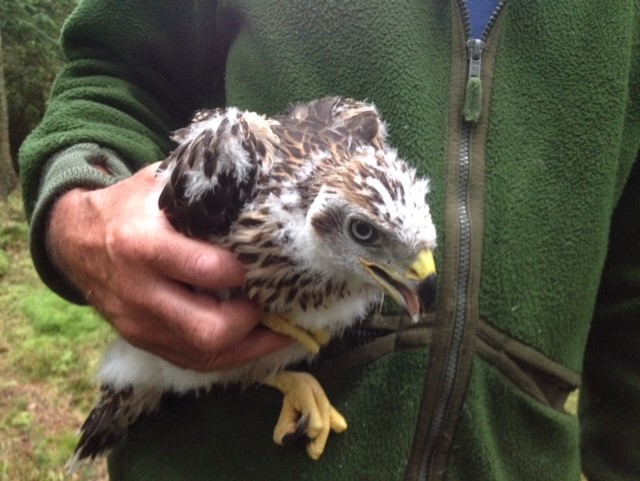
Young male hen harrier Thor fledged from a nest of four chicks in the Forest of Bowland and his satellite tag was fitted in mid-June. After leaving the nest he remained in the vicinity for several months.

[Photo of hen harrier Thor by Steve Downing]

His tag was transmitting regularly when it suddenly and inexplicably stopped. His last known fix on 3 October 2018 showed he was over Goodber Common near Salter in Lancashire, adjacent to a managed driven grouse moor. This disappearance was reported to the police, and a search revealed no sign of the bird or his tag.

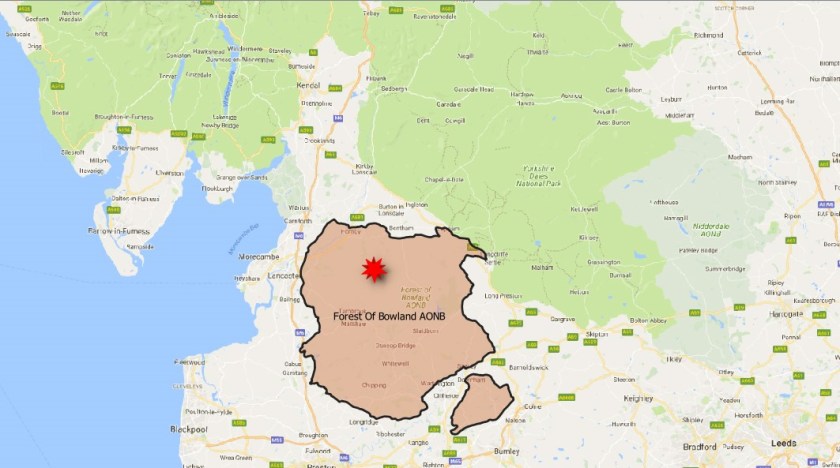
[RPUK map showing Goodber Common in the Forest of Bowland Area of Outstanding Natural Beauty]

Thor is the fourth bird to disappear in the past two months, following the disappearances of Hilma, Octavia and Heulwen in August this year. Alarmingly, the last known fix for Thor is directly between the sites where tagged hen harriers Hope and Sky were last heard from before they disappeared back in 2014.

[RPUK map showing last known location of satellite-tagged hen harriers Sky and Hope and the approximate last known location (no grid ref provided) of hen harrier Thor]

James Bray, RSPB’s Bowland Project Officer, was involved in monitoring the nests in Bowland over the summer, and watched as Thor hatched, grew and fledged from his nest. He says: “Whilst we know that hen harrier mortality rates are high for young birds – with a survival rate of around 22% within the first two years – if Thor had died naturally we would have expected to find some sign of him or his tag. His tag was functioning well before he disappeared, which sadly suggests there has been some kind of interference with it.”

If anyone has any information as to what may have become of Thor, you can contact Lancashire Police on 101.

ENDS

According to Guy Shrubsole’s excellent Who Owns England website, the grouse moors to the south of Goodber Common, shown in our map above, belong to the Duke of Westminster’s Abbeystead Estate.

Nobody will be the least bit surprised that yet another young hen harrier has vanished close to a grouse moor in northern England, and especially in the Forest of Bowland AONB. We know from Natural England’s HH sat tag data (2007-2017) that Bowland is one of several areas (along with the Yorkshire Dales National Park and the Nidderdale AONB) where the land is dominated by driven grouse moors and where young hen harriers tend to disappear. We prepared a map of those areas in August 2018 after Natural England had finally released the HH sat tag data (which didn’t include details of any missing RSPB-tagged birds). Here’s an updated map to include hen harrier Thor’s last known location, as well as RSPB-tagged birds Sky & Hope who ‘disappeared’ in 2014:

[Red star = HH found dead & confirmed illegally killed; orange star = last known location of missing hen harriers; Black star: missing hen harrier but grid reference withheld by Natural England; orange stars 1, 2 & 3 = last known locations of RSPB-tagged hen harriers Hope, Sky and Thor].

So what happens now? Absolutely nothing of any significance.

The grouse-shooting industry will either stay mute and hope the news blows over quickly, or we’ll hear from Andrew Gilruth of the GWCT telling us how well the Government’s Hen Harrier (In)Action Plan is working (it isn’t, it’s a sham), or we’ll heard from Amanda Anderson of the Moorland Association that there’s no need for concern as she saw Thor flying past her kitchen window just yesterday.

DEFRA Minister Dr Therese Coffey will be too busy shuffling around in her handbag to even notice her Government’s complete and utter failure to protect this species.

UPDATE 19 Oct 2018: Responses to missing hen harrier Thor (here)

Shot goshawk found dead in Angus

In yesterday’s blog (here) we discussed how the raptor-killing criminals have changed tactics to avoid detection and are going to greater lengths to remove/hide the evidence of their crimes.

This latest case is a good example of how this may be happening and how this can lead to raptor persecution crimes remaining undetected.

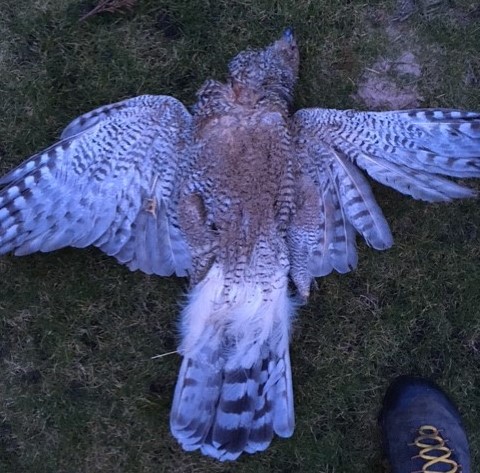
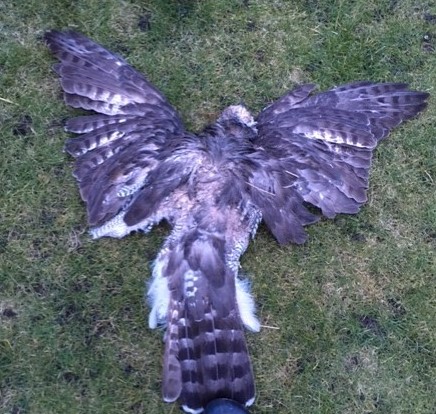
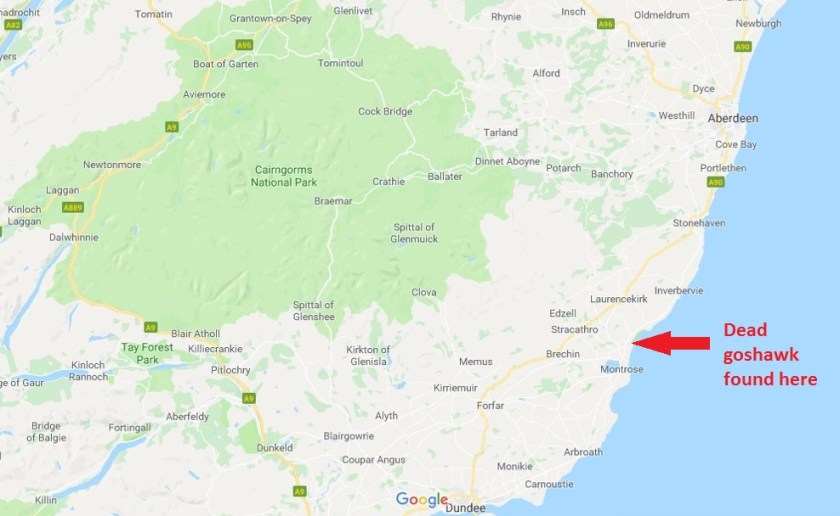
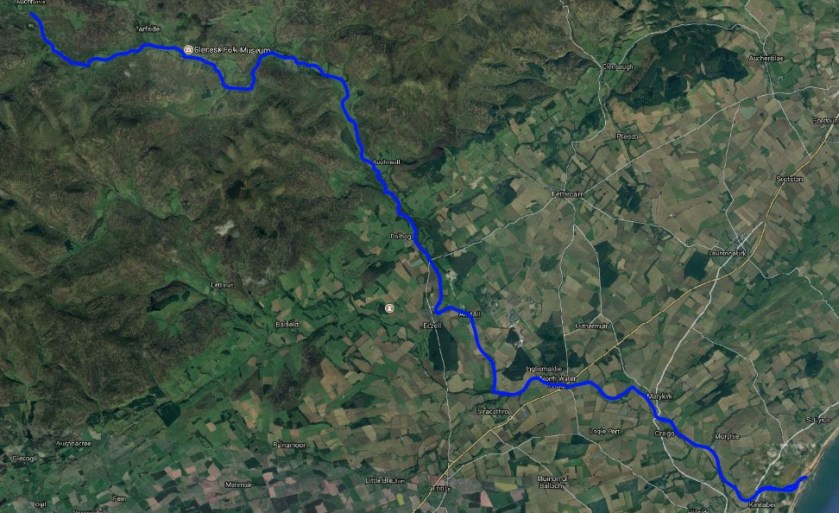
In March 2018 a member of the public found a dead goshawk washed up at the mouth of the River North Esk near St Cyrus in Aberdeenshire. The bird had an identifying leg ring and the finder reported this ring number to the British Trust for Ornithology (BTO). The BTO quickly notified the ringer, Dr Chris McGuigan, and provided him with the grid reference of where the bird had been found. Chris contacted a colleague in the area (Simon Ritchie) who was able to attend the scene and collect the fresh corpse.

[Photos of the dead goshawk by Simon Ritchie]

Chris was able to identify the bird as one of three females that were ringed as chicks in Angus in 2014:

Having experience of finding dead raptors in Angus which upon closer examination turned out to have been illegally shot, and given the location of where the corpse had been found (not prime goshawk habitat), in addition to the known level of hatred directed towards goshawks by many in the game-shooting industry, Chris took the decision to submit the dead goshawk for testing. It was a very good decision.

The goshawk was sent to the Royal School of Veterinary Studies at Edinburgh University where an x-ray revealed the goshawk’s body was peppered with lead shot, suggesting it had been shot at close range.

So how did the dead goshawk end up washed up on the shoreline at the mouth of the River North Esk? Given the large amount of lead shot in its body it would have died immediately, so it’s possible it was killed on the shoreline and left to rot, although this seems unlikely given the habitat and the stupidity of leaving an illegally-killed raptor in full view of any passing members of the public.

Another explanation is that the goshawk had been shot and killed further inland and then tossed in the river for the water to carry away the corpse (and thus the evidence of the crime).

[Map showing the River North Esk running down through the Angus Glens grouse moors and out along the plain to the North Sea]

Undoubtedly there will be some who consider this explanation far-fetched, but throwing dead goshawks in to rivers isn’t unheard of in Scotland – we’ll shortly be reporting on another case that includes some amazing supportive evidence……we’re just waiting for a bit more detail on that one.

Meanwhile, back to the investigation in to the illegal shooting of this goshawk in Angus….

When Chris submitted the goshawk carcass to the Edi Vet School he hadn’t notified the police as there was nothing to report at that stage – just the discovery of a dead goshawk. However, when the x-ray revealed the lead shot in the goshawk’s body, he asked the staff member to report the incident to Police Scotland.

We understand that the staff member sent the corpse to Scotland’s Rural College (SRUC) for a post-mortem (standard practice) and that the SRUC would then notify the police.

However, when we contacted Police Scotland last week to ask about the status of the investigation and why they hadn’t made a public appeal for information (this goshawk was found in March, remember, that’s seven months ago!), we were told that the police had only been informed about the incident ‘in the last couple of weeks’ and so the investigation was ‘at the very early stages’.

We asked Police Scotland for a crime reference number that we could include in this blog but we were told that a crime number ‘had not yet been issued’.

Hmm.

There are several lessons to learn from this case, not least the importance of submitting carcasses for further examination to help detect criminal activity – if Chris & Simon hadn’t acted, this crime would not be recorded in the official statistics.

But this case also highlights the importance of sending reports of suspected raptor crime to RSPB Scotland at the earliest possible time, so if there is a subsequent breakdown in communication between the authorities, which appears to have happened in this case, the RSPB can follow-up and make sure that at least these crimes are properly recorded and investigated, even though the chances of catching the culprit are precisely zero.

UPDATE 20 Oct 2018: This blog has been picked up by an article in The Express (here)

UPDATE 20 Oct 2018: This blog has also been picked up by an article in The Press & Journal (here)

2017 raptor persecution stats show criminals getting better at hiding evidence

The Scottish Government’s annual raptor persecution maps have just been released showing the number of reported crimes in 2017.

A five-year map showing the number of reported raptor persecution crimes between 2013-2017 has also been published:

An accompanying press release is as follows:

Recorded cases of bird of prey poisonings at record low

2017 saw only one recorded incident of illegal bird of prey poisoning in Scotland, according to new maps published by the Partnership for Action Against Wildlife Crime (PAW) Scotland.
This is the lowest total in a single year since PAW Scotland began compiling data for 2004 onwards.
Despite the drop in recorded incidents, data from satellite tagged raptors continues to show birds disappearing in unexplained circumstances, with persecution strongly suspected in many cases.
There was a further 36% fall in all recorded bird of prey crimes during 2017. The new figures show 9 confirmed crimes compared to 14 the previous year.
Species illegally killed in 2017 incidents included buzzards, owls, and a hen harrier, while the golden eagle, osprey and merlin were victims of disturbance cases. In addition to the poisoning incident, there were two shootings, two illegal trappings and three cases of disturbance.
Environment Secretary Roseanna Cunningham said:
While I welcome this further reduction in recorded bird of prey crimes, including our lowest ever total for poisoning incidents, reports from early 2018 indicate that this remains a problem in some parts of Scotland.
It is extremely frustrating that some criminals continue to undermine the good work that has been done by conservationists and land managers in recent years, with much of that work being done through the Partnership Against Wildlife Crime (PAW Scotland).
We have recently provided additional resources to Police Scotland for the detection and investigation of wildlife crime, and set up a review group to look at grouse moor management, including the potential for licensing this type of business.
ENDS
The maps are available on the Scottish Government website here
It’s interesting that the Government’s headline refers only to poisoning incidents, and of course this is the line that will be picked up by the press (e.g. BBC news here). A drop to only one reported poisoning incident in 2017 does look like progress has been made, but we are well aware that the criminals have switched tactics in recent years, favouring shooting over poisoned baits, presumably because a shot bird can be swiftly removed from the crime scene to avoid detection whereas a poisoned bait (and any poisoned victim) is more likely to be accidentally discovered by walkers before the poisoner has had the time to return and remove the evidence.
However, as pointed out by Environment Secretary Roseanna Cunningham in the press release, this reduction to only one reported poisoning incident in 2017 appears to just be a temporary hiatus; we know that in 2018 there have been at least five reported raptor poisoning crimes (of which we’re aware), including four red kites and buzzards that were poisoned in Dumfries & Galloway between Jan-May this year (see here) and a poisoned peregrine found in the Pentland Hills in May this year (see here). There may well be further cases that Police Scotland are keeping quiet about, as they did with the Pentland peregrine. It’ll be interesting to see whether the headline accompanying the 2018 persecution maps highlight an upturn in illegal raptor poisoning.
The Government maps no longer just focus on poisoning  – they now include other types of raptor persecution such as illegal trapping, shooting, disturbance, nest destruction etc. However, what they don’t include are the suspicious disappearances of satellite-tagged golden eagles, hen harriers and white-tailed eagles. Again, it’s good to see this point being highlighted in the Scottish Government’s press statement but it’s about time these incidents were also included in the official data.
The 2017 report on the fate of satellite-tagged golden eagles in Scotland was unequivocal, showing clear evidence of deliberate and sustained illegal raptor persecution over a number of years.
[Stars indicate last known location of satellite-tagged golden eagles that have ‘disappeared’ in suspicious circustances, 2004-2016. Data from golden eagle satellite tag review]
Since the research was completed in January 2017, the findings of which the Scottish Government accepted as strong evidence of ongoing illegal persecution, at least eight more satellite-tagged raptors have ‘disappeared’ in suspicious circumstances in Scotland (3 x golden eagles, 2 x white-tailed eagles, 3 x hen harriers), and seven of these vanished on land managed for driven grouse shooting. None of these incidents are included in the Government’s raptor persecution maps, even though the pattern of disappearance is damning.
There is further evidence of continued raptor persecution crimes, again not included in the Government’s maps. This evidence is provided by the national and regional surveys of several raptor species, which show another clear pattern of criminality with golden eagles, hen harriers and peregrines noticeably absent from many areas managed for driven grouse shooting and illegal persecution identifed yet again as the main factor limiting these populations.
Until all the available evidence is compiled together to show an overall picture of the continued criminal killing of birds of prey, these annual persecution maps should be considered as an under-representation of what is actually going on.
Hiding the evidence of raptor crime is definitely on the increase, and the next blog will provide a good example of how this is achieved….
UPDATE 3pm: Great to see The Scotsman journalist Jane Bradley recognising the limitations of the Govt’s ‘official’ raptor crime stats (here).

Songwriter Holly Lamar pleads guilty to possessing wild peregrine in Derbyshire

US grammy nominee Holly Lamar (real name Mary Holladay Lamar), 51, pleaded guilty at Chesterfield Magistrates Court on Friday to two offences relating to the illegal possession of a wild peregrine falcon.

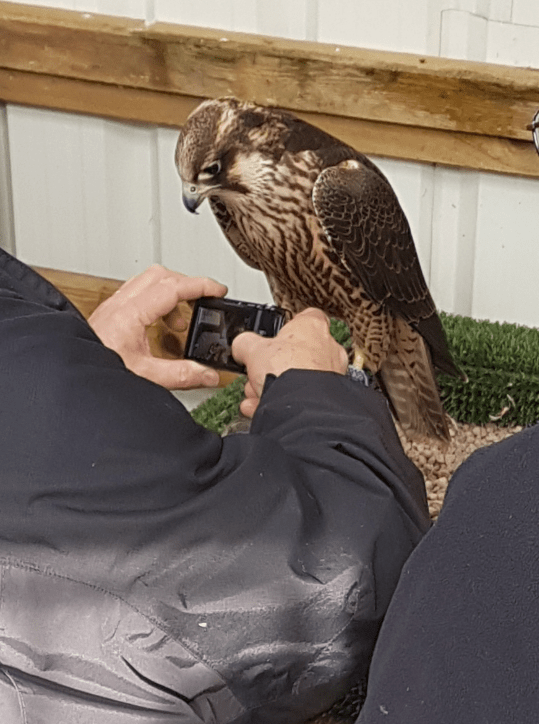
Derbyshire Police and the National Wildlife Crime Unit raided her home in Ashover Road, Old Tupton, Chesterfield last December where they found a juvenile peregrine wearing an identification leg ring that, according to official records, should have been worn by a captive adult peregrine.

[Officers photographing the leg ring on the juvenile peregrine, photo by Derbyshire Police]

Officers found the body of an adult peregrine in the freezer whose leg had been cleanly cut off. It’s head was also detatched and apparently this bird had died in a fight with a female peregrine:

Lamar was interviewed and told officers the juvenile peregrine (believed to be a wild bird) had come from someone else and she was just looking after it.

In court, District Judge Leo Pyle said: “You are a long-standing and accomplished keeper of birds of prey. You know a juvenile Peregrine Falcon from an adult bird. How you acquired that bird I don’t know.

Anyone who flouts the regulations should expect the suitable punishment. Had you not pleaded guilty today I would have no doubt sentenced you immediately to imprisonment“.

Lamar was given an 18 weeks’ sentence for each offence, suspended for 12 months, and ordered to carry out 120 hours’ unpaid community work. The peregrine was confiscated, she was banned from keeping any Schedule 4 birds for five years and ordered to pay £1,020 costs plus a £115 surcharge.

The court heard that Lamar had lived in Derbyshire for two and a half years but intends to move back to the US imminently. Her defence lawyer said she’d recently been the victim of a £600k fraud and lost everything, currently living on benefits. She denied she had ever been involved selling birds to the Middle East.

Lamar’s company, ‘Raptor Rapture Ltd’ was established in Lincolnshire in 2015 but according to records at Companies House it was dissolved via compulsory strike-off in 2016.

The BBC News Website ran a story on Friday’s court hearing (here).

Merlin nest shot out in the Pentland Hills

Following Tuesday’s news that a peregrine had been illegally killed with a highly toxic banned poison in the Pentland Hills Regional Park earlier this year (see here), we’d also blogged yesterday (here) about other recorded wildlife crime in this area, including the shooting out of a merlin’s nest in 2017:

We’ve been asked some questions about the merlin case so here are some background details about that crime.

A breeding pair had taken over an abandoned crow nest at the top of a tree on the edge of a small copse. The immediate land was being used for sheep farming but the site was close to an area being managed for driven grouse shooting (as you can see from the above map). The sheep-farming landowner (believed to be Alastair Cowan of Eastside Estate, according to Andy Wightman’s brilliant Who Owns Scotland website) was known to be very supportive of raptors having previously given permission to local Raptor Study Group members to erect nest boxes for kestrels and nest baskets for merlin.

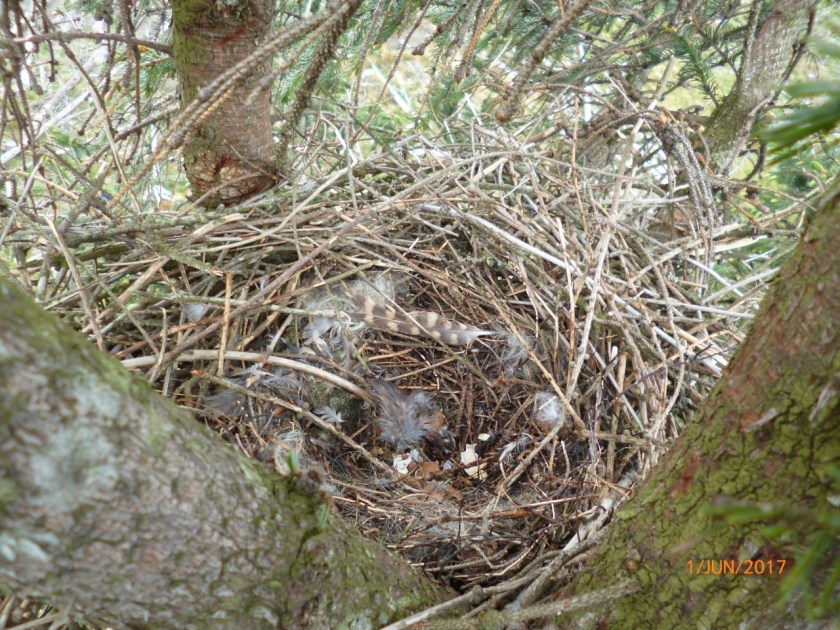
[Merlin nest tree, photo SSPCA]

The merlins had laid four eggs and were at the incubation stage when a routine monitoring visit by licensed Raptor Study Group fieldworkers led to suspicions that the breeding attempt had failed. Climbing to the nest to investigate, they found smashed eggs and feathers from the adult female congealed together. They also found residual bits of bark in the nest cup and fresh damage marks on the surrounding tree branches that were suspected to have been caused by shotgun pellets. Given that the eggs were on the point of hatch, the fieldworkers were concerned the incubating female had been shot on the nest, although there was no sign of her body but had she been shot it’s possible her body had been scavenged by corvids.

[Merlin nest contents, photo SSPCA]

The incident was reported to the SSPCA who also notified the police. Typically in a case such as this that’s as far as things would have gone. It would have been recorded as a ‘probable’ wildlife crime but without witnesses or video evidence it would have been virtually impossible to progress the case.

However, although the prospects of solving the case were slim to zero, the SSPCA investigator wanted to do everything possible to at least demonstrate that this was a crime, so after securing the landowner’s permission, the top of the tree was cut off and sent for digital x-ray. The results were clear, the nest and the branches around the nest were peppered with shotgun pellets:

[X-rays from SSPCA]

It could be argued that the nest had been blasted by a shotgun prior to the merlins taking it over for their breeding attempt; if the nest had previously been occupied by corvids then destroying the nest, eggs and adults of specified corvid species is a legal activity under the terms of a General Licence. It’s a fairly barbaric thing to do but nevertheless it is a lawful activity, routinely undertaken by gamekeepers up and down the country who only require a shotgun certificate and the landowner’s permission.

However, in this case the fresh damage marks to the tree branches and the presence of pieces of bark in the nest cup were indicative that this nest had been blasted with a shotgun while the nest was being used by a protected species, the merlin.

The shooting of a nearby raven’s nest the previous year (see map above) where the corpse of a raven riddled with holes was found on the nest is also suggestive that someone with access to a shotgun is waging a determined campaign against protected species in this area. Perhaps the same person using a dangerous toxic poison to kill peregrines?

Full credit to the SSPCA for the extraordinary and creative lengths they were prepared to go to to secure the evidence that would see this incident recorded as a confirmed crime. We’re not aware of any other case where a tree top has been removed and x-rayed.

Although nobody has been charged, the details of this case, along with the other recorded wildlife crimes in the Pentlands, are all building a picture of yet another raptor persecution hotspot in south Scotland, right under the noses of the Scottish Government (who, incidentally, still haven’t responded to the news that a peregrine was illegally killed in this area with a highly toxic banned poison).

Armed criminals running amok in the Pentland Hills nr Edinburgh

The northern edge of the Pentland Hills is a familiar sight to residents of Edinburgh and can be seen from the Scottish Parliament building.

[View of the Pentlands from Edinburgh, photo by Ruth Tingay]

Designated as “a place for the peaceful enjoyment of the countryside“, the Pentland Hills Regional Park hosts over 600,000 visitors per year.

We suspect many of those visitors looking for a bit of ‘peaceful enjoyment’ would be outraged to discover that this area is actually a wildlife crime hotspot and the armed criminals involved are running amok without being brought to justice.

In the last two years, a raven was found shot dead on its nest, a merlin’s nest was shot out, a golden eagle ‘disappeared‘ in highly suspicious circumstances and a peregrine has been poisoned with a deadly toxin so powerful that it could kill a human.

These are blatant wildlife crimes and nobody has been charged, let alone prosecuted or convicted. That’s not a criticism of the police – collecting sufficient evidence to charge an individual is almost impossible without the help of witnesses and/or camera footage – but it is a criticism of the Scottish Government’s continuing failure to deal with this issue.

It’s interesting to note that the majority of these crimes occured very close to land managed for driven grouse shooting. The tell-tale rectangular strips of burned heather on this map are quite striking:

Large areas of the Pentland Hills Regional Park are privately owned estates and are managed for grouse shooting and farming. The wildlife crimes have been committed across several estate boundaries and we understand that at least until recently, some estates ‘shared’ gamekeepers.

It is not unusual for the police to be unable to identify the individual(s) committing crimes on driven grouse moors – and again, that’s not a criticism of the police, although withholding information from the public for months on end, especially when there is a risk to public safety, certainly doesn’t help. In fact escaping prosecution was such a common problem that in 2013 the then Environment Minister Paul Wheelhouse MSP introduced another sanction – he instructed Scottish Natural Heritage (SNH) to withdraw the use of the General Licence on shooting estates where there was sufficient evidence to indicate a raptor persecution crime but insufficient evidence to identify the individual culprit(s).

This power has been available to SNH since 1 January 2014 but so far only four restrictions have been imposed: one on Raeshaw Estate/Corsehope Estate in the Scottish Borders; one on Burnfoot Estate/Wester Cringate Estate in Stirlingshire; one on Edradynate Estate in Perthshire; and one on an unnamed individual who had worked on the Tillypronie Estate in Aberdeenshire. We’ve blogged a lot about this sanction and particularly SNH’s failure to impose General Licence restrictions in at least nine other cases where raptor persecution has been detected. When asked about these failures, SNH responded that it “wasn’t in the public interest” to explain (see here).

We’d like to know whether SNH is considering withdrawing the use of the General Licence on any of the shooting/farming estates in the Pentland Hills where raptor persecution crimes have been confirmed. And if not, why not?

Without sanctions being imposed, and importantly, being seen to be imposed, the armed criminals, whoever they may be, running around the Pentland Hills laying poisoned baits and shooting out nests and killing protected birds are going to think they’re untouchable and the wildlife-loving general public is going to know that the Scottish Government has lost all control over this disgraceful issue, happening right on its doorstep.

Ps. Great to see the BBC News website is running with the peregrine poisoning news today (see here).

UPDATE 11 Oct 2018: Merlin nest shot out in the Pentland Hills (here)

Lothian MSP Alison Johnstone speaks out on Pentlands poisoned peregrine

Following yesterday’s news that a peregrine has been found poisoned in the Pentland Hills (here), Alison Johnstone MSP (Scottish Greens, Lothian) has issued a statement:

Peregrine falcon found dead in the Pentland Hills

The Raptor Persecution UK blog has revealed that a peregrine falcon was found dead in the Pentland Hills near Edinburgh earlier this year.

I am deeply saddened that yet another bird of prey has been illegally killed in the Pentland hills, just a few miles from the city of Edinburgh. Scotland’s birds of prey are supposedly protected, yet persecution is rife and rarely met with justice.

That a protected species could be killed using a deadly poison in a regional park that is visited by over half a million people every year is shocking. I will be asking questions of the Scottish Government and Police Scotland to get to the bottom of this failure to protect our wildlife and the public. But it also raises a wider disregard for the law amongst certain parts of the land management community that the Scottish Government is failing to counter effectively. We urgently need to see wildlife crime taken seriously and backed up with sufficient resources and tougher penalties.

ENDS

Bravo, Alison!

We’re still waiting for a statement from the Scottish Government.

What does it take? Does the peregrine’s poisoned corpse need to be dumped on the First Minister’s desk? Obviously that would be a recklessly dangerous move – one touch from Nicola Sturgeon and her skin could absorb the highly toxic poison and kill her.

Just as one touch of that dead peregrine laying by the public footpath from a passing walker, a child or a pet dog could have proved fatal.

UPDATE 10 October 2018: BBC News website running with the peregrine poisoning story (here)

UPDATE 10 October 2018: Armed criminals running amok in Pentland Hills nr Edinburgh (here)

Peregrine found poisoned in Pentlands, not far from Fred’s last known location

We were recently informed that a peregrine had been found dead in the Pentland Hills near Edinburgh way back in May this year (five months ago). We were also advised that toxicology results had shown it had been poisoned with a banned poison.

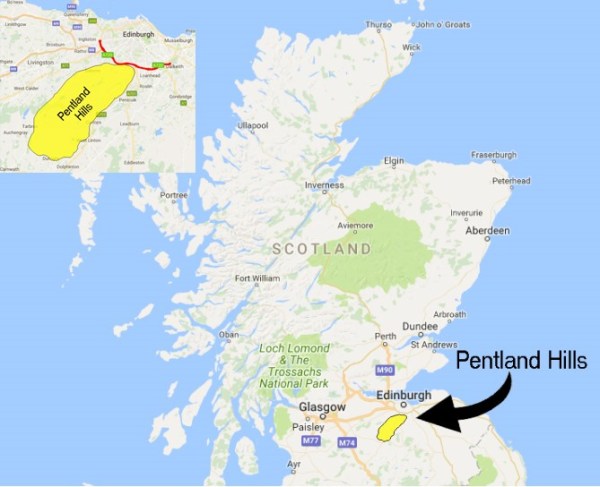
[RPUK map: Pentland Hills, just south of the Edinburgh City ByPass]

Given the location, a few miles from where golden eagle Fred had ‘disappeared’ in highly suspicious circumstances in January (see here), we were obviously very interested in this case.

[RPUK map showing golden eagle Fred’s last known fix in the Pentlands in January 2018 and the location of the poisoned peregrine found in May 2018]

We hadn’t seen any media from Police Scotland about this poisoned peregrine – no appeals for information, no warnings to the public about the use of a banned poison in a regional park popular with the visiting public, nothing.

So last week we started asking questions and this morning Police Scotland advised us that the following statement had just been issued:

Police Scotland Official Statement

Police Scotland received a report of a dead peregrine falcon on Thursday 25 May 2018 in the Pentland Hills near Edinburgh.

The dead bird was recovered from the Green Cleuch area of the hills in Midlothian.

Detective Constable Andrew Loughlin said: “After extensive inquiries were carried out in collaboration with partner organisations, the bird was found to have been poisoned.

Our investigation has concluded that this appears to have been deliberate as we do not believe that under the circumstances the poison could have been used legitimately.

The investigation has now concluded and no further Police action is being taken at this time.

We take wildlife crime like this very seriously and would urge anyone who has information about crime involving birds of prey to contact Police Scotland on 101 or make a report anonymously to the charity Crimestoppers on 0800 555 111.

ENDS

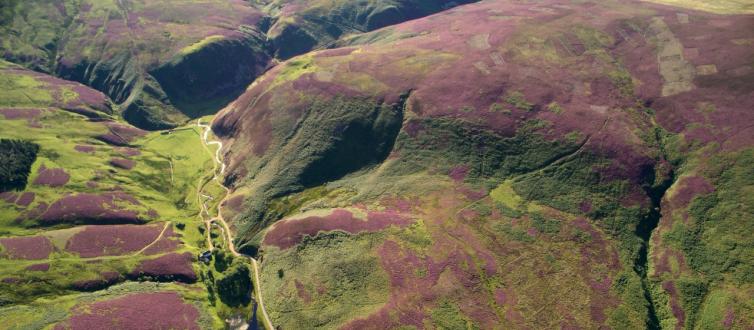
[Aerial photo of Green Cleugh, at the edge of the grouse moor at Black Hill – photo from Eastside Cottages website]

According to local Raptor Study Group fieldworkers, this peregrine was an adult male and was raising a brood of chicks in the area in May 2018. Three days after his body was found, the adult female and all the chicks had ‘disappeared’.

This case raises a number of questions and we’ll be returning to some of those shortly.

For now though, why the hell wasn’t this case publicised? If we hadn’t chased it up, would it ever have come to light?

This was a banned poison. We don’t know which one because that’s a secret apparently, but we do know it’s one of eight poisons listed on The Possession of Pesticides (Scotland) Order 2005 which are so dangerous that it’s an offence to even possess the stuff, let alone use it.

And to use it in the Pentland Hills Regional Park – an area that attracts approximately 600,000 visitors a year, including families walking with children and pets. Why weren’t those visitors warned that a banned poison had been used that could have potentially fatal consequences if even touched?

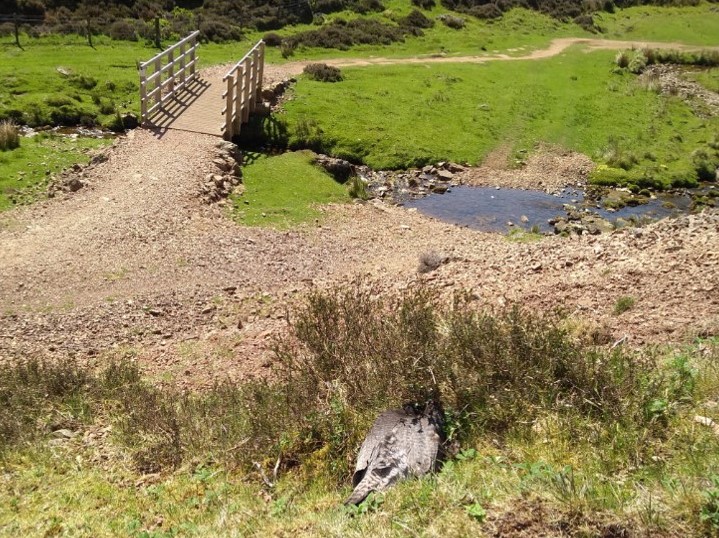
Here’s the poisoned peregrine, right next to the public footpath:

Who knew about this case and who made the decision to keep it quiet?

Was it a politically-motivated decision? We know there is huge sensitivity about illegal raptor persecution in south Scotland just now, with the start of the Government-backed translocation of golden eagles in to the region this year and SNH pretending that “persecution is not an issue” [in south Scotland] (see here).

It clearly bloody is an issue and we’ll be asking several politicians to look in to the handling of this case.

More on this, and other questions, shortly.

UPDATE 10 Oct 2018: Lothian MSP Alison Johnstone speaks out on Pentlands poisoned peregrine (here)

UPDATE 10 Oct 2018: BBC News has picked up on this blog  – Police criticised over bird of prey poisoning in Pentland Hills (here)

UPDATE 10 Oct 2018: Armed criminals running amok in the Pentland Hills nr Edinburgh (here)

UPDATE 11 Oct 2018: Merlin nest shot out in the Pentland Hills (here)

Buzzard found poisoned in North York Moors National Park

Press release from North Yorkshire Police (8 Oct 2018):

In January a dead buzzard was found in suspicious circumstances on top of a dry-stone wall, next to a layby on the Kildale to Commondale road near Percy Rigg in the North York Moors.

[Google map showing the road between Kildale and Commondale and surrounding grouse moors]

The find was made by a member of the public, who reported it to the RSPB and North Yorkshire Police.

The area is very public, and it is unlikely that the bird died where it was found, but appears to have been placed onto the wall deliberately.

The bird was collected and no obvious signs of trauma were found, and an x-ray revealed no signs of injury. The bird was sent for toxicology tests under the Wildlife Incident Investigation Scheme (WIIS).

The results show that chloralose poisoning was the likely cause of death.

Sergeant Stuart Grainger, of North Yorkshire Police’s Rural Taskforce, said:

North Yorkshire is known for its wonderful countryside, which is home to many species of birds, including protected birds of prey. Sadly, as a county, we have more confirmed incidents of raptor persecution than any other county in England – a situation North Yorkshire Police is absolutely determined to tackle.

It is saddening that this magnificent bird has been poisoned. I would urge anyone with any information about this incident to contact us on 101, or you can speak with someone in confidence by ringing the RPSB hotline number.”

[RSPB Raptor Crime Hotline Number: 0300-999-0101]

Jenny Shelton, RSPB Investigations Liaison Officer, said:

Raptor persecution is a serious, ongoing issue which is affecting some of our most incredible birds of prey. Our UK population of buzzards dropped during the 20th century largely due to illegal killing, and it’s alarming that these practices are continuing even today. This was a despicable and deliberate act. If you have any information, please speak out.

If you have any information about the circumstances of the buzzard’s death, or why it was placed on the wall, please contact North Yorkshire Police on 101, quoting reference number 12180127114.

ENDS

It’s not clear why this appeal for information has only just been published when the buzzard was found poisoned in the National Park in January, although we understand the toxicology results weren’t provided by the lab until July.

It’s no surprise to learn that yet another raptor persecution crime has been detected in North Yorkshire, inside a National Park that is dominated by driven grouse moors.

[RPUK map]