Yorkshire Dales National Park Authority reacts to public concern on illegal raptor killing

Last year the Yorkshire Dales National Park Authority opened a consultation to find out what issues the general public would like to see addressed by the Park’s latest five-year management plan (2018-2023).

The results were clear – visitors and residents of the National Park raised serious concerns about illegal raptor persecution and land management, with a particular focus on grouse moor management (see here).

When these findings were published in September 2017, we blogged about whether the Yorkshire Dales National Park Authority would be up for the challenge of taking a lead role in tackling raptor persecution within the Park. It seemed unlikely, given the scale of illegal raptor killing and the many years of in-action by the Park Authority.

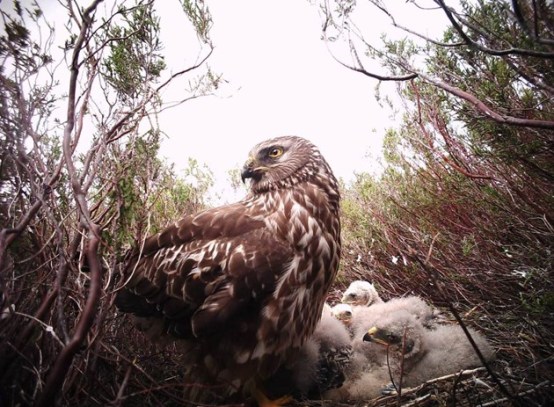
[Photo by Ruth Tingay]
But it seems like public opinion has finally forced change and the Yorkshire Dales National Park Authority has recently been taking steps to highlight illegal raptor persecution and is getting involved with various initiatives to apply pressure on the raptor killers.

In February the Park Authority was closely involved with Operation Owl, a multi-agency initiative led by North Yorkshire Police designed to target those who continue to persecute birds of prey in the region.

And last week the Park Authority published an ‘evidence report’ detailing the illegal persecution of birds of prey in the Yorkshire Dales National Park over the last ten years. This report, which is very well written and referenced, is a significant move. There’s no attempt to deny or hide or obfuscate the facts, as we’ve seen so often before. It is a clear description of what’s been happening in this National Park and places grouse moor management at the centre of it all. It’s well worth a read:

YDNP-Bird-of-prey-evidence-report-FINAL

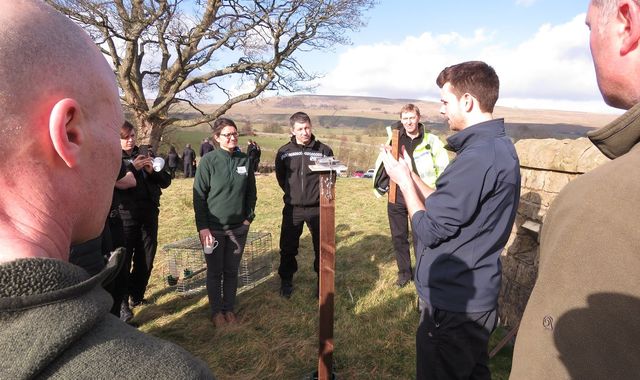
The publication of the report was accompanied by a press release (take note, Peak District National Park Authority!). The press release also provided details of a wildlife crime seminar organised by the Park Authority in February, where Park staff and police officers received expert training from RSPB investigators on how to identify raptor persecution crimes. The staff will now be passing on that knowledge to Dales Volunteers. That’s excellent, pro-active work by the Park Authority.

Photo: Howard Jones (RSPB) providing training to police officers and Yorkshire Dales National Park staff (photo by YDNPA)
David Butterworth, CEO of the Yorkshire Dales National Park Authority, has also been busy writing. In February he wrote an article for the Yorkshire Post on illegal raptor persecution and it was reproduced on the Park’s website here.

He hasn’t minced his words and deserves much credit for speaking out. However, his last paragraph is less impressive:

I believe that the Moorland Association, which represents some of the estates, is making genuine attempts to tackle bird of prey persecution. The Park Authority wants to see grouse shooting remain and thrive. It is part of the cultural heritage of the Dales and a part of the local economy. But the Association must know that change cannot come quickly enough.  We want birds of prey back in this iconic National Park“.

If he’s banking on actions by the Moorland Association to help bring an end to raptor persecution in the Park he’ll have a very long wait. Others have been down this road, many times over, and have recently called out this organisation for what we consider to be continued disruptive behaviour in tackling these crimes (e.g. see here and here).

Meanwhile, legal proceedings against a gamekeeper accused of the alleged shooting of two short-eared owls on a grouse moor in the Yorkshire Dales National Park continues in court this week. More to follow soon.
Police acknowledge golden eagle Fred’s disappearance is highly suspicious

Two weeks ago we blogged about a motion raised by Edinburgh Councillor Chas Booth (Scottish Greens) calling on Edinburgh City Council to take action in response to the highly suspicious disapearance of golden eagle Fred in the Pentland Hills (see here).

Last week we blogged about an attempt by Tim (Kim) Baynes, Director of the Scottish Moorland Group (part of Scottish Land & Estates) to downplay the suspicious circumstances of Fred’s disappearance and to derail Cllr Booth’s motion (see here).

Cllr Booth’s motion was due to be heard by Edinburgh City Council’s Transport & Environment Committee on 1st March 2018 but the meeting was postponed due to the snow.

The meeting was rescheduled and took place yesterday.

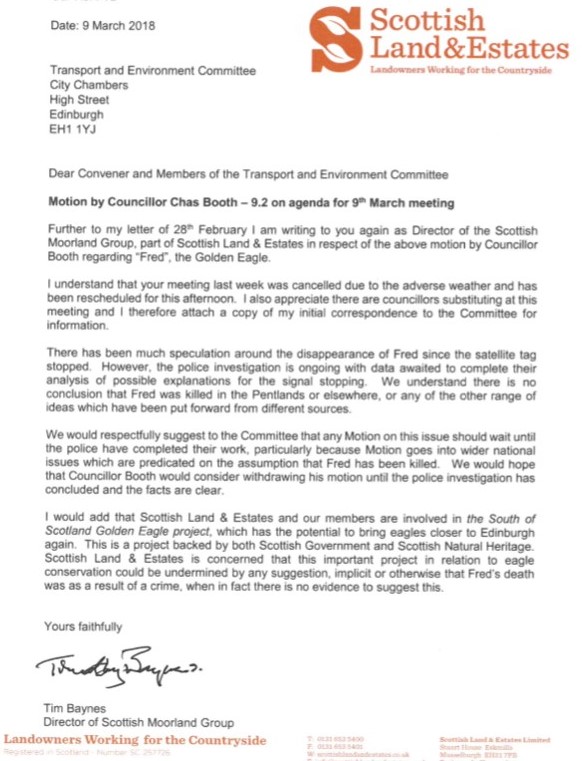
Prior to the meeting, Tim (Kim) Baynes sent another letter to the Committee, again attempting to derail the motion, as follows:

This letter, implying (incorrectly) that there is no evidence of criminal activity in relation to Fred’s disappearance, prompted Conservative councillor Nick Cook to call for ‘no action’ on the motion.

However, Cllr Booth sent around an email he’d received from Police Scotland that said they were “happy with the wording” of his motion (i.e. that Fred’s disappearance was indeed highly suspicious) and Cllr Booth argued that the opinion of Police Scotland held far greater weight than the opinion of Scottish Land & Estates.

Cllr Booth further argued that rather than delaying the motion until the police investigation had ended, the timing of the motion was even more pertinent now, in that one of the motion’s statements included referring the matter to the Pentland Hills Regional Park Joint Committee, to ask them to consider writing to landowners in the region highlighting this incident and encouraging them to report any suspicious activity to Police Scotland or the RSPB.

The Committee voted on the motion and despite three Conservative councillors voting against it, the motion was carried by 8 votes to 3.

Well done and thank you, Cllr Chas Booth.

Here’s the motion that was carried:

Green Motion – Suspicious disappearance of ‘Fred’ the Golden Eagle in Pentland Hills

Committee:

  1. Notes with grave concern reports of the suspicious disappearance of ‘Fred’ the Golden Eagle, who hatched from a nest in the Scottish Borders to the only breeding pair of Golden Eagles in the region, and who, according to his satellite tag, was in woodland near Currie in January 2018, within the Edinburgh Council boundary;
  2.  Notes that Fred’s satellite tracker is reported to have suddenly and inexplicably stopped transmitting on 21 January 2018, and then to have mysteriously started transmitting again on 24 January 2018, with a GPS location some 15 miles offshore of St Andrews, Fife.
  3. Further notes that RSPB Scotland and Raptor Persecution UK regard Fred’s disappearance as highly suspicious and believe it is likely that he has been illegally killed;
  4. Notes that the Golden Eagle is a magnificent and majestic bird and one of the largest birds of prey in the British Isles, notes that it is protected under the Wildlife and Countryside Act 1981, but notes that nonetheless it has been illegally killed and persecuted in the past;
  5. Notes that a Scottish Government-commissioned study in 2017 found that 41 of 131 satellite-tagged Golden Eagles had disappeared in suspicious circumstances, most of them at or near to managed grouse moors;
  6. Notes that the Scottish Government have established a working group with a view to establishing a licensing regime for game-shooting estates;
  7. Agrees that the suspicious disappearance of Fred is deeply regrettable, and urges anyone with any knowledge of this incident, or any other incidents of possible wildlife crime, to contact Police Scotland on 101 or alternatively call the RSPB’s new confidential raptor crime hotline on 0300 999 0101;
  8. Agrees that the Council Leader will write to the Cabinet Secretary for the Environment expressing the council’s grave concern at this incident, asking her to outline a timetable for the introduction of the licensing of game-shooting estates; offering the council’s cooperation with any such licensing regime, and offering the council’s support for consideration of stiffer penalties for wildlife crime;
  9. Agrees to refer the matter to the Pentland Hills Regional Park Joint Committee, to ask them to consider writing to landowners in the region highlighting this incident and encouraging them to report any suspicious activity to Police Scotland or the RSPB.

Moved by Cllr Chas Booth, Seconded by Cllr Steve Burgess (Scottish Greens).

RSPB joins legal challenge against Hen Harrier brood meddling licence

In January this year, Natural England issued a licence to Jemima Parry-Jones (International Centre for Birds of Prey, Newent, Glos) permitting the controversial removal of hen harrier eggs and chicks from some nests on grouse moors in Northern England, to protect artificially-high stocks of red grouse being farmed for shooting. The licence permits the ICBP to rear the young hen harriers in captivity and then release them in August back to the same grouse moor areas from where they were removed, where they will once again be put at risk of being illegally killed.

This licence is fundamental to DEFRA’s hen harrier brood meddling plan, which forms part of its ludicrous Hen Harrier Action Plan. For background reading on hen harrier brood meddling, please see here. The ICBP is being paid by the Moorland Association to undertake the brood meddling work, and the licence is supported by the members of the Hen Harrier Brood Meddling Project Board, which includes Rob Cooke (Natural England), Adrian Jowitt (Natural England), Steve Redpath (Aberdeen University), Jemima Parry-Jones (ICBP), Adrian Smith (GWCT), Philip Merricks (Hawk & Owl Trust), Amanda Anderson (Moorland Association), Robert Benson (Moorland Association).

In early February, lawyers acting on behalf of Mark Avery decided to challenge the lawfulness of Natural England’s decision to issue this licence by way of a judicial review. The lawyers agreed to work at reduced rates and Mark successfully raised over £26,000 via crowdfunding to support the legal action.

In late February Mark’s lawyers sent a ‘pre-action protocol letter’ to Natural England, outlining the perceived legal inadequacies of the decision to issue the licence. The letter also invited Natural England to revoke the licence and undertake a proper public consultation on the issue of hen harrier brood meddling.

This pre-action protocol letter is the first step in the process of judicial review and Natural England should respond within 14 days (deadline 14 March 2018). If Mark’s lawyers find Natural England’s response inadequate, they will move to begin formal legal proceedings via judicial review.

Today, the RSPB has announced that it, too, has started proceedings and has sent its own pre-action protocol letter to Natural England. We don’t know the details of that letter but we expect the specifics to be very similar to the letter sent by Mark’s lawyers.

We now have to wait for Natural England’s response(s).

Assuming Natural England stands by its decision-making process, and permission is granted by the courts to proceed with a full judicial review, we might expect Natural England to temporarily suspend the brood meddling licence while legal proceedings are underway, much in the way that SNH suspended its General Licence Restriction on Raeshaw Estate while that judicial review was heard.

Interesting times ahead.

UPDATE 17 April 2018: Legal challenge against hen harrier brood meddling continues, x2 (here)

Ssshhhh! Don’t mention the new Raptor Crime Hotline!

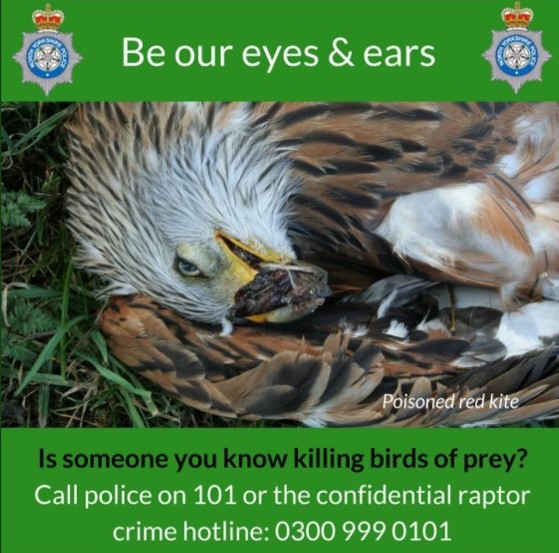
Two and a half weeks ago the RSPB launched its new, confidential Raptor Crime Hotline (0300-999-0101) to help whistle-blowers within the shooting industry come forward about bird of prey persecution.

We thought it’d be interesting to see how many members of the Raptor Persecution Priority Delivery Group (RPPDG) were actively promoting this initiative, because part of the RPPDG’s role is to provide publicity about raptor persecution in order to ‘build trust and transparency’.

There must be something wrong with our internet browser, because we could only find the new hotline number being promoted on two RPPDG member’s websites: RSPB and NERF (Northern England Raptor Forum).

We couldn’t find anything on the websites of the other RPPDG members:

Moorland Association, National Gamekeepers Organisation, British Association for Shooting & Conservation, Countryside Alliance, Country Land & Business Association, Natural England, DEFRA, National Parks England, Crown Prosecution Service, National Wildlife Crime Unit.

How strange. Surely just a temporary, technical glitch for, er, them all?

Well done though to the Yorkshire Dales National Park Authority and the North York Moors National Park Authority who have both publicised the new Raptor Crime Hotline, and they’re not even listed as members of the RPPDG!

National peregrine survey results: illegal persecution on grouse moors affecting distribution

Periodically there are synchronised national surveys for a number of raptor species in the UK, which help to build a picture of national and regional population trends.

In 2014 a national peregrine survey was undertaken, to follow up on the previous survey completed in 2002. The results of the 2014 survey were published yesterday in the journal Bird Study.

The full paper can be read here

A press release from the BTO (whose scientists led the study) can be read here

If you read beyond the superficial headline (‘World’s fastest bird making a comeback’) you’ll see that although peregrines are doing fantastically well in the lowlands and in many urban environments, all is not well for peregrines in the uplands, and particularly in areas intensively managed for driven grouse shooting.

This will come as no surprise to regular blog readers. It’s not exactly news to learn that illegal persecution on driven grouse moors is affecting the distribution and abundance of peregrines on a national scale, just as it is affecting the national popuation of golden eagles and hen harriers.

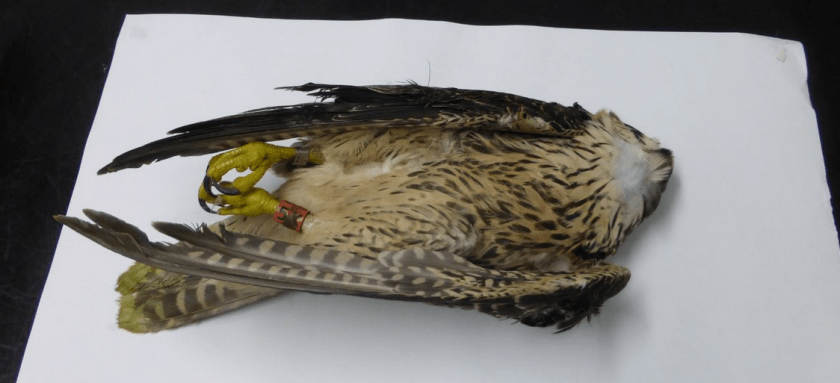
Photo of a dead peregrine that was found shot next to a grouse moor in the Peak District National Park in 2016 [RSPB photo]

An excellent paper by Arjun Amar and colleagues, published in 2011, examined 1081 peregrine nest histories across northern England between 1980-2006 and found that productivity of peregrines on grouse moors was 50% lower than pairs breeding on non-grouse moor habitat. This was attributed to illegal persecution rather than to prey constraints.

Another paper by the North East Scotland Raptor Study Group, published in 2014, demonstrated an on-going decline in the breeding population of peregrines on driven grouse moors on the eastern side of the Cairngorms National Park, a trend that has persisted since 1991.

Anecdotal information suggests a continuing decline in the number of breeding peregrines on the driven grouse moors of Bowland in Lancashire.

And last year, further information was published by the Peak District Bird of Prey Initiative documenting the continuing decline of breeding peregrines in the Dark Peak area of the Peak District National Park, an area dominated by driven grouse moors.

The results of the 2014 national peregrine survey don’t tell us anything we didn’t already know, they simply confirm what has been known for years.

The question is, what, if anything, will the statutory authorities do about it? Continued wilful blindness is no longer an option.

Stody Estate exonerated after gamekeeper’s conviction for mass raptor poisoning

Regular blog readers will remember the mass poisoning of birds of prey on the Stody Estate, Norfolk in 2013.

In October 2014, Stody Estate gamekeeper Allen Lambert was convicted of a series of wildlife crime offences on the estate, including the mass poisoning of birds of prey (10 buzzards and one sparrowhawk) which had been found dead on the estate in April 2013. He was also convicted of storing banned pesticides and other items capable of preparing poisoned baits (a ‘poisoner’s kit’) and a firearms offence (see here and here).

Photo of nine of the buzzards poisoned by gamekeeper Lambert [photo: RSPB]

In our opinion, gamekeeper Lambert got off pretty lightly when he was sentenced in November 2014. Even though the judge acknowledged that Lambert’s crimes had passed the custody threshold, Lambert received a 10-week suspended sentence for poisoning 11 raptors (suspended for one year), a six-week suspended sentence for possession of firearms and dead buzzards (suspended for one year) and was ordered to pay £930 prosecution costs and an £80 victim surcharge. In our opinion (see here), this was absurdly lenient for one of England’s biggest known mass raptor poisoning incidents, and on top of that, Lambert wasn’t even sacked – it was reported that he’d been allowed to take early retirement from the Stody Estate.

However, even though Lambert appeared to have got off lightly, his employers at Stody Estate were hit with a massive financial penalty (through cross-compliance regulations), believed to be the biggest ever civil penalty imposed for raptor persecution crimes.

Today though, the High Court has ruled that Lambert’s actions were “not directly attributable” to Stody Estate or its senior management and the subsidy penalty has been quashed!

In other words, the employer (Stody Estate) cannot be held accountable for the criminal actions of its employee (Allan Lambert). That’s quite astonishing, although it’s difficult to comment in detail without knowing the finer details of Lambert’s employment contract with Stody Estate. [UPDATE 7th March – full written judgement now available at foot of this blog post]

It does seem like yet another example of the need to introduce vicarious liability legislation for specific offences against birds of prey in England, as has been done in Scotland.

Stody Estate photo by RPUK

The following article has been published in the EDP:

A farm company was wrongly penalised after a gamekeeper poisoned wild birds of prey to preserve game birds for shooting, the High Court has ruled.

Allen Lambert poisoned 10 buzzards and a sparrowhawk which he saw as a threat to 2,500 pheasants and partridges laid down for a 10-day “family shoot”.

The gamekeeper on the 4,200-acre Stody Estate in north Norfolk was convicted of an offence under the Wildlife Conservation Act 1981 in October 2014.

And, in January last year, then Environment Secretary, Andrea Leadsom, stripped Stody Estate Ltd of 55pc of its farm subsidy for that year.

Overturning the penalty today, a senior judge noted that there had been “no finding of fault” against the company, based in Melton Constable, or its senior management.

The mere fact of Mr Lambert’s conviction did not prove that poisoning the birds was “directly attributable” to his employer, said Mrs Justice May.

“Some further enquiry directed at the level of fault, if any, on the part of Stody Estate in connection with Mr Lambert’s actions was required,” she added.

“In the absence of any finding of fault there was no proper basis for the imposition of a penalty.”

The Stody Estate, which has 15 employees, has been farmed by the MacNicol family for 75 years and Charles MacNicol is its managing director.

Estate manager, Ross Haddow, has day to day management of the farm and Mr Lambert had been a gamekeeper since 1990, living in a tied cottage.

The Rural Payments Agency, which administers the single farm payment subsidy scheme, at first said the company should lose 75pc of its subsidy.

That was reduced to 20pc by the Independent Agricultural Appeals Panel, but the penalty was upped again, to 55pc, by Ms Leadsom last year.

Stody Estate Ltd and its management were “exonerated” from any involvement in poisoning birds, the court heard.

But Ms Leadsom concluded that “the intentional acts of Mr Lambert, acting within the scope of his employment, were to be treated as those of the farmer, being Stody Estate.”

The issue was of such importance to the farming industry that the National Farmers Union intervened in the case, arguing that the penalty could only lawfully have been imposed if Charles MacNicol, or possibly Mr Haddow, had poisoned the birds.

Mrs Justice May said that that was going too far, but nevertheless ruled that Mr Lambert’s actions could not be “directly attributed” to Stody Estate or its management. The penalty was quashed.

ENDS

UPDATE 7 March 2018: The written judgement can be read HERE (with thanks to @borobarrister)

Job opportunity with RSPB’s Investigations Team

The RSPB’s Investigations Team is recruiting for an Assistant Investigations Officer to work in the uplands of northern England with a special focus on the illegal persecution of hen harriers.

This is a fantastic opportunity to join an elite team of field investigators working on the front line of raptor conservation.

A full job description and information about how to apply can be found here

RSPB Investigator Guy Shorrock with a shot hen harrier [photo: RSPB]

Fred the golden eagle: police investigation still very much ongoing

The criminals within the game-shooting industry are deeply concerned about what might be revealed by the police investigation in to the highly suspicious disappearance of our satellite-tagged golden eagle Fred.

The following was posted on the BASC facebook page today and has since been doing the rounds on social media, accompanied by various defamatory accusations that we (RPUK, Chris Packham, and Ian Thomson from RSPB) are all “compulsive liars”:

FOR THE AVOIDANCE OF ANY DOUBT, THE POLICE INVESTIGATION IS STILL ONGOING.

The police have been given the new data we were able to retrieve from Fred’s tag, which very much support our earlier suspicion that Fred was a victim of illegal persecution.

Rest assured, we WILL be publishing these data in due course.

For now, we have to let the police do their job.

But thanks, game-shooting criminals, for keeping Fred’s highly suspicious disappearance in the news. Much appreciated.

Our 8th birthday

Blimey, where did the years go?

Thanks to all of you who’ve been with us since the start, literally sharing our goal of raising more awareness, and welcome to all those who’ve joined us along the way.

We’re often asked how we measure the failure or success of this blog. It’s almost impossible to answer because these things can be measured in different ways. For example, if we were to measure it in terms of the number of raptors still being illegally killed then we’d have to consider the blog a complete failure. But if we were to measure it in terms of the number of people we’re reaching (in terms of the number of blog hits), then we’re doing ok.

There’ll be no sitting on laurels around here though. There’s still so much more work to do and we hope you’ll stick with us as we continue to try and influence change.

Last year a wonderfully generous supporter stepped forward and paid for some of the time it takes to research and then write this blog. We’re enormously happy, and grateful, that funding has been received again this year. You know who you are – thank you so much.

Here’s to another productive year.

Cheers!

Satellite-tagged hen harrier Marc disappears on grouse moor at Wemmergill

And so it continues.

Joint press release today from RSPB and Durham Police:

YET ANOTHER RARE HEN HARRIER GOES MISSING

Durham Constabulary and the RSPB are appealing for information following the disappearance of a satellite-tagged hen harrier near Middleton-in-Teesdale.

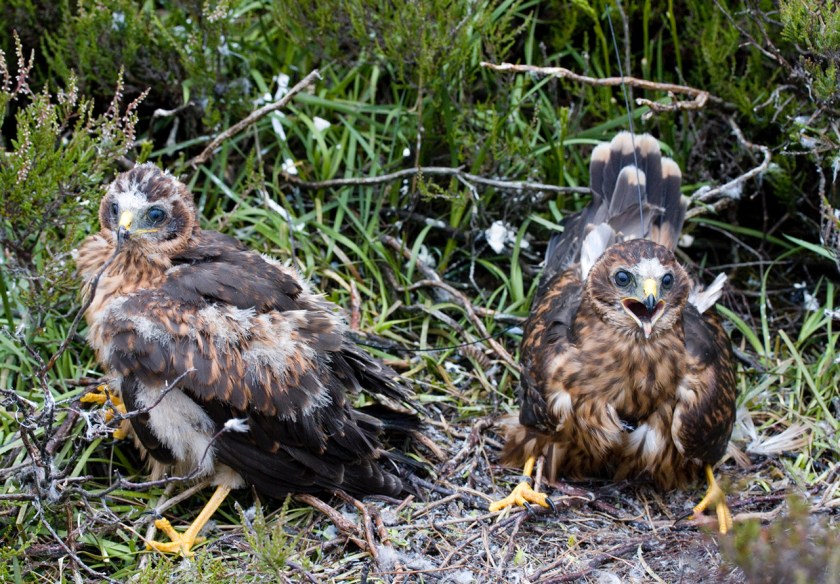
The harrier, named Marc, was one of a nest of two chicks tagged as part of the EU-funded Hen Harrier LIFE+ project in July last year from a nest in the Scottish Borders.

Photo of Hen harrier Marc (right) photographed at the nest last summer with his brother Manu, who also disappeared on a grouse moor in the North Pennines. Photo by Tim Jones.

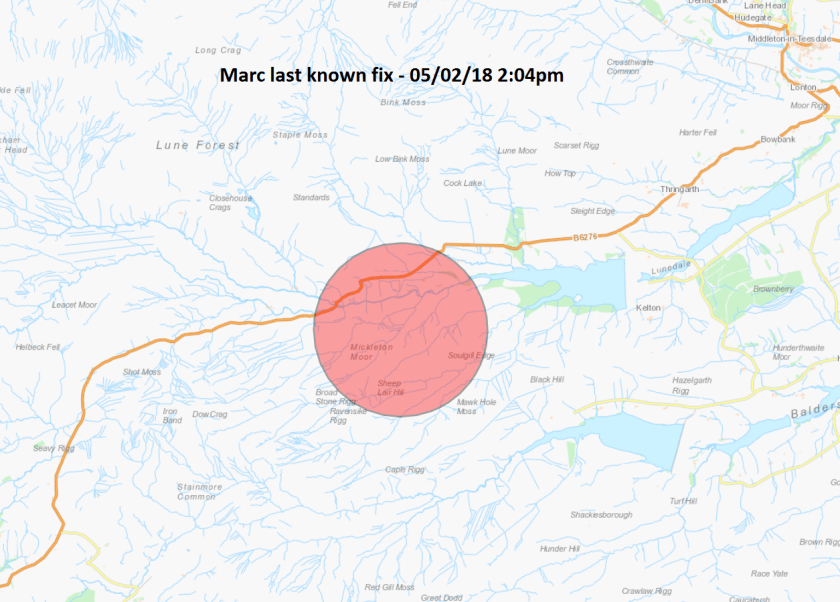
Marc’s tag had been transmitting regularly, showing no signs of any problems, until it suddenly stopped on the afternoon of 5 February. Data from Marc’s tag indicated he had been in the same area of upland farmland since late November before moving 10km north west on 27 January to an area of driven grouse moor, from here he posted several positions on the 5 February until 2.04pm, after which the tag inexplicably failed to send any further data.

Hen harriers are one of the UK’s rarest raptors with only three successful nests recorded in England in 2017. There have been a number of other hen harriers that have gone missing in similar circumstances both in England and Scotland since the tagging project began in 2015. This includes Marc’s brother, a bird called Manu who was tagged in the same nest but went missing in October 2017 with his last known location being close to a grouse moor in Northumberland.

Mark Thomas, RSPB Principal Specialist, said: “Hen harriers are facing an uncertain future: these spectacular birds should be flourishing in our uplands but studies show that we are down to just a handful of pairs in England with illegal persecution identified as a prime factor. So it’s depressing when yet another hen harrier goes off the radar like this, especially when the supporting tag data is so precise.”

A spokesperson for Durham Constabulary said: “We are very concerned at the disappearance of one of these iconic birds of prey. Hen harriers are fully protected by law and raptor persecution is a national wildlife crime priority. We urge you to come forward if you have any information about the disappearance of this bird.”

If you have any information relating to this incident (ref 163 2022018), call Durham Constabulary on 101 or the confidential Raptor Crime Hotline on 0300 999 0101. All calls are anonymous.

ENDS

The RSPB has also published a blog about Marc’s suspicious disappearance here

The RSPB has published a map showing the last known location of Marc’s tag:

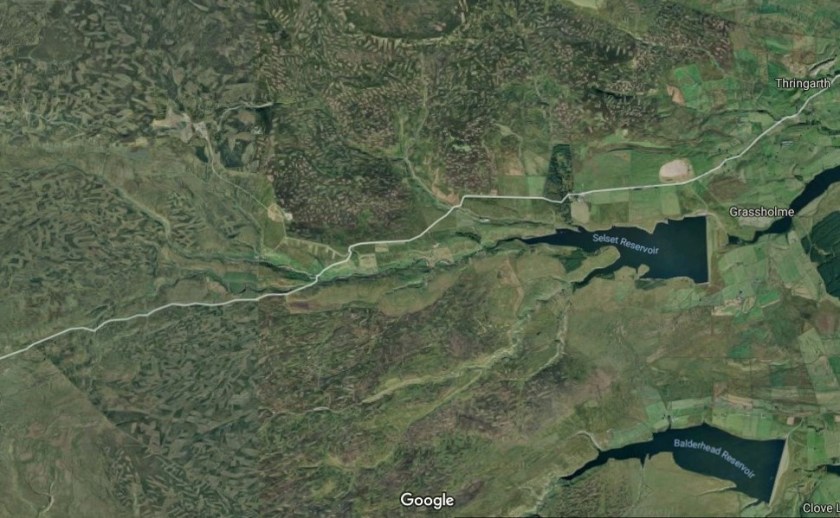
A quick look on Google Earth shows this area is managed for driven grouse shooting:

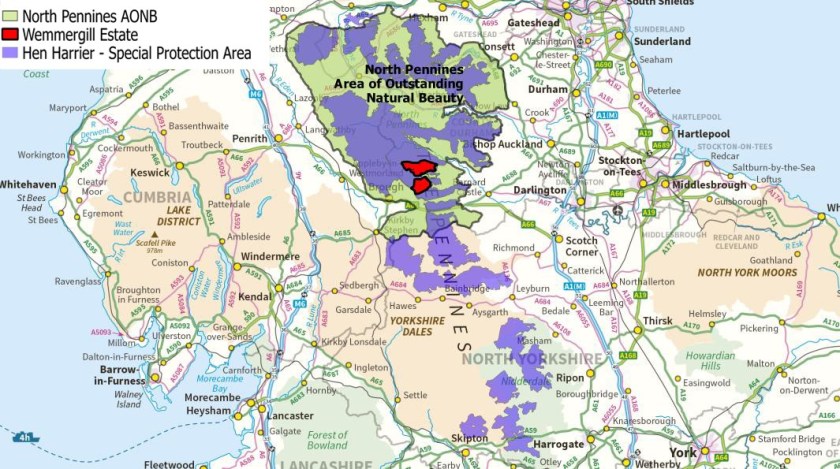
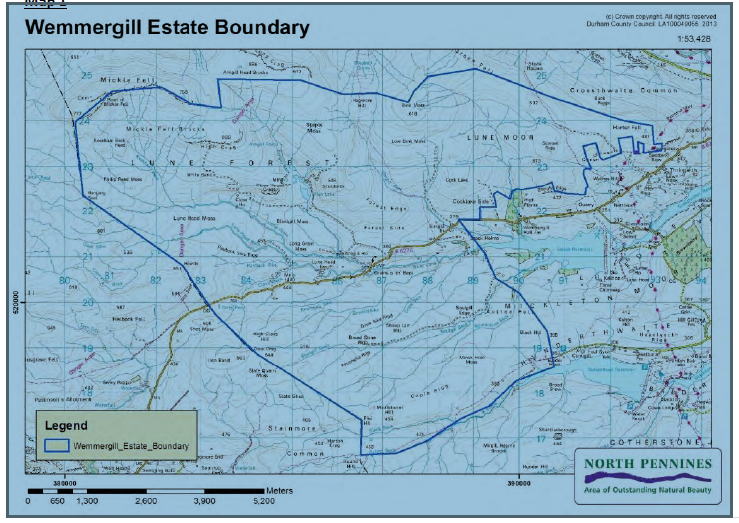
We’ve done a bit of research and it looks like this area is part of the Wemmergill Estate, a well-known driven grouse shooting location in the North Pennines Area of Outstanding Natural Beauty. It is also part of a Special Protection Area (SPA) designated specifically for hen harriers. There should be at least 11 breeding pairs of hen harriers in this SPA – there are none.

The estate boundary (in red) on our map suggests the estate is divided in to two separate areas, but this could just be a function of the system used to assess rural payments received by the estate, which is the source of the estate boundary we have used above.

This map below, from the North Pennines AONB, suggests Wemmergill is not split in to two separate areas:

This is not the first time that the police have investigated a suspected raptor persecution incident in this location. In 2015, two dead short-eared owls were found shoved inside a pothole – both had been shot (see here).

So, it looks like DEFRA’s outrageous Hen Harrier Action Plan is continuing to fail. Launched in January 2016 and designed to supposedly protect hen harriers from criminal persecution, here we have yet another satellite-tagged hen harrier that has vanished without trace in an area managed for driven grouse shooting.

As Dr Hugh Webster commented recently, “They can hide the bodies. They can hide the tags. But they can’t hide the pattern“.

If you’re sick to the back teeth of hen harrier persecution and you have no faith in DEFRA’s Hen Harrier Action Plan, there’s no better time than now to support this legal challenge to the brood meddling part of that Plan – please support the crowdfunder here.