
Brood meddling is one of the six action points in DEFRA’s Hen Harrier Action Plan, launched in January 2016.
Regular blog readers will know that we initially got some information out of Natural England about this controversial action point (see here, here, here, here), but for the last year all our requests have been refused for one reason or another, but mainly because NE considered the release of information would “prejudice” the internal licence application. This is, of course, complete nonsense.
In early October 2017 we submitted yet another FoI request, only to be told by Natural England that more time was needed to gather the requested information “because of the complexity/voluminous nature of the request“.
Natural England has now had the extra time it requested and the information it has released was neither “complex” nor “voluminous”. Once again, requested information has been withheld (for “confidentiality” purposes this time) but some info has been released.

The Hen Harrier Brood Meddling Group held its sixth meeting in June 2017 and here are the notes from that gathering:

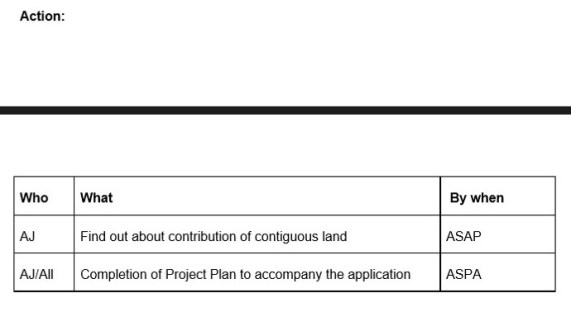
Unfortunately these notes provide little information, mainly because much of the discussion was centred on the Brood Meddling Draft Project Plan, which has not been made publicly available.
We have submitted another FoI to ask for a copy.
The only other bit of information that NE released as part of this “complex and voluminous” request was a couple of letters to the Ministry of Defence and to Yorkshire Water, inviting them to get on board with the hen harrier brood meddling plan. Here is a copy of the letter to the MoD (the letter to Yorkshire Water was virtually identical so we won’t reproduce it here):
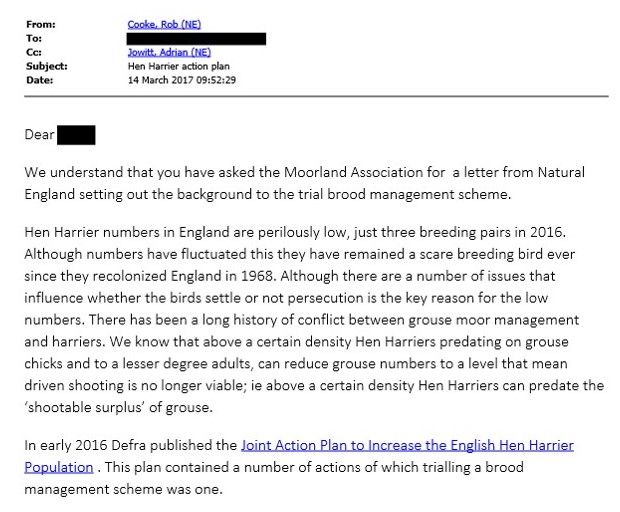
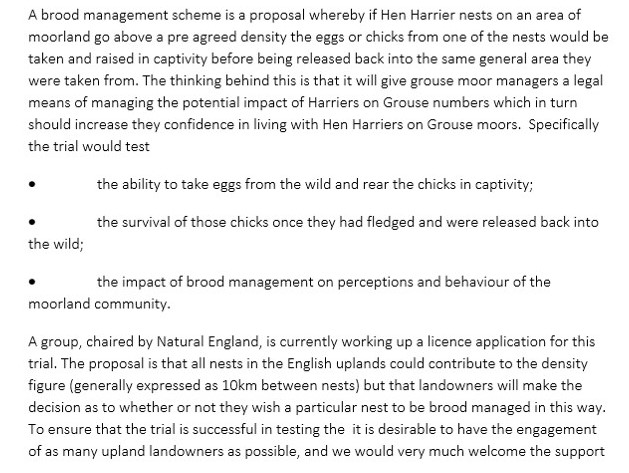
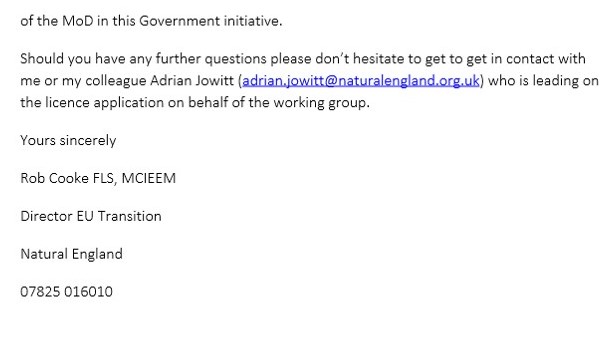
We have no idea whether the MoD or Yorkshire Water has agreed to sign up to the hen harrier brood meddling plan (i.e. to permit the removal of hen harrier eggs/chicks from their land).
Despite a thoughtful (but some might argue naive) position (see here), Yorkshire Water does permit grouse shooting on its land.
So does the MoD – here are a couple of photos of grouse butts photographed on a military firing range in North Yorkshire [photos by Ruth Tingay].
We await the Brood Meddling Draft Project Plan with interest.
UPDATE 7 December 2017: Yorkshire Water agrees to hen harrier brood meddling on its landholdings (here)


 Raptor Persecution UK
Very brief notes indeed from a not very well attended meeting. The lack of attention to detail applies to the notes as well.
Glad to see that Rob Cooke form NE acknowledges that “persecution is the key reason for low numbers” of Hen Harriers. So why not tackle the key reason?
‘The thinking behind this is that it will give grouse moor managers a legal means of managing the potential impact of Harriers on Grouse numbers’
The thinking behind this is that the heads of the organisations responsible are admitting their guilt and are at the same time pretending solutions. They will only stop when the killing and/or removal of BOP are made legal.
Foxes in charge of the hen house has never been more apt.
Interesting that there is no request to the only organisation with any young Hen harriers in England – I suspect NE know what response they’d get, and Ministers are still handling anything to do with the Forestry Commission estate with kid gloves.
What sort of people does Natural England employ? The whole rationale behind this brood meddling plan is amateurish and naive, and anyone who knows anything about harrier ecology will be left scratching their head in dismay. The idea that harriers nesting at densities greater than 10 km between nests will significantly affect grouse productivity is, in all but exceptional cases, absolute nonsense. It’s hard to believe that a species researched as thoroughly as Hen Harrier can be so misunderstood by so many, but I know for certain that at least one of the prominent scientists xxxxxxxxx xxxxxxxxx xxxxxxxxx xxxxxxxxx xxxxxxxxx xxxxxxxxx xxxxxxxxx xxxxxxx xxxxxxx xxxxxxx xxxxxxx xxxxxxx xxxxxxx xxxxxxxx. The most well-known factor in determining breeding density is the overwinter field vole population still present and breeding in spring. Research has not proved the following conclusively, but it seems apparent that the harriers will only switch to relying on grouse chicks on relatively rare occasions when vole numbers crash in summer. Unfortunately that appears to have happened at Langholm, so the results of the work carried out there has led to skewing of the level of grouse chick predation being greatly exaggerated. Further research is required to test the validity or otherwise of this conclusion. A medium term (4-year) study of prey taken to nests in the Renfrewshire Heights SPA suggested that in average circumstances, Red Grouse chicks form only a very small proportion of the items provisioned to harrier nestlings. It is possible that the longer term sustainability of harrier populations would be adversely affected by reducing densities to no more than one nest per 10km to nearest neighbour. The so-called Joint Hen Harrier Recovery Plan is a con, and we should not let them get away with it.
[Ed: Part of your comment deleted, Iain, as the identity of that prominent scientist is obvious so your comment is defamatory]
‘A medium term (4-year) study of prey taken to nests in the Renfrewshire Heights SPA suggested that in average circumstances, Red Grouse chicks form only a very small proportion of the items provisioned to harrier nestlings.’
##
What’s the density of red grouse chicks in that area compared to an average driven grouse moor though? If they’re not comparable then I’m not sure that dietary preferences could necessarily be extrapolated from one to the other.
The density of breeding Red Grouse, as on any moor managed or unmanaged, was variable from year to year. During the four years in question, numbers were estimated to be ‘moderate’, albeit with no hard stats to back it up (it was based on registrations – including fresh droppings – per total transects walked by surveyors during the season). Out of a sample of 1,285 prey items delivered to four different nests (captured on camera), 93% were meadow pipits, 5% field voles and 2% unidentified small passerines. Not a single grouse chick. In fifteen years of nest monitoring we recorded only a handful of grouse chicks being carried to nests, and only one incident of a (female) harrier taking an adult grouse. Grouse numbers were estimated as “high” in four of the years. The significance of meadow pipits underestimates the importance of voles in the diet of adults, particularly the female in the month prior to laying. Harrier hatching dates were more or less perfectly timed to coincide with the fledging date of pipit nestlings, providing an abundance of that species on the moor during the period when harriers were feeding young in the nest. A population within the SPA of 12-13,000 pairs of meadow pipit, in a good vole year, supported 12-14 pairs of harriers attempting to breed, a density of up to 15 pairs per 10-km square. Note that this figure is over ten times higher than the “appropriate” density decided by the Joint Hen Harrier Recovery Plan!
Its a shocking state of affairs that Yorkshire Water, and other utilities allow grouse shooting on their land knowing the extent to which raptor persecution is carried out on land managed for grouse. It’s morally repugnant and it should be campaigned against. The same goes for MOD land. And to consider allowing any harrier eggs/young to be removed from their property is like rubbing salt into the wounds.
I agree with Iain here in most circumstances where harriers are present on a moor grouse chicks form a relatively low proportion of the diet. For high densities of Harriers that is even more so the case. The whole of this scheme is smoke and mirrors and has little if any scientific validity. Even the work commissioned by the Environment Council process showed that two pairs of harriers per 5000 acres could be accommodated at most grouse densities of the time without damage to the number going over the guns. Of course densities of grouse have gone up since then. The whole thing is a sham the density of harriers settled on has nothing to do with predation and all to do with how many the moor owners are prepared to tolerate. Of course it means harriers will always gravitate to Honey pot sites and be brood managed. Harrier population in fact will never behave normally under this dreadful scheme. This is no compromise solution, not that compromise would be any more or less acceptable it gives the grouse lobby want they want a fig leaf to hide behind whilst they keep the density in England to almost nothing by winter killing. Any raptor worker amateur or professional and any scientists worthy of the name involved in this have sold their souls to the dark side and it will quite rightly ruin their reputations.
If you look at the board of HOT now it reads like a who’s who of the CLA, enough said.
Here in Nidderdale we did once have birds displaying and site selecting on YW land unfortunately it was still in the “burning season” (which should finish in England at the latest 1st April better still would be 15th March but of course runs to 15th April) the keeper burnt the whole gill of long heather under them, that was nearly 20 years ago now!—– still the same tenant but a different keeper, nasty man with a bad reputution ( don’t they all in Nidderdale!)
So, to quote the NE letter to the MOD, the Hen Harrier is a ‘scare (sic) breeding bird’. Reckon I’d be scared too if I was a Hen Harrier. There’s also a reference to them predating ‘the shootable surplus’ of grouse. Might this be the same ‘surplus’ on which BOPs used to feed when nature was rather more in balance and before the shooting fraternity appropriated this naturally occurring wild resource for its own dubious purposes?
What interests me most at this stage, however, is how the approaches from the MOD and Yorkshire Water came about. Were they solicited by the MA or did they arise from independent, spontaneous enquiries?
The gamekeepers are killing the harriers and natural England know that so what are they going to do, they will punish the harrier, does this make them idiots or criminals.
Makes them both Mick complicit in crime makes you a criminal yourself in every moral sense.
In the e-mail the second paragraph/second line contains a classic Freudian slip, sorry typo.
Deserves an honourable mention.
Urm – extraordinary, really quite remarkable – that second paragraph in the email. I know I have read before in these blogs and in Inglorious about the absurdities of the Joint Action Plan, but, coming from Natural England, that second paragraph seems an extraordinarily candid admission that the brood management scheme has been ill-thought-up solely to appease the criminals who will otherwise just continue to persecute to oblivion any harriers unfortunate enough to stray into the English uplands. You don’t even need to gloss it to come to that conclusion. Takes the breath away! In what other area of society would public resources be used in such a way to reward criminality?
And as for the line ‘There has been a long history of conflict between grouse moor management and harriers’ with its suggestion that the harriers are actually combatants in a 100 years war between the birds and the mysteriously depersonalised moor owners and gamekeepers – it would be laughable if it wasn’t in fact describing the systematic persecution of a beautiful bird to the point of near extinction in England for commercial gain.
Indeed Francis. The whole plan is an admission by Government, DEFRA, NE you choose that persecution of Hen Harriers is out of control. They have little or no stomach to combat this crime or crimes in the usual way– bring the criminals to book and if current law does not suffice then change it.
In what other walk of life are criminals rewarded for their criminality it beggars belief.
I’m never 100% happy with the implication that harrier persecution is exclusively to do with commercial gain. Having had many a conversation on the subject with a range of individuals involved in grouse shooting, including gamekeepers, grouse shooting scientists and managers, I sense something more psychological and primaeval affecting their judgement. Not that commercial gain isn’t part of the equation. It’s almost impossible to win an argument with most of them, because their hatred of hen harriers, over and above any other avian predator, is so deeply profound. They seem convinced that the bird represents pure evil, because they hold a very false understanding of their behaviour. Even more so, they regard harriers as possessing an almost evil disregard for their personal interests, which is more than verging on anthropomorphism. One keeper, during a particularly heated debate with me, even compared harriers to nazis! They seem to imagine that if left alone, the harriers will virtually wipe out red grouse, as if any predator is likely to have evolved such a self-destructive strategy. This image of hen harriers has proved very difficult to counter, it is so deep rooted, so in a sense we are all failing, to some extent, to educate the ignorant. Such a personal view is usually considered arrogant and patronising by those being criticised, which risks exposing the critic to ridicule or abuse, but I’m just being honest. It’s the culture we need to counter.
That strikes a chord with my experience. Otherwise rational and enlightened guy (retired keeper on a grouse estate) with a complete blind spot so far as hen harriers go. An almost pathological, obsessive hatred, striking because it was so out of character. I think it’s just cultural conditioning, part of the great semi mystical heritage and lore passed on from generation to generation that they regard as giving them their unique position in the great scheme of things.
Dave, it’s also to do with acceptance into their tight circle of peers, a particularly effective form of the phenomenon known as groupthink. Any suggestion that they might have any sympathy towards harriers, or indeed any predator at all, can lead to them being regarded as outcasts. They also have to convince potential employers of being prepared to be ruthless and reliable, as well as servile and secretive.
My experience agrees with you both Harriers were once described to me as Effing rats with wings. Yet that same keeper now long retired was once grateful as two harriers ruined a drive when he had already told his bosses they did not have enough grouse to continue shooting. I well remember a land agent explaining to others that his keeper was instructed to leave Peregrines alone because they are magnificent hunters whilst harriers were to be killed at every opportunity as they were abject cowards taking chicks and small things. Incidentally I know his keeper killed both and had a pathological hatred of Short eared Owls too!
I couldn’t agree with you more: there is just a mindset amongst antediluvian practitioners of “countryside pursuits” that any animal is there to be killed at their pleasure and that they have no value outside of their availability to be killed. The continued killing of rooks, jackdaws, carrion crows, magpies, jays, weasels, stoats, polecats, pine martens, badgers, foxes and otters by “country folk” is testament to the ingrained belief that they have the right to kill any wildlife they want at any time.
As a country dweller, we know they are a minority – but they are a sizeable and protected minority because of police inaction, collusion and corruption: something that pervades the entire justice system and gives them a sense of immunity that allows them to act with impunity..
I strongly agree with the above comments about the attitudes of the tweedy brigade. Down here in lowland England, it goes far wider and deeper that merely commercial gain. As well as the peer pressure and total lack of respect for any species of wildlife except a select few, there’s also a sense of striking a blow against the legion of walkers, conservationists, scientists, townies and, above all, the RSPB that have invaded their home territory and challenged their position as the holders of all rural wisdom.
The presence of Red Kites, in particular, seems to symbolise the ‘real countryman’s’ loss of authority and can produce a level of anger and hatred that goes way beyond any rational calculation of the harm they might do to shooting or farming interests.
I’m not sure how far the blood sports leopard will ever go in changing its spots.
I think you may have missed an important part from the letter. It doesnt say they would remove HH nests from MOD and YW land… the would be used at a possible release area and play on the fact that the MOD and YW are public bodies and should support public goods i.e. HH. The MA are trying to recruit as many non intensively driven grouse moors as possible otherwise they wont have anywhere legimate to release the removed chicks
That’s a very fair comment, John.
We are currently communicating directly with Yorkshire Water and expect to understand their position/involvement a lot better in the next few days.