
RSPB press release:
MOUNTAIN HARE CULLS CONTINUE DESPITE A PERIOD OF “VOLUNTARY RESTRAINT” SAYS SCOTTISH WILDLIFE ORGANISATIONS
A coalition of ten environmental and outdoor organisations have repeated their appeal to the Scottish Government to introduce urgent safeguards for mountain hare populations.
The group (1) is asking for a temporary ban on all mountain hare culling on grouse moors until measures are put in place to ensure their numbers can remain at acceptable, sustainable levels.
The Scottish Government has a duty to maintain mountain hare populations in a state of good health, otherwise it may be in breach of its legally binding international obligations for this species. However, mountain hares are now routinely culled on a large scale across many grouse moors in Scotland (2).
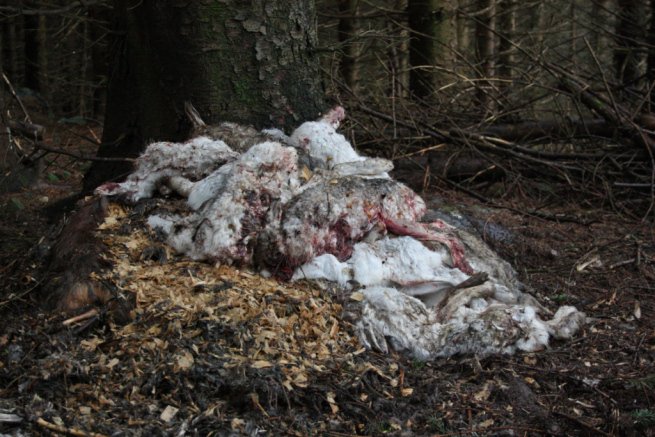
In 2014, the coalition warned the Scottish Government that the ‘voluntary restraint’ that was claimed to be in place was unlikely to protect these mammals from wide-scale culls on grouse moors, including in the Cairngorms National Park.
Since then, there have been multiple reports of culls being carried out across the country – suggesting that voluntary restraint has been ignored. These culls are believed to be having a serious negative effect on hare populations. In some areas it has been shown that the culls are leading to severe population declines and potentially even local extinctions.
Duncan Orr-Ewing from RSPB Scotland, said: “The Scottish Government needs to do more to safeguard these iconic species of our upland areas. In 2014 we had serious concerns that the notion of voluntary restraint would be ignored by many in the grouse shooting industry and, with the evidence of culls continuing on many moors over the last three years, it seems that these fears have been well founded.
“The start of the mountain hare season has already begun meaning hare populations will continue to be put at risk by unregulated culls that we believe, are resulting in localised disappearance of hare populations. We still do not know what impact these large scale culls are having on mountain hares’ wider conservation status and this could mean that the Scottish Government may be in breach of its legally binding international obligations for this species.
“We trust that this issue will also be considered by the forthcoming independently led expert group, announced by the Cabinet Secretary for the Environment at the end of May 2017, which will be looking at how grouse moors can be managed sustainably and within the law.”
Susan Davies, Director of Conservation, Scottish Wildlife Trust said: “Mountain hares are an iconic species that act as an indicator of the ecological health of our uplands, and seeing them gives much pleasure to hillwalkers and tourists alike.
“There has been continued and widespread culling throughout the period of voluntary restraint that was called for three years ago to allow research to be carried out. This suggests that some grouse moor managers have no concern for the long-term viability of mountain hare populations.
“We believe that grouse moor managers have a responsibility for this important native species. Lethal control should be halted until there is both accurate information on the number of hares culled, and the true effect of these culls on the health of the hare population is known.”
Alison Johnstone MSP said: “The mountain hare is a true icon of our upland areas and an important part of our natural heritage. The unnecessary and unregulated culling of mountain hares on intensive grouse moors across Scotland is damaging populations of this species beyond recovery. I have previously asked the Cabinet Secretary to ban these culls, at the very least in our National Parks and I support the call from these 10 organisations for the government to do more to safeguard populations of mountain hares and implement a moratorium on culls until work can be carried work to assure those concerned that any necessary mountain hare management can be sustainable.”
Notes for editors:
- The organisations which make up the coalition are: RSPB Scotland, Scottish Wildlife Trust, Scottish Raptor Study Group, Badenoch and Strathspey Conservation Group, Cairngorms Campaign, National Trust for Scotland, Royal Zoological Society of Scotland, Mammal Society, John Muir Trust and Mountaineering Scotland.
- Mountain hares are protected against unsustainable and indiscriminate killing by the European Union’s Habitats Directive. However, they are now routinely culled on a large scale on many grouse moors. This practice has developed relatively recently, in the belief that it protects red grouse against the tick-borne louping ill virus and so increases the surplus of grouse to be shot at the end of the summer, despite the lack of scientific evidence to support this claim.
- The mountain hare is Britain’s only native hare and plays a vital part of the complex ecosystem of Scotland’s uplands and moorlands, including acting as an important source of prey for golden eagles, one of Scotland’s most well-known birds.
- Mountain hares are understood to spread very slowly from one area to another, meaning culls may have significant detrimental impacts on local populations.
- In December 2014, Scottish Natural Heritage (SNH) along with other partners, announced the beginning of a three year study to trial methods of measuring mountain hare numbers to better inform their monitoring, how to assess their population status, and identify appropriate management measures. As part of this, SNH called for a voluntary restraint of large scale mountain hare culls on grouse moors.
ENDS
It’s great to see continued pressure being placed on the Scottish Government, and we’re especially pleased to see Mountaineering Scotland add its voice.
The Scottish Government (and it’s statutory conservation agency SNH) is exhibiting wilful blindness over this issue. There’s no other explanation for it. The Scottish Government has repeatedly said it does not support mass culls of mountain hares, and three years ago called on grouse moor managers to practice ‘voluntary restraint’ – a request that has been blatantly ignored by the grouse shooting industry, who have denied there is even a need for it (see here). And yet still the Scottish Government has not acted.
We’ve recently discovered that SNH has reported to the EU Commission that the mountain hare has favourable conservation status, despite strong scientific evidence (particularly from Dr Adam Watson) of local population declines. We are waiting for SNH to provide more detail of the scientific evidence it used to make this assessment because frankly, given the paucity of information on population size, we don’t understand how SNH was able to reach this conclusion.
The Scottish Government has committed to investigate the issue of mass hare culling on grouse moors, as part of the independent review of grouse moor management that was announced in May 2017. However, five months on we haven’t seen any sign of progress on this review – as far as we’re aware the panel hasn’t even been named, let alone the actual review getting underway.
Meanwhile, open season on mountain hares has come around again and we can expect to see more unregulated massacres taking place across many driven grouse moors, all in the name of ‘sport’.
Media coverage:
BBC news here
Mammal Society here
Scottish Gamekeepers Association here
Scottish Moorland Group here
 Raptor Persecution UK
Maddening. Incidentally, does anyone ever check these ‘stink pits’ for poisons open to the elements? They surely attract such as Golden Eagles, Buzzards, Red Kites, foxes, farm dogs and others from time to time?
To say nothing of the pollutant threat to water-courses in the vicinity. These stink pits should already be ruled illegal. I can’t imagine why owners or managers wouldn’t see how the existence of these, on their land, would result in endless bad publicity.
Maybe they are illegal, it looks like they are if they are dumping wild game.
https://www.gov.uk/guidance/fallen-stock
Wild animals
The carcasses of wild animals, other than wild game, are exempt from the EU regulations.
Mick – maybe stink puts are illegal outright! See my comments below.
Hi Nick
Here’s some more info
The Animal By-Products (Enforcement) (England) Regulations 2011
http://www.legislation.gov.uk/uksi/2011/881/regulation/6/made
ABP not intended for human consumption – Farm animals
Part 2, Regulation 6. “A carcase or part of a carcase of any farmed animal that has not been slaughtered for human consumption must be held, pending consignment or disposal, in such manner as to ensure that any animal or bird will not have access to it.”
Mick
Here’s another similar bit of law:
The Animal By-Products (Enforcement) (England) Regulations 2013
Restrictions on access to animal by-products
http://www.legislation.gov.uk/uksi/2013/2952/regulation/4/made
PART 2, Regulation 4(3) “The body or part of a body of any farmed animal that has not been slaughtered for human consumption must be held by an operator, pending consignment or disposal, in such manner as to ensure that no animal or bird will have access to it. “
That should be applicable to all the pheasant shoots that use stink pits for the unwanted shot pheasants. Or those that just scatter corpses.
Doug
We could say goodbye to a hell of a lot of Ravens were that legislation strictly enforced!
But I believe all stink pits are heavily snared or worse?
Doug
Doug, I meant in the wider sense, not stink pits which I would never describe as advantageous. Ravens rely quite heavily on sheep and lamb carcasses, which in my experience most shepherds are slow to dispose of – the Ravens (and Carrion Crows and foxes) do the job for them.
Iain, I agree the farmers are slow to clear up carcasses. When I was a lad, I informed a local farmer where a dead lamb was, he informed me, as only a farmer could, “It’s no b***** good to me now!”. Yes, I see your point and I don’t think that will happen, especially for hill farmers.
Doug
Trading Standards would be the organisation to ask about that.
Tony – Thank you. I think you have an amazing point. Perhaps stink puts are illegal after all.
According to the net regs website commercial businesses should “appropriately” dispose of waste (such as the carcases of ‘vermin’ and wild animals). They have a duty of care to handle, store and dispose of carcases safely, so they don’t cause pollution or attract vermin (ie the carcases should be stored in secure, leak proof containers). They need to be able to prove that they have used licenced waste handlers to dispose of the waste so they are required to retain the Waste Transfer Notes given them by the authorised business for two years. Hmm, I wonder how many grouse shooting estates have WTNs for the hares and other ‘vermin’ they kill? I don’t see how stink pits can’t possibly comply with the regulations. Anyway – here’s some info if you’re interested.
http://www.netregs.org.uk/environmental-topics/waste/more-waste-materials-a-d/
Dispose of wild animal carcasses correctly
Wild animals and birds are not covered by the Animal By-Products Regulations. Wild animals include wild deer, wild boar, rabbits, foxes, rats, squirrels, moles, pigeons, crows.
If you have killed a wild animal as vermin or to reduce the population, you need to dispose of carcasses appropriately. This includes animals caught in a trap or snare, and animals that have been shot. Wild animal carcasses that you don’t have a use for are waste, and you have a duty of care to dispose of them safely, so you don’t cause pollution or attract vermin.
You must make sure that your waste is handled, stored and recycled or disposed of safely and legally.
You must:
store and transport your waste appropriately and securely so it doesn’t escape
check that your waste is transported and handled by people and businesses that are authorised to do so
complete waste transfer notes (including a written description of the waste) to document all waste movements, and keep these as a record for at least two years.
See our guidance on who is allowed to deal with your waste.
http://www.netregs.org.uk/environmental-topics/waste/duty-of-care-your-waste-responsibilities/
Waste Transfer Note
A waste transfer note (WTN) is a document that details the transfer of waste from one person to another. You must ensure every load of waste you receive or pass to others is covered by a WTN. The only exception is when you receive household waste directly from the householder who produced it, but you will need a WTN when you pass that waste to someone else.
WTNs ensure that there is a clear audit trail from when the waste is produced until it is disposed of. You must keep copies of all your WTNs for at least two years and must be able to produce them on demand to your environmental regulator or local council, or you could be fined.
You must check that anyone you pass your waste to holds the relevant registration, permit or exemption for the type of waste you pass to them. See the page in this guideline on who can deal with your waste?
Apologies for the multiple, long comments but, to clarify … I
I’ve reported stink pits containing sheep carcasses to Trading Standards and the issue has been investigated by their officers.
However, I think that if stink pits contain wild animal carcasses then the matter should be investigated by the Environment Agency (who deal with breaches of the Environmental Protection Act 1990). I’ve also reported waste pollution issues to them which they have prosecuted.
I think these are the relevant pieces of legislation.
Environmental Protection Act 1990
http://www.legislation.gov.uk/ukpga/1990/43/section/33
http://www.legislation.gov.uk/ukpga/1990/43/section/34
The Environmental Protection (Duty of Care) (Scotland) Regulations 2014
http://www.legislation.gov.uk/ssi/2014/4/regulation/3/made
It follows that where a landowner or their employee (that could include an external land manager) applies for a licence, to remove vermin, a descriptive disposal note should automatically follow – this should itemise a description, and number of the carcasses, the means of disposal, and the licensed transporter. If these licenses are being issued without any questions being asked about means of disposal then they clearly are potentially illegal. If there is no disposal cover we should presume that a continually accumulating stink pit could be operational where snares are set on approaches around the pit and victims to snaring continually add to it’s effectiveness. It follows that there should be licensing of disposal of carcasses where permits for vermin cull are issued. That would at least provide official statistics which, if credible, could provide cull numbers for the permissible controls. It would also promote the applicant as signatory to a clear position of responsibility for any misdemeanours carried out by employees.
We already see evidence of badger carcasses being left lying around in piles in the badger cull. This surely highlights the mind-set of the participants, where potentially “diseased” animals, being culled because of the “potential threat” they carry, can only continue to carry a threat when the carcasses aren’t immediately disposed of.
Some very interesting and enlightening legal advice from wjspeirs et al, hopefully providing an opportunity to tackle this particular problem.
OK – for the sake of near completeness, here’s the relevant legislation. Note I’ve not divided the law into English and Welsh law and Scottish law but a quick scan suggests they’re near identical (but worth double checking) …
For your game keeper setting up a stink pit using the carcases of dead wild animals – think:
Environmental Protection Act 1990
Part II Prohibition on unauthorised or harmful depositing, treatment or disposal of waste
http://www.legislation.gov.uk/ukpga/1990/43/section/33
S33(1)”Subject to subsections (1A), (1B), (2) and (below and, in relation to Scotland, to section 54 below, a person shall not—
(a)deposit controlled waste or extractive waste, or knowingly cause or knowingly permit controlled waste or extractive waste to be deposited in or on any land unless an environmental permit authorising the deposit is in force and the deposit is in accordance with the licence; ”
And for the management / land owner permitting that to take place:
Environmental Protection Act 1990
Part II Duty of care etc. as respects waste
http://www.legislation.gov.uk/ukpga/1990/43/section/34
S34 (1)”Subject to subsection (2) below, it shall be the duty of any person who imports, produces, carries, keeps, treats or disposes of controlled waste or, as a broker, has control of such waste, to take all such measures applicable to him in that capacity as are reasonable in the circumstances—
(a)to prevent any contravention by any other person of section 33 above; ”
Transfer Notes
3.—(1) The transferor and the transferee must ensure that a document as described in paragraphs (3) and (4) is completed in writing and signed by each of them in respect of the waste being transferred (“a transfer note”).
(2) A transfer note must be prepared at the same time as the written description is transferred in accordance with section 34(1)(c) of the Act.
Yes, the legal restraint regarding the 150 – year old tradition of exterminating raptors on grouse moors has also had spectacular results hasn’t it !
A bunch of criminals who disregard the law will never restrain themselves voluntarily.
Just what fantasy world do the politicians live in ?
Oh ! perhaps they’re still willingly complicit in the destruction of the upland ecosystems for which they are responsible ?
Our pathetic politicians must ultimately by judged in the light of their total unwillingness to uphold the law.
Things will get a lot worse once the uplands don’t even have the weight of EU law to protect them.
Keep up the pressure !
If you are charged with the duty of managing hare numbers and fail miserably to do that responsibly – you shouldn’t be surprised when that option is taken away and replaced with legislation. This, another indication that “voluntary restraint” just doesn’t appear to work, and isn’t a viable option – surely another very important step on the way to licensing the moors.
It worries me that the culling culture is so implanted in the human psyche that it is unlikely we will see a complete end to culling of mountain hares. I anticipate some sort of Defra/SNH compromise coming along to satisfy both parties, which let’s be honest is not good enough. True ecology-based conservationists will not be content with even a restricted cull, quite rightly, and the gamekeeper fraternity is unlikely to adhere to any set quota anyway. This might seem a cynical point of view, but haven’t we learned that these people are just not to be trusted to comply with the law? Once out on the hill with no-one in sight they consider themselves free to kill whatever they wish. I would like to see a radical change in the ethics of culling, particularly from the conservation side, many of whom don’t seem to realise that they have been culturally influenced by an attitude which has infected society. Sometimes it feels like we’re never going to leave the earlier centuries behind, as even conservation bodies can’t resist the urge to use selective mortality as a management tool. The Wildlife Trusts organise widespread culls of thousands of Grey Squirrels, despite the widespread public controversy and lack of evidence that the alleged harm to Red Squirrels is real. The demonisation of that species can be compared to outright propaganda. The RSPB can’t fully work out ways to manage habitats and wild bird populations without resorting to killing foxes and crows, species that are important in their own right and should be valued as such. Too often the impact of man leads to the persecution of scapegoats. However the insistence on culling mountain hares is just wrong in principle, even if research manages to come up with some contrived degree of justification. Which I suspect it will. Much of this prolonged debate and public dissatisfaction could be cured by banning grouse shooting. We need the strongest support possible for the latest e-petition.
Apparently the RSPB have stopped killing foxes at Abernethy as it’s suspected that their removal means loss of a natutral check on pine marten numbers. This issue also came up in Strathspey where they’ve done good work for black grouse and capercaillie with habitat management and not a shred of predator ‘control’ – the predator list there has grown to include pine marten and goshawk as well as foxes and this is felt to have been beneficial. Personally I do believe the grey squirrel has driven out the red, but with very few exceptions culling them is an utter waste of time, encouraging pine martens back is effective though – I’ve had three personal communications with people who’ve noticed more reds about when the marten has moved back. If marten recovery hadn’t been held back by what must have been a horrendous level of persecution we could have had a healthier red squirrel population decades ago. Likewise a bit more effort to create better habitat for otter should help drive down mink numbers – an animal it’s difficult to see being exterminated on the mainland – a friend is involved in culling them and it’s a constant job that isn’t making much difference. On the terrestrial side mink could suffer from competition with polecat – another species that we need to get back – then the mink will undergo a double squeeze.
If the H, F n S lobby are truly worried about supposed predator imbalances why aren’t they waving the flag for the goshawk a major corvid predator? There should be thousands and thousands of pairs by now not a few hundred. And of course if they are worried by fox numbers they can’t be happy about tens of millions of gamebirds dumped into the countryside to be glorified clay pigeons and likely fox fodder. Someone said recently that ‘when you have a hammer every problem is a nail’ – well for some with guns, poison and traps the solution to any species being in trouble is kill the other wildlife that might eat it – especially if it might be partial to the occasional bit of ‘game’ too. Reintroduction, translocations and larger scale habitat restoration that means more species can have decent populations that aren’t so unnaturally small they can’t even cope with natural pressures must be the way forward for conservation in this country and it’d be better if more groups started explaining this to the public – becoming the standard to blame predators taken to a ludicrous extreme by the ‘Predation Action Group’ who are now turning the otter into an aquatic buzzard that somehow is responsible for supposed declines of every single species it might just possibly eat.
Hi Les, interesting points and I agree with most of your thinking, but I’m very surprised to hear that you believe that Grey Squirrels have “driven out” Red Squirrels. I’m sure you know the situation is far more complicated than that; for starters the native UK Red Squirrel was wiped out by man by the late 18th century. The so-called native Red Squirrels we have now are descendants of Scandinavian animals that were introduced in the 1870s. Apart from that technicality, perhaps not that important, the balance of scientific research is very much against the idea that the Grey is at all likely to cause another extinction of the Red Squirrel. It just so happens that the Wildlife Trusts and other pro-culling groups seem to have ignored any science which doesn’t fit with their agenda, resulting in widespread media publicity which is tantamount to propaganda. As this is slightly off topic I won’t go into more detail, but would urge you to examine the scientific evidence referenced in the website http://www.i-csrs.com. I’m not familiar with the status of American Mink outside west central Scotland, but numbers here have declined gradually since the 1960s, and especially since the revival of otter populations. Personally I have carried out an extensive study of Mink on a river system in Glasgow, and detected no significant impact on breeding riparian bird species. They feed mainly on eels. Research on Water Voles in Glasgow has also shown no significant impact by Mink predation, except perhaps on riverbank habitats to which most research appears to be biased. We have to be cautious about anecdotal remarks like more Red Squirrels being about since Pine Martens returned, because although it is undoubtedly true in some circumstances, there can be an element of received wisdom and wishful thinking involved. I am convinced the Grey Squirrel cull is one of the biggest mistakes ever made by the UK conservation movement, which we will regret in future, particularly when we find that the uptake in shooting wildlife for pleasure leads to greater ongoing problems for wildlife in general. The Wildlife Trusts are attempting to recruit 5,000 volunteer squirrel killers, and one of the shooting organisations has set up training courses teaching school children how to kill squirrels with air rifles, essentially creating a new generation of hunters killing our wildlife for their own entertainment.
Re grey squirrels think they’ve out competed reds in most localities rather than direct aggression – I believe they digest acorns more effectively than reds do for a start. I think grey squirrel culls have almost always been a complete waste of money they just move back in as soon as killing stops, they just make some people think they are doing something I suppose. The three people I dealt with had no foreknowledge of what’s believed to happen re grey squirrels and martens so their observations are valid I believe – will find out soon enough for myself martens have now been camera trapped at three separate locations in my area. Totally agree with you about mink – I keep hearing about what terrors mink are for local birdlife in places that have lots of ducks, dippers, grey wagtails, kingfishers etc! The first time I saw this was on the river Ure at Ripon in 1989 – the river was absolutely heaving with fish and birds. There might have been otters there, but for a ludicrous mink hunt that charged up and down the riiver scaring the hell out of everything including what must have been in late June nesting birds. If there was more habitat left next to rivers rather than the pathetic little strip you get with canals I’m sure the water vole would have coped a lot better with mink.
Hey wait a minute guys. Tim Baynes knows how many hares there are because he says
‘Culls range from 14% to 5% of hare populations in years when culls are carried out, which is sustainable.’
He would never lie.
‘Culls range from 100% to 0.005% of hare populations in years when culls are carried out, which is sustainable.’ Corrected for accuracy.
I wonder if SNH tacitly condone this culling of Mountain hares (MH)? They either do or again, the people they trust are dropping them in it. You would have thought they had learned their lesson by now. I wonder, since they are clearly misinforming the EU re status of MH, can they be taken to EU court over this?
Visited the links at the bottom of the blog and all I can say is Yay! an ‘SGA mountain hare study’. Now we’re getting somewhere with the science.
Don’t you just love the mind numbing ecological illiteracy of the SGA’s response! ” Where hares are over-running, populations are being controlled to prevent disease and habitat damage. ”
Disease… keeping red grouse at un-natural densities clearly is not a factor in the spread of the disease! The grouse are a threat to the hare!
Habitat… a game keeper talking about habitat…pull the other one! Sterilise the hill with fire to create a barren grouse monoculture.
Many shooting estates adopt a
“No prey, no predators ” strategy.
Hares are culled in an attempt to prevent predators particularly eagles being present on estates.
xxxxx xxxxx xxxxx
The SGA and SMG don’t like having their cages rattled. The tone of their answers is full of anger because it may dent the killing game they enjoy so much.
SNH, for years don’t seem to require any sort of evidence on numbers of any animal on the moors or around the lowland pheasant cages. If a gamekeeper requires a licence to cull something it will be issued, not many questions asked!!!! I also add NE to the SNH for their lack of scrutiny over such matters.
Gamekeepers are always correct, after all they are the experts????
Doug
This is disgusting and I despair at the lack of morals these people display. The wildlife must be protected and if it spoils the fun of the shooters then tough luck. They should grow up and take responsibility for the wildlife they are destroying.