Petition launched to licence gamebird hunting in Scotland

SRSG logo2A new petition has just been launched calling for the Scottish Government to introduce a State-regulated licensing scheme for all gamebird hunting in Scotland.

The petition has been lodged by the Scottish Raptor Study Group and already has the backing of RSPB Scotland (see here) and the Scottish Wildlife Trust (see here).

Background information about the petition may be read here.

Information about previous action that has been taken to address this issue may be read here.

The petition itself may be read here.

To sign this petition, please go here.

This isn’t the first time the Scottish Raptor Study Group has called for licensing. In 2014, they, with support from RSPB Scotland and the Scottish Ornithologists’ Club, called for grouse-shooting licences to be introduced (see here); a request that was rejected by the then Environment Minister Paul Wheelhouse (see here). That request was an informal one, put to the Minister in a letter. This time they’ve gone for a more formal approach and they need your support.

There is really no need to explain here why the regulation of gamebird hunting is long overdue. If you’re in any doubt whatsoever, just spend a few minutes looking through some of our blog posts and also have a look at the background information links above. The gamebird-shooting industry in the UK is the least-regulated in comparison with other European countries and, arguably, is responsible for more environmental destruction than any of its European counterparts. The UK shooting industry has had decades to get its act together and self-regulate, but has failed, comprehensively, and so enforced regulation is inevitable.

What’s interesting about this petition though, is how it differs from Mark Avery’s petition to ban driven grouse shooting (which so far has attracted over 55,000 signatures – see here).

The most obvious difference is that this new Scottish petition is calling for licensing rather than for a ban, and it is directed at ALL types of gamebird hunting in Scotland (e.g. grouse, pheasant, partridge) rather than just driven grouse shooting.

Some may argue that the licensing approach is futile, mainly due to enforcement issues, and we’d have to agree with that to some extent. Scotland already has some of the strongest wildlife protection legislation in Europe but enforcement problems continue to be of concern. Nevertheless, this new petition is still worthy of your support, and importantly, there’s nothing to stop you signing both petitions!

It seems the licensing approach in Scotland is considered to have more chance of acceptance by the Scottish Government than calling for an outright ban, largely due to the fact that the Scottish Government is, in relative terms, much more progressive and further down the road on this issue than the Westminster Government. This call for licensing is in line with the Scottish Government’s previously stated approach to the illegal persecution of raptors; they’ve been saying for years now that they are prepared to take further action if the persecution doesn’t stop, so this petition could nudge them in the direction they’re already travelling, because, despite the gamebird shooting industry’s claims to the contrary, the persecution has not stopped (see here).

It could be argued that licensing is just delaying the inevitable, in that if it fails to act as an effective deterrent, a ban must surely be on the cards, but we’d have to wait 10+ (?) years to get to that position because the Scottish Government will insist, quite rightly, that the licensing approach will need time before its success or failure can be measured. It does seem highly unlikely that the Scottish Government will support calls for a ban until all other options have been tried, so the licensing approach seems to be a necessary hurdle to be jumped, but if it does turn out to be effective then that’d be good, obviously.

If the Scottish Government does decide to accept a call for licensing, the next question will be, ‘What will that licensing look like?’. Who knows, and that’d be for the Scottish Government to decide in due course, but it might include restrictions on the intensification of land managed for gamebird shooting (i.e. restrictions on muirburn, restrictions on drainage, restrictions on medication) as well as new reporting requirements (i.e. How many gamebirds shot? How many predators legally killed? How many mountain hares killed?) etc. Crucially, whatever regime is introduced, it must be independently monitored if the public is to have any confidence in it.

But that’s for later discussion. At this stage, the most important thing is to apply pressure on the Scottish Government to accept that gamebird hunting in Scotland cannot continue in its current unregulated form. Whether you think a licensing scheme will work or not isn’t that important right now; the Scottish Government needs to hear from you that this issue is important to you and that you want to stimulate a discussion about it.

The Scottish Government’s petition system works differently to the Westminster system. For Mark’s ‘ban driven grouse shooting’ e-petition, the Westminster Government requires 100,000 signatures within a six-month period before it will even consider holding a Parliamentary debate, and even then that’s not a given. In Scotland, petitions are only live for six weeks but all petitions to the Scottish Government are considered equally by the Scottish Petitions Committee, regardless of how many signatures have been registered. The Petitions Committee will automatically submit the petition for consideration to the most relevant Parliamentary Committee, in this case the Environment Committee, who will discuss and put forward their recommendations based on their findings. Please note: the Scottish petition may be signed by anybody, anywhere in the world, whereas the Westminster petitions are restricted to UK citizens/residents only.

The Scottish petition will close on 22 August 2016. We’d encourage you to sign the petition (here), not only to support the views of the Scottish Raptor Study Group, but also to let the Scottish Government know that this issue is important and deserves Parliamentary time and attention.

As mentioned above, you don’t have to restrict yourself to signing one or other of the two petitions. What happens to raptors in Scotland is of equal significance to what happens to raptors in England, Wales and Northern Ireland. Many raptor species physically cross country borders, particularly as juveniles, and at the moment they are just as likely to be illegally killed in certain parts of Scotland as they are in certain parts of England, Wales and Northern Ireland. For this reason, we’d also encourage you to sign the e-petition to ban driven grouse shooting (here), which closes on 20 September 2016.

Thank you.
Chris Packham has a message for Marks & Spencer

Following the news earlier this week (here) that Marks & Spencer is planning to sell red grouse in its stores this year, Chris Packham has a message for them:

Please sign the e-petition to ban driven grouse shooting HERE

Watch out for more videos about driven grouse shooting…..to be released over the next couple of weeks.

UPDATE 12 July 2016: Grouse-shooting industry seriously rattled by Chris Packham video (see here).

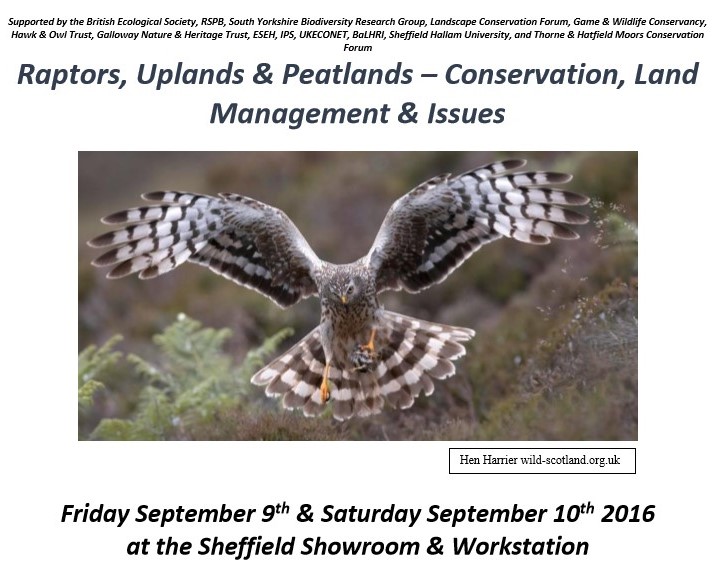
Upland raptor conference, Sheffield, September 2016

Raptor conference poster

This looks like it’ll be fun.

The programme includes some interesting speakers with equally ‘interesting’ presentation titles. We’re particularly looking forward to:

Stephen Murphy (Natural England): Hen Harrier Population Dynamics. Stephen has been given a 30 minute slot to explain that when hen harriers are illegally killed on grouse moors, their population disintegrates to virtual breeding extinction.

Adrian Jowitt (Natural England): DEFRA’s 2016 Hen Harrier Plan. Adrian has been given a 25 minute slot to explain the actual details of this non-plan. Quite a tall order.

Philip Merricks (Hawk & Owl Trust): The Hawk & Owl Trust’s Involvement in the Hen Harrier Recovery Action Plan. Perhaps Philip will use his slot to explain why the H&OT is still involved in the outrageous brood meddling scheme, even though one of their supposed “immoveable provisos” was breached this spring (see here).

Rhodri Thomas (Peak District National Park Authority): The Peak District’s Raptors Project – Conservation in Action. It looks like the person writing the programme has inserted an erroneous space in Rhodri’s presentation title; surely it should read Conservation Inaction, because the Peak District’s Birds of Prey Initiative has failed to meet every target set (see here) and has been totally silent on recent, local, high profile raptor persecution crimes (e.g. see here and here).

Tim (Kim) Baynes (Scottish Land & Estates): Scottish Initiatives. Those Scottish ‘initiatives’ will no doubt include repeated attempts to discredit the scientific data showing the extent of raptor persecution on driven grouse moors (here), repeated denials that raptor persecution is a big problem on grouse moors in Scotland (here), and fronting a propaganda campaign about the ‘benefits’ of driven grouse shooting (here).

Fortunately, there are others speakers lined up to cut through the spin, including Mark Avery, Pat Thompson, and Alan Fielding.

The conference is open to the public so if you have the slightest interest in raptor persecution in the British uplands, this would be a good one to attend.

The conference programme can be downloaded here:

 raptors___uplands_conference_programme_sept._2016

You can register for the conference online here.

See you there!

It’ll be interesting to see how many people will have signed the e-petition to ban driven grouse shooting by then. It’ll be ten days away from its closing date. 53,000+ people have signed so far. If you’re not one of them, PLEASE SIGN HERE

North Yorkshire Police admit they should have charged pole-trapping gamekeeper

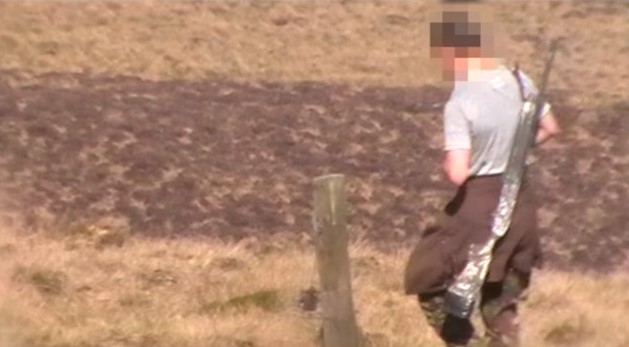
On 1 June 2016 we blogged about the Mossdale Estate gamekeeper who had been caught on film setting illegal pole traps on a grouse moor in the Yorkshire Dales National Park (here).

Mossdale pole trap May 2016

Also on 1 June 2016, we blogged about North Yorkshire Police’s decision to issue this criminal with a caution rather than refer him to the Crown Prosecution Service to begin a formal prosecution. We argued that, according to the official Police ‘cautions’ guidelines, the decision to caution in this case was apparently flawed. The offences, to which the gamekeeper had already admitted guilt, backed up by excellent video evidence obtained by the RSPB’s Investigations Team, were of such gravity and included all five aggravating factors (and no mitigating factors) as listed in the Police guidelines, that this was a clear case for proceeding to charges and a prosecution. Following a bombardment of complaints from blog readers (thank you all), Amanda Oliver, Acting Chief Constable of North Yorkshire Police, promised a review of the decision not to charge this criminal gamekeeper (see here).

Today, Amanda Oliver has published the findings of that review:

You wrote to us recently to complain about our decision to caution a man, after he admitted an offence contrary to section 5(1) of the Wildlife and Countryside Act 1981.

North Yorkshire Police has now completed a review of this investigation. This involved looking again at the evidence and the decision, using the Ministry of Justice Guidelines on Adult Cautions, the Adult Gravity Factor Matrix, and the latest Director of Public Prosecutions Guidance on Charging. Specialist advice was also sought from the Crown Prosecution Service.

Our review found that we had not used the correct cautioning guidelines when dealing with this case. Police officers have a level of discretion in deciding how to deal with a case, based on the specific circumstances of the incident. However, the review concluded that if the correct guidelines had been used, it is likely that the man would have been charged, rather than cautioned.

It is important to remember that a police caution is not a “let off”. A person who has been cautioned has a criminal record, and there can be very serious consequences as a result.  Depending on the circumstances, they may lose their job and income, and there may also be implications for the person’s future employment. A decision was also made to revoke this man’s firearms licence as a result of his involvement in this offence.

As a result of the review, we asked the Crown Prosecution Service to consider whether further action should be taken on this case, and provided them with other details of our activity related to the man involved. After consideration, the Crown Prosecution Service decided that, taking all matters into account, including that a decision had already been made, no further action should be taken. 

I would like to reassure you that the mistake we made on the use of guidelines was isolated to this particular case. Nonetheless, we have taken the matter very seriously, and we have ensured we have done everything we can to avoid mistakes happening in the future. We have amended our policy on how wildlife crimes are dealt with by investigators and decision-makers, and advice from specially-trained officers is now sought in every case. We are also using our position as the National Police Chiefs’ Council lead on rural and wildlife crime, to share what we have learned with other police services across the UK.

Thank you for raising this matter with us. On behalf of North Yorkshire Police I would like to apologise for the distress that this matter has caused you, and assure you that we will do our very best to protect our local wildlife, and deliver the police national wildlife action plan here in North Yorkshire and more widely.

Yours sincerely

Amanda Oliver

Acting Assistant Chief Constable

END

We very much appreciate Amanda Oliver’s decision to conduct this review and publicise the findings. This level of accountability, honesty and transparency is, in our experience, extremely rare but it is vital if the public is to have any confidence in the way the Police handle wildlife crimes. We applaud North Yorkshire Police for not trying to cover up their mistakes.

On to the actual review itself, Amanda says the usage of incorrect charging guidelines was isolated to this particular case. We’re not so sure about that. In 2015, we blogged about the discovery of five illegally set pole traps at a gamebird-breeding facility in North Yorkshire. The police charged the owner of that facility and he was found guilty of permitting the use of one pole trap, although this conviction was later quashed. But the Police failed to charge two employees with setting those five illegal traps and instead they were both given a caution (see here). Did North Yorkshire Police use the incorrect guidelines when they decided to caution those two employees? We’ll never know.

Amanda suggests that in the case of the Mossdale Estate gamekeeper, a police caution is “not a let off”. Sorry, but that’s nonsense, and we share Mark Avery’s views (here) on why it absolutely is a let off. It’s particularly frustrating in this case because, as you all know, raptor persecution on grouse moors is prolific and yet there are relatively few convictions. Why? Because it takes an extraordinary set of circumstances to have first-rate evidence AND an admission of guilt from the gamekeeper. This particular case was handed to the Police on a plate, thanks to the superb efforts of the RSPB’s Investigations Team. It should have been an easy ‘win’ that ended in a successful prosecution. That opportunity was missed in this case, and that’s unfortunate. However, we do applaud the Police’s decision to revoke this gamekeeper’s firearms certificate and we hope other Police forces take note of that decision.

It’s also unfortunate that the CPS has taken the decision not to take any further action against this criminal gamekeeper but without knowing the full details of the case it’s difficult to assess the validity of that decision.

We’re pleased and encouraged to hear that North Yorkshire Police has now amended its policy on how it tackles wildlife crimes. Given this region’s well-deserved reputation for being a raptor persecution hell hole, it probably won’t be long before we get to see just how well this new policy is working. The next case won’t be far away.

No subsidy withdrawal for mass poisoning of raptors on Glanusk Estate

Further to the news about the mass poisoning of raptors uncovered on the Glanusk Estate in the Brecon Beacons National Park, Wales (see here), we wanted to find out whether the Estate had incurred a financial penalty for what appears to be a clear breach of cross compliance rules.

In order to qualify for Common Agricultural Policy (CAP) subsidy payments, claimants are required to keep their land in ‘Good Agricultural and Environmental Condition’ and comply with a set of Statutory Management Requirements (SMRs). This is known as cross compliance. [NB: the rules have now changed slightly but as this mass poisoning took place in 2012/2013, the old rules apply].

In our opinion, the illegal poisoning of raptors with Bendiocarb is a breach of SMR1 (relating to the protection of wild birds) and SMR9 (relating to restrictions on the use of plant protection products).

DSCN0334.JPG-550x0

In April, an FoI was submitted to Rural Payments Wales (RPW), the Government agency responsible for implementing CAP subsidy payments and for imposing penalties if cross compliance regulations have been breached. Here are the questions that were asked, along with the answers received from RPW:

Question 1. Which of these incidents were on land in receipt of subsidies under the Single Payment Scheme (SPS) during the years 2012 and 2013?

Answer: I can confirm that 10 of these incidents were on land in receipt of SPS in 2012 and 2013.

[RPUK comment: Although there were 24 incidents in total, it seems that RPW has excluded 14 of them, presumably because the illegally-poisoned birds and/or illegally-placed poisoned baits were on land that is not subject to SPS, for example, in woodland].

Question 2. What were the amounts of payments made under SPS in 2012 and 2013 and to how many beneficiaries?

Answer: A total of £98,802.01 was paid to 2 beneficiaries under SPS 2012. A total of £97,145.70 was paid to 2 beneficiaries under SPS 2013.

[RPUK comment: We’ve scrutinised the CAP payments website to find out who these beneficiaries were and we’ve worked out that they are two tenant farmers on the Glanusk Estate, presumably on whose landholdings the poisoned birds/baits were discovered].

Question 3. Can Rural Payments Wales confirm whether these offences would have breached SMR1 and SMR9 of the SPS?

Answer: These offences would be a breach of SMR1 and SMR9 if they were found to be attributable to a benficiary of Common Agricultural Policy (CAP) funds.

Question 4. What investigation or enforcement action has Rural Payments Wales undertaken in relation to these offences?

Answer: RPW considered the offences in question and concluded there was insufficient evidence to apply a cross compliance breach to a beneficiary.

[RPUK comment: We’re fascinated by this. The standard of proof for a cross compliance breach is lower than the standard of proof required for a criminal prosecution. A criminal conviction is NOT required for a cross compliance penalty to be imposed].

Question 5. What subsidy withdrawals have been made from anyone in receipt of money under the SPS in 2012 and 2013 as a result of these incidents?

Answer: No withdrawal of subsidy has been made from anyone under SPS 2012 and SPS 2013 as a result of these incidents.

END

A further FoI was submitted to RPW in May 2016, to try and understand why RPW thought there was ‘insufficient evidence’ to apply a penalty. Here are the questions that were asked, along with the answers received from RPW:

Question 6. Please can you tell me the date (day/month/year) that RPW first became aware of these poisoning incidents?

Answer: RPW first became aware of the poisoning incidents on 5 December 2013.

Question 7. Please could you provide information about the extent and type of enquiries RPW conducted when “considering the offences in question and concluding there was insufficient evidence to proceed with a cross compliance action”?

Answer: A formal police investigation was underway in this case and RPW undertook a review of the documentary evidence.

Question 8. Have the two claimaints been informed by RPW of the SMR1 and SMR9 breaches on their land?

Answer: No, RPW has not established any breaches to SMR1 and SMR9 on their land.

Question 9. Have the two claimants been interviewed by RPW about the incidents on their land?

Answer: No.

Question 10. Can copies of any correspondence between RPW and the claimants about these incidents be supplied (with personal details redacted)?

Answer: RPW has had no contact with the claimants over these incidents.

Question 11. What steps has RPW taken to prevent a reoccurence of these breaches?

Answer: RPW undertakes a programme of annual on site visits to farm businesses to ensure cross compliance requirements are respected.

END

To be honest, we’re completed baffled by RPW’s answers to questions 8-11. They’re either displaying overwhelming apathy, or they’re confused, or we’re confused. Confusion and apathy shouldn’t be unexpected – we saw a similar approach from the Rural Payments Agency (operating in England) when we challenged them about a subsidy withdrawal for the Stody Estate (Norfolk) after the discovery of mass raptor poisoning on their land. The confusion and apathy continued for a year, but, to their credit, the RPA did eventually get it right and imposed a large financial penalty on Stody Estate (see previous blogs here).

Are we going to have to go through the same process with Rural Payments Wales?

Was there a cross compliance breach or wasn’t there? If there was, why hasn’t a penalty been imposed? Why hasn’t RPW bothered to discuss these poisonings with the subsidy recipients? How can RPW claim, with straight faces, that their on site visits “ensure cross compliance requirements are respected”? If that’s the case, where was RPW in 2012 and 2013?

Emails to: RPWOnline@wales.gsi.gov.uk

There’s something decidedly rotten about this whole affair. The most significant wildlife poisoning incident ever uncovered in Wales, and the second largest in the UK in 40 years, on a prominent estate with strong royal connections, inside a National Park. Abject secrecy about these crimes from Dyfed Powys Police (until we started asking questions 3 years later), no criminal prosecution, and no subsidy penalty.

Further statement from Glanusk Estate re: mass raptor poisoning

Following on from yesterday’s blog about the Glanusk Estate statement on the illegal mass poisoning of raptors on their land (here), the Glanusk Estate trustees have issued a further statement:

Further Glanusk statement

A couple of things jumped out at us:

The incident involves a third party to Glanusk Estate and is nothing to do with the Management Team or the owners of the Estate“.

Clearly, the owners and Management Team were not directly responsible for setting out poisoned baits, or for picking up poisoned raptors and hiding them inside feed sacks next to a pheasant pen. That was the criminal action of a ‘third party’. But it’s irresponsible for the Management Team and owners of the Estate to claim ‘it is nothing to do with us’. It’s their responsibility, and theirs alone, to, er, ‘manage’ what happens on their Estate.

The question is, do the owners and Management Team know who that ‘third party’ was and if so, what action have they taken against that ‘third party’? Is the ‘third party’ still involved at Glanusk Estate? What measures, if any, have Glanusk Estate put in place to ensure the poisoning is not repeated? They say they have asked their visitors, tenants and friends to be vigilant, but is that enough? This mass poisoning took place over the period of a whole year and apparently nobody saw anything suspicious (!) so asking people to be vigilant is a start but hopefully it isn’t the Management Team’s only course of action!

The Welsh Government and the Dyfed Powys Police confirmed at the time that there was no risk to public health“.

Really? If that’s true, it would be an extraordinary statement for the Welsh Government & Dyfed Powys Police to make. According to the World Health Organisation, Bendiocarb (the poison that was used for these mass raptor killings) is listed as Class II for acute toxicity, indicating that it is moderately hazardous to humans if ingested or absorbed through the skin. Symptoms of Bendiocarb poisoning in humans are weakness, blurred vision, headache, nausea, abdominal cramps, low blood pressure, muscle tremours, uncoordination and heart irregularities. Death can result from discontinued breathing, paralysis of muscles of the respiratory system and/or intense constriction of the openings of the lungs. But don’t worry, the Welsh Government and Dyfed Powys Police said there was “no risk to public health”.

We’ll be blogging more about the Welsh Government’s role in this case shortly…..

Statement from Glanusk Estate about mass poisoning of raptors

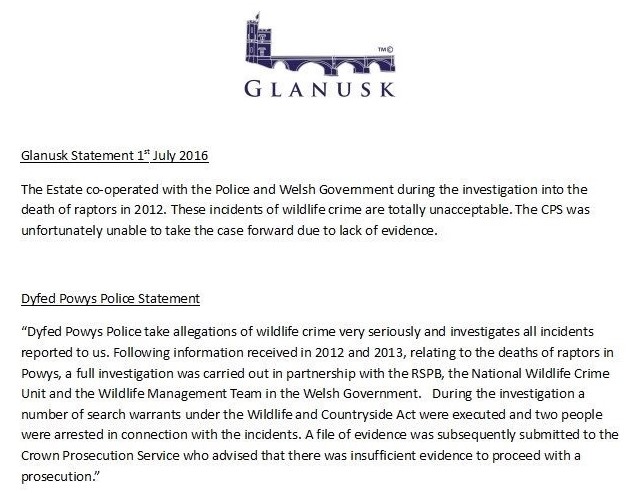
Following yesterday’s blog (here) about the mass illegal poisoning of birds of prey on the Glanusk Estate within the Brecon Beacons National Park, the Estate has issued a statement, probably as a measure to placate the organisers of the Green Man Festival (held annually in the Estate grounds) as we know those festival organisers have asked Glanusk about what’s going on. Here’s the Glanusk statement:

Glanusk statement2

In addition to this formal statement, Debbie Murray from the Glanusk Estate wrote the following in an email to one of our blog readers:

I can assure you that we take any matter of animal welfare seriously and we have extensive health & safety measures in place for all of the activities, land and property that we engage with/own.

The alleged poisoning has been said to have been located on land outside of the Glanusk Park where our events take place and there is no risk at all to animals or humans. We enlist an external consultant to provide risk assessments and health & safety advice and again to reiterate, any risk to any of our visitors is received and treated with the utmost severity“.

END

So, let’s just take a closer look at these statements.

For a start, the police investigation began in 2013, not in 2012 (read the RSPB Investigations team’s blog (here) about how things unfolded at Glanusk Estate, starting with the discovery of poisoned baits in October 2012 and leading to the discovery of 15 poisoned victims and more poisoned bait in October 2013).

Is the Glanusk Estate saying 2012 by mistake, or are they trying to suggest that the poisonings took place in 2012 because that sounds better than the more recent 2013?

Glanusk Estate mentions the “alleged poisonings“, presumably to imply that they might not have happened. Hang on a minute, investigators found nine poisoned baits, two poisoned ravens, five poisoned red kites, and eight poisoned buzzards. All of them were subjected to toxicology tests in a government laboratory and all of them tested positive for the poison Bendiocarb. There is no ‘alleged’ about it – these poisonings took place and the 9 baits and 15 victims were definitely found on Glanusk Estate.

Here’s a photo of a poisoned buzzard, one of the 15 poisoning victims found on the Glanusk Estate (photo by RSPB Investigations).

DSCN0334.JPG-550x0

Glanusk Estate says: “the poisonings were located on land outside of Glanusk Park where our events take place”. Hmm. How does the Estate know where the poisonings took place? The majority of those victims (seven buzzards and three red kites) were found stuffed inside feed sacks stacked up next to a pheasant pen. There’s no way anyone (except the poisoner(s)) can know precisely where on the Glanusk Estate those birds were actually poisoned. And even if the poisoned baits had been found in an area of the Estate away from the central ‘Glanusk Park’ area (where their events take place), there’s every chance that a bird might eat some of the bait but then manage to fly some distance before succumbing to the poison. Indeed, isn’t this the very excuse we’re given by the shooting community whenever a poisoned raptor has been found? ‘Ah well, even though the poisoned bird was found on our land, that doesn’t mean it was poisoned on our land, it could have flown a few miles from somewhere else and it just died here’.

Glanusk Estate says: “there is no risk at all to all animals or humans“. Sorry, but there is absolutely no way the Estate can give this sort of assurance. These poisonings took place over the period of at least one year, and nobody from the Glanusk Estate noticed them. The pile of ten raptor corpses stuffed inside feed bags and stacked next to the pheasant pen, the nine poisoned baits and the other five corpses of poisoned birds left on the open ground – all apparently missed by the gamekeepers that worked in that area every day (hard to believe, we know). The poisoner is still at large, because nobody has been charged for these crimes, so for all the Estate knows, poisons may still be being put out on that land and the Estate owners and workers have failed to notice, again. How on earth can Glanusk Estate declare “there is no risk at all to all animals and humans“? It’s just absurd.

Glanusk Estate says: “We enlist an external consultant to provide risk assessments and health & safety advice“. We’re sure they do – as a commercial outfit they are legally obliged to do this. So how come the organisers of the Green Man Festival were apparently unaware of the mass poisoning of wildlife on this estate prior to our blog going out yesterday? Surely, information about the presence of toxic poisons, such a serious hazard to festival-goers, would have been provided in the Festival’s risk assessment, no? Or is it the case that Glanusk Estate has suppressed this information for the last three years, with the assistance of Dyfed Powys Police and the Welsh Government, hoping that nobody would find out?

For the safety of those thousands of visitors to Glanusk Estate, let’s hope the festival organisers ask some probing questions.

UPDATE 3 July 2016: Further statement from Glanusk Estate here