
Does National Gamekeepers Org spokesman have a headmaster fetish?

Following on from today’s earlier blog about the dismissal of video evidence in a case against a grouse moor gamekeeper (see here), the National Gamekeepers’ Organisation has issued the following hilarious press statement:

RSPB Shamed In Court

Friday 13th Feb 2015

The National Gamekeepers’ Organisation has said the the RSPB should hang its head in shame after it was revealed at Northallerton Magistrates Court on 12 February 2015 that the bird charity had provided unlawfully obtained covert surveillance evidence from a hidden camera in order to support the prosecution of a gamekeeper from North Yorkshire. The court dismissed the case after hearing legal arguments that an “abuse of process” had taken place and that the grouse keeper, who has been described as a man of “impeccable character”, could not receive a fair trial.

The case, brought by the Crown Prosecution Service, had centred on evidence that had been obtained unlawfully by the RSPB. The charges related to the quality of the water and the shelter provided for decoy birds in a cage trap during April 2014.

A spokesman for the National Gamekeepers’ Organisation said: “The RSPB should be hanging its head in shame today after providing unlawfully obtained evidence to support the prosecution of a gamekeeper. The RSPB was so scurrilous as to plant a covert surveillance camera, and film for more than 380 hours, without the permission of the landowner, nor with any lawful justification. It’s a disgrace that the RSPB – now widely seen as a self-styled wildlife police force – should operate in this manner. The RSPB needs to get its house in order. “

He added: “It makes us wonder whether the RSPB may be out of control? The fact that this case was dismissed so swiftly is in our view perhaps indicative of the depths to which the RSPB will stoop in order to create the illusion, both for the court and for the public, of a gamekeeper being involved in wildlife crime. The RSPB is, it seems, singlehandedly destroying its own reputation and credibility by the use of covert surveillance cameras. How can anyone trust its word in the future? We hope the RSPB has now learned its lesson, its knuckles having been soundly rapped by the decision of the court. We hope it has the decency to apologise to all concerned.”

Mr Sleightholm was represented by leading country sports barrister Peter Glenser, of 9 Bedford Row, and specialist solicitor, Tim Ryan, of Warners Solicitors.

The NGO would like to remind everyone who controls birds under the General Licences of the importance of following the licences to the letter.

END

It sounds like the NGO’s spokesperson has got some sort of Headmaster fetish.

All quite comical, until you realise that the NGO is supposedly a partner of the RSPB on the Partnership for Action against Wildlife Crime (PAW). Hard to believe, isn’t it?

And let’s not forget, the NGO is the same organisation that welcomes members with poisoning-related convictions (see here).

Not to worry, it won’t be long until another member of this illustrious organisation finds himself with a conviction for wildlife crime and then we can all ask the NGO to pull down their tweeds, touch their toes and prepare for six of the best.
Gamekeeper trial collapses after court dismisses RSPB video evidence

The case against Head gamekeeper Ian Sleightholm of the Bolton Hall Estate in North Yorkshire collapsed yesterday after magistrates at Northallerton ruled the RSPB’s video evidence inadmissible.

Sleightholm had been accused of alleged mis-use of a cage trap – specifically that the trap he was operating did not have adequate shade and that the water provided was unsuitable, in contravention of the terms of the General Licence.

The court ruled that the RSPB’s video evidence amounted to ‘an abuse of process’ because RSPB investigations staff “were trespassing on another farmer’s land when they visited the site, saw the trap and set up covert surveillance cameras”. The court ruled that because Sleightholm was unaware of the cameras, ‘he didn’t have the opportunity to discuss the issues with the RSPB or prepare his defence’ and this denied the accused the opportunity of a fair trial.

Eh?

The magistrates also ruled that the case should be dismissed because the only evidence put forward was photographic. It was argued that samples of the water should also have been collected to determine whether it was suitable or unsuitable drinking water.

This is fascinating. According to the terms of the English General Licence (under which Sleightholm was operating the trap), the following criteria apply:

Water must always be available to decoy birds and drinkable; it should be free from chemical additives and changed regularly to ensure that it is clean“.

As far as we’re aware, there is no legally-binding definition of what constitutes ‘drinkable’ water for birds. There’s plenty of legislation defining ‘drinkable’ water that is fit for human consumption (e.g. The European Drinking Water Directive) but these standards are unlikely to be applicable to water provided for decoy birds. So quite what test parameters the magistrates would be looking for to demonstrate that the water was suitable or unsuitable is a bit of a mystery.

We’d have thought that it’s pretty obvious when water is ‘clean’ or not, and photographic evidence should suffice. If the water container contains, say, green sludge, most people would consider that to be unclean. The terms of the General Licence do not define what constitutes “changed regularly” – does that mean daily, weekly, monthly, annually? Once again, the vagueness of the General Licence conditions do not stand up to legal scrutiny.

The collapse of this case is a bit of a surprise. Video evidence has long been considered admissible in English courts (as opposed to the difficulty of using it in the Scottish courts) and it’ll be interesting to see how the ruling in this case affects future cases where video evidence plays a central role in the prosecution’s case.

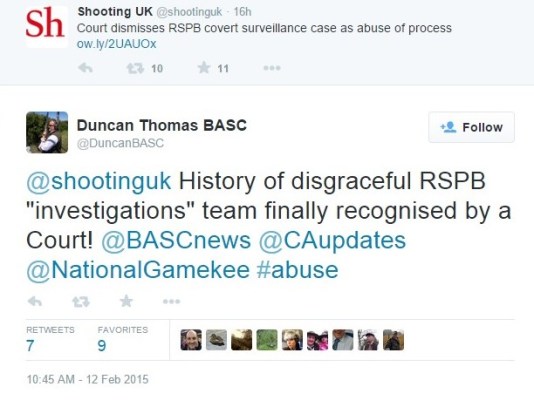
As you can imagine, there has been much crowing from the Dark Side about this result, and we were particularly interested in the following tweet from Duncan Thomas:

Duncan Thomas tweet RSPB covert video case

The name Duncan Thomas may sound familiar to some of you. He is a former Police Wildlife Liaison Officer with Lancashire Constabulary and now works as the North West Regional Officer for BASC. We recently blogged about him here. BASC is a member of the Partnership for Action against Wildlife Crime (PAW). Do you think his published opinion (which, incidentally, was also re-tweeted by the National Gamekeepers Organisation) is conducive to ‘partnership’ working, or do you think it exposes the ‘partnership’ sham for what it actually is?

UPDATE 20:00hrs: Does the spokesman of the National Gamekeeper’s Organisation have a headmaster fetish?

Interesting bedfellows 2

Some of you may have seen news coverage of PM David Cameron’s secret Conservative Black & White Ball which took place at the Grosvenor House in Mayfair on Tuesday night. This was a fundraising event designed to boost the coffers of the Conservative Party in the run up the general election.

Some details of the event were reported here.

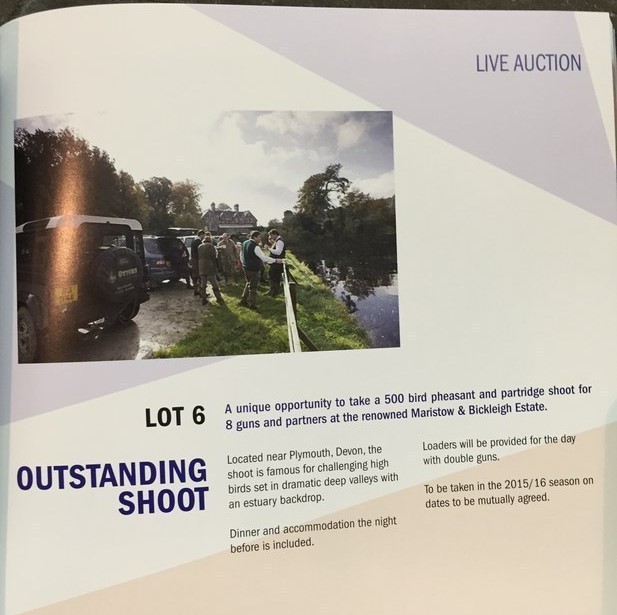
What interested us about this event was one of the auction lots – an opportunity to shoot 500 gamebirds, which sold for an incredible £110,000.

Naturally, we were interested in the location of this shoot and a bit of digging turned up this image from the auction booklet:

Pheasant shoot conservation ball auction

What’s interesting about this venue isn’t necessarily who owns it (some Lord or other) but rather, who is involved with the shooting rights. This is where it gets really interesting.

Apparently, the shooting rights on the Maristow and Bickleigh shoots have been let ‘in recent seasons’ by Mr Mark Osborne’s agency:

Osborne let estates maristow and bickleigh

Mark Osborne, who he? If you don’t know, try googling ‘Mark Osborne grouse’……or, read this.

Interesting bedfellows indeed.

Hen harrier: ’cause of death withheld’

hh LAURIE CAMPBELLLast June we blogged about an illegally-killed hen harrier that had been found dead on moorland near Muirkirk in south west Scotland. The adult female’s corpse was discovered close to a nest containing two live chicks (see here).
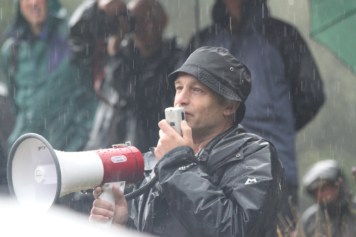
At the time, Police Scotland refused to reveal the cause of death. Det. Inspector Graham Duncan of Kilmarnock CID was quoted as follows:

Whilst at this time we cannot divulge how the bird was killed, we do believe it was the result of a criminal act and we need to establish why this has happened“.

Pretty much everyone  in the country will know exactly ‘why this has happened’ – well, everyone it seems except Kilmarnock CID.

We suggested the harrier had probably been shot, although one of our readers commented that it could also have been clubbed to death – as has happened previously to hen harriers at Muirkirk.

Eight months on and the cause of death is still being withheld. Here’s what the latest SASA report says about this case:

Cause of death withheld due to specialist knowledge‘.

Marvellous.

It’s also interesting to note that SNH has not enforced a General Licence restriction on the land where this bird was found. Just as we discussed yesterday with the case of the poisoned red kite (see here), the illegal killing of this harrier seems to meet all the criteria needed for immediate enforcement action:

This hen harrier is not the first to be illegally-killed in the Muirkirk area – it’s one of many in a long, long line – read this article from 2008(!) detailing what was going on in this so-called Hen Harrier Special Protection Area; the conservation impact of killing a hen harrier is obvious; and the evidence [her carcass] was fresh.

So why the delay in enforcement?

Why is it so difficult to get the police (and in this case, SNH) to do their jobs properly?

SNH slow to enforce general licence restriction for poisoned red kite

It’s been four months since SNH set in place its procedures for restricting the use of General Licences on land where evidence of raptor crime is apparent.

Rolled out on 6th October 2014 (see here), this new measure was to be back-dated to incidents that have occurred since 1st January 2014. And there are plenty of those, some of which have reached the public domain and some of which have been deliberately kept quiet.

One of those which has been kept quiet is the illegal poisoning of a red kite which was found dead in central Scotland last July (seven months ago). It had died after ingesting the banned poison Carbofuran.

A couple of weeks ago we blogged about this particular case (see here) and we encouraged blog readers to email Andrew Bachell, SNH’s Director of Operations, to ask whether a General Licence restriction had been enforced. Here’s his response:

Dear XXXXX

Thank you for your e-mail. No restrictions have yet been implemented on a General Licence, including for this case.

We all find crimes such as these abhorrent and we, along with Scottish Ministers are fully committed to tackling wildlife crime. The restrictions on the use of General Licences are one tool we can use to help. In order to do so, we have been meeting regularly with the Police to review and discuss all evidence of bird-crimes that occurred in 2014 in line with our decision-making framework (see http://www.snh.gov.uk/docs/A1417398.pdf).

This document highlights that the decision to restrict the use of a General Licence will be based on evidence provided by Police Scotland and will be made on a case-by-case basis. In making a decision each piece of evidence will be assessed against criteria including:

– The strength of evidence that those activities had been carried out by owners or managers of that land

– The number or frequency of such instances

– The actual or potential conservation impact of those activities;

– The age of the evidence.

– Any history of previous, similar instances.

Whilst no restriction has yet been published, as soon as we were informed by Police Scotland about this case it has been under consideration by SNH against these criteria and we have been in close contact with the Police as the investigations continue. We will publish any restrictions on the website as and when they are implemented. In the meantime, I trust you can understand we cannot discuss individual cases, and particularly ones which are subject to ongoing police investigations such as this one.  

Yours sincerely

Andrew Bachell

Director of Operations

Scottish Natural Heritage

It’s a predictable response in that it doesn’t tell us very much other than the case is under consideration. What it doesn’t explain is the delayed enforcement action. When you consider that the decision whether or not to restrict the General Licence is based on a civil burden of proof rather than a criminal burden of proof (i.e. a conviction), it’s not clear why SNH is waiting to hear about the on-going police investigation. When you look at the other criteria that SNH is using to assess these cases, we believe the criteria for enforcement action have been met: This poisoned red kite is not the first case of raptor persecution in this area (although no known prior convictions but that shouldn’t matter because criminal burden of proof isn’t required); the conservation impact of poisoning a red kite is obvious; and the poisoned carcass (i.e. the evidence) was fresh enough for SASA to determine that the bird had been poisoned by Carbofuran.

So why the delay?

Perhaps we’re being unfair and SNH has already issued a restriction notice and it has been challenged/appealed by the landowner (as is his/her right under the terms of SNH’s restriction framework). Indeed, we’d be extremely surprised if any landowner didn’t challenge/appeal a restriction of this type, given the problems of using a civil burden of proof for enforcement measures.

This case will be an interesting one to watch. Let’s hope that whatever the outcome, SNH will demonstrate some transparency and explain the reasons for either the failed or successful enforcement.

Red kite photo by David Tomlinson

Chris Packham resigns from Hawk & Owl Trust

chris packham hh day - CopyChris Packham has announced on Twitter that he has resigned his presidency of the Hawk & Owl Trust:
I this week resigned as President of the Hawk & Owl Trust. Very sad, I’d been a member since 1975“.

When asked why, he wrote this:

Personal differences over ideas of policy“.

Whilst not explicitly stating it, it’s more than likely that this relates to the Hawk & Owl Trust’s recent controversial move to push forward with hen harrier brood management. We blogged about our views on this ludicrous policy here.

Chris’s resignation reflects the strength of feeling of many within the conservation community. It seems fair to assume that the Hawk & Owl Trust has no plans to re-think its position (otherwise Chris wouldn’t have resigned) and that is both sad and incredulous.

Case against Michael Johnston: part 2

Criminal proceedings against Michael Johnston have continued at Dumfries Sheriff Court.

Johnston, 45, of Eastriggs in Dumfriesshire has been accused of being in possession of the banned poison Strychnine in April 2014, as well as a number of other alleged offences. He has pleaded not guilty.

This case will continue on 24th February 2015.

Previous blog on this case here.

Help support raptor rehabber in persecution blackspot

kestrel shot Ryedale 2015 2 - CopyNorth Yorkshire has the dubious distinction of being the UK’s worst known raptor persecution blackspot – a title it has held for several years (see here). With driven grouse moors the dominant land-use in this region, this rating shouldn’t come as any surprise.
At the heart of this blackspot is a remarkable lady called Jean Thorpe, who runs Ryedale Wildlife Rehabilitation, a facility that is wholly dependent on donations to keep going.

Jean works closely with the RSPB and the local Police Wildlife Crime Officers and last year was awarded an MBE for her tireless (voluntary) work.

When she’s not caring for injured raptors, mammals and any other creature that needs some expert help, Jean writes a blog (see here). Her latest entry is a review of the raptors she rehabilitated during 2014: a total of 99 injured birds, including 43 tawny owls, 19 barn owls, 11 buzzards, 9 sparrowhawks, 8 little owls, 7 kestrels, 1 peregrine and 1 red kite. She managed to release 53 back to the wild – an incredible achievement.

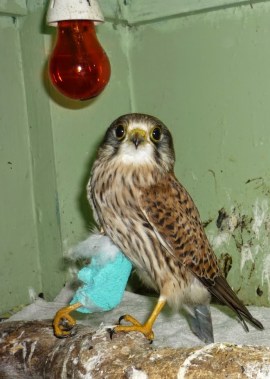
Not all were victims of persecution – many were road traffic casualties – but some had most definitely been targeted by the raptor-killing criminals. There’s a photo of a kestrel that she’s currently caring for – someone had blasted it with a shotgun.

Jean is fund-raising to buy/build a new aviary – her target is a modest £500. Let’s try and help her: donations can be made HERE.

Another hen harrier shot dead

Heather_dead_(Barry_ODonoghue_NPWS)With depressing familiarity, news has emerged of the illegal killing of yet another hen harrier.
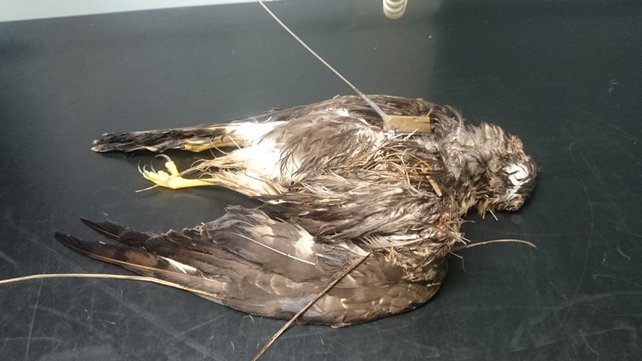
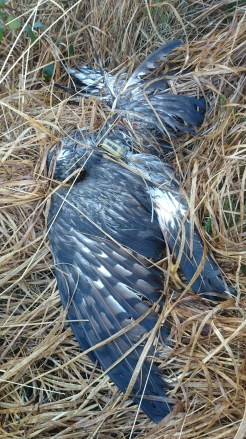
The corpse of the latest victim was found in January at an established roost site in Co. Kerry. The young female, named Heather by local schoolchildren, had been satellite-tracked since 2013 and her progress followed by hundreds of thousands who regularly logged on to the Hen Harrier Ireland blog where movement maps had been posted.

A post mortem has revealed that Heather had been shot.

There’s been plenty of news coverage about this latest crime:

Irish Times here

BBC news here

BirdWatch Ireland here

Irish Independent here

Heather’s fate is really no surprise. Had she been allowed to reach an age to begin her first breeding attempt without being gunned down would have been the real surprise.

For context, it’s worth reading about a disturbing incident from 2003, where a shot hen harrier was mailed to a local newspaper in Co. Kerry as a sinister message for those considering designating Special Protection Areas for hen harriers – see here.

Hen harriers, as you all know, are in serious trouble throughout these isles, whether it be in England, Scotland or the RoI. Those vilifying this species may have different agendas (i.e. in England & Scotland the threat is from the grouse-shooting industry; in the RoI it’s more complex and is based on afforestation and farming issues, not helped by the mysterious disappearance of millions of Euros that should have been given to support farmers working in designated conservation areas e.g. read our recent guest blog here) but the outcome for this species (and certain other raptor species) is always the same – certain death at the hands of those who think they’re above the law. Or, more to the point, at the hands of those who know very well that the chances of them being brought to justice are slim to non-existent.

Heather was an Irish bird. She hatched there, she lived her short life there, and she was killed there. But it’s important to recognise that she was part of a wider population whose range includes England, Wales, Isle of Man, Northern Ireland & Scotland. Some Scottish hen harriers travel to England, Ireland, Northern Ireland etc, just as some Irish harriers travel to England, Scotland, Northern Ireland, just as some English harriers travel to Scotland, RoI, Wales etc etc. If there are persecution issues in any part of the range, the impact will eventually affect the population in every other part of the range. Heather’s pitiful death should be felt just as keenly by those of us in Scotland, England, Northern Ireland etc as it is by those in the Irish Republic who today are mourning her loss. Political boundary lines on a map mean nothing to these hen harriers and they should mean nothing to those of us fighting to protect them.

You might think the campaign to end illegal raptor persecution is futile. You might think it’s too big of an issue and too geographically widespread for any of us to tackle it effectively. You’d be wrong. Over the last few years, thanks to the efforts of many organisations, large and small, as well as the efforts of ‘ordinary’ members of the public using social media, illegal raptor persecution has never had such a high media and political profile. There’s still a long long way to go, and the image of Heather’s wretched corpse is a miserable, poignant reminder of the work ahead of us, but we’ve only just got started.

Hen Harrier Day 2015 (Sunday 9th August) is an opportunity for us all, no matter in which part of the harrier’s range we live, to show our unity and intent. More news on that later this spring.

Heather HH shot Kerry Jan 2015