
 A couple of weeks ago, Police Scotland and COPFS gave evidence to the Scottish Parliament’s Rural Affairs, Climate Change and Environment (RACCE) Committee about wildlife crime (see here).
Last week it was the turn of Environment Minister Paul Wheelhouse. The archived video can be watched here and the full transcript can be read here.
So what did we learn? Quite a lot.
1. The Minister is “confident” that surveillance cameras can be used in wildlife crime investigations and the Lord Advocate has made it clear that the option is available to Police Scotland. (Interestingly, Police Scotland were not quite so keen when they were asked about it two weeks ago).
2. The Minister will shortly be announcing a forthcoming pesticide disposal scheme (he made it clear it was not an amnesty) – no further details available.
3. The committee reviewing wildlife crime penalties (led by Prof Poustie) will report back early in the New Year, and not in December as originally planned.
4. The Minister recognises the “wall of silence” that so often prevents the reporting of wildlife crime. Good.
5. Two weeks ago, Police Scotland claimed that the number of reported wildlife crimes was more than just the tip of the iceberg. The Minister disagrees with that and cited the large areas of suitable and yet unoccupied raptor habitat as evidence of widespread unreported wildlife crime. However, he suggested that more research was necessary to understand why raptors may be missing from those areas. Eh? What about the twenty years of high quality research that has shown time and time again the link between driven grouse moor management and raptor persecution?
6. The Minister recognises that the (police) response to every wildlife crime incident isn’t perfect. However, he believes that everyone in the law enforcement community takes wildlife crime seriously. He said that with a straight face.
7. On the new General Licence restrictions, the Minister explained that he was taking a ‘targeted approach’ to try and avoid penalising those who are not involved in wildlife crime. He accepts that the restriction measure could easily be by-passed by someone simply applying for an individual licence, although he maintains that SNH may not issue one – each case will be judged on its merit. He has more faith in SNH than we do but time will tell.
He also said that he expects GL restriction cases to be listed publicly on SNH’s website “on a live basis” because he wants the restriction to be used as a ‘reputational driver’. Good.
He made an interesting statement about who is probably responsible for poisoning birds:
“In most cases in which we find a dead poisoned bird on a landholding, we can be reasonably confident that the poisoning took place on that landholding and that the bird died on the landholding as a result of that poisoning“.
That’s very encouraging to hear.
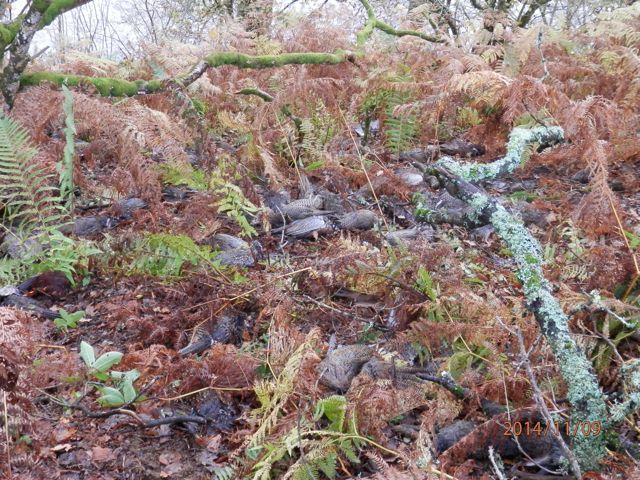
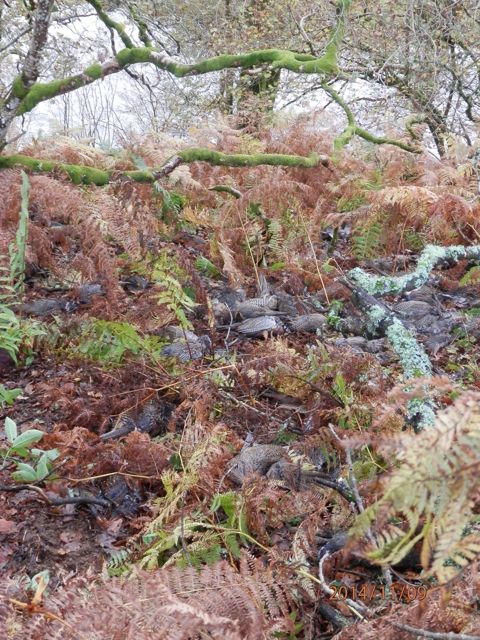
8. On the idiotic Police Scotland press release about the Ross-shire Massacre, the Minister said “unfortunately” he didn’t have any input into the wording of the statement and he urged the Committee not to read too much into the statement, but instead to focus on the fact that 16 of the 22 dead birds are confirmed to have been poisoned and that a criminal investigation was continuing. You can read between the lines – he didn’t think much of the police statement.
9. On the SSPCA consultation, the Minister said he hadn’t yet made up his mind about whether to increase their investigatory powers and he was waiting for an analysis of the consultation responses before he decided. He expected to receive the analysis “early next year at the latest“.
10. When asked whether he was considering further measures to tackle wildlife crime, the Minister said he didn’t have a definitive timescale but wanted to give the current measures time to take effect. However, he did say that he had already commissioned a review of game-shoot licensing in other countries, in preparation for consideration of further measures. He wants to know what options are available to him should he decide to take a harder line. The review will be undertaken by Prof Poustie as soon as the wildlife crime penalties review has been completed in the New Year. Excellent.
11. The Minister said he would try to incorporate further data in the next wildlife crime annual report, including reports of illegal traps (but with no apparent victim) and poisoned baits (with no apparent victim). Good.
12. Two weeks ago, COPFS claimed that vicarious liability was already proving to be an effective deterrent against raptor crime (based on what the landowners had been saying). The Minister disagreed, citing on-going wildlife crime as a clear indication that not everyone is deterred by the threat of vicarious liability. He thinks that may change if/when there is a successful VL conviction. Good.
All in all, we think the Minister did pretty well. He may be a bit too light-handed and cautious for many of us, but it’s clear that he has taken a personal interest in addressing wildlife crime, he’s incredibly well-informed, he’s not fooled by the cries of denial from the wildlife killers, and his measures are heading in the right direction, albeit slowly. He thinks the GL restrictions will be the most important step in the process but we disagree. His defining moment will come when he makes the decision on whether to increase the SSPCA’s powers. That decision, and that decision alone, will tell us all we need to know about how seriously committed this Government is to tackling wildlife crime.





 Last Wednesday, the Scottish Government’s Rural Affairs, Climate Change and Environment Committee (RACCE)
  Raptor Persecution UK