Er, about that Langholm raven-killing licence

A couple of days ago we blogged about those raven-killing licences that have been issued by SNH and the well-dodgy procedures in place to ensure these licences are issued all above board and in line with the regulations, e.g. issued for ‘livestock protection’ as opposed to game management (see here). We also mentioned the raven-killing livestock protection licence that had apparently been issued at Langholm this year.

Since then, someone has been in touch (thank you – you know who you are!) to tell us that the raven-killing livestock protection licence at Langholm needs closer scrutiny. Why? Well, remember that these raven-killing livestock protection licences are issued under the pretext of protecting livestock (i.e. in this case, sheep)? Well, according to our informant, the sheep have been removed from Langholm as part of the heather regeneration scheme!

We tried to find verification of this but all we could find were two pieces of information:

1. Simon Lester, head gamekeeper at Langholm, quoted on the Langholm Moor blog on 10th Sept 2012: “The silver birch is encroaching on to the moor now the sheep have been removed to help heather regeneration” (blog link here).

2. A statement in a recent MSc disseration: “Since 2009, a programme of sheep stock reductions and off-wintering has been implemented across the Moor (SNH, 2010). This has resulted in a zero-stocking density for a large proportion of the central and southern areas of the Moor” (Donald Scott, Sept 2012, “Habitat Condition Assessment for Langolm Moor”, MSc Imperial College London, see link here).

The SNH publication cited is this: SNH (2010). Stock changes in Langholm Moor under the Scottish Rural Development Scheme. Briefing Note.

Unfortunately we haven’t been able to find an on-line copy of this document. If anyone has a copy we’d be interested in reading it.

Let’s assume that the information we’ve received is accurate and the sheep have indeed been removed from Langholm – in that case we might be asking why would SNH, who are project partners in the Langholm Project (and therefore presumably know what’s going on), issue a raven-killing livestock protection licence if there weren’t any sheep left to ‘protect’?

According to the Langholm Project website (see here), the SNH contact is Des Thompson. Here’s his email address if anyone wants to get clarification about this situation: Des.Thompson@snh.gov.uk

RSPB shows its teeth over Walshaw grouse moor management

The RSPB has lodged a formal complaint to the European Commission over the way Natural England has (mis?)handled its dealings with the Walshaw Moor Estate near Hebden Bridge, West Yorkshire, concerning moor management regimes.  A couple of previous posts on this here and here).

Brilliant news! Well done RSPB – nice to see your teeth bared – good on you!

RSPB Conservation Director Martin Harper explains the decision to lodge this complaint here

An excellent summary (and detailed history) of the Natural England / Walshaw Moor fiasco can be found on Mark Avery’s blog here.

How many licences have been issued to kill so-called ‘protected’ ravens?

‘How many licences have been issued to kill ravens?’ This was one of a series of raven-killing questions asked recently of the Scottish Government by Alison Johnstone MSP (Lothian, Scottish Green Party).

Here’s the full suite of her written questions lodged on 18th September 2012:

S4W-09688 Alison Johnstone: To ask the Scottish Government how many licences to kill ravens were granted by (a) it and (b) Scottish Natural Heritage in (i) 2011 and (ii) 2012 and what the grounds were for granting such licences, broken down by local authority.

S4W-09689 Alison Johnstone: To ask the Scottish Government how many multi-annual licences to kill ravens have been granted since 2011, broken down by local authority.

S4W-09690 Alison Johnstone: To ask the Scottish Government what proportion of holders of licences to kill ravens indicated that they had made kills in 2011 and how many birds were killed.

S4W-09691 Alison Johnstone: To ask the Scottish Government how many licences to kill ravens have not been renewed by Scottish Natural Heritage because of non-compliance with conditions in each year since 2011.

S4W-09692 Alison Johnstone: To ask the Scottish Government whether Scottish Natural Heritage will publish details annually of the number of ravens killed under licence.

S4W-09693 Alison Johnstone: To ask the Scottish Government what factors are considered when considering granting a licence to kill ravens.

S4W-09694 Alison Johnstone: To ask the Scottish Government whether there are licensing restrictions to control the killing of ravens in nests during the breeding season.

S4W-09695 Alison Johnstone: To ask the Scottish Government what checks are made to ensure that livestock protection licences to kill ravens are not used for game management.

The answers provided by Environment Minister Paul Wheelhouse are quite interesting (see here for full script). SNH took over the responsibility of issuing licences from 1st July 2011 – previously the Scottish Government had issued them.

It’s fascinating to learn what factors are considered by SNH when considering whether to grant one of these licences. Apparently, “SNH relies on expert advice from site visits made by Scottish Government Rural Payments and Inspections Directorate (SGRPID) staff to inform licensing decisions“. Interesting. I wonder how many ornithologists and/or ecologists work for SGRPID?

It’s also fascinating to learn that SNH also relies upon SGRPID to make site visit checks to ensure that livestock protection licences (which is how these raven-killing licences are defined) to kill ravens are not used for game management. Apparently if allegations were made in this respect, then SNH would rely upon the police to investigate. Perhaps that’s why, in answer to Alison’s question about how many licences to kill ravens have not been renewed by SNH (since 2011) because of non-compliance with the conditions of the licence, Mr Wheelhouse replied: “To date, no such cases have occurred“. Really?

Another interesting piece of information to emerge from these written questions and answers is the confirmation that a raven-killing licence was issued in the Scottish Borders for 2012. Now, according to our sources, a raven-killing licence was issued at Langholm this year. Hopefully more detailed information about this will appear on the Langholm project website in due course. Is this a fore-runner to the issuing of a buzzard-killing licence at Langholm? We are aware that, unofficially at least, there is great interest in ‘controlling’ buzzards at Langholm amongst some of the project partners. Thankfully, so far, there has also been strong opposition to this move by some of the other project partners. You don’t need to be Einstein to work out which partners are for and which are against.

Finally, Mr Wheelhouse assures us that “SNH is considering how to publish statistics [of the annual number of ravens killed under licence] in the future“.

Well done Alison Johnstone MSP for asking some probing questions.

Trout farmer convicted for illegal use of spring traps

A topical story given today’s discussions…
A Scottish trout farmer has been convicted of illegally trapping a heron by using spring traps. Simon Duffin, 61, of Morrinton, was convicted at Dumfries Sheriff Court yesterday and was fined £1,500. He admitted recklessly injuring the bird in a trap likely to cause injury to a wild bird, and setting in position a trap likely to cause bodily injury to any animal at Cargenglen Trout Farm in Dumfries. (Surely not the same Simon Duffin mentioned here offering worldwide advice on all aspects of trout farming?).

A member of the public found the injured heron in the water with a Fenn spring trap around its leg. The bird’s injuries were so severe that it had to be euthanised.

Well done to the SSPCA (again) for a successful prosecution and special mention should go to the Procurator Fiscal Pamela Rhodes. Now if only Pamela had been given that third wildlife crime specialist spot that she apparently applied for at COPFS last year….

SSPCA press release here

Is this what happened to the Langholm harriers?

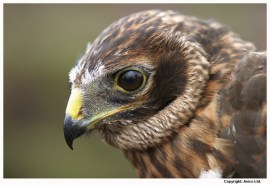
Is this what happened to this year’s Langholm harrier chicks, Barry and Blae? (Blae confirmed dead, Barry now ‘missing’ – see this morning’s blog entry below).

These photos were taken on Moy Estate in 2010. Naturally, nobody was charged with these offences. Probably not enough “hard evidence”, eh? One gamekeeper (James Rolfe) was charged with possession of a dead red kite that was found in the back of his vehicle. The kite had two broken legs and its head had been caved in with a blunt instrument (see here and here for background info).

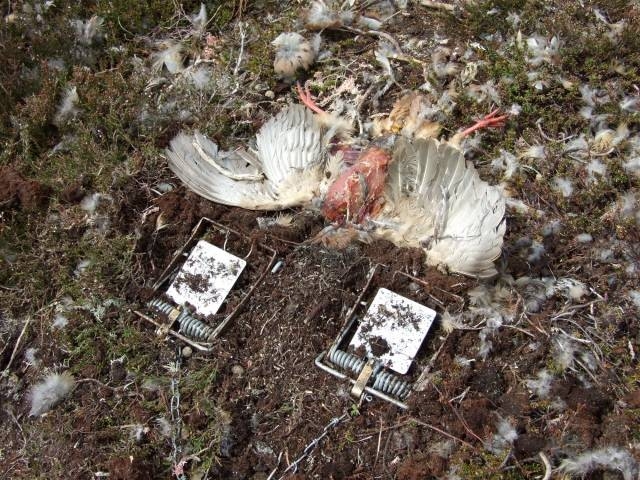
This first photograph shows a skinned rabbit that had been placed out on the moor. Can you see the hidden spring traps on either side of this bait? No? Any passing raptor would probably struggle to see them, too:

This next photo shows another bait found set on Moy with two spring traps. This time the moss has been removed so the traps could be photographed. These traps are illegal when used in this way:

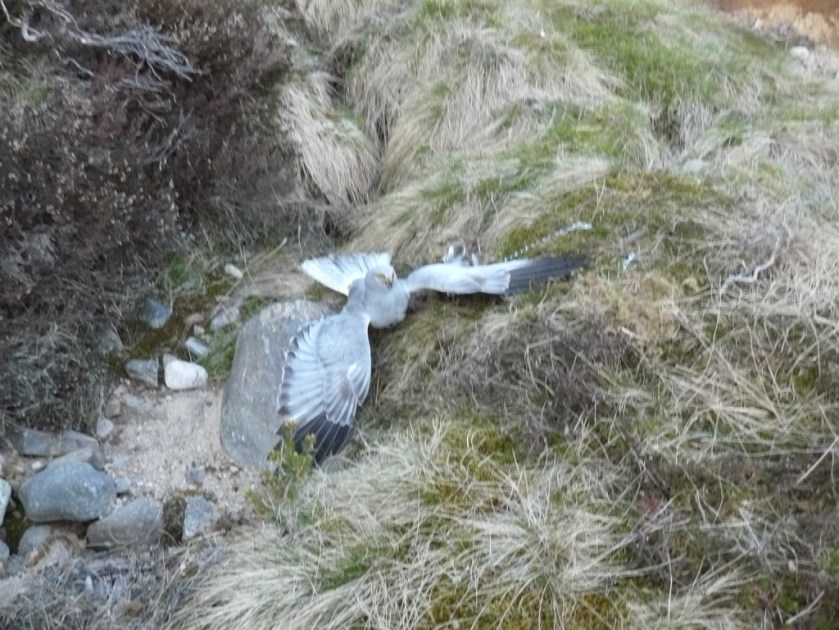
This next photo shows a hen harrier caught in one of the illegal traps that had been laid out on Moy Estate. The picture is slightly blurred but we can forgive the photographer, given the circumstances:

Here’s the same harrier being carefully removed from the trap. This one was lucky – he survived:

‘Barry’ the Langholm harrier is “missing”

Here’s the latest blog entry from the Langholm Moorland blogspot (link here):
Heartbreaking

The sun is shining here in Langholm, which is an incredibly rare and usually heart warming occurance, but today my heart is heavy. Sadly and all too predictably Barry (the young male hen harrier fledged from Langholm this year) has has gone the way of so many others.
Barry’s last fix was transmitted on the 2nd of October, although he was seen on the morning of 4th of October, when he was observed coming out of a roost by a raptor worker. His tag was due to transmit on the evening of the 4th, and his previous transmissions were always regular. There was no transmission then or subsequently. At this stage, we have to presume that he is dead, and it is very unlikely that there has been any transmitter failure. Most of his previous movements were associated with grouse moors. The police have been kept informed and the search for the carcass is underway and ongoing. 
We are still awaiting toxicology reports from the female Harrier Blae.
But don’t you go worrying your pretty little heads about this latest incident. There’s “no hard evidence” to suggest his ‘disappearance’ is a result of criminal activity, and anyway, the PAW Scotland partnership will have a chat about it over soft biscuits and coffee.
Fucking outrageous.
Environment Minister Paul Wheelhouse’s email address: ministerforenvironment@scotland.gsi.gov.uk
First Minister Alex Salmond’s email address: FirstMinister@scotland.gsi.gov.uk
Previous blog entries about Blae & Barry here, here, here, here, here

Environment Minister’s response to dead eagle found in Grampian

Un-fucking-believable. Yes, it’s a swear word but that’s the least of our concerns. Read what follows and you’ll be swearing in anger too…
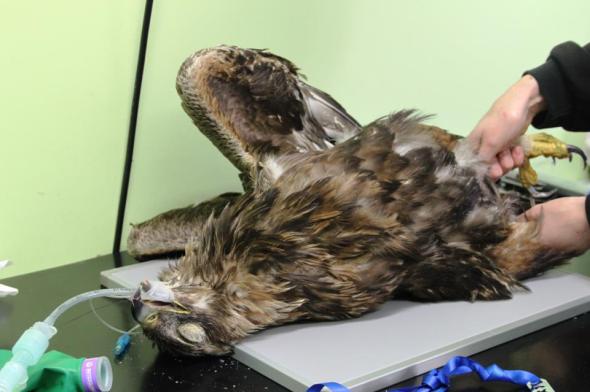
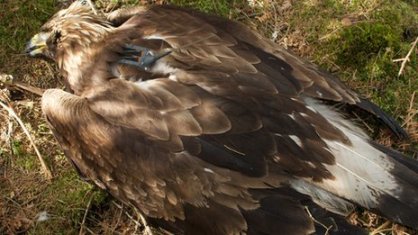
The Environment Minister has responded to a letter sent to him by one of our readers (Dave Adam) concerning the appalling death of that golden eagle back in May (see here for details of that bird’s demise). This is the eagle whose satellite transmitter showed the bird went down on a grouse moor in Glen Esk, Angus for 15 hours (an area where another golden eagle had previously been found poisoned in 2009, oh, and a buzzard was also found poisoned there in 2008 although that wasn’t publicised at the time) and then this eagle miraculously moved to a layby in Aberdeen, in the middle of the night, where it was found dead several days later with two broken legs – injuries consistent with being caught in a leg-hold trap. Yes, THAT eagle. According to the Minister, this scenario may not have been the result of criminal activity.

Dave Adam has posted the Minister’s response letter in the comments section of the original post (thank you) but it’s far too important for it to remain there, hence the decision to publish it here.

Here it is in full:

Thank you for your letter of the 25 September 2012 to the Minister for Environment and Climate Change, Mr Paul Wheelhouse. I have been asked to respond.

I agree that the media reports were a terrible story of the suffering of a young golden eagle. The reports may suggest that the circumstances of this incident were suggestive of an offence however there is no hard evidence and it remains possible that there is an alternative explanation. It is therefore inappropriate for me to comment.

The unlawful killing of any raptors has no place in today’s Scotland and we will continue to work hard to eradicate this criminal activity. We believe that the partnership approach with the Partnership for Action Against Wildlife Crime (PAW) Scotland, is bringing the reduction in bird of prey poisoning that can be seen in the statistics in recent years. However we are not complacent and if there is evidence of a switch to other methods of persecution we will take action to bear down on those methods.

The Scottish Government recognises that game shooting generates significant income and employment in our rural economy, often in areas where there are few alternative opportunities. However it is important that these businesses operate within the law, and the Scottish Government recognises that most such businesses do so. However where there appear to be conflicts for example between raptors and highly-intensive grouse moor management, we believe that an approach of seeking to improve the effectiveness of law enforcement while working with partner organisations to isolate those persisting with illegal practices is the best way forward.

Scottish police have a clear focus on tackling wildlife crime cases. Law enforcement’s role in tackling wildlife crime was reviewed by Her Majesty’s Inspectorate of Constabulary Scotland in 2008, and there was a follow-up review in 2009. As a result there are officers with wildlife crime duties in every police force area and a consistent and professional approach from senior officers.

It is frustrating that it is difficult to detect, prosecute and convict those responsible for wildlife crimes. However while it easy to make suppositions about circumstances of an apparent offence as reported in the media, wildlife crime must be subject to the same standard of proof as any other crime. Police and prosecutors also apply the same stringent procedure for dealing with wildlife crime as for any other sort of crime.

You say that the golden eagle population is threatened by illegal persecution. The Golden Eagle Conservation Framework published by SNH in 2008 did identify persecution in eastern Scotland and food shortages in the west as threats to the birds’ conservation status. It is difficult to estimate the amount of illegal persecution, but we recognise that in the longer term the best measure of success in dealing with raptor persecution will be when vacant golden eagle territories, as identified in the Framework document, are re-occupied.

K. Hunter, Policy Officer, Scottish Government.

Like we said at the top, un-fucking-believable. Especially coming a day after we learn that another golden eagle was the target of criminal activity on a grouse moor, this time being found shot and critically injured and left to die.

What did we say yesterday about needing a strong response from government, and not the usual platitudes about ‘partnership working’?

The question is, what are we going to do about it? And by ‘we’, that means all of us. Angry? You’d better believe it.

If you want to tell him how angry you are, and why (because it obviously needs spelling out) here’s his email address again: ministerforenvironment@scotland.gsi.gov.uk

When you’ve done that, send a copy to Alex Salmond: FirstMinister@scotland.gsi.gov.uk

These politicians HAVE to understand that we’re not tolerating this any longer.

Golden eagle found shot & critically injured on Scottish grouse moor

A golden eagle has been found shot and critically injured on a Scottish grouse moor in Dumfries & Galloway. The bird suffered shotgun injuries and was discovered on the ground on Saturday (6th October). The eagle has been rescued and is receiving expert veterinary care at the SSPCA’s National Wildlife Rescue Centre.

Press releases from SSPCA here and RSPB here.

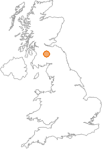
Information from local sources indicate that the bird was discovered on the Buccleuch Estate, very close to the boundary with Leadhills Estate, just to the north of Wanlockhead (see map below – our thanks to Andy Wightman [http://www.andywightman.com/] for his help defining the estate boundaries: Buccleuch pink, Leadhills grey). It is not known where the actual shooting took place. How far can an eagle fly with an injured wing and injured tail muscles? When it was found it reportedly had extensive feather damage, suggesting it had been stumbling around on the ground for some time. The SSPCA has said if it hadn’t been picked up on Saturday it’s quite likely it would have starved to death.
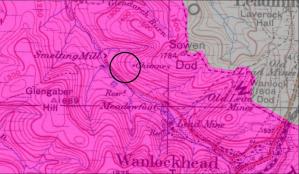
The area where the eagle was found is managed as a driven grouse moor, as is the land immediately on the other side of the estate’s border. It’s been reported that Leadhills Sporting Ltd leases land on Buccleuch Estate (see here) although the precise area leased is not known.
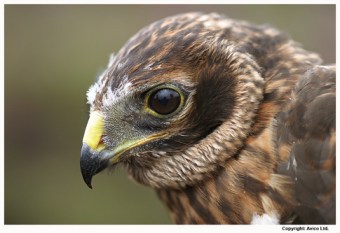
Whoever did it, whether they be a gamekeeper, a member of a grouse shooting party or someone from the Wanlockhead silk embroidery club, they will escape justice. That’s a certainty. Along with all the other people who have poisoned, trapped or shot the 26 other dead or ‘missing’ eagles over the last six years (see here) and these are just the ones we know about. Every time, there is outrage. Every time, there are denials from the gamebird shooting community. Every time, there are calls for government action. Every time, we’re fobbed off with platitudes about ‘partnership working’.

Every. Single. Time.

Is this bird going to be the one that finally galvinises a strong response from the Scottish Government? It’s been 20 years since the RSPB first started drawing attention to the criminal and unsustainable activities taking place on driven grouse moors. What’s changed in those 20 years? NOTHING. (Except we’re now much better informed about the extent of the issue….all those claims of “it’s just a rogue keeper” just don’t wash anymore; we know better now).

It’s encouraging to see that Scottish Environment Minister Paul Wheelhouse MSP has already made a statement (see SSPCA press release above). Now we need more from him and his government. The game-shooting community continues to show utter contempt for the wildlife laws, despite all the chances they’ve been given. Enough is enough. Estate licensing should now be on the cards. No more excuses, just get on with it. Those who don’t persecute raptors have nothing to fear. Please email Paul Wheelhouse and urge him to make a strong response: ministerforenvironment@scotland.gsi.gov.uk

You might also want to mention to him how impressive the SSPCA response has been to this crime. Eagle found on Saturday, press release out on Tuesday. Mr Wheelhouse should soon be commissioning a consultation on increasing the SSPCA’s powers to investigate wildlife crime; let him know how effective the SSPCA are.

Langholm harrier update

On 25th September 2012, the blog (see here) showing us the satellite-tracked movements of this year’s Langholm hen harriers had this statement:
As you will have noticed, it has been a week or so since I have posted any data from Blae, the young female from Langholm. Sadly Blae’s signal indicated that she had died south of Edinburgh about two weeks ago, her carcass was recovered and is undergoing a postmortem“.

So, when that statement was written, “about two weeks ago” would place this harrier’s death ‘about’ 11th September. Today is 8th October, so we’re coming up to ‘about’ a month since she died.

Today there’s a new statement on the Langholm harrier blog:

No news yet on Blae’s postmortem results“.

How long does it take to do a simple postmortem on a single harrier carcass?! Even if it took, say, a week for the bird’s dead body to be recovered, the lab has had almost three weeks to conduct a procedure that shouldn’t take more than a couple of hours at most.

An article published in the Southern Reporter on Sunday (see here) includes a quote from Langholm Project Manager Graeme Dalby, who says:

The timescale for results being released can vary from a couple of weeks to much longer depending on the lab’s workload“.

So either this lab is inundated with the carcasses of dead animals or not enough urgency is being afforded to this case. Or perhaps we are being unfair on the lab – perhaps they have already done the PM and released the results but the Langholm Project folk are not sharing them? We know there are quite a few things that the Langholm team are keeping quiet about…more on those in a later blog.

Meanwhile, Blae’s sibling, Barry, appears to be still alive, for now (see here).

Previous blogs on Blae here, here, here.

Court case updates

The ridiculously lengthy legal proceedings against Keith Liddell continue. First reported on this blog in July 2011 (here) and subsequently in February 2012 (here), May 2012 (here) and June 2012 (here), Liddell’s case will have another intermediary diet at Inverness Sheriff Court tomorrow (9th October). Liddell is accused of various offences including the alleged trading of raptor eggs.

Another lengthy case has also been continued at Inverness Sheriff Court. The so-called ‘hare-snare’ case, which began back in 2009 (!!) was heard at Inverness last Thursday and Friday. It is now set to continue on 16th November. Two gamekeepers from the Lochindorb Estate originally faced trial but now the charges are only being heard against one of them, David Taylor. Previous posts on this case here, here, here, here, here, here.