

New government inquiry into scale of wildlife crime in UK

The Environmental Audit Committee (EAC) has launched a new inquiry into the scale of wildlife crime in the UK. The EAC, appointed by the House of Commons, is the select committee responsible for, amongst other things, monitoring environmental protection.

The new inquiry will examine the scale of wildlife crime in the UK, including damage and destruction to species and habitats. It will also examine the scale of, and risks posed by, the illicit trade in wildlife and wildlife products. The inquiry will consider the role of the Government and other bodies in England and Wales in preventing, detecting and prosecuting these types of crime, as well as what action the Government can take internationally to tackle the problems of illegal trade.

The inquiry will specifically examine:

  • The scale of wildlife crime and its impacts, and how this has changed since the EAC’s 2004 report
  • The extent to which UK legislation and regulations on wildlife crime are ‘fit for purpose’ and the penalties for offences are adequate
  • How policing of wildlife crime is coordinated in the UK (between bodies and geographically) and whether enforcement bodies have sufficient resources and powers, and how the proposed National Crime Agency might affect policing of this type crime
  • How well Government and responsible enforcement bodies are responding to newer threats and challenges, including use of the internet for wildlife trade
  • How fully wildlife crimes are recorded, and how rigorously available penalties are applied
  • How effectively behaviour-change and attitude-change is being promoted
  • The UK’s role in influencing the EU and International agreement on illegal wildlife trade

The committee invites organisations and members of the public to submit written evidence, setting out their views on these issues. More wide ranging responses are also welcome. Submissions should ideally be sent to the Committee by Friday 24th February, although later submissions may be accepted.

For further details about the enquiry and to find out how to submit information, see here.

National Trust remarks about raptor persecution in Peak District

For those who have been following the story about the recent conviction (see here) and (failed) appeal of Derbyshire gamekeeper Glenn Brown for his criminal activities on the National Trust’s Howden Moor (see here), you might want to have a read of Mark Avery’s blog. He’s managed to persuade Dr Simon Pryor, Natural Environment Director from the National Trust, to comment about the National Trust’s approach to dealing with raptor persecution on its properties.
Mark Avery’s blog here

Wildlife Crime book just published

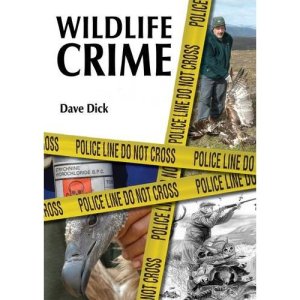
Further to the blog post of 29 November 2011 (here), Dave Dick’s new book, ‘Wildlife Crime’ has just been published. Info from the publisher:

WILDLIFE CRIME by Dave Dick

Whittles Publishing, £18.99 [Ed: £16.14 on Amazon!]. Paperback, 208 pages.

ISBN – 13: 978-1849950367

PRODUCT DESCRIPTION from the publisher

‘This is an important book. It is written by an expert who probably knows more about wildlife crime in the UK, and especially in Scotland, than anyone else. It is important because so little is known and understood about a widespread and deeply disturbing illegal practice…‘ Extract from Foreword by Sir John Lister-Kaye, OBE.

Through the professional life of Dave Dick, the RSPB’s Senior Scottish Investigation Officer between 1984 and 2006, the often murky world of wildlife crime is revealed. This is the first book that faces up to the realities of the often unsuccessful efforts by the justice system in its attempt to stop these crimes. Unflinching accounts of the shocking levels of killing and the cruel and callous nature of the killers are related. However black comedy and lighter moments prevent this being just another catalogue of man’s inhumanity to nature with personal accounts of the thrill and joy of watching some of our most beautiful birds and animals in their equally beautiful landscapes. The author examines the motives of both criminals and their pursuers in an attempt to show the truth of what has become a highly-charged and politicised topic. He reveals the truth of what is happening in some corners of our countryside, where the public may be discouraged to tread and hopes to inform a more reasoned debate on the topic. This timely and inevitably controversial book lifts the lid on the pressures faced by some of our most iconic wildlife species which are being shot, trapped and poisoned.

Scottish gamekeeper made false poisoning claim

A Scottish gamekeeper from Perthshire sparked a major health scare and forced the closure of part of the city after claiming he’d eaten the banned poison Cyanide, according to newspaper reports today.

Perth Sheriff Court heard the bizarre case yesterday, when 29-year old gamekeeper Graeme Thompson of Primrose Crescent, Perth, admitted depriving the public of emergency service workers last November by [falsely] claiming he had swallowed razor blades and cyanide. The large-scale operation to isolate Thompson (for fear of him contaminating hundreds of nearby residents) reportedly involved six police vehicles, 14 police officers, eight ambulances, seven paramedics and seven specialist medics.

Thompson has been remanded in custody pending sentence and the case was continued for the preparation of social work reports.

The Scottish Gamekeepers’ Association were quick to make a public statement to confirm that Thompson was not one of their members (see here).

STV news report here    Scottish Sun report here

Police raid pigeon fanciers in England and Wales in peregrine persecution investigation

Yesterday saw a coordinated multi-agency raid on the homes of four pigeon fanciers during an investigation into alleged peregrine persecution.

The investigations took place in the following regions: Avon & Somerset, South Wales, Northumbria and the West Midlands. Police with search warrants were aided by investigators from the RSPB, RSPCA, Natural England and the Countryside Council for Wales. A 47 – year old man is reported to have been arrested at one of the locations in connection with evidence that was seized during the raid.

RSPB press release here

Let’s hope these raids end with a better result than a recent prosecution in Scotland, where an individual was charged with the alleged illegal use of a Larsen trap at a pigeon loft. Unfortunately, the case became time barred under Scottish law (meaning the prosecution evidence wasn’t presented in time) and therefore the case wasn’t heard in court.

Gamekeeper on Aswanley Estate, Aberdeenshire, loses appeal [UPDATED]

An article on the STV website reports that a gamekeeper on the Aswanley Estate has lost his court appeal against his sentence for illegal possession and control of a wild bird.
30 year old gamekeeper Craig Barrie of Glass, Huntly, Aberdeenshire, had previously been convicted for having a live pigeon inside a cage trap. On 28 October 2011 at Aberdeen Sheriff Court he had been fined £520 for the possession and control of a live wild bird contrary to the Wildlife & Countryside Act 1981. Barrie is reported to have appealed his sentence, arguing that unless he received an admonishment or an absolute discharge, he would lose his job. Two appeal court judges rejected his argument yesterday, meaning that Barrie has now lost his job. The article reports that Barrie had previously resigned from his job following his earlier conviction, “but the post had been kept open for him in case the appeal was successful“!!!!! (The point being that Barrie wasn’t appealing against his conviction – just against his sentence. Why would Aswanley Estate want to ‘keep his job open’ when he’d been convicted of a wildlife crime, no matter what his sentence?!)

There’s some shoddy journalism in the article, referring to Barrie’s “gamekeeper licence” and saying that the offence took place in “2019” (it actually took place in 2010). It is presumed that the “gamekeeper licence” refers to the general licence. Unfortunately we have not yet reached the stage where gamekeepers are regulated by a ‘gamekeeper licence’ but who knows, the way things are going this might just be the next step after estate licencing!

It is not known whether Barrie was a member of the Scottish Gamekeepers’ Association. More on this shortly…

Well done to the two appeal judges – a refreshing change is in the air.

STV article here

Aswanley Estate website here

Thank you to the contributor who alerted us to this story.

UPDATE: We have received the following email from Aswanley Estate: “We notice that you have used a photograph of Aswanley Estate on your blog entry. You are infringing copyright laws and would ask that you please take this of [sic] within 48 hours or we will take further action”. Thanks for keeping us on the right side of the law, Aswanley Estate – it’s a shame this level of vigilance didn’t extend to the criminal activity of the Estate’s gamekeeper. Keep ’em peeled!

Opportunity to photograph hen harriers on Glen Tanar Estate

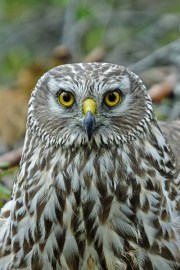
Here’s an interesting one. Glen Tanar Estate in the Cairngorms National Park is offering an opportunity for photographers to spend time in a specially-built observation hide to photograph hen harriers at a supplementary feeding station.
We have previously blogged about Glen Tanar Estate’s outstanding efforts to protect the breeding hen harriers on their grouse moor (see here and here) – an unprecedented effort that has drawn widespread praise from the conservation community. Now the estate has teamed up with a specialist wildlife photography company (Northshots) to allow wildlife photographers a rare opportunity to photograph the estate’s harriers during the sensitive breeding period (see here).

What’s interesting about this is the whole idea of a private estate charging money to photograph a species that essentially belongs to all of us. Is it ethical for Glen Tanar Estate to profit from this? Some might argue that yes, it is entirely ethical, and this behaviour should be encouraged in order to persuade other shooting estates that there is a (financial) incentive for them to protect breeding hen harriers on their land. If more estates took this proactive approach, then perhaps we’d have more than just a single pair of hen harriers breeding in the district around Glen Tanar. Which is better – having harriers that are seen as a financial commodity or having no harriers at all? That’s a fairly easy choice. The Glen Tanar/Northshots approach looks to have been well thought through – the hide will apparently not be available until after any eggs hatch, thus minimising disturbance during the critical incubation period, and once the hide is opened, the number of photographers is severely restricted to a maximum of two people per day.

On the other hand, some might argue that the public shouldn’t have to pay a private estate for access to view a breeding pair of hen harriers. Assuming they already had a Schedule 1 disturbance licence that covered them for hen harriers, why should they have to pay ££ to a landowner when they have free access rights to the land anyway? What’s interesting about this particular opportunity is that it appears that any old photographer can pay for the privilege of spending time in the hide, whereas normally this kind of opportunity is restricted to photographers (and/or fieldworkers) who have a proven record of knowing how to behave when close to a Schedule 1 protected bird. Perhaps the photographers in this case are actually paying for the privilege of piggybacking onto someone else’s Schedule 1 licence? These licences are not (normally) easy to get! According to the Northshots website, “This opportunity is only possible due to the issue of a Schedule 1 [disturbance] Licence by Scottish Natural Heritage“. What isn’t clear is whether this licence has been/will be issued to a named person at Northshots, or whether each individual photographer will have to apply for their own. The website indicates that the photographer will be accompanied into and out of the hide by a ranger, but essentially will be left to their own devices for a minimum of six hours. So if the licence is given to an inexperienced individual, who will supervise that individual’s behaviour during this period to ensure they aren’t causing any unneccessary disturbance to the harriers? Or will a named individual from Northshots be present in the hide for the entire period? How will SNH assess whether the legal obligations of the licence have been met? If the harriers successfully fledge then obviously it could be argued that any disturbance wasn’t ‘significant’. But what if the harriers fail, for whatever reason, whether disturbance-related or just a natural cause? How will SNH determine the cause? Or would they even bother to try?

It’ll be an interesting experiment to see how things go (assuming the harriers cooperate and decide to nest on Glen Tanar again – highly likely, given the zero tolerance policy towards hen harriers on certain nearby estates). If the scheme is successful for both the estate and the harriers, could this prove to be a small step forward towards, dare I say it, the beginning of a recovery for our diminishing hen harrier population?

SSPCA continues to perform well in advance of govt consultation to increase their powers in wildlife crime investigations

A year ago in February 2011, former MSP Peter Peacock put forward an ammendment to the then Wildlife and Natural Environment (Scotland) Bill [known as the WANE Bill], to increase the investigatory powers of the SSPCA, to help with the effective investigation of wildlife crime, and particularly raptor persecution crime. The ammendment didn’t make it into the final WANE Act but former Environment Minister Roseanna Cunningham said it could be considered, after public consultation, in a later Criminal Justice Bill. Seven months later, in September 2011, MSP Elaine Murray raised the issue again (see here).

In November 2011, MSP Elaine Murray again raised the issue, and this time was told by the current Environment Minister, Stewart Stevenson, that the Scottish Government intended to begin a consultation during the first half of 2012 (see here).

So far we haven’t seen any movement on the impending consultation but there’s still another four months to go and when we do see some movement, we’ll blog about it here.

Meanwhile, the SSPCA has continued to enhance its hard-earned reputation for successfully bringing criminals involved in wildlife crime to justice. In terms of catching raptor persecutors, this was most recently demonstrated by the successful prosecution of gamekeeper David Whitefield, who was convicted of poisoning four buzzards on a shooting estate in South Lanarkshire (see here).

Their success doesn’t end there. Just last week, the SSPCA was instrumental in securing a ground-breaking conviction of a man who was guilty of keeping dogs used to fight against wild animals, including foxes and badgers (see here, here and here). A conviction for this type of crime isn’t novel – we’ve blogged about it all too often in recent months. What was ground-breaking about this case was that we believe it was the first conviction in Scotland for this type of offence (involving wildlife) under the Animal Health & Welfare (Scotland) Act 2006 – legislation usually reserved for incidents not involving wildlife. Perhaps this will start a trend and we’ll begin to see more use of this Act when dealing with raptor persecutors, for example, in cases where buzzards (or other protected raptor species) are illegally held in crow traps.

We look forward to following the public consultation in the coming few months on increased investigatory powers for the SSPCA.