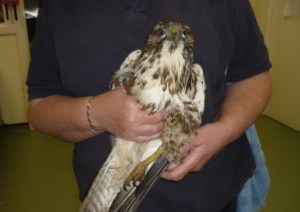
Golden eagles in southern Scotland: the facts and the fiction

A new report has been published today detailing the recovery prospects for golden eagles in southern Scotland.

The SNH-commissioned report has been written by two undisputed experts (Alan Fielding and Paul Haworth), both of whom were involved with the impressive Golden Eagle Conservation Framework report that was published in 2008.

The report has only just been made available on SNH’s website so we’ve not had a chance to thoroughly digest its findings – although we intend to come back to it in due course.

Having skimmed through it, it looks like a very detailed analysis of the various issues that could affect the recovery of this tiny population (see here for a previous blog entry on the perilous state of the golden eagle population in southern Scotland), including, of course, the effect of illegal persecution. This photo below shows the graphic effect of persecution on golden eagles in south Scotland – this one was found shot and critically injured on a driven grouse moor in 2012 – it later died from its injuries – see here.
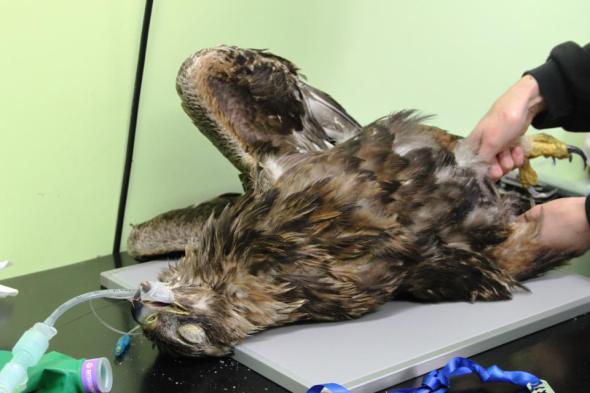
Wanlock Head GE Oct 2012

If you haven’t read the new report (and let’s face it, not many people will), you might just base your opinion of it on what has been written in the mainstream media, which would be fine if the media reports were accurate, balanced and didn’t contain any lies.

For example, if you read the BBC report, you’d be forgiven for thinking that golden eagles in southern Scotland are only constrained by impoverished habitat and potentially by climate change, lack of prey (apparently due to a loss of gamekeepers!) and afforestation. You’d read that illegal persecution ‘may have been an historical factor’ but apparently it isn’t any more.

Hmm. Is that what the report actually says? Er, no. The report mentions persecution in several areas (Lowther Hills, Tweedsmuir Hills, Ettrick Hills and Moorfoot Hills) and suggests that it needs to be brought under control if golden eagles are to once again survive in these areas.

So if the report didn’t say that illegal persecution ‘may have been an historical factor’ but apparently isn’t any more, then who did?
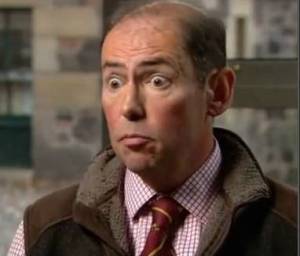
McAdam 1No surprises…..Doug McAdam, CEO of the landowners’ organisation, Scottish Land and Estates. We  blogged about SLE’s persistent denial of raptor persecution only yesterday (see here) in relation to comments made by SLE’s Moorland Director Tim (Kim) Baynes during a radio debate. It looks like McAdam was sent the same memo – just deny, deny, deny.

This time, however, we intend to do more than just make fun of him – we’re going to complain to the BBC about publishing such nonsense and we’d encourage as many of you as possible to join in. We’ve even prepared some suggested text that you can simply cut and paste if you’re short of time or not sure what to write. Here it is:

Dear BBC,

I wish to make a complaint about the content of an online article about a new report about Golden Eagles in the south of Scotland:

http://www.bbc.co.uk/news/uk-scotland-south-scotland-28320168

In my opinion, a disproportionate amount of space in the written article is given over to comments made by Mr Doug McAdam, the chief executive of Scottish Land and Estates. This is in complete contrast to the amount of space given to the comments by Prof Des Thompson “who led the research” and Mr Ian Thomson of RSPB Scotland.

In addition I am very concerned that the comments attributed to Mr McAdam reflect a falsehood that is frequently stated by his organisation and others who have a long-term political agenda to downplay the issue of persecution of birds of prey. Mr McAdam is quoted as saying, “Where persecution may have been a historical factor, it is clear from the official government data – published alongside our partners in PAW Scotland in March – that the number of such incidents has dropped significantly in recent years.”

In fact, the figures published by the Scottish Government show the opposite to be the case. In the Scottish Government’s wildlife crime report for 2012:  http://www.scotland.gov.uk/Resource/0043/00434716.pdf thirteen birds of prey are listed as being the victims of persecution.

In 2013, twenty three birds of prey were listed as victims:  http://www.scotland.gov.uk/Topics/Environment/Wildlife-Habitats/paw-scotland/types-of-crime/crimes-against-birds/Poisoninghotspotmaps/2009-2013

These figures are nowhere near being indicative of “a significant” decline – in fact they are wholly contradictory of such a claim.

I urge the BBC to remove these erroneous comments from the article, given that they suggest to its readers a picture which is patently untrue.

Yours faithfully, (your name).

Here’s where to send your complaint: https://ssl.bbc.co.uk/complaints/forms/?reset=#anchor  [click on ‘Make a complaint’]

Some links:

BBC news article (and accompanying video) here

SNH press release about the new golden eagle report here

RSPB Scotland press release here

Download the new report here: Fielding & Haworth 2014_Golden Eagles in south Scotland an overview

UPDATE 17.40: Interestingly, the BBC appears to have retracted some of McAdam’s quote, but not the offending part! (Many thanks to those of you have already complained – we can see from our site stats that quite a few of you have done so).

Here’s McAdam’s quote from this morning:

Douglas McAdam, chief executive of Scottish Land & Estates, said: “We have been involved with Scottish Natural Heritage and other partners in this study since its inception as we felt it was crucial to understand the real underlying reasons why Golden Eagles were struggling in certain parts of Scotland.

This thorough and detailed study makes clear that SNH believes that habitat improvements are needed to encourage more breeding golden eagle pairs in the south of the country. We fully support this conclusion and we will encourage land managers to work in partnership with SNH and other bodies to make improvements to these habitats wherever possible.

Other factors, including climate change, lack of availability of prey base for eagles – often because these areas are no longer actively managed by gamekeepers – as well as expansion of forestry and changing land use may also be inhibiting eagle presence in these areas. Where persecution may have been a historical factor, it is clear from the official government data – published alongside our partners in PAW Scotland in March – that the number of such incidents has dropped significantly in recent years. However, everyone remains resolute that where persecution exists it must be eradicated.

Golden Eagles are iconic Scottish birds, adding greatly to Scotland’s natural landscape and welcomed by estates as part of our natural heritage. This study will add greatly to our understanding of what limits the presence of these magnificent birds and should therefore help us to understand how best they can be conserved.”

And here’s what’s currently online at 17.40: 

Scottish Land and Estates chief executive Douglas McAdam said: “Where persecution may have been a historical factor, it is clear from the official government data – published alongside our partners in PAW Scotland in March – that the number of such incidents has dropped significantly in recent years.

However, everyone remains resolute that where persecution exists it must be eradicated.

Golden Eagles are iconic Scottish birds, adding greatly to Scotland’s natural landscape and welcomed by estates as part of our natural heritage.

This study will add greatly to our understanding of what limits the presence of these magnificent birds and should therefore help us to understand how best they can be conserved.”

Come on BBC editors, get your act together!

Wheelhouse responds to latest raptor killings….by doing nothing

Paul-Wheelhouse-MSP Earlier today we blogged about the latest poisoning victim to have been uncovered in Scotland….a dead buzzard that was found in Fife in April (see here).
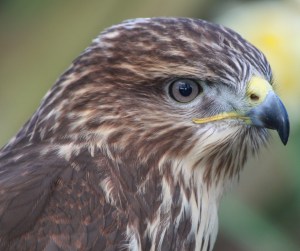
This evening, Environment Minister Paul Wheelhouse has issued the following statement:

I have been hugely angered to learn about another case of a poisoned buzzard following on from a separate incident involving the illegal death of a hen harrier in Ayrshire. I have made it very clear that I will not tolerate these criminal and selfish acts and this form of criminality has also been roundly condemned by parliament in a recent debate.

These crimes are not the actions of people who value Scotland’s wildlife and natural environment and I encourage anyone with any information on these despicable crimes to contact Police Scotland on 101.

My officials are working on a pesticide disposal scheme to rid illegal substances from our countryside and I hope to see this up and running very soon while the implementation of changes to the General Licences is in the process of implementation.

Our ongoing review of wildlife crime penalties is due by December and these latest incidents only add to the evidence supporting a toughening of sanctions and penalties on perpetrators.

We don’t doubt that he’s “hugely angered” – we all are – but we most certainly do question his commitment to taking meaningful action against the raptor killers.

A year ago, give or take a few days, the Minister introduced a series of what he described as ‘further measures’ to combat raptor persecution (see here). Since then, not one of these measures has yet been fully implemented. Also since then, we’ve seen examples, over and over again, of how these crimes are still taking place right across Scotland. Here are some of them:

June 2013: Shot buzzard in the Borders (see here), later revealed to also have been poisoned (see here)

July 2013:  Buzzard shot in the throat in North Ayrshire (see here)

August 2013: Red kite found shot at Leadhills (see here)

September 2013: Poisoned buzzard found in Stirlingshire (see here)

October 2013: Langholm hen harrier ‘Blue’ disappears (see here)

October 2013: Half-made raptor trap discovered in Angus (see here)

December 2013: Buzzard died of ‘unnatural causes’ near Tomatin (see here) [we now know it had been shot]

December 2013: Golden eagle ‘Fearnan’ found poisoned on Angus grouse moor (see here)

January 2014: Man reported for hen harrier death in Aberdeenshire (see here)

January 2014: Dead bird (species unknown) & suspected poisoned bait found in South Lanarkshire (see here)

February 2014: Poisoned peregrine found near Leadhills (see here)

March 2014: 22 poisoned raptors (16 red kites + 6 buzzards) found in Ross-shire (see here)

April 2014: Man arrested for alleged attempted raptor trapping in Aberdeenshire (see here)

April 2014: ‘Illegally-killed’ peregrine found near Stirling (see here) [we now know it had been shot]

April 2014: East Scotland sea eagle chick ‘disappears’ on Aberdeenshire grouse moor (see here)

April 2014: Gamekeeper charged for allegedly shooting, bludgeoning & stamping on buzzard in Dumfries (see here)

April 2014: Poisoned buzzard found in Fife (see here)

June 2014: Allegations emerge of ‘coordinated hunt & shooting’ of a hen harrier in Aberdeenshire last year (see here)

June 2014: Hen harrier died “as result of criminal act” near Muirkirk (see here)

These are just the ones that have been made public – we expect there to be a number of others that have not yet been revealed to the public.

Each time, we’ve asked Wheelhouse to act. Each time, he’s told us we need to ‘wait’ for the new measures to take effect but he has adamantly refused to give a time-frame of how long that wait should be. It’s crystal clear, even to a child, that The Untouchables are out of control and waiting for them to stop of their own accord is ridiculous.

The Minister’s response this evening is simply not good enough. A ‘poisoning amnesty’? It sounds good, but the truth is it’s been done before and with no effect. Carbofuran has been banned since 2001 – that’s 13 years ago! Does he really think that these disgusting poisoners are going to hand over their private stashes of poison when they know full well they can continue to use them without fear of consequence? The whole industry denies that poisoning is even happening!

We think the amnesty is being implemented so the Government can be seen to be doing ‘something’ but actually it’s just a bit of cynical window dressing in an attempt to delay taking the proper action that is needed. It’s just another excuse to do nothing.

And actually, this amnesty hasn’t been announced as a reaction to the recently-reported killing of the buzzard and the hen harrier. He announced his intention to launch an amnesty in his speech at the Police Wildlife Crime Conference several months ago. So what has he actually announced in response to the poisoned buzzard and the illegally-killed (probably shot) hen harrier? Absolutely nothing.

The Minister says he “won’t tolerate these criminal and selfish acts“. Sorry, Minister, but that is exactly what you’re doing.

If you feel strongly about this and agree that this government is still failing to address the widespread persecution of protected raptor species, we’d encourage you to email Mr Wheelhouse, cite the list of crimes (above) and demand he takes meaningful action or resign his position as Environment Minister. Email: ministerforenvironment@scotland.gsi.gov.uk

Natural England says no to buzzard-killing licence

buzzard 3A couple of days ago we learned that Natural England had received a licence application to permit the capture and killing of ten buzzards (well done to the RSPB for getting the info – see their blog on the subject here.)

The licence application was made by somebody who had applied for licences before and the justification for wanting to trap and shoot ten buzzards was to prevent so-called “serious damage” to pheasant poults.

Natural England has just made the following announcement about this year’s application:

Decision on buzzard control licence

On 23 April 2014 Natural England received an application for a licence to cage trap and shoot ten common buzzard (Buteo buteo) in the vicinity of a site which has experienced loss to pheasant poults in recent years.

The application had been made by the operator of a pheasant rearing and shooting business on the site and is supported by the National Gamekeepers’ Organisation. After careful consideration, Natural England has concluded that the application does not meet the criteria that would permit lethal control to be licensed.

ENDS

Unlike last year, so far this year we haven’t seen the actual licence application, although we strongly suspect that this year’s licence applicant is the same individual as last year, working with the help and support of the National Gamekeepers Organisation (NGO). We blogged a lot about this gamekeeper last year, and particularly about his previous criminal conviction for poison offences and questioned why the NGO were still supporting him instead of booting him out of their club for being a convicted wildlife criminal. Astonishingly, we were told that they hadn’t booted him out because the NGO apparently doesn’t see poison offences as either a ‘game-keeping activity’ or a wildlife crime! We also learned that having a wildlife crime conviction was no barrier to applying (and receiving) a licence from Natural England to destroy protected wildlife (e.g. see here, here, here, here, here). The whole affair was illuminating, to say the least, and that’s without even going in to the arguments against killing a protected native species in order to protect an exotic, introduced species that is bred and released into our countryside by the tens of millions every year so that they can be later shot for ‘sport’.

Today’s announcement is very welcome news indeed, although most (all?) of the game-shooting lobby will disagree. We expect them to launch a judicial review of Natural England’s decision, as they threatened to do last year if they didn’t get their way. That might be quite interesting, especially when they get to the bit where they’re asked to provide scientific evidence about the ‘serious damage’ caused by buzzards….

UPDATE 7pm: The NGO has issued a statement about Natural England’s decision (here). In it, they claim the gamekeeper involved is “close to financial ruin”. Here’s a tip for that gamekeeper – if your business is reliant on the killing of protected species, it ‘ain’t viable in the long term. Try another ‘profession’.

SNH launches ‘independent’ (ahem) study into trap use

The long-awaited study into the use of corvid traps in Scotland has finally begun.

This research was first proposed in late 2012, following SNH’s controversial decision to permit the use of clam-type traps on the 2013 General Licences (see here for associated blog posts). There was much opposition to this inclusion, based on concerns that these traps are likely to cause unacceptable risks to non-target species (including raptors). SNH ignored the majority of respondents to a public consultation, who had called for research to be conducted BEFORE the traps were authorised; SNH decided to go ahead and allow the use of these traps and do the research AFTERWARDS.

Following a series of Parliamentary Questions in December 2012 about this decision, Environment Minister Paul Wheelhouse said: “We will commission objective research on these traps“. SNH then announced they would conduct ‘rigorous and independent’ tests.

SNH has now commissioned two organisations to conduct that ‘objective, rigorous and independent’ research. Those two organisations are Science and Advice for Scottish Agriculture (SASA) and the Game and Wildlife Conservation Trust (GWCT).

We have no problem with SASA – they have no vested interests in the removal of predators to enhance the number of gamebirds available for shooting and therefore can be seen as being thoroughly independent on this topic. But GWCT? This is the organisation that has consistently petitioned for buzzards and sparrowhawks to be included on the General Licences (thus allowing them to be culled in the interests of game-shooting) and many of their Trustees are directly involved with game-shooting. Not what we’d call ‘independent’.

According to the SNH press release about this new study, the research will cover all the different types of traps that are currently licensed for use in Scotland (e.g. clam-type traps, Larsen traps, crow cage traps). That’s good – concerns about these traps and their use have been unresolved for many years. These include (but are not limited to) compliance (or not) with European environmental legislation; welfare concerns; poor trap design that allows indiscriminate species trapping; year-round use (as opposed to seasonal use); ineffective regulation of crow trap users; ineffective monitoring of crow trap use (i.e. number and species caught/killed); inability to identify an individual trap user (traps are registered to estates, not to individual users); and a lovely get-out clause for any General Licence user with an unspent criminal conviction. Will this new research address all of those concerns? We’ll have to wait and see.

The press release states that the first phase of the research involves a survey of trap users from the following organisations: British Association for Shooting and Conservation (BASC), Scottish Gamekeepers Association (SGA), Scottish Land and Estates (SLE), GWCT, and National Farmers Union of Scotland (NFUS). Hmm. Does anybody believe that these users are going to admit to having caught a non-target species? Or admit to ‘accidentally’ injuring or killing a trapped non-target species? Given that it is widely accepted (even by the Environment Minister) that these traps are often used for the illegal persecution of raptors, how reliable will these survey results be?

Curiously, there’s no mention of other interest-groups being involved (e.g. RSPB, SSPCA, SRSG, OneKind) – all of whom have previously expressed concerns about how these traps are used – but hopefully that’s just an oversight in the wording of the press release and not an accurate reflection of their actual participation in the study.

Later stages of the study will apparently include ‘field studies of how different traps are used in practice’. We hope the final report will also include information about every single incident of illegal trap-use recorded in Scotland over the last five years, including incidents that resulted in the conviction of a gamekeeper and those cases that remain unresolved.

Download the SNH press release: General Licences – Trapping Project – May 2014 press release

UPDATE 13.40hrs: A previous study looking at the use, abuse and misuse of crow cage traps in Scotland was undertaken by the Scottish Raptor Study Groups and RSPB Scotland in 1998. It was published in 1999 in the journal Scottish Birds (Vol. 20, pages 6-13). Download it here: Dick & Stronach 1999 Use, Abuse & Misuse of Crow Traps

Case against gamekeeper George Mutch: part 8

Criminal proceedings continued today with hearing #9 in the case against Scottish gamekeeper George Mutch, of Kildrummy Estate, Aberdeenshire.

We understand that Mutch is pleading not guilty to a suite of charges for offences alleged to have taken place in August 2012. The charges come under Section 5 (subsection 1B) of the Wildlife & Countryside Act (relating to the use of a trap for the purpose of taking or killing wild birds) and Section 1 (subsection 1A) of the W&CA (relating to the killing, injuring or taking of wild birds).

Today’s hearing was supposed to be the last intermediate diet before the trial, which had been due to start on 28th May 2014. However, at today’s hearing, a further intermediate diet was announced (24th September 2014!!!) with a new trial date set for 22nd October 2014. Marvellous.

If the trial does go ahead in October 2014 (and it may not, depending on the outcome of the Sept intermediate diet), it will have been over two years since the alleged offences took place.

Here’s a chronology of the hearing dates in this case:

11th September 2013 (case opened)

2nd October 2013 (hearing #2)

30th October 2013 (hearing #3)

27th November 2013 (hearing #4)

17th December 2013 (hearing #5)

17th March 2014 (hearing #6)

2nd April 2014 (hearing #7)

16th April 2014 (hearing #8)

13th May 2014 (hearing #9)

Previous blogs on this case here, here, here, here, here, here and here.

Goshawk found dead in suspicious circumstances on Chatsworth Estate

Goshawk Derbyshire spring trap April 2014The RSPB has posted a £1,000 reward for information that leads to a conviction following the discovery of a dead goshawk found in suspicious circumstances on Chatsworth Estate in Derbyshire.

The dead female bird was found on the estate by a member of the public on 2nd April. A post-mortem revealed the bird had two broken legs, and that both breaks were in the same place – injuries that are consistent with being caught in a spring trap.

The bird had been fitted with a leg ring, showing it had hatched in 2003 in the Peak District National Park, 15km to the north of Chatsworth.

Derbyshire Constabulary and the RSPB are appealing for information.

For full details, including quotes from the RSPB, Derbyshire Constabulary and a Chatsworth Estate representative, see the article on the Derbyshire Constabulary website here.

Peregrine shot in Devon as this year’s tally continues to rise

Perg shot seaton Devon May 2014A critically-injured peregrine was found at Seaton Beach in Devon on Bank Holiday Monday. The bird, soaked and unable to fly, was found by members of the public.

It was taken to a vets but had to be euthanized. Its injuries were consistent with a gunshot wound.

The police quickly issued an appeal for information (see here) and local birder Steve Waite has written about the incident on his blog (see here).

So here we are, another month, another reported raptor persecution crime to add to the year’s growing death toll:

Jan 2014: Shot buzzard, Norfolk.

Jan 2014: Dead bird (species unknown) & poisoned bait, South Lanarkshire.

Feb 2014: Shot buzzard, North Yorkshire.

Feb 2014: Shot buzzard, Norfolk.

Feb 2014: Shot sparrowhawk, Norfolk.

Feb 2014: Spring-trapped buzzard, West Yorkshire.

Feb 2014: Poisoned peregrine, South Lanarkshire.

Mar 2014: Shot peregrine, Dorset.

Mar-April 2014: Poisoned red kites (x 16) & buzzards (x 6), Ross-shire.

April 2014: Man arrested for alleged attempted raptor trapping, Aberdeenshire.

April 2014: Shot buzzard, North Yorkshire.

April 2014: Shot red kite, Northamptonshire.

April 2014: White-tailed eagle ‘disappears’ in suspicious circumstances, Aberdeenshire.

April 2014: Peregrine ‘illegally killed’, Stirlingshire.

May 2014: Shot peregrine, Devon.

Meanwhile, over in Northern Ireland a wildlife crime summit has learned that 90 raptors have been found poisoned there since 2006 – see here.

32 eagles, 8 years, 0 prosecutions

In April 2012, we wrote an article called ’21 eagles, 6 years, 0 prosecutions’ (see here).

In September 2012, we updated it and called it ’26 eagles, 6 years, 0 prosecutions’ (see here).

In July 2013 we updated it again. This time, ’27 eagles, 7 years, 0 prosecutions’ (see here).

In December 2013 we had to do another update: ‘31 eagles, 7 years, 0 prosecutions’ (see here).

It’s now April 2014 and another ‘lost’ eagle means another update: ’32 eagles, 8 years, 0 prosecutions’.

28 of these 32 eagles have either been found dead or have ‘disappeared’ on Scottish grouse moors.

This article should provide some context the next time you hear someone (usually from the game-shooting industry or from the government) say that “We’re making real progress in the fight against raptor persecution”. So much ‘progress’ in fact that 24 of these eagles have been lost in the last 4 years. As this shameful list continues to grow, the Environment Minister is still insisting that more time is needed to see whether enforcement measures are working. How many more eagles need to be added to this catalogue of horror before he decides to act?

As before, a number of eagles included in this list (8 of them, to be precise) may not be dead. However, they are included here because their satellite tags unexpectedly stopped functioning (i.e. they’d been transmitting perfectly well up until the eagles’ last known location, often a known persecution hotspot). Two further satellite-tagged eagles (‘Angus’ and ‘Tom’) are not included in this list as although their transmitters stopped functioning, there had been recognisable problems with their tags prior to the final transmissions and so the benefit of the doubt has been applied.

Many of these listed eagles from recent years have only been discovered because the eagles were being satellite-tracked. Much kudos to the dedicated teams of fieldworkers who have put in hours and hours of skilled hard work to allow this to happen. Obviously there are many other eagles out there that have not been sat-tagged and on the balance of probability will have been killed at the hands of the game-shooting industry. 32 eagles in the last 8 years is the bare minimum. The number of prosecutions (zero) is indisputable.

MAY 2006: A dead adult golden eagle was found on the Dinnet & Kinord Estate, near Ballater, Aberdeenshire. Tests revealed it had been poisoned by the illegal pesticide Carbofuran. Grampian Police launched an investigation. Seven years and 11 months later, nobody has been prosecuted.

JUNE 2006: A dead golden eagle was found on Glen Feshie Estate in the Cairngorms. Tests revealed it had been poisoned by the illegal pesticide Carbofuran. Northern Constabulary launched an investigation. Seven years and 10 months later, nobody has been prosecuted.

AUGUST 2007: A dead adult female golden eagle was found on an estate near Peebles in the Borders. She was half of the last known breeding pair of golden eagles in the region. Tests revealed she had been poisoned by the illegal pesticide Carbofuran. Lothian & Borders Police launched an investigation. Six years and 8 months later, nobody has been prosecuted.

NOVEMBER 2007: Tayside Police received a detailed tip-off that a young male white-tailed eagle (known as ‘Bird N’) had allegedly been shot on a grouse moor estate in the Angus Glens. The timing and location included in the tip-off coincided with the timing and location of the last-known radio signal of this bird. Six years and 5 months later, the bird has not been seen again. With no carcass, an investigation isn’t possible.

MAY 2008: A one year old male white-tailed eagle hatched on Mull in 2007 and known as ‘White G’ was found dead on the Glenquoich Estate in the Angus Glens. Tests revealed he had been poisoned by an unusual concoction of pesticides that included Carbofuran, Bendiocarb and Isofenphos. A police search in the area also revealed a poisoned buzzard, a baited mountain hare and 32 pieces of poisoned venison baits placed on top of fence posts on the neighbouring Glenogil Estate. Laboratory tests revealed the baited mountain hare and the 32 poisoned venison baits contained the same unusual concoction of highly toxic chemicals that had killed the white-tailed eagle, ‘White G’. Five years and 11 months later, nobody has been prosecuted.

JUNE 2009: An adult golden eagle was found dead at Glen Orchy, Argyll, close to the West Highland Way. Tests revealed it had been poisoned by the illegal pesticide Carbofuran. Strathclyde Police launched a multi-agency investigation. Three years and 3 months later, estate employee Tom McKellar pled guilty to possession of Carbofuran stored in premises at Auch Estate, Bridge of Orchy and he was fined £1,200. Four years and 10 months on, nobody has been prosecuted for poisoning the golden eagle.

JULY 2009: A two year old female golden eagle known as ‘Alma’ was found dead on the Millden Estate in the Angus Glens. Tests revealed she had been poisoned by the illegal pesticide Carbofuran. Alma was a well-known eagle  – born on the Glen Feshie Estate in 2007, she was being satellite-tracked and her movements followed by the general public on the internet. Tayside Police launched an investigation. Four years and 9 months later, nobody has been prosecuted.

AUGUST 2009: A young white-tailed eagle was found dead on Glenogil Estate in the Angus Glens. Tests revealed it had been poisoned by the illegal pesticide Carbofuran. Tayside Police was criticized in the national press for not releasing a press statement about this incident until January 2010. Four years and 8 months later, nobody has been prosecuted.

MAY 2010: #1 of three dead golden eagles found on or close to Skibo Estate, Sutherland. Tests revealed they had been poisoned; two with Carbofuran and one with Aldicarb. Northern Constabulary launched a multi-agency investigation. One year later (May 2011), Sporting Manager Dean Barr pled guilty to possession of 10.5 kg of Carbofuran stored in premises at Skibo Estate. Three years and 11 months later, nobody has been prosecuted for poisoning this eagle.

MAY 2010: #2 of three dead golden eagles found on or close to Skibo Estate, Sutherland. Tests revealed they had been poisoned; two with Carbofuran and one with Aldicarb. Northern Constabulary launched a multi-agency investigation. One year later (May 2011), Sporting Manager Dean Barr pled guilty to possession of 10.5 kg of Carbofuran stored in premises at Skibo Estate. Three years and 11 months later, nobody has been prosecuted for poisoning this eagle.

MAY 2010: #3 of three dead golden eagles found on or close to Skibo Estate, Sutherland. Tests revealed they had been poisoned; two with Carbofuran and one with Aldicarb. Northern Constabulary launched a multi-agency investigation. One year later (May 2011), Sporting Manager Dean Barr pled guilty to possession of 10.5 kg of Carbofuran stored in premises at Skibo Estate. Three years and 11 months later, nobody has been prosecuted for poisoning this eagle.

JUNE 2010: #1: Leg rings with unique identification numbers that had previously been fitted to the legs of four young golden eagles in nests across Scotland were found in the possession of gamekeeper James Rolfe, during a multi-agency investigation into alleged raptor persecution at Moy Estate, near Inverness. It is not clear how he came to be in possession of the rings. The bodies of the eagles from which the rings had been removed were not found. No further action was taken in relation to the discovery.

JUNE 2010: #2: Leg rings with unique identification numbers that had previously been fitted to the legs of four young golden eagles in nests across Scotland were found in the possession of gamekeeper James Rolfe, during a multi-agency investigation into alleged raptor persecution at Moy Estate, near Inverness. It is not clear how he came to be in possession of the rings. The bodies of the eagles from which the rings had been removed were not found. No further action was taken in relation to the discovery.

JUNE 2010: #3: Leg rings with unique identification numbers that had previously been fitted to the legs of four young golden eagles in nests across Scotland were found in the possession of gamekeeper James Rolfe, during a multi-agency investigation into alleged raptor persecution at Moy Estate, near Inverness. It is not clear how he came to be in possession of the rings. The bodies of the eagles from which the rings had been removed were not found. No further action was taken in relation to the discovery.

JUNE 2010: #4: Leg rings with unique identification numbers that had previously been fitted to the legs of four young golden eagles in nests across Scotland were found in the possession of gamekeeper James Rolfe, during a multi-agency investigation into alleged raptor persecution at Moy Estate, near Inverness. It is not clear how he came to be in possession of the rings. The bodies of the eagles from which the rings had been removed were not found. No further action was taken in relation to the discovery.

JUNE 2010: A golden eagle was found dead on Farr & Kyllachy Estate, Inverness-shire. Tests revealed it had been poisoned by the illegal pesticide Carbofuran. Northern Constabulary apparently did not search the property until July 2011. Three years and 10 months later, nobody has been prosecuted.

JUNE 2010: A white-tailed eagle was found dead on Farr & Kyllachy Estate, Inverness-shire. Tests revealed it had been poisoned by the illegal pesticide Carbofuran. Northern Constabulary apparently did not search the property until July 2011. Three years and 10 months later, nobody has been prosecuted.

DECEMBER 2010: A decomposing carcass of a white-tailed eagle was found and photographed on Logie (Lochindorb) Estate, Morayshire. It was reported to Northern Constabulary. By the time the police arrived to collect it, the carcass had disappeared. The police said they couldn’t investigate further without the body.

FEBRUARY 2011: The signal from a young satellite-tracked golden eagle ( ‘Lee’, hatched in 2010) unexpectedly stopped transmitting after a final signal from the North Angus Glens. A technical malfunction or another mysterious ‘disappearance’?

MARCH 2011: The body of a young golden eagle was discovered on North Glenbuchat Estate, Aberdeenshire. Tests revealed it had been poisoned by the illegal pesticide Carbofuran. Grampian Police launched an investigation and raided the property in May 2011. A poisoned buzzard, a poisoned bait and a shot short-eared owl were found. Three years and 1 month later, nobody has been prosecuted.

APRIL 2011: The body of a white-tailed eagle was found at the base of cliffs on Skye. The person who discovered it (a professional medic) considered it to have been freshly shot with a rifle, decapitated with a sharp implement and thrown from the cliff top. He took photographs and alerted Northern Constabulary and RSPB. There was a delay of two weeks before the now probably decomposed carcass was collected. A post-mortem was inconclusive. This incident was not made public until one year later after a tip off to this blog. Three years later, nobody has been prosecuted.

SEPTEMBER 2011: The signal from a satellite-tracked young golden eagle (‘Strathy’, hatched in 2010) unexpectedly stopped transmitting after a final signal from an Aberdeenshire grouse moor. A technical malfunction or another mysterious ‘disappearance’?

MARCH 2012: The body of a young golden eagle being tracked by satellite was discovered in Lochaber. Tests revealed it had been poisoned with the banned pesticides Aldicarb and Bendiocarb. Information about this incident was not made public until three months later. Two years and 1 month later, nobody has been prosecuted.

MARCH 2012: The signal from a satellite-tracked young golden eagle (‘Angus 26′, hatched in 2011) unexpectedly stopped transmitting after a final signal from a grouse moor in the Angus Glens. This bird’s suspiciously damaged sat tag was found in the area. Two years and 1 month later, nobody has been prosecuted.

MAY 2012: The signal from a young satellite-tracked golden eagle (#32857) unexpectedly stopped transmitting when the bird was north-east of the Cairngorms National Park. A technical malfunction or another mysterious ‘disappearance’?

MAY 2012: The dead body of a young satellite-tracked golden eagle (hatched in 2011) was discovered near a lay-by in Aboyne, Aberdeenshire. The data from its satellite tag & the injuries the bird had when found (2 broken legs) suggested it had been caught in an illegal trap on a grouse moor in the Angus Glens and then removed, under cover of darkness, to be dumped in another area where it was left to die, probably a slow and agonising death. Information on this incident was not released until almost five months later, by the RSPB. It appears the police failed to properly investigate this incident as we understand that no search warrants were issued and no vehicles were searched. One year and 11 months later, nobody has been prosecuted.

OCTOBER 2012: An adult golden eagle was found shot and critically injured on grouse moor at Buccleuch Estate, near Wanlockhead, South Lanarkshire. The bird was rescued by the SSPCA and underwent surgery but it eventually succumbed to its injuries in April 2013. One year and 6 months later, nobody has been prosecuted.

MAY 2013: The signal from a two-year-old satellite tracked golden eagle (‘Angus 33′, hatched in 2011) unexpectedly stopped transmitting after its last signal from North Glenbuchat Estate in Aberdeenshire. A technical malfunction or another mysterious ‘disappearance’?

JUNE 2013: A dead golden eagle was found under power lines on an RSPB reserve on Oronsay. This bird had been shot although it is not known whether this was the cause of death or an historical injury.

JULY 2013: The signal from a young satellite tracked golden eagle (‘Cullen’, hatched 2010) unexpectedly stopped transmitting after its last signal in Aberdeenshire. A technical malfunction or another mysterious ‘disappearance’?

DECEMBER 2013: A two year old satellite tracked golden eagle (‘Fearnan’) was found dead on a grouse moor in the Angus Glens. Tests revealed he had been poisoned with the banned pesticide Carbofuran. Four months later, we are not aware of any pending prosecutions.

APRIL 2014: The signal from a young satellite tracked white-tailed eagle (the first fledged sea eagle chick in East Scotland in ~200 years) unexpectedly stopped transmitting after its last signal from the North Glenbuchat Estate in Aberdeenshire. Police raided the property a couple of weeks later. We are not aware of any pending prosecutions.

THE UNTOUCHABLES: 32; JUSTICE: 0

Wanlock Head GE Oct 2012

Case against gamekeeper George Mutch: part 7

Criminal proceedings continued today with another hearing in the case against gamekeeper George Mutch of Kildrummy Estate, Aberdeenshire.

We understand Mutch is pleading not guilty to a suite of charges for offences alleged to have taken place in August 2012. The charges come under Section 5 subsection 1B of the Wildlife & Countryside Act (relating to the use of a trap for the purpose of taking or killing wild birds) and Section 1 subsection 1A of the Wildlife & Countryside Act (relating to the killing, injuring or taking of wild birds).

This was the 8th hearing in this case. Previous hearings:

11th September 2013 (case opened)

2nd October 2013 (hearing #2)

30th October 2013 (hearing #3)

27th November 2013 (hearing #4)

17th December 2013 (hearing #5)

17th March 2014 (hearing #6)

2nd April 2014 (hearing #7)

16th April 2014 (hearing #8).

We understand a trial date has been set for late May, although there is yet another hearing (#9)  scheduled for 13th May.

Previous blogs on this case here, here, here, here, here and here.

Man arrested for attempted raptor trapping on Deeside

copfsAn un-named man has been arrested and reported to the Procurator Fiscal following an investigation into the alleged attempted trapping of birds of prey on Deeside.

The Crown Office & Procurator Fiscal Service (COPFS) now has six months in which to decide whether there’s sufficient evidence to prosecute.

This is another interesting case from Aberdeenshire – one of three from the region on the go at the moment – and we’ll be taking a special interest in this one, as no doubt will one of our blog followers who has what we’ll call a special interest in driven game-shooting on Deeside.