Buzzard caught in illegally-set trap near Moy

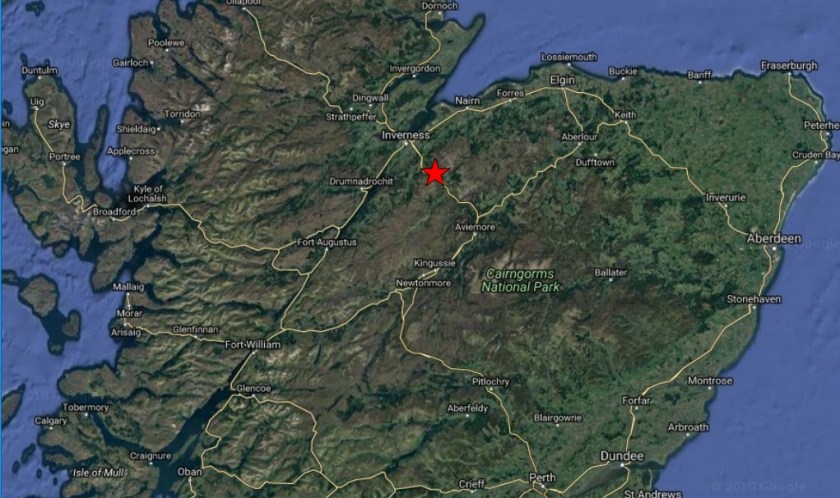
Once again, we’re having to report on the deliberate persecution of a protected bird of prey in the Moy area of Highland Scotland, a well-known raptor persecution hotspot.

RPUK map showing location of Moy:

Police Scotland has issued the following appeal for information this morning:

Appeal after buzzard reported trapped south of Inverness

Police Scotland can confirm that an investigation is ongoing following a report of a trapped buzzard near Moy south of Inverness.

The buzzard was discovered by a member of the public earlier in October. However, following a subsequent search of the area by police the bird has not been located.

The trap was close to a fence near to a rough, marshy grazing area close to the B9174 and the national cycle path between Moy and Craggie.

Inspector Mike Middlehurst said: “This unfortunately appears to be an example of deliberate unlawful use of a legal trap to cause suffering to a bird of prey.

A lot of good work has been done in the Highlands and this has been a good season for raptors locally, so any evidence of continued persecution is disappointing.

The location next to the national cycle network path will hopefully help us identify anyone seen acting in a suspicious manner in the area.

Anyone seen near the fence lines, walking up the fence lines, placing articles on the fence posts would be of great interest to us.

We are appealing for anybody who has information about this incident or any other wildlife persecution in the Highland area contact us on 101 or Crimestoppers on 0800 555 111.”

ENDS

The road number cited in the police press release appears to be inaccurate. The police say it is the B9174 but it looks like this should read the B9154 as this is the road that runs between Moy and Craggie.

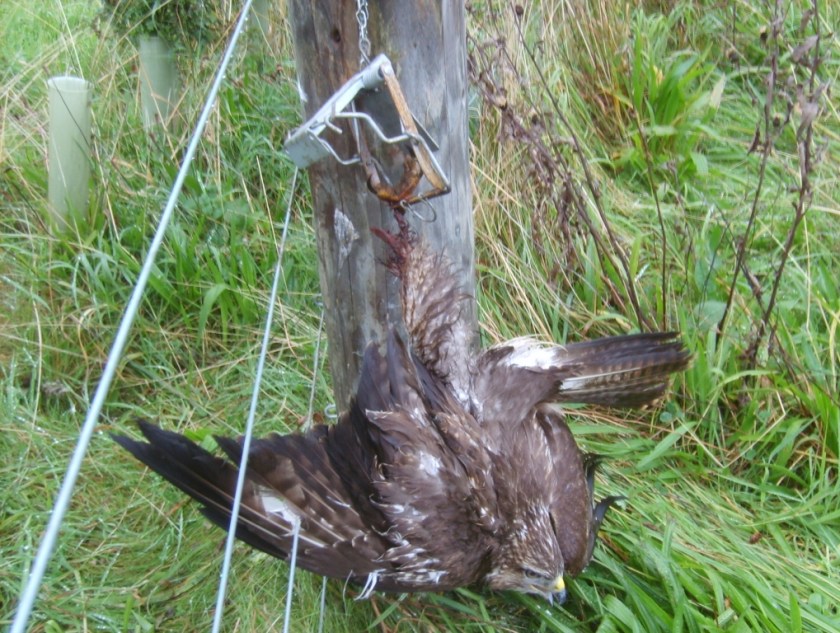
Interestingly, Police Scotland has not published the pictures of the trapped buzzard, photographed by the member of the public who found the bird in distress. However, from the police press release, especially the penultimate sentence, it seems reasonable to conclude that this buzzard was caught in a pole trap. A pole trap is a spring trap that has been fixed to the top of a post. When a bird lands on it, the jaws of the trap smash the birds legs, often breaking them. As the trap is fixed to the post, the bird cannot fly away and it is left to dangle upside down, held by its legs, until it dies or until the trap operator comes along and kills it.

Here’s a photo from our archives of another buzzard that had been caught in a illegal pole trap. It didn’t survive its horrific injuries.

These are barbaric devices that cause immeasurable suffering and as such have been banned from use since 1904. However, pole traps are still routinely used as a weapon of choice on game-shooting estates as we see all too often (e.g. see here, here, here, here, here, here). Anyone caught using these traps deserves a lengthy custodial sentence. There is simply no excuse for such savagery in 21st Century Scotland.

We’ve blogged about raptor persecution in the Moy area many many times, including the illegal use of traps and reports of armed masked gunmen visiting the nest sites of protected species. Here are a few examples: here, here, here, here, here and just last year there was a report of another buzzard that had been caught in an illegally-set trap in this area (here).

[RPUK map showing the B9154 road between Moy and Craggie. The red dots are confirmed raptor persecution incidents in this area]

And of course, this grouse moor dominated area has also been identified as one of the hotspot areas where satellite-tagged golden eagles ‘disappear’:

2017 raptor persecution stats show criminals getting better at hiding evidence

The Scottish Government’s annual raptor persecution maps have just been released showing the number of reported crimes in 2017.

A five-year map showing the number of reported raptor persecution crimes between 2013-2017 has also been published:

An accompanying press release is as follows:

Recorded cases of bird of prey poisonings at record low

2017 saw only one recorded incident of illegal bird of prey poisoning in Scotland, according to new maps published by the Partnership for Action Against Wildlife Crime (PAW) Scotland.
This is the lowest total in a single year since PAW Scotland began compiling data for 2004 onwards.
Despite the drop in recorded incidents, data from satellite tagged raptors continues to show birds disappearing in unexplained circumstances, with persecution strongly suspected in many cases.
There was a further 36% fall in all recorded bird of prey crimes during 2017. The new figures show 9 confirmed crimes compared to 14 the previous year.
Species illegally killed in 2017 incidents included buzzards, owls, and a hen harrier, while the golden eagle, osprey and merlin were victims of disturbance cases. In addition to the poisoning incident, there were two shootings, two illegal trappings and three cases of disturbance.
Environment Secretary Roseanna Cunningham said:
While I welcome this further reduction in recorded bird of prey crimes, including our lowest ever total for poisoning incidents, reports from early 2018 indicate that this remains a problem in some parts of Scotland.
It is extremely frustrating that some criminals continue to undermine the good work that has been done by conservationists and land managers in recent years, with much of that work being done through the Partnership Against Wildlife Crime (PAW Scotland).
We have recently provided additional resources to Police Scotland for the detection and investigation of wildlife crime, and set up a review group to look at grouse moor management, including the potential for licensing this type of business.
ENDS
The maps are available on the Scottish Government website here
It’s interesting that the Government’s headline refers only to poisoning incidents, and of course this is the line that will be picked up by the press (e.g. BBC news here). A drop to only one reported poisoning incident in 2017 does look like progress has been made, but we are well aware that the criminals have switched tactics in recent years, favouring shooting over poisoned baits, presumably because a shot bird can be swiftly removed from the crime scene to avoid detection whereas a poisoned bait (and any poisoned victim) is more likely to be accidentally discovered by walkers before the poisoner has had the time to return and remove the evidence.
However, as pointed out by Environment Secretary Roseanna Cunningham in the press release, this reduction to only one reported poisoning incident in 2017 appears to just be a temporary hiatus; we know that in 2018 there have been at least five reported raptor poisoning crimes (of which we’re aware), including four red kites and buzzards that were poisoned in Dumfries & Galloway between Jan-May this year (see here) and a poisoned peregrine found in the Pentland Hills in May this year (see here). There may well be further cases that Police Scotland are keeping quiet about, as they did with the Pentland peregrine. It’ll be interesting to see whether the headline accompanying the 2018 persecution maps highlight an upturn in illegal raptor poisoning.
The Government maps no longer just focus on poisoning  – they now include other types of raptor persecution such as illegal trapping, shooting, disturbance, nest destruction etc. However, what they don’t include are the suspicious disappearances of satellite-tagged golden eagles, hen harriers and white-tailed eagles. Again, it’s good to see this point being highlighted in the Scottish Government’s press statement but it’s about time these incidents were also included in the official data.
The 2017 report on the fate of satellite-tagged golden eagles in Scotland was unequivocal, showing clear evidence of deliberate and sustained illegal raptor persecution over a number of years.
[Stars indicate last known location of satellite-tagged golden eagles that have ‘disappeared’ in suspicious circustances, 2004-2016. Data from golden eagle satellite tag review]
Since the research was completed in January 2017, the findings of which the Scottish Government accepted as strong evidence of ongoing illegal persecution, at least eight more satellite-tagged raptors have ‘disappeared’ in suspicious circumstances in Scotland (3 x golden eagles, 2 x white-tailed eagles, 3 x hen harriers), and seven of these vanished on land managed for driven grouse shooting. None of these incidents are included in the Government’s raptor persecution maps, even though the pattern of disappearance is damning.
There is further evidence of continued raptor persecution crimes, again not included in the Government’s maps. This evidence is provided by the national and regional surveys of several raptor species, which show another clear pattern of criminality with golden eagles, hen harriers and peregrines noticeably absent from many areas managed for driven grouse shooting and illegal persecution identifed yet again as the main factor limiting these populations.
Until all the available evidence is compiled together to show an overall picture of the continued criminal killing of birds of prey, these annual persecution maps should be considered as an under-representation of what is actually going on.
Hiding the evidence of raptor crime is definitely on the increase, and the next blog will provide a good example of how this is achieved….
UPDATE 3pm: Great to see The Scotsman journalist Jane Bradley recognising the limitations of the Govt’s ‘official’ raptor crime stats (here).

Yorkshire police investigate suspicious death of buzzard found with head injuries

Press release from Humberside Police (2 Oct 2018):

BUZZARD FOUND DEAD WITH TRAP WOUNDS TO HEAD

We are investigating the suspicious death of a common buzzard found at the end of August in the western area of the East Riding of Yorkshire.

X-rays of the bird show that it has previously suffered shotgun injuries as three shotgun pellets were found embedded in the bird.  The shotgun pellets are not thought to have caused its death and when the bird was found it had recent injuries to its head consistent with being confined in a cage trap.

[Photos by Humberside Police]

Wildlife Crime Officer PC 1708 Ward said,

However this bird met its end it has previously been shot. Raptor persecution is a National Wildlife Crime priority which we take very seriously. Whatever anyone’s feelings are towards birds of prey there is no excuse for this type of criminality.

It’s sad that such practices are still common place. Due to the nature of these crimes they are difficult to detect. If you have information about anyone persecuting birds of prey we want to know.

I can be contacted in confidence via 101 and your information will be treated with the utmost confidentiality“.

Anyone with information regarding the above incident should call us on the non-emergency number 101 quoting investigation number 16/99978/18 which is being dealt with by WCO PC 1529 Day.

The attached images may cause distress and are property of Humberside Police

Note to press: No one is available for interview regarding this news story.

END

There’s no detail about the location other than “the western area of the East Riding of Yorkshire“. Here’s a Google map showing East Riding:

UPDATE 20 February 2019: Buzzard shot and poisoned in East Yorkshire: police renew appeal for info (here)

Gamekeeper cautioned after merlin killed in illegally-set trap on grouse moor

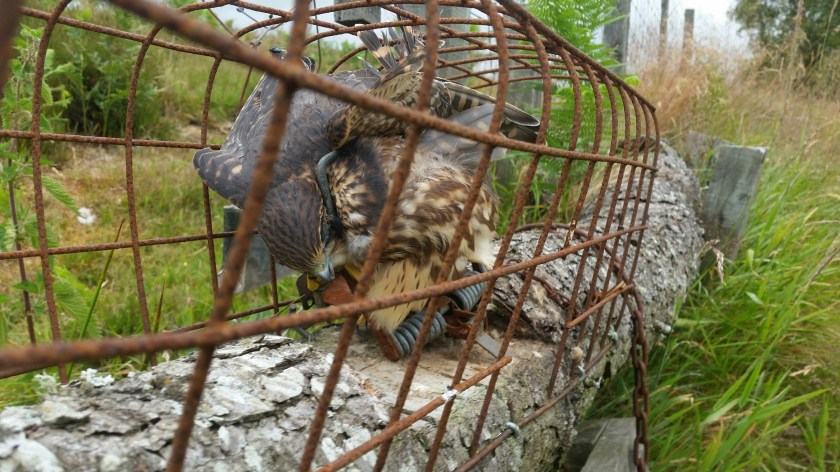
This merlin was found dead in a trap on an un-named driven grouse moor in Northumberland in July this year. A fell runner discovered the bird and reported it to the RSPB.

The RSPB went to the site the next day and realised that this trap had been illegally-set as no attempts had been made to restrict access to the tunnel entrance, meaning non-target species (such as this merlin) could easily access the tunnel, with the inevitable result.

The incident was reported to Northumbria Police and a wildlife crime officer visited the site with an RSPB investigator.

An ‘experienced’ gamekeeper was formally interviewed and admitted setting the trap. Unbelievably, the police decided to issue him with a police caution instead of seeking a prosecution via the Crown Prosecution Service.

Haven’t we been here before? Ah yes, here and here.

Once again, another gamekeeper gets let off for committing a wildlife crime on a driven grouse moor. And before anyone says, ‘A caution isn’t a let off’, it absolutely is if this gamekeeper is permitted to keep his firearms and shotgun certificates, and his job, despite now having a criminal record.

Sure, he probably didn’t intend to trap and kill this merlin but that’s not the point. If he’s employed as a professional gamekeeper he has a responsibility to operate his traps within the terms of the law. With this trap, he chose not to do that, knowing full well that a non-target species could be killed, which it was. That’s an offence and he should have been charged and prosecuted.

Further details about this merlin case can be read on the RSPB Investigations Team blog here

Moorland Association’s response to peregrine persecution on Bleasdale grouse moor

The Moorland Association’s response to the RSPB video published on Wednesday is an interesting read.

For new blog readers, the Moorland Association is a lobby group representing the interests of grouse moor owners in England.

Here’s the video again, for those who might have missed it, showing an unidentified individual attending a peregrine nest site where an adult male peregrine had been caught in a spring trap on the nest ledge, and where it thrashed around for over ten hours in a desperate attempt to escape before finally being removed by the unidentified individual. We believe this nest site to have been located on a grouse moor on the Bleasdale Estate in Bowland in April 2016 and that the video footage published by the RSPB related to the prosecution of a Bleasdale Estate gamekeeper – a case that collapsed in April this year due to a series of legal technicalities.

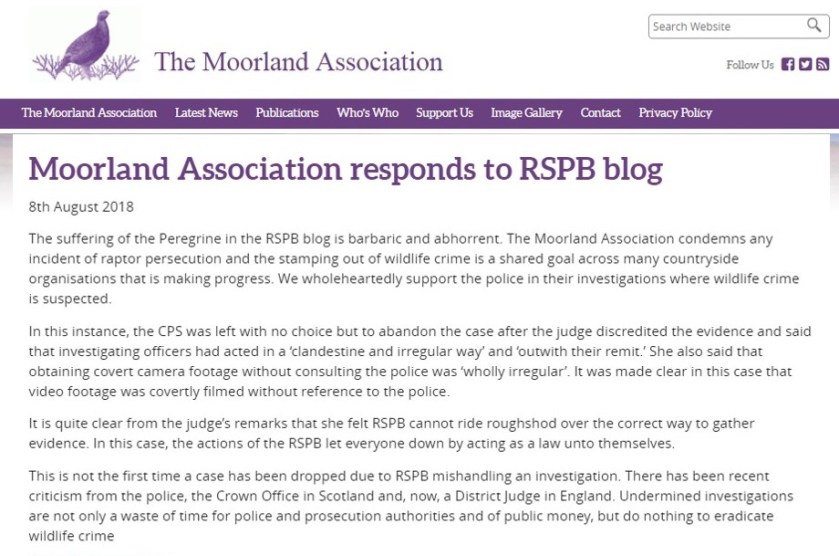
Here’s the Moorland Association’s statement in response to the publication of this video nasty:

The opening line is astonishing: “The suffering of the Peregrine in the RSPB blog is barbaric and abhorrent“.

The peregrine didn’t suffer “in the RSPB blog”, it suffered at its nest site on a driven grouse moor.

A more sincere and accurate Moorland Association statement might have looked like this: “The suffering of the Peregrine in the illegally-set trap that was positioned at the Peregrine’s nest site on a grouse moor on the Bleasdale Estate, a Moorland Association member, is barbaric and abhorrent“.

The rest of the Moorland Association’s statement deflects attention away from the peregrine’s suffering as a result of this crime and instead focuses on trying to undermine the integrity and credibility of the RSPB, as we’ve come to expect.

Not only did the Moorland Association ignore the fact this peregrine suffered on a driven grouse moor (the words ‘grouse moor’ don’t appear anywhere in the MA’s statement!), but it also carefully sidestepped the fact that the grouse moor in question was, at least at the time this footage (and the peregrine) was captured, a Moorland Association member.

How do we know that? Well, as we blogged back in April 2018 when the court case collapsed (see here), in April 2016 when the alleged offences took place, the owner of the Bleasdale Estate was one Jeremy Duckworth, who also happened to be a Director and Regional Representative of the Moorland Association. Here’s a screengrab from the Moorland Association website in 2016:

Strangely, according to documents lodged at Companies House, Mr Duckworth resigned his Directorship of the Moorland Association in September 2016. There are many different reasons why people resign from Directorships but it’s interesting to note that the timing of Jeremy Duckworth’s resignation coincided with the early stages of the police investigation in to the alleged offences on his grouse moor – obviously nothing to do with damage limitation and purely and simply coincidental, of course:

We wonder whether the Bleasdale Estate is a still a member of the Moorland Association?

We wonder whether the Moorland Association is concerned that an unidentified camouflaged individual was able to repeatedly visit this peregrine nest site on the grouse moor of a Moorland Association member and inflict what looks like unimaginable cruelty to this peregrine?

We wonder whether the Moorland Association is concerned that an unidentified armed individual was able to visit this peregrine nest site and fire four shots as another adult peregrine flew from the nest?

We wonder whether the Moorland Association is concerned about the widespread, systematic persecution of peregrines on driven grouse moors in England, as evidenced by an increasing number of scientific papers (here, here, here)? Incidentally, this last paper, ‘Raptor Persecution in the Peak District National Park’ by Melling et al was published by British Birds in May 2018 but the full paper was only available to BB subscribers. British Birds has now kindly published this paper in full so everyone can read it – see here).

We wonder whether the Moorland Association still expects to be considered a genuine partner in the fight against the illegal persecution of raptors on driven grouse moors when it seems to take every opportunity to attack the RSPB’s Investigations Team instead of those responsible for enabling and carrying out these barbaric crimes?

[Photo of an illegally-killed peregrine found next to a driven grouse moor, photo by RSPB]

Peregrine persecution on a grouse moor: Bleasdale video footage finally released

In April this year, a high profile prosecution case for alleged raptor persecution collapsed after covertly-filmed video evidence was deemed inadmissible.

The prosecution was being brought against a gamekeeper from the Bleasdale Estate in Bowland, who had been charged with a string of wildlife offences including the alleged killing of two peregrines in April 2016.

We had followed this case since September 2017, attended each court hearing, and blogged in detail after the case collapsed on a series of technicalities earlier this year (e.g. see here, here, here, here).

The details, as described in court, of what had happened to those two peregrines, were horrific. It was alleged that the adult female peregrine had been shot whilst leaving her nest and the adult male had been caught by the leg in a spring trap that had been set on the nest ledge, where he struggled to escape, in vain, for over ten hours, before being shoved in a bag by an unidentified man and removed from the site.

We’ve been waiting for the RSPB to publish this video footage ever since the case collapsed and the accused walked free. We understand there have been some legal issues about publishing the video and although we don’t know the details, it’s probably a safe bet to guess that some influential people from the grouse shooting industry have probably been working hard to ensure this footage never sees the light of day.

Today the RSPB has released video footage of peregrine persecution in Bowland and although the Bleasdale Estate is carefully not mentioned, it’s quite obvious from the dates cited and the video images that what is being shown in this footage fits the description of what allegedly happened to those two Bleasdale peregrines as desribed to the court earlier this spring.

The RSPB has published a blog describing the circumstances of this footage (here).

Watch the video here but beware, it contains graphic content:

Ater you’ve watched it, think about why nobody has been successfully prosecuted for these crimes.

And then think about why nobody will ever be prosecuted for these crimes.

And then think about why these crimes continue to be committed on grouse moors in 21st Century Britain.

And then think about what you can do to help bring it to an end.

Change must come, but it will only come if people stand up and demand it.

See you at a Hen Harrier Day event this weekend.

UPDATE 10 August 2018: Moorland Association’s response to peregrine persecution on Bleasdale grouse moor (here)

Ring Ouzel is latest victim of ‘vermin’ trap on grouse moor

We’ve been blogging recently about wildlife that has been caught/killed in ‘vermin’ traps set by gamekeepers on grouse moors.

These traps are used to target legal quarry such as stoats and weasels but they often catch other species, as we’ve seen in recent weeks, such as red squirrels, song thrushes, mistle thrushes, red grouse, pied wagtails and kestrels (e.g. see here, here, here). These victims have been aptly described by Dr Rob Sheldon as “collateral damage”.

We have no idea how many innocent victims are killed in these traps, because there is no requirement on the trap user to report the number of animals killed. There must be thousands of them, every year, given the number of traps we know about (at least 2,000 of these traps are set on one grouse moor in the Angus Glens alone).

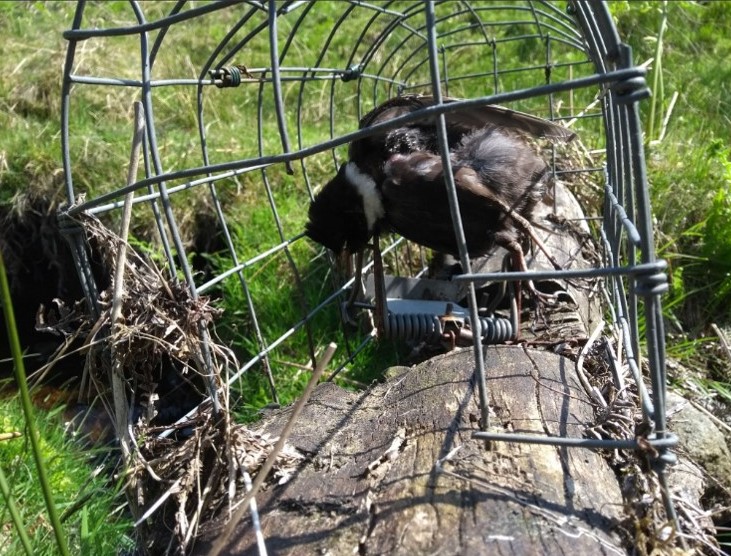
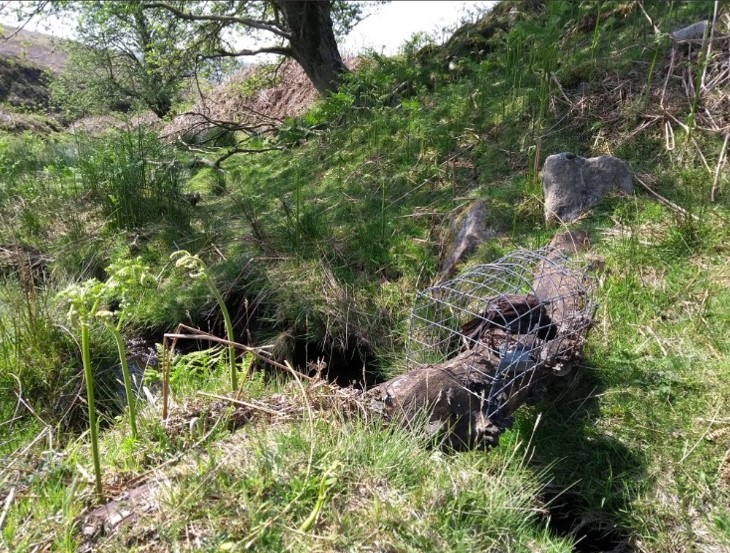
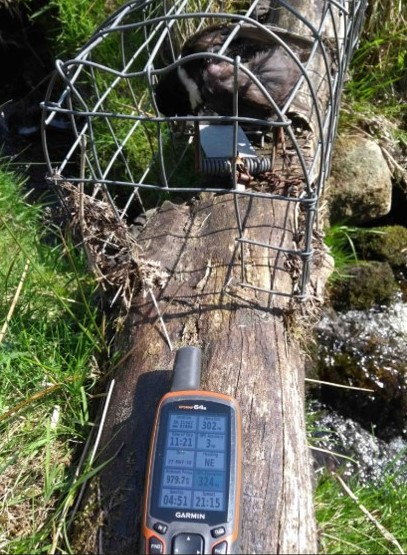
Here’s another victim. This time a Ring Ouzel, photographed dead in a trap on a grouse shooting estate in the Peak District National Park in May this year. If the GPS coordinates in photo #4 are correct, these photos appear to have been taken on the Moscar Estate.

These sorts of traps can be used lawfully as long as certain conditions are applied, e.g. they must be set inside a natural or artificial tunnel and efforts must have been made to restrict the entrance holes to minimise the chances of non-target species getting caught/killed. However, stupidly, the law does not specifiy the min/max dimensions of the entrance holes.

You can see in these photos that efforts to restrict the entrance holes has been made, but clearly not sufficiently to prevent this Ring Ouzel from gaining access and getting killed in the jaws of the trap.

[Photos by an RSPB fieldworker]

Kestrel is latest victim of ‘vermin’ trap on grouse moor

We’ve blogged a bit recently about wildlife that has been caught/killed in traps set by gamekeepers on grouse moors (e.g. see here, here).

These traps are used to kill so-called ‘vermin’ (e.g. stoats and weasels) but we’ve seen plenty of evidence of non-target species also being trapped and killed (e.g. red squirrel, song thrush, mistle thrush, pied wagtail, red grouse, rabbits, ring ouzel).

Here’s another victim – a kestrel this time.

Thanks to the blog reader who sent us the following post from the Walkhighlands forum:

This incident took place on a grouse moor in south Scotland. We contacted the SSPCA for information on the fate of this kestrel. An SSPCA undercover inspector said:

We can confirm that we responded to a call from a member of the public regarding a kestrel that had been reportedly removed from a trap.

Unfortunately due to the severity of the injuries and to prevent further suffering the kestrel had to be put to sleep“.

We understand an investigation is underway to determine whether the trap was set legally or illegally.

Red kite suffers horrific injuries from illegal gin trap

From Powys County Times, 22 May 2018:

ABERYSTWYTH: ILLEGAL GIN TRAP LEADS TO DEATH OF RED KITE

An RSPCA appeal for information has been launched following the death of a red kite caught by an illegal gin trap.

RSPCA Cymru was alerted after the poor bird of prey was found bleeding, and with broken legs, in the trap on the B4340, near New Cross and Abermadwr on May 7.

The caller who found the bird transferred the animal to a local veterinary practice on Park Avenue, where it was confirmed that the legs had been broken by the trap.

Sadly, the vet was left with no choice but to put the bird to sleep to prevent further suffering.

Gin traps, such as the device used in this incident, are spring-operated and illegal to set and use, although not illegal to own. It is also illegal to set any spring trap in the open or on top of a post.

The RSPCA say they are following a line of inquiry about the placing of the trap – but are calling on the local community in Aberystwyth to get in touch should they have any relevant information.

RSPCA inspector Keith Hogben said: “These gin traps were made illegal to set many years ago and yet shockingly are still being used to catch animals. They are indiscriminate and sadly this red kite is the latest victim.

The potential consequences of these devices for animals and humans are so severe. I shudder to think what could have happened had a toddler, for example, crossed the path of this trap.

We are following a line of inquiry on this incident but are eager for more information to come to light as to the circumstances behind this illegal trap being put down.

The RSPCA’s inspectorate appeal line can be reached on 0300 123 8018, and all calls are treated in confidence.”

ENDS

SNH issues licence for mass raven cull in 5-year ‘experiment’

To the utter disbelief of conservationists, statutory conservation agency Scottish Natural Heritage (SNH) has issued a licence authorising the mass killing of ravens in a large area of Perthshire (an area identified as a wildlife crime hotspot where six satellite-tagged eagles have suspiciously disappeared in recent years), as part of a proposed five-year experiment, on the basis of ‘seeing what happens’ to wader populations when ravens are removed.

The licence has been issued to a consortium calling itself the Strathbraan Community Collaboration for Waders (SCCW) which, according to the licence application, ‘represents some of the local land management (farmers, gamekeepers) and private interests in the area who value wading birds for their biodiversity, social and economic value to the area and to Scotland more widely. The application is supported by the Scottish Gamekeepers Association and technical advice and support, notably data gathering and interpretation, is being provided by the Game & Wildlife Conservation Trust (GWCT)‘.

The following has been written by a group of Scottish Raptor Study Group (SRSG) members as a guest blog:

STRATHBRAAN RAVEN LICENCE

The news about the missing white tailed sea eagle disappearing in Glen Quaich on Tuesday 17th April could sadly not have been more timely as Scottish Natural Heritage, (SNH), have issued a licence to several estates in the Strathbraan area in Perthshire, including Glen Quaich Estate, for the killing of 300 ravens in a large scale trial over five years to see if wader productivity and populations can be improved by removing raven predation.

The manner in which the government’s statutory nature conservation agency have conducted themselves has come as a shock and there is grave concern about the mis-application of science, the lack of consultation with key stakeholders, such as the RSPB and SRSG, their choice of estate partners and the lack of transparency, trust and honesty, and even seasoned SNH watchers are aghast.

We have raised our concerns and are unhappy with the response so far and have resorted to writing this blog to make the matters public. Following the “suspicious” disappearance of the white tailed sea eagle and the fact the police are describing this as ‘an illegal act’ we call upon SNH to conduct a review and if the circumstances fulfil what we consider to be the established criteria set out in SNH’s own report then we expect the licence to be withdrawn.

Our concerns focus on three areas, firstly the choice of partners:-

Firstly when selecting a trial area why would you choose an area dominated by driven grouse shooting with a history of illegal raptor persecution? What message does this send out to the many law-abiding estates? Is it that persecution will enable you to ‘cut a deal’ with the statutory nature conservation body? Cynics might suggest this is more about an opportunity to kill ravens in an attempt to protect red grouse stocks and it could also be argued that a licence has been issued to kill one species of bird to enable another bird to be shot for fun.

[Map of proposed cull area in north Perthshire, from the licence application, running from Loch Tay in the west to the A9 in the east]:

Raptor workers over the years have been monitoring the area and can speak with authority on raptor persecution. The Scottish Government’s review of satellite-tagged golden eagles showed that four of these birds have disappeared suspiciously in this area, with a satellite-tagged red kite also disappearing in 2010. In all cases, the tags can be classed as “stopped – no malfunction” as used in the review – ie. highly suspicious.

[Map of north Perthshire showing the last known fixes of five satellite-tagged golden eagles that disappeared in suspicious circumstances. Sea Eagle Blue X also disappeared in Glen Quaich last month]:

In addition, a radio-tagged white-tailed eagle was tracked to this area, but disappeared in January 2012, while a further satellite-tagged white-tailed eagle recently similarly disappeared in Glen Quaich. An illegal clam trap was found in November 2012, while a buzzard was spring-trapped in January 2012. A red kite was found poisoned in January 2015. A raven was poisoned in 2017. In addition, licenced raptor study group members have noted a number of cases of suspicious failure of nesting attempts by hen harrier, red kite and buzzard across the area. They have also recorded a higher than usual turnover of red kites and a loss of breeding pairs at nearby sites. All of which indicates on-going illegal persecution.

Even bearing in mind these detected incidents represent an unknown proportion of actual persecution taking place, this is an area where land management practices have displayed a proven criminal intolerance to protected species, stretching back for many years. All this has been in the public domain so why did SNH press on knowing that their partners in this initiative have such a dubious record, and what level of confidence can we have in their honesty and integrity?

Secondly, science and key questions that remain unanswered:-

  • What monitoring is in place to assess that this cull will not affect the raven population status?
  • How will SNH be able to differentiate from other factors affecting the decline of waders such as other predatory pressures, the loss of suitable habitat and changes in agricultural practices?
  • What criteria will be used to differentiate between breeding and non-breeding birds? This year we have noticed that the breeding season is later than usual.
  • What allowance has been made for the immigration of immature flocks into the proposed licence area?
  • Why has the licensing decision been taken in the absence of the raven population modelling report, as it was commissioned with the sole, or at least the main, purpose of underpinning raven licensing decisions with sounder background information?
  • What is the nature and extent of the independent scrutiny that has been carried out?
  • If any raven roosts are located during the period of the licence, can we be assured that any Schedule 1 non-breeding species and other protected species (possibly also using the same roosts) will not be disturbed?
  • What safe guards are in place to ensure the numbers killed will remain within that permitted?

Thirdly, the lack of engagement

SNH are always keen to trumpet words such as ‘trust’, ‘building relationships’, ‘shared objectives’ ‘working collaboratively’ but we have seen none of this.

  • There has been no communication with SRSG workers who have been active in the proposed licence area and have many years of breeding data on ravens and raptors.
  • We understand that not all landowners/managers within the area of licence have been contacted about this licence, contrary to reassurances provided.
  • This proposed application was developed outside the much lauded ‘Working for Waders’ initiative and we only became aware of this by accident; hardly working together or building trust!
  • Under the Scottish Raptor Monitoring Scheme raven data are submitted to SNH (who is a key partner), yet it seems this information was not included in the licence considerations, (we know this as under the permission sharing protocols raptors workers who collected the information in the first place would have had to have been consulted).

We are deeply suspicious that the lack of engagement was deliberate as SNH knew their proposal was weak and would not stand up to the rigour of an independent scientific review.

We again call upon SNH to withdraw the licence.

ENDS

It’s well known that SNH issues a number of licences every year to cull ravens where they are considered a ‘serious threat’ to livestock (e.g. see here, here) but these are apparently for a limited cull, not related to game management and supposedly based on sound scientific evidence of a perceived local problem.

It’s also well known that gamekeepers have long wanted ravens to be added to the General Licence (e.g. see here, here) because they are seen as a perceived threat to grouse stocks.

It’s also well known that ravens are routinely demonised in the press, including this outrageous piece published by the BBC (see here, and well worth a read to understand the hysteria whipped up around this protected species).

However, this latest licence authorising a multi-year mass culling of ravens over a large area for spurious reasons (and apparently very little, if any, scientific justification) is unprecedented. That it also happens to be a well-known raptor persecution hotspot just adds to the lunancy of this situation.

If you share the concerns of the SRSG members, please consider sending an email to Mike Cantlay, SNH Chair, calling on him to withdraw the licence with immediate effect. Emails to: chair@snh.gov.uk

UPDATE 14.20hrs: Thanks to the blog reader who brought this article to our attention, reporting on the results of a scientific study that dispels many of the myths associated with ravens and wader population declines. And here is the scientific peer-reviewed paper by Amar et al that specifically warns against making predator control licensing decisions without a thorough evaluation of the evidence.

UPDATE 21 April 2018: A quote from SNH Head of Wildlife, Robbie Kernahan:

We understand the concerns over wildlife crime in Strathbraan, but we are also clear that the granting of this licence is wholly unconnected to the issues concerned.

This licence is about a pressing and complex conservation issue. It  is a large-scale collaborative trial which will help improve our understanding of factors affecting key wader species, populations of which are declining at an alarming rate. We are satisfied this licence will not affect the population of ravens overall, and is over a five year period.

The licence places significant responsibility and expectations on all those involved – to be able to show that this approach can work and will help deliver what are essentially shared objectives.

Trust is a key element of this and this presents a great opportunity to develop that trust and relationships with all involved. If it becomes apparent that actions are not being carried out in accordance with the terms of any licence then we will have no hesitation in removing the licence“.

UPDATE 21 April 2018: A quote from RSPB Scotland Head of Species & Land Managament, Duncan Orr-Ewing:

We are extremely concerned about the likely scale on impact of this research licence on the local raven population in the Strathbraan area of Perthshire. We are also very surprised that SNH have issued such a research licence  in the vicinity of Strathbraan, which has an appalling  and well documented track record of illegal persecution of raptors, noting also the very recent “suspicious” disappearance of a satellite tagged white-tailed eagle in this very same area.

We, together with local raptor workers who have been monitoring ravens in the area for decades, could have helped SNH with this background detail to the licence application if we had been consulted.

We will be seeking a high level meeting with SNH shortly to discuss. We will be pressing for the research licence to be revoked on the back of the white-tailed eagle incident, and instead consideration given by SNH to removing the use of the Open General Licence in this area, as is within their powers“.

UPDATE 22 April 2018: Raven cull update and what you can do to help (here)

UPDATE 23 April 2018: Article published in The National (here)

UPDATE 23 April 2018: Article published in The Herald (here)

UPDATE 23 April 2018: RSPB Scotland blog in response to raven cull licence (here)

UPDATE 25 April 2018: OneKind blog in response to raven cull licence (here)

UPDATE 25 April 2018: Chris Packham’s response to raven cull licence (here)

UPDATE 26 April 2018: Is the raven cull licence still active whilst SNH review takes place? (here)

UPDATE 26 April 2018: SNH refuses to say whether raven cull licence has been suspended (here)

UPDATE 27 April 2018: Green MSPs seek urgent meeting with SNH re: raven cull licence (here)

UPDATE 27 April 2018: ‘No justification’ for raven cull licence, says RSPB Scotland Director (here)

UDATE 28 April 2018: Raven cull licence: SGA evasive on benefits to grouse moors (here)

UPDATE 1 May 2018: Strathbraan Community Collaboration for Waders: who’s involved? (here)

UPDATE 4 May 2018: Raven cull: next steps to take as SNH blunders on (here)

UPDATE 7 May 2018: “Let’s have more trials [culls] whether it’s about ravens or other things” says SNH (here)

UPDATE 8 May 2018: Parliamentary questions lodged on raven cull licence (here)

UPDATE 9 May 2018: Alison Johnstone MSP lodges Parliamentary motion on raven cull licence (here)

UPDATE 12 May 2018: Raven cull: please ask your MSP to support this Parliamentary motion (here)

UPDATE 23 May 2018: Raven cull update: scientific advisory committee not being asked to repeal licence (here)

UPDATE 23 May 2018: Raven cull: Parliamentary questions and answers (here)

UPDATE 20 May 2018: Raven cull: latest update (here)

UPDATE 5 June 2018: Legal challenge to raven cull licence: your help needed! (here)

UPDATE 6 June 2018: Raven cull: legal challenge crowdfunder smashes £10k target on day one! (here)

UPDATE 19 June 2018: Raven cull: a few updates (here)

UPDATE 20 June 2018: #Justice4Ravens fundraising merchandise now available (here)

UPDATE 22 June 2018: Preston man receives warning for raven cull death threat (here)

UPDATE 1 July 2018: Last push on #Justice4Ravens crowdfunder (here)

UPDATE 1 July 2018: #Justice4Ravens crowdfunder target smashed! (here)

UPDATE 5 July 2018: #Justice4Ravens: application lodged for judicial review (here)

UPDATE 23 July 2018: Surprise! Gamekeeper in raven cull area declares cull a success (here)

UPDATE 30 July 2018: Raven cull licence: scientific rigour ‘completely inadequate’ says SNH’s scientific advisory committee (here)

UPDATE 30 July 2018: Voluntary suspension of raven cull is meaningless greenwash (here)

UPDATE 7 August 2018: #Justice4Ravens: judicial review update (here)

UPDATE 20 August 2018: Raven cull: application for judicial review withdrawn, for now (here)

UPDATE 30 April 2019: SNH reluctant to discuss licensed raven cull in Strathbraan this year (here)

UPDATE 2 May 2019: SNH rejects 2019 licence application for Strathbraan raven cull (here)

UPDATE 30 May 2019: Scottish Gamekeepers Association’s pity party in response to failed Strathbraan raven cull bid (here)

UPDATE 10 November 2022: Ravens illegally shot on two Strathbraan grouse moors (here)