Gamekeeper convicted for pole-trapping offences

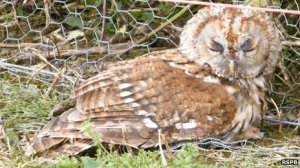
tawny owlMark Stevens, a self-employed gamekeeper who worked on Andrew Lloyd Webber’s Sydmonton Court Estate in Hampshire, has been convicted of setting two illegal traps and has been fined £700 with £650 court costs and a £50 victim surcharge.

Stevens, 42, admitted setting the two pole traps at a pheasant release pen in August last year but claimed he was targeting a grey squirrel that had been eating the pheasants’ food. The traps, which were not set on Lloyd Webber’s estate but on land at nearby Echinnswell, were discovered after a member of the public found a tawny owl hanging upside down with its leg caught in one of the traps. Its leg injuries were so severe it had to be euthanised by a vet.

According to Stevens’ solicitor, the setting of the traps was ‘accidental’.

Well done to the RSPB Investigations Team, Hampshire Constabulary and the Crown Prosecution Service for securing a conviction.

Pole-trapping has been illegal for over 100 years. Stevens is the latest of a number of gamekeepers recently convicted for this barbaric practice (e.g. see here and here). Unsurprisingly, all of them have claimed the traps were targeting squirrels and not birds of prey (as if that makes a difference).

RSPB Investigations video here (WARNING: GRAPHIC CONTENT)

RSPB Investigations blog here

News story in Daily Mail here

News story on BBC here


Death toll rises again in Ross-shire massacre as £5k reward offered

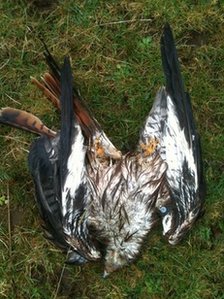
The death toll in what we are calling the Ross-shire Massacre has risen again today with the discovery of another poisoned raptor. Today’s dead red kite is the 10th to be discovered in the last fortnight in a small area in Conon Bridge, along with four buzzards, bringing the total found to date to fourteen.

RSPB Scotland is offering a £5,000 reward for any information that leads to a successful conviction. Their money is probably quite safe.

Chairman of the Scottish Gamekeepers’ Association, Alex Hogg, has put out the following statement:

The discovery of so many birds in one area is unprecedented and alarming“.

He’s either deliberately lying to make out that the mass killing of raptors in one area has never happened before or he has a very short memory:

In 2004, a gamekeeper on the Barns Estate in the Scottish Borders was convicted of poisoning 20 raptors (18 buzzards, 1 goshawk and 1 tawny owl). 25 dead raptors had been discovered but five were too badly decomposed to establish their cause of death (see here).

In 2013, gamekeeper Colin Burne was convicted of killing seven buzzards at the Whinfell Plantation, Penrith, Cumbria. A total of 12 dead birds had been found but five were too badly decomposed to establish their cause of death (see here).

This year, there is an on-going court case against a gamekeeper from the Stody Estate, Norfolk, after the discovery of 16 dead raptors (14 buzzards, 1 sparrowhawk and 1 tawny owl). Allen Lambert has admitted to storing two banned pesticides but he has denied killing the raptors. His trial begins in May (see here).

So far from this current incident being ‘unprecedented’, there are examples dating from 10 years ago right up to the present day of multiple dead raptors being found in a single incident – a telling indictment of just how little progress has been made in addressing this disgusting crime.

There’s also a statement on the SGA facebook page that includes this:

Articles in the Telegraph and Herald this week indicated, through research, that there is little or no shooting interests in the area” [Conon Bridge, Ross-shire, where the latest atrocity is gradually being revealed].

That’s also inaccurate. There may not be a driven grouse moor in the immediate area but there certainly are shooting interests…

Photo of red kites at Gigrin Farm, Wales, by David Bowman.

Previous blogs on the Ross-shire Massacre here, here and here.

Verdict against Scottish gamekeeper James Marsh: ‘not proven’

The eight-day trial of Scottish gamekeeper James Marsh ended at Stirling Sheriff Court last week with a verdict of ‘not proven’.

The case centred on the discovery of a Larsen trap on the Duntreath Estate on 1st April 2012. The trap, found by a walker, was situated underneath a crag and contained a Jay (in the trap’s decoy compartment) and a Tawny Owl (within the catching compartment). The Tawny Owl was reportedly close to death. The trap had an identification tag which was registered to Duntreath Estate and the walker alerted the SSPCA to the trap. It was suspected that gamekeeper Marsh was using the Jay as a lure to trap birds of prey. It is not permitted under general licence to use a Jay as a decoy within a Larsen trap. [As a point of interest, since January 1st 2014 it is now no longer permitted in Scotland to use a Jay as a decoy inside a crow cage trap either, so if you see one, you should report it immediately].

Marsh, 49, of Middle Ballewan near Blanefield, Stirling, was reported to the Procurator Fiscal by the SSPCA for a number of alleged offences including:

1. Section 5(1)(b) of The Wildlife and Countryside Act 1981 (Use of an unlawful trap);

2. Section 19 2(a)(b) Animal Health and Welfare (Scotland) Act 2006 (Causing suffering to a Tawny Owl and a Jay);

3. Section 24 3(a)(b)(c)(e) Animal Health and Welfare (Scotland) Act 2006 (Failure to ensure the welfare of a Tawny Owl and Jay);

4. Section 1(1)(a) of The Wildlife and Countryside Act 1981 (Unlawfully taking a Tawny Owl);

5. Section 1(1)(a) of The Wildlife and Countryside Act 1981 (Unlawfully taking a Jay);

6. Section 1(2)(a) of The Wildlife and Countryside Act 1981 (Unlawfully possessing a Tawny Owl);

7. Section 1(2)(a) of The Wildlife and Countryside Act 1981 (Unlawfully possessing a Jay).

In defence, Marsh admitted to having set the trap [lawfully] some weeks prior to its discovery in order to catch a Carrion Crow which he intended to use as a decoy. He argued that the trap had been moved up hill and reset in the location where it was found and despite searching he had been unable to find it. He claimed the Jay may have squeezed into the trap decoy compartment by itself and attracted the Tawny Owl which had become trapped. He was unable to explain why the Jay, having squeezed into the trap, would not have been able to get back out.

The verdict of ‘not proven’ is an interesting one. In Scottish law, there are three possible outcomes to a criminal trial. These are ‘Guilty’ [a conviction], ‘Not Guilty’ [an acquittal] and ‘Not Proven’ [an aquittal]. Wikipedia offers an explanation for the use of ‘not proven’:

The modern perception of the ‘not proven’ verdict is an acquittal when the judge or jury does not have enough evidence to convict but is not sufficiently convinced of the accused person’s innocence to bring in a ‘not guilty’ verdict. Essentially, the judge or jury is unconvinced that the suspect is innocent, but has insufficient evidence to the contrary. In popular parlance, this verdict is sometimes jokingly referred to as ‘not guilty and don’t do it again’.

Out of the country, the ‘not proven’ verdict may be referred to as the ‘Scottish verdict’, and in Scotland itself it may be referred to colloquially as the ‘bastard verdict’, which was a term coined by Sir Walter Scott, who was sheriff in the court of Selkirk“.

Despite the ‘not proven’ verdict, well done to the SSPCA for taking on the case. It is widely recognised that this type of investigation requires specialist knowledge, especially with the continuing difficulties of proving who has set a trap (or laid out a poisoned bait, chopped down a nest tree, stamped on eggs or young birds, shot a bird etc etc) and the SSPCA and the Fiscal did well to bring this case to court.

The Tawny Owl survived and was eventually released following extensive veterinary care.

For previous blogs on this case see here and here

SGA donor owns estate ‘among the worst in Scotland for wildlife crime’

SGA donors 2014 EdradynateThe Scottish Gamekeepers’ Association publishes a quarterly magazine for its members. The latest edition (winter/spring 2014) includes a list of recent donors. We were intrigued to see the following entry:

MDCC Campbell Edradynate Estate (Donation: £1720)

Could this be Michael David Colin Craven Campbell, who resides in Hampshire but owns Edradynate Estate? So why would this entry be intriguing? Why wouldn’t they accept funding from Mr Campbell, who was awarded an MBE in 2008 for services to charity, was appointed by the Queen to become High Sheriff of Hampshire 2008-2009 and has an entry in Debretts? No reason whatsoever to reject a generous donation from such an upstanding and distinguished gentleman whose Debrett’s entry lists ‘shooting’ and ‘escaping to Scotland’ amongst his recreational activities. Right?

Edradynate Estate near Aberfeldy in Perthshire was described in 2004 by the then RSPB Investigations Officer Dave Dick as being “among the worst in Scotland for wildlife crime” (see here).

In January 2005, the then Police Wildlife Crime officer for Tayside Police, Alan Stewart, described Edradynate Estate as follows:

Edradynate Estate, which is owned by an absentee landlord from Hampshire, has probably the worst record in Scotland for poisoning incidents, going back more than a decade. In 14 separate incidents since 1998, 16 poisoned victims (9 buzzards, 1 cat, 1 tawny owl, 2 sparrowhawks, 1 common gull, 1 polecat and 1 carrion crow) and 12 poisoned baits (rabbits, wood pigeons and a pheasant) have been found, with traces of the pesticides Mevinphos, Carbofuran and Alphachloralose” (see here, page 3).

These two prominent wildlife crime investigators were commenting following the collapse of a case against two gamekeepers from Edradynate Estate. In 2002, the Head gamekeeper and an under keeper had been charged with nine offences relating to the alleged use of poisoned baits and bird cruelty, including the use of spring traps. These charges followed a police raid on Edradynate Estate where three rabbit baits, a dead buzzard and a dead crow had been found. Lab tests detected Carbofuran and Alphachloralose. A game bag and a knife seized during the search showed traces of these poisons when swabbed.

On 22 July 2004, two years after the original arrests and 13 court hearings later, the Fiscal dropped the case following a series of adjournments called by both the defence and the prosecution. A Crown Office spokeswoman admitted that the time taken to prepare the case for trial had been a major factor in the decision to drop the case.

The 2002 raid was the second police search on Edradynate Estate. In Alan Stewart’s book, Wildlife Detective, he writes the following:

This would be our second major search of the estate under warrant and we hoped this time to find sufficient evidence to bring to an end the catalogue of poisoned baits and victims that had turned up on the estate with the worst record by far not just in Tayside but in Scotland”.

The crimes didn’t end there.

a dead red kiteIn July 2010 a poisoned red kite was discovered in the area (see here). According to Tayside Police, ‘five buzzards and a tawny owl met with the same fate in the same area in the last year’.

In September 2010, an un-named gamekeeper from Edradynate Estate, a self-proclaimed member of the SGA, talked to the Courier about the discovery of the poisoned red kite:

As a member of the Scottish Gamekeepers’ Association, I am against anything illegal. Anybody who does this should be jailed because it’s not on and I have never done anything like this in my life. To find a poisoned bird on my ground is just wrong because I don’t use poison and wouldn’t know how to.

There is something funny about this and I think someone else has killed this bird and planted it on my estate. Why they have done that, I don’t know. We have never seen a red kite, living or dead, in the Strathtay valley so I don’t know where this has come from. The laird is so upset about it, as am I, because it besmirches our reputation and it’s reflecting badly on me.

I am a professional person and I have worked hard for all these years on the estate and never had anything against my name. This is causing me a lot of stress and strain because I don’t know what is going to happen next. I’ve never been involved in anything like this before.

It’s very reassuring to know that I have the full support of the laird because this job is something I love doing.” (see here).

In March 2011 two poisoned buzzards and two poisoned crows were discovered, along with two poisoned pheasant baits. Carbofuran was detected this time. Tayside Police conducted another search (their third on this estate?) and it was reported that a 62 year old man was taken in for questioning but was released pending further enquiries (see here). We’re not aware of any other media statements about this incident.

In September 2013, the Crown deserted a case against Edradynate Estate’s Head gamekeeper on alleged firearms and explosives charges. The reason for this desertion was not made public (see here).

Nobody has ever been convicted for any of the alleged offences on Edradynate Estate.

Alan Stewart wrote about a 1995 incident on Edradynate Estate in his Wildlife Detective book, concerning the discovery of a poisoned cat belonging to the occupier of a cottage on Edradynate Estate. A search in a nearby wood had recovered a poisoned pheasant bait and a poisoned tawny owl – later all found to contain traces of Mevinphos. A further search had recovered two wood pigeon baits and a poisoned sparrowhawk, all found inside a pheasant pen. They all contained traces of Mevinphos. Stewart wrote:

I visited a number of residents on the estate and was absolutely shocked at what I learned. According to the interviews I carried out, my suspect had, at various times, set up a gun with a string attached to the trigger to pepper with wheat any intruder who brushed against the string. He had allegedly driven into Perth to the workplace of a person who lived on the estate, to remonstrate with him after a pheasant had been knocked down and killed by the person’s car. He had allegedly poisoned a tenant farmer’s collie, and also shot dead the dog of a visitor to a neighbouring estate after the dog had run off and was being pursued by its owner. I was taken aback by the vitriol these people had for my suspect but their hatred was tempered with fear and all interviews were ‘strictly off the record’. All those I spoke to were in tied houses and none wanted to become involved in a prosecution. News of my investigation had travelled fast and out of the blue I received a telephone call from a former factor for the estate. He had anticipated the reluctance of those who could potentially help, wished me the best of luck, but doubted that my enquiry would ever result in court proceedings”.

A prosecution in this case was attempted but the case was deserted after it became time-barred due to a lack of available evidence to link the individual suspect to the alleged offences.

Alan Stewart wrote:

The following week [just after the case had been deserted] I learned that another employee had borrowed the suspect’s Land Rover but it had broken down. In his search for tools to repair it, he had lifted up the passenger seat to search the compartment underneath as the most likely place for tools to be stored. Instead of tools there were three dead sparrowhawks. I am sure this would have clinched the case but naturally the employee wanted to keep his job and his house and the information came to me via a third party”.

Stewart wrote about another incident in 2001 – the discovery of a poisoned buzzard on the estate that had been killed by Carbofuran:

The usual enquiries were made and the usual suspect interviewed, but his involvement could not be established……..In the investigations on Edradynate Estate, we could prove beyond reasonable doubt that baits and dead birds and animals were being found with monotonous regularity on the estate. We could prove beyond reasonable doubt that the baits were laced with particular pesticides and that the victims had been poisoned after having consumed part of these baits. What we were so far unable to prove was who set the baits”.

Case against Stody Estate gamekeeper Allen Lambert: part 4

The case against Allen Lambert, a gamekeeper on the award-winning Stody Estate, continued in February and is now set to go to trial.

Lambert, 64, of Old Lodge House, Stody, Melton Constable in Norfolk has already pleaded guilty to storing the pesticides Mevinphos and Aldicarb, but has denied a series of further charges concerning the alleged killing and possession of 14 buzzards, 1 sparrowhawk and 1 tawny owl.

His trial will take place in May.

For previous blogs on this case see here, here and here.

Gamekeeper accused of pole-trapping on Lloyd Webber’s estate

It has been reported that a gamekeeper is appearing in court tomorrow to face various charges of alleged wildlife crime on Andrew Lloyd Webber’s country estate.

There is no suggestion Andrew Lloyd Webber was involved.

Mark Stevens, 42, is accused of five alleged offences. Three relate to allegations that a tawny owl was caught in a spring trap set on a pole on the Sydmonton Court Estate, Hampshire in August 2013. Two relate to allegations that spring traps were not properly set on the Sydmonton Court Estate in September 2013.

Tomorrow’s hearing will be the first in this case.

Further updates later…

Case against Stody Estate gamekeeper Allen Lambert: part 3

A case management hearing was heard today at Kings Lynn Magistrates Court regarding the remaining charges against Stody Estate gamekeeper, Allen Lambert.

In December 2013, Lambert was charged with seven alleged offences including the killing of 14 buzzards, 1 sparrowhawk and 1 tawny owl (see here).

Lambert, 64, of Old Lodge House, Stody, Melton Constable, Norfolk pled guilty to storing the pesticides Mevinphos and Aldicarb but denied killing and possessing the dead birds.

His case was adjourned today and is expected to continue in February 2014.

Case against Stody Estate gamekeeper Allen Lambert: part 2

Last week we blogged about Norfolk gamekeeper Allen Lambert who had been charged with seven alleged wildlife crime offences including the killing of 14 buzzards, 1 sparrowhawk and 1 tawny owl (see here).

The case against 64-year old Lambert, a gamekeeper on the award-winning Stody Estate, was heard last Thursday (19th December 2013) at Kings Lynn magistrates court.

It has been reported that Lambert pled guilty to keeping banned pesticides (Mevinphos & Aldicarb) but denied killing raptors and keeping some of their bodies.

His case was adjourned until 22nd January 2014.

Interestingly, the news report calls Lambert a ‘former’ gamekeeper.

News report from EDP24 here.

Case against Scottish gamekeeper James Marsh to continue in Feb

Criminal proceedings against Scottish gamekeeper James Marsh continued at Stirling Sheriff Court last Thursday (19th December 2013).

Marsh, 49, of Middle Ballewan near Blanefield, Stirling is facing charges related to alleged wildlife crime and animal welfare offences which are said to have taken place near Duntreath Castle in April 2012.

The charges, which Marsh has denied, relate to the alleged trapping of a Tawny owl and other associated offences.

His case was continued on Thursday and is expected to conclude in February 2014.

Previous blog post here.

Golden eagle found poisoned on Angus grouse moor

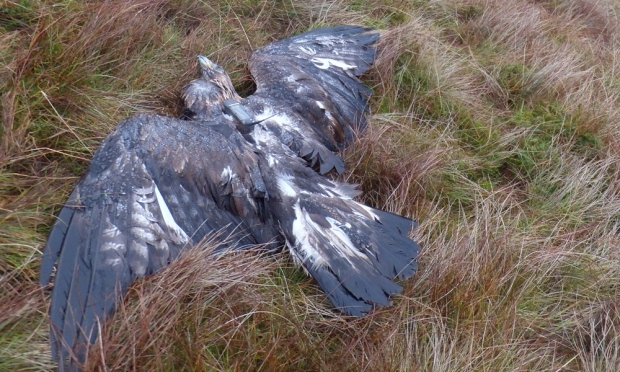
A two-year old golden eagle named ‘Fearnan’ has been found dead on a Scottish grouse moor. He had been poisoned with a banned pesticide. The poison hasn’t been named but we’ll take an educated guess at Carbofuran, the gamekeepers’ poison of choice.

Interestingly, there are three separate press releases about this latest disgraceful crime:

One from the government via PAW (here)

One from the police (here)

One from RSPB Scotland (here)

Usually, we’re lucky to see anything for at least 4-5 months after the crime so it’s somewhat surprising to see the scuffle for media attention on this one. Could this be a sign that Environment Minister Wheelhouse has put his foot down and demanded that timely press statements are released? We can’t think of any other reason why the police should suddenly change their tactics from seemingly apathetic to seemingly responsive.

Of course, regular blog readers will already know that Fearnan is not the only poisoned eagle to have been found dead in the Angus Glens. In fact, there’s been a fair bit of raptor persecution over the last nine years. Here’s a list of incidents we’ve compiled from various published reports:

2004 May, near Edzell: long-eared owl and two short-eared owls starved to death in crow cage trap.  No prosecution.

2004 May, Invermark Estate: peregrine nest destroyed. No prosecution.

2006 March, Glenogil Estate: poisoned rabbit bait (Carbofuran). No prosecution.

2006 April, Easter Ogil: poisoned buzzard (Alphachloralose). No prosecution.

2006 April, Easter Ogil: poisoned tawny owl (Alphachloralose). No prosecution.

2006 May, Glenogil Estate: poisoned rabbit bait (Carbofuran). No prosecution.

2006 June, Glenogil Estate: poisoned woodpigeon bait (Carbofuran). No prosecution.

2006 June, Glenogil Estate: Traces of Carbofuran found in estate vehicles & on equipment during police search. No prosecution. Estate owner had £107k withdrawn from his farm subsidy payments. This was being appealed, but it is not known how this was resolved.

2006 July, Millden Estate; poisoned sheepdog (Lindane). No prosecution.

2007 November, Glenogil Estate: Disappearance of radio-tagged white-tailed eagle ‘Bird N’ coincides with tip off to police that bird been shot. No further transmissions or sightings of the bird.

2008 May, ‘Nr Noranside’: poisoned white-tailed eagle ‘White G’ (Carbofuran, Isophenfos, Bendiocarb). No prosecution.

2008 May, ‘Nr Noranside’: poisoned buzzard (Bendiocarb). No prosecution.

2008 May, ‘Nr Noranside’: poisoned mountain hare bait (Carbofuran, Isophenfos, Bendiocarb). No prosecution.

2008 May, Glenogil Estate: 32 x poisoned meat baits on fenceposts (Carbofuran, Isophenfos, Bendiocarb). No prosecution.

2008 October, ‘Glenogil Estate: poisoned meat bait on fencepost (Carbofuran). No prosecution.

2009 March, Glenogil Estate: poisoned buzzard (Carbofuran). No prosecution.

2009 March, Glenogil Estate: poisoned buzzard (Carbofuran). No prosecution.

2009 April, Millden Estate: poisoned buzzard (Alphachloralose). No prosecution.

2009 July, Millden Estate: poisoned golden eagle ‘Alma’ (Carbofuran). No prosecution.

2009 August, Glenogil Estate: poisoned white-tailed eagle “89” (Carbofuran). No prosecution.

2010 May, ‘Nr Noranside’: poisoned red kite (Carbofuran). No prosecution.

2010 September, Glenogil Estate: poisoned buzzard (Chloralose). No prosecution.

2010 October, Glenogil Estate: poisoned buzzard (Carbofuran). No prosecution.

2010 October, Glenogil Estate: poisoned pigeon bait (Carbofuran). No prosecution.

2010 October, Glenogil Estate: poisoned pigeon bait (Carbofuran). No prosecution.

2011 February, Airlie Estate: buzzard caught in illegal crow trap. (see below)

2011 March, Airlie Estate: 3 x buzzard caught in illegal crow trap. Prosecution (!) but dropped after statement from suspect given to SSPCA deemed inadmissible.

2011 April, Millden Estate: shot buzzard. No prosecution.

2012 April, ‘Nr Noranside’: Remains of buzzard found beside pheasant pen. Suspicious death.

2011 June, Rottal & Tarabuckle Estate: dead kestrel inside crow cage trap. No prosecution.

2012 February, ‘Nr Edzell’: spring-trapped buzzard. No prosecution.

2012 February, ‘Nr Bridgend’: remains of buzzard found under a rock. Suspicious death.

2012 May, Millden Estate: satellite-tagged golden eagle caught in spring trap, then apparently uplifted overnight and dumped on Deeside. No prosecution.

2012 May, Glen Esk: disappearance of sat-tagged red kite. No further transmissions or sightings of bird.

2013 January, Invermark Estate: white-tailed eagle nest tree felled. No prosecution.

2013 November, Glen Lethnot: poisoned golden eagle. Prosecution? Highly unlikely!

We think you’ll agree, this is overwhelming evidence that some people in the Angus Glens are systematically persecuting birds of prey, they have been for many years, and those same people are avoiding criminal justice for their disgusting and illegal activities. We call them The Untouchables.

Why have they been able to avoid prosecution for so long?

Now would be a good time to ask the Environment Minister for an explanation. While you’re at it, please also mention your revulsion about the continued practice of illegal raptor persecution on driven grouse moors. The time for estate licensing is here; the game-shooting industry, quite clearly, cannot or will not self-regulate.  Emails to: ministerforenvironment@scotland.gsi.gov.uk

RIP Fearnan.
posioned GE Lethnot 2013