Dumfriesshire man charged with possession of banned poison

Michael Johnston, 45, of Pretoria Road, Eastriggs, Dumfriesshire has been charged with possession of the banned poison Strychnine.

Strychnine is one of eight poisons listed on the Possession of Pesticides (Scotland) Order 2005, which makes it illegal to have, let alone to use it. The other seven are: Aldicarb, Alphachloralose, Aluminium phosphide, Bendiocarb, Carbofuran, Mevinphos and Sodium cyanide. Regular readers will recognise the name of most of these poisons which have regularly been used to kill birds of prey.

Johnston is further accused of attempting to steal red diesel at Dryfesdalegate Farm, Lockerbie, in April 2014. He is also alleged to have trespassed at the farm and to have kept various types of ammunition in his vehicle.

The case was continued without plea last week at Dumfries Sheriff Court – next hearing 22 October 2014.

Ross-shire Massacre: police confirm banned poison involved

RK7The following statement has just been released by Police Scotland:

Police Scotland Highland and Islands Division are seeking to reassure the public that enquiries are still ongoing into a wildlife crime investigation regarding the death of birds of prey in the Ross-shire area.

The 22 birds (sixteen red kites and six buzzards) were located in the Conon Bridge area and following analysis of the birds’ remains, fifteen have been confirmed as having digested an illegally-held poisonous substance (twelve red kites and three buzzards). Post mortem examinations and toxicology work continues into all the birds seized.

Police Scotland is continuing to work in close collaboration with partner agencies. Landowners and farmers in the local area are also continuing to assist police with their ongoing enquiries.

Police are keen to speak to anyone who has any information about the incident and would encourage them to contact Police on 101 or Crimestoppers anonymously on 0800 555 111 or online at http://www.crimestoppers-uk.org/. No personal details are taken, information is not traced or recorded and you will not go to court.

ends

So, finally, they’ve managed to confirm that a banned poison was involved. About time, too. They still haven’t named it, but the “illegally-held poisonous substance” will be one (or more) of those named on the Possession of Pesticides (Scotland) Order 2005. These are:

Aldicarb, Alphachloralose, Aluminium Phosphide, Bendiocarb, Carbofuran, Mevinphos, Sodium Cyanide, and Strychnine.

Now, which industry hates raptors and is known to have a close association with these banned poisons…let’s think hard….erm….

It actually doesn’t matter that the police haven’t named the poison(s). Just knowing it’s a banned poison and not a ‘mystery virus’ or an ‘accidental poisoning’ is enough to put a halt to what has recently looked increasingly like a coordinated campaign to associate the deaths with the feeding regime at the RSPB’s Tollie Kite Feeding Station rather than focus attention on the specific area where the poisoned victims, along with poisoned bait, had been found.

It’s funny, isn’t it, that of all the speculation that’s been aired, nobody seems to have wondered about whether there’s any (legal) ‘vermin control’ being done on those farms around Conon Bridge. Perhaps done on a casual basis in return for access for a spot of pheasant shooting by a small shooting syndicate? But then that’s such an obvious angle of inquiry, the police must have covered it months ago…..right?

The number of confirmed poison victims has reached 15 (it really is like pulling teeth trying to get information about this incident) and the police ‘investigation’ continues…..

Previous blog posts on the Ross-shire Massacre here

Head gamekeeper convicted of storing 5 banned poisons: gets conditional discharge

Derek Sanderson, a recently-retired head gamekeeper for a shooting syndicate on the Sledmere Estate in Yorkshire, was yesterday found guilty of storing five banned poisons in his house and in an unlocked outbuilding.

Those poisons were Carbofuran, Aldicarb, Mevinphos, Strychnine and Alphachloralose.

His sentence? A conditional discharge and a £15 victim surcharge!!!!!!!

The court apparently accepted that there was no causal link between the possession of these poisons and a dead buzzard found on Sledmere Estate in 2012 – confirmed as having been poisoned with Aldicarb.

Bob Elliot, Head of RSPB Investigations, has written an excellent blog about this, frankly, unbelievable case, here.

What sort of deterrent value is such a pathetic sentence?

Why we don’t trust the National Gamekeepers’ Organisation

A few days ago, Charles Nodder, Political Advisor to the National Gamekeepers’ Organisation (NGO), wrote on this blog:

You should regard us [the NGO] as a key part of the solution [to stamping out illegal raptor persecution], not part of the problem. An organisation to be supported, not attacked”.

The thing is, in order to support an organisation there first needs to be a level of trust. It’s very hard for us to trust the NGO, and here’s why…

Until recently, we were under the impression (mistakenly, as it turns out) that the NGO wouldn’t tolerate any illegal gamekeeping activity and if any of their members were convicted of such an offence, they would be expelled from the organisation. This is what the NGO wants us all to believe, as outlined in their own Disciplinary Code, as published on their website.

However, it would now appear that the NGO does, in our opinion, tolerate some illegal gamekeeping activity. This has only come to light because we discovered that the NGO member who has been applying for licences to kill buzzards (and now sparrowhawks too) was recently convicted for being in possession of several banned poisons, including Carbofuran, the most common poison used to illegally kill birds of prey. We have now discovered that the NGO member, who we have called Mr Buzzard Licence Applicant, was not booted out of the NGO following his conviction for a wildlife crime that is closely linked with the illegal poisoning of birds of prey. Not only was he not booted out, but the NGO then actively supported this member by helping him to apply for his buzzard and sparrowhawk-killing licences.

When challenged about this, Mr Nodder provided some fascinating responses on this blog (see here). Before we take a closer look at those responses, we would first like to acknowledge Mr Nodder’s willingness to engage in conversation on this blog. That’s to his credit; there are many others within the game-shooting industry who have repeatedly refused to engage with us, citing excuses such as, “We don’t communicate with anonymous individuals” but who then go on to complain that we publish articles without giving them the right to reply!! Quite an astonishing response given today’s world of multi-media and social networking communications. A missed opportunity for them, but not really that surprising when you consider that many of them are still hanging on to other 19th Century ideals.

Anyway, back to that NGO policy of supposedly not tolerating any illegal gamekeeping activity.

To begin with, Mr Nodder tried to claim that “The possession of a banned substance [and remember we’re talking here about banned poisons that are routinely used to illegally poison wildlife] is quite clearly a possession offence and not an offence against wildlife”. We were astounded by this comment. There are many, many examples of ‘possession’ offences that are inextricably linked to wildlife crime. Here are just a few examples:

  • Possession of a dead red kite (see James Rolfe case).
  • Possession of 10.5kg of the banned poison Carbofuran (see Dean Barr case).
  • Possession of the banned poison Carbofuran (see Cyril McLachlan case).
  • Possession of wild birds eggs (see Matthew Gonshaw cases).
  • Possession of an illegal pole trap (see Ivan Crane case).
  • Possession of a wild bird (see Craig Barrie case).
  • Possession of live & dead birds for trade/taxidermy (see Gary McPhail case).
  • Possession of the banned poison Alphachloralose (see David Whitefield case).
  • Possession of the banned poison Carbofuran (see Tom McKellar case).
  • Possession of wild birds (see Cogoo Sherman Bowen case).
  • Possession of the banned poisons Carbofuran, Strychnine and Alphachloralose (see Peter Bell case).
  • Possession of wild birds eggs (see Keith Liddell case).
  • Possession of the banned poison Sodium Cyanide (see William Scobie case).
  • Possession of dead wild birds (see Luke Byrne case).
  • Possession of the banned poisons Carbofuran and Alphachloralose (see Graham Kerr case).

In many of these example cases, poisoned and/or other illegally killed raptors were also discovered. Indeed, in many cases it is the discovery of these poisoned animals that then leads on to a police investigation and search that then leads to the discovery of a stash of banned poisons. Quite often, as we all know, the subsequent charges that are brought do not often include charges for actually poisoning the wildlife, but instead the charges relate to the ‘lesser’ (in legal terms) offence of ‘possession’, either due to plea bargaining or due to lack of evidence needed to secure a conviction for the actual poisoning of a wild animal. It stands to reason that the actual poisoning of wildlife is inextricably linked to the possession of banned poisons; in order to poison wildlife, the criminal obviously first has to be in possession of the poison to carry out the act of poisoning.

The National Wildlife Crime Unit defines the possession of a banned poison as a wildlife crime – the Unit often publicises convictions for the possession of banned poisons in its reports. The Scottish Government also defines convictions for possession of banned poisons as wildlife crime – indeed, this is one of the offences that can trigger a prosecution under the new vicarious liability legislation, brought in specifically to address the continuing illegal persecution of raptors. The Crown Office considers possession of banned poisons as a wildlife crime because its specialist wildlife prosecutors take on these cases. The Partnership for Action against Wildlife Crime (PAW, of which the NGO boasts membership) also considers possession of banned poisons a wildlife crime – they, too, publicise ‘possession’ convictions in their newsletters.

So why is it that the National Gamekeepers’ Organisation doesn’t accept possession of banned poisons as a wildlife crime? And if they don’t, why the hell are they allowed to participate in the Raptor Persecution Wildlife Crime Priority Group? Surely that group has been established to find ways of stamping out illegal raptor persecution, but how can it achieve that if one organisational member refuses to expel members who have been convicted of a serious wildlife crime? It makes a mockery of the whole group and does absolutely nothing to instill public confidence in the sincerity of the process.

Mr Nodder’s next explanation for why Mr Buzzard Licence Applicant wasn’t booted out of the NGO was to suggest that possession of a banned poison was not a ‘gamekeeping activity’. On the contrary, if Mr Nodder took the time to look at the conviction statistics (publicly available to those who want to look) he would notice that the significant majority of those convicted for possession of banned poisons are gamekeepers, and that trend has continued for many years. In the case of Mr Buzzard Licence Applicant, his stashes of banned poisons were found in his work vehicle and inside one of his pheasant pens. There’s simply no denying it, unless of course you happen to be the NGO, trying to justify why you haven’t stuck to your stated Disciplinary Code and expelled a member for his criminal conviction.

And what sort of message does this policy send to other NGO members? ‘Don’t worry if you get caught in possession of banned poisons, we won’t kick you out of the club’. It makes you wonder what the law-abiding members of the NGO feel about this policy. If you were a law-abiding member (and there must be some, surely), would you want to be a member of a group that welcomed those with a criminal conviction related to banned poisons? If the NGO doesn’t distinguish between criminal and law-abiding members, why should we?

The third argument Mr Nodder used to try and get us to drop what must be quite embarrassing questions was to pull out the old ‘It’s a spent conviction so we can’t discuss it’ routine. Nice try, but in this case, wholly inapplicable. The legislation that prevents publication of so-called ‘spent convictions’ is the Rehabilitation of Offenders Act 1974 (see here for a good explanation). Its basic premise is that after a period of x years of rehabilitation (depending on the type of crime committed – in this case, five years), the conviction can be ignored and need not be divulged (with one or two exceptions). If somebody does then publish information about the conviction, they may be subject to libel damages, but only if the primary motive of publishing the information was malicious. In this case, seeing as though we haven’t named Mr Buzzard Licence Applicant, even though we’ve had lots of opportunity to do so (and indeed our own received legal advice was that we could name him), it would be extremely difficult, if not impossible, to demonstrate that we are acting in malice (against him as an individual) by discussing his spent conviction because he hasn’t been identified as a named individual. Our primary motive for discussing this case has been to (a) examine the Natural England/DEFRA policy that allows convicted wildlife criminals to apply for licences to kill protected species (see earlier blogs on this), and (b) to examine the sincerity of the NGO’s claims that they won’t tolerate any illegal gamekeeping activity and will expel any member with such a conviction.

And while we’re on the subject of the Rehab of Offenders Act, we’ve made a very interesting observation. Certain professions are exempt from the Act, so that individuals are not allowed to withhold details of previous convictions in relation to job applications. These professions include teachers, social workers, doctors, dentists, vets, accountants etc. But interestingly, also included are “Employees of the RSPCA or SSPCA whose duties extend to the humane killing of animals”. Now then, it is beyond question that the duties of gamekeepers ‘extend to the humane killing of animals’. They probably kill (legitimately) more animals on a daily basis than all the RSPCA and SSPCA employees put together. So why are gamekeepers not included in this list of exemptions? Why should a gamekeeper be able to hide past wildlife crime convictions but an RSPCA/SSPCA employee cannot? That’s a question for the policy makers…

In summary then, in our opinion the NGO’s stated claim that they don’t tolerate any illegal gamekeeping activity is not convincing. They don’t view the possession of a banned poison as a wildlife crime and a conviction for possession of a banned poison is not enough to warrant expulsion from the NGO, even when that poison just happens to be the most commonly used substance to illegally kill birds of prey. It doesn’t matter to us how many wildlife crime groups the NGO has joined – in our view this is just a convenient shield for hiding true intentions – we don’t trust them and will continue to view them with suspicion until they start to back up their stated claims with convincing actions.

Scottish gamekeeper convicted for poisoning buzzard

Buzzard BellA Scottish gamekeeper has today been convicted for a number of wildlife crime offences, including the poisoning of a buzzard.
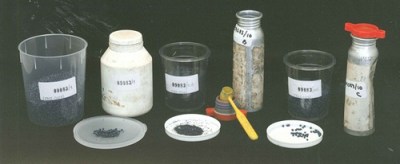
Peter Finley Bell (62) pleaded guilty to four charges at Stranraer Sheriff Court and was fined a total of £4,450.

Bell is a full-time gamekeeper and has sole responsibility for rearing pheasants and organising shooting on Glasserton and Physgill Estates which includes land on Glasserton Home Farm, Whithorn.

Bell committed the poisoning offence on 23 December 2012 at Glasserton Home Farm. He had laced the carcass of a pheasant baited with Carbofuran and set the bait in a field. A birdwatcher passing the farm saw something flapping in the field and on closer inspection found that it was a common buzzard, lying on the ground, in the last throws of life.

Subsequent forensic work showed that the buzzard had died as a result of ingesting the poisoned bait.

A search of Bell’s home address on 5 March 2013 revealed poisonous substances in his tool shed and home which are illegal to possess, namely Carbofuran, Strychnine and Aphachloralose.

Bell’s fine was broken down as follows:

£2,450 for killing the buzzard (reduced from £3,500 to reflect his guilty plea)

£1,400 for possession of Carbofuran (reduced from £2,000)

£300 for possession of Strychnine (reduced from £500)

£300 for possession of Alphachloralose (reduced from £500).

There are some interesting points about this case. First of all, the speed of the judicial process – offences committed in December 2012 and March 2013, criminal convicted by June 2013! That has to be some sort of record and it is very, very pleasing to see.

But why, if the poisoned pheasant carcass and buzzard were found in December, did it take more than two months to conduct a search of Bell’s home?

It’ll be interesting to find out if Bell is/was a member of the Scottish Gamekeepers’ Association: info@scottishgamekeepers.co.uk

It’ll also be interesting to find out if Glasserton & Physgill Estates are members of Scottish Land & Estates: info@scottishlandandestates.co.uk

UPDATE: An important question, raised by blog commentator Michael Gill: what about vicarious liability in this case? Shall we ask the Environment Minister? Email: ministerforenvironment@scotland.gsi.gov.uk

UPDATE 16.20: The SGA has issued a statement about this conviction (see here). Interestingly, they do not address the fundamental question of whether this gamekeeper is/was one of their members. The SGA is a member of PAW Scotland and serves on the PAW Scotland Raptor Persecution Priority Delivery Group. Would it be appropriate for the SGA to continue to serve in this capacity (and take credit for its PAW membership) without being transparent about whether it has a convicted poisoner amongst its membership? We think it would be highly inappropriate. Please raise these concerns with the PAW Scotland Chair – Environment Minister Paul Wheelhouse – and demand SGA transparency on this case. Email: ministerforenvironment@scotland.gsi.gov.uk

UPDATE 17.25: Scottish Land and Estates have issued a statement to say that the estate in question has been booted out of their organisation. Good news. Statement here.

UPDATE 19th June 08.30: According to a BBC article (here), this convicted gamekeeper was indeed a member of the Scottish Gamekeepers’ Association and he’s now been kicked out. Strange that the SGA excluded this information from their own statement on their own website.

Glen Orchy: a hollow victory

Last Friday, Tom McKellar, an employee of Auch Estate, an Argyll sporting estate in Bridge of Orchy, was convicted of possessing the illegal poison Carbofuran and was fined £1,200 (see here). This conviction should be a cause for celebration, and in some respects it is, but there is also an overwhelming sense of disappointment and frustration. We had all thought this was a pretty clear-cut case, with lots of investigative resources thrown at it, a strong evidential trail and a known suspect. We were further encouraged by a statement given by the then Scottish Environment Minister, Roseanna Cunningham, who said:

I am truly appalled that yet another golden eagle has been illegally killed in Scotland – the second this summer. Illegal poisoning is simply inexcusable and while the perpetrators are certainly beneath contempt they are in no way above the law“.

Given the nature of the alleged offences (wildlife & firearms), we were certain that a custodial sentence was inevitable. How stupid were we?

It all started to unravel in December 2010, 18 months after the poisoned eagle was found dead in Glen Orchy. We learned that Tom McKellar had been convicted of possessing two illegal handguns, but instead of receiving the mandatory five-year prison sentence, he was given just 300 hours community service and a commendation from the judge who reportedly told him: “There is no doubt you are an outstanding individual” (see here). There was little mention in the media about the poisoned golden eagle or the stash of illegal poison that had been found at McKellar’s house during the original police search. We were suspicious that the wildlife crimes were being ignored and that COPFS had decided to just take on the firearms offences because, in the eyes of the law, these are greater crimes than the poisoning offences and would normally result in a custodial sentence.

Based on these suspicions, we blogged about the case in January 2011, and suggested that no charges were being brought against anyone for poisoning that eagle. We also encouraged readers to contact the Scottish Government to complain. Many did, and all hell let loose. The Scottish Government responded by saying that the firearms offences were being dealt with separately, at a court with a higher authority than a Sheriff Court, and that the wildlife offences were still ‘being dealt with’. A well-known prosecutor threatened us, indirectly, with legal action. For what? Expressing an opinion? As it turns out, we were right all along, nobody has been prosecuted for poisoning that golden eagle, although we’ve had to wait for over three years to have this confirmed.
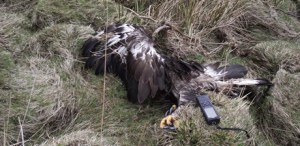
It then all went quiet for a while, at least publicly. It’s not known whether COPFS bowed to pressure to take forward the wildlife crime prosecution or whether they had actually been pursuing the charge all along, but that it took over three years for the case to conclude is probably quite telling.  Not that it really matters now anyway; what matters is the outcome.

So, a conviction was eventually secured, although this was just for ‘possession’ of a banned substance; in our opinion this is the least significant charge of any that could have been brought. McKellar admitted during interviews that he had laid out poisoned baits ‘in the past’, and yet he wasn’t charged for that. Were the words ‘in the past’ significant in the decision not to press charges for that offence? What does ‘in the past’ mean, anyway? Two years ago? Two weeks ago? Two days ago? Two hours ago? In addition to the poisoned golden eagle, a Carbofuran-poisoned fox was found and also a dead sheep laced with Carbofuran. Someone was clearly still putting out poisoned baits, but COPFS accepted McKellar’s claim that he wasn’t responsible. It’s unfortunate that these types of offences are only dealt with as summary cases in a Sheriff Court. It would have been interesting to hear what a jury might have thought had the charges been heard in a higher court. Again, we’ll never know and we have to accept that McKellar is guilty of nothing more than possessing the banned poison Carbofuran (oh, and possessing two illegal handguns).

It’s hard not to think that McKellar has come out of all this relatively lightly. It’s also hard to believe that his punishments will act as any sort of deterrent to other would-be criminals. He avoided a mandatory five-year prison term for the firearms offences, and he was fined just a fraction of the amount that he could have been fined for possessing the illegal poison Carbofuran. It appears that he has also kept his job. Auch Estate is currently up for sale (for a mere £8.4 million) and a look at the sales particulars (Auch Estate sales brochure 2012), dated August 2012, indicates that the new owner has to take on the current Estate employees under the TUPE regulations, including Farm Manager Tom McKellar. These sales particulars also show that almost £700,000 was paid in grants and subsidies during 2011; it would be interesting to know whether there will be any forfeiture of these payments following McKellar’s conviction, although based on previous experience, this information is exceptionally difficult to access, even though it’s public money! It would also be interesting to hear whether McKellar’s employer is being investigated, after McKellar reportedly claimed it was his employer who had provided him with the Carbofuran (see here). Wouldn’t it also be interesting to find out whether Auch Estate is a member of Scottish Land & Estates? And whether McKellar, as an employee of a sporting estate, is a member of the Scottish Gamekeepers’ Association? Needless to say, neither of these organisations has made any public statements about McKellar’s conviction last Friday.

Other question marks include a strange bit of (non)-reporting by SASA. The poisoned golden eagle found at Glen Orchy was listed in SASA’s 2009 annual report. However, the dead fox found nearby that was reported to have been poisoned by Carbofuran did not appear in the SASA report. Neither did the dead sheep also found nearby that was reportedly laced with Carbofuran and used as poisoned bait. Why weren’t these two animals included in SASA’s list of confirmed poison cases for 2009? Perhaps SASA didn’t do the toxicology tests. If they didn’t, then who did? If SASA did do the tests, but failed to include the animals in their report, what confidence does this give us when SASA release their annual poisoning statistics? Are other cases missing? We only knew about the fox and the sheep because the RSPB had listed them in their annual report.

A further question mark hangs over a related issue. The media has reported that the poisoned golden eagle found dead in Glen Orchy had been killed with the banned pesticide Carbofuran. However, if you look at the 2009 SASA report, the following chemicals are listed as being detected in this bird’s body: Carbofuran, Methiocarb, Sodium Cyanide and Strychnine. Now, we have it on good authority, although this has not been formally verified, that a second individual was searched during the police raid back in June 2009. This individual, XXXXX XXXXX is believed to be a gamekeeper in Perthshire but is not an employee of Auch Estate; he was just there on the day the police arrived to conduct their search. We understand that the police found Mr XXXXX to be in possession of a bottle of Strychnine and a container of decanted Cyanide. Now look again at the chemicals detected in the body of the dead golden eagle. As far as we are aware, no charges have been brought against Mr XXXXX, not even for possession. If this turns out to be an accurate report, then something has gone seriously wrong with this investigation. A lack of resources can’t be blamed on this one, given the array of organisations involved with the investigation, including multiple police forces with specialist wildlife crime officers as well as the National Wildlife Crime Unit. So what happened? Did Mr XXXXX slip through the net and if so, how? Do you think we’ll hear anything about this or do you think it’ll be quietly pushed under the carpet?

In summary then, yes, a conviction was secured (McKellar) and we should be pleased about that. McKellar’s illegal stash of Carbofuran and his illegal cache of handguns have been taken out of circulation and so we should also be pleased about that, too. But this is not what could be called a successful outcome; far from it. It’s deeply unsatisfactory and shares striking similarities with other recent, high-profile cases which also concluded unsatisfactorily, such as Moy Estate and Skibo Estate. In all three cases, and in countless other lower-profile cases, sporting estate employees have only been charged with the lesser offence of possession. Charges have not been brought against anyone for the illegally-killed raptors found in each location, nor for laying the illegal poisoned baits or for putting out the illegal traps. On a superficial level then, the convictions for possession look good and the authorities can claim they are successfully addressing the issue of wildlife crime. Scratch below the publicity gloss though and you find that very little progress has been made; charges, if they’re brought at all, are not reflecting the full extent of the crimes uncovered, and on conviction the sentences are not reflecting the seriousness of these crimes.

Latest SASA figures reveal widespread poisoning incidents in early 2011

The latest figures detailing illegal animal poisoning incidents in the first quarter of 2011 have just been released by Science and Advice for Scottish Agriculture (SASA) on behalf of the Scottish Government.

The figures cover the period January to March 2011, and show that criminal raptor poisoning incidents were detected in each of the three months. They include 3 buzzards, 1 golden eagle, 1 red kite and 2 peregrines.  Poisoning incidents were widespread, taking place across Scotland, including in the Borders, Strathclyde, Tayside, Grampian and the Highlands. The illegal poisons used included Carbofuran, Chloralose and Strychnine. So much for the game-shooting industry’s self-regulation. I guess 2011 will not be the year they ‘stamp out’ illegal raptor persecution.

Not for the first time, two of the five recorded incidents were apparently unpublicised in the media: 1 x buzzard poisoned with Carbofuran in the Borders in January 2011, and 1 x red kite poisoned with Chloralose in the Highland region in February 2011.

SASA poisoning figures for period Jan – Mar 2011 available here