Following on from yesterday’s news that gamekeeper Timothy Cowin had been convicted for shooting and then sadistically stamping to death two protected short-eared owls on a grouse moor on the Whernside Estate in the Yorkshire Dales National Park (see here), public anger has been justifiably prominent.
Many have commented on Cowin’s pathetic sentence (a £1,210 fine) but there has also been considerable commentary on social media about why the landowner hasn’t also been prosecuted.
If these crimes had taken place in Scotland, there would have been an opportunity to prosecute the landowner and/or shooting agent for alleged vicarious liability, following the introduction of the WANE Act 2011. Although in Scotland a prosecution may not have followed automatically, especially if the landowner and/or agent was able to show due diligence, or if the landowner couldn’t be identified, or if the prosecutors deemed it wasn’t in the public interest to proceed. Since the legislation was enacted on 1 January 2012, six and a half years ago, there have only been two successful prosecutions for vicarious liability in relation to raptor persecution (here and here); two others have failed (here and here) and others simply haven’t been considered for reasons that haven’t been made clear to us (e.g. see here).
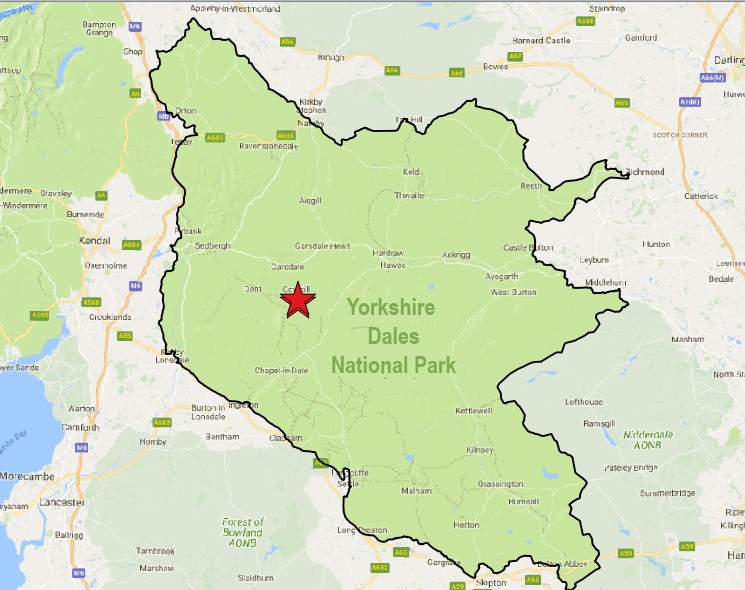
However, as Whernside Estate is in the Yorkshire Dales National Park, not in Scotland, there is no hope that a prosecution for alleged vicarious liability will follow in this case.
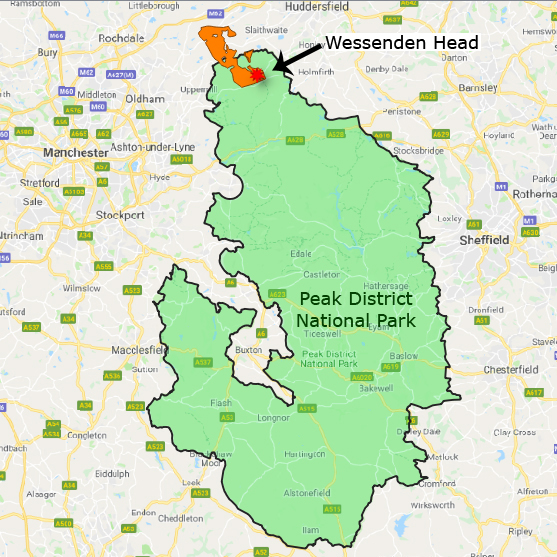
[RPUK Map showing location of Whernside Estate, which is located in the county of Cumbria but also lies within the boundary of the Yorkshire Dales National Park]
So with no prospect of a further prosecution, the least that could be expected would be for the grouse moor owners’ lobby group, the Moorland Association, to expel the Whernside Estate from the ranks of its membership, right?
Well, no. The Moorland Association has done the exact opposite and has instead chosen to publish a statement in support of Whernside Estate and confirmed the estate’s continued membership in the Moorland Association:

Amanda Anderson’s justification for not expelling Whernside Estate rests with the Moorland Association’s “satisfaction” that the estate had taken “all appropriate measures” to ensure its staff acted within the law and this included written correspondence between the estate and gamekeeper Cowin. Without seeing this correspondence it’s impossible to know whether this evidence would have been sufficient to meet the standards of due diligence required as a defence against vicarious liability in Scotland. It’s our understanding that in Scotland, this correspondence may not be enough to demonstrate due diligence, and other measures may also be required such as the landowner and/or agent undertaking spot checks on their employees and having a written record of those checks.
It’s fairly apparent from the detail we do know about Cowin’s case that had adequate spot checks been undertaken, questions would have been raised about Cowin being in possession of a plastic peregrine decoy, and importantly, his possession of a calling device that had been loaded with the calls of several raptor species, presumably to be used to entice raptors, perhaps towards a plastic decoy, where they could then be shot at close range.
Unfortunately we’ll never get to hear about the details of the estate’s claimed supervision of Cowin because, as there’s no provision for a potential prosecution for alleged vicarious liability in relation to raptor persecution in England, the estate doesn’t have to present this information to the authorities for scrutiny. We only have the word of the Moorland Association, which, of course, has a long track record of denying the bleedin’ obvious.
But let’s take the word of the Moorland Association, and the Whernside Estate, at face value and assume that Cowin’s crimes were as abhorrent to them as they are to the rest of us. That leads to a very interesting question. Two questions, in fact.
Firstly, no matter what claims the Moorland Association makes in all these so-called ‘partnership’ meetings trying to combat illegal raptor persecution, the Moorland Association, and its members, have absolutely no control or influence over gamekeepers working on grouse moors. Cowin is a perfect example of this. If, as the MA and the Whernside Estate claims, Cowin had undergone training, refresher training, and had signed an employment contract undertaking to work within the law, he STILL went on to commit these crimes. So what, exactly, is the point of the Moorland Association attending these ‘partnership’ meetings if it can’t offer any guarantees that gamekeepers won’t kill raptors on grouse moors?
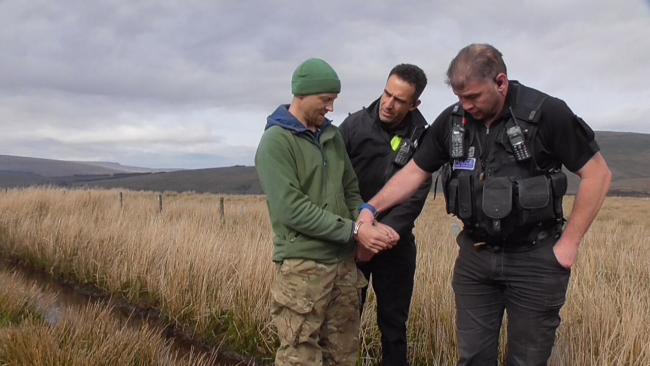
[Gamekeeper Cowin, leaving Whernside Moor after shooting and stamping on two short-eared owls and hiding their corpses. Photo by Guy Shorrock]

Secondly, if the Whernside Estate was “dismayed” at Cowin’s actions of shooting and then stamping on those two short-eared owls, and being in possession of a calling device with raptor calls loaded on to it, did the Whernside Estate pay for Cowin’s legal representation?
Cowin’s solicitor was Michael Kenyon. Mr Kenyon was unlikely to have been a random duty solicitor called in to the police station to represent Cowin when he was questioned and later charged. Mr Kenyon is a well known figure in the game shooting world and is considered a ‘leading expert’ in firearms law and wildlife crime and once served as the legal advisor to the National Gamekeepers’ Organisation (see here) so it seems likely that he was chosen specifically to defend Cowin based on his expertise.
We had thought that perhaps Cowin’s legal representation costs had been covered by his presumed membership of the National Gamekeepers’ Organisation, especially given Mr Kenyon’s links, but according to a tweet from the NGO this morning, Cowin “was not and never has been a member of the NGO“. So it would seem unlikely the NGO paid.
Did Cowin himself pay for Mr Kenyon’s legal services? Perhaps, but this seems unlikely given what the court heard yesterday about Cowin’s financial means.
Was Cowin a member of another ‘professional’ group whose membership dues include the cost of legal representation if faced with a prosecution in relation to gamekeeping activities? We don’t know.
Did the Whernside Estate pay for Cowin’s legal representation? We don’t know that either, but we do know that somebody accompanied Cowin to several court appearances and although we cannot identify that person, it was suggested to us that it was Cowin’s boss. It may well have been, as he was certainly chatty with Mr Kenyon, heard discussing the number of grouse available to shoot on Mossdale Estate (remember them?), but equally as plausible is an explanation that it may have been a member of Cowin’s family attending court to support him.
Unfortunately we’ll never get to find out who paid for Cowin’s defence.
We were also interested in what the other ‘countryside’ organisations had to say about Cowin’s conviction. Would they all be condemning his actions and saluting the efforts of the RSPB et al in securing a successful outcome? Here’s what we found, at the time of writing this blog:
GWCT – silence
BASC – silence
NGO – silence, apart from responding to a tweet to confirm Cowin was never a member.
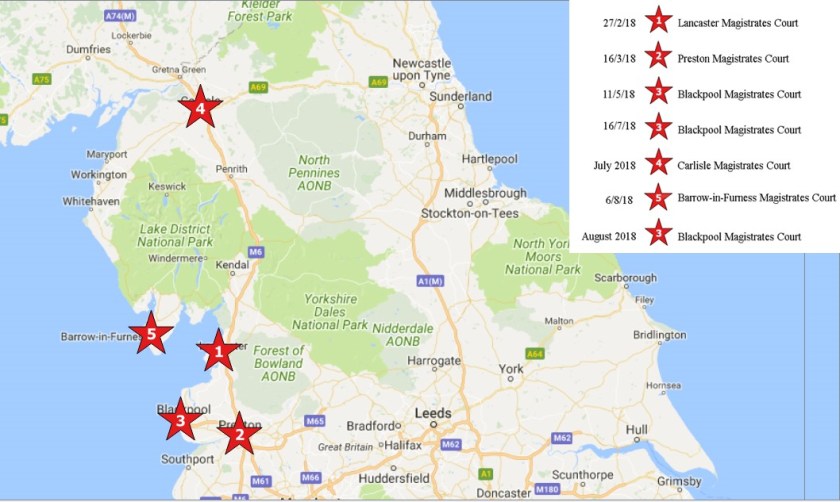
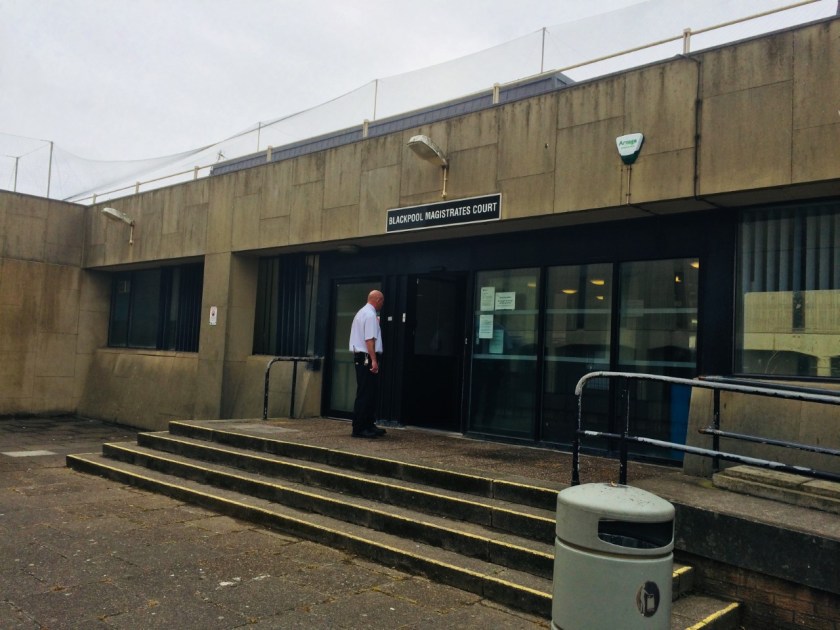
Countryside Alliance – silence on Cowin’s conviction but leading with the news that the prosecution of three hunting group members for alleged hunting and wildlife crime offences had been dropped, and focusing on the “wasted public resources” by “animal rights extremists” in bringing this case to trial. Interesting – we could argue the same point about the amount of wasted public resources spent in Cowin’s case as it was dragged around five different courts in NW England before his eventual guilty plea.
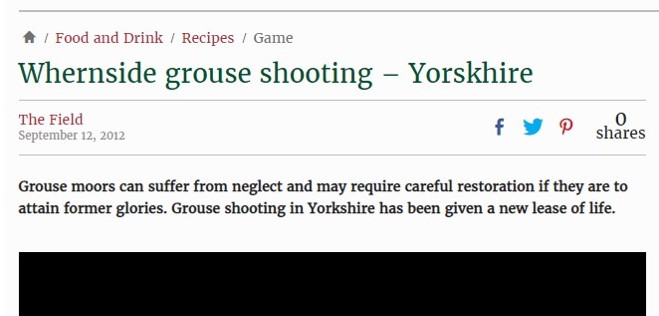
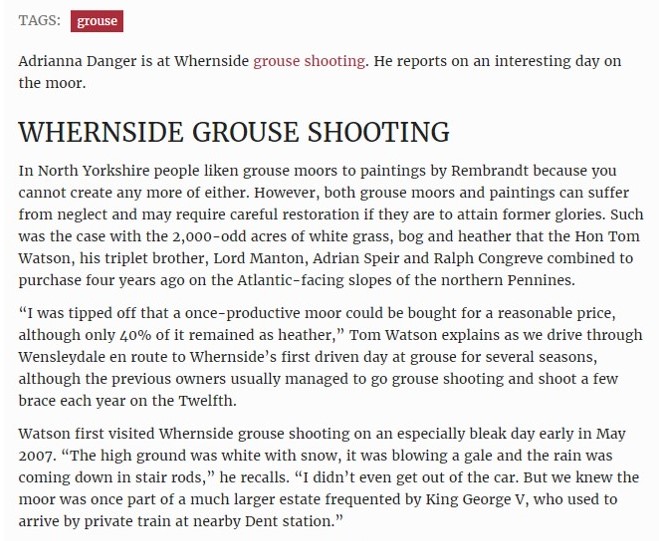
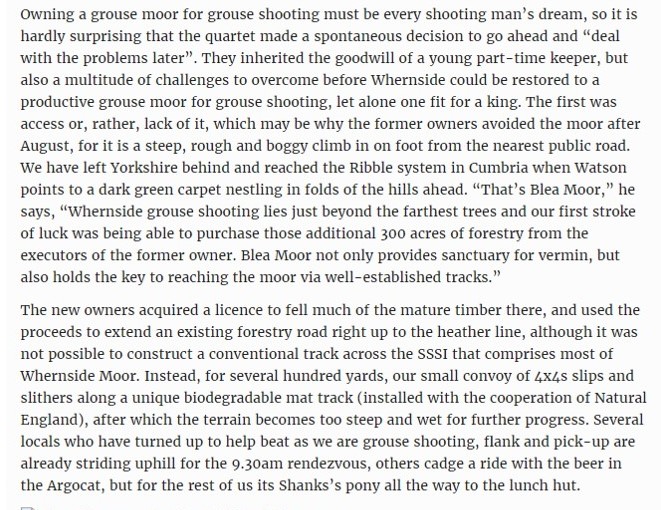
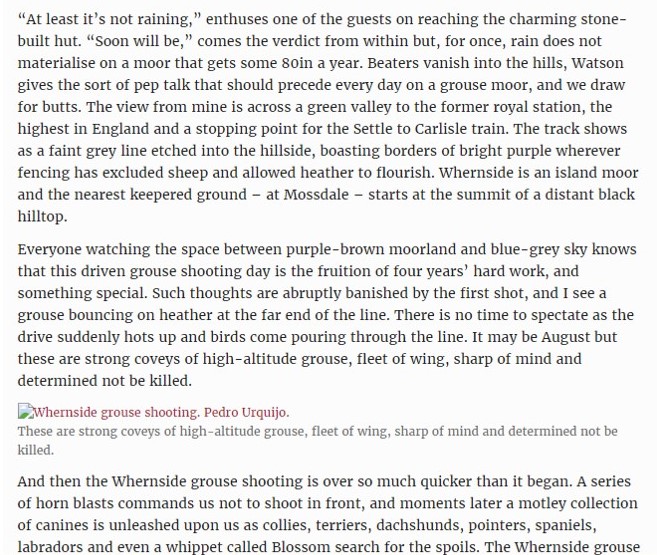
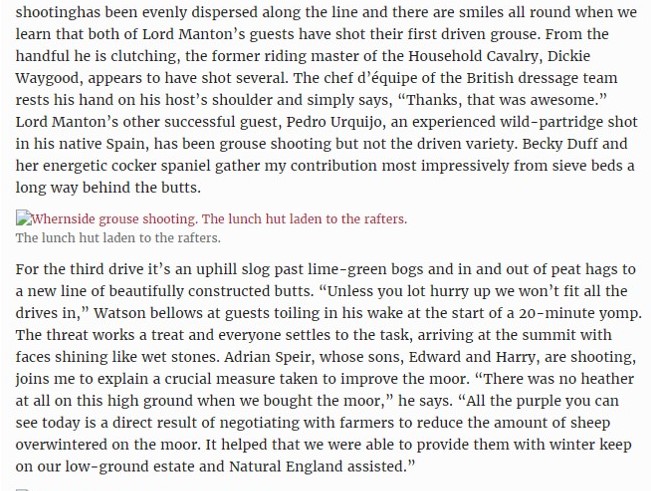
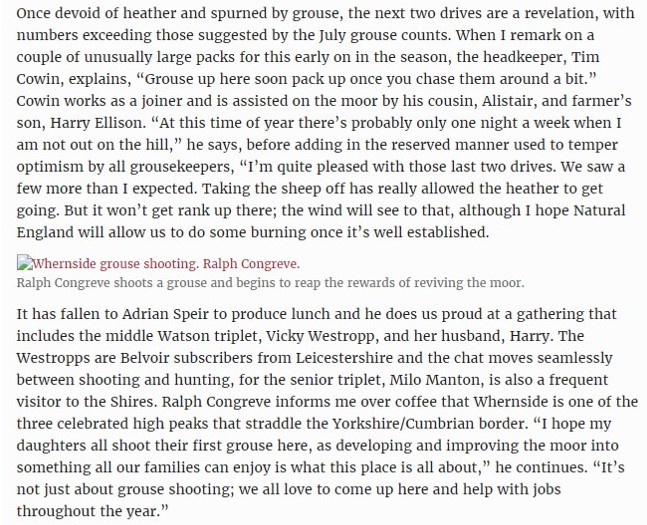
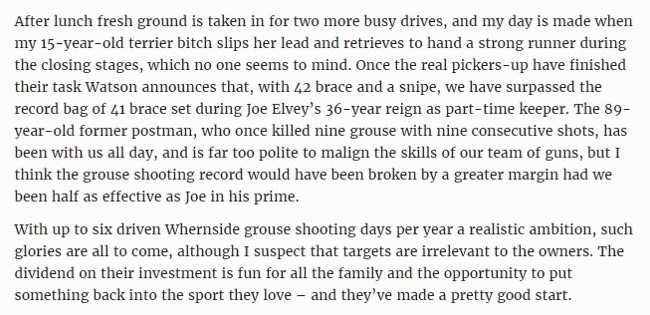
During our searches for commentary from the grouse shooting industry we did stumble across an article about grouse shooting on Whernside Estate that had been published in The Field magazine in 2012. Strangely, the article seems to have been removed from The Field’s website archives but fortunately we were able to find a cached version elsewhere. It makes for an interesting read, especially the bit about Headkeeper Tim Cowin working as a joiner!
UPDATE 31 August 2018: Whernside Estate: more reaction to gamekeeper’s conviction for shooting owls (here)










 Raptor Persecution UK