who owns the shooting rights at Moy Estate?

Following the development of the sad and sorry story about alleged illegal raptor persecution on the Moy Estate, let’s look at who’s who. The Moy Estate is owned by Celia Mackintosh of Mackintosh, but it seems that the shooting rights are let to someone else.

Apparently, grouse shooting on Moy Estate is let to “The Moy Estate Sportings”, which forms part of the nearby estate, Corrybrough. Corrybrough Estate has recently been sold, and the estate agents obligingly left some detailed information about the sale on their website, which included the lease of “The Moy Estate Sportings”, which runs until 2028, and details of the shooting records from the two estates over the the last few years.

The new owner of Corrybrough Estate has not been named, but Victor Beamish, the man who signed the recent SRPBA letter on behalf of Moy Estate, condemning the illegal posioning of raptors, is understood to be associated with the company which now holds the sporting lease for Moy Estate. It has been reported elsewhere that he is the sporting tenant (here).

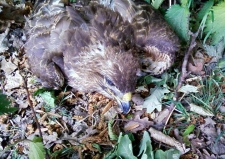
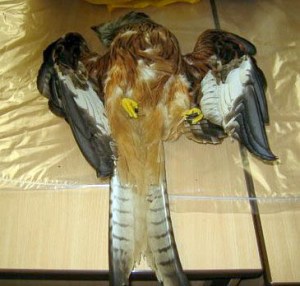
Interestingly, Corrybrough Estate was not a signatory of the recent letter to the government from over 200 landowners, condemning wildlife crime. 8 buzzards and 1 red kite were found dead on Corrybrough Estate in 1998 (see blog post on 7th March 2010 for details). There was at least one gamekeeper at Corrybrough at the time the sales document was drafted, who, according to the document, apparently had been there for “many years”, although it is not known whether he is still employed there. He has engaged in a series of public spats in the Strathspey and Badenoch Herald, where he proclaims the oft-repeated SGA stance that gamekeepers are unfairly blamed for raptor persecution incidents. No surprise there, given that he has acted as an official representative of the SGA on occasions, including the SGA’s critical condemnation of the Irish Golden Eagle Reintroduction Project. Here are his letters in the 2008 Strathspey & Badenoch Herald – starting with the letter from R. Drennan Watson, Convenor of the Cairngorms Campaign – read in order from the top down: UPDATE 2014: the following links no longer work. However, we happen to have some saved copies, which we’ve posted in full at the bottom of this blog entry.

http://www.strathspey-herald.co.uk/news/fullstory.php/aid/3256/Eagles:_about_time_that_people_grasped_the_facts.html

http://www.strathspey-herald.co.uk/news/fullstory.php/aid/3283/’What_actually_happened’.html

http://www.strathspey-herald.co.uk/news/fullstory.php/aid/3360/Association_s__untenable_stance_.html

http://www.strathspey-herald.co.uk/news/fullstory.php/aid/3409/Never_mind_the_facts_when_condemning_gamekeepers.html

http://www.strathspey-herald.co.uk/news/fullstory.php/aid/3433/_In_denial__over_birds_of_prey.html

For the full details of the Corrybrough Estate/Moy Estate shooting deal, click here: deanfarmdraftbrochure

Another Moy Estate gamekeeper has been in the news in recent years – facing a compensation claim after he shot two dogs on Moy Estate. One survived, the other didn’t. Story here: http://www.inverness-courier.co.uk/news/fullstory.php/aid/462/Defiant_dog-owner_drops_compensation_claim_.html

UPDATE: Here is the full correspondence between the Corrybrough gamekeeper (Callum Kippen) and R. Drennan Watson:

Published:  20 August, 2008

Sir, – I am writing re the removal of young golden eagles from Scottish eyries to Ireland. The press release from the Scottish Gamekeepers Association (SGA), as reported in the “Strathy” of August 13, displays the usual lack of grasp of the facts.

The SGA spokesman, Alex Hogg, is quoted as asserting that chicks are removed when fledged. This is nonsense. Fledged young eagles are highly active creatures and trying to catch one on a precipitous crag would be difficult and highly dangerous. They are removed when they begin to grow adult plumage and can both control their own body temperature and feed themselves.

He is also quoted as saying they are removed from eyries in areas least populated by eagles and this should stop. Again not so – they are taken from areas where there are good populations, using very strict Scottish Natural Heritage criteria embedded in the licence, to ensure chicks are only collected from specific areas where SNH believes that the golden eagle population is robust.

Raptors like eagles sometimes have more than one chick, but very frequently only one reaches adulthood, partly due to competition between chicks for food.

Removing and rearing the weaker chick therefore ensures its survival, increases the total number of eagles reaching maturity, and does not significantly reduce the numbers reaching adulthood hence, there was no reason for SNH to mention this as a factor depleting golden eagle populations in their report.

Mr Hogg also points out that almost half the birds released in Ireland are now unaccounted for. This is not surprising. The data comes from radio tracking. Radios fail after several years and, in difficult terrain, birds can be hard to track. Because they are unaccounted for does not mean they are dead.

SNH’s report examines extensive data over a considerable number of years and, combined with recent detailed reports from the RSPB, provides convincing evidence that the chief factor depleting golden eagle populations is illegal poisoning on sporting estates.

What does Alex Hogg advocate? That the eaglets in eyries in least populated areas in the Highlands should just be left to mature – and be poisoned in Scotland instead of Ireland? These protests by the SGA are simply a smokescreen to confuse the public where real culpability lies. – Yours etc,

R DRENNAN WATSON (Convener), Cairngorms Campaign, Brig o’ Lead, Forbes, Alford

Published:  27 August, 2008

Sir, – In last week’s “Strathy”, R. Drennan Watson claims to set out a few facts regarding the eagle population in Scotland, but once again he misses the point.

His opinions are an example of “one rule for gamekeepers and another for the conservation organisations.” In his correspondence, he states that eagles could not have been removed from nests at the point of fledging as claimed by the Scottish Gamekeepers Association, because that is against the “criteria embedded in the licence”.

However, it would be interesting to know if he was present at the capture of the young eagles, as otherwise, how would he know what actually happened. Eyewitnesses have seen eaglets flying from the nests and being captured on the ground. It is also a fact that two of these exported birds have arrived in Ireland injured, one with a broken hip and one with a broken wing. Not really the picture that the conservationists or Mr Watson want the public to envisage.

The law very clearly states that it is illegal to kill eagles yet Mr Watson is willing to accept indeed even accuse gamekeepers of such acts that is despite no gamekeeper having been prosecuted for killing eagles in the last 20 or more years. Are we guilty until proven innocent?

He uses this logic in an attempt to “prove” that conservationists could not have hurt the chicks because it is not their policy, but fails to mention the conservationist who was arrested by the police for causing a hen eagle to desert her nest at the point of hatch, only to have the case thrown out by the Procurator Fiscal as not being in the public interest to prosecute.

Would this have happened if it had been a gamekeeper who was witnessed by the police disturbing the nest? It is disappointing that this man sets his stall by the RSPB and states “they have provided convincing evidence”; this is an organisation that by their own admission need wildlife crime in order to swell their coffers.

Mr Watson also states “because they are unaccounted for does not mean they are dead,” as a defence for missing eagles in Ireland, yet in Scotland eagles that are unaccounted for are presumed poisoned by gamekeepers.

It also beggars belief that he and his ilk will not join the SGA, and call for a halt to this extravagant waste of Scotland’s iconic eagles. Conservation groups are always very quick to blame Scottish gamekeepers for the down-turn in eagle numbers but are happy to support the transfer of these valuable birds to a country with the lowest number of different raptor species in Europe.

It is blatantly evident to anyone who is willing to look, that Ireland is unable to support its own natural levels of raptors and therefore the introduction of a further raptor species is bound to fail.

Finally, he accuses Alex Hogg of creating a smoke screen to deflect attention from gamekeeper’s misdemeanours, I suggest the opposite is true and the conservation organisations are finally being seen in their true light, and their only defence is to rehash the same old rhetoric which is at least 20 years out-of-date. Facing the truth that gamekeepers are no longer responsible for widespread persecution is not in the conservationists’ best interest.

Unfortunately, Mr Watson shows the same lack of insight and prejudiced views which have been created by the conservation organisations in an attempt to undermine the good work of the SGA.

Their views are not based on substance or a genuine desire to improve wildlife management but merely to down cry the SGA. This view is what contributes to double standards that are so common these days and the SGA is working hard to overcome.

The tide is turning in the world of conservation and the Scottish Government is showing more and more interest in the opinions of the SGA as a more legitimate and realistic organisation.

It is about time that the other conservation organisations worked with the SGA instead of bringing up the same out-dated and biased views to disagree with them just because it is the S.G.A. – Yours etc,

CALUM KIPPEN, Dalkillin, Soilsean, Tomatin.

Published:  10 September, 2008

Sir, – Callum Kippen (Strathy, August 27) complains that keepers on grouse moors are being unjustly accused of illegally persecuting golden eagles and the work of the Scottish Gamekeeper’s Association as being undermined in my letter in the previous issue. Really?

He asserts the views stated are “not based on substance” and on information that is 20 years out of date. The conclusions in recent reports by the RSPB and Scottish Natural Heritage (SNH) not only draw on many years of accumulated data on eagle and other populations, but on at least seven studies in the last 10 years, six of them in the last four years.

The SNH report which concludes: “The highest priority for management and political initiatives is tackling persecution” is particularly thorough and broad in its review, drawing on nearly 240 cited publications.

What does the very substantial evidence show? Firstly, eagle populations and breeding are poor in grouse moor areas where there are suitable eagle ranges but, curiously, not in areas dominated by land uses like crofting and forestry.

Secondly, poisoned eagles have been found in these grouse moor areas.

Thirdly, this pattern also applies to peregrine falcons and hen harriers, which can predate grouse.

Fourthly, over 2006-2007 alone, six keepers were prosecuted for possessing and/or using the poisons used to kill these species. What does Calum Kippen think they were doing with these very dangerous poisons?

Two more keepers were prosecuted for illegally persecuting protected species by other means but, with the exception of one lone crofter, nobody else was prosecuted for these crimes.

If it walks like a duck, quacks like a duck and looks like a duck – you can bet it’s a duck! These crimes take place in remote areas where it is far easier for the perpetrators to conceal evidence than for it to be found.

Most incidents of illegal poisoning are found by hillwalkers by chance. It is hardly surprising there are not (yet) prosecutions. Pursuing these issues does not “swell the coffers” of environmental groups as asserted – rather, it drains their limited resources of time and staff, and they would rather be doing other things.

It is understandable that Calum Kippen, as a headkeeper and a board member of SGA, finds this issue difficult.

Not all keepers illegally persecute protected species, but until the SGA comes out of its state of denial and accepts there is a problem, it will make no progress with other organisations or government on this issue, and its untenable stance will just damage its members’ interests. – Yours etc,

R DRENNAN WATSON, Convener, Cairngorms Campaign, PO Box 10037, Alford.

Published:  24 September, 2008

Sir, – Mr Drennan Watson (‘Strathy’, September 10), has again shown his ignorance of the facts surrounding the golden eagle population in Scotland and the eagle export to Ireland.

He claims that the eagle population on grouse moors is low, yet the east of Scotland, including the Cairngorms, which has a high density of grouse moors, has contributed 46 per cent of the eagle chicks exported over the Irish Sea. How many chicks has the RSPB’s Abernethy reserve in the same area contributed?

I do agree that eagles have been found poisoned, but conservationists have also been responsible for the death of protected birds while “monitoring” them. I wonder if Scottish Natural Heritage has studied the trauma caused to eagles while dying at the hands of a gamekeeper compared to conservationists. I doubt there is much difference, so why do gamekeepers get so much more condemnation?

The real reason, I suspect, that the Scottish eagle population is not higher is due to the reduction in their food supply.

There has been a 60 per cent reduction in sheep numbers in upland areas; 30,000 red deer culled in the Cairngorms; and all dead sheep grallochs are removed from the hillside. This has massively reduced the food supply to the golden eagle.

Mr Watson claims that because keepers work in remote areas, it is very difficult to catch them breaking the law, and therefore they must be guilty. I should point out that these same remote working conditions also make it very difficult for the keeper to secure his workplace from outside interference.

Mr Watson and his ilk constantly use the terms “prosecuted” and “convicted” as if they can be interchanged. The majority of the keepers that he quotes as being prosecuted for possession of illegal poisons were not found guilty at trial. Does he wish to do away with court trials for gamekeepers and just send us all to jail regardless of the facts?

Finally, I would like to state categorically that I am not a board member of the Scottish Gamekeepers Association, and if this very basic fact has been misrepresented by Mr Watson, then how many of his other so-called facts are also plain wrong? – Yours etc,

CALUM KIPPEN, Dalillin, Scilscan, Tomatin.

Published:  01 October, 2008

Sir, – Callum Kippen’s latest letter to the ‘Strathy’ (September 23) contains the usual rather silly points.

He queries why a major percentage of the eagles exported to Ireland came from grouse moor areas.

Golden eagles fare best where there is a good food supply, and therefore they breed well in the drier east of Scotland, with its preferred prey including red grouse and mountain hares – at least when they are not poisoned.

He demands to know how many eagles have come from the RSPB’s Abernethy Reserve. RSPB Abernethy is a Special Protection Area and Special Area of Conservation. The SNH licence for export of golden eagles to Ireland prohibits the taking of birds from protected areas, based on EU law.

Similarly, red kites have not been taken from protected areas in Germany and Sweden for Scottish reintroduction projects. He asserts that conservationists have caused the death of golden eagles while monitoring them. This is a very serious allegation, without a shred of supporting evidence, because it is not true. If Mr Kippen has any evidence to this effect, then this is a police matter and he should report it to the authorities.

He attributes golden eagle decline to a drop in sheep numbers. It has little to do with sheep numbers. That drop has taken place across the Highlands and Islands, but severe impacts on golden eagle numbers arise in grouse moor areas, not sheep areas.

He asserts that the majority of keepers figuring in my statistics were prosecuted but found not guilty at trial. All the keepers figuring in my statistics were found guilty.

These people were found to be in possession of the dangerous, banned, poisons used to poison birds of prey. What does Mr Kippen think they were doing with them? Feeding their chickens? Who does he think is poisoning these protected species if it is not keepers? He implies it is some mysterious group who nobody has ever heard of, seen, or prosecuted interfering with the work of gamekeepers. The idea is just silly.

It is clear that no matter how many keepers are convicted or careful studies conclude who is to blame, Mr Kippen will continue to be in denial. I will therefore not reply to future letters from him on this topic. The public can come to its own inevitable conclusion.

Meanwhile, the reintroduction of golden eagles to Ireland is meeting with some success. – Yours etc,

R DRENNAN WATSON (Convener), Cairngorms Campaign, PO Box 10037, Alford AB33 8WZ

red kite blasted with shotgun finally released

In December 2009, a walker found an injured red kite in Braco, Perthshire. X-rays revealed it had been blasted with a shotgun, five times,  from close range. The kite’s injuries were horrific and it was feared the bird would not survive (see the post on this blog from 3 March 2010). No arrests were made.

The kite ready for release

Six months later, after extensive treatment and care provided by the SSPCA, the rehabilitated kite was released back to the wild yesterday. Congratulations to all involved with this bird’s recovery.

News story: http://news.bbc.co.uk/1/hi/scotland/tayside_and_central/10215466.stm

landowners’ condemnation of raptor persecution exposed as a sham?

On 21 May 2010, this blog reported on the news that over 200 landowners (members of the Scottish Rural Property & Business Association – SRPBA)  had written a letter to Environment Minister Roseanna Cunningham MSP, condemning the continued practice of illegal raptor persecution on Scottish sporting estates.

This letter has now become available for public viewing: SRPBA LETTER MAY 2010

On close scrutiny of the signatories to this letter, it is now apparent that on 23 of the estates listed, wildlife crime incidents have been recorded, and on seven of them, estate employees have criminal convictions. Here they all are in their full glory:

Careston Estate, Brechin: Buzzard found poisoned by Chloralose 1992.

Dochfour Estate, Inverness: Buzzard found poisoned by Chloralose 1992.

Invercauld Estates, Braemar: Buzzard found poisoned by Chloralose 1992; Three Buzzards and a raven found poisoned by Carbofuran 2005; Gamekeeper convicted for illegal use of spring trap 1997.

Balmanno Estate, Bridge of Earn: Buzzard found poisoned by Carbofuran, illegal gin traps and egg collection – Gamekeeper convicted 2003.

Haystoun Estate, Peebles: Gamekeeper filmed allegedly removing Peregrine chick from nest – evidence ruled inadmissable in court (a legal technicality) – but keeper convicted of firearms offences 2003.

Haddo Estate, Aberdeenshire: Gamekeeper convicted for  laying poisoned baits and illegal traps and fined £2,600 in 1989.

Dunachton Estate, Kincraig: Buzzard found shot 1990; Buzzard found shot 1992.

Dougarie Estate, Isle of Arran: Eagle found poisoned by Chloralose 1991.

Rosehaugh Estate, Black Isle: Buzzards found poisoned by Mevinphos 1991.

Dinnet & Kinord Estates, Aboyne: Gamekeeper convicted for firearms offences and trespassing on neighbouring estate while carrying a firearm 2006; Golden eagle found poisoned 2006.

Straloch Farm, Blairgowrie: Buzzard found poisoned by Chloralose 1992.

Lothian Estates, Jedburgh: Osprey found shot 1993.

Glenfeshie Estate, Kincraig: Golden eagle found poisoned by Carbofuran 2006.

Islay Estates, Islay: Raven found poisoned by Mevinphos 1989; Buzzard found poisoned by Mevinphos 1989.

Dunecht Estates, Aberdeenshire: Buzzard found shot 2007.

Coignafearn Estate, Tomatin: Poisoned bait found 1983; Golden eagle found poisoned 1988.

Roxburghe Estate, Kelso: Buzzard found poisoned by Mevinphos 1989.

Seafield Estate, Strathsprey: Buzzard found poisoned by Chloralose 1991.

Innes Estate, Elgin: Dead Buzzards and crows found dying after poisoned by Carbofuran – Michael Royan (head gamekeeper) convicted of firearms offences and possession of illegal poisons 2007.

Carbeth Estate, Stirlingshire: Buzzard found poisoned by Chloralose 1989.

Wemyss & March Estates, Longniddry: Managers of the Barns Estate in Peebleshire, where gamekeeper was convicted of poisoning 20 raptors, described at the time as “Britain’s worst wildlife crime” 2004.

Alvie Estate, Kincraig: Golden eagle found poisoned 1980.

Aberarder Estate, Strathnairn: Eagle found poisoned 1993.

One has to ask, why are these estates still allowed a membership of SRPBA? Doesn’t their continued membership ruin any credibility of the SRPBA’s public pronouncements against illegal raptor persecution? Indeed, it seems to go against the SRPBA’s very own Code of Practice: http://srpba.com/view_item.aspx?item_id=136&open2=false

Although of course, we should point out that some of these Estates may have changed ownership/staff since some of these incidents occured – we should probably give them all the benefit of the doubt because after all, the SRPBA has ‘repeatedly condemned the illegal poisoning of wildlife’ and of course we should all accept that their members are all above board and not engaged in criminal activities.

The SRPBA is also a fully-fledged partner in the Partnership Against Wildlife Crime (PAW Scotland) – as a commited partner, I’m sure that the SRPBA has expelled any members that are associated with wildlife crime. Otherwise, what is the point of SRPBA being a partner in PAW Scotland? No point, other than paying lip-service to raptor conservation in a feeble attempt to protect their public image. But we are giving them the benefit of the doubt, aren’t we.

At the latest PAW Scotland meeting  that was held on 25 May 2010, Environment Minister Roseanna Cunningham MSP apparently congratulated the SRPBA on their letter. Let’s give her the benefit of the doubt too and assume she hadn’t read it yet.

scotland’s red kites under threat from illegal killing

The red kite population in Scotland is under severe threat from illegal poisoning a new RSPB study has revealed.

An equal number of red kites were released in the Chiltern Hills in southern England and in The Black Isle near Inverness as part of a reintroduction project which began in 1989

The birds in the Chiltern Hills have flourished and numbers of breeding pairs had reached 320 pairs by 2006. In stark contrast the Black Isle birds have struggled to establish a viable breeding population and had only reached 46 pairs over the same period. Both populations of red kites have been closely monitored and productivity from successful nests in both studies were found to be similar and amongst the highest in Europe.

Red kites are mainly scavengers and their diet of carrion makes them extremely vulnerable to illegal poisoning. Although they pose absolutely no threat to game shooting interests they are all too often killed by gamekeepers illegally targeting other species.

Between 1989 and 2009, 64 red kites have been found poisoned in Scotland. Naturally considering the remote locations where these birds live, only a small proportion of poisoned birds will ever have been found.

Scottish Environment Minister Roseanna Cunningham said,

“Poisoning is an arbitrary method of killing which poses serious risks to other wildlife, and potentially people, in our countryside.

“The protection of Scotland’s wildlife has never before occupied such a prominent position politically or in terms of the law. I hope that our continued joint action to tackle raptor persecution across Scotland will reduce this threat to red kites.”

With sentences such as we have recently seen in the Redmyre Estate case, where gamekeeper Graham Barclay Kerr was fined a derisory £400 for shooting a buzzard with a high velocity rifle and admonished for possession of illegal and deadly poisons I don’t think Roseanna’s words will have the perpetrators of these crimes quaking in their plus fours.

Full story. http://news.bbc.co.uk/1/hi/scotland/highlands_and_islands/8629284.stm

Gamekeeper sentenced for wildlife crimes on Redmyre Estate, Abernyte, Perthshire

Further to the blog entry of 3 March 2010……

Gamekeeper Graham Barclay Kerr (53) of Mary Findlay Drive, Dundee, who had earlier pleaded guilty to shooting a buzzard and being in possession of illegal and deadly poisons on the Redmyre Estate, Abernyte, Perthshire on 9 September 2009, has now been sentenced.

His punishment? A pathetic £400 fine for shooting the buzzard with a .243 rifle, and an even more pathetic ‘admonishment’ (which means a telling off) for being in possession of Carbofuran and Alphacloralose. Sentencing him at Perth Sheriff Court on 24 March 2010, Sheriff Robert McCreadie told Kerr, “You may not have appreciated how serious the courts take the illegal destruction of wildlife. I think you will be aware of that now”.

Really? A £400 fine for deliberately shooting a protected species is not what I would call a deterrent for other gamekeepers or their employers. And an admonishment for the possession of illegal and highly toxic poisons is nothing but lamentable. When oh when will the public see the full force of the law being handed down to convicted wildlife criminals? The Scottish judiciary has been given the powers to impose large fines or custodial sentences for convicted wildlife criminals, because that is the punishment that society deems fitting for these crimes. The Scottish government claims to be ‘stamping out’ wildlife crime. Perhaps the government and the judiciary need to get together and make sure they are reading from the same book, let alone the same page, because so far their actions speak louder than their words. This case speaks volumes.

Full story: http://www.perthshireadvertiser.co.uk/perthshire-news/local-news-perthshire/perthshire/2010/03/26/buzzard-killed-my-former-perthshire-gamekeeper-73103-26110898/

Inside case details from Tayside Police: http://www.scotland.gov.uk/Topics/Environment/Wildlife-Habitats/paw-scotland/Resources/Newsletters/Issue2/Inthecourts/GrahamKerr2010

shooting times magazine names the countryside’s “most wanted pests”

Game shooting’s top magazine, The Shooting Times, has published an article on the countryside’s “most wanted pests”, which speaks volumes on the true attitude of the game shooting industry to our protected wildlife.

The Shooting Times, 6th February 2006 reports,  The golden eagle, red kite, osprey, heron, peregrine falcon and buzzard stand accused with the hedgehog, otter, badger and the domestic cat of being “voracious predators” that affect the game shooting and fishing industries.

The 114-year-old title describes the animals on its list as “pricey pests” that devour pheasant, partridge, grouse, salmon, trout, hare, pigeon, woodcock, snipe, duck, goose and deer or snatch wild birds’ eggs. The losses hit the profits of estate owners and shooting and fishing syndicates.

Jim Knight, the Rural Affairs Minister, joined animal welfare groups and the Countryside Alliance in criticising the magazine for vilifying wildlife. He was shocked by the article’s emotive language. “The list includes a number of precious species that are protected by law. Readers of this article may agree that some species can be a nuisance — but this does not excuse their destruction.”

Camilla Clark, editor of Shooting Times, said: “The purpose was to assess the economic impact of predators and pests on game birds in the UK. Shooting Times would never advocate the illegal killing of a protected species.”

“Eagles have no place on my grouse moor”, allegedly said former Laird of Fordie Estate, Perthshire

It is often said that gamekeepers only persecute raptors because they are acting upon the orders of their employer, and fear losing their job and often a tied cottage if they refuse. Here is an example of an estate manager who refused.

Ian Thomas (42) had worked on the Fordie Estate near Comrie, Perthshire for 15 years, when the estate was bought by former banker Lord Anthony Tryon (former husband of Lady ‘Kanga’ Tryon). During an inspection of his newly-acquired grouse moor, Lord Tryon allegedly became irritated at finding piles of grouse feathers indicating kills by birds of prey. According to Ian Thomas, Lord Tryon allegedly said, “Eagles have no place on my grouse moor” and “I have bought an estate and I will do what I like”.

Thomas claims that he was instructed by Lord Tryon to shoot a golden eagle and use illegal poisons to rid the estate of other raptors. Thomas refused and reported him to the authorities, saying he felt “morally obliged” to blow the whistle. Thomas claimed he was constructively dismissed after being branded a trouble-maker by Tryon and took his claim to an employment tribunal.

To avoid giving evidence in court, Tryon made an undisclosed settlement to his former estate manager in 2004.

Full story: http://news.scotsman.com/birdsofprey/Shooting-row-laird-agrees-to.2526404.jp

The Fordie Estate was bought from Lord Tryon in 2009 and is now owned by designer luggage tycoon, Luis Vuitton. The Fordie Estate is one of eight estates in Perthshire who have joined the Countrywatch Partnership, working to protect three key raptor species in the area (golden eagle, hen harrier and peregrine).

Thomas has gone on to establish his own forestry consultancy business. Here is a man with whom it’s worth doing business.

Film footage of Gamekeepers on Leadhills Estate ruled inadmissable

Female Hen harrier at nest

On 30 April 2003, an undercover RSPB investigation team were filming at a hen harrier nest on the Leadhills Estate, South Lanarkshire (also known as Hopetoun Estate and Abington Farms Ltd). This estate has a shocking record of alleged persecution against hen harriers and peregrines.

According to an article published by a former RSPB investigator (see link below), a gamekeeper was filmed walking up the valley towards the hen harrier nest, and ‘finding’ the nest by throwing a training bag for his labrador dog. The keeper was also allegedly filmed picking up the dog by its throat and kicking it to the ground. He was later charged with a cruelty offence after SSPCA officers and a vet had viewed the evidence.

Later the same night, the RSPB team reportedly filmed a group of men approaching the hen harrier nest in the dark using torches.  They are reported to have shot the incubating female and removed the eggs from her nest. One of the RSPB team followed the men back to the road and took their vehicle registration number. The vehicle was allegedly found to be used by the estate’s head gamekeeper. A shotgun cartridge found next to the nest was allegedly matched to the gun belonging to the head gamekeeper’s son. The son was later charged in relation to killing the harrier and destroying the nest.

After prolonged legal activity, the charges against both keepers were all dropped. It is thought this was in connection to the use of undercover footage by the RSPB. (See our post about a similar incident at Haystoun Estate in 2003).  http://www.the-soc.org.uk/docs/SBN80.pdf


Dinnet Estate Gamekeeper convicted for offence

On the night of June 25 2003, a gamekeeper on the Dinnet Estate in Aberdeenshire was filmed by RSPB investigators as he left his Landrover carrying a shotgun, climbed over a fence on to the neighbouring Crannach Estate, and began to stalk a recently-fledged hen harrier for several hundred metres across the hillside. At one point he was seen to point his shotgun at the harrier but he did not shoot.

At Stonehaven Sheriff Court on 17 February 2006, the keeper was convicted of firearms offences and of trespassing with a firearm on the neighbouring Crannoch Estate. He was fined £500.

http://www.the-soc.org.uk/docs/SBN80.pdf

Inquiry after red kite shot

August 2007. One of the 30 red kite chicks sent to Ireland in a project to reintroduce the species there has been found shot dead.

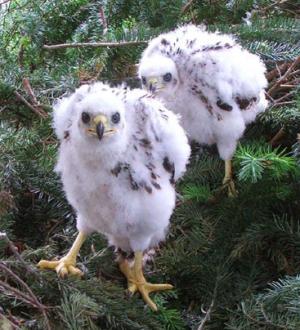
red kite chicks

The kite was among a batch taken from Powys to the mountains of County Wicklow six weeks ago.

Police in Ireland are investigating after it was found with seven shotgun pellets .Tony Cross of the Welsh Kite Trust in Rhayader, who worked on the scheme, said the shooting was a setback but did not “invalidate” the plan.

Full story. http://news.bbc.co.uk/1/hi/wales/mid/6972121.stm