RSPB Scotland publishes 2012 persecution report

sam4RSPB Scotland has today published its annual persecution report which documents the known and suspected incidents of  illegal raptor killing throughout Scotland in 2012.

It’s a shame it’s taken so long to get it published, but that minor criticism aside, massive kudos and appreciation to them for their continued meticulous collection of these data and especially their willingness to publish them. Without these reports the general public, and probably the government, would be unaware of exactly what’s going on in our countryside. If we relied upon the ‘official’ figures (i.e. those ‘approved’ by the likes of Scottish Land & Estates, the Scottish Gamekeepers’ Association, Police Scotland etc) we wouldn’t know the half of it.

The 2012 report, just like all the previous 18 reports, makes for grim reading. Sure, it documents a reduction in the number of birds known to have been illegally poisoned last year; some people (guess who?) have spent much of 2013 shouting about this as being evidence of the game-shooting industry cleaning up its act – we know better – the 2013 figures (to date) show no such reduction and in fact show an increase in known poisoning incidents…but more of that next year. Let’s focus on the 2012 report for now.

Three things caught our attention in this report. The first thing was the Foreword by Stuart Housden, RSPB Scotland Director. This is the hardest-hitting Foreword of his that we’ve read. In the past it’s been a bit wishy-washy, with too many platitudes aimed at the landowning and gamekeeping communities and suggestions that the raptor killers are just an unrepresentative minority. This time it’s quite different:

It is evident that a significant number of individuals or estates illegally persecute birds of prey“.

Is this subtle change of language an indication that RSPB Scotland is tiring of the whole ‘partnership-working’ pretensions? Let’s hope so.

The second thing to catch our attention was an entry in Table 3 (page 24): Confirmed incidents of illegal killing or attempted killing (excluding poisoning) of birds of prey in Scotland, 2012

The entry of interest is this:

‘February. Buzzard caught in illegal spring trap. Nr Edzell, Angus’.

There isn’t any further detail about this incident, and it certainly hasn’t been publicised by the Police (no surprise there). However, for reasons that we can’t go in to right now, we are particularly interested in the details of this incident and would ask any blog reader with specific information to contact us, in confidence: raptor.persecution.scotland@hotmail.co.uk

The third thing that caught our attention was the Case Study: Poisoning in Progress (pages 19-20). This case relates to the discovery of poisoned corvids and poisoned bait found in the Borders in May 2012.

We’d blogged about this case in Sept 2012, criticising the Police for not publicising the discovery of poisoned birds and poisoned bait (see here). We also blogged about it in October this year, after the incident was excluded from the ‘raptor persecution’ section in the  Government’s ‘official’ 2012 Wildlife Crime Report (see here). We asked blog readers to contact the Environment Minister and ask why this incident had been excluded. Here is part of the reply received by one of our readers:

You ask why a bird poisoning incident was omitted from the Scottish Government’s first annual report into wildlife crime. I can advise you that the incident in question was not listed in the section on raptor crime because no raptors were involved“.

Now, have a read of the Case Study in the RSPB’s report. Guess what was found at the scene? “The feathers and bones of two dead buzzards, lying beside the old, dried-out carcases of two rabbits, in a wood beside a partridge rearing pen. A dead crow was also found a short distance away“.

That’s a pretty clear indication that raptors were indeed involved.

According to the Case Study report, the rabbits were covered in dead insects (a sure indication of the presence of poison) and they were submitted for toxicology analysis, along with the crow. The buzzards were not submitted as they were considered too decomposed.

The results – all contained the pesticide Bendiocarb.

There was no police follow-up, no search, no nothing. Why not, when there was clear evidence of long-term poisoning at the site? And even better, the site is a very well-known raptor persecution blackspot in the Borders, where many other poisoned raptors have previously been discovered.

It’s just the same old familiar pattern, same shit, same locations, different year. The sooner the Government launches its public consultation on increasing the powers of the SSPCA to allow them to investigate raptor persecution, the better. (Where is that consultation anyway? We heard it would be launched in mid-Oct. No sign yet…)

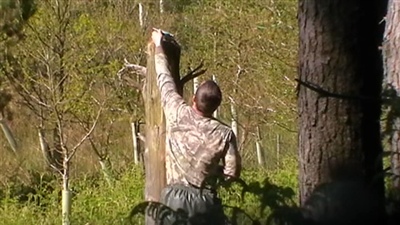
Anyway, well done and thanks again to RSPB Scotland – funny, lots of poisoning, trapping and shooting incidents but not a single ‘death by tree’ report!!

Download the report: The Illegal Killing of Birds of Prey in Scotland 2012

Animal rights activists killing thousands of hen harriers

The long-awaited publication showing the results of the UK 2010 Hen Harrier Survey is finally here. Published in the scientific journal Bird Study, the paper (see here) documents significant declines across many parts of the UK.

No surprises there then.

England had a heady 12 pairs in 2010 (a country with sufficient habitat to support an estimated 323-340 pairs, according to the Hen Harrier Conservation Framework).

Scotland had 505 pairs in 2010 (a country with sufficient habitat to support an estimated 1467-1790 pairs).

Wales bucked the trend with at least a 33% increase to 57 pairs (none of which were found on habitat classified as grouse moor).

It should be remembered that these results are from 2010; there have been further documented declines since then, including just two (failed) breeding attempts in England this year and a consistent downward trend of breeding success in Scotland, according to the latest report from the Scottish Raptor Monitoring Scheme (see here).

The paper also documents a severe decline on the Isle of Man (49%) and bizarrely suggests that ‘there are no obvious drivers for this’. Eh? Could it possibly be anything to do with the systematic elimination of harriers on the mainland, reducing the number of birds available to travel to the Isle of Man? Just a thought.

So, where are the missing 962-1285 breeding pairs of hen harriers in Scotland?

And where are the missing 322-339 breeding pairs of hen harriers in England?

Widespread declines are indisputable. The relationship in England and Scotland between areas of reported declines and land managed for intensive driven grouse shooting is also indisputable. But what happened to all those birds? Those with a vested interest in the grouse-shooting industry will tell you it’s all down to climate change/habitat change/lack of prey/cold spring/wet spring/late spring/early spring/being eaten by golden eagles/too many foxes/too many buzzards/too many ravens/too many sparrowhawks/the work of animal activist extremists hell-bent on killing hen harriers to make the gamekeepers look bad…in fact they’ll blame anything except the blindingly fucking obvious.

Hen Harrier photo by Gordon Langsbury

Petition to name golden eagle as Scotland’s national bird

RSPB Scotland has launched an on-line petition to have the golden eagle named as Scotland’s national bird.

Capitalising on the golden eagle being recently voted as the nation’s favourite animal (in SNH’s ‘Big Five’ Campaign), the RSPB is hoping that Scottish Ministers will formally designate the species as a national symbol and thus show their commitment to protecting this bird from the appalling persecution it continues to suffer.

An RSPB spokeswoman said:

The petition urges ministers to formally designate the species as a national symbol, placing it alongside the lion rampant, Saltire and Scottish thistle as emblems of the country. There are currently just 431 pairs of golden eagles in the whole of Scotland. Owing to centuries of persecution, this most charismatic of birds has been almost entirely confined to the more remote areas of the country, such as the mountains and glens of the west coast and on the western isles, with numbers held at artificially low levels and many territories vacant. Its restricted range and tendency to favour the more remote and dramatic areas has made it become a coveted sight for any visitor who appreciates Scotland’s magnificent wildlife spectacles. But now RSPB Scotland is pressing for the adoption of the golden eagle as Scotland’s national bird, helping to raise its profile, turn around its fortunes and see it return once again to its former range thus increasing the chances of a sighting for visitors and local people.”

Stuart Housden, Head of RSPB Scotland said:

It is a stirring symbol of strength and pride, qualities well befitting to a modern Scotland and its people. 2013 is the Year of Natural Scotland – a period where the Scottish Government is celebrating our most impressive natural heritage. What better legacy can we provide for this initiative than to officially designate the eagle as Scotland’s national bird and join together for its future conservation? It would formally recognise the place this species has unofficially occupied in our culture for many centuries, and show our commitment and desire to protect and conserve it, and our wider national heritage, for generations to come.”

Please consider signing the petition – if nothing else, it will put further pressure on those who continue to shoot, poison and trap this species. Signing is easy – it takes seconds – the closing date is 6th December 2013. Please sign here.

Golden eagle voted nation’s ‘favourite’ wild animal

The golden eagle has taken pole position in a vote to identify the nation’s favourite wild animal. The poll was organised by SNH and VisitScotland to highlight the Year of Natural Scotland and included the so-called ‘Big 5’ species: golden eagle, red squirrel, red deer, harbour seal and otter. The golden eagle won by a landslide majority (see here).

But so what? Will winning this poll make any difference to the number of illegally poisoned, illegally shot or illegally trapped golden eagles that keep turning up on Scottish grouse moors? Or any difference to those young satellite-tagged golden eagles that keep mysteriously ‘disappearing’ over Scottish grouse moors? Or any difference to the number of grouse moor gamekeepers and grouse moor estate owners that are never prosecuted for killing our favourite species?

Here’s a link to all the blog entries we’ve written about golden eagle persecution in Scotland – a fairly comprehensive overview of how appallingly our favourite species is treated by those who won’t tolerate it on their moors and by those who are supposed to be protecting it.

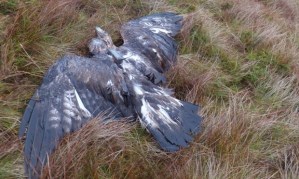
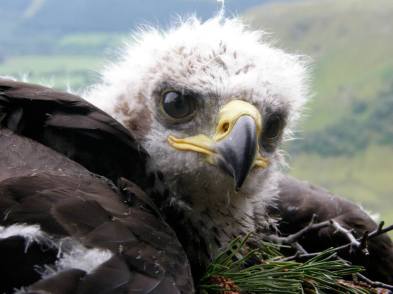
Here’s a photo of the golden eagle that was found shot and critically injured on a grouse moor in southern Scotland last year. Despite top veterinary care, he didn’t make it. This is what we’re allowing to happen to our ‘favourite’ species…

optable

Countryside Alliance disputes evidence that Bowland Betty was shot

Those luminaries of hen harrier conservation, The Countryside Alliance, are claiming that the scientific evidence used to show that Bowland Betty was shot was actually just ‘supposition’.

For those who don’t remember, Bowland Betty was a young satellite-tagged hen harrier who was found dead on a Yorkshire grouse moor in 2012 (see here). There followed a post-mortem carried out by the Zoological Society of London, which showed she had a fractured left leg which led to her death. There was then a pioneering forensic examination by scientists at the University College London Institute of Orthopaedics and Musculoskeletal Science, which found a tiny fragment of lead at the site of the fracture, confirming that she had been shot (see here, scroll down to news item 9th January 2013, and later published in the journal Veterinary Record in 2015: hopkins-et-al-2015_bowlandbetty_vetrecord ).

According to a press statement on the Countryside Alliance website (see here), “The Countryside Alliance team has accessed and reviewed autopsy reports and has serious concerns about this claim“.

Hmm, I wonder how many professional forensic scientists are employed on the CA’s team? Probably the same number as the number of professional veterinary pathologists employed by the SGA when they challenged the findings about what had happened to the Deeside eagle (see here).

Of course, it’s not the first time that the Countryside Alliance have been in denial about the extent of hen harrier persecution – see here, here, here and here for starters. Blimey, even Nick Griffin MEP has a greater grasp of the dire straits this species is in (see here) and that’s saying something!

It’s worth remembering that the Countryside Alliance was a participant in the charade that was the ‘Hen Harrier Dialogue’ – until the RSPB, Northern England Raptor Forum and the Hawk & Owl Trust finally had enough after six years of utter game-playing and walked out. Also interesting to note that the Countryside Alliance is still a participant in the PAW England and Wales Raptor Persecution Priority Delivery Group, along with the likes of the Moorland Association (see here for their view on hen harrier conservation) and the National Gamekeepers’ Organisation (we wrote recently about their contribution to tackling illegal raptor persecution here). Yet another charade, almost identical to the Scottish Raptor Priority Group, portrayed as ‘partnership working’ when it’s anything but.

The illegal killing of Bowland Betty provided tangible evidence of what we all knew was happening to the thousands of ‘missing’ hen harriers on UK grouse moors, just as the Countryside Alliance’s latest denial lays bare what we already knew was their real attitude to hen harrier conservation. Bowland Betty wasn’t the first silent witness and certainly isn’t the last…..watch this space…

Buzzard shot – police ‘not currently investigating’

buzzardAn injured buzzard has been rescued on Guernsey – a veterinary x-ray showed it had been shot through the right shoulder with an air rifle.

The buzzard is now being treated in an intensive care unit at a wildlife hospital and is expected to make a full recovery.

Interestingly, according to the BBC, the police have been informed but are ‘not currently investigating’!

Guernsey SPCA are nevertheless appealing for information. Tel: 01481-257261.

Article on Isles News website here

BBC article here

Sparrowhawk shot and strung up from gatepost

shot hung spar IrelandThe Irish National Parks and Wildlife Service are appealing for information after the discovery of a sparrowhawk found hanging from a gatepost. It had been shot and then strung up with a piece of string.

The gruesome discovery was made along a public road in the Rathkenny area of Navan, County Meath.

Further details and a contact telephone number for anyone with information can be found here.

Buzzard licence applicant tries for four more licences

The #Buzzardgate saga continues. Mr Buzzard Licence Applicant (the one who successfully applied for licences to destroy buzzard nests and eggs to protect pheasants earlier this year – see here) has applied for four more licences, this time to kill (by trapping and shooting) 16 buzzards and three sparrowhawks.

The details of these latest applications (well, heavily-redacted versions) have only been revealed after the RSPB again applied under FoI for the information from Natural England. The RSPB’s Conservation Director, Martin Harper, has published these redacted applications and has written a good blog about them (see here). Well done to the RSPB, and particularly to Jeff Knott (who wrote the FoI requests) and to Martin for publishing the results.

This time, Natural England rejected all four applications.

There are a number of issues that are a cause for serious concern, not least the secrecy of the full application material – given the huge public interest in this issue, and the potential for setting precedents that would allow other licences to be issued, the details should be available for public interest and scrutiny, not redacted under heavy black ink. Martin writes eloquently about this in his blog.

But what interests us the most is the involvement, again, of the National Gamekeepers’ Organisation (NGO). The latest licence applications were again made by the NGO “on behalf of our member”. We have blogged extensively about Mr Buzzard Licence Applicant and our strong suspicions that he has a recent conviction for possession of banned poisons, including the gamekeepers’ so-called ‘poison of choice’ – Carbofuran (e.g. see here).

Why do we have these suspicions? Well, we know Mr Buzzard Licence Applicant’s real name, and we know that someone with the same name, working as a gamekeeper, in the same region, was convicted for possession of banned poisons. There is a very slim chance, of course, that it is purely a coincidence that Mr Buzzard Licence Applicant shares the same name, occupation and location as the convicted criminal, but there is also every chance that these two people are one and the same.

According to the NGO’s disciplinary policy (available on their website, see here), they ‘automatically condemn any illegal gamekeeping practice’ and ‘In circumstances where an NGO member is convicted in court of a wildlife crime, that person’s membership will automatically be suspended forthwith, pending the decision of the NGO National Committee. The National Committee will at its next meeting decide, in the light of the court’s findings,…..whether the suspended member shall be expelled or re-admitted”. We and many of you (thank you) emailed the NGO after the first buzzard licence had been issued, seeking clarification about whether Mr Buzzard Licence Applicant was a member of the NGO or whether he had ever been previously suspended. The NGO responded with complete silence.

A few days ago, the NGO’s Political and PR Advisor, Charles Nodder, wrote a comment on this blog concerning another convicted gamekeeper (Andrew Knights). Mr Nodder wrote to advise us that he could find no record of Andrew Knights ever being a member of the NGO (see here). We again asked Mr Nodder for clarification about whether Mr Buzzard Licence Applicant had a previous conviction for wildlife crime and if so, how that fitted in with the NGO’s claimed stance of zero tolerance of illegal acts?

Mr Nodder replied: “Sorry but I am not sure what you are getting at here. The NGO is for best practice and against law-breaking. Is that not clear? Please understand that not all people calling themselves ‘gamekeepers’ are members of the NGO.

This website is implacably against raptor persecution and so too is the NGO. We are members of the Partnership Against Wildlife Crime and active participants in the Raptor Persecution Wildlife Crime Priority Group. We supported and publicised the official maps produced earlier this year showing where birds of prey had been confirmed poisoned.

So far as I know, only two members of the NGO (out of 16,000) have ever been convicted of crimes against raptors have both been publicly condemned on conviction and chucked out. The organisation’s disciplinary policy and unequivocal statement opposing raptor persecution are on the NGO website.

The NGO, and the firm stance it is taking on this subject, can probably achieve more in cleaning up game management practice and encouraging people to follow legal routes than any amount of sniping from the sidelines. You should regard us as a key part of the solution, not part of the problem. An organisation to be supported, not attacked.

And on the buzzard licence applicant, we cannot comment on spent convictions any more than you but I can assure you that he has never been convicted of any crime against wildlife”.

It would seem Mr Nodder has chosen his words carefully, but not carefully enough. You see, possession of banned poisons IS considered a wildife crime and in England, this crime can be prosecuted under the Wildlife & Countryside Act 1981. Or perhaps the NGO don’t consider the illegal possession of banned poisons (usually used to illegally poison wildlife) a legitimate wildlife crime?

So, back to the same question. Is the National Gamekeepers’ Organisation harbouring a convicted criminal amongst its membership? And if so, why is the National Gamekeepers’ Organisation allowed to serve on various wildlife crime committees (e.g. PAW and the Raptor Persecution Wildlife Crime Priority Group)? The legitimate members of these committees should be asking the NGO for clarification and transparency on this issue.

What’s the point of sitting around a table to discuss ways to resolve raptor persecution crime if one of those groups is representing someone with a conviction for wildlife crime? Come on RSPB and the other members of the Raptor Persecution Wildlife Crime Priority Group, ask them the bloody question!

We can also ask them the question: Email to – cnodder@msn.com and info@nationalgamekeepers.org.uk

Dear Charles Nodder/NGO, does Mr Buzzard Licence Applicant, an NGO member whose application to kill buzzards and sparrowhawks you are supporting, have a previous conviction for possession of banned poisons? If so, how does this fit in with the NGO policy of zero tolerance of illegal gamekeeping activities? Thanks.

By the way, we’re still waiting for a response from the Information Commissioner about whether Natural England can refuse to release the name of Mr Buzzard Licence Applicant because they believe it’s in the public interest to keep it secret (see here). We’ll report on that when we’ve had a response.

Buzzard dies from gunshot injuries in Northumberland

Hexham buzzardAn injured buzzard was found by a member of the public at Blanchland near Hexham, Northumberland at the weekend.

It had been shot.

The bird was taken to a wildlife sanctuary at Ladyhill Farm, Simonburn, Hexham where it later died of its injuries.

More info on the Falconry Days  facebook page here.

UPDATE 25th September: Police have now issued an appeal for information about this case, and a similar one in the same area involving a shot tawny owl. Read the press release here.

The untouchables

Last month we blogged about getting our hands on the Leadhills Estate Game Book and our interest in the lists of killed ‘vermin’ dating over several decades (see here). These ‘vermin’ lists include the usual species that are typically referred to as ‘vermin’ by the game-shooting industry: species such as foxes, stoats, weasels and crows. However, also included on these ‘vermin’ lists are supposedly protected species such as birds of prey, ravens, otters and badgers. We said we’d blog about the lists in more detail when we had more time.

Leadhills game book vermin lists

Since then an independent academic has contacted us to ask whether we’d consider allowing access to the documents so the data could be analysed, in combination with other data sources, to provide a ~50 year dossier of alleged illegal raptor persecution incidents recorded at Leadhills Estate, stretching from the 1970s right up to the present day. These results would be written up as a peer-reviewed paper in a scientific journal. We think that such a paper would hold much more gravitas than a simple analysis of a sub-set of those data written up for this blog so we have agreed to pass the information to the academic. We look forward to seeing the results in due course.

So as not to steal the academic’s thunder we won’t be writing in detail about the contents, but we did want to share one startling statistic.

We looked at the number of killed ‘hawks’ listed in the Leadhills Estate Game Book, just between the years 1980-1987. The vermin lists in the Game Book stretch well beyond these years but we selected this particular period because we wanted to compare the figures with the RSPB’s published figures for all of Scotland during this period (the RSPB data were published in McMillan’s 2011 paper – here).

Here’s what we found:

RSPB: Number of illegally killed raptors recorded for the whole of Scotland between 1980 and 1987 = 91 birds.

Leadhills Estate Game Book: Number of illegally killed raptors recorded on Leadhills Estate between 1980 and 1987 = 383 birds.

The difference between these two figures gives a very clear illustration of a situation that conservationists have been arguing for decades: that is, the ‘official’ recorded figures of illegally-killed raptors that are published each year by the RSPB are just the tip of a bloody great big massive iceberg. Just on this one estate (Leadhills), more than four times as many raptors were recorded illegally killed during this seven-year period than those officially reported throughout the whole of Scotland. That’s just one estate. Think what these figures would look like if we had access to the vermin lists of other estates across Scotland!

Now, there’ll be some in the game-shooting industry who will argue that raking over historical persecution records dating back 30 years is irrelevant. They’ll claim that although persecution was common practice several decades ago, things have now changed for the better and it’s only the odd ‘rogue’ estate that are still at it. This, of course, is absolute nonsense. Anybody who bothers to read through the pages of this blog will know that that is simply not a true statement. Sure, some estates have since got their acts together and are now supporting healthy raptor populations on their land (e.g. see Atholl Estate in McMillan’s 2011 paper above) but these estates seem to be exceptional: there are many, many other estates that are still, even to this day, systematically and illegally persecuting raptors and many of them seem to have a curious immunity to prosecution.

leadhills estateLeadhills Estate has been at the centre of allegations of wildlife crime for a very long time. The list of confirmed reported incidents dating from 2003 to 2011 makes for shocking reading (see here). Of these 41 confirmed incidents, only a couple have resulted in a prosecution and a conviction.

Earlier this year we reported the discovery of a substantial illegal stash of poisoned baits that was reportedly found on the estate (see here). Unsurprisingly, six months later we’re still waiting for Police Scotland to issue a statement.

What was particularly interesting about this incident was the reaction of the Scottish landowners’ organisation, Scottish Land and Estates. They refused to discuss the incident, citing an ‘on-going police investigation’ (how very convenient – this excuse relieves them of having to comment on any alleged persecution incident that never gets resolved – i.e. most of them). They also wrote to the Environment Minister and posted an article on their website complaining about the alleged incident being reported on this blog (see here). They gave an impression of being more outraged by the reporting of the incident than they were of the alleged discovery of a big stash of deadly poisoned baits on a Scottish sporting estate.

Now, compare that reaction to their response to the conviction of gamekeeper Peter Bell earlier this year. Bell was convicted of four offences including the poisoning of a buzzard on the Glasserton and Physgill Estates. Immediately following his conviction, Scottish Land and Estates issued a statement to say that Glasserton had been booted out of their organisation (see here). So why didn’t SLE issue a similarly strong statement when the poisoned baits had allegedly been found at Leadhills? They could argue that nothing is proven until a conviction has been secured, as in the Glasserton case. But if that is their argument, then why didn’t they distance themselves from Leadhills Estate when a Leadhills Estate gamekeeper (Lewis Whitham) was convicted of laying a poisoned bait in 2010 (see here)? Why is Leadhills Estate, with its long, long, long history of alleged wildlife crime, treated so differently to an estate like Glasserton, which in relative terms barely registers on the persecution radar? Back in June we asked SLE to provide some transparency about their relationship with Leadhills Estate (see here). They still haven’t.

There may be some who will argue that things are about to change at Leadhills Estate with the shooting lease now up for sale; the sales document itself makes for an interesting read – note the reason given for the current tenants’ departure and the fate of the gamekeepers currently employed on Leadhills Estate: Leadhills brochure 2013

Yes, there may well be a change in the tenancy but will that make any difference? There have been numerous shooting tenants at Leadhills Estate over the years and yet, if the available data are to be believed, the background level of alleged persecution has remained constant.

The raptor killers, whoever they are, appear to be untouchable.