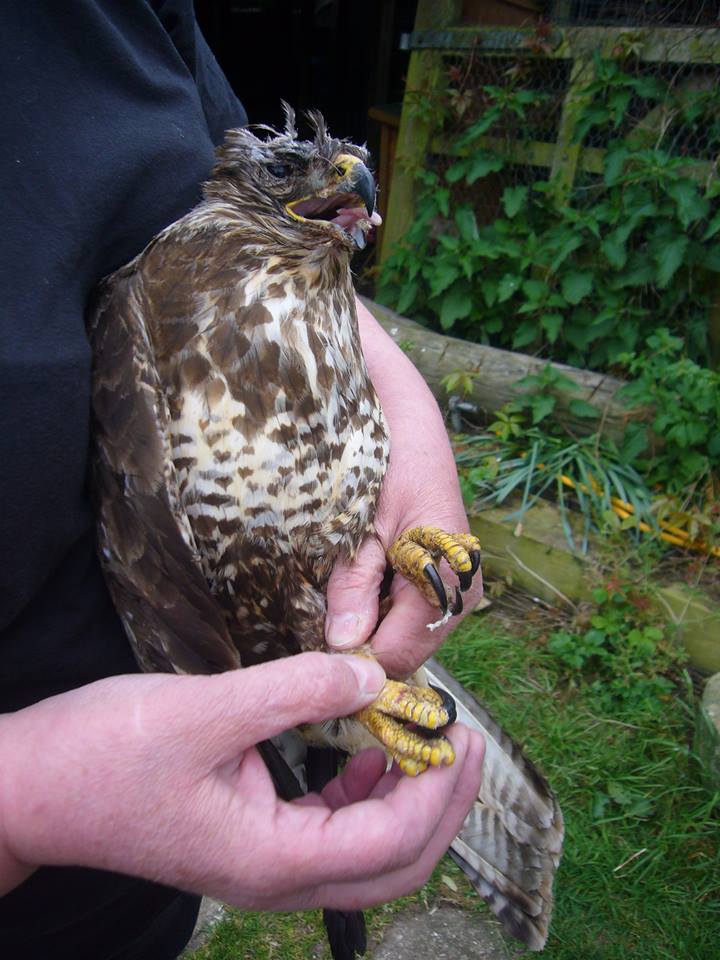
Peregrine found shot in Hampshire

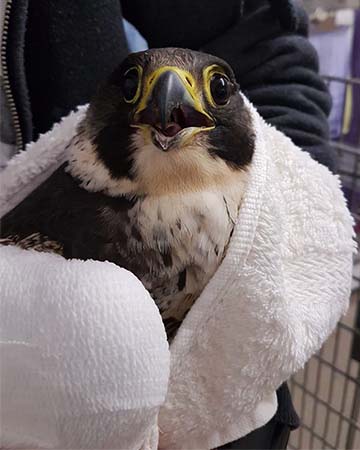
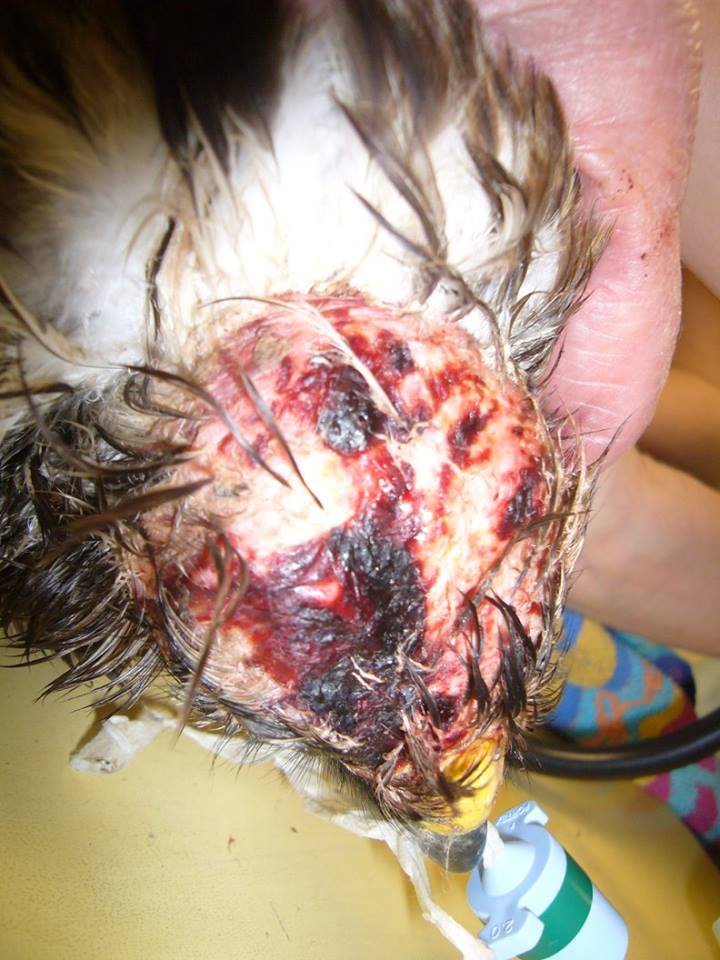
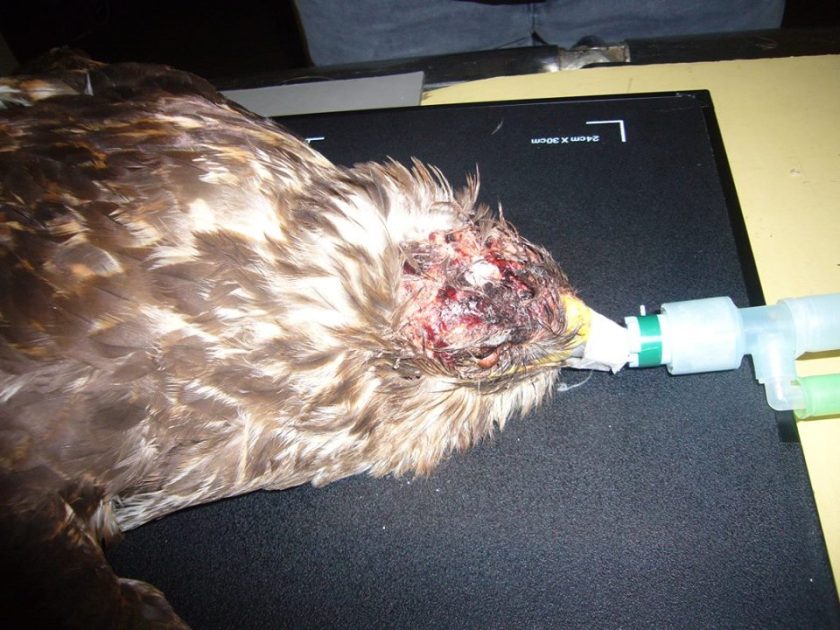
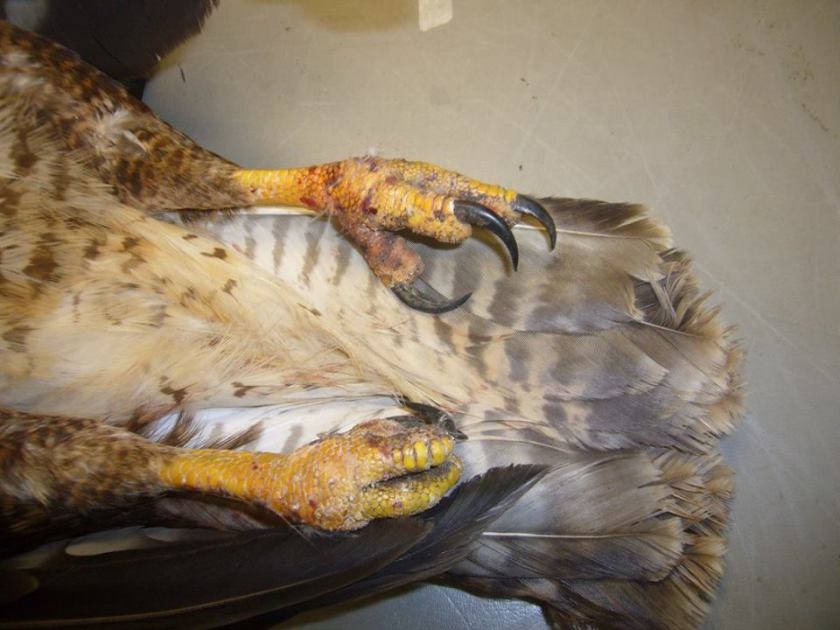
The RSPB’s investigations team is reporting the discovery of a shot peregrine in Hampshire.

The bird, which hatched on Salisbury Cathedral in 2014, was found in King Somborne, Hants, on 11 March 2017, unable to fly.

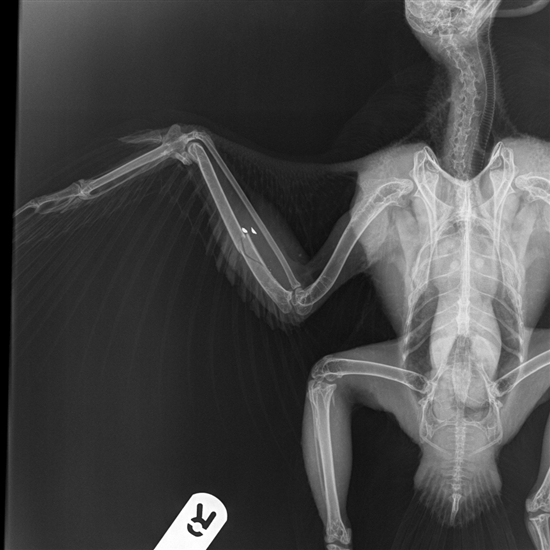
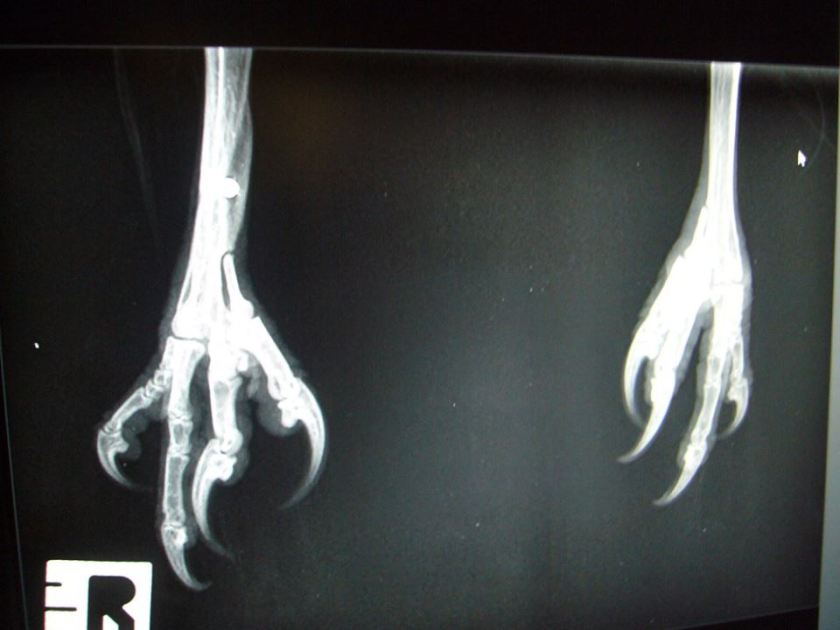
It was taken to the Hawk Conservancy Trust in Andover where an x-ray revealed it had a fractured wing with gunshot fragments lodged next to the fracture site.

The peregrine is currently undergoing rehabilitation at the Hawk Conservancy Trust.

For further details see the RSPB Investigations Team blog here, which also lists some of the other peregrines that have been found so far this year, either shot or found dead in suspicious circumstances.

Meanwhile, the Police Service of Northern Ireland (PSNI) has joined forces with the Northern Ireland Raptor Study Group to proactively protect peregrine breeding sites throughout the region. Real partnership working – good for them. More information can be found on the NIRSG website here.

UPDATE 25 May 2017: Shot peregrine successfully rehabilitated and returned to the wild by Hawk Conservancy Trust (see here).

UPDATE 22 July 2018: Salisbury peregrine ‘Peter’ – shot last year, Dad this year (here)

Dead peregrine in Cumbria: x-ray reveals historical lead shot fragments

Cumbria Constabulary have launched an investigation after the discovery of a dead peregrine, according to the Westmorland Gazette.

The bird was found by walkers on a public footpath in Bove Wood, Newbiggin but the article doesn’t say when the corpse was found.

The peregrine was submitted for a post mortem and although the cause of death couldn’t be established, an x-ray revealed the bird was carrying three fragments of lead shot, thought to be historical.

PC Sarah Rolland said: “It is quite apparent that the peregrine recovered from Newbiggin had been shot at some stage in its life. However, the post mortem indicates the fragments of shot may be historic and were not the direct cause of its death. It is therefore difficult to establish when or where the bird was shot“.

As an aside, it’s interesting that Cumbria police accept that the x-ray clearly shows the peregrine had been shot, and yet an equally clear x-ray of hen harrier Rowan’s leg, containing metal shot fragments, wasn’t deemed to be clear and only resulted in the Cumbria police statement, ‘Rowan was likely to have been shot‘. Fascinating.

Another red kite shot dead in Nidderdale, North Yorkshire

North Yorkshire Police are appealing for information after the discovery of a yet another shot red kite.

The latest victim was found near Greenhow, in Nidderdale, on the afternoon of Saturday 11 March 2017.

Anyone with information is asked to contact Police Wildlife Crime Officer David MacKay: david.mackay@northyorkshire.pnn.police.uk and quote reference number 12170047155.

Last year North Yorkshire Police investigated the deaths of 10 red kites that had been shot or poisoned in the county. The Nidderdale Area of Outstanding Natural Beauty and the neighbouring Yorkshire Dales National Park are notorious black spots for raptor persecution, particularly for red kites and hen harriers. This region is dominated by land managed for driven grouse shooting.

Photo of red kite by Claire Marshall

‘Official’ 2016 raptor persecution maps are a misleading distraction

Today the Partnership for Action against Wildlife Crime (Scottish PAW Raptor group) has published the so-called ‘official’ annual raptor persecution maps showing details of recorded raptor persecution crimes for 2016.

Once again, Police Scotland has withheld information about several incidents ‘for operational reasons’ and as such these are not included on the ‘official’ map. Some details have been included in the accompanying summary data tables but even information as basic as the species affected has not been published.

Here’s the ‘official’ map purportedly showing ‘ALL’ recorded bird of prey crimes in Scotland from 2013 to 2016:

However, just as last year, some incidents are not shown and so the title of this map is totally misleading. As we’ve said before, there is no point whatsoever publishing these maps if Police Scotland is going to keep some of these crimes a secret. Seriously, what is the point?

The PAW Raptor group is headlining today’s news as a “26% drop in recorded bird of prey offences during 2016“. No doubt this supposed ‘good news’ will be used by the game-shooting industry as evidence that things are improving. On a superficial level this looks like a reasonable conclusion, but as well as the withholding of known poisoning offences, other information has also been excluded.

For example, there is no mention at all about the four satellite-tagged golden eagles that are known to have ‘disappeared’ in suspicious circumstances in 2016: three of them ‘disappeared’ on grouse moors in the Monadhliaths and one ‘disappeared’ on a grouse moor in the Angus Glens.

There is also no mention of the three satellite-tagged hen harriers that are also known to have ‘disappeared’ in suspicious circumstances in 2016: ‘Chance‘ disappeared on a South Lanarkshire grouse moor in May 2016; ‘Elwood‘ vanished on a Monadhliaths grouse moor in August 2016;  and ‘Brian‘ vanished on a grouse moor in the Cairngorms National Park in August 2016.

PAW Scotland will argue that these data have not been included because they do not represent confirmed persecution crimes. Technically, that’s fair comment, but given the frequency with which satellite-tagged raptors are ‘disappearing’ on Scottish grouse moors, they point to a much more sinister picture, as recognised by the Environment Cabinet Secretary when she ordered a review of raptor sat tag data last year. She also mentions that review in her comments about today’s supposed ‘good news’.

As far as we’re concerned, the PAW Scotland raptor persecution maps are a misleading distraction from what is actually going on in the Scottish uplands. All eyes should be on the forthcoming raptor satellite tag review for a more meaningful and revealing picture.

PAW Scotland press release here

PAW Scotland persecution maps and data here

41 eagles, 10 years, 0 prosecutions

Regular blog readers will know that from time to time we publish a list of eagles that are known to have been illegally killed, or have ‘disappeared’ (i.e. their satellite tag suddenly stops functioning) in Scotland.

The last update was in August 2016 when the RSPB revealed that eight satellite-tagged golden eagles had ‘disappeared’ on grouse moors in the Monadhliaths between 2011 and 2016.

Last week we blogged about another ‘disappearing’ golden eagle, this time a young bird that had been tagged in Perthshire in 2014 and whose satellite signal suddenly stopped functioning two years later when the eagle was visiting an Angus Glens grouse moor. It’s time to add that eagle to our list.

As before, a number of eagles included in this list (17 of them, to be precise) may not be dead. However, they are included here because their satellite tags unexpectedly stopped functioning (i.e. they’d been transmitting perfectly well up until the eagles’ last known location, often a known persecution hotspot). Two further satellite-tagged eagles (‘Angus’ and ‘Tom’) are not included in this list as although their transmitters stopped functioning, there had been recognisable problems with their tags prior to the final transmissions and so the benefit of the doubt has been applied.

It’s also worth reiterating that the following eagles are only the ones we know about. How many un-tagged eagles are illegally killed each year?

MAY 2006: A dead adult golden eagle was found on the Dinnet & Kinord Estate, near Ballater, Aberdeenshire. Tests revealed it had been poisoned by the illegal pesticide Carbofuran. Grampian Police launched an investigation. No prosecution.

JUNE 2006: A dead golden eagle was found on Glen Feshie Estate in the Cairngorms. Tests revealed it had been poisoned by the illegal pesticide Carbofuran. Northern Constabulary launched an investigation. No prosecution.

AUGUST 2007: A dead adult female golden eagle was found on an estate near Peebles in the Borders. She was half of the last known breeding pair of golden eagles in the region. Tests revealed she had been poisoned by the illegal pesticide Carbofuran. Lothian & Borders Police launched an investigation. No prosecution.

NOVEMBER 2007: Tayside Police received a detailed tip-off that a young male white-tailed eagle (known as ‘Bird N’) had allegedly been shot on a grouse moor estate in the Angus Glens. The timing and location included in the tip-off coincided with the timing and location of the last-known radio signal of this bird. The eagle has not been seen again. With no carcass, an investigation wasn’t possible.

MAY 2008: A one year old male white-tailed eagle hatched on Mull in 2007 and known as ‘White G’ was found dead on the Glenquoich Estate in the Angus Glens. Tests revealed he had been poisoned by an unusual concoction of pesticides that included Carbofuran, Bendiocarb and Isofenphos. A police search in the area also revealed a poisoned buzzard, a baited mountain hare and 32 pieces of poisoned venison baits placed on top of fence posts on the neighbouring Glenogil Estate. Laboratory tests revealed the baited mountain hare and the 32 poisoned venison baits contained the same unusual concoction of highly toxic chemicals that had killed the white-tailed eagle, ‘White G’. No prosecution.

JUNE 2009: An adult golden eagle was found dead at Glen Orchy, Argyll, close to the West Highland Way. Tests revealed it had been poisoned by the illegal pesticide Carbofuran. Strathclyde Police launched a multi-agency investigation. Three years and 3 months later, estate employee Tom McKellar pled guilty to possession of Carbofuran stored in premises at Auch Estate, Bridge of Orchy and he was fined £1,200. No prosecution for poisoning the golden eagle.

JULY 2009: A two year old female golden eagle known as ‘Alma’ was found dead on the Millden Estate in the Angus Glens. Tests revealed she had been poisoned by the illegal pesticide Carbofuran. Alma was a well-known eagle  – born on the Glen Feshie Estate in 2007, she was being satellite-tracked and her movements followed by the general public on the internet. Tayside Police launched an investigation. No prosecution.

AUGUST 2009: A young white-tailed eagle was found dead on Glenogil Estate in the Angus Glens. Tests revealed it had been poisoned by the illegal pesticide Carbofuran. Tayside Police was criticized in the national press for not releasing a press statement about this incident until January 2010. No prosecution.

MAY 2010: #1 of three dead golden eagles found on or close to Skibo Estate, Sutherland. Tests revealed they had been poisoned; two with Carbofuran and one with Aldicarb. Northern Constabulary launched a multi-agency investigation. One year later (May 2011), Sporting Manager Dean Barr pled guilty to possession of 10.5 kg of Carbofuran stored in premises at Skibo Estate. No prosecution for poisoning the golden eagle.

MAY 2010: #2 of three dead golden eagles found on or close to Skibo Estate, Sutherland. Tests revealed they had been poisoned; two with Carbofuran and one with Aldicarb. Northern Constabulary launched a multi-agency investigation. One year later (May 2011), Sporting Manager Dean Barr pled guilty to possession of 10.5 kg of Carbofuran stored in premises at Skibo Estate. No prosecution for poisoning the golden eagle.

MAY 2010: #3 of three dead golden eagles found on or close to Skibo Estate, Sutherland. Tests revealed they had been poisoned; two with Carbofuran and one with Aldicarb. Northern Constabulary launched a multi-agency investigation. One year later (May 2011), Sporting Manager Dean Barr pled guilty to possession of 10.5 kg of Carbofuran stored in premises at Skibo Estate. No prosecution for poisoning the golden eagle.

JUNE 2010: #1: Leg rings with unique identification numbers that had previously been fitted to the legs of four young golden eagles in nests across Scotland were found in the possession of gamekeeper James Rolfe, during a multi-agency investigation into alleged raptor persecution at Moy Estate, near Inverness. It is not clear how he came to be in possession of the rings. The bodies of the eagles from which the rings had been removed were not found. No further action was taken in relation to the discovery.

JUNE 2010: #2: Leg rings with unique identification numbers that had previously been fitted to the legs of four young golden eagles in nests across Scotland were found in the possession of gamekeeper James Rolfe, during a multi-agency investigation into alleged raptor persecution at Moy Estate, near Inverness. It is not clear how he came to be in possession of the rings. The bodies of the eagles from which the rings had been removed were not found. No further action was taken in relation to the discovery.

JUNE 2010: #3: Leg rings with unique identification numbers that had previously been fitted to the legs of four young golden eagles in nests across Scotland were found in the possession of gamekeeper James Rolfe, during a multi-agency investigation into alleged raptor persecution at Moy Estate, near Inverness. It is not clear how he came to be in possession of the rings. The bodies of the eagles from which the rings had been removed were not found. No further action was taken in relation to the discovery.

JUNE 2010: #4: Leg rings with unique identification numbers that had previously been fitted to the legs of four young golden eagles in nests across Scotland were found in the possession of gamekeeper James Rolfe, during a multi-agency investigation into alleged raptor persecution at Moy Estate, near Inverness. It is not clear how he came to be in possession of the rings. The bodies of the eagles from which the rings had been removed were not found. No further action was taken in relation to the discovery.

JUNE 2010: A golden eagle was found dead on Farr & Kyllachy Estate, Inverness-shire. Tests revealed it had been poisoned by the illegal pesticide Carbofuran. Northern Constabulary apparently did not search the property until July 2011. No prosecution.

JUNE 2010: A white-tailed eagle was found dead on Farr & Kyllachy Estate, Inverness-shire. Tests revealed it had been poisoned by the illegal pesticide Carbofuran. Northern Constabulary apparently did not search the property until July 2011. No prosecution.

DECEMBER 2010: A decomposing carcass of a white-tailed eagle was found and photographed on Logie (Lochindorb) Estate, Morayshire. It was reported to Northern Constabulary. By the time the police arrived to collect it, the carcass had disappeared. The police said they couldn’t investigate further without the body.

FEBRUARY 2011: The signal from a young satellite-tracked golden eagle ( ‘Lee’, hatched in 2010) unexpectedly stopped transmitting after a final signal from the North Angus Glens. A technical malfunction or another mysterious ‘disappearance’?

MARCH 2011: The body of a young golden eagle was discovered on North Glenbuchat Estate, Aberdeenshire. Tests revealed it had been poisoned by the illegal pesticide Carbofuran. Grampian Police launched an investigation and raided the property in May 2011. A poisoned buzzard, a poisoned bait and a shot short-eared owl were found. No prosecution.

APRIL 2011: The body of a white-tailed eagle was found at the base of cliffs on Skye. The person who discovered it (a professional medic) considered it to have been freshly shot with a rifle, decapitated with a sharp implement and thrown from the cliff top. He took photographs and alerted Northern Constabulary and RSPB. There was a delay of two weeks before the now probably decomposed carcass was collected. A post-mortem was inconclusive. This incident was not made public until one year later after a tip off to this blog. No prosecution.

SEPTEMBER 2011: The signal from a satellite-tracked young golden eagle (‘Strathy’, hatched in 2010) unexpectedly stopped transmitting after a final signal from an Aberdeenshire grouse moor. A technical malfunction or another mysterious ‘disappearance’?

NOVEMBER 2011: The signal from a one-year-old satellite-tracked golden eagle (#57124) unexpectedly stopped transmitting after a final signal from a grouse moor in the Monadhliaths. A technical malfunction or another mysterious ‘disappearance’?

MARCH 2012: The body of a young golden eagle being tracked by satellite was discovered in Lochaber. Tests revealed it had been poisoned with the banned pesticides Aldicarb and Bendiocarb. Information about this incident was not made public until three months later. No prosecution.

MARCH 2012: The signal from a satellite-tracked young golden eagle (‘Angus 26′, hatched in 2011) unexpectedly stopped transmitting after a final signal from a grouse moor in the Angus Glens. This bird’s suspiciously damaged sat tag was found in the area. No prosecution.

MAY 2012: The signal from a young satellite-tracked golden eagle (#32857) unexpectedly stopped transmitting when the bird was north-east of the Cairngorms National Park. A technical malfunction or another mysterious ‘disappearance’?

MAY 2012: The dead body of a young satellite-tracked golden eagle (hatched in 2011) was discovered near a lay-by in Aboyne, Aberdeenshire. The data from its satellite tag & the injuries the bird had when found (2 broken legs) suggested it had been caught in an illegal trap on a grouse moor in the Angus Glens and then removed, under cover of darkness, to be dumped in another area where it was left to die, probably a slow and agonising death. Information on this incident was not released until almost five months later, by the RSPB. It appears the police failed to properly investigate this incident as we understand that no search warrants were issued and no vehicles were searched. No prosecution.

JULY 2012: The signal from a one-year-old satellite-tracked golden eagle (‘Foinaven’) unexpectedly stopped transmitting after a final signal from a grouse moor in the Monadhliaths. A technical malfunction or another mysterious ‘disappearance’?

OCTOBER 2012: An adult golden eagle was found shot and critically injured on grouse moor at Buccleuch Estate, near Wanlockhead, South Lanarkshire. The bird was rescued by the SSPCA and underwent surgery but it eventually succumbed to its injuries in April 2013. No prosecution.

MAY 2013: The signal from a two-year-old satellite tracked golden eagle (‘Angus 33′, hatched in 2011) unexpectedly stopped transmitting after its last signal from North Glenbuchat Estate in Aberdeenshire. A technical malfunction or another mysterious ‘disappearance’?

JUNE 2013: A dead golden eagle was found under power lines on an RSPB reserve on Oronsay. This bird had been shot although it is not known whether this was the cause of death or an historical injury.

JULY 2013: The signal from a young satellite tracked golden eagle (‘Cullen’, hatched 2010) unexpectedly stopped transmitting after its last signal in Aberdeenshire. A technical malfunction or another mysterious ‘disappearance’?

DECEMBER 2013: A two year old satellite tracked golden eagle (‘Fearnan’) was found dead on a grouse moor in the Angus Glens. Tests revealed he had been poisoned with the banned pesticide Carbofuran. No prosecution.

MARCH 2014: The signal from a one-year-old satellite-tagged golden eagle (#129002) unexpectedly stopped transmitting after a final signal from a grouse moor in the Monadhliaths. A technical malfunction or another mysterious ‘disappearance’?

APRIL 2014: The signal from a young satellite tracked white-tailed eagle (the first fledged sea eagle chick in East Scotland in ~200 years) unexpectedly stopped transmitting after its last signal from the North Glenbuchat Estate in Aberdeenshire. Police raided the property a couple of weeks later. No prosecution.

OCTOBER 2014: The signal from a one-year-old satellite-tagged golden eagle (#107133) unexpectedly stopped transmitting after a final signal from a grouse moor in the Monadhliaths. A technical malfunction or another mysterious ‘disappearance’?

OCTOBER 2014: The signal from a two-year-old satellite-tagged golden eagle (#119886) unexpectedly stopped transmitting after a final signal from a grouse moor in the Monadhliaths. A technical malfunction or another mysterious ‘disappearance’?

MARCH 2016: The signal from a satellite-tagged golden eagle (tagged in Perthshire 2014) unexpectedly stopped transmiting after a final signal from a grouse moor in the Angus Glens. A technical malfunction or another mysterious ‘disappearance’?

MAY 2016: The signal from a less-than-one-year-old satellite-tagged golden eagle (#00000583) unexpectedly stopped transmitting after a final signal from a grouse moor in the Monadhliaths. A technical malfunction or another mysterious ‘disappearance’?

JUNE 2016: The signal from a two-year-old satellite-tagged golden eagle (#129010) unexpectedly stopped transmitting after a final signal from a grouse moor in the Monadhliaths. A technical malfunction or another mysterious ‘disappearance’?

JULY 2016: The signal from a two-year-old satellite-tagged golden eagle (#129015 ‘Brodie’) unexpectedly stopped transmitting after a final signal from a grouse moor in the Monadhliaths. A technical malfunction or another mysterious ‘disappearance’?

37 of the listed 41 eagles have either been found dead on, or have ‘disappeared’ on, Scottish grouse moors. (The other 4 have either died or have ‘disappeared’ in other habitat types).

Four of these 41 eagles ‘disappeared’ in 2016. So much for the grouse-shooting industry claiming that they’ve cleaned up their act and that persecution is a thing of the past. The tactics of how to kill an eagle have clearly changed (see here) but the persecution continues.

Last summer, in response to the news that eight tagged golden eagles had ‘disappeared’ in the Monadhliaths over a five year period, Environment Cabinet Secretary Roseanna Cunningham ordered a review of satellite tag datato discover if there is a pattern of suspicious activity“.

We are expecting the review to be published some time in April and we expect it to show what decades of scientific research has already clearly demonstrated: that golden eagles (and several other raptor species) are routinely killed or suspiciously ‘disappear’ on land intensively managed for driven grouse shooting.

We expect this review to be a seminal piece of research and if it shows what we anticipate it will show, the Scottish Government can expect to be put under enormous pressure to respond appropriately.

Hen Harrier Rowan’s injuries “entirely consistent with being shot”

In the latest edition of the RSPB’s Legal Eagle newsletter (here), there’s an article about how satellite tag technology is shining a bright light on illegal raptor persecution.

We were particularly interested to read the following paragraph:

In October 2016, Cumbria Constabulary announced that, following some excellent fieldwork by Natural England, one of the Natural England / Hawk & Owl Trust sponsored birds, Rowan, had been found dead on the edge of the county. The Zoological Society of London post mortem examination, including a radiograph of its fractured left leg, showed the bird’s injuries were entirely consistent with it having been shot‘.

Well, well, well. ‘Injuries entirely consistent with being shot‘ is a very different message from that put out by Natural England, Cumbria Constabulary and the Hawk & Owl Trust, who claimed Rowan was only ‘likely to have been shot’ (see here and here).

Indeed, when challenged about the lack of transparency, the Hawk & Owl Trust conjured up this statement:

The initial post mortem results were not wholly conclusive and further metallurgical tests were required” (see here).

Last month we asked the Hawk & Owl Trust three questions about their statement:

  1. Who said the initial post mortem results weren’t wholly conclusive?
  2. Who said further metallurgical tests were required?
  3. Have those further metallurgical tests been done? If so, where are the results? If they haven’t been done, four months on, then why not if they were supposedly “required”?

The Hawk & Owl Trust has not responded. Perhaps they’re too busy looking for a big enough shovel to dig themselves out of the crater.

That’s the thing about cover-ups. They are usually uncovered, especially badly botched ones.

RSPB offers £1,000 reward for info on two shot buzzards in North Yorkshire

A week ago we blogged about the discovery of two dead buzzards found in North Yorkshire (see here).

One had been found shot near East Lutton and the other one had been found shot near Helmsley in the North York Moors National Park.

The Northern Echo has now run with an article about these shootings (here) and the RSPB is offering a £1,000 reward for any information which leads to a successful conviction.

Conversely, the Yorkshire Post has published an article about the ‘value’ of gamekeepers in North Yorkshire (see here). One of the gamekeepers, Michael Wearmouth from the Rosedale and Westerdale Estate, is quoted: “Mr Packham and others who don’t understand shooting at all are trying to make everybody hate us“.

Nope, sorry Michael, it’s not Chris Packham et al at whom who you need to be pointing the finger, it’s the criminals from within your own industry who are causing public outrage by continuing to kill birds of prey, over 60 years since it became an offence. Just last year an horrifically injured buzzard was discovered on a Westerdale grouse moor and it wasn’t an isolated crime. North Yorkshire continues to hold the record for the highest number of reported raptor crimes in the UK.

Two more buzzards shot dead in North Yorkshire

Two buzzards have been found shot dead in separate incidents in North Yorkshire.

One was found with shot gun injuries near East Lutton and the other one was found with shot gun injuries at Sutton Bank top near Helmsley in the North York Moors National Park.

Information and photos from Jean Thorpe (Ryedale Wildlife Rehabilitation Centre).

No further details available but hopefully North Yorkshire Police will issue a press release soon.

If you have any info please contact Police Wildlife Crime Officer Jez Walmsley: jeremy.walmsley@northyorkshire.pnn.police.uk 

Buzzard shot dead in Nidderdale, North Yorkshire

nyorks-policeNorth Yorkshire Police have issued the following press release:

Buzzard shot in Nidderdale Area of Outstanding Natural Beauty

North Yorkshire Police are investigating an incident in which a Buzzard was shot in the Nidderdale Area of Outstanding Natural Beauty.

A dead buzzard was found on 1 February 2017 in an area called High Skelding, near the village of Grantley It was in a small coniferous plantation close to where the Ripon Rowel footpath crosses the upper River Skell.

The police arranged for an x-ray at a local vet and this shows that the bird had been shot. It is thought to have been shot between 31st January and 1st February.

Buzzards, along with all wild birds, are protected under the Wildlife and Countryside Act 1981 and it is a criminal offence to kill or injure any wild bird. The government has set persecution of birds of prey as one of their wildlife crime action priorities.

If you have any information about this crime please contact North Yorkshire Police on 101. After being connected to North Yorkshire Police select option 1 and quote reference number 12170018791 when passing on information. Alternatively contact the investigating officer PC820 Hickson by email: bill.hickson@northyorkshire.pnn.police.uk

ENDS

A good, detailed press release and appeal to the public that has only taken three weeks, not three years, to come out (take note Police Scotland).

North Yorkshire is consistently rated the worst county in the UK for the number of reported crimes against raptors, and a lot of it takes place in the Nidderdale Area of Outstanding Natural Beauty and the neighbouring Yorkshire Dales National Park. We were only talking about this region two weeks ago in relation to the poisoning of red kites.

Gamekeeper chat

The following conversation took place on a Facebook page called ‘Gamekeeper chat’ on 12 February 2017. They were discussing buzzards:

Not very bright, is he?

Shall we just remind ourselves what Dr Colin Sheddon (BASC) said in his recent evidence to the Scottish Parliament’s Environment Committee? He told MSPs that a licensing scheme to regulate gamebird hunting in Scotland wasn’t necessary as all those who shoot game are already regulated via their shotgun certificates and that “shotgun certificate holders are among the most law-abiding sector of society and any hint of illegal activity can lead to the right to hold a certificate, and the ability to shoot, being withdrawn“.