Shot buzzard in Essex: an update

Last week we learned that Essex Police were investigating the shooting of a buzzard found on 4th September 2020 at Davy Down Riverside Park, South Ockendon (see here).

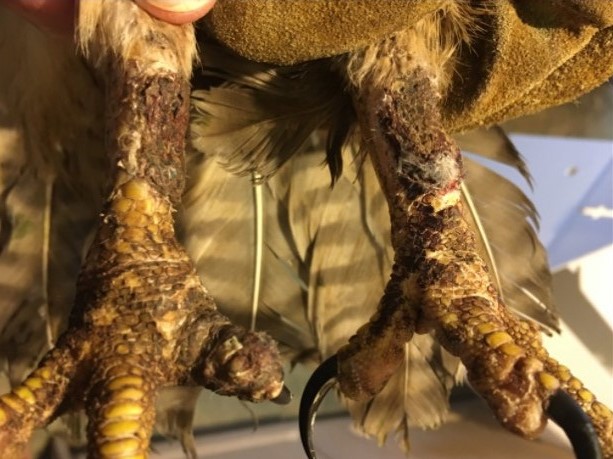
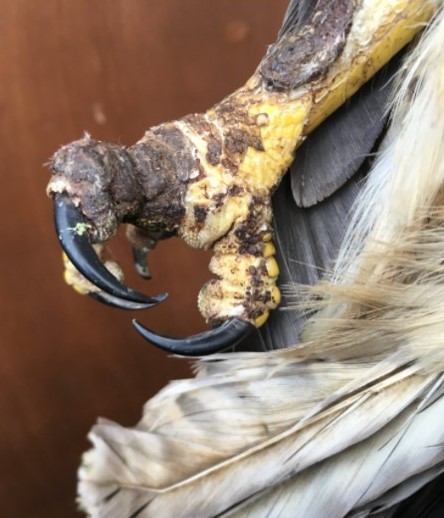
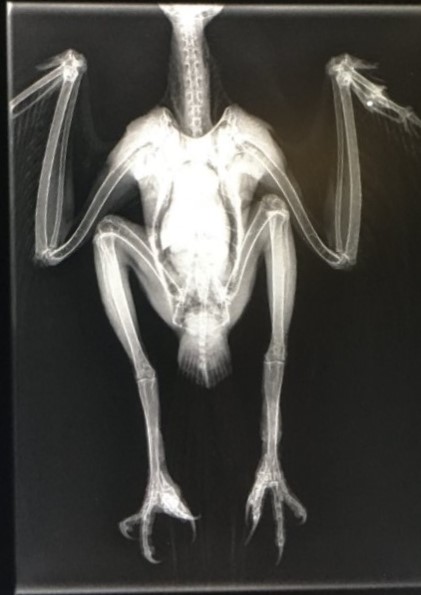
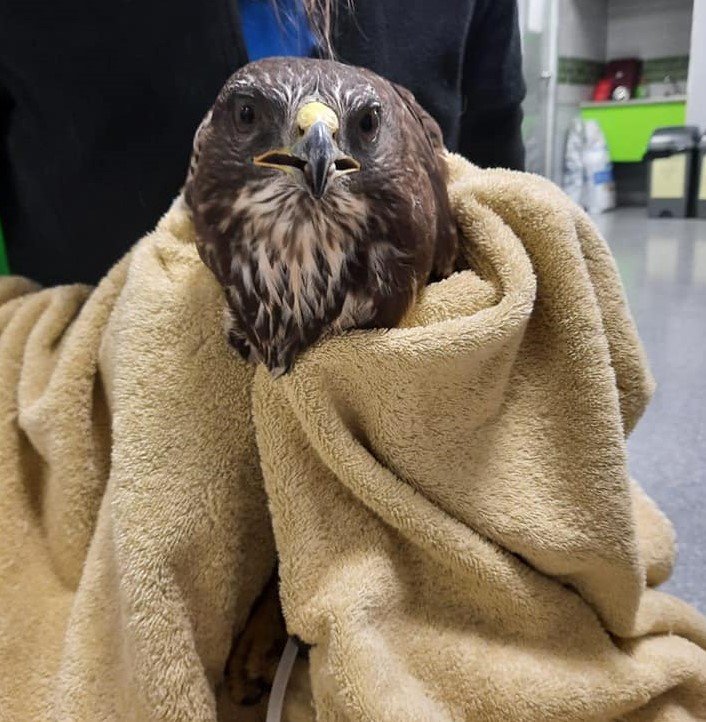
We’ve now been sent photos of the dead bird and an incident number has been issued: 42/141700/20

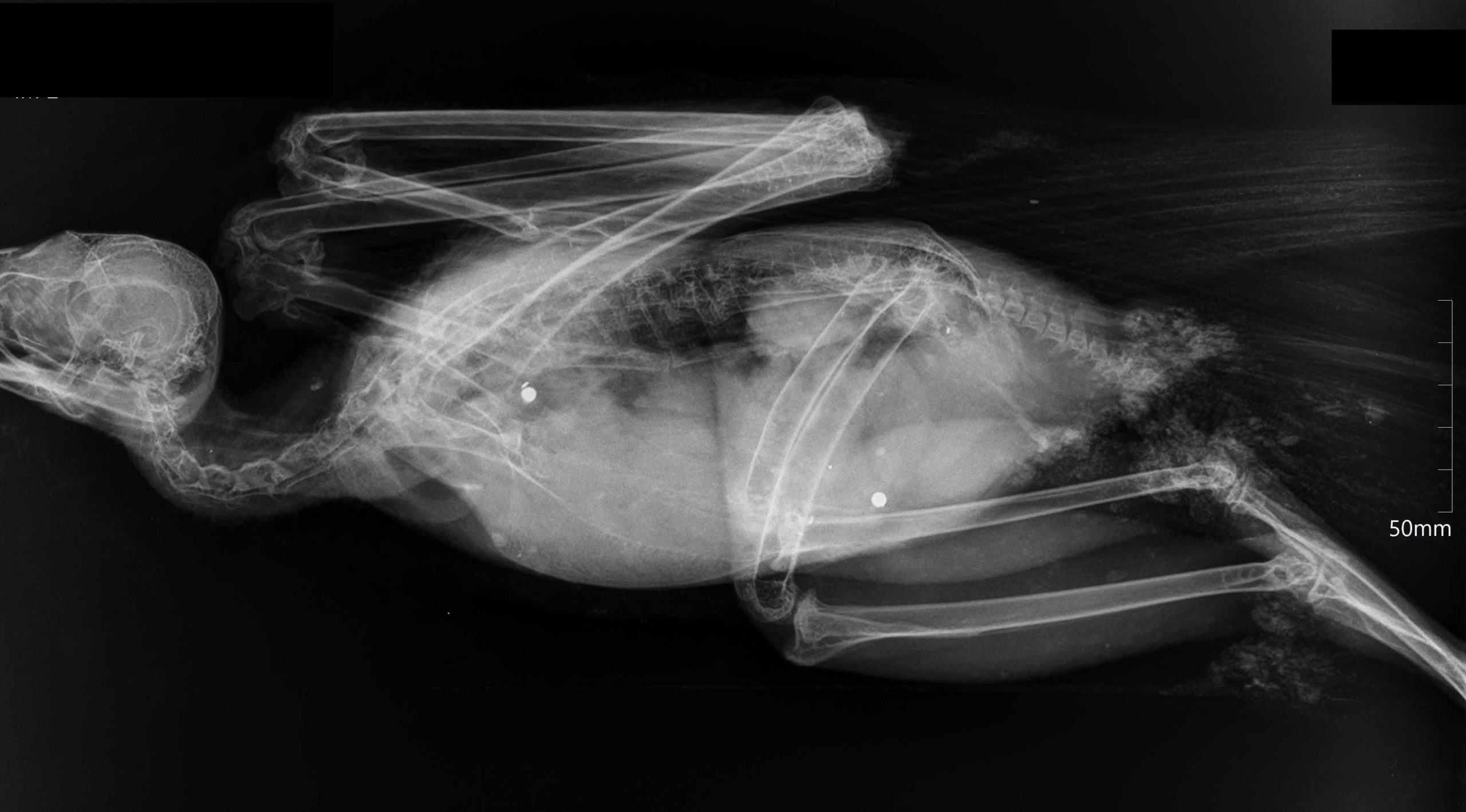
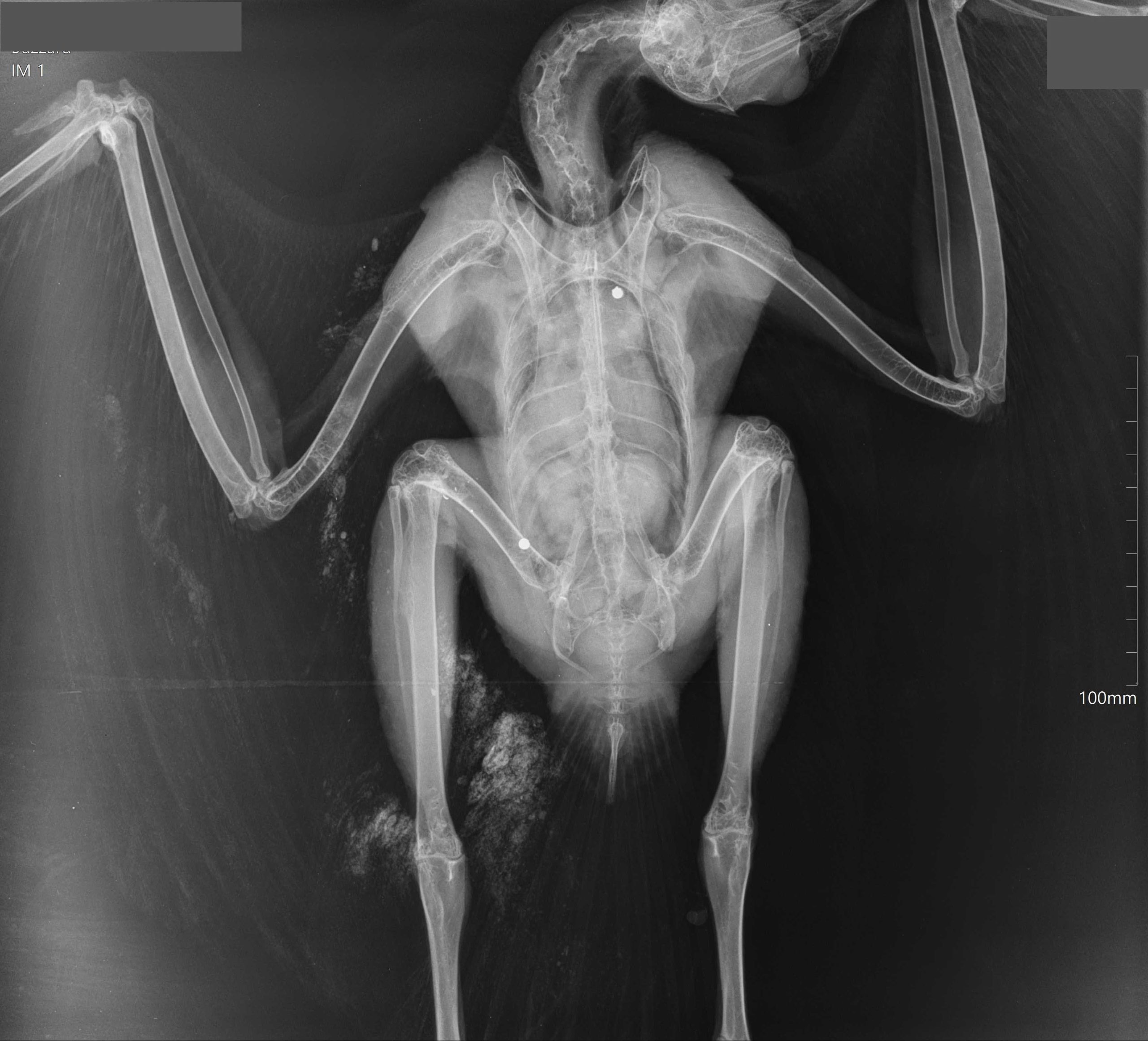
[Shot buzzard, photos via Essex Police]

There still isn’t any information about the type of weapon used to shoot this buzzard but we do know, judging by the maggots in the second photo, that it was shot well before the discovery of the corpse on the 4th September.

Anyone with information please contact PC Jed Raven from Essex Police Wildlife Crime Unit on 101 and quote reference: 42/141700/20

This is the third bird of prey shooting in Essex in recent months, following a shot buzzard found near Weeley on 2nd June (here) and a shot hobby found at North Fambridge in August (here).

Shot peregrine in Gloucestershire – an update

In mid-August we blogged about a shot peregrine that had been found critically injured in Gloucestershire and was later euthanised due to the extent of its injuries (see here).

[The shot peregrine, photo from Vale Wildlife Hospital]

There was very little information available about this crime at the time but now Gloucestershire Police are appealing for witnesses.

The shot peregrine was found near Northleach in the Cotswolds Area of Outstanding Natural Beauty.

Anyone with information is urged to contact PC Ashley Weller on 101, quoting incident # 349/16/08.

Eagle shot, satellite tag dumped in reservoir, suspect identified via tag data

A man who shot and killed an eagle, removed its satellite tag and dumped it in a reservoir, and then dumped the eagle’s corpse in a bin, has been tracked down thanks to the data provided by the eagle’s tag.

This is a news story from Andalucia in southern Spain, translated via Google (here) so bear with it.

A young Bonelli’s eagle was fitted with a satellite tag in its nest in May 2020 as part of a Spanish LIFE project trying to address this species’ population decline (here).

[A tagged Bonelli’s eagle, photo from Aquila a-LIFE Project]

On 27th August, the researchers tracking the eagle’s movements via the tag’s data reported to the authorities that the eagle appeared to be floating in the Iznajar Reservoir, near a bridge.

A patrol visited the site and found the tag but no sign of the eagle.

Meanwhile, the police were able to retrace the route of the tag from the time when the data suggested the bird had been killed (11.53 – 12.23hrs) on a hunting (shooting) estate. They also located two points where they found Bonelli’s eagle feathers – one on the hunting ground and one in the area where the hunters park their vehicles.

What are described as ‘subsequent investigations’ led the police to identify the suspect, who then attended voluntarily and admitted he’d accidentally shot the eagle and panicked when he saw the tag so he removed it and threw it in the reservoir and dumped the eagle in a bin.

A prosecution is expected.

[Police officers retrieving the eagle’s corpse from a bin]

Interesting, isn’t it?

This Spanish shooter could learn a lot from his Scottish counterparts. They’ve already learned that when you kill a satellite-tagged eagle you need to disable the tag before disposing of it, otherwise the tag will continue to transmit and give away its location.

Although disabling the tag and then hiding it, and the corpse of the dead eagle, doesn’t hide the clear geographic pattern of the killings, as revealed by the superbly comprehensive and forensic analyses undertaken for the Govt-commissioned Golden Eagle Satellite Tag Review, amusingly still being described as “crap science” by those who don’t have any scientific credentials and don’t have any experience of satellite tags, but who do have a vested interest in wanting raptor satellite tracking to stop. Can’t imagine why.

The Scottish eagle killers have also learned that if you chuck a satellite tag into water you definitely need to ensure it’s been properly disabled first because some of them, depending on the tag model, will continue to function in water (remember Fred, anyone?), as this Bonelli’s eagle tag did.

Sometimes, though, simply disabling the tag isn’t always enough to cover your tracks…….there’ll be more on this very soon.

Police investigate shot buzzard remains found on Wirral pheasant shooting estate

The discovery of the remains of a buzzard have led to a joint investigation into alleged raptor persecution and other wildlife offences on a game-shooting estate on the Wirral.

The decomposed corpse was discovered next to a hunting tower on the estate in July 2020, according to a social media posting by a group called ‘Cheshire Against Blood Sports’. The buzzard’s decapitated head and legs were found close by. An x-ray at the RSPCA’s Stapeley Grange Wildlife Centre reportedly found the body was ‘peppered with shot’. It’s not known how old the corpse was but it’s clear from the photographs that decomposition was quite advanced.

[All photos from Cheshire Against Blood Sports]

Other allegations made by the group include ‘unchecked Larsen traps & decoy birds found dead in the trap’. The group has also posted photographs of what looks to be a clam trap with the decomposed remains of something in it, an uncovered Fenn trap (although the circumstances of its use are unclear) and a large stink pit containing the rotting corpses of wildlife.

The group reports that the joint Merseyside Police/RSPCA investigation concluded with a visit to the estate in late August where words of advice have apparently been given. There are not thought to be any impending prosecutions.

It’s believed the pheasant, partridge and duck shooting on the estate is leased to a third party.

[All photos from Cheshire Against Blood Sports]

This article was re-published on the Birdguides website on 13th September 2020.

Another buzzard shot in Essex

Essex Police are investigating the shooting of a buzzard on 4th September 2020 at Davy Down Riverside Park, South Ockendon.

[Buzzard. Photo by Ruth Tingay]

PC Jed Raven from Essex Police’s Wildlife Crime Unit has confirmed the buzzard was shot, however its condition is unknown and the type of weapon used is yet to be reported.

[UPDATE 7 Sept 2020: Police have confirmed the buzzard died]

Anyone with information please contact PC Jed Raven on 101.

UPDATE 11 Sept 2020: Shot buzzard in Essex: an update (here)

This is the third bird of prey shooting in Essex in recent months, following a shot buzzard found near Weeley on 2nd June (here) and a shot hobby found at North Fambridge in August (here).


More on Leadhills Estate’s individual licence to shoot crows

Back in November 2019, Scottish Natural Heritage (SNH) imposed a three-year General Licence restriction on Leadhills Estate in South Lanarkshire following ‘clear evidence from Police Scotland that wildlife crimes had been committed on this estate’ (see hereherehere, here, and here).

Those alleged offences included the ‘illegal killing of a short-eared owl, two buzzards and three hen harriers’ that had been ‘shot or caught in traps’ on Leadhills Estate since 2014. SNH also claimed that ‘wild birds’ nests had also been disturbed’, although there was no further detail on this. The estate denied responsibility, obviously.

[This male hen harrier was found with its leg almost severed, caught in an illegally-set trap next to its nest on Leadhills Estate in 2019. Despite valiant efforts by a top wildlife surgeon, the bird didn’t survive. Photo by Ruth Tingay]

As regular blog readers will know, a General Licence restriction is supposed to prevent an estate from killing so-called ‘pest’ species (e.g. crows) that would otherwise be permissible under the General Licences but estates can still apply to SNH for an ‘individual licence’ to circumvent the General Licence restriction and continue killing birds, albeit with a bit more paperwork to complete.

This ridiculous situation is a legal quirk, outlined in a Judicial Review, and isn’t SNH’s fault (although SNH could be doing a lot more to point out the system failings to the Scottish Government). Basically if a penalised estate isn’t provided with an opportunity to apply for an individual licence the estate could argue the system was unfair and the legality of the General Licence restriction probably wouldn’t stand. If further wildlife crimes are discovered on the estate when an individual licence is in place, SNH can revoke the individual licence but the estate can simply reapply for another one. We’ve discussed how the General Licence restriction is a wholly ineffective deterrent plenty of times in the past, (e.g. see herehereherehere) and last year we even gave evidence to this effect alongside RSPB Scotland and others to a Scottish parliamentary committee (here).

In July this year we discovered via a freedom of information request that SNH had indeed granted an individual licence to Leadhills Estate that was valid between 27 April – 1 June 2020. It permitted the shooting of two species, hooded crow and carrion crow, in a limited part of the estate and apparently to protect lambs (see here).

One of the conditions of the licence was that the estate had to submit a return to SNH no later than 1 July 2020, documenting all shooting and scaring activities undertaken under this licence.

We wanted to see this return and we also wanted to know the details of the compliance checks undertaken by SNH. SNH has stated previously that any individual licences issued to Leadhills Estate would be ‘closely monitored’ and this ‘tighter supervision is a proportionate response to protect wild birds in the area and prevent further wildlife crime’.

Another FoI was submitted and here is SNH’s response:

It’s all very interesting, isn’t it?

But not as interesting as the fact that Police Scotland are currently investigating a number of new alleged wildlife crimes on this estate (see here) including the alleged shooting of a(nother) short-eared owl by a masked gunman on a quad bike as witnessed by a local resident and his eight year old son (see here).

The question now is, in light of these new alleged offences and the obvious conclusion that imposing a three-year General Licence restriction did not prevent further wildlife crime taking place, as SNH thought it might, will SNH now extend Leadhills Estate’s three-year General Licence restriction as its policy allows if further evidence of wildlife crime is uncovered during the original three-year restriction period, and refuse the individual licence that the estate appears to want for next spring? Is there any point to further licence restrictions? It seems pretty ineffective, to be honest.

There are another couple of questions, too, but these are for Scottish Land & Estates (SLE), the grouse shooting owners’ lobby group. We’ve been asking these questions for years but SLE hasn’t replied yet. Can’t imagine why. These are really questions that should be asked by the so-called ‘partner organisations’ that serve alongside SLE on the so-called ‘partnerships’ such as the Partnership for Action against Wildlife Crime Raptor Group with its zero tolerance for raptor persecution. Here are the questions again, for old times’ sake:

  1. Is Leadhills Estate still a member of SLE?
  2. Is Lord Hopetoun of Leadhills Estate still Chairman of SLE’s Scottish Moorland Group?

TAKE ACTION

If you’re concerned about the level of illegal raptor persecution in the UK, especially the high incidence of killing that takes place on or close to driven grouse moors, you can sign this e-action which urges your politician to take note and actually do something about it.

Launched two weeks ago by three organisations: Wild Justice, the RSPB and Hen Harrier Action, so far over 86,000 people have signed up. All you need to do is enter your postcode and a polite, pre-written email will automatically be sent to your parliamentary representative asking them to stop ignoring this issue.

If you want to add your voice and give your elected politician a polite nudge, please sign up HERE and pass this link on to others.

Thank you

Hobby dies after suspected shooting in Essex

Essex Police’s Rural Engagement Team have been in touch to say they’ve had reports of a Hobby being shot and unfortunately not surviving its injuries.

This is believed to have happened between 14th-15th August (last Friday – Saturday) at Essex Wildlife Trust’s Blue House Farm Nature Reserve at North Fambridge.

The incident number is #42/127418 and is being investigated by PCs Andy Long & Jed Raven from Essex Police.

Please call 101 and quote the reference number if you have any information that could help.

[Photo of the shot Hobby via Essex Police].


Shot peregrine euthanised in Gloucestershire

A critically-injured peregrine has been euthanised after an x-ray revealed a shotgun pellet lodged in its wing, causing a catastrophic break.

[All photographs from Vale Wildlife Hospital]

The wounded bird was taken to Vale Wildlife Hospital near Tewkesbury, Gloucestershire today. There are no further details yet about where this illegally-shot peregrine was picked up.

Anyone with information please contact the Police on Tel: 101, or the RSPB Raptor Crime Hotline on Tel: 0300 999 0101 or anonymously Crimestoppers on Tel: 0800 555 111.


‘Everywhere we go there are dead animals’ – local residents detest grouse moor management

There’s a very interesting article in The Times today, debunking the picture often painted by the grouse shooting industry of moorland community harmony – a rural idyll where local residents are deliriously enthralled by the activities of the local grouse moor managers and thankful for the boost that grouse shooting brings to the local economy, without which the local community would apparently collapse. Oh, and it’s where unicorns live, too.

If the Campaign for the Protection of Moorland Communities (C4PMC) wasn’t so busy astroturfing for the grouse shooting industry, this story (below) is the one it should be telling, instead of spending thousands of pounds on Facebook to promote abusive and personal attacks on decent, hardworking conservationists who are simply seeking grouse moor reform (e.g. see here).

Today’s article in The Times comes on the back of last week’s news (here) that Police Scotland are investigating alleged wildlife crimes on the Leadhills Estate in South Lanarkshire (yes, that place again), including the suspicious disappearance of a satellite-tagged hen harrier and the shooting of a(nother) short-eared owl. The estate has denied all responsibility, obvs.

Written by journalist Lucy Bannerman, it takes a slightly different angle and focuses on the impact on local residents of having to live in the shadow of an estate as notorious as Leadhills.

Bannerman writes:

The estate has a notorious reputation as an alleged wildlife crime hotspot, where local monitors claim that at least 50 protected birds of prey have vanished or been found dead or dying in traps or by poisoned bait. One villager claims that even her cat has been poisoned.

The brazen manner of the latest killing, of the short-eared owl, has enraged residents, who are so sick of finding poisoned carcasses on the grouse moors around their homes that they have another name for the area: Deadhills.

“It’s devastating to lose another bird”, Steph Spode, 35, a local mother of four, said. “When you live here, you look around and at first you think, wow, look at those mountains. After a little while, you start to realise there’s nothing here. No trees. No wildlife. I can’t hear animals. I can’t see birds. When I go hiking there’s dead animals everywhere. What’s going on?“‘

It’s no surprise that there are ‘dead animals everywhere’ – a report published just yesterday (here) by the League Against Cruel Sports, as part of the Revive Coalition for Grouse Moor Reform, indicates that up to a quarter of a million animals are killed on Scottish grouse moors every year, many in the most gruesome and barbaric way imaginable.

Here’s a video we made last year with Chris Packham about the miserable death of a hen harrier, a supposedly protected species, that was found caught in an illegally-set trap at Leadhills last year:

The residents of Leadhills are not the only moorland community to speak out. Increasingly we’ve been hearing from local residents across the uplands who are finding their voices and speaking out against the damage this industry brings to their door. First we heard from local communities in the Yorkshire Dales National Park (see here and here), then from a community in the Nidderdale Area of Outstanding Natural Beauty (see here), and then from a local community in the North York Moors National Park (here).

And then there are those local communities who want to buy the moors and transform and restore them in to something for the whole community, not just for those who come to kill birds for a bit of a laugh.

The Langholm community is currently attempting to buy part of Langholm Moor in Dumfries & Galloway from the Duke of Buccleuch (e.g. see here) and now the Wanlockhead Community Trust has voted (see here) to buy another part of Buccleuch’s moorland at Wanlockhead, the neighbouring village to Leadhills.

If you read the Wanlockhead Community Trust feasibility study you’ll see there’s not much interest in maintaining the moors for grouse shooting.

Download the report here: Wanlockhead Community Trust Buyout Feasibility Study April 2020

TAKE ACTION

If you’re sick to the back teeth of illegal raptor persecution on driven grouse moors, please consider participating in this quick and easy e-action to send a letter to your local Parliamentary representative (MSP/MP/MS) urging action. Launched just a week ago by Wild Justice, RSPB and Hen Harrier Action, over 43,000 people have signed up so far.

This means that over 43,000 pre-written letters complaining about illegal raptor persecution and the environmental damage caused by intensive grouse moor management, are winging their way to politicians of all parties across the UK. If you want your local politician to receive one, Please join in HERE

Thank you


West Yorkshire Police appeal for information after peregrine shot in Bingley

West Yorkshire Police are appealing for information after a peregrine was found shot in Bingley yesterday (11th August 2020) according to an article in the Telegraph & Argus.

The injured bird was found by members of the public at Bingley Three Rise locks yesterday afternoon. It didn’t survive its injuries, which a vet has described as being caused by a pellet gun.

[The shot peregrine. Photos by Brian Goddard]

A spokesperson for West Yorkshire Police said:

Police were called during the afternoon of Tuesday August 11 by a vets surgery which made a third party report of a  Peregrine Falcon dying after being shot with a pellet gun.

Officers have recorded a crime for the killing of a protected schedule one bird and initial enquiries are underway.”

Anyone who has information about the incident is asked to contact the Bingley NPT on 101, referencing crime number 132004033337

To read the full article please click here