New study: raptor persecution in Wales 3 x more likely in areas managed for driven gamebird shooting

Press release from RSPB Wales (24th August 2021)

New research sheds light on crimes against birds of prey in Wales

The theft of eggs and chicks of birds of prey has almost ceased in Wales, but persecution rates are not declining – according to a new RSPB Cymru review, published today.

Crimes against raptors in Wales 1990-2019 – written by RSPB Cymru and published by the Welsh Ornithological Society – summarises the plight of raptors in Wales over the past three decades.

One of the key findings is that since the 1990s, egg and chick theft has almost ceased. Theft used to be a major problem in Wales, with eggs of raptors such as peregrines and red kites stolen by collectors. The chicks of goshawks and peregrines have also been targeted for the purposes of selling to falconers, including in the Middle East. But tougher penalties and a shift in public awareness and attitude has resulted in the detection of only a handful of cases in Wales over the past decade.

On the other side of the coin, the picture for raptor persecution (by shooting, trapping and poisoning) is less positive. While the number of confirmed incidents of raptor persecution fell in 2000 – 09 compared to the previous decade, there has been a marginal increase in the past decade. However, the real total could be much higher, as the number of confirmed persecution cases could only be the tip of the iceberg.

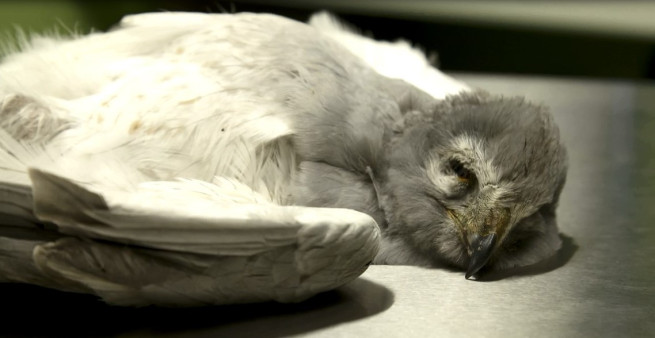
[This buzzard was found shot dead near Powys]

Most worryingly of all, the rate of poisoning cases has increased in the last 30 years, with 52 cases confirmed in the last decade. While laying poison baits in the open has been illegal since 1911, the review suggests that it remains a problem for wildlife in the Welsh countryside. Birds of prey, wild mammals and even household pets can fall victim to the abuse of pesticides.

Julian Hughes, RSPB Cymru Head of Species and lead author of the paper, said:

There has been good progress made over the past three decades to reduce the rate of crimes against our majestic birds of prey. The dramatic reduction in the theft of egg and chick shows that tougher action really does work. This has helped the welcome return of birds such as red kite that was once on the brink of extinction. However, the rise in persecution, and especially poisoning cases, is a big worry. There’s still work to be done to root out these deplorable acts of crime against wildlife.

The paper also shows that the probability of a persecution incident in 2010-19 was three times higher in areas where driven shooting of gamebirds is available for sale.

Julian Hughes continued:

The relationship between raptor persecution and driven shooting was stronger than we expected, and we think this deserves further investigation to understand.”

Anne Brenchley, Chair of the Welsh Ornithological Society, said:

Public awareness of raptor persecution has heightened in the last thirty years, often due to the concerted efforts of the RSPB. The Welsh Ornithological Society fully supports all attempts to reduce raptor persecution, particularly investigating the apparent link between persecution and gamebird management. We hope that the levels of detected illegal raptor persecution continues to decrease over the next thirty years.”

Rob Taylor, Welsh Government Wildlife and Rural Crime Coordinator, said:

Historically the human race has affected the population and even existence of many birds and habitats within Wales, for a variety of reasons. As a nation we have many iconic birds that proudly adorn our skies and we give credit to the work of the few who have gone that extra mile to maintain their essential conservation. The red kite and osprey are a prime example of a success story within Wales, although these can be still subject to unnecessary persecution even in 2021. We, the police and our key partner agencies, have a duty to prevent the further persecution of any bird within Wales and protect them and their habitats for future generations to come. My new role, sponsored by the Welsh Government, will ensure that we remain focused as a nation and the establishment of a Wales Bird Crime Enforcement Group will bring together the necessary expertise to achieve that. Our work today will maintain the natural beauty of our Welsh birds and visitors for generations to come.”

ENDS

The research paper has been published today in the journal of the Welsh Ornithological Society. Here’s the citation:

Hughes, J., Mason, H., Bruce, M. and Shorrock, G. (2021). Crimes against raptors in Wales 1990-2019. Birds in Wales 18 (1): 3-19.

The research paper can be downloaded here:

Shot goshawk in notorious persecution black spot: police investigation reaches dead end

In July this year, a shot goshawk was found in one the country’s most notorious raptor persecution black spots in the northern Monadhliaths in the Highlands (see here).

A member of the public discovered the dead bird in woodland managed by Forestry Land Scotland (FLS), which is close to land managed for grouse and pheasant shooting. The corpse was retrieved by the Police, FLS and the RSPB and sent for post mortem where it was confirmed it had been shot.

It is by no means unusual that masked gunmen will visit public woodland to attack goshawk nests (e.g. see herehere and here) especially as this highly efficient predator is a perceived threat to gamebird stocks and as such is despised by many in the game-shooting industry.

Police Scotland issued a timely appeal for information (here) and opened a criminal investigation.

Unfortunately, as with so many raptor persecution crimes, that investigation has now reached a dead end. A police spokesperson has advised that ‘all lines of enquiry have been completed, including CCTV, door to door enquiries, local enquiries, vet analysis of the remains, x-ray of remains, background checks, social media and traditional media press release‘.

There haven’t been any arrests and there won’t be any prosecutions unless new information comes to light.

Of course, this doesn’t mean that the crime didn’t take place (some in the game-shooting industry would have you believe that no prosecution = no crime), it just means that yet again, someone with access to a gun in this area has been able to commit a crime and will face zero consequences, just like the last time, and the time before that, and the time before that, and…..etc etc.

Police attend suspected peregrine shooting near Aylesbury, Buckinghamshire

Yesterday, Thames Valley Police (Aylesbury Vale) posted this on Facebook:

I haven’t been able to find any follow-up information, e.g. whether the peregrine was x-rayed to confirm/rule out shooting and there isn’t an incident number or an appeal for information on the Thames Valley Police website.

Meanwhile, the local press are reporting this as a confirmed shooting. Eg. see this headline from the Bucks Free Press:

Wouldn’t it be good if there was a national standard on how to report suspected raptor persecution crimes, that every police force could follow? And a central location where these verified reports could be found?

Opportunity for Prince Harry to blow the cover of the hen harrier killers

The ‘wall of silence’ maintained by many in the grouse-shooting industry to protect the identities of the raptor killers within their ranks is a well-known phenomenon. It’s been likened to the Mafia’s omertà, the code of silence about criminal activity and a refusal to provide evidence to the police.

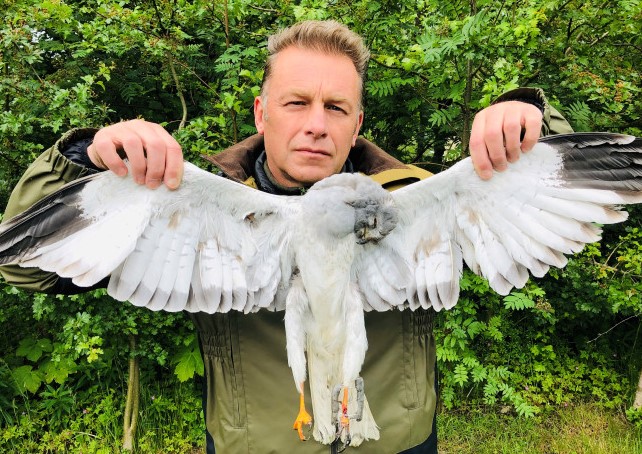
With news that Prince Harry has agreed a publishing deal with Random House to write his memoirs, including ‘the mistakes made, the lessons learned’, wildlife campaigners have been wondering whether he will use it to reveal what exactly went on at Dersingham Bog near Sandringham back in 2007 when he and his mate William van Cutsem were out shooting with a Sandringham Estate gamekeeper when a witness alleged two hen harriers had been shot. Harry and van Cutsem were interviewed by the police and denied all knowledge and no hen harrier corpses were found.

An article in the Guardian this last weekend examined the possibility of Harry using his memoirs to perhaps have more to say about not only this incident, but also to distance himself from the wider criminal link between driven grouse shooting and hen harrier persecution.

You can read the Guardian article in full here

iNews also carried a shortened version of the article here

It would have been quite good had the journalist not got his figures mixed up in this one paragraph:

Hen harriers have been illegally targeted particularly on upland moors because they prey on red grouse, for which there is a lucrative driven shooting industry on the moors. They virtually ceased breeding in England in the early 2000s because of persecution. They have since recovered to an estimated 330 pairs, but remain one of the rarest and most persecuted raptors in the UK‘.

If only hen harriers HAD recovered to an estimated 330 pairs in England! Sadly we are still a very long way from coming anywhere close to that number (unless DEFRA’s hen harrier brood meddling conservation sham has turned out to be extraordinarily good!).

What the journalist should have said was:

England has sufficient habitat to host at least 330 pairs of hen harriers but due to persistent illegal persecution by the grouse shooting industry (e.g. at least 56 hen harriers killed/suspiciously vanished in the last three years alone) we haven’t even got 10% of that number breeding. You can find out more about this scandal at this weekend’s Hen Harrier Day‘.

Hen Harrier Day 2021 takes place this Saturday (7th August 2021). You can sign up for notifications of Wild Justice’s online event here.

Peregrine found shot & critically injured in Fife

Press release from the Scottish SPCA (2nd August 2021)

Peregrine falcon shot near Kirkcaldy

We are appealing for information after a peregrine falcon was shot near Kirkcaldy.

We were alerted to the incident after the female bird was discovered on farmland at Grange Farm near Kirkcaldy on 25 July.

The falcon was unable to fly and was transferred to the Society’s National Wildlife Rescue Centre in Fishcross where x-rays uncovered she had been shot.

[Photos and x-rays by Liam Reed]

An undercover Scottish SPCA special investigations unit inspector said, “We were shocked to hear that the peregrine falcon had been shot.

This poor bird was extremely lucky to be spotted by the farm worker, who took immediate steps to ensure the falcon’s welfare and survival.

The shot would have knocked the bird out of the sky almost instantaneously so the incident will have happened close to the farmland the bird was found on.

Thankfully, due to the expert avian vets we have at our national wildlife hospital, the falcon has a good chance at recovery and release back in to the wild.

Peregrine falcons are a Schedule One listed species of The Wildlife and Countryside Act and it is illegal to intentionally harm or kill one of these birds.

We are working closely with Police Scotland to establish the circumstances around the bird’s injuries due to the use of a firearm in the incident.

We would like to find out what happened to this falcon. If anyone witnessed anything on the 25 July or has any information they feel may be relevant they can contact our confidential animal helpline on 03000 999 999 or Police Scotland on 101, quoting incident number quoting incident number 1390 of 28 July 2021.”

Wildlife Crime Liaison Officer, Detective Constable Ben Pacholek, said: “The fact that a shotgun has apparently been used in an attempt to kill a bird of prey is of serious concern. This incident is sadly another example of the unacceptable persecution of raptors in Scotland.

I strongly urge anyone within the local and wider community to come forward with details or any information about this incident which can help the ongoing investigation.”

If anyone is concerned about an animal, please do not hesitate to contact our confidential animal helpline on 03000 999 999.

ENDS

You can see on the x-ray that the peregrine’s ulna has been broken by the shotgun pellets. This is a clear indication the bird was shot close to where it was found – there’s no way this bird would have been able to fly with an injury that severe:

Well done to the Scottish SPCA for getting this appeal for information out so quickly. This should be the very least we expect from investigating authorities but as many of you will know, it doesn’t happen as often as it should.

Standby for news of another case involving a shot peregrine that Police Scotland has refused to publicise…….

Goshawk found shot in Staffordshire had to be euthanised

Staffordshire Police are appealing for information this evening after the discovery of a shot goshawk.

Unfortunately the details of this latest wildlife crime are vague, even though raptor persecution is supposed to be a national wildlife crime priority. This is what was posted on the Rural & Wildlife Crime team’s Facebook page:

The post doesn’t say when this bird was found, but the incident reference number suggests it may have been on 21st July 2021. There isn’t any information about the type of weapon used (e.g. shotgun, air rifle) nor any specific detail about the location. I couldn’t find any press statement/appeal on the police website.

If you can assist the police investigation, please get in touch with them.

Goshawk found shot dead in notorious persecution hotspot in Scotland

Press release from Police Scotland (23 July 2021)

Appeal for information after protected bird of prey found shot in Loch Farr, Inverness-shire

Officers in Inverness are appealing for information after a bird of prey was found dead in the Loch Farr area of Inverness-shire.

A female goshawk was found in a tree in nearby Forestry Land Scotland (FLS) woodland on Saturday, 10 July. The bird was recovered with assistance from the FLS and the Royal Society for the Protection of Birds (RSPB). Following a post mortem, it was established that the bird had been shot.

Wildlife Crime officer Constable Daniel Sutherland said: “This was a cruel and callous act against a protected bird of prey which will simply not be tolerated.

I am grateful to the member of public who came across the bird and reported it to us. Wildlife crime can be challenging to investigate and we work closely with a number of partners to investigate and bring those who seek to destroy or harm wildlife to justice.

I am therefore appealing to anyone with information about this incident or who may have seen anything suspicious in this area to please contact police on 101, quoting reference NM/3907/21. Alternatively, if you wish to remain anonymous, you can contact the independent charity Crimestoppers on 0800 555 111.”

Ian Thomson, RSPB Scotland’s Head of Investigations said: “It’s both depressing and worrying that in 21st century Scotland, rare and protected birds of prey are still being routinely killed. Goshawks are regularly targeted, even in publicly-owned forests, despite their role as predators of crows and pigeons, species that some people regard as pests.”

Graeme Prest, Regional Manager, North, Forestry and Land Scotland said: “We work hard to safeguard all protected species on our land so it is extremely disappointing to find an incident such as this has taken place on land managed by FLS. We carry out regular monitoring of sites in this area and will continues to work with local police officers, the Highland Partnership against Wildlife Crime and RSPB to ensure that all incidents of wildlife crime are reported and investigated.”

ENDS

First of all, well done to Police Scotland for this relatively speedy appeal for information. There have been a number of cases recently (on which I’ll blog shortly) where there has been a deliberate attempt to withhold information from the public about raptor persecution crimes, in some cases for months and months. That’s not good enough, especially when raptor persecution is supposedly a wildlife crime priority, so I’m very pleased to see this timely press release.

But what about this latest crime? The goshawk was found shot dead on land managed by Forestry and Land Scotland (previously known as Forestry Commission Scotland) and as Ian Thomson says in the press release, this is not a new tactic in areas where goshawks are a perceived threat to gamebirds (e.g. see here, here and here).

Nobody will be at all surprised to learn that the land close to this latest location is managed for gamebird shooting (grouse and pheasants) and that this area of the northern Monadhliaths is recognised as a notorious raptor persecution hotspot, and has been for years and years.

That so-called ‘zero tolerance for raptor persecution’ is going well, then?

UPDATE 18th August 2021: Shot goshawk in notorious persecution black spot: police investigation reaches dead end (here)

Shot peregrine successfully rehabbed and released back to wild

In May this year an eight-year-old female peregrine was found injured in the grounds of Selby Abbey suffering from being shot with a shotgun (see here).

North Yorkshire Police appealed for information and the peregrine was treated by specialist vets at Battle Flatts before being taken in to the expert care of the remarkable Jean Thorpe at Ryedale Wildlife Rescue.

One month on, the peregrine has recovered and has been successfully released back in to the wild at the Lower Derwent Valley National Nature Reserve:

Massive kudos and thanks to Jean and to the vets at Battle Flatts who are dealing with these victims time and time again. Some of the birds’ injuries are too severe for any hope of recovery but every now and then this dedicated team gets a win, like this one. All credit to them.

North Yorkshire Police are still investigating the circumstances of this latest crime (injured peregrine found 7th May 2021). If you have any information about this incident please call North Yorkshire Police on 101 quoting ref: 12210119786, or if you wish to remain anonymous please call Crimestoppers on 0800 555 111.

Red kite shot in Wales, now rehabbed & released

Press release from RSPCA (14th April 2021)

Red kite released after shot bird was rescued and rehabilitated

An inspector who rescued an injured red kite who was found beside a road unable to fly has filmed the magical moment she released the majestic bird back into the wild after a month of rehabilitation.

Our inspector Suzi Smith had been called to rescue the bird after a concerned member of the public found the red kite unable to take off because of an injured wing.

Found at the side of the A470 in Builth Wells on March 16, the bird was safely captured by Suzi before being taken to Vale Wildlife Hospital and Rehabilitation Centre to be assessed. While there, vets x-rayed the bird and discovered that the kite had been shot.

Suzi, who has been rescuing animals for us for twenty years, said:

It was an honour to be able to release this beauty after weeks of treatment and rehab at Vale Wildlife Hospital.

The bird had been shot, and had a guarded prognosis but the team at Vale worked their magic and the red kite has thankfully been able to go back into the wild where they belong.

It’s very upsetting to think that this beautiful bird was deliberately targeted and shot and this is an offence under the Wildlife and Countryside Act 1981.

Anyone with any information about how this bird came to be harmed is urged to call our inspector appeal line on 0300 123 8018.”

All wild birds are protected under the Wildlife and Countryside Act 1981 (as amended) and it’s an offence to kill, injure or take wild birds except under licence. The maximum penalty, if found guilty, is six months in prison and or an unlimited fine.

ENDS

Thanks to the blog reader who alerted me to this press release from April 2021. I don’t recall seeing any appeal for information in March 2021 when this bird was picked up injured by the side of the road.

Great work by the team at Vale Wildlife Hospital.

UPDATE 7th July 2021: Appeal after red kite wounded by shotgun pellets (here)

Peregrine found critically injured with shotgun injuries in North Yorkshire

Press statement from North Yorkshire Police (20th May 2021)

Police appeal for information after peregrine falcon found shot near Selby Abbey

On 7 May 2021, an 8 year old female peregrine falcon was discovered in the grounds of Selby Abbey with injuries which meant she was unable to fly.

[Photograph from North Yorkshire Police]

The peregrine was rescued and x-rayed by a local falconry specialist vet, Mark Naguib, who found a number of shotgun pellets throughout the bird’s body. The peregrine is ringed by the British Ornithology Trust so was able to be traced back to being released as a chick near Newark eight years ago.

The peregrine falcon is now in the expert care of local wildlife rehabilitator, Jean Thorpe, who will give her the best possible chance of making a recovery.

[X-ray from North Yorkshire Police]

North Yorkshire Police Constable Sarah Ward said:

“Peregrine falcons are a protected schedule one species and it is shocking that anyone would target one in this cruel and callous way.

“Our county should be a haven for birds of prey and this type of cruelty will not be tolerated.

“If anyone has information about this worrying incident please get in touch and report to us. You can either call 101 or if you wish to remain anonymous please call Crimestoppers on 0800 555 111.”

RSPB Investigations Officer, Jack Ashton-Booth said:

“We are appalled at this deliberate and illegal attack on a protected peregrine falcon. The bird was riddled with shot, including one piece lodged in its head. Incredibly, it is still alive but it’s touch and go.

“We urge anyone with information to contact North Yorkshire Police immediately. Alternatively, if you wish to speak out in confidence, please don’t hesitate to call our Raptor Crime Hotline on 0300 999 0101.

“Peregrines are incredibly good at adapting and are increasingly living alongside us in our towns and cities, and are a joy to see nesting on tall buildings like cathedrals. Nature is in trouble, and we must embrace it or risk losing it.”

If you have any information about this incident please call North Yorkshire Police on 101 quoting ref: 12210119786.

ENDS

UPDATE 29th June 2021: Shot peregrine successfully rehabbed and released back to wild (here)