SNH still licensing mountain hare culls

Last month a leading upland ecologist claimed that Scottish landowners were causing ‘massive declines’ of mountain hares on grouse moors around Deeside, Aberdeenshire and blamed SNH for failing in its statutory duty to protect this species (see here).

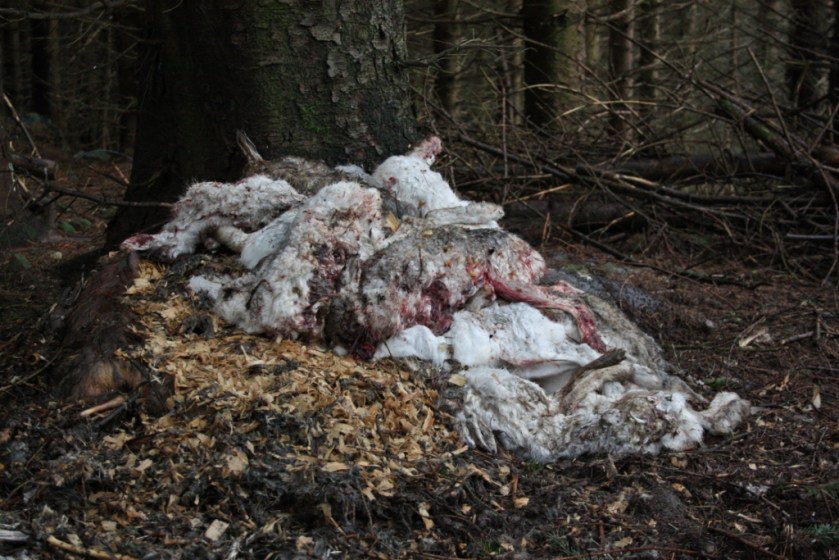
We followed up that article with some gruesome photographs showing piles of culled mountain hares left to rot on another grouse moor, this time in the Angus Glens (see here). Unregulated mountain hare culling, it seemed, was widespread.

We encouraged blog readers to contact SNH to ask them about what we thought was their long-term failure to implement an effective monitoring scheme to protect mountain hare populations. SNH responded with their usual let’s-buy-ourselves-some-time line that ‘further research was forthcoming’.

Around the same time, MSP Alison Johnstone lodged a series of parliamentary questions about mountain hare culling and how it affected mountain hare populations (see here).

Environment Minister Paul Wheelhouse has now responded to those questions (his answers presumably provided by SNH, the licensing authority). The bottom line is, SNH is still issuing licenses to allow the killing of mountain hares in the closed season, even though they admit that they are still unable to assess mountain hare abundance and therefore cannot possibly know what sort of impact, if any, these culls are having on the conservation status of the species. Quite remarkable. Where’s the precautionary principle?

Here are the parliamentary questions and answers:

Question S4W-18470: Alison Johnstone, Lothian, Scottish Green Party, Date Lodged: 19/11/2013

To ask the Scottish Government what information it holds (a) on the health of mountain hare populations and (b) that is relevant to assessing whether mountain hare are in a favourable conservation status.

Answered by Paul Wheelhouse (04/12/2013):

The National Gamebag Census data for mountain hare compiled by the Game and Wildlife Conservation Trust shows no significant trend in the data between 1961 and 2009, despite marked cyclical fluctuations which are known to exist in around half of mountain hare populations.

A questionnaire survey commissioned by Scottish Natural Heritage (SNH) in 2006-07 (SNH Commissioned Report 278) concluded that there was no evidence of an overall change in the distribution of mountain hares when compared to a similar study in mid 1990s. However, there may have been localised declines and possibly extinctions, undetectable at the 10km scale at which the data were collected and analysed.

The findings of this report provide SNH with an impression of the overall range of the species and some information on the numbers controlled, but SNH need more detailed information on hare abundance before it can be in a position to make a reliable assessment of the impact that culling is having on the population as a whole. To this end, SNH commissioned a study in 2008 into developing improved monitoring methods (Commissioned Report 444), but unfortunately, due to two severe winters hampering the fieldwork, the results did not provide SNH with the statistical relationship needed to progress this work. SNH therefore propose to develop a further programme of research, with the intention to commencing further fieldwork later in 2014. The exact detail of this work programme is still to be agreed.

Question S4W-18471: Alison Johnstone, Lothian, Scottish Green Party, Date Lodged: 19/11/2013

To ask the Scottish Government what conservation action is planned to protect mountain hare populations.

Answered by Paul Wheelhouse (04/12/2013):

In order to properly inform licence applications and to have a better understanding of the effects of culling on hare populations, a cost-effective and easily-applied method of reliably estimating hare numbers is required. This is the immediate priority and, once developed, will enable better monitoring schemes to be developed, and provision of information on population status will be improved also. Such data would then be used to inform future management decisions concerning the species, as necessary.

Question S4W-18472: Alison Johnstone, Lothian, Scottish Green Party, Date Lodged: 19/11/2013

To ask the Scottish Government what information it holds on the number of mountain hare that are culled annually and the impact of this on golden eagles (a) dispersing from, (b) likely to be recruited to or (c) nesting in natura sites for which golden eagles are a designated interest.

Answered by Paul Wheelhouse (03/12/2013):

The Scottish Natural Heritage (SNH) Commissioned Report 278 indicated that a total of 24,529 mountain hares were harvested in 2006-07 across 90 sporting estates (of these, 11,906 were reported to have been taken by 26 estates). This represents 7% of the 1995 published Scottish population estimate of 350,000 and is subject to a 50% margin of error.

SNH Commissioned Report 278 on the distribution of Mountain Hare in Scotland shows hares present in all or part of the Special Protection Areas (SPAs) designated for golden eagles.

The Report also indicates that the vast majority of hare control occurs in the central and eastern Highlands. In these areas, Report 278 suggests that there is a mixed picture of hare distributional change between 1995-96 and 2006-07 with no clear pattern of decline. The 2006-07 data are the most recent SNH holds.

(a) Golden eagles take several years to reach breeding age and juvenile birds disperse from their parent’s breeding territory and range over the Highlands and islands to varying degrees i.e. the young birds are not tied to the SPAs.

As breeding adult birds are territorial, these young birds mainly use areas of suitable habitat that does not form part of a territorial range. Some of the areas these birds will be using will be areas where hare control is being carried out. SNH Report 278 indicates that more hares are controlled from September to February, although levels of hares removed for tick control are fairly similar across the year.

(b) Young golden eagles often return and try to settle close to where they were born although some settle elsewhere. The SPAs therefore are reliant on the wider golden eagle population to support recruitment. Only a proportion of the young eagles survive to reach breeding age and it is unknown what, if any, effect the reductions in hare numbers will have on recruitment.

(c) Live prey is of key importance for chick development and successful breeding. As with (a) and (b) there is a potential impact through reducing available prey and/or requiring the birds to prey more on grouse.

Question S4W-18473: Alison Johnstone, Lothian, Scottish Green Party, Date Lodged: 19/11/2013

To ask the Scottish Government what information it holds on a link between the culling of mountain hare and the incidence of (a) louping ill or (b) other diseases transmitted by sheep ticks or other hare parasites to red grouse.

Answered by Paul Wheelhouse (03/12/2013):

The scientific evidence on this subject has been reviewed in a 2009 paper in the Journal of Applied Ecology “Culling wildlife hosts to control disease: mountain hares, red grouse and louping ill virus” by A Harrison et al.- see http://onlinelibrary.wiley.com/doi/10.1111/j.1365-2664.2010.01834.x/abstract.

The authors conclude that there is no compelling evidence base to suggest culling mountain hares might increase red grouse densities.

Question S4W-18474: Alison Johnstone, Lothian, Scottish Green Party, Date Lodged: 19/11/2013

To ask the Scottish Government how it controls the culling of mountain hare.

Answered by Paul Wheelhouse (04/12/2013):

Mountain hare are protected by a close season during which no culling can be carried out by any method except under licence granted by Scottish Natural Heritage (SNH). Mountain hare are also covered by Regulation 41 of The Conservation (Natural Habitats, &c.) Regulations 1994 which prohibits the use of certain methods of taking or killing wild animals, including the use of traps which are non-selective according to their principle or their condition of use. The use of such traps can be licensed by SNH. The use of such traps is not permissible under the terms of a general licence but can be licenced by SNH.

Question S4W-18475: Alison Johnstone, Lothian, Scottish Green Party, Date Lodged: 19/11/2013

To ask the Scottish Government how many applications it has (a) received and (b) granted for the culling of mountain hare since 2011, broken down by (i) year, (ii) purpose and (iii) area.

Answered by Paul Wheelhouse (03/12/2013):

Licences are required to control mountain hares at any time using certain otherwise prohibited means, or to kill them by any method during the “closed season”. Scottish Natural Heritage (SNH) is the licensing authority.

SNH received one application for the control of mountain hare by snaring in 2011. SNH granted that licence in 2012 and it has been amended twice. The licence was granted for the purpose of preventing serious damage to woodland.

SNH received five applications for the control of mountain hare in 2012. Two of these applications were refused. All of the remaining three were to shoot hares out-of-season and for preventing serious damage to woodland. One was in Highland, one in Moray and one in Aberdeenshire.

SNH received three applications for the control of mountain hare in 2013. Two of these were applications to renew licences issued in 2012 (one in Moray and one in Aberdeenshire). The remaining application was for another site in Moray, and again was for the purpose of preventing serious damage to woodland. Licences were granted for all three, and all three relating to shooting hares out-of-season.

MH1

So long, Sheriff Drummond

One of the most influential figures in the world of Scottish wildlife crime enforcement, and particularly in relation to raptor persecution, has finally retired. There are some who will be delighted with this news, others not so much.

Sheriff Kevin Drummond QC left office this week after 13 years in the Sheriff courts of the Scottish Borders. In addition, he’d played a significant role on various PAW Scotland committees, including Chair of the Legislation, Regulation and Guidance Sub Group (see here), and was a member of the high-level PAW Scotland Executive Group (see here). He was also heavily involved in the provision of ‘mock trials’ as part of a training programme for police wildlife crime officers and procurators fiscal to help prepare them for dealing with wildlife crime trials. Prior to being appointed Sheriff, he had worked as a leading defence QC whose clients included gamekeepers accused of wildlife crimes. His own reported hobbies include shooting and fishing (see here).

An article in the Selkirk Advertiser reporting his retirement (see here) describes the Sheriff as ‘well-respected’, ‘fair and consistent’ and ‘kind and approachable’. We’d agree with ‘consistent’ at least. In a number of cases over which Sheriff Drummond presided around 2006-2007 there was opportunity to sentence the convicted gamekeepers in his court to jail time – a provision that had at the time been recently introduced in an attempt to crack down on raptor persecution. Disappointingly, Sheriff Drummond decided that community service orders were adequate punishments for these convicted poisoners, including one case that had been described by one RSPB investigator as ‘the worst he had seen in 20 years’. This reluctance to send convicted poisoners to jail is still very much in evidence in Sheriff courts right across Scotland – there still hasn’t been a single one.

Sheriff Drummond held strong views against the introduction of vicarious liability – his visibly agitated performance in front of the WANE bill committee in 2010 was quite a display – and he also strongly opposed the concept of increasing the investigatory powers of SSPCA inspectors to allow them to take on raptor persecution cases (e.g. see here).

There were calls for the Sheriff’s dismissal from the PAW Scotland group following another of his outbursts at the Police Wildlife Crime Conference in 2010 when a wildlife investigator asked whether there should be tougher sentences for wildlife criminals. Sheriff Drummond’s reported response, “Get a life“, was met with ‘shock and bewilderment’ by conference delegates but was later defended by then Environment Minister Roseanna Cunningham (see here).

Many years earlier RSPB Investigator Dave Dick also found himself on the receiving end of one of the Sheriff’s seemingly characteristic tantrums. Here’s an excerpt from Dave’s 2012 book, Wildlife Crime: The Making of an Investigations Officer:

Thursday 20 June 1991. Jedburgh Sheriff Court and Jimmy [a gamekeeper] has got himself a QC – or more correctly, Jimmy’s boss, a wealthy Austrian banker, has got Jimmy a QC. Kevin Drummond, QC, who walks into the Fiscal’s office just before the trial is due to start, where I am having a last-minute conference as was the normal, efficient practice by 1991. Kevin announces that he is going to win this case because Section 19 of the 1981 Act does not permit a constable to enter land and search for evidence. The Fiscal may have been used to this robust, even arrogant approach but I wasn’t and in my naivety, combined with experience of Section 19 in court, I blurted out, “Do you really think that’s what Parliament thought, when they drew this up?” The resulting angry out-burst (‘You may be very good at what you do out there, Mr Dick, but in here, I’m in charge!’) was my first sight of an apparent lack of control which I have since witnessed many times“.

It is without question that Sheriff Drummond has had considerable influence on the approach taken to tackling wildlife crime in Scotland, at both a strategic governmental level as well as on the front-line level in court. That influence has been welcomed by some, while exasperating others.

Today is his 70th birthday and we wish him a long and enjoyable retirement – here’s hoping he doesn’t ‘do a Dysart‘ – we’re all hoping for the start of a new era.

Environment Minister responds to our questions about his ‘further measures’ to tackle raptor persecution

On July 1st, Environment Minister Paul Wheelhouse laid out his ‘further measures’ to tackle the on-going problem of raptor persecution (here).

Whilst we welcomed his intentions, we wanted further clarification about these ‘further measures’ as well as some updates on previously-promised measures, so on July 2nd we posed five clear questions to him (see here).

This week, one of our blog readers received the following response from Wheelhouse’s wildlife crime policy officer:

Question 1:

Please can you clarify whether the Lord Advocate has instructed COPFS to accept covert video footage as admissible evidence in prosecutions for alleged raptor persecution incidents?

Answer:

The Lord Advocate has instructed the specialist prosecutors in the Wildlife and Environmental Crime Unit to work with Police Scotland to ensure that law enforcement utilises all investigative tools at their disposal in the fight against wildlife crime including tools such as video surveillance equipment where justified and appropriate.

Before instituting any prosecution, the Procurator Fiscal must be satisfied that there is sufficient admissible evidence to justify doing so. Established rules of evidence determine whether a court can take into account certain types of evidence including third party video evidence. If evidence does not comply with these rules, it is inadmissible and the court may not take it into account. In considering any case for prosecution, the Procurator Fiscal will assess, having regard to the particular facts and circumstances of any evidence and the manner in which it was obtained, whether the court will allow it to be considered. For example, the court may refuse to take account of evidence that has been obtained improperly, irregularly or unlawfully.

Our assessment:

It’s hard to know if the Lord Advocate’s instruction will make a blind bit of difference. Covert video evidence is routinely accepted as admissible evidence in England. It has, also, been previously accepted in Scotland, albeit rarely. More often than not, COPFS rejects it and we’re never provided with a transparent answer about why it was rejected. We’ve struggled to understand the legal reasoning behind these repeat rejections, especially when, as we understand it, the decision to accept or reject evidence should be made by the court (the Sheriff), not COPFS. We’ll just have to wait and see how covert video surveillance is treated in any future cases….and it’s quite likely we won’t have long to wait.

Question 2:

Please can you clarify the timescale for SNH’s review for introducing potential restrictions on the use of General Licences in areas where they have good reason to believe crimes against wild birds have been committed? In other words, when can we expect the review to be completed? Also, will their review be made publicly available?

Answer:

Officials are currently discussing with Scottish Natural Heritage how they will carry out the work to examine how and in what circumstances they can restrict the use of General Licences to trap and shoot wild birds on land where they have good reason to believe that crimes against wild birds have taken place. Timescales for completing the work are still to be concluded, but we would expect any new arrangements to be in place for next year and will ensure that we keep stakeholders in PAW Scotland informed of progress. SNH will be clear to all users of General Licences when and in what circumstances their use will be restricted or prohibited.

Our assessment:

This seems a perfectly reasonable explanation. We look forward to watching the developments.

Question 3:

Please can you advise whether there will be a prosecution under the new vicarious liability legislation following the recent conviction of gamekeeper Peter Bell, found guilty of poisoning offences on the Glasserton and Physgill Estates? If you don’t know the answer (which would be surprising, given that you said in March 2013 that you would be “keeping an eye on this particular area [i.e. vicarious liability] with interest”, please can you provide the contact details of someone who can answer the question?

Answer:

It would be inappropriate to comment further on this case as police enquiries have not yet concluded.

Our assessment:

Not very impressed, but as this case is probably the first of its kind to be considered under the new vicarious liability legislation, we don’t have any benchmark to be able to compare the timescales involved. It’s been 8 months since the crimes were committed (December 2012). Is it reasonable to expect Police Scotland to still be conducting enquiries or is this another fob-off to delay telling us that no charges will be brought under VL legislation? If they are still making enquiries, let’s hope they’re making a better job on this case than they did on this one! We’ll keep asking questions about this case every so often so it can’t just be swept quietly under the carpet.

Question 4:

Please can you tell us the status of the Scottish Government’s first annual report (2012) into wildlife crime? As you know, under the Wildlife and Natural Environment (Scotland) Act 2011, there is now a requirement (under section 26B) that ‘Scottish Ministers must, after the end of each calendar year, lay before the Scottish Parliament a report on offences relating to wildlife’. You mentioned in March 2013 that your policy officials ‘are currently working on’ this report. When can we expect this report to be available?

Answer:

Section 26B of the Wildlife and Countryside Act 1981 requires Scottish Ministers, after the end of each calendar year, to lay before the Scottish Parliament an annual report on wildlife crime. We will of course comply with that requirement and it is in preparation. Details about the laying of the report, including the timing, will be given to the Parliament in the first instance in accordance with established parliamentary protocol. We will, of course, ensure that the report publication is communicated to stakeholders and Parliament.

Our assessment:

It’s taking a very long time for this report to be published. We’ll keep asking about it.

Question 5:

Please can you tell us when, exactly, will you open the consultation regarding the increase of SSPCA powers to broaden the range of their work investigating wildlife crime? As you know, this consultation was first suggested by former MSP Peter Peacock as an amendment during the WANE Act debates, way back in February 2011. The then Environment Minister Roseanna Cunningham rejected it as an amendment but suggested a consultation was in order. Seven months later in September 2011, MSP Elaine Murray lodged a motion that further powers for the SSPCA should be considered. In November 2011, Elaine Murray MSP formalised the question in a P&Q session and the next Environment Minister, Stewart Stevenson, then promised that the consultation would happen in the first half of 2012. Nothing happened so in September 2012 we asked you, as the new Environment Minister, when the consultation would take place. In response to one of our blog readers in October 2012 your policy officer said: “The consultation has been delayed by resource pressures but will be brought forward in the near future”. Nine months later and we’re in July 2013 – almost 2.5 years after Scottish Ministers committed to undertaking the consultation. Where is it?

Answer:

We regret that resource pressures did further delay the public consultation on the extension of SSPCA powers. However, I can confirm that the consultation document will be published later this year.

Our assessment:

As far as we’re concerned, this consultation, if it does actually appear this year, could be a game-changer. Forget bringing in new legislation to tackle raptor persecution – we don’t need it. The legislation is all there – it just needs to be enforced. The enforcement process begins with a criminal investigation. Do we have complete confidence in Police Scotland to effectively and efficiently undertake these investigations? Based on their past performance, that has to be a resounding NO, with just a handful of exceptions. Do we have confidence in the SSPCA to undertake these investigations? If we judge them on their track record for successful prosecutions under animal welfare legislation, then YES, we do. We also know that certain organisations associated with the game-shooting industry do not support these extended powers for the SSPCA – they argue that criminal investigations should be carried out by the police. Funny that, because they support extended powers for water bailiffs – is that because the water bailiffs are often acting in the interests of landowners and gamekeepers (e.g. when tackling poachers)? Do they not support extended powers for the SSPCA because they know that with an extra 75+ highly-trained officers on the ground then the chances of raptor persecution crimes being uncovered become greater? You’d think, given that the game-shooting industry claims to be all for stamping out raptor crime, that they’d welcome the SSPCA with open arms.  We’ll be watching closely for this consultation to finally emerge and you can expect a great deal of blogging about it when it is published.

Questions for the Environment Minister

Following yesterday’s announcement by Environment Minister Paul Wheelhouse on his proposed further measures to tackle the illegal persecution of Scottish raptors (here), we’d like to follow up by asking him for some clarifications on the latest measures, and for some updates on previously-promised measures. If you want to cut and paste these questions and send them yourself, or adapt them in your own letter, or simply cut and paste this blog’s URL to your own letter, please feel free. His email address appears at the foot of this page.

Question 1.

Please can you clarify whether the Lord Advocate has instructed COPFS to accept covert video footage as admissible evidence in prosecutions for alleged raptor persecution incidents?

Question 2.

Please can you clarify the timescale for SNH’s review for introducing potential restrictions on the use of General Licences in areas where they have good reason to believe crimes against wild birds have been committed? In other words, when can we expect the review to be completed? Also, will their review be made publicly available?

Question 3.

Please can you advise whether there will be a prosecution under the new vicarious liability legislation following the recent conviction of gamekeeper Peter Bell, found guilty of poisoning offences on the Glasserton and Physgill Estates (here)? If you don’t know the answer (which would be surprising, given that you said in March 2013 that you would be “keeping an eye on this particular area [i.e. vicarious liability] with interest“, see here), please can you provide the contact details of someone who can answer the question?

Question 4.

Please can you tell us the status of the Scottish Government’s first annual report (2012) into wildlife crime? As you know, under the Wildlife and Natural Environment (Scotland) Act 2011, there is a now a requirement (under section 26B) that ‘Scottish Ministers must, after the end of each calendar year, lay before the Scottish Parliament a report on offences relating to wildlife’ (see here for copy of the WANE Act 2011). You mentioned in March 2013 that your policy officials ‘are currently working on’ this report (see here). When can we expect this report to be available?

Question 5.

Please can you tell us when, exactly, will you open the consultation regarding the increase of SSPCA powers to broaden the range of their work  investigating wildlife crime? As you know, this consultation was first suggested by former MSP Peter Peacock as an amendment during the WANE Act debates, way back in February 2011. The then Environment Minister Roseanna Cunningham rejected it as an amendment but suggested a consultation was in order (see here). Seven months later in September 2011, MSP Elaine Murray lodged a motion that further powers for the SSPCA should be considered (see here). In November 2011, Elaine Murray MSP formalised the question in a P&Q session and the next Environment Minister, Stewart Stevenson, then promised that the consultation would happen in the first half of 2012 (see here). Nothing happened so in September 2012 we asked you, as the new Environment Minister, when the consultation would take place (see here). In response to one of our blog readers in October 2012 your policy officer said: “The consultation has been delayed by resource pressures but will be brought forward in the near future“. Nine months later and we’re in July 2013 – almost 2.5 years after Scottish Ministers committed to undertaking the consultation. Where is it?

Email: ministerforenvironment@scotland.gsi.gov.uk

Environment Minister announces ‘further measures’ to tackle raptor persecution

The Environment Minister Paul Wheelhouse has today announced what he calls ‘further measures’ to tackle the on-going problem of illegal raptor persecution in Scotland. Here is his statement in full:

Since I took on responsibility for this portfolio, I have been clear that one of my priorities is to bear down on the illegal persecution of raptors that continues to blight the Scottish countryside and tarnish Scotland’s reputation.  These outdated, barbaric and criminal practices put at risk the conservation status of some of our most magnificent wildlife.  They also harm our reputation as a country which values its environment and wildlife and undermine the growing tourism sector that is built on that reputation.

We have achieved much since 2007. We have a robust legal framework that protects birds of prey and their nests, including the new vicarious liability provisions.  We have dedicated resources in Police Scotland and the Crown Office and Procurator Fiscal Service (COPFS).  We are leading the way in the UK in the development of wildlife crime forensics work, and we continue to work at building a broad-based alliance through the Partnership for Action Against Wildlife Crime (PAW Scotland).  

In 2012 we saw a very welcome reduction in poisoning cases.  However a number of recent reports, some of which are in the public domain and some of which are still subject to police enquiries, suggest that there is still a problem with the use of poison as well as cases involving illegal trapping and shooting.  I have decided therefore that the time is right to bring forward some further measures which I hope will deter those involved in illegal activities. 

Wildlife crime, and raptor persecution in particular, often takes place in remote locations or in the dark of night.  By its very surreptitious nature, the likelihood of being seen by a member of the public who can report the matter to the authorities is small.

I have spoken with the Lord Advocate, who maintains a close personal interest in all wildlife crime.  We are both keen to maximise the opportunity for offences to be detected and offenders to be tracked down.

The Lord Advocate has instructed the specialist prosecutors in the Wildlife and Environmental Crime Unit to work with Police Scotland to ensure that law enforcement utilises all investigative tools at their disposal in the fight against wildlife crime.

This work will take place within the National Wildlife Crime Co-Ordinating Forum – a group attended by police Wildlife Crime Liaison Officers from across Scotland and the police’s full-time Scottish Wildlife Crime Co-Ordinator, as well as senior police officers, the National Wildlife Crime Unit, Scottish Government officials and the specialist prosecutors from the Wildlife and Environment Crime Unit within COPFS.

Secondly, in my capacity as Chair of PAW Scotland, I intend to establish a group to carry out a review and report to me on how wildlife crime is treated within the criminal justice system, including examining whether the penalties available for wildlife crime properly reflect the seriousness of the damage caused to vulnerable wildlife and fragile habitats and ecosystems.  

Thirdly, I will be asking Scottish Natural Heritage in their capacity as the authority for licensing decisions under section 16 of the Wildlife and Countryside Act to examine how and in what circumstances they can restrict the use of General Licences to trap and shoot wild birds on land where they have good reason to believe that crimes against wild birds have taken place.  These General Licences allow the holders to carry out actions that would otherwise be unlawful if undertaken, without any reference to SNH.  We regard the use of General Licences as a privilege that should not be extended in circumstances where there is evidence that their use may be facilitating illegal activities. 

In putting together these measures I have sought to focus only on those individuals and businesses where there are very good reasons to believe they are involved in illegal practices.  I am very keen to avoid anything that places an unfair burden on the majority of shooting businesses that are law-abiding and responsible members of the rural community.  I should also say that I think it is important that wildlife crime is treated in exactly the same way as other types of crime. This means information about cases should be handled in the same way as in other types of crime and that the police and prosecutors are allowed the time and space to carry out whatever investigations they believe to be necessary according to their own professional judgement. We should not descend into allowing trial by leak and accusation. There is a responsibility on us all to avoid that. 

In conclusion I wish to reiterate that eradicating raptor persecution in Scotland remains a high priority for the Scottish Government.  It is not however the sole responsibility of the Scottish Government.  Law enforcement clearly has a key role to play and I am confident that we are ratcheting up the pressure on those committing acts of illegal persecution. However,  everyone involved in the Scottish countryside, and in particular those involved with shooting, should make abundantly clear their disapproval to the minority whose actions are tarnishing the reputation of Scotland’s country sports”.

So, this is the much anticipated ‘action’ against illegal raptor persecution that’s been promised since last autumn when Paul Wheelhouse was appointed. Whilst we welcome his willingness to engage with the issue (in stark comparison to his English counterpart who won’t even admit there’s a problem), we see these latest measures as tiny baby steps in the right direction, and not the decisive hefty stamp that could have been delivered.

The first four paragraphs of his statement are just introductory comments with the usual rhetoric, such as, “We have achieved much since 2007”. Actually, we haven’t. Raptors are still being illegally killed on land managed for game-shooting and more often than not the criminal(s) involved are not being prosecuted. In the few instances where they are prosecuted, there is evidence of extensive plea-bargaining resulting in convictions only for the minor offences, not for the major crimes.

In 2012 we saw a very welcome reduction in poisoning cases. No, we didn’t. What we saw was a reduction in the number of reported poisoning cases; that’s a very important distinction. Members of the game-shooting industry (and government, it seems) have made much of this claim, using it as an example of how the industry is cleaning up its act. They won’t be able to make the claim for much longer – we understand that there have been several poisoning incidents already in 2013 and we’re only half-way through the year. Naturally, once again the public haven’t (yet) been informed about these poisonings even though they took place several months ago. We’ll come back to this issue.

The first ‘new’ measure that Wheelhouse is introducing is this:“The Lord Advocate has instructed the specialist prosecutors in the Wildlife and Environmental Crime Unit to work with Police Scotland to ensure that law enforcement utilises all investigative tools at their disposal in the fight against wildlife crime.

This is interesting, particularly because it immediately follows this paragraph:

Wildlife crime, and raptor persecution in particular, often takes place in remote locations or in the dark of night.  By its very surreptitious nature, the likelihood of being seen by a member of the public who can report the matter to the authorities is small.

Does this mean that prosecutors in Scotland are being told by the Lord Advocate that they should now accept covert video surveillance as admissible evidence? If this is the case then it would be a very welcome step indeed. Covert film footage is routinely accepted as admissible evidence in England, but in Scotland it continues to be blocked by the Crown Office prosecutors. Why? We don’t know – we’ve never heard a satisfactory explanation. If our assumption is correct (and of course it may not be) and covert footage is to be accepted, then Wheelhouse deserves a good deal of credit for this single measure. We’ll be watching this potential development with great interest.

His second measure is to establish (yet another) group within the framework of PAW Scotland, “to carry out a review and report to me on how wildlife crime is treated within the criminal justice system, including examining whether the penalties available for wildlife crime properly reflect the seriousness of the damage caused to vulnerable wildlife and fragile habitats and ecosystemsWe’re not so impressed with this plan; it seems to be reinventing the wheel. A similar review was carried out in 2008 (Natural Justice 2008) following the poisoning of the last remaining breeding female golden eagle in the Scottish Borders in 2007. That review made many recommendations to improve the efficiency of detecting and prosecuting wildlife crime in Scotland, some of which have since been implemented but many have not. It would perhaps have been a good opportunity for Wheelhouse to critically evaluate the implementation of those recommendations made five years ago, rather than start off the process again from scratch, which just leads to further delays in addressing the actual problem.

The third and final new measure is what we would call a fig-leaf approach to tackling illegal raptor persecution. Wheelhouse says: “I will be asking Scottish Natural Heritage in their capacity as the authority for licensing decisions under section 16 of the Wildlife and Countryside Act to examine how and in what circumstances they can restrict the use of General Licences to trap and shoot wild birds on land where they have good reason to believe that crimes against wild birds have taken place.  These General Licences allow the holders to carry out actions that would otherwise be unlawful if undertaken, without any reference to SNH.  We regard the use of General Licences as a privilege that should not be extended in circumstances where there is evidence that their use may be facilitating illegal activities

At a superficial level, a restriction on the use of the General Licence sounds like a positive action. But let’s just think about the practicalities. First of all, Wheelhouse suggests that the General Licence may be restricted where SNH have “good reason to believe that crimes against wild birds have taken place”. That sounds like SNH would require a lower burden of proof to show that crimes against wild birds have taken place than say, for example, a criminal conviction. In real terms, how would that work? What would constitute ‘good reason’? The discovery of a poisoned or shot bird on a particular piece of land? In legal terms that’s not enough evidence for a conviction because the estate in question could legitimately argue (no matter how implausible) that the dead bird had been planted by someone with a grudge against them, or that the bird had been poisoned/shot elsewhere and just happened to fly on to their estate where it finally succumbed to its injuries. We can be certain that if SNH tried to use such evidence as giving them ‘good reason to believe that crimes against wild birds have taken place’ they would face a strong legal challenge by the estate’s lawyers. So then we’re back to the current situation whereby a conviction in a court of law is the only acceptable proof that the crime was committed by someone associated with the estate where the dead bird was found and those convictions are, as we all know, almost as rare as rocking horse shit.

But even if SNH could use a lower burden of proof as reason to believe a crime had been committed, there would still be difficulties. The use of General Licences is barely monitored or enforced due to the high volume of people operating under their terms. By their very nature, a General Licence is not actually issued to an individual – you don’t have to apply to use one and there isn’t even a competency test that you must first pass – it’s an open ‘licence’ that anyone can use to carry out what would otherwise be unlawful activities, such as the killing of so-called ‘pest species’ such as crows. We occasionally see a prosecution for an offence relating to a General Licence, e.g. when the operator of a crow cage trap has failed to meet the licence’s terms and conditions, but these prosecutions are rare and incidental. No statutory authority is regularly monitoring the use of General Licences (e.g. SNH don’t do it, the police don’t do it)  – we don’t even know how many people are operating under the General Licences because the operators are not required to submit annual returns. So, if SNH did ‘restrict the use’ of a General Licence on a particular piece of land, who would be enforcing that restriction? How would we know whether a restriction was in place? Would the location and name of the estate be published? For how long would the restriction be in place? What would be the penalty if an estate was found to be flouting the restriction?

All in all, this proposed new measure has glaring loopholes that in practical terms would be very difficult to close. It’s hugely disappointing that the Minister has taken this route instead of another option that is already available to him in the provisions of the Wildlife & Countryside Act – that is, the ability to enforce a (temporary) ‘closed season’ on the hunting of a particular game bird species in a particular area (or in this case, a specific estate). For example, in exceptional circumstances a Minister can impose a temporary moratorium on shooting specific species during periods of prolonged severe weather. The authority to impose such restrictions is already there in the legislation – it wouldn’t require the lengthy drafting of new legislation – if he wanted to enforce a temporary ban on, say, driven grouse shooting on a particular moor, he could do so. This measure would fit with his approach of only targeting the criminals, not the ‘law-abiding majority’ (his words, not ours) so why isn’t he pursuing it? Just another missed opportunity.

One final point about the Minister’s statement – the bit in his penultimate paragraph where he says this:

I should also say that I think it is important that wildlife crime is treated in exactly the same way as other types of crime. This means information about cases should be handled in the same way as in other types of crime and that the police and prosecutors are allowed the time and space to carry out whatever investigations they believe to be necessary according to their own professional judgement. We should not descend into allowing trial by leak and accusation. There is a responsibility on us all to avoid that

We whole-heartedly agree that wildlife crime should be treated in exactly the same way as other types of crime. This means that these crimes should be properly publicised in the media, just as other crimes are, and especially when they involve the discovery of potentially-fatal poisons that put the general public at significant risk. We hold very strong opinions on this and are adamant that it is not in the public interest for the police to keep these crimes hidden from view for months on end. Until we see an end to this ridiculous culture of silence we’ll continue to blog about these crimes with a measured, accurate and responsible approach.

We’ll be blogging later this week with some specific questions for Paul Wheelhouse….

Scottish Land & Estate’s response to the announcement here.

RSPB Scotland’s response here.

Scottish Gamekeepers’ Association response here.

BASC Scotland’s response here.

Golden eagle protection discussed in parliament

Great to see more MSPs raising questions about golden eagles in the Scottish Parliament….

Joan McAlpine (South Scotland) (SNP): To ask the Scottish Government what steps it is taking to protect golden eagles. (S4O-02010).

The Minister for Environment and Climate Change (Paul Wheelhouse): All wild birds are protected in Scotland under the Wildlife and Countryside Act 1981. Golden eagles are listed in schedule 1 to the 1981 act, which provides further protection measures to prevent disturbance to nesting birds. Last month, we added golden eagles to schedules A1 and 1A to the 1981 act, to provide year-round protection for nest sites and protect birds from harassment.

Since 2008, we have broadened and developed the partnership for action against wildlife crime in Scotland—PAW Scotland; strengthened the legal framework by introducing vicarious liability; provided funding for the national wildlife crime unit; and supported initiatives to tag and satellite track golden eagles. Recent police reform has increased the number of specialist wildlife crime officers.

We have been active in the fight against raptor persecution, and poisoning has reduced significantly. However, we are in no way complacent and we are actively considering whether other methods of persecution are being deployed. Some of the new wildlife crime measures that we have put in place are yet to be tested, but we know that there is still a problem in some parts of Scotland, and I reiterate to people outside the Parliament that we stand ready to introduce further measures, should that be necessary.

May2012 GE tayside grampianJoan McAlpine: As the minister acknowledged, there have been a number of shocking incidents across Scotland during the past year. Earlier this month, a golden eagle was shot on the southern upland way. In light of that, will the minister reassure the Parliament that investigations into the illegal killing of eagles are carried out quickly and effectively? Is he willing to update the Parliament on the investigation into the killing of the golden eagle that was found on Deeside in May 2012?

Paul Wheelhouse: As I said, police reform has resulted in a revised structure for wildlife crime, which will improve co-ordination and support for wildlife crime officers. I have every confidence in Assistant Chief Constable Graham, who has been appointed to lead the work. We also have a specialist unit in the Crown Office, which ensures that there is greater understanding of the complexities of this area of the law, in and out of the courtroom. That is a major development, which should not be underestimated and which will increase the focus on wildlife crime.

I assure the member and the Parliament that such measures, along with robust working in the partnership for action against wildlife crime in Scotland, will ensure that investigations are carried out as quickly and effectively as possible. PAW Scotland is looking at making the evidential trail on issues such as raptor persecution more robust, if it is possible to do so, which involves working closely with the Scottish raptor persecution priority delivery group.

I am not in a position to update the Parliament on the 2012 Deeside eagle case. There is an on-going police investigation and it would be entirely inappropriate for me to comment at this point.

[Ed: this issue about when is a case still ‘live’ is of great interest to us. How do you define when a case is still live/on-going? We would expect the definition to mean that active leads are still being followed up and/or a court case is pending. However, we are suspicious that the regularly-heard phrase ‘it’s an on-going police investigation and therefore can’t be discussed’ is a convenient excuse for the police/government to avoid answering serious questions about the effectiveness of these investigations. Take the Deeside eagle case as an example. That golden eagle was found dead almost one year ago. Are we expected to believe that the police are still following up active leads? Come on, let’s be realistic here. How about some of the other 26 cases of either dead or ‘missing’ eagles in the past seven years (see here), for which no-one has been prosecuted? Are they still ‘on-going’ investigations as well? Are the police still investigating the death of Alma, the golden eagle found poisoned on Millden Estate in 2009? How about the poisoning of the last remaining breeding golden eagle in the Borders in 2007? We would like to see much more transparency about these cases – obviously not while they’re genuinely on-going – but when a case is clearly going nowhere shouldn’t there be a point when questions can be asked, and answered, no? We would be very interested to hear from anyone who can tell us the official definition of how an ‘active case’ is defined and at what point, if any, can the police/government be questioned about an incident?]

Graeme Pearson (South Scotland) (Lab): I am sure that members welcome the drop in reported poisonings of birds of prey, but I am concerned that there has been no decline in other forms of raptor persecution. The Wildlife and Natural Environment (Scotland) Act 2011 introduced vicarious liability, to combat raptor persecution. Will the minister indicate what the next steps will be? Now that Police Scotland has been established, what new approaches will be introduced?

Paul Wheelhouse: Graeme Pearson is right to say that vicarious liability is a significant development in the law on wildlife crime. The provisions came into force on 1 January 2012 and the legislation has not yet been tested in court, as he is aware. I believe, however, that the legislation has had the welcome effect of encouraging responsible land managers to examine the training of and procedures for their staff. I have no doubt that, if a land manager or owner is prosecuted under the provisions, it will have a salutary effect on others who have been content to turn a blind eye to unlawful practices that are carried out on their land.

More generally, the Government is doing everything that it can to encourage good practice. Recently, Scottish Land & Estates launched the wildlife estates Scotland initiative, which I hope will gather arms and legs and cover an ever-greater share of landowners. In theory, that will enable the promotion of the most proactive and progressive conservation measures by land managers. However, I reassure the member that, if the measures under vicarious liability prove to be ineffective, I will take further action.

Jamie McGrigor (Highlands and Islands) (Con): The RSPB states that one of the key problems for the survival of golden eagles is the lack of live prey that is available to the species. Does the minister agree that a healthy supply of food species in golden eagle areas, such as rabbits and mountain hares, is a factor in the maintenance of healthy numbers of golden eagles? Is he, through the appropriate agencies, doing something about the decline of those species in some areas?

Paul Wheelhouse: The member raises an important point about the need for golden eagles to have adequate food supplies. It is not as simple as saying that it is all about raptor persecution; we know that there are multiple influences on the sad decline in the populations of a number of our key, iconic species of birds. Clearly, mountain hares are a species that we want to protect. If there was any persecution of those animals by land managers, we would be concerned about it. If the member has constructive proposals that he would like me to consider, I would be happy to meet him to discuss the issues.

Parliamentary questions asked about SNH’s decision on clam traps

Claire Baker MSPFollowing on from earlier blog posts about SNH’s latest baffling decision to authorise the use of clam-type traps in the 2013 General Licences (see here), a well-informed MSP has now asked the following excellent parliamentary questions:

Claire Baker (Scottish Labour, Mid-Scotland and Fife), Date lodged 7/12/2012

Question S4W-11729 To ask the Scottish Government what independent testing has been carried out to evaluate the risk of injury to birds and other animals from (a) Larsen Mate and (b) Elgeeco cage traps.
 
Question S4W-11730 To ask the Scottish Government what independent testing has been carried out to evaluate the impact of (a) Larsen Mate and (b) Elgeeco cage traps on (i) protected species and (ii) species not targeted by the devices.
 
Question S4W-11731 To ask the Scottish Government what provision must be made for (a) food, (b) water and (c) shelter for (i) birds and (ii) other animals caught by a (A) Larsen Mate and (B) Elgeeco cage trap before a general licence for its use can be granted.
 
Question S4W-11732 To ask the Scottish Government what its position is on issuing general licences for untested cage traps.
 
Question S4W-11733 To ask the Scottish Government whether independent evidence establishing a need to supplement a trap with a (a) Larsen Mate and (b) Elgeeco cage trap is required before a general licence for its use can be granted.

Expected answer date: 21/12/2012

Those answers should make for interesting reading. Well done Claire Baker MSP.

Meanwhile, we’re still waiting for SNH to publish ALL the responses they received on their 2013 General Licence consultation. They told us last Thursday that they were “currently preparing the information for publication” (see here).

Raptor Persecution: still a national disgrace

The following article has been published in the autumn edition of Wild Land News, the magazine of the Scottish Wild Lands Group (visit their website here). The magazine should be posted online in the near future and we’ll provide a link when it’s available. Congratulations to the SWLG’s magazine editor, Calum Brown, for providing a platform for this subject. UPDATE: Magazine now published online. Link here.

Raptor Persecution: Still A National Disgrace. By Bob McMillan.

Bob McMillan has had a lifelong interest in birds of prey. He retired as Assistant Chief Constable in Tayside Police in 1998 at which time he was the ‘lead officer’ on wildlife crime in Scotland on behalf of ACPOS. He represented Scottish Raptor Study Groups on PAW Scotland and the Raptor Priority Persecution Group until 2011. He now lives on Skye and runs the website www.skye-birds.com

My childhood in the 1950s had been spent in a rural village near Dunblane in south Perthshire surrounded by sporting estates. To see a Buzzard or a Kestrel was a rarity, let alone a Hen Harrier. An early interest in birds was cultivated by older friends, one of whom had found breeding Harriers on a moor on the nearby Cromlix estate. He subsequently studied and photographed the birds, much to the consternation of the local estate which eventually took out a civil action and interdicted him from the ground. Twice prosecuted for breach of interdict, the case remains unique amongst individuals who have put themselves on the line to protect birds of prey from the illegal actions of gamekeepers and sporting estates.

Eddie Blake from Dunblane died recently. Somewhat eccentric, he received little support for his actions from the ornithological establishment who shunned him. In 1952 Blake had recorded the first breeding record of Montagu’s Harrier in Scotland on Braco Moor. Though the pair returned the following year, the female was shot. There have only been five recorded breeding attempts in Scotland and the last of these was in 1955. Montagu’s Harriers might still be breeding in Scotland today were it not for persecution, but rarely merit a mention alongside formerly extinct species such as Osprey, Red Kite and White-tailed Eagle.

When I joined the police service in 1963 my final interview was by the Chief Constable at Callander Police Station. Bedecked in tweeds and with two spaniels at his heels, George Glendinning was every inch the country squire. Any discussion about Blake’s interdict was strictly off limits but I later learned that Glendinning was a regular shooting guest on Cromlix estate. The influence of landowners on local policing was profound in the 1960/70s and vestiges of it remain today. Rural police officers had access to free fishing and shooting, which invariably meant an immediate response to suspected poachers, or for that matter, to ‘suspicious trespassers’ who were simply enjoying their Scottish right to roam. Many gamekeepers were Special Constables. Rural shoots in Perthshire would have been unsustainable had it not been for the many police officers who acted as ‘beaters’ at pheasant shoots on their days off. Though trained and aware of wildlife crime, such cultural influences would make them strongly anti-poaching, and more likely than not to turn a blind eye if an occasional Sparrowhawk was accidentally ‘taken out’ during a Pheasant drive. The police response to reports of illegal trapping or poisoning of birds of prey, up until the end of the 1980s, was likely to be ambivalent. Some raptor enthusiasts would argue it remains fairly unpredictable to this day.

Despite most raptors having legal protection since 1954, persecution by gamekeepers and those with sporting interests in grouse moors and lowland estates remains a major problem. In 1998 Scottish Raptor Study Groups carried out an assessment of the extent of the illegal killing of raptors in Scotland. Published by the Scottish Office, it was launched at the Scottish Wildlife and Countryside Fair at Kinross, where the late Donald Dewar, then Secretary of State for Scotland, expounded the view that persecution of birds of prey was a national disgrace. As a retiring Assistant Chief Constable in Tayside Police, who took the lead on wildlife crime in Scotland, my last public duty was to meet Donald Dewar at the event. In the context of the persecution of raptors, this was a major political statement, and the expression “a national disgrace” was used by many others subsequently. The reality was that the expression had been conjured up by a senior civil servant and Donald Dewar posed the question as to whether he could actually say it. The fact that he decided to say it represented a major politicisation of the issue, though not necessarily a turning point.

Having found my first poisoned Golden Eagle at an eyrie in Perthshire 40 years ago these problems were not new to me, as was the case for other raptor enthusiasts. What was new, however, was that senior politicians and officials of agencies such as Scottish Natural Heritage were, for the first time, prepared to speak out against the problem. Raptor persecution was by no means rare, and the killing of adult birds and destruction of nests continued or even increased during the 1990s. Donald Dewar also said that the Government, and the soon to be Scottish Parliament, “will take all possible steps to eliminate persecution.” Fifteen years on from this statement, perhaps finally, some progress is being made.

The Partnership for Action on Wildlife Crime (PAW) brings together the Police, HM Revenue and Customs, and representatives of Government Departments and voluntary bodies with an interest in wildlife law enforcement. It provides a strategic overview of enforcement activity, considers and develops responses to strategic problems, and looks at issues of strategic concern. Its main objective is to support the networks of Police Wildlife Crime Officers (PWCO). As part of the overall UK-wide structure, PAW Scotland has existed for at least 20 years. Although it has been responsible for many preventive initiatives post-devolution, and despite Donald Dewar’s commitment, it lacked strategic support from a number of the key agencies.

Since the SNP administration came to power that has significantly changed, initially under the leadership of the then Minister for Environment Michael Russell and, since then, through subsequent ministers. A major turning point was the Borders Golden Eagle poisoning incident in 2007 which led to two parliamentary debates on Wildlife Crime and the police thematic inspection ‘Natural Justice’. This led to the publication in September 2008 of the Scottish Wildlife Crime Reduction Strategy which is being implemented through a PAW Scotland plenary and executive group, and a number of sub-groups.

The persecution of raptors had been a major factor in influencing this new strategic commitment, and although a Raptor Persecution Priority Group was established, it has been slow to make progress and is still to report. The pro-shooting lobby has been extremely influential within PAW Scotland and within this group. In terms of the protection of raptors, much of this has muddied the waters and not been particularly constructive. Whilst it is important to have a partnership approach to deal with these problems, some question whether it is appropriate that the perpetrators, in the main gamekeepers and the sporting estates which condone these crimes, should be part of it. (More details of the work of PAW Scotland can be found at http://www.scotland.gov.uk/Topics/Environment/Wildlife-Habitats/paw-scotland/).

The accurate recording of wildlife crime incidents involving raptors is a major challenge and most will be aware that the RSPB in Scotland produce an annual report. Annual maps of incidents (‘maps of shame’) can also be found on the website above. A major challenge is to make sure that all wildlife crime incidents are reported to the police, preferably to Wildlife Crime Officers who are known locally. It is equally important to make sure that RSPB Investigations staff are also aware of any incidents reported to the police. Wildlife crimes such as suspected shooting or poisoning of birds, destruction of nests or eggs, or reckless disturbance should be reported at the time and without delay. The remains of dead birds of prey, irrespective of age or condition, may be important evidence and require forensic examination. Advice on what to do if you find a suspected incident is available on the PAW Scotland website.

Recently-published research showed that illegal persecution remained particularly prevalent on grouse moors, and for raptor workers and those who visit wild land this is perhaps nothing new. The recent recovery of a poisoned Golden Eagle in Morar and a shot White-tailed Eagle on Skye confirms that birds are at risk throughout the Highlands, not just on sporting estates. Some local populations face the prospect of significant decline unless action is taken. In areas of Scotland such as the Black Isle the re-establishment of the Red Kite continues to be jeopardised by illegal persecution, and each year brings further reports of the destruction of Hen Harriers and Peregrines.

Satellite telemetry is now being used extensively on several species of birds of prey, primarily intended to trace the movements of young birds to gather information which assists their long-term conservation. An unintended outcome from this new science is that when signals indicate a bird has stopped moving, follow-ups have established that birds have been trapped, shot and poisoned. Without satellite telemetry these crimes would never be known about. The Golden Eagle ‘Alma’, poisoned in 2009, is one such example. Unfortunately a significant number of recent persecution casualties involving our large raptors have been found in this way, supporting the argument that reported incidents represent the tip of the iceberg.

The ‘Natural Justice’ thematic inspection recommended dedicated Wildlife Crime Officers in every force. The reality is there are now fewer WCOs than existed when the inspection was carried out. Strathclyde, the largest force in Scotland, have had no full-time post for some years. With a single national police force just months away there is little evidence that there is any genuine commitment on the part of the police service to meet many of the earlier recommendations. Whilst we can work in partnership, increase awareness, improve legislation and ensure landowners and employers accept vicarious responsibility, we can achieve nothing without a properly trained and professional police service which can rise to the challenge. Regrettably, the number of successful prosecutions remains extremely low, and there is a need to ensure that, in terms of enforcement and investigation, the limited resources dedicated to this field of work are properly supported so that much of the political and public relations rhetoric can be converted into tangible results.

I was part of a delegation from Scottish Raptor Study Groups which met Roseanna Cunningham when she was Minister for Environment in November 2010, and we recommended that a dedicated investigative unit be established, comprising trained WCOs and specialists from the RSPB, SSPCA and SNH, with a remit to cover the whole of Scotland, untrammelled by force boundaries. Many will argue, politicians amongst them, that only a few rogue estates and gamekeepers are involved, but any review of the so-called ‘maps of shame’ and the RSPB maps which preceded them, would find that hundreds of estates have been involved in incidents during the last ten years. Uniquely, there are also several estates with histories of persecution going back 30 years. As long as the police have responsibility to investigate such crimes, there is a need for them to develop a cutting edge and target the perpetrators. There would never be a better time to establish a specialist unit than now.

Some fifty years on from my childhood days in south Perthshire I will certainly be able to see Buzzards, Kestrels, Sparrowhawks and even Red Kites when I visit. Unfortunately Hen Harriers remain absent from the moors of Cromlix and Braco. Golden Eagles show little sign of expanding their range, and there is a real risk that fifteen years on from the branding of the problem ‘a national disgrace’, the fate of some of the iconic species which occupy our wild land remains in the balance.

Another MSP calls for greater protection of golden eagles

Following on from the news that Nigel Don MSP has lodged a Scottish parliamentary motion asking the Scottish Government to consider what further measures it can take to protect golden eagles (see here), another MSP has ramped up the pressure by adding an amendment to the original motion. Here it is:

Motion S4M-04516.1: Claudia Beamish, South Scotland, Scottish Labour, Date Lodged: 25/10/2012

Death of Golden Eagle

As an amendment to motion S4M-04516 in the name of Nigel Don (Death of Golden Eagle), insert at end; “is further appalled by the shooting of another golden eagle in the south of Scotland; urges the Scottish Government to build on the initial work carried out by Scottish Natural Heritage in Commissioned Report No. 193: A conservation framework for golden eagles: implications for their conservation and management in Scotland to develop an action plan for the next steps for golden eagle conservation in Scotland, and further urges the Scottish government to use the Year of Natural Scotland as an opportunity to educate young people about ecology and the role of predators in a healthy ecosystem, especially since the golden eagle is identified by Scottish Natural Heritage as one of the five flagship species for this initiative.

The full text of the amendment can be read here. You may also notice that the number of supporting MSPs listed underneath the original motion has grown to 32. We understand that parliamentary motions are ‘live’ for up to six weeks, during which time MSPs can add their support. The motion can be called for a debate if the number of supporting MSPs passes 30 and are representative of at least two political parties. It looks like they’ll be debating this particular motion.

We are certain that this motion (and its amendment) was triggered by the number of people writing to complain about the two recent shocking incidents involving the illegal persecution of golden eagles in Scotland (see here and here). Don’t think for a minute that you can’t make a difference. Look at what happened with ‘buzzardgate’ – a complete u-turn due to massive public opposition. Look at what happened yesterday with the proposed badger cull – a complete u-turn (although Owen Paterson denies this) and an overwhelming majority parliamentary vote against the cull going ahead.

The frequent frustrations expressed on this blog, by us and by you, could easily lead to an apathetic position of ‘What’s the point?’ That’s understandable, but it’s not a workable position. We may not be able to influence change as quickly as we would like, but we stand a much better chance of doing so if we’re still in the game. Will this latest motion (and its amendment) make any difference in the long term? Who knows, we’ll have to wait and see. The cynics amongst us will say ‘No, of course it won’t’. But even if it doesn’t, the issue is still kept in the public eye and the pressure is still building. One of these days that pressure is going to explode.

New motion lodged in Scottish Parliament: “Death of golden eagle”

A new motion was lodged in the Scottish Parliament on Monday 22nd October 2012 concerning the death of the Glen Esk golden eagle:

Motion S4M-04516: Nigel Don, Angus North and Mearns, Scottish National Party.

Death of Golden Eagle

That the Parliament condemns what it sees as the recent brutal killing of a golden eagle in Glen Esk, Angus; considers that the golden eagle is one of Scotland’s most iconic species and understands that 11 golden eagles have been illegally killed since 2007; notes also that 2013 will be the Year of Natural Scotland; urges the Police Service of Scotland to ensure that police officers have the training and resources required to tackle wildlife crime effectively; considers that golden eagles more than earn their keep by attracting tourism to rural Scotland, and asks the Scottish Government to assess what further measures it might take to protect what are considered these magnificent birds.

Here is a desciption of what a Scottish parliamentary motion is.

Here is the full text of this particular motion.

While very welcome (and probably a direct result of all the letters of complaint and media coverage) this motion raises some interesting questions:

It was proposed by 1 MSP (whose constituency includes Brechin) and was supported by 26 others. There are 129 MSPs in the Scottish Parliament. Where’s the support of the other 122? Did your MSP support it? If not, why not?

Note the phrase, “….what it sees as the recent brutal killing of a golden eagle in Glen Esk, Angus” and then compare it with the official line given by Environment Minister Paul Wheelhouse MSP:

The reports may suggest that the circumstances of this incident were suggestive of an offence however there is no hard evidence and it remains possible that there is an alternative explanation“.

It seems Nigel Don MSP and the 26 MSPs who supported his motion do not share the Environment Minister’s view on what happened to that eagle. Apparently nor do the police (see here). We would encourage you to write again to Mr Wheelhouse and ask him to provide the evidence that leads him to suggest that this eagle’s death was not the result of criminal activity. Email: ministerforenvironment@scotland.gsi.gov.uk. It’s important that this issue is clarified; any doubt that this eagle did not die as a direct result of criminal activity will be used by the Dark Side to support their continual denial about the extent of illegal raptor persecution.

Another interesting question concerns the number of known illegal deaths of golden eagles. The motion says 11 golden eagles have been illegally killed since 2007. Our figures suggest that ten have been discovered (see here):

Peebles (2007); Glen Orchy (2009); Alma (2009); Skibo 1 (2010); Skibo 2 (2010); Skibo 3 (2010); Farr (2010); Glenbuchat (2011); Lochaber (2012); Glen Esk (2012).

 So where’s the information about the 11th one? And why limit the figure to golden eagles? What about white-tailed eagles? If they’re included during this time frame, then the number of eagles known to have been illegally killed is at least 14:

GlenQuoich (2007); Glenogil (2009); Farr (2010); Skye (2011).

If the time frame was increased one year further, to 2006, then at least 16 eagles are known to have been illegally killed:

Dinnet & Kinord (2006); Glen Feshie (2006).

And then there’s all the known ‘missing’  eagles, which brings the total to at least 25:

WTE radio-tagged Bird ‘N’ disappeared in Angus Glens (2007); WTE carcass removed in suspicious circumstances from Lochindorb (2010); 4 x golden eagle leg rings found in gamekeeper’s possession on Moy Estate (2010); sat-tagged golden eagle ‘disappeared’ in Monadhliaths (2011); sat-tagged golden eagle ‘disappeared’ in eastern glens (2012); sat-tagged golden eagle ‘disappeared’ NE of Cairngorms (2012).

And then the most recent one, the shot golden eagle found on the border of Buccleuch Estate (2012) – that brings the total to 26.

And we haven’t included any other of the known persecuted raptor species in this list!

So, well done Nigel Don MSP for highlighting a significant and on-going problem – we look forward to seeing a response from the Scottish Government.