
The Scottish Gamekeepers Association (SGA) held its AGM last Friday (5th March 2021) – here are two earlier blogs about that event (here and here).
The vast majority of the 2.5 hour event was taken up by a political hustings. Candidates from five different parties were invited to introduce themselves and tell the SGA members ‘what they would do for gamekeepers’ if elected in May, and then there was a tortuous period of questions for the candidates that had been submitted by SGA members.
The participants of the hustings were (from top left): Peter Fraser (Vice Chair, SGA), Carol (one of the ‘girls‘ from the SGA office who’s actually a woman, who was in charge of time-keeping and recording – unseen in this screengrab), Jamie Blackett (All For Unity [George Galloway’s new party, say no more] and author of spectacularly crap articles in Shooting Times), Alex Hogg (Chair, SGA), Edward Mountain MSP (Scottish Conservatives and the un-fiercest critic of raptor persecution), Catriona Bhatia (Scottish Lib Dems), Ian Davidson (Scottish Labour) and Fergus Ewing (Cab Sec for Rural Economy & Tourism, SNP).

You’ll notice the Scottish Greens weren’t represented and at one point Catriona Bhatia asked why they weren’t there. Alex Hogg admitted they hadn’t been invited because before Xmas the SGA had asked for a meeting with Andy Wightman and apparently he hadn’t responded. Er, ok. He does realise Andy left the Greens in December, doesn’t he? Still, the Greens’ absence didn’t stop some of the panellists slagging them off, even though they weren’t there to defend themselves.
I’m not going to post about the entire tedious session because I fear I’d lose the will to live but as an overview of what each of these candidates had to say about what they’d deliver for gamekeepers, I think it’s useful to blog about their introductory speeches.
Jamie Blackett (All for Unity): I’m Jamie Blackett, I’m the leader of All for Unity, we’re a new party founded by my good friend George Galloway, with the intention of unifying the pro-UK anti-nationalist vote to feed[?] the SNP green government and install a government of national unity in May.
Some of you will know me, I write a column each month in the Shooting Times, I’ve written a book, Red Rag to a Bull, about the countryside, I’m a passionate campaigner for the countryside and I hope that if we achieve what we want to achieve in May we will all have a much stronger voice for the countryside and get the government off all our backs so we are no longer looking over our shoulders as we look after the countryside and conserve its wildlife. Thank you.
Alex Hogg: What would you do for gamekeepers if you got elected, Jamie?
Jamie Blackett: Well, we’re running a full slate of candidates across all regions. We’re still looking for some candidates and we hope very much that there may be some people in the SGA who will join us. As I say, I have a strong stake in the countryside, I actually run my own shoot here. George Galloway, as you all know, is not a countryman but he has moved to the countryside and believe it or not I’m teaching him to shoot, er, or I will do when Covid conditions allow.
And we feel very strongly that the justice system needs reforming so that gamekeepers are no longer presumed guilty before they’ve even started in court, we must sort out the burden of proof, corroboration of evidence and all these things so that we in the countryside no longer have this threat hanging over us.
We also want to, er, completely obliterate the Greens in George Galloway’s terminology, the SNP gardening section, who we believe are grinos, greens in name only, they know absolutely nothing about the environment and care even less. We will act rather as the Greens do on the list. The Greens mop up all the spare separatist votes. We will do the same with on the unionists side of the argument and return more pro-UK MSPs to the Parliament. And, er, as I say, we want to get rid of the Green party, diminish the voice of the RSPB and others, and hear more of the voices of people like your members who are the true experts who care about the environment because they spend every waking moment looking after it.
Edward Mountain MSP (Scottish Conservatives): I’m Edward Mountain, I’m a Conservative member of the Parliament on the regional list at the moment, and I’m standing in Inverness and Nairn at the next election. If I can say, at the outset, Alex, that I’m really sad that we’re not all meeting in person. I’ve had some really happy memories of past AGMs. I’ve been a proud member of your Association as you know, almost since its inception, and for 40 years I’ve shared your passions and your experiences.
And I stood for election because I felt that the Scottish Parliament was letting the countryside down. It was clear to me that many politicians relied on briefings by pressure groups such as Revive, RSPB and the League Against Cruel Sports and not from those people who work the lands, people like your membership. And in the Parliament I haven’t been surprised, we’ve had debates on deer management, led by the Green party who’d be happy to see all deer shot all year round. And when I questioned them about it their retort to me is that it was clear that I know nothing about deer management. Well, I wonder. I wonder what 40 years of experience gives you. Perhaps I would suggest to you and your members, as they know, it gives you more than you can read in a book.
And when it comes to hare control the decision to set culls should be done locally, that’s something that I believe, not by a national ban, something that Fergus Ewing, despite his warm words outside the Parliament, meekly followed his party line on and voted for.
And when it came to wildlife crime which I’ve always called out, Claudia Beamish called me out when I suggested that accidental damage of a badger sett should be viewed differently to malicious damage to a badger sett. Her suggestion was that all farmers should walk through the field before harvest to ensure they were free from badgers and setts. Well Claudia, what I say to you is lead the way. I’m happy to follow you through every field in Scotland.
So in summary in the last five years I’ve stood up for you and your industry based on my knowledge and belief. I’ve had your group leaders, Alex and his team, in to the Parliament on numerous occasions to brief me and my members. I’ve never promised to do one thing when I talk to you and do another in the Parliament. And I’ve ensured that my party fully considers your views at all times. And in the next five years if our party is in a strong position and I’m re-elected I will ensure that you get not just warm words of platitudes but actions and results, which is what I think we’ve delivered in the last five years. Thank you.
Fergus Ewing (Cab Sec Rural Economy & Tourism, SNP): Good morning everybody and thank you very much indeed for this invitation. May name is Fergus Ewing. I have spent around 20 years working as a solicitor with my own legal practice and the last 21 years as the MSP for Inverness and Nairn, 13 years as a Scottish Government Minister and for the last five years the Rural Secretary in the Scottish Government.
I have been a supporter of country sports. I am and always will be a supporter of the good work, the excellent work, Alex, that your members do. And I made it my business as somebody who didn’t have that background to learn about it by visiting estates, speaking to you, by learning from the late great Ronnie Rose, from Peter, from many others, and I think it’s essential going forward that we continue to listen to what you have got to say in formulating all policy.
Over the past couple of decades in public life I have done a few things which I hope have helped and I think action speaks louder than words. In the Watson Bill I worked cross-party with others to secure the future of legitimate, necessary and valuable control of foxes by more than one dog flushing the foxes to be despatched. I learnt why that was necessary and we delivered that result.
Over the years I’ve launched the good guidance on snaring at Moy, I voted against the ban on tail docking, I thought that caused cruelty to hunting dogs because their elongated tails became wounded by gorse and bracken and the nerves in the tail mean it was difficult to heal. So it was actually a cruel measure and I really campaigned very hard with you and others to restore that and the tail shortening can now be carried out and I’m pleased about that.
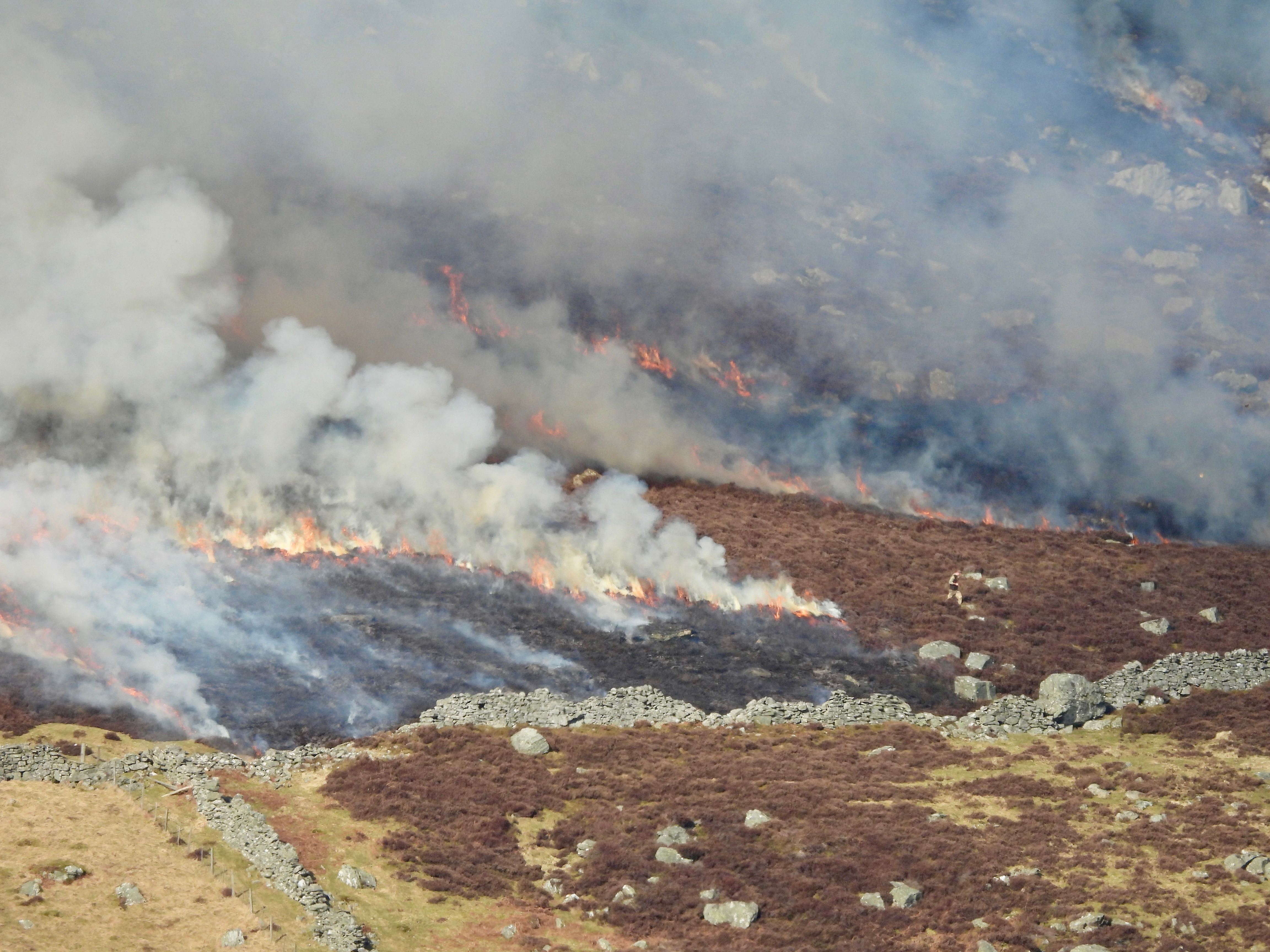
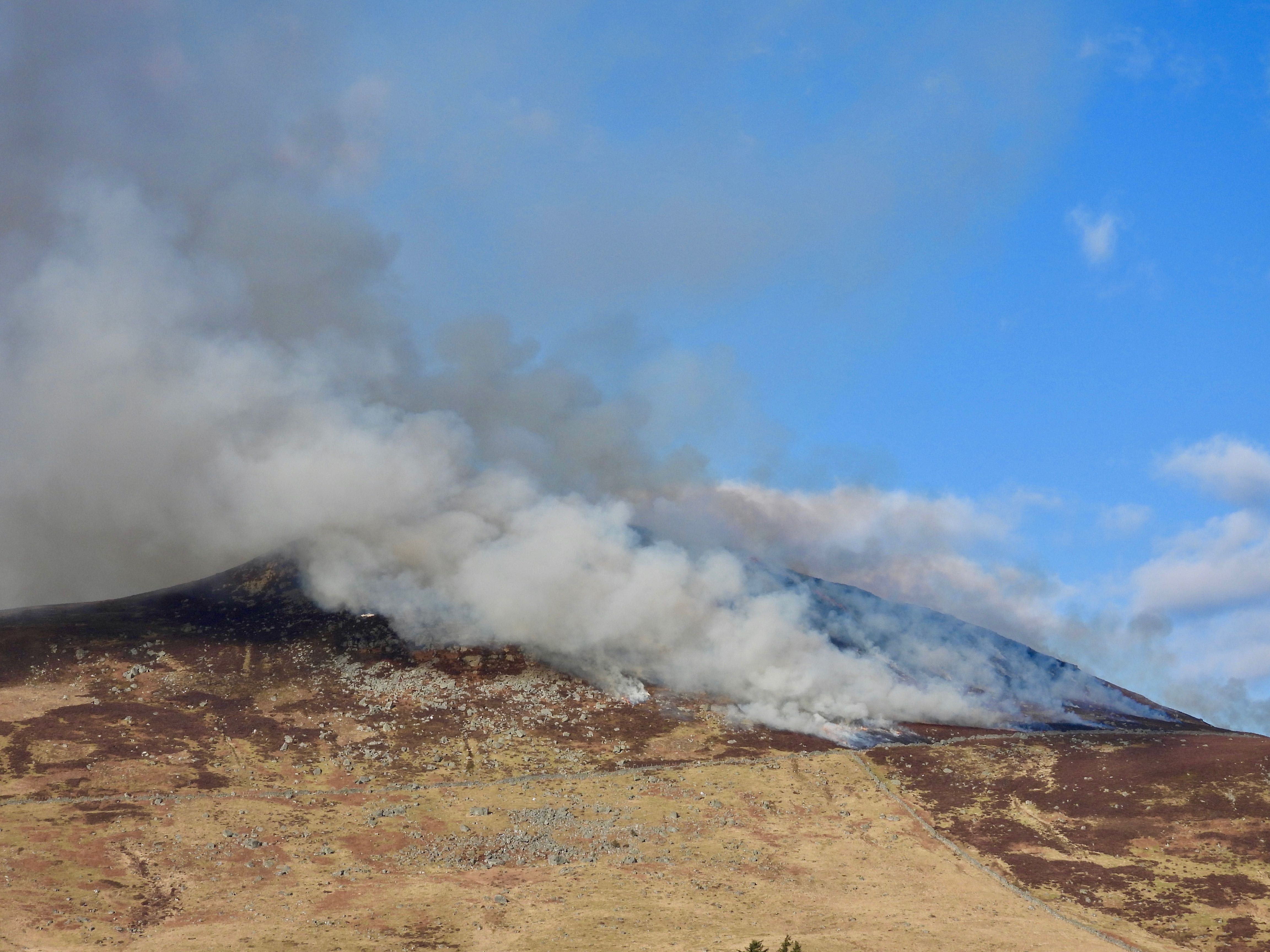
It’s essential that we carry on with muirburn. We might come to that later. It’s absolutely essential to protect peatland. I’ve seen the Mars Bar film – I get it.
Lastly, on positive things, over the past year in Covid, last year I made sure that country sports qualified for support as a branch of hospitality and tourism. This year and very recently working with you and BASC and others, who understand the countryside very well, we’ve set up a million pound support for compensation, particularly for businesses that have really lost all their custom, guides, agents, who bring in valuable business to Scotland. Country sports are worth £155 million a year to the Scottish economy, there’s four million participants, and contrary to what some may believe, they’re not all titled or landowners. They’re ordinary people, up and down the UK, who enjoy taking part in lawful country sports.
In conclusion, I know that there are serious criticisms of your members of my Government but I hope I can say and I genuinely believe that I am a friend in Government and my objective is to continue to be your friend, in Government, acting on the basis of the evidence and making sure that we can continue to see country sports form a hugely important part of the life of Scotland’s rural societies. Thank you very much.
Catriona Bhatia (Scottish Lib Dems): I’m Catriona Bhatia and I’m the lead candidate for the Lib Teams in the south of Scotland and I’m also their spokesperson for the rural economy and tourism. Formerly I was a councillor in the Scottish Borders for about 14 years and Deputy Leader of the council there.
In terms of what I can do for gamekeepers, ghillies and other land managers, well I grew up in the Scottish Borders, my family are keen shooters, keen anglers and my daughters like to partake in the odd hunting when they get the opportunity on hunting land so I 100% get the contribution that country sports make to the rural economy and not just the rural economy but the wider economy in Scotland. I don’t think we should look at ourselves as just distinct. If you look at the 11,000 jobs that are within the industry that’s equivalent to say a shipyard on the Clyde, there’s no politician who would say we’re gonna just close that overnight because we don’t like what they do and I think we should avoid doing the same sort of attrition that we’re trying, that some members of Parliament and political parties are trying to do to the country sports sector.
So I think in terms of what I would like to see, I think we need to lower the temperature, we need to work together because it’s in everybody’s interest to address some of the issues which, you know, there are in any profession, and as politicians we have problems in our profession the same way that you all have within the country sports sector so we need to lower the temperature, we need to work together to look at the issues around raptors, around licensing on grouse moors, but what we don’t need to do is to say that we’re just not gonna have grouse shooting, we’re not going to have deer-stalking, we’re going to ban all these things because people don’t understand them, it’s not just a question they don’t like them, they don’t understand them.
These 11,000 jobs are not just jobs, it’s a way of life. And I think the other key thing which I’d really like to see is more promotion and education, as Fergus was saying it’s not just the titled landlords, there’s many people working in here who probably need better housing, who may need better wages, here are people who partake in the sports who are just ordinary mean and women in the countryside who just like a day out and I think we need to educate the wider public on that and I think we also need to provide better routes in to the country sports industry from schools and from colleges and that again is across Scotland, there’s no reason why a young girl growing up in Glasgow shouldn’t become a ghillie in the Highlands and yet they probably don’t even know there is such a thing so I think we need to look at how we can get more in to schools and that way get more understanding so that’s what I would like to see, I would like to see a lot more dialogue, a lot more positive engagement with yourselves but also with the wider public within Scotland and stop us being quite so distinct from the urban areas but get them to see that we’re part of the wider Scottish economy not just the rural economy.
Ian Davidson (Scottish Labour): Ian Davidson, I was born and brought up in the Borders, I may be the only candidate here that’s prepared to admit having been chased off land by some of your members at various points when I was a youngster but like so many in the Borders and in rural areas I had to leave and go abroad and into the city to get employment, I then became a Labour MP for 20 years representing part of Glasgow and I retired by public demand in 2015, and now I’m a candidate in Ettrick, Roxburgh and Berwick for the Labour party.
Boris Johnstone [sic] said, not somebody I am often quoting, said that allegedly that devolution was a disaster. I don’t disagree that devolution has been a disaster but I do think it has been a disappointment. I think it has grossly under-delivered, particularly for rural issues and for rural areas. And particularly, for the south of Scotland and the rural areas there, that’s the neglected part of a neglected area.
And I think that your members are more than just simply their jobs, they’re also sons and daughters or spouses or parents, they’re concerned about where they live as well as just simply how they’re employed and that’s why I think that for your members, the fact that Scottish education has deteriorated considerably over the years of devolution, that health over the last decade has consistently failed to meet the targets for waiting times, is relevant.
I think the fact that rural transport is a disgrace affects your members and their families. The idea that it’s free for the elderly is a great thing. The idea that it’s gonna be extended to be free for young people is excellent as well and we would support it. But there’s no point in having free travel if there’s no buses.
And I think that the way in which all of these services have been allowed to deteriorate, partly by the under-funding of local Government in Scotland has been a disgrace and it has impacted considerably on the life opportunities of your members and their children and the quality of life that’s experienced by people in the countryside and that’s not to mention the question of care of the elderly in the countryside which is a particular issue even pre-Covid.
And I don’t think that all of these difficulties are the fault of the English, or somebody else, I think that these questions could have, and should have, been addressed under devolution.
Turning to your jobs, I think that there’s growing interest in nature, in rural and in land issues. Change is coming and I think that your organisation has got to take some strategic decisions about whether or not you’re going to be campaigning basically for a better yesterday or whether or not you’re going to be dragged resisting into the future, or you’re going to try and mould the future in the interests of your members.
And can I just say as an aside, when I was just preparing for this I got one of your staff to send me some information about salaries, I’m surprised how badly paid many of your members are considering the experience and ability that they’ve got. In a way I shouldn’t be surprised because the feudalism, the class divisions that are so prevalent in rural areas in Scotland…..
[Carol (SGA) interrupts to say he’s got five seconds left]
Ian Davidson: Vote for me
ENDS




 Raptor Persecution UK