SNH issues licence for mass raven cull in 5-year ‘experiment’

To the utter disbelief of conservationists, statutory conservation agency Scottish Natural Heritage (SNH) has issued a licence authorising the mass killing of ravens in a large area of Perthshire (an area identified as a wildlife crime hotspot where six satellite-tagged eagles have suspiciously disappeared in recent years), as part of a proposed five-year experiment, on the basis of ‘seeing what happens’ to wader populations when ravens are removed.

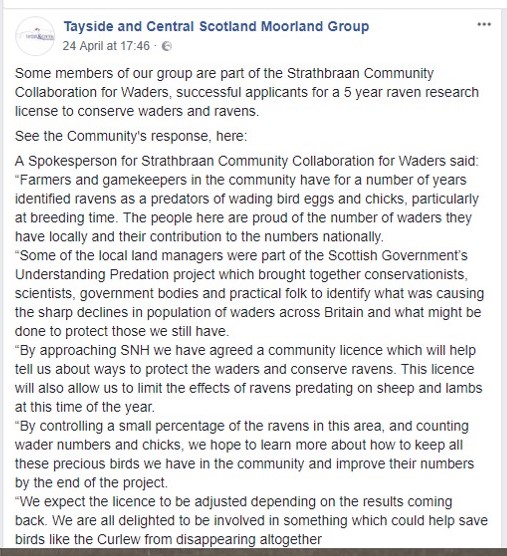
The licence has been issued to a consortium calling itself the Strathbraan Community Collaboration for Waders (SCCW) which, according to the licence application, ‘represents some of the local land management (farmers, gamekeepers) and private interests in the area who value wading birds for their biodiversity, social and economic value to the area and to Scotland more widely. The application is supported by the Scottish Gamekeepers Association and technical advice and support, notably data gathering and interpretation, is being provided by the Game & Wildlife Conservation Trust (GWCT)‘.

The following has been written by a group of Scottish Raptor Study Group (SRSG) members as a guest blog:

STRATHBRAAN RAVEN LICENCE

The news about the missing white tailed sea eagle disappearing in Glen Quaich on Tuesday 17th April could sadly not have been more timely as Scottish Natural Heritage, (SNH), have issued a licence to several estates in the Strathbraan area in Perthshire, including Glen Quaich Estate, for the killing of 300 ravens in a large scale trial over five years to see if wader productivity and populations can be improved by removing raven predation.

The manner in which the government’s statutory nature conservation agency have conducted themselves has come as a shock and there is grave concern about the mis-application of science, the lack of consultation with key stakeholders, such as the RSPB and SRSG, their choice of estate partners and the lack of transparency, trust and honesty, and even seasoned SNH watchers are aghast.

We have raised our concerns and are unhappy with the response so far and have resorted to writing this blog to make the matters public. Following the “suspicious” disappearance of the white tailed sea eagle and the fact the police are describing this as ‘an illegal act’ we call upon SNH to conduct a review and if the circumstances fulfil what we consider to be the established criteria set out in SNH’s own report then we expect the licence to be withdrawn.

Our concerns focus on three areas, firstly the choice of partners:-

Firstly when selecting a trial area why would you choose an area dominated by driven grouse shooting with a history of illegal raptor persecution? What message does this send out to the many law-abiding estates? Is it that persecution will enable you to ‘cut a deal’ with the statutory nature conservation body? Cynics might suggest this is more about an opportunity to kill ravens in an attempt to protect red grouse stocks and it could also be argued that a licence has been issued to kill one species of bird to enable another bird to be shot for fun.

[Map of proposed cull area in north Perthshire, from the licence application, running from Loch Tay in the west to the A9 in the east]:

Raptor workers over the years have been monitoring the area and can speak with authority on raptor persecution. The Scottish Government’s review of satellite-tagged golden eagles showed that four of these birds have disappeared suspiciously in this area, with a satellite-tagged red kite also disappearing in 2010. In all cases, the tags can be classed as “stopped – no malfunction” as used in the review – ie. highly suspicious.

[Map of north Perthshire showing the last known fixes of five satellite-tagged golden eagles that disappeared in suspicious circumstances. Sea Eagle Blue X also disappeared in Glen Quaich last month]:

In addition, a radio-tagged white-tailed eagle was tracked to this area, but disappeared in January 2012, while a further satellite-tagged white-tailed eagle recently similarly disappeared in Glen Quaich. An illegal clam trap was found in November 2012, while a buzzard was spring-trapped in January 2012. A red kite was found poisoned in January 2015. A raven was poisoned in 2017. In addition, licenced raptor study group members have noted a number of cases of suspicious failure of nesting attempts by hen harrier, red kite and buzzard across the area. They have also recorded a higher than usual turnover of red kites and a loss of breeding pairs at nearby sites. All of which indicates on-going illegal persecution.

Even bearing in mind these detected incidents represent an unknown proportion of actual persecution taking place, this is an area where land management practices have displayed a proven criminal intolerance to protected species, stretching back for many years. All this has been in the public domain so why did SNH press on knowing that their partners in this initiative have such a dubious record, and what level of confidence can we have in their honesty and integrity?

Secondly, science and key questions that remain unanswered:-

  • What monitoring is in place to assess that this cull will not affect the raven population status?
  • How will SNH be able to differentiate from other factors affecting the decline of waders such as other predatory pressures, the loss of suitable habitat and changes in agricultural practices?
  • What criteria will be used to differentiate between breeding and non-breeding birds? This year we have noticed that the breeding season is later than usual.
  • What allowance has been made for the immigration of immature flocks into the proposed licence area?
  • Why has the licensing decision been taken in the absence of the raven population modelling report, as it was commissioned with the sole, or at least the main, purpose of underpinning raven licensing decisions with sounder background information?
  • What is the nature and extent of the independent scrutiny that has been carried out?
  • If any raven roosts are located during the period of the licence, can we be assured that any Schedule 1 non-breeding species and other protected species (possibly also using the same roosts) will not be disturbed?
  • What safe guards are in place to ensure the numbers killed will remain within that permitted?

Thirdly, the lack of engagement

SNH are always keen to trumpet words such as ‘trust’, ‘building relationships’, ‘shared objectives’ ‘working collaboratively’ but we have seen none of this.

  • There has been no communication with SRSG workers who have been active in the proposed licence area and have many years of breeding data on ravens and raptors.
  • We understand that not all landowners/managers within the area of licence have been contacted about this licence, contrary to reassurances provided.
  • This proposed application was developed outside the much lauded ‘Working for Waders’ initiative and we only became aware of this by accident; hardly working together or building trust!
  • Under the Scottish Raptor Monitoring Scheme raven data are submitted to SNH (who is a key partner), yet it seems this information was not included in the licence considerations, (we know this as under the permission sharing protocols raptors workers who collected the information in the first place would have had to have been consulted).

We are deeply suspicious that the lack of engagement was deliberate as SNH knew their proposal was weak and would not stand up to the rigour of an independent scientific review.

We again call upon SNH to withdraw the licence.

ENDS

It’s well known that SNH issues a number of licences every year to cull ravens where they are considered a ‘serious threat’ to livestock (e.g. see here, here) but these are apparently for a limited cull, not related to game management and supposedly based on sound scientific evidence of a perceived local problem.

It’s also well known that gamekeepers have long wanted ravens to be added to the General Licence (e.g. see here, here) because they are seen as a perceived threat to grouse stocks.

It’s also well known that ravens are routinely demonised in the press, including this outrageous piece published by the BBC (see here, and well worth a read to understand the hysteria whipped up around this protected species).

However, this latest licence authorising a multi-year mass culling of ravens over a large area for spurious reasons (and apparently very little, if any, scientific justification) is unprecedented. That it also happens to be a well-known raptor persecution hotspot just adds to the lunancy of this situation.

If you share the concerns of the SRSG members, please consider sending an email to Mike Cantlay, SNH Chair, calling on him to withdraw the licence with immediate effect. Emails to: chair@snh.gov.uk

UPDATE 14.20hrs: Thanks to the blog reader who brought this article to our attention, reporting on the results of a scientific study that dispels many of the myths associated with ravens and wader population declines. And here is the scientific peer-reviewed paper by Amar et al that specifically warns against making predator control licensing decisions without a thorough evaluation of the evidence.

UPDATE 21 April 2018: A quote from SNH Head of Wildlife, Robbie Kernahan:

We understand the concerns over wildlife crime in Strathbraan, but we are also clear that the granting of this licence is wholly unconnected to the issues concerned.

This licence is about a pressing and complex conservation issue. It  is a large-scale collaborative trial which will help improve our understanding of factors affecting key wader species, populations of which are declining at an alarming rate. We are satisfied this licence will not affect the population of ravens overall, and is over a five year period.

The licence places significant responsibility and expectations on all those involved – to be able to show that this approach can work and will help deliver what are essentially shared objectives.

Trust is a key element of this and this presents a great opportunity to develop that trust and relationships with all involved. If it becomes apparent that actions are not being carried out in accordance with the terms of any licence then we will have no hesitation in removing the licence“.

UPDATE 21 April 2018: A quote from RSPB Scotland Head of Species & Land Managament, Duncan Orr-Ewing:

We are extremely concerned about the likely scale on impact of this research licence on the local raven population in the Strathbraan area of Perthshire. We are also very surprised that SNH have issued such a research licence  in the vicinity of Strathbraan, which has an appalling  and well documented track record of illegal persecution of raptors, noting also the very recent “suspicious” disappearance of a satellite tagged white-tailed eagle in this very same area.

We, together with local raptor workers who have been monitoring ravens in the area for decades, could have helped SNH with this background detail to the licence application if we had been consulted.

We will be seeking a high level meeting with SNH shortly to discuss. We will be pressing for the research licence to be revoked on the back of the white-tailed eagle incident, and instead consideration given by SNH to removing the use of the Open General Licence in this area, as is within their powers“.

UPDATE 22 April 2018: Raven cull update and what you can do to help (here)

UPDATE 23 April 2018: Article published in The National (here)

UPDATE 23 April 2018: Article published in The Herald (here)

UPDATE 23 April 2018: RSPB Scotland blog in response to raven cull licence (here)

UPDATE 25 April 2018: OneKind blog in response to raven cull licence (here)

UPDATE 25 April 2018: Chris Packham’s response to raven cull licence (here)

UPDATE 26 April 2018: Is the raven cull licence still active whilst SNH review takes place? (here)

UPDATE 26 April 2018: SNH refuses to say whether raven cull licence has been suspended (here)

UPDATE 27 April 2018: Green MSPs seek urgent meeting with SNH re: raven cull licence (here)

UPDATE 27 April 2018: ‘No justification’ for raven cull licence, says RSPB Scotland Director (here)

UDATE 28 April 2018: Raven cull licence: SGA evasive on benefits to grouse moors (here)

UPDATE 1 May 2018: Strathbraan Community Collaboration for Waders: who’s involved? (here)

UPDATE 4 May 2018: Raven cull: next steps to take as SNH blunders on (here)

UPDATE 7 May 2018: “Let’s have more trials [culls] whether it’s about ravens or other things” says SNH (here)

UPDATE 8 May 2018: Parliamentary questions lodged on raven cull licence (here)

UPDATE 9 May 2018: Alison Johnstone MSP lodges Parliamentary motion on raven cull licence (here)

UPDATE 12 May 2018: Raven cull: please ask your MSP to support this Parliamentary motion (here)

UPDATE 23 May 2018: Raven cull update: scientific advisory committee not being asked to repeal licence (here)

UPDATE 23 May 2018: Raven cull: Parliamentary questions and answers (here)

UPDATE 20 May 2018: Raven cull: latest update (here)

UPDATE 5 June 2018: Legal challenge to raven cull licence: your help needed! (here)

UPDATE 6 June 2018: Raven cull: legal challenge crowdfunder smashes £10k target on day one! (here)

UPDATE 19 June 2018: Raven cull: a few updates (here)

UPDATE 20 June 2018: #Justice4Ravens fundraising merchandise now available (here)

UPDATE 22 June 2018: Preston man receives warning for raven cull death threat (here)

UPDATE 1 July 2018: Last push on #Justice4Ravens crowdfunder (here)

UPDATE 1 July 2018: #Justice4Ravens crowdfunder target smashed! (here)

UPDATE 5 July 2018: #Justice4Ravens: application lodged for judicial review (here)

UPDATE 23 July 2018: Surprise! Gamekeeper in raven cull area declares cull a success (here)

UPDATE 30 July 2018: Raven cull licence: scientific rigour ‘completely inadequate’ says SNH’s scientific advisory committee (here)

UPDATE 30 July 2018: Voluntary suspension of raven cull is meaningless greenwash (here)

UPDATE 7 August 2018: #Justice4Ravens: judicial review update (here)

UPDATE 20 August 2018: Raven cull: application for judicial review withdrawn, for now (here)

UPDATE 30 April 2019: SNH reluctant to discuss licensed raven cull in Strathbraan this year (here)

UPDATE 2 May 2019: SNH rejects 2019 licence application for Strathbraan raven cull (here)

UPDATE 30 May 2019: Scottish Gamekeepers Association’s pity party in response to failed Strathbraan raven cull bid (here)

UPDATE 10 November 2022: Ravens illegally shot on two Strathbraan grouse moors (here)

Why shooting estates should fear eagle disappearances

An interesting and insightful Leader Comment in today’s Scotsman: (whoever wrote this, well done!) –

As the RSPB Scotland points out, the disappearance of a fourth satellite-tracked eagle in a part of Perthshire that’s home to several shooting estates over four years is “highly suspicious”.

The Scottish Gamekeepers Association complains its members are the “first to be accused when any bird of prey goes missing”, but the illegal killing of raptors undoubtedly happens, as a 2016 report on red kites by Scottish Natural Heritage found, and few others have a motivation. Each case is a further challenge to the rule of law that will eventually force parliament to react.

And that could lead to the licensing of shooting estates – with the threat of licences being revoked over killings of birds of prey – or a strict liability offence so that a landowner would be found responsible for the unnatural death of any raptor on their land.

Both are measures that estates would – and should – fear.

The sooner the shooting community realises that the death of a sea eagle represents a greater threat to their business than a live bird, the better the chances will be of protecting these magnificent creatures.

Golden eagle Fred: the SGA doth protest too much

The highly suspicious disappearance of our golden eagle Fred continues to make the news.

The Scottish Gamekeepers Association has issued the following press release today:

GAMEKEEPERS SEEK END TO ‘TRIAL BY MEDIA’ OVER EAGLE.

The Scottish Gamekeepers Association has called for an end to the ‘trial by media’ over a golden eagle which has gone missing near Edinburgh.

Last week, BBC wildlife presenter Chris Packham issued a press release claiming a young satellite tagged eagle had gone missing just miles from the Scottish Parliament, in a wood in the Pentland Hills.

According to the Springwatch presenter, the tag was later found to signal in the North Sea, after appearing to stop transmitting for three days.

A video released to the media by Packham – who actively campaigns for grouse shooting to be banned- implied that the eagle, which has not been located, had been illegally killed.

The video the BBC presenter appeared in, pointed the finger at a grouse moor as it was geographically close to the wood and fields where the bird was understood to be.

Now the SGA has called for an end to what it describes as unsubstantiated speculation and for greater transparency over evidence.

Despite media claims that the area 7 miles to the south of the capital is managed for driven grouse shooting, the moor is used principally as a partridge shoot as quarry numbers are now too low to sustain viable grouse shooting due to high levels of public access.

The area is popular with hikers, dog walkers and mountain bikers from Edinburgh and beyond, with the Pentland Hills welcoming 600 000 visitors per year.

A Spokesman for The Scottish Gamekeepers Association said: “Trial by media has already taken place. Now everyone who has been drawn into this needs the truth as to what happened to this eagle.

It is not enough for people to be implied as being criminals and those in possession of the satellite tag evidence to walk away, after presenting their judgement to the media, then say no one will probably ever know what has happened.

If the tags are as reliable as everyone has been told, then the tag data will surely provide conclusive evidence. Many questions need to be answered including why it could not be located in the sea, if it continued to transmit locational data for several days.

There needs to be greater transparency because there are too many elements to the carefully stage-managed narrative which do not stack up despite its presentation as a fait accompli.

If, by releasing this evidence, in full, to Police Scotland, it helps to bring this to a successful conclusion or prosecution, then the SGA and others would be satisfied that justice, as we have come to expect justice to look like, will have run its course.

In the meantime, serious allegations have been made against a community of people on the basis of a running commentary of media speculation, implication and suggestion which makes a laughing stock of what looks to be a live investigation.”

ENDS

We have provided a response to media enquiries, reproduced in full here:

The circumstances of Fred’s disappearance are highly suspicious and fit with the findings of the Scottish Government’s recent review of the fates of satellite-tagged golden eagles in Scotland, which demonstrated that almost one third of tagged golden eagles have disappeared without trace in areas managed for driven grouse shooting.

Since our initial press release, we have obtained further information from Fred’s tag which corroborate our earlier suspicions that Fred is a victim of illegal persecution. Far from “walking away”, as the SGA claims, this new information has been passed to the police for investigation so we cannot comment further at this stage.

It’s laughable that the SGA is complaining about ‘trial by media’ when one of its own Directors has been using social media to smear and discredit the conservationists involved in this project, suggesting we’ve fabricated the whole story. If the SGA used its time and resources more productively to root out the criminals within the game-shooting industry, eagles like Fred would stand a much better chance of survival“.

ENDS

Meanwhile, we’re still waiting to hear from the SGA whether Scottish gamekeeper Alan Wilson, who was recently convicted of animal cruelty, was a member of the SGA at the time he committed his crime and if so, whether he has now been expelled. Strangely, the SGA has not yet commented.

Emails to: info@scottishgamekeepers.co.uk 

The Gift of Rogues

Last Thursday, at the invitation of Andy Wightman MSP (Scottish Greens), several conservationists attended the Scottish Parliament for a meeting to discuss illegal raptor persecution with Andy and some of his parliamentary colleagues. It was our privilege to be invited and we are grateful to Andy for the opportunity to contribute to what turned out to be a very productive session.

Prior to the start of our meeting, Andy invited some of us to attend a parliamentary reception for the Gift of Grouse (Gift of Rogues for you anagram fans) hosted by Kate Forbes MSP (SNP) and designed to celebrate red grouse as a ‘healthy and sustainable’ food. We’d actually blogged about this forthcoming event the day before where we’d argued that rather then being ‘healthy and sustainable’, red grouse shot on driven grouse moors were more likely to be toxic, diseased and unsustainably harvested (see here), so we were delighted to be able to attend as invited guests and listen to the speeches.

You can probably imagine the warm and welcoming reception we received from the pack of tweed-clad gamekeepers who’d come along to boost the numbers (the official press statement said the event was attended by “over 60 guests” – it wasn’t, there was about half that number, mostly from the grouse-shooting and game dealer industry and a handful of Conservative MSPs, and us) but all credit to Colin Sheddon (BASC) and Tim (Kim) Baynes (Scottish Land & Estates / Scottish Moorland Group / Gift of Grouse) who came over and introduced themselves. Kate Forbes also made a point of coming over and we had a brief chat about unsustainable driven grouse shooting and its association with the criminal killing of birds of prey.

So, the turn out was lacklustre and to be honest, so were the speeches. We heard from Andrew Hopetoun (of the infamous Leadhills Estate and Chairman of the Scottish Moorland Group) who muttered something about there being “environmental benefits” of driven grouse shooting but failed to elaborate on what those benefits are, and carefully avoided any mention of the long history of recorded raptor persecution at Leadhills, including the alleged shooting last year of a hen harrier and a short-eared owl. (Incidentally, we’re still waiting to see whether SNH imposes a General Licence restriction on this estate).

We heard from Jeremy Dixon of Ochil Foods in Perthshire (the company that supplies red grouse to Michelin-starred chef Andrew Fairlie at Gleneagles – you’ll remember him, he’s the one who falsely claimed red grouse are ‘organic’). Jeremy claimed that his company had seen a “five-fold increase in the demand for red grouse last year” – but then he was hardly going to say that his business is struggling to sell an unpopular product.

Then we heard from Chef Brian Grigor (The Balmoral Hotel, Edinburgh) who made the extraordinary claim that the red grouse that reaches your plate is ‘truly wild’ and has been ‘untouched by human hand’. Really, Brian? Is this the same ‘truly wild’ and ‘untouched by human hand’ bird that has been raised on a moor where all the native predators have been ruthlessly destroyed and the grouse itself has been netted in the middle of the night to have a powerful drug used in chemotherapy forced down its throat and a pesticide band attached to its leg that will transfer the pesticide directly to the grouse to kill off ticks (also used as a topical treatment in humans to treat scabies and pubic lice)?

Brian had produced some grouse canapes for the reception and needless to say we weren’t tempted. We did consider collecting a few to have them tested for excessive quantities of toxic poisonous lead and a dose of the anti-parasitic wormer drug Flubendazole but that seemed a bit rude. We might instead just visit his restaurant later in the year and buy some grouse for testing.

We did check out the goodie bags but they weren’t up to much, either. Although we did find a pamphlet that repeats a false claim that 81 bird species thrive on grouse moors – a claim we debunked over a year ago.

We left the reception wondering what its objectives had been – a group of grouse-shooting industry insiders talking to some other grouse-shooting industry insiders and a few tame Conservative MSPs all seemed a bit pointless. But then we read this, and of course it all became clear: just another PR propaganda exercise designed to portray political support for the industry, although this time they probably hadn’t banked on Andy Wightman MSP having the final word:

There’s no assurance standards around grouse, we don’t know where the source of it is and we know there’s criminality mainly around the illegal culling of protected raptors.

Produce from a system that involves criminal activity should not get to the plates of high end restaurants.

I would also question whether grouse is healthy.”

Amusingly, our presence at this event prompted this outburst from Scottish Gamekeepers’ Association Director, Bert Burnett (thanks to the blog reader who sent us these images). A free Gift of Rogues goodie bag for anyone who can spot the irony!

Scottish gamekeepers complain about alleged escalation of trap vandalism

The Scottish Gamekeepers’ Association is today complaining about an alleged escalation in the vandalism of animal traps on shooting estates.

This supposed increase has been attributed to ‘activists’ and the SGA wants the law tightened up so that the alleged perpertrators can be prosecuted.

There’s widespread media coverage about it today e.g. in The National (here), The Times (here) and on the SGA website (here).

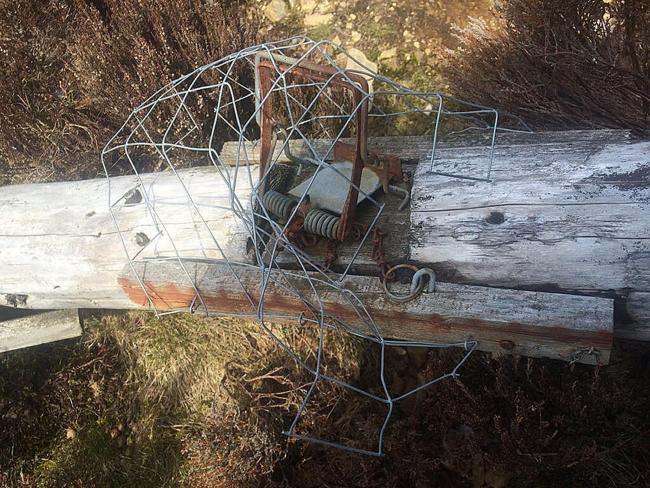
Photo of an allegedly vandalised trap (from The National)

This isn’t the first time we’ve heard such claims. Back in 2013 it was discussed during a Rural Affairs Parliamentary Committee meeting, when then Environment Minister Paul Wheelhouse acknowledged that trap tampering might be taking place but that there was no hard evidence to show how widespread the problem might be so at that time it was considered all conjecture.

In 2015 the issue was raised again by a Fife landowner and an article in the local press suggested that “Police Scotland is reporting a rise in the number of traps being tampered with“.

We challenged that claim by looking at the results of a year-long trap tampering study carried out across Scotland by BASC between April 2014 and March 2015. The results showed that the issue was not widespread at all, but seemed to centre on a handful of local areas.

Whether the problem has increased since then is hard to tell without independently collected data. The problem might have increased. It’s not hard to understand the motivation that might lead to someone damaging a trap. It might be on animal welfare grounds (someone might see a non-target species dead in a trap). It might be because someone can’t tell whether a trap is legally or illegally-set – it’s not always easy to judge. It might be because someone objects to predator control just to maximise a landowner’s profits. Or the motivation might simply be because so many cases of illegally-set traps rarely result in a prosecution, even when a known gamekeeper has been filmed setting an illegal trap. That doesn’t make trap vandalism ‘right’, we’re just saying it’s easy to understand why it might be happening.

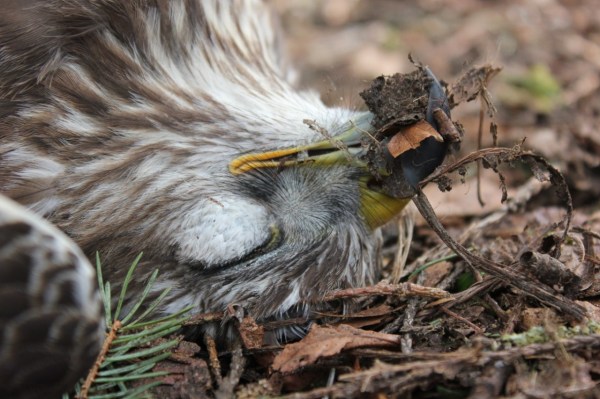
Photo of a young red grouse killed by a lawfully-set trap (photo by RPUK)

It’s equally plausible to suggest that some gamekeepers may be deliberately vandalising one or two of their own traps and then reporting it to the police as the work of ‘activists’ in an attempt to smear those whose campaign to put game-shooting under political scrutiny is gaining such traction.

Whatever might be happening, it’s ironic that the SGA doesn’t make this much noise when cases of illegally-set traps on game-shooting estates are reported in the media.

It’s very hard (virtually impossible) for us to sympathise with the SGA when it remains silent (or concocts outlandish alternative explanations) about the on-going abuse and use of illegal traps, by gamekeepers, to target birds of prey on game-shooting estates.

Speaking of which, we’re still waiting for the findings of the SGA’s inquiries in to who set the illegal traps that were discovered on a grouse moor on Invercauld Estate last year.

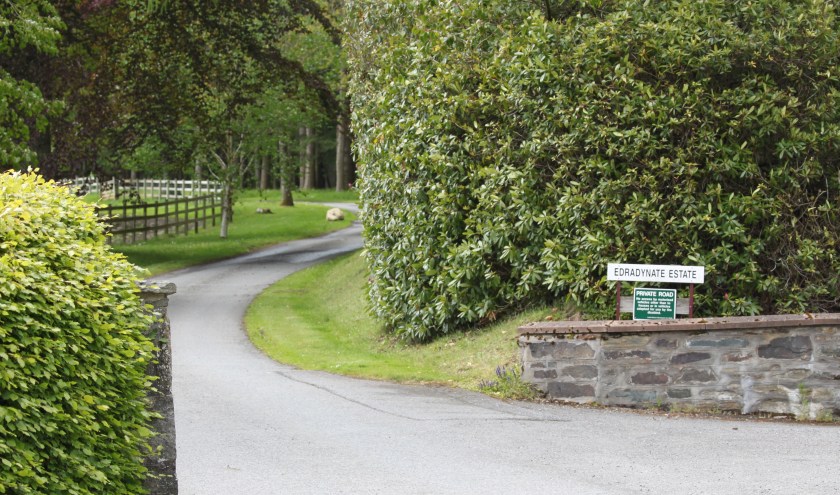
Evidence of wildlife crime results in General Licence restriction on Edradynate Estate

As many of you will know, SNH has the ability to impose a three-year General Licence restriction order on land, or on an individual, where there is sufficient evidence, substantiated by Police Scotland, that raptor persecution has taken place (see SNH framework here).

This measure, based on a civil burden of proof, was introduced by then Environment Minister Paul Wheelhouse in 2013 in response to the continuing difficulties of meeting a criminal burden of proof to facilitate a criminal prosecution. The measure became available for incidents that occured on or after 1 January 2014.

Photo of a poisoned buzzard (RPUK)

Since then, only two restriction orders have been imposed, both in November 2014: one for the Raeshaw/Corsehope Estates in the Scottish Borders, and one for the Burnfoot/Wester Cringate Estates in Stirlingshire (see here for details, and an explanation of what a General Licence restriction actually means).

As you’ll also probably be aware, Raeshaw Estate and Corsehope Estate made a legal challenge to SNH’s decision and this resulted in a judicial review. The judicial review dragged on for some time but eventually concluded in March this year, and the court found that SNH had acted fairly and that the General Licence restriction at Raeshaw Estate and Corsehope Estate should remain in place (see here).

While this legal challenge was underway, SNH, quite reasonably, did not impose any further General Licence restrictions, even though there were plenty of candidate estates to consider. Once the legal argument had been settled, we expected SNH to open the floodgates and impose many more restriction orders for offences that had taken place since January 2014. We asked SNH about this in June 2017 and we were told that two notifications were underway, relating to offences in Perthshire and Aberdeenshire, although no further details were given at that time, presumably as SNH was giving the affected parties time to respond/appeal. Fair enough.

Today, SNH has announced that two General Licence restriction orders have been imposed in two separate cases.

The first of those cases relates to Edradynate Estate in Perthshire: SNH_GL Restriction Notice_Edradynate Estate_15Sept2017

Here is the decision notice:

And here is the estate boundary map to which the General Licence restriction applies for the next three years:

For the next three years, Edradynate Estate will no longer be able to enjoy the privilege of using General Licences 1, 2 or 3, but the estate will be entitled to apply for the use of an Individual Licence that will allow them to kill certain bird species but under closer scrutiny than if the estate was using a General Licence. We’ll be monitoring the use of any Individual Licences that SNH approves for this estate, and, if there is any breach of the licence conditions, we fully expect SNH to revoke the Individual Licence just as they did for Raeshaw Estate earlier this year.

SNH has not provided any information about the Police Scotland evidence used as the basis for this General Licence restriction order on Edradynate Estate. However, it’s probably a fair assumption that it relates to the alleged poisoning of several buzzards in 2015. This is one of the five prosecution cases that the Crown Office dropped earlier this year, without explanation. The case did not involve video evidence, as some of the others did, and the case was dropped by the Crown despite a plea from Police Scotland to proceed (see here).

We’ve been blogging about Edradynate Estate for a very long time. It’s well worth reading an earlier summary we wrote (here) which includes some fascinating commentary about the estate by former RSPB Investigator Dave Dick, who claimed as far back as 2004 that the estate was “among the worst in Scotland for wildlife crime“, and commentary by former Police Wildlife Crime Officer Alan Stewart, who said in 2005, “Edraynate Estate has probably the worst record in Scotland for poisoning incidents, going back more than a decade“. The details involve a disturbingly high number of poisoned birds and poisoned baits that were found over the years, as well as a number of dropped prosecution cases (nobody has ever been convicted for any of the alleged offences). The summary also includes information about links between the estate and the Scottish Gamekeepers’ Association.

Now, whether you think a General Licence restriction order is a sufficient sanction against this estate is open to debate. However, while we wait for the Scottish Government to get on with estate licensing, a General Licence restriction order is all that is currently available, so well done to SNH for imposing the General Licence restriction order on this particular estate and for being semi-transparent about the details.

Unfortunately, we can’t say the same about the second General Licence restriction order that SNH has just imposed. We’ll be blogging about that one in the next blog…..it’s an absolute shocker.

Edradynate Estate (photo by RPUK)

UPDATES:

RSPB press statement here

SNH imposes General Licence restriction on ‘mystery’ gamekeeper (here)

More on the mystery gamekeeper with the General Licence restriction (here)

SGA Chairman wonders why gamekeepers aren’t respected

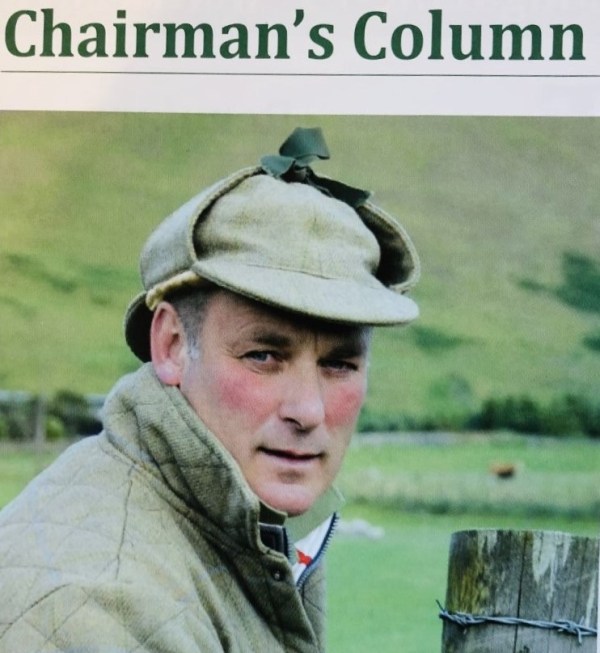
We always look forward to the publication of Scottish Gamekeeper, the quarterly rag for members of the Scottish Gamekeepers’ Association. As you can imagine, it’s often stuffed full of bright intellectual commentary and an appreciation of birds with hooked beaks and sharp talons.
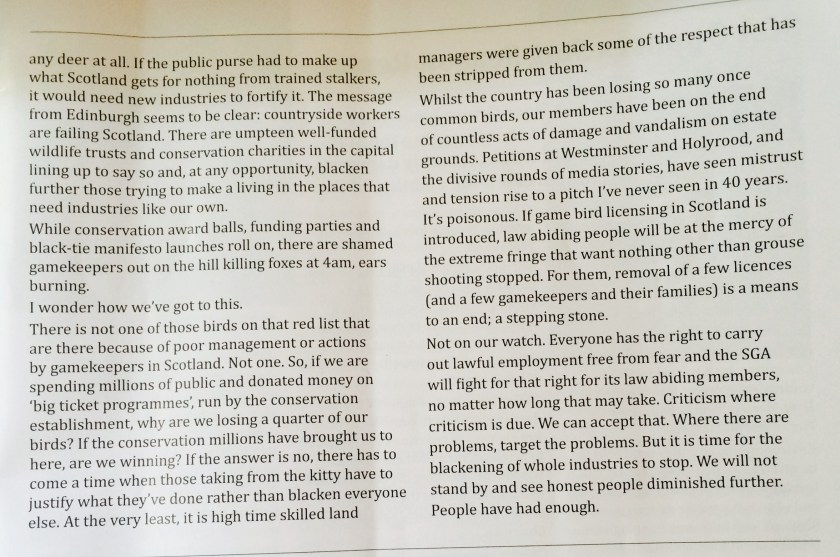
The latest edition landed on our doormat last week and as ever, its content didn’t disappoint. Looking at the cover, we were particularly keen to read Chairman Alex Hogg’s thoughts on ‘working people’ (he means gamekeepers) being fed up about being wrongly ‘tarred’.

As an aside, we were also intrigued to see the Partnership for Action against Wildlife Crime (PAW) logo displayed on the banner. As some of you will recall, the SGA recently spat the dummy and announced they’d no longer attend PAW Raptor Group meetings. So apparently you can be a member of PAW, and pick and choose your own terms of engagement. Marvellous.

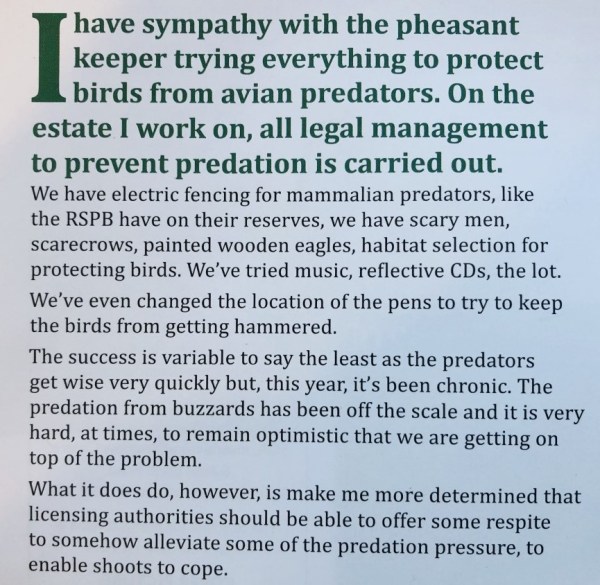
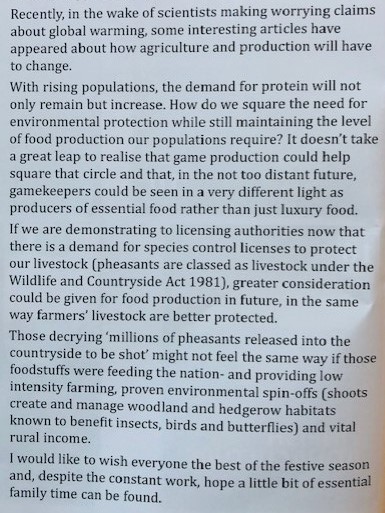
Anyway, back to Chairman Hogg’s musings on life. Here’s his column:

Apart from having to point out to Chairman Hogg (not known for his grasp of factual accuracy) that, contrary to his claim, the hen harrier is red-listed precisely because of ‘poor management actions by gamekeepers’ in Scotland (and of course in England), what really intrigued us was his confusion about why gamekeepers are so maligned.

It’s a tricky one alright. Maybe, perhaps, we’re not entirely sure, but might it have something to do with the fact that of all those convicted for offences related to raptor persecution in Scotland between 1994-2014, 86% of them were gamekeepers? (Source: RSPB 2014 annual review)

Or that of all poison abuse incidents reported in Scotland between 2005-2014, 81% of them took place on land managed for grouse and pheasant shooting? (Source: RSPB 2014 annual review)

Chairman Hogg also uses his column to whip up a spot of scaremongering (as was regurgitated by a gamekeeper’s wife in the Mail on Sunday last weekend) about the introduction of game shoot licensing claiming that “law abiding people will be at the mercy of the extreme fringe that want nothing other than grouse shooting stopped. For them, the removal of a few licences (and a few gamekeepers and their families) is a means to an end; a stepping stone“.

Why is licensing such a difficult concept to understand? If you break the terms of the licence, you get penalised. If you abide by the terms of the licence, you won’t get penalised. It’s really pretty simple. Perhaps by using the term ‘extreme fringe‘ Chairman Hogg is suggesting that gamekeepers will be ‘set up’ or framed. Has there ever been a case of this happening, where a gamekeeper has been wrongly convicted by the action of somebody else? We can’t think of one. Members of the ‘extreme fringe’, whoever they might be, have no need to ‘set up’ gamekeepers because gamekeepers keep on breaking the law all by themselves, time and time and time again.

To be fair, Chairman Hogg does have a point about all gamekeepers being tarred by the same brush. The reason this happens is because it’s virtually impossible for observers to distinguish between the law-abiding gamekeepers and the criminal gamekeepers. Even industry leaders don’t differentiate, so why should we? The criminals within the ranks are repeatedly shielded and protected by the game-shooting industry, until the point of conviction. Once they’re convicted, the leading organisations within the industry are put under strong public pressure to react, (e.g. a membership expulsion), but this is a fairly recent phenomenon and it doesn’t always happen (e.g. see here) and actually we’re still waiting for the SGA (and Scottish Land & Estates and Wildlife Estates Scotland) to comment on the membership status of convicted gamekeeper William (Billy) Dick who committed offences on the Newlands Estate in Dumfriesshire. We’ll come back to this case soon.

However, as everybody knows, convictions for raptor persecution are as rare as hens teeth (especially when the Crown Office refuses to accept what appears to be clear cut evidence of alleged crimes) and so the SGA and others within the industry spend their time concocting the most fantastical explanations for what might have happened to the crime victims (e.g. see here, here, here, here) instead of focusing on the blindingly obvious suspects. That isn’t going to earn Chairman Hogg et al any respect, and will simply engender the commonly-held view that many (not all) gamekeepers are nothing more than irredeemably archaic luddites.

Here are some top tips for earning back some respect:

  1. Stop killing raptors
  2. Er
  3. That’s it

There’s nothing ‘draconian’ about licensing game shooting estates

There were a couple of articles published in the Scottish Mail on Sunday yesterday about the possibility (probability) of the introduction of game shoot licensing in Scotland.

The first article didn’t bring anything new to the story; it was just a re-hashed version of who’s said what since Cabinet Secretary Roseanna Cunningham announced a package of new measures to address the on-going problem of raptor persecution and unsustainable grouse moor management. Lord David Johnstone of Scottish Land & Estates talked about maintaining the status quo (i.e. no licensing scheme required), James Reynolds of RSPB Scotland talked about the necessity of introducing a licensing scheme because self-regulation by the grouse-shooting industry has failed, and an unnamed spokesman from the Scottish Gamekeepers’ Association talked about how licensing could have serious consequences for gamekeepers and their families. The two journalists who wrote the article described the Government’s proposed review as ‘the latest blow to landowners following draconian land reforms and the abolition of tax breaks’.

What ‘draconian land reforms’ are those, then? And why should multi-millionaire landowners, whose grouse moors are already subsidised by the public purse, be entitled to tax breaks?

Here’s a copy of the article, and for those who struggle to read it, here’s a PDF version so you can zoom in and increase the font size: MailonSunday1_July162017

The second article was a commentary column written by Carrieanne Conaghan, a gamekeeper’s wife who coordinates the ‘Speyside Moorland Group’ – one of several regional moorland groups closely affiliated with the Gift of Grouse propaganda campaign.

The headline begins: ‘As Draconian new land laws loom…’ These words probably weren’t Carrieanne’s but nevertheless, it’s clear from her commentary that estate licensing isn’t welcomed by gamekeepers because, she says, “For the vast majority of estates who have done nothing wrong and are resolute in their fight against wildlife crime, they would be penalised by strict new controls“.

Unfortunately she doesn’t explain why or how she things law-abiding estates would be “penalised by strict new controls“. The fact of the matter is, they wouldn’t be penalised at all, as the penalities would only be felt by those who continue to illegally kill protected raptors. And quite rightly so. Law-abiding gamekeepers, and their employers, have absolutely nothing to fear from the introduction of a licensing scheme, and you’d think they’d be welcoming it with open arms because if anything, it’ll protect them from being lumped in with the criminals.

Here’s the article and here it is as a PDF: MailOnSunday2_July162017

Carrieanne also claims that, “More worryingly, it [licensing] also brings the potential of gamekeepers losing their homes and livelihoods if a licence to operate was withdrawn“. This is just emotional scaremongering, probably encouraged by the same tosh spouted by SGA Chairman Alex Hogg earlier this year (see here). The only reason gamekeepers would potentially lose their homes and livelihoods would be if they’d broken the conditions of the licence and the subsequent withdrawal of that licence. That principle applies to everybody else in society whose activities are licensed. It’s the risk you run if, for example, you’re a professional driver and you commit road traffic offences leading to the loss of your driving licence. Why should gamekeepers be exempt from regulation when everyone else’s lives are governed by such rules?

Carrieanne claims that the licensing proposal has been brought about by “activists who object to the very existence of grouse moors, whether their opposition is based on a dislike of shooting or the ‘toffs’ who they believe are the only ones who participate“. Actually, the proposal was brought about by ordinary members of the public who are sick to the back teeth of criminal gamekeepers and their employers getting away with the illegal slaughter of protected wildlife, particularly on driven grouse moors.

Carrieanne claims that raptor persecution is “in decline” and that “tough new legislation has had a positive effect“. She also thinks, because her gamekeeper husband told her, that gamekeepers “desire to manage moorland for the interests of all species, whether it be grouse, ground-nesting birds, mountain hares or birds of prey“. Good grief.

She must have missed the Golden Eagle Satellite Tag Review, the findings of which were the final straw for Roseanna Cunningham and which led directly to the current proposition of a licensing scheme. She must also have missed the news that the hen harrier population continues to spiral downwards, thanks in large part to illegal persecution, and the news that peregrine populations continue to decline in areas dominated by driven grouse moors, and the news that the northern red kite population continues to suffer from the impact of illegal persecution on driven grouse moors, and the news that five prosecutions for alleged wildlife crime (all involving gamekeepers or their employers) have all been dropped in recent months, and the news that raptors continue to be illegally shot, even in recent weeks (see here, here) or illegally trapped (see here) on grouse moors up and down the country.

Did anyone see any gamekeepers or any moorland groups condemning these incidents? Where was their uproar? Where was their outrage? How many gamekeepers or members of moorland groups have provided information/intelligence to the police about any of these recent crimes? We’ll take an educated guess – none of them.

Carrieanne is right to be concerned about her family’s livelihood, but it’s not at risk from a licensing scheme, which is neither draconian or unnecessary; it’s actually a long overdue and pretty measured response to decades of criminality and unsustainable practices. Carrieanne’s livelihood is only at risk from those criminal gamekeepers and their employers who refuse to reform and continue to stick up two fingers to the law.

UPDATE 25 July 2017: SRSG response letter here

“Fiercest critic” yet to be fierce or critical

Back in January this year we wrote a blog about Conservative MSP Edward Mountain (Highlands & Islands) who had written a guest article for the Scottish Gamekeepers’ Association’s quarterly rag.

In that article, Mr Mountain wrote this:

I believe that challenging the ‘spectre’ [of land management reform] is vital, if the very countryside we all value and love is to be maintained. The way to do this is by standing tall and laying out a stall, for all to see the benefits positive management has to offer. The problem is that every time it looks like the right story is being delivered another case of wildlife crime comes to light. If there is any chance of moving forward we must stop these idiots, who believe illegally killing raptors is acceptable.

I therefore would urge all organisations that represent country folk to stand up and let people know all the good work that is being done for conservation. At the same time, they also need to vilify those that break the law.

Over the next 4.5 years I look forward to working with the SGA and I will do all I can to defend the values you and your members believe in. However, I must also say that I will be the fiercest critic of those that jeopardise these values by breaking the law‘.

Since January we’ve waited with anticipation to see this “fiercest critic” in action but we haven’t heard a peep from him on the subject of illegal raptor persecution, not even after the publication of the golden eagle satellite tag review which showed that one of the six significant clusters of suspicious eagle ‘disappearances’ was within his constituency (the grouse moors of the Monadhliaths to the west of the Cairngorms National Park).

So a couple of days ago, when Police Scotland announced an investigation in to the illegal shooting of a short-eared owl on the Leadhills Estate, we thought we’d ask Mr Mountain on Twitter for a ‘fiercely critical’ response. Instead we got this:

Watching carefully need the evidence“.

When we asked him why 50 recorded wildlife crime offences over a 14 year period wasn’t enough evidence, he said:

I will react when I have clear and legal proof to do so before would be irresponsible“.

So not so much the “fiercest critic”, but more the meekest observer.

If any of you are attending the Scottish Game Fair this weekend, you can probably catch Mr Mountain for a chat. He’ll definitely be there tomorrow (Friday), presenting the SGA’s Young Gamekeeper of the Year Award.

Scottish Gamekeepers’ Association’s response to eagle satellite tag review

We’re slowly making our way through the recently published Golden Eagle Satellite Tag Review.

What an incredible piece of research! It goes far deeper than answering the simple question, ‘Is there a pattern of suspicious activity surrounding the ‘disappearance’ of many satellite tagged golden eagles?‘ (Answer: an unequivocal YES). The authors, Dr Phil Whitfield & Dr Alan Fielding, deserve much credit not only for their forensic analysis and clarity of presentation, but also for the extent of their review, demolishing long-held myths about the supposed unreliability of satellite tags, the supposed harmful effect of satellite tagging golden eagles (at an individual and population level), and the notion that wind farms are responsible for the ‘disappearance’ of many satellite-tagged golden eagles in Scotland. If you have the time to read beyond the headlines in this review, you’ll be rewarded with some really useful information that exposes the grouse shooting industry’s interminable denial about what’s been going on, some of which we discuss below.

Last Wednesday, the day the review was published, the Scottish Gamekeepers’ Association responded with this official statement:

Statement (in full, as given to media early today): SNH Report into missing tagged eagles

A Spokesman for the Scottish Gamekeepers Association said: “Losing, on average, 4 tagged eagles per year across Scotland is totally unacceptable. The illegal killing of any eagle is condemned wholeheartedly by the SGA and all law abiding gamekeepers.

Although this study assimilates 12 years of evidence and makes difficult reading, it does acknowledge recent improvements in some grouse moors areas previously associated with suspected persecution. This change has contributed to the overall betterment of the golden eagle’s conservation status, as recently reported.

That said, problems clearly still exist in some hotspot areas and, in our view, this can only be tackled by all partners having access to the same telemetry data in order to arrive at shared and targeted solutions. If this had been happening over the past decade, there is a high likelihood these problems could have been tackled satisfactorily before now.

The SGA does not believe the report adequately tackles the threat wind farms pose to raptor species as there is a significant amount of published data from other countries which show a negative correlation between bird survival and turbine strike.

However, that is not an attempt in any way to detract from the report’s findings“.

END

The SGA says the report “made difficult reading“. It’s apparent, from their official statement, that the report also made for difficult comprehension (for them). They refer to recent improvements in some grouse moor areas which led to the golden eagle’s national conservation status changing from ‘unfavourable’ (largely due to illegal persecution) to ‘favourable’, as we blogged about here. However, what the SGA has conveniently forgotten to mention is the following statement from the golden eagle satellite tag review:

We also expect that there may have been some recovery in some parts of the central and eastern Highland regions where the species’ conservation status was previously unfavourable due largely to illegal persecution. These regions, however, still yield evidence of continued illegal persecution in parts, and so we would not expect recovery to the full capability of breeding birds being evident‘.

In other words, the recent improvements in some areas do not off-set the continued illegal persecution that is, quote, “still hampering overall recovery from historic, widespread persecution“.

The SGA does acknowledge that “problems still clearly exist in some hotspot areas” but then claim that “this can only be tackled by all partners having access to the same telemetry data in order to arrive at shared and targeted solutions. If this had been happening over the past decade, there is a high likelihood these problems could have been tackled satisfactorily before now”.

Eh? Are they suggesting that before the publication of this review, they were totally unaware of where these hotspot areas were? Talk about disingenuous. They’ve been made fully aware, for many years, of where these persecution hotspots are (some intensively managed grouse moors in the Monadhliaths, eastern Cairngorms, Angus Glens and parts of north Perthshire), through their participation in the PAW Scotland Raptor Group and also from widespread media coverage every time a sat tagged raptor has ‘disappeared’ or every time a raptor has been found illegally poisoned, shot or trapped in these, and other areas. Their feigned ignorance is ludicrous.

They argue that if they’d had access to the sat tag data, the illegal killing “could have been tackled satisfactorily before now“. How? By telling gamekeepers on the ground which tagged eagles are in the area so don’t shoot those ones? It’s worth remembering how the SGA reacted when they were given access to detailed information about one tagged golden eagle, that was illegally trapped on a grouse moor in the Angus Glens, suffering two broken legs as a consequence (both almost severed, according to the Golden Eagle Sat Tag Review), and then was moved, while still alive, in the middle of the night to be dumped in a lay by on Deeside 15km away and left to suffer an excruciating and miserable death (see here). Did the SGA accept the findings of the independent expert veterinary pathologist and come down like a tonne of bricks on the estate? No, they concocted the most outlandish explanation for what might have happened to that eagle and then slagged off the RSPB for suggesting a crime might have taken place (see here). If that’s the SGA’s idea of ‘tackling the problem satisfactorily’ then it’s no wonder the illegal killing continues.

Photo of the ‘Deeside’ golden eagle (RSPB)

This sat tag review has validated the long-held concerns of conservationists that parts of the grouse shooting industry are out of control, aided and abetted by the blind-eye turning of industry representatives, and this example is just one of many that shows the industry’s inability to self-regulate and why licensing is now very much on the cards.

The SGA’s response to the satellite tag review then comes back to one of their old favourites, wind farms. Not for the first time have wind farms been cited as being a more serious threat to Scottish raptors than illegal persecution (a myth we’ve debunked at least twice, see here and here). In the SGA’s latest statement it says:

The SGA does not believe the report adequately tackles the threat wind farms pose to raptor species as there is a significant amount of published data from other countries which show a negative correlation between bird survival and turbine strike”.

Dear God. Do they not understand that the potential collision risk of a wind farm will be calculated on innumerable variables (e.g. topography, altitude, wind speed, wind farm size, turbine size, species behaviour, etc etc etc) so just because a wind farm in one country has proven disastrous for some raptor species, it doesn’t then mean that all wind farms, wherever they are sited, are going to have the same negative impact. Of course there are issues, and these are well documented, but had the SGA bothered to read the in depth chapter on wind farms in this sat tag review, they’d have realised that wind farms have been ruled out for causing the ‘disappearance’ of so many satellite-tagged golden eagles. And not ruled out on a whim, but ruled out based on almost half a million location ‘fixes’ of 112 tagged eagles.

In fact, the review has more than adequately tackled the threat of wind farms to golden eagles in Scotland, and in addition to the review’s headline that ‘Wind farms were not associated with any recorded golden eagle deaths‘ the report also includes some startling revelations. Here are some direct quotes:

  • No ‘stopped no malfunction’ last fixes [i.e. abruptly ‘disappearing’ eagles] were within 1 km of an operational wind farm [see map below]. It is difficult to envisage a situation whereby a trauma sufficient to suddenly destroy a tag would allow a bird to travel afterwards for more than 1 km.
  • Moreover, records of tagged eagles close to wind farms were rare with only 0.005% of 360,711 fixes being within 150 m of an operational turbine. This indicated that even the risk of collision with a turbine blade was miniscule. Furthermore, it would add no support to a notion that technicians visiting turbines were discovering and then ‘covering up’ victims of collision, including moving dead birds away from the wind farm before, or then, curtailing the operation of the tag.
  • Overall, there was no evidence that wind farms were a direct or indirect agent of anthropogenic influence on the sudden tag failures of many young golden eagles. The reverse was more evidentially likely – that young golden eagles appeared to avoid operational wind farms.
  • Addressing the frequently heard accusation that wind farm technicians are removing and thereby ‘covering up’ the deaths of raptors that have been struck by a turbine blade, the report says: In Scotland this possibility seems remote given that: a) on incentive, the continued operation of no wind farm in Scotland is conditional on operational monitoring feedback in planning; b) technicians are not employed directly by the developer and are contracted independently by the turbine manufacturer and according to the projected lifespan of the wind farm; c) independent checks on reporting fatalities can be conducted at several wind farms by other contractors, and at least some developers (P. Robson pers. comm.) further blind-check these in staged exercises due to additional baseline legal requirements on environmental liability reporting; and d) many dead birds of prey (including tagged birds) have been routinely recorded incidentally by technical engineers and reported through several channels (e.g. Sansom et al. 2016, Urquhart & Whitfield 2016). In other words there are several checks and balances in Scotland to circumvent the possibility that carcasses of dead birds of prey would not be reported at wind farms and not disposed of once discovered (and even when relatively few birds will have been tagged). Nevertheless, our analyses were grounded to consider such a possibility; however remote.
  • Interestingly, and by contrast, from the many data sources we have received and examined, we are not aware of dead tagged raptors having being reported by managers or employees of game bird shooting estates in Scotland.

So, after trying to muddy the water with commentary about the potential impact of wind farms, even though the review has clearly shown wind farms are not implicated in the ‘disappearance’ of over 40 satellite-tagged golden eagles, the SGA’s official response to the sat tag review concludes with the line:

However, that is not an attempt in any way to detract from the report’s findings”. 

Really? That’s exactly what it looks like to us.

Presumably, then, now the SGA has been made fully aware of where the persecution hotspots are (certain grouse moors in the Angus Glens, Monadhliaths, eastern Cairngorms and north Perthshire), not to mention the other well-known persecution hotspots that didn’t feature in this golden eagle report (e.g. certain grouse moors in the Moorfoots, Lammermuirs and Lowther Hills), we can now expect to see the SGA setting up some ‘targeted solutions’ in these areas? Can’t wait.