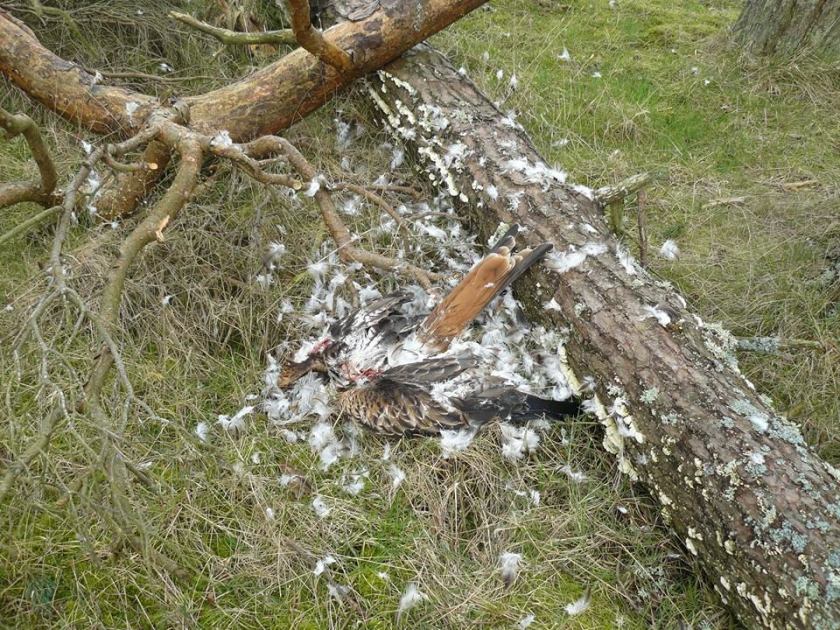
Ross-shire Massacre: police confirm banned poison involved

RK7The following statement has just been released by Police Scotland:

Police Scotland Highland and Islands Division are seeking to reassure the public that enquiries are still ongoing into a wildlife crime investigation regarding the death of birds of prey in the Ross-shire area.

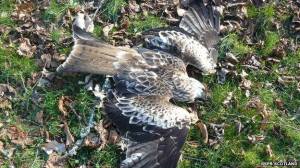
The 22 birds (sixteen red kites and six buzzards) were located in the Conon Bridge area and following analysis of the birds’ remains, fifteen have been confirmed as having digested an illegally-held poisonous substance (twelve red kites and three buzzards). Post mortem examinations and toxicology work continues into all the birds seized.

Police Scotland is continuing to work in close collaboration with partner agencies. Landowners and farmers in the local area are also continuing to assist police with their ongoing enquiries.

Police are keen to speak to anyone who has any information about the incident and would encourage them to contact Police on 101 or Crimestoppers anonymously on 0800 555 111 or online at http://www.crimestoppers-uk.org/. No personal details are taken, information is not traced or recorded and you will not go to court.

ends

So, finally, they’ve managed to confirm that a banned poison was involved. About time, too. They still haven’t named it, but the “illegally-held poisonous substance” will be one (or more) of those named on the Possession of Pesticides (Scotland) Order 2005. These are:

Aldicarb, Alphachloralose, Aluminium Phosphide, Bendiocarb, Carbofuran, Mevinphos, Sodium Cyanide, and Strychnine.

Now, which industry hates raptors and is known to have a close association with these banned poisons…let’s think hard….erm….

It actually doesn’t matter that the police haven’t named the poison(s). Just knowing it’s a banned poison and not a ‘mystery virus’ or an ‘accidental poisoning’ is enough to put a halt to what has recently looked increasingly like a coordinated campaign to associate the deaths with the feeding regime at the RSPB’s Tollie Kite Feeding Station rather than focus attention on the specific area where the poisoned victims, along with poisoned bait, had been found.

It’s funny, isn’t it, that of all the speculation that’s been aired, nobody seems to have wondered about whether there’s any (legal) ‘vermin control’ being done on those farms around Conon Bridge. Perhaps done on a casual basis in return for access for a spot of pheasant shooting by a small shooting syndicate? But then that’s such an obvious angle of inquiry, the police must have covered it months ago…..right?

The number of confirmed poison victims has reached 15 (it really is like pulling teeth trying to get information about this incident) and the police ‘investigation’ continues…..

Previous blog posts on the Ross-shire Massacre here

Ross-shire Massacre: RSPB denies ‘accidental poisoning’ claims

The Ross-shire Massacre fiasco continues, with yet another claim that the 22 dead red kites and buzzards were ‘accidentally poisoned’ by contaminated meat put out at the Tollie Red Kite Feeding Station.

This latest claim was made by a local farmer (who wishes to remain anonymous) who believes the birds were fed sheep carcasses containing legal treatments used to prevent fluke, which can be toxic to birds.

The claim has been strongly denied by RSPB Scotland (see here).

It’s not the first time this claim has been made. Jamie McGrigor MSP gave credence to it when he mentioned it during a parliamentary debate last month (see here), although he did admit it was based purely on rumour.

We think the claim is as plausible as the ‘mystery virus spoof‘ we wrote in response to Conon Bridge farmer Ewan MacDonald’s suggestion that the birds had been killed by a ‘mystery virus’. Incredibly, there were some people who actually believed the spoof, and thus it follows that there will be some who are gullible enough to believe the ‘accidental poisoning’ claim, just as there are those who believe the ridiculous claims that gamekeepers don’t put out poison baits – they’re just the victims of an elaborate set-up designed to blacken their reputations; set-ups that apparently include planting poisoned carcasses as well as planting jars of poison in gamekeepers’ vehicles, game bags, out-buildings and even in their homes.

Far more plausible is the suggestion put forward by the RSPB’s Red Kite Officer, Brian Etheridge, that the Ross-shire Massacre was caused by “somebody who knew what they were doing” when they placed small poisoned baits in various locations around Conon Bridge (see here). It has previously been reported that poisoned bait had been found at the crime scene, and, given the small area of farmland in which the majority of the birds were discovered, the poison was obviously fast-acting and highly toxic. Hmm, whatever could it be?

Meanwhile, as speculation rages, Police Scotland remain tight-lipped about their ‘investigation’. Two weeks ago they managed to say that 14 of the 22 dead raptors were now confirmed to have been “illegally poisoned” (11 red kites and three buzzards) but they were still apparently waiting for post mortem results on the remaining eight victims – see here. They are still refusing to name the poisons discovered by SASA scientists during their toxicology analyses, because the investigation is apparently ‘ongoing’.

Two and a half months down the line, nobody has been charged.

Previous blogs on the Ross-shire Massacre here.

Ross-shire Massacre: RSPB considers alternative use of reward fund

A couple of weeks ago we blogged about the Ross-shire Massacre, two months on from the initial discovery of poisoned red kites and buzzards in the Conon Bridge area.

We suggested that it was now highly unlikely that anyone would be prosecuted for this disgraceful crime and we encouraged blog readers to contact RSPB Scotland Director Stuart Housden, to ask whether the reward fund, to which many of us contributed, could now be put to better use by their Investigations team rather than having it festering in some dusty account for years with virtually no prospect of ever being claimed (see here).

Thanks to those of you who did contact Stuart. It’s pleasing to see that he has taken note – the following statement has appeared on the RSPB’s reward fund website:

Update – 23rd May 2014:

We are extremely grateful for the huge public support and demonstration of outrage following the illegal killing of a large number of red kites and buzzards in Ross-shire just over two months ago. Your support via this Just Giving appeal has been incredible, and we have taken on all of your comments left on this page. The collective reward for information leading to a conviction over this atrocity has now grown to £27,000 (including pledges from Scottish Land and Estates and others) – demonstrating how strong the public feeling is for tackling wildlife crime in Scotland. In our appeal, we stated that if this money was not claimed as part of the Ross-shire reward fund, it would be channelled to RSPB Scotland Investigations team to help with their work supporting the police to tackle raptor crime in Scotland. Further to a number of enquiries from supporters over progress with this case, we will now be speaking to Police Scotland to seek their advice over use of your donations to this reward fund. If agreed by the police, we will use this money shortly to fund satellite tags for hen harriers and golden eagles, to be fitted by experienced and qualified RSPB Scotland staff, as well as other high technology equipment for RSPB Scotland Investigations. Thank you for all your support in helping combat crimes against birds of prey in Scotland, from all of us at RSPB.

That’s excellent news! The reward fund stands at £27,423 and of that, £10, 423 was donated by ordinary members of the public wanting to help. It’s this £10, 423 that could be released, if Police Scotland agree.

It’ll be interesting to see the police response to the RSPB’s question. If they agree (and we hope they do), they will be admitting that their investigation has failed, which will probably be quite embarrassing given the enormous public and political interest in this case. It would be the right thing to do though, and they’d deserve some credit for being honest about it. They won’t get any credit at all if they insist on claiming this is still an on-going investigation with a good chance of a prosecution, because we, and they, know it definitely isn’t that.

Previous blogs on the Ross-shire Massacre here.

Red kite photo by Claire Marshall

Ross-shire Massacre: two months on

It’s been two months since the massacre of 22 birds of prey was first uncovered near Conon Bridge in Ross-shire.

We know that 12 of the victims were poisoned (nine red kites and three buzzards) but there has been a complete lack of information about the other seven red kites and three buzzards.

RK5

Although it is known that some sort of poison was involved,  there hasn’t been any information about the type(s) of poison used. The police and the Environment Minister have both said this information hasn’t been released for ‘operational reasons’. This lack of information has led to a great deal of speculation, even from inside the Parliamentary Chamber, where one MSP suggested the whole incident might have been ‘an awful accident’ – perhaps from, he suggested, unintentionally-contaminated meat at the Tollie Red Kite feeding station.

Whilst it is perhaps understandable that, in some circumstances and for a limited period, the specific type of poison is not revealed to the public, there is no reason whatsoever why the police can’t confirm whether the poison(s) used was a banned pesticide (as is common in most raptor poisoning incidents in Scotland), without having to actually name it specifically. By withholding this information, the police and the government are allowing this incident to be dismissed as a possible inadvertent/unintentional poisoning when actually it is anything but.

So, two months on and it’s all gone quiet. Six weeks ago the police were surprisingly willing to allow their official searches of various properties in the Conon Bridge area to be photographed and publicised in the media – we counted at least five different photographs depicting police officers or police vehicles at the scene of the crime – that level of media exposure of an investigation is relatively rare, but perhaps it was an attempt to demonstrate that the investigation was being taken seriously, in response to the huge outpouring of public anger and demands for action.

It’s probably obvious to most of us who follow these crimes that it is highly unlikely, two months on, that anyone will be prosecuted for this offence. Just like the majority of these crimes, the weeks will turn into months and then into years and we’ll hear nothing more about it. Just look at any of the high-profile incidents of the last few years – they all follow the same pattern – e.g. see here.

The Ross-shire Massacre was different in some respects, in that the corpses were discovered over a period of five weeks and each discovery led to a new press release, which led to a steady rise of public fury. That fury led to an unprecedented public demonstration in Inverness town centre, as well as an influx of public donations towards a reward fund for information leading to the successful prosecution of the poisoner(s).

That reward currently stands at £27,423. Of that total, £10,423 came from 217 members of the public. RSPB Scotland, who set up the donations website, told us that if the reward wasn’t claimed it would be put towards the work of their wildlife crime investigations team in Scotland. It seems to us that, two months on, the reward is unlikely to be claimed (because a prosecution is so unlikely) and so some of us that donated might want to ensure our money is put to good use now, instead of it languishing in an account for three years while the police claim they’re still working on a ‘live investigation’. Ten and a half grand is a lot of money and could be used to buy all sorts of equipment that might just lead to the prosecution of another raptor killer somewhere else in Scotland.

If this is your view (and it’s certainly ours) and you’d prefer your donation to be made immediately available to the RSPB’s Investigations Team, we’d recommend you contact the Director of RSPB Scotland, Stuart Housden, and tell him (don’t forget to mention how much you donated). His email address: stuart.housden@rspb.org.uk

Previous blogs on the Ross-shire Massacre here.

Disappointing radio debate on wildlife crime in Scotland

bbc radio scotlandThere was a radio debate yesterday about zero tolerance of wildlife crime in Scotland. The debate was hosted by the Good Morning Scotland programme and for those who missed it, here is the transcript:

Presenter: This week the Scottish Wildlife Trust called for zero tolerance when it comes to wildlife crime. It says that the current punishments aren’t enough to deter people. In recent months 22 raptors have been found dead, 12 of them have been confirmed as poisoned. So what would zero tolerance look like and do we need it? Joined now by Tim Baynes from the Scottish Moorland Group, part of the Scottish Land and Estates, and Mike Flynn, Chief Superintendent of the Scottish SPCA.

Mike Flynn, first of all, you approve of the idea of zero tolerance?

Mike Flynn: Well I don’t think anybody disapproves of it, I mean even if you’re talking about Scottish Land & Estates, they’ve roundly come out saying that all these kind of acts have got to stop and what we really need is some of the people that are linked with those involved to come forward so they can be dealt with.

Presenter: What would it look like though, Mike Flynn?

Mike Flynn: Well, what it’d look like is we’d have a lot more wildlife going about, you wouldn’t be getting organisations like the landowners and gamekeepers being instantly castigated every time some of these incidents happen and you can’t just point the finger at any organisation, this could be down to single individuals and they’ve got to be stopped.

Presenter: Well Tim Baynes from the Scottish Moorland Group, what’s wrong with enforcing the law?

Tim Baynes: Well absolutely nothing at all and I agree with what Mike says there. I think that zero tolerance is one of these quite easy phrases to use but in fact there is already zero tolerance for wildlife crime; zero tolerance within the law and the range of measures that are there to deal with it, zero tolerance within the organisations like ours and the Scottish Gamekeepers, who as Mike says are frequently castigated for this. So it is there, I mean the law governing wildlife crime is tough to start with in the sense that anyone committing a crime could have up to six years in jail, they could be fined for up to £5,000, sorry six months in jail, someone was jailed for poaching recently for 8 months, there is also a law called vicarious liability which deals with an employer or a manager of someone who is convicted, they can face the same penalties. Recently the Minister for the Environment has announced various other new measures, some of them aimed particularly at the land management sector.

Presenter: Well Mike Flynn, some people argue that actually what you should do is have a sort of absolute liability for landowners so that if a raptor or something is found on land the owner could be held responsible and perhaps even fined or sent to jail. Would you agree?

Mike Flynn: Well, Tim’s just said there is an offence now of vicarious liability but you can’t really point the finger at someone if they have absolutely no knowledge of what’s happening. If you’re looking at the crime that Tim just mentioned, poaching, people do not allow poaching on their land but it goes on quite often so you couldn’t blame the landowner for that kind of thing happening.

Presenter: Tim Baynes, it has been suggested, what’s wrong with the idea of, it would certainly focus minds wouldn’t it?

Tim Baynes: Well there is already absolute liability if someone is responsible for a crime on their land and they are absolutely liable. What the problem is that there are a whole lot of different circumstances and it seems to be very difficult for the police ever to find sufficient evidence to secure convictions, and you know, there’s a whole range of things that can go on on the ground that may not be quite so obvious to people looking from outside.

Presenter: What are you suggesting though, if an eagle or a buzzard or something is found on somebody’s moor that, you know, it’s been brought there by somebody else, it’s surely the responsibility of those whose ground it is?

Tim Baynes: Well yes it is, well there are a number of things that have happened and if you look back at some of the recent incidents where, you know, the police, very extensive investigations have gone on and yet they’ve not been able to work out exactly what happened. I mean I think the one, the extraordinary one at Conon Bridge recently as an example, I mean there’s a very big police investigation there but they haven’t managed to work out what happened there…

Presenter: Well we should point out that’s on farmland rather than estates…”

Tim Baynes: Yes but I think the same sort of accusations have been levelled at the landowners there at which quite possibly this incident is nothing to do with certainly anything deliberate that’s been done by the people responsible for managing that land. There are a whole range of different things that can happen and we have to be extremely careful about trying to apportion blame, you know it’s very easy to do but the police have to be given time to conduct these investigations, work out what really happened and then deal with the causes.

Presenter: Mike Flynn, on some readings the conservation movement has actually been extraordinarily successful hasn’t it, in actually bringing back lots of birds of prey, there’s far more around now than it used to be 10 or 20 years ago?

Mike Flynn: Yeah and a lot of that’s down to public awareness, I mean there is far greater awareness now that wildlife crime is illegal; the problem that we’ve got is that there’s so little enforcement and you’ve got to remember, a lot of these wildlife crimes happen in very remote areas, where there’s nobody’s actually around and about to actually witness these things and you do have a kind of anomaly in the law where one part of the Wildlife & Countryside Act a person can be prosecuted on the evidence of one person, and that was kind of brought in because like osprey eggs being stolen, it might be just one hill walker that sees somebody going up the tree, so there is legislation there, what it is is that there’s a lack of enforcement.

Presenter: Mike Flynn from the Scottish SPCA and Tim Baynes from the Scottish Moorland Group, thank you to both.

This debate highlights the importance of having an interviewer who knows the right questions to ask. In our opinion, this one didn’t. Why didn’t he challenge Mike Flynn’s assertion that you can’t blame an organisation when all the official statistics demonstrate very clearly that the majority of these incidents are taking place on land managed for game-shooting? Why didn’t he challenge the poaching example – you can hardly place poaching (a so-called wildlife crime that isn’t actually a wildlife crime at all – it’s based on the principle of ‘theft’) alongside raptor persecution when one ‘crime’ (poaching) is ‘against’ the landowner’s interests and the other crime (raptor persecution) is very much in the landowner’s interest?

Why didn’t he challenge Tim Baynes’ assertion that there already is zero tolerance for wildlife crime in certain organisations when several estates well-known as raptor blackspots, and their employees, are members of those very organisations or provide funding to those organisations?

Why didn’t he challenge Tim Baynes’ assertion that the incident at Conon Bridge was ‘possibly nothing to do with anything deliberate done by the people responsible for managing that land’? He doesn’t know that – the police haven’t yet released information about their investigation.

Why didn’t he challenge Tim Baynes’ assertion that the law governing wildlife crime is tough – how many of those convicted of raptor persecution have ever received the maximum fine for their crimes or received any jail sentence? None of them!

Having said that, we know that there is currently a review underway to assess wildlife crime penalties (a review instigated by the Environment Minister last July). He said in parliament earlier this week that he expected the review group to report their findings by December this year. The group’s remit is this:

“To examine and report on how wildlife crime in Scotland is dealt with by the criminal courts, with particular reference to the range of penalties available and whether these are sufficient for the purposes of deterrence and whether they are commensurate with the damage to ecosystems that may be caused by wildlife crime”.

Interestingly, the identities of the group’s members were revealed this week:

The group’s Chair is Professor Mark Poustie, an esteemed legal academic from the University of Strathclyde.

Detective Chief Superintendent Robbie Allan from Police Scotland.

Hugh Dignon (senior civil servant) from the Scottish Government.

An un-named representative from the Crown Office.

Jeremy Greenwood, former Director of the British Trust for Ornithology.

Hugh Campbell-Adamson, owner of Stracathro Estates.

An interesting line-up. A well-qualified Chair and senior representatives from Police Scotland and the Scottish Government. We’ll reserve judgement on the COPFS rep until we find out who it is. The former Director of the BTO is presumably there to provide scientific expertise about the population-level impact of raptor persecution. But what on earth is the owner of a landed estate doing on this panel when the panel’s remit is to make recommendations for penalties for wildlife crimes, some of which will have been carried out by, er, estate owners?!!!!

What we learned from today’s Parliamentary debate on raptor persecution

ScottishParliamentChamberEarlier today there was a debate in the Scottish Parliamentary Chamber about eradicating raptor persecution from Scotland. The debate stemmed from a motion lodged by Environment Minister Paul Wheelhouse (see here for details of that motion and several suggested amendments).
We very much welcome the Environment Minister’s action of bringing this topic to the attention of Parliament, although given the recent foul catalogue of current crimes against raptors, and the enormous public response to these on-going crimes, he had to be seen to be doing something.

The debate lasted for an hour and twenty minutes, beginning with an opening address from the Minister during which he expressed his “anger, revulsion and utter frustration” that these crimes continue in 21st Century Scotland. He ran through a list of previous measures brought in since 2007, some of which are still to be fully implemented. He said he understood the calls from some quarters for further measures to be introduced now, but insisted that more time was needed to allow these measures to take effect. Here’s one quote that we’ll be reminding him of in due course when we see the next inevitable incident, and the next, and the next:

If and when we judge it necessary, I am committed to taking further action. If that involves licensing certain types of businesses, then we will do so“.

He’s made this commitment before, on many occasions, and there are only so many times that he can make such a commitment before he will be forced to actually follow up his words with action.

During his opening speech he was questioned by Liam McArthur MSP about the alleged police response to the poisoned peregrine incident at Leadhills (see here for info on that incident). The Minister’s response:

We do believe proper procedures were followed“.

Really? How interesting. We look forward to reading the full written response that is now due about this incident following the emails that were sent to him by RPS blog readers in early April. [Incidentally, we haven’t yet received a response – if anyone else has, we’d be interested in reading it]. We’ll also be paying close attention to his written answers to the parliamentary questions that were raised about this issue by Claire Baker MSP and Liam McArthur MSP.

One significant point he made was that proceedings have commenced in the first vicarious liability case at Stranraer Sheriff Court. We believe this case relates to the Glasserton & Physgill Estates buzzard poisoning case in June last year, where gamekeeper and SGA member Peter Bell was convicted of several poisoning offences (see here). The news that this vicarious liability prosecution is going ahead is excellent news and we await the outcome with great interest.

There were a number of other MSPs who spoke during this debate, with many of them being strongly supportive of the consultation to increase the SSPCA’s investigatory powers, and a number of them expressing concerns about the ability of Police Scotland to prioritise wildlife crime.  Dennis Robertson MSP demonstrated a refreshingly sceptical view of the SGA and their claimed attempts to eradicate raptor persecution.

Talking of the SGA, their parliamentary cheerleader, Jamie McGrigor MSP, gave a rousing but wholly irrelevant speech about the SGA’s Year of the Wader project, and mentioned the SGA’s briefing document for today’s debate in which they apparently call for an investigation into the cause of wildlife crime, i.e. the old ‘too many’ raptors routine. Perhaps they mis-read the title of today’s debate as ‘Eradicating Raptors from Scotland’. At one point, Mr McGrigor announced:

Wildlife crime is being perpetrated by a very few individuals, rather than any sector of the Scottish countryside“.

Oh dear. He clearly needs to go back and look at the statistics of where the majority of raptor persecution incidents take place [on land managed for game-shooting] and the occupation/interests of the majority of those convicted for these crimes [gamekeepers].

Mr McGrigor also gave a surprising commentary on the possible cause of the Ross-shire Massacre, in which he suggested that the “hand-fed” (?!!) red kites at Tollie Red Kite feeding station may have been fed contaminated food. He did admit this was based purely on rumour but we were surprised that such speculation on a live police investigation would be allowed during a parliamentary debate.

The Environment Minister ended the debate by saying that he was looking into a poisons amnesty. In our view, a total waste of time and effort – it’s been done before with little, if any, effect. Besides, some of these poisons (e.g. Carbofuran) have been banned since 2001 – that’s 13 years ago – how many more chances are these criminals going to be given to comply with the law? The one saving grace of an amnesty is the potential for anyone found to be in possession of poisons AFTER the amnesty has passed would then face a more severe penalty. That’d be good, if only we could believe that a severe penalty would be handed down. The Minister did mention that there is currently an academic review being undertaken to review the penalties for wildlife crimes and the authors of that review are expected to report in December this year.

Video footage of the debate is available here for about a month [starts at 1:29; ends at 2:49].

The official transcript of the debate can be read here: Minutes of debate: eradicating raptor persecution 6 May 2014

Ross-shire Massacre: frustration grows at lack of information

RK4The investigation into the mass poisoning of 22 birds of prey near Conon Bridge, Ross-shire in March is apparently continuing, although the police have been reluctant to provide much information since the well-publicised raids they carried out at various properties almost a month ago. The only news to emerge has been the ever-increasing death toll, currently standing at 16 red kites and 6 buzzards.
They’ve said that 12 of the dead birds have been confirmed as poisoned, but that information was given weeks ago – they still haven’t confirmed whether the other 10 birds were poisoned.

And nor have they released information about the poison(s) used to kill these birds. The purpose of withholding this information is not known – the police will probably say it’s a tactical approach, but the poisoner will know what was used and the poison itself will have been hidden away weeks ago. Even if a stash is now found, the chances of linking it directly to the Conon Bridge poisonings are zero because of the level of evidence required to secure a conviction. For example, unless the poisoner was seen placing the poisoned baits, and the birds were seen eating those poisoned baits, a strong evidential link cannot be established. The only possible conviction would be for a ‘possession’ offence, unless the poisoner actually admits to placing the poisoned baits, and that is hardly likely.

What’s frustrating is that here, yet again, we have an incident where deadly toxic poison(s) has been set out in the countryside, putting at risk any animal and human that comes in to contact with it, and yet the police don’t think the general public should be told what the poison is.

This lack of public information has even been picked up by a global listserv used by the health community. The following appeared on the listserv the day after the BBC announced that the current death toll had reached 22 birds:

The issue of this many birds of prey or carrion being found dead indeed smacks of a toxin. However, multiple articles all say the birds were poisoned and they are investigating. Their investigation has included DNA testing of meat to determine what type of meat was used. These investigators say they need to get insecticide tests performed, yet not a single article mentioned if that has been done or what the outcome was, or if the test was pending.

While this number of birds being found dead is of concern, and the number of avian deaths seems to be climbing, the lack of testing, and/or the lack of accurate reporting remains of equal or greater concern“.

Meanwhile, dog walkers in the area are now avoiding their usual routes for fear of being exposed to poison, according to an STV report (see here).

Also in this article is another interview with farmer Ewan MacDonald, whose farm properties were searched by police last month. Mr MacDonald continues to call for a ‘working group’ comprising police and local farmers “to find out what has caused this devastation“.

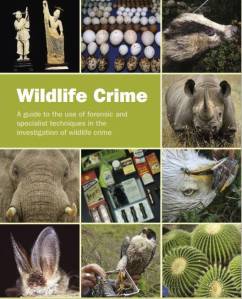
Ironically, at the end of the article is an interview with Environment Minister Paul Wheelhouse on the launch of a revised guide to the use of forensics in tackling wildlife crime. This latest edition is a very welcome tool, especially if it helps investigators to preserve crucial forensic evidence from the crime scene. But the irony comes from the statement made by the reporter at the end of the video:

“The message they’re [wildlife groups] getting today is that Scotland is a world leader in using science to bring those responsible [for wildlife crime] to justice“.

Er, no, Scotland is most definitely not a world leader in bringing wildlife criminals to justice, as evidenced by an embarrassing 7.3 conviction rate for raptor crime (see here) and 32 dead or ‘missing’ eagles over an 8-year period with zero prosecutions (see here). Scotland could be a world leader, if policing and enforcement measures matched the skills and expertise of the forensic scientists, but we’re still a long way from being able to claim anything of the sort.

Previous blogs on the Ross-shire Massacre here

Download the new Wildlife Crime Forensics Guide: Wildlife Crime Forensic Guide v2 2014

More parliamentary questions asked about raptor persecution in Scotland

Claire Baker MSP 2Last week we blogged about MSP Liam McArthur’s parliamentary questions about raptor persecution in Scotland, posed after our articles on the alleged police response to the poisoned peregrine found at Leadhills (see here).

It seems he’s not the only MSP paying attention to this blog.

Claire Baker MSP (Scottish Labour’s Shadow Cabinet Secretary for Rural Affairs & the Environment, and MSP for Mid Scotland & Fife) has also been asking some pointed parliamentary questions:

Question S4W-20654: Claire Baker, Mid Scotland and Fife, Scottish Labour, Date Lodged: 08/04/2014.

To ask the Scottish Government what steps it plans to take in response to the illegal killing of birds of prey in addition to its consultation on the powers of the Scottish SPCA.

Current Status: Expected Answer date 07/05/2014

Question S4W-20655: Claire Baker, Mid Scotland and Fife, Scottish Labour, Date Lodged: 08/04/2014.

To ask the Scottish Government, in light of the Minister for Environment and Climate Change’s comment in his letter to the chief executive of Scottish Land & Estates dated 26 February 2014 [which we revealed in an FOI here] that “despite all our efforts, there remains an element of sporting managers and owners who continue to flout the law and defy public opinion”, whether it will conduct a review of the licensing and other arrangements for regulating game bird shooting in other countries, with a view to implementing stronger management and regulation.

Current Status: Expected Answer date 07/05/2014

Question S4W-20656: Claire Baker, Mid Scotland and Fife, Scottish Labour, Date Lodged: 08/04/2014.

To ask the Scottish Government what recent discussions the (a) Cabinet Secretary for Justice and (b) Minister for Environment and Climate Change has had with the Chief Constable regarding resources and training for wildlife crime officers.

Current Status: Expected Answer date 07/05/2014

Not only has she been asking parliamentary questions, she’s also been writing to the Environment Minister specifically about raptor persecution (see here), and last week she used her opening address at the SEPA and SRUC conference on land use and sustainable development to highlight the Ross-shire Massacre and state that “there can be no more excuses from landowners and the Government” (see here).

The Environment Minister is coming under increasing attack for what many see as an abject failure to deal with raptor persecution, particularly that associated with game-shooting estates. We suggested on Twitter this weekend that the Scottish Government is too obsessed with the Independence Referendum to care/notice the on-going rise in raptor crime. Paul Wheelhouse has hit back this morning with a series of tweets, including:

“It [raptor persecution] stains our reputation and I promise you this is not being ignored by me or Scottish Government”

and

“We’re being robust and if new measures don’t improve, will go further”

and

“Hope to have a parliamentary debate in near future”.

UPDATE 16th MAY 2014: Answers to Claire Baker’s parliamentary questions here.

Ross-shire Massacre: death toll rises to 22

The death toll in the mass poisoning at Conon Bridge, Ross-shire, has risen to 22, according to a Scottish journalist (more on that source in a later post this evening).

The current body count is 16 red kites and 6 buzzards.

So far, the police have only confirmed that 12 of the dead were poisoned. Tests apparently continue on the other ten.

The police have not yet revealed the identity of the poison(s) used, leading to some bizarre speculation such as a ‘mystery virus’, ‘contaminated meat’ and ‘accidental agricultural spillage’. We look forward to them putting an end to this speculation and revealing the name of the poison(s) that we believe will confirm that these deaths were a result of deliberate poisoning.

We also look forward to learning more about the status of the police investigation, five weeks after it began.

Previous blogs on the Ross-shire Massacre here.

RK7

Raptors being killed by a mystery virus, not by illegal persecution

A top virologist has declared that we’ve all got it wrong – raptors are not being systematically slaughtered across Scotland and northern England – they are falling victim to a mystery virus.

Professor McPasteur, a distant relative of Louis Pasteur, has been studying the new virus in his top secret laboratory in Ross-shire. He said:

This is a real breakthrough in the world of virus discovery. We’ve uncovered what we believe to be the cause of extensive raptor deaths that have previously been blamed on the activities of gamekeepers. We don’t yet know a lot about this virus but we do know it is transmitted on the breath of grouse moor gamekeepers and is highly contagious. Some gamekeepers have developed a high level of immunity and appear not to be infected; however we have yet to develop an effective vaccine and at the moment the only known control is to isolate the host carriers from the rest of the community“.

He goes on: “This virus is very clever. It can mimic the presence of several banned poisons, but particularly Carbofuran, leading crime investigators to mistakenly attribute a bird’s death to illegal poisoning. It can also fell nest trees, set illegal traps and cause shotguns to self-trigger. It really is remarkable“.

The results of Prof McPasteur’s experiments are expected to be published in the Ross-shire Science Journal in the coming days.