SNH wilfully blind to threat of persecution of golden eagles in south Scotland

The project to translocate golden eagles from the Scottish Highlands to south Scotland has finally got underway this year, with news out today that three eagles have been successfully released this year.

There’s an article about it on BBC Scotland (here) including some video footage.

Unbelievably, Professor Des Thompson, Principal Advisor for Biodiversity and Science at SNH, is quoted in both in the video and in the article as follows:

This is the icon of wild Scotland. We are on the threshold of giving something very exciting back to the south of Scotland. Scotland has just over 500 pairs, just two to four breeding pairs in the south of Scotland where they are really struggling.

Young golden eagles are heavily persecuted. A third of them have been killed either through shooting or poisoning.

Down here in the south of Scotland we’ve been able to reassure ourselves persecution is not an issue. It’s just a small fragmented population that needs this helping hand from us. We have been overwhelmed by the support we are getting from landowners and we are reassured these birds are going to be welcome“.

Did he actually just say that? “We’ve been able to reassure ourselves persecution is not an issue“. What, you mean in the same way that SNH reassured itself that the scientific justification for the Strahbraan raven cull was sound?

You couldn’t make this up. Has he switched jobs and is now representing Scottish Land & Estates? He might as well be as this is exactly the line they were trying to spin several years ago (see here).

The south of Scotland is well known for the illegal persecution of raptors, including golden eagles. Only this year a young satellite-tagged golden eagle (Fred) ‘disappeared’ in the Pentland Hills in highly suspicious circumstances (here) in an area where previously a merlin nest had been shot out and breeding ravens had also ‘disappeared’.

[Golden eagle Fred, by Ruth Tingay]

Then there’s Raeshaw Estate, currently operating under a General Licence restriction and an Individual Licence restriction, due to evidence of alleged ongoing raptor persecution (here); there’s a forthcoming prosecution of a gamekeeper in the Borders for a long list of alleged wildlife crime (here); there’s the land managed for driven grouse shooting in South Lanarkshire (close to the golden eagle translocation area) where over 50 confirmed reported incidents of dead raptors and poisoned baits have been recorded since 2003, including a shot golden eagle in 2012 (it didn’t survive, here), the reported shooting of a short-eared owl in 2017 (here), the reported shooting of a hen harrier in 2017 (here), and the reported shooting of a buzzard in 2018 (here); and then there’s been at least four raptor poisonings in south Scotland this year alone (here).

But don’t worry, folks, despite all evidence to the contrary, Professor Thompson is “reassured” that raptor persecution won’t be an issue for these young golden eagles.

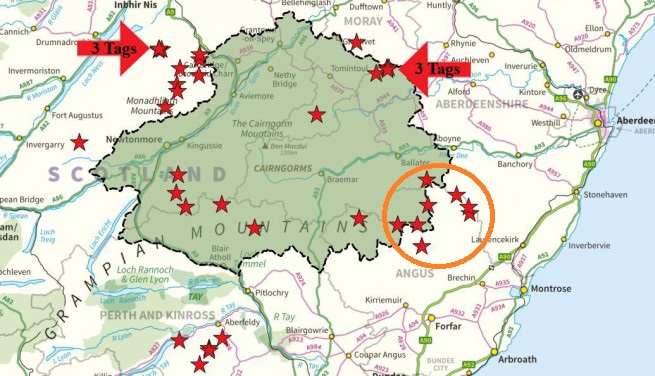
Here’s a map from the 2008 Golden Eagle Conservation Framework showing the conservation status of golden eagles in Scotland (red = unfavourable conservation status), overlaid with ten years of raptor persecution data (all species, 2005-2015) gleaned from ‘official’ persecution maps. It doesn’t include data from the last three years. Does it look to you like raptor persecution isn’t an issue in southern Scotland?

We’ve blogged about the South Scotland Golden Eagle Project several times over the years (e.g. here, here, here) and we still have mixed feelings about it. On the one hand the south Scotland golden eagle population is in dire straits, and has been for some time, and urgently needs a boost. Translocating eagles from other parts of the Scottish range seems a decent strategy.

However, fundamental to translocation and reintroduction projects is the need to identify and resolve the underlying cause(s) of the species’ decline in that area. The authorities have not come anywhere near to resolving this issue, either in south Scotland or beyond. The chances remain high that these young eagles will be killed. Having said that, they’re just as likely to be illegally killed further north in Scotland so in that sense, moving them a few hundred km south probably won’t make much difference to their chance of being illegally killed.

At least these three young eagles have been satellite-tagged so their movements can be followed. The question is, if/when each eagle goes off the radar in suspicious circumstances, who will decide whether this news is suppressed or publicised?

We’ll be taking a close interest.

(Deliberate) misinformation about welfare of satellite-tagged raptors

The Honorary Professors of Idiocy at the Angus Glens Institute for Critical Thinking are at it again.

Not content with embarrassing themselves with the laughable critique of the Golden Eagle Satellite Tag Review earlier this year (see here), they’re now on a mission to further detract attention from the damning evidence of illegal persecution being revealed by these satellite-tagged raptors.

[Photo of a satellite-tagged golden eagle that was caught in a trap on an Angus Glens grouse moor, suffering two broken (almost severed) legs, and then transported in the middle of the night several km north and dumped in a layby and callously left to suffer what must have been an excruciating death over several days. Photo by RSPB]

The Honorary Professors’ claim this time is that satellite-tagging raptors is “cruelty at its worst” and that those involved are “medieval practitioners of torture” (a claim made without the faintest hint of irony).

The evidence they’re using to whip up this hysteria and contrived concern comes from a scientific study that demonstrated awful lesions on the bodies of four red kites, caused by badly-fitting tag harnesses. The Honorary Professors suggest that this is evidence “they do not want you to see“. ‘They’, presumably, being anyone drawing attention to the ongoing persecution of raptors as demonstrated by the tag data from satellite-tagged golden eagles and hen harriers.

Hmm. Researchers went to real extremes to cover up these findings – so much so that the study was written up and published in a scientific journal that is freely available on t’internet for anyone to read. Damn those researchers, concealing their findings like this!

Here’s a copy of the freely available paper that the Honorary Professors suggest has been covered up:

Peniche et al 2011 Vet Record red kite harness

It’s well worth a read. It’s indisputable that those harnesses on those four red kites caused serious damage and that they likely contributed to the death of at least some of those four kites.

The Honorary Professors are suggesting that despite this shocking evidence, raptor workers are continuing to fit satellite tags using harnesses and therefore the researchers “don’t care” about the birds’ welfare and that it’s these poorly-fitting harnesses that are killing the raptors, not criminal gamekeepers.

One of the more stupid Honorary Professors even claims “The stats for birds affected by sat tag lesions [four red kites] seems to correlate with numbers of vanishing eagles [41 and counting]”. Er, no, not quite. That’s as idiotic as saying ‘the number of sausage rolls on display in the window of Greggs seems to correlate with numbers of patients admitted to Dundee Royal Infirmary with gastroenteritis’.

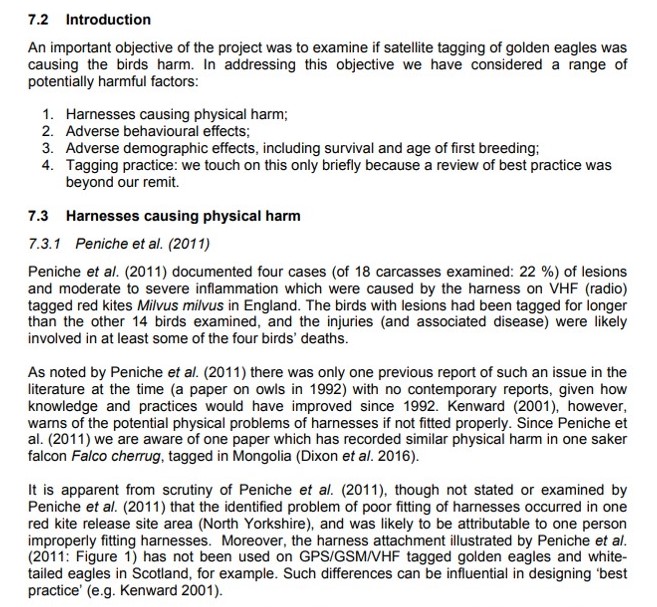
You see, what the Honorary Professors have failed to notice (or have chosen to deliberately exclude from their argument) is that the paper by Peniche et al (2011) detailing the lesions found on the tagged red kites was considered in great detail in the Golden Eagle Satellite Tag Review, as part of the authors’ assessment on whether satellite tagging was causing harm to golden eagles (Chapter 7). Here’s what they found:

So, the type of harness used on the red kites in those early years of tagging has not been used on golden eagles in Scotland (and if you read the Peniche et al paper you’ll see that as a direct result of the findings, the licensing authorities have now issued a specific post mortem protocol for harnessed birds to enable the detection of any further problems – gosh, they’re such an uncaring lot, aren’t they?); the problem with the red kite harness was likely attributed to one person improperly fitting harnesses, rather than a more general problem with tagging; and that there has been no evidence of harm being caused by tagging after post mortems of 28 dead tagged birds in Scotland, nor in the wider context of similar harnesses fitted in Europe and the USA.

Sorry, Honorary Professors, your claims are wholly unfounded. Again.

We really must pay tribute to the criminals whose persistent killing of satellite-tagged golden eagles led the Environment Secretary to commission the sat tag review; the superbly comprehensive and forensic analyses undertaken by the review authors (Dr Alan Fielding & Dr Phil Whitfield), amusingly still being described as “crap science” by one of the Honorary Professors, and the consistent efforts of the Honorary Professors of Idiocy for providing us with ongoing opportunities to keep drawing attention to this review’s findings, over a year after it was first published.

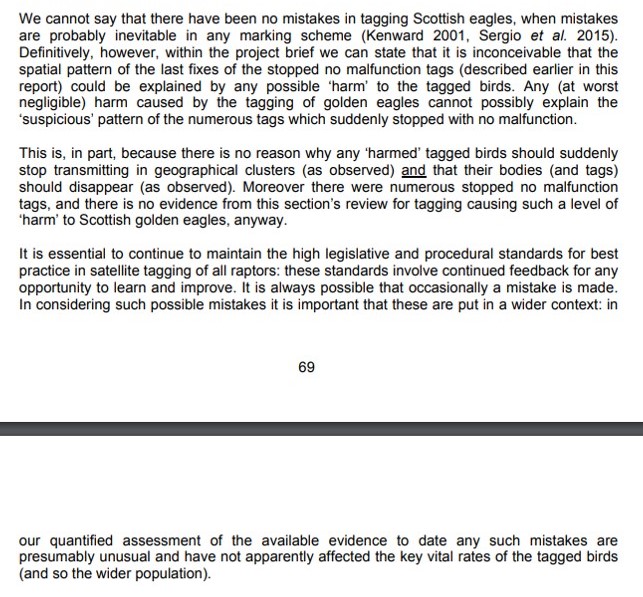
We’ll finish with this, taken from the end of Chapter 7 of the Golden Eagle Satellite Tag Review, that points out that even if tagging is harmful to golden eagles (which it hasn’t been proven to be), it still doesn’t explain the geographic clustering of all those ‘missing’ sat tagged eagles that just happen to coincide with areas of land intensively managed for driven grouse shooting, including, er the grouse moors of the Angus Glens:

“They can hide the bodies, they can hide the tags, but they can’t hide the pattern” (Dr Hugh Webster)

Red kite shot near Corby, Northants

The following article appeared in the Northamptonshire Telegraph on Tuesday 31 July 2018:

POLICE ARE APPEALING FOR WITNESSES AFTER A RED KITE WAS SHOT AND INJURED

The bird of prey is being seen to by a local vet after being shot and injured yesterday (Monday).

The shooting took place in the area of Deene park and Fineshade.

A neighbourhood alert posted by Northants Police about the incident said: “Please be aware it is an offence to injure or kill these birds.”

Anyone who witnessed the shooting, saw anyone that looked suspicious or saw any suspicious vehicles in the area at the time is asked to call Northamptonshire Police on 101.

ENDS

We’ve been unable to find any further detail about this case – there’s no official appeal for information on the Northamptonshire Police website.

UPDATE 13.50hrs: We’ve now been informed this kite was handed in to the Forestry Commission office at Fineshade Wood on THURSDAY 19th JULY (not Mon 30th July as previously thought). It was rescued by a member of the public.

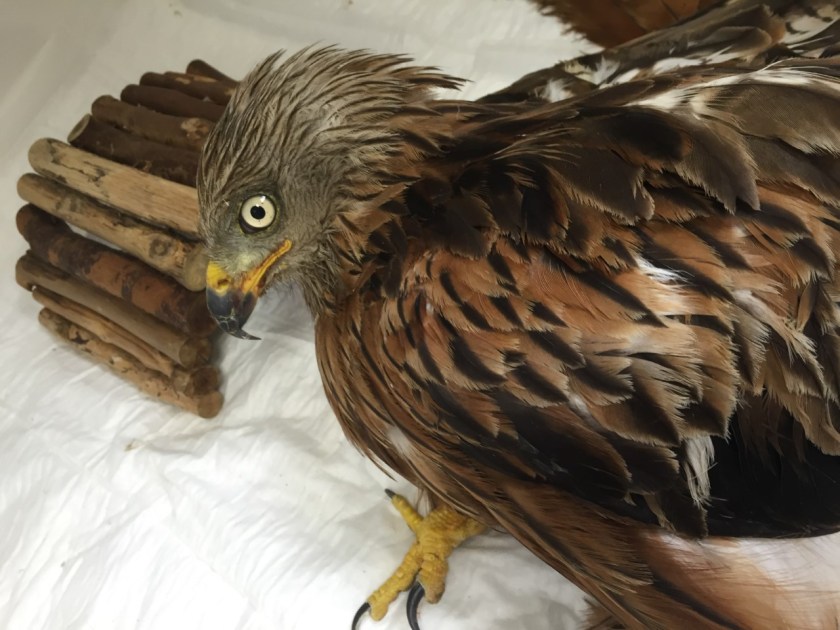
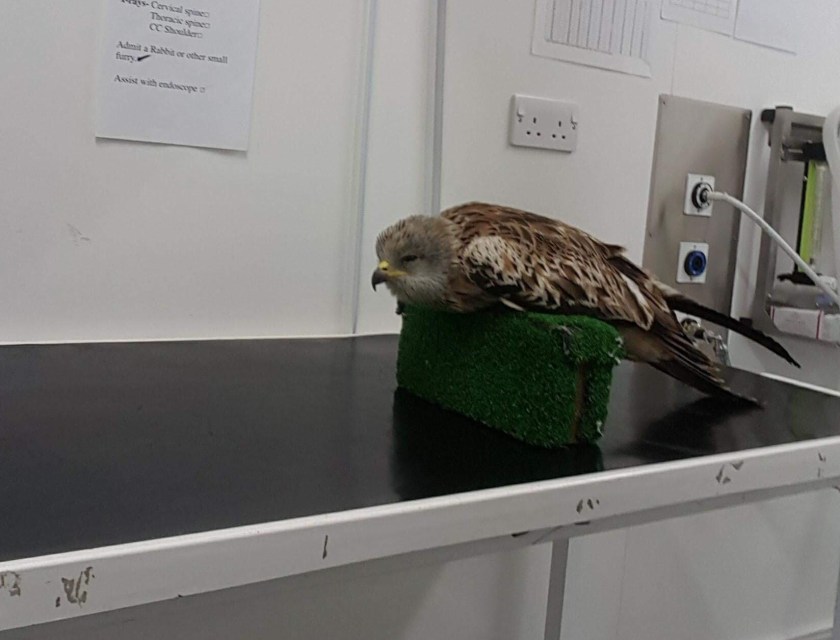
Quote from the Raptor Foundation: “I have taken charge of a red kite that has been shot, with three shotgun pellets, in the leg, shoulder and ear. The leg and shoulder pellets are not really an issue governing the birds potential release as they are below joints. The pellet in the ear is lodged in the bony part of the skull and is causing the bird problems with balance. The vet and I both agree the bird could not be released back with the pellet still inside. We have been treating for infection and pain relief and the bird is making steady improvements. It was unable to stand on admission, but is now mobile along the floor to some degree. The vet is looking to operate later this week“.

[Photo of the shot red kite, by Raptor Foundation]

Angus Glens Moorland Group downplays significance of missing satellite-tagged raptors

There was an article in yesterday’s Courier (here) highlighting the “impoverished” status of wildlife in the Angus Glens.

This claim was made by Ian Thomson (Head of Investigations, RSPB Scotland) and an unnamed investigator from the SSPCA in relation to the number of vacant breeding territories for hen harrier, the number of satellite-tagged raptors that have ‘disappeared’ in the area, and the number of indiscriminate traps laid out to kill wildlife in order to protect red grouse for shooting parties.

Head gamekeeper’s wife Leanne MacLennan, coordinator of the Angus Glens Moorland Group (AGMG) dismissed the claims and made two extraordinary statements. Here’s the first:

There is a welcome sea change in these glens and members of the Angus Glens Moorland Group will continue to move on, if others can’t“.

By claiming that AGMG members (gamekeepers) have “moved on”, she’s surely not suggesting that they had anything to do with the long, long history of illegal raptor persecution for which the Angus Glens have become notorious, is she?

For as long as we can remember, gamekeepers have denied any involvement with any of these crimes (even though banned lethal poisons were found on game bags used by estate staff, according to this article) and nobody has ever been prosecuted for these offences so how can Lianne now claim a “sea change” if she doesn’t know who was responsible for those crimes? It’s a bit odd, isn’t it?

[Photo of golden eagle Fearnan, found poisoned on an Angus Glens grouse moor, photo by RSPB Scotland]

Lianne’s second extraordinary statement was this:

There have been no confirmed incidents of criminality towards protected species in this area for several years, despite attempts at speculation“.

What a fascinating claim.

If the claim is based on the number of raptor corpses found containing lead shot or lethal poison or having horrific injuries consistent with being caught in an illegally-set spring trap, then yes, you might argue that, superficially at least, things appear to have improved.

However, if you’ve got even a moderate understanding of the issue you’ll understand that across the UK, those mystery people who kill raptors on grouse moors have simply changed tactics to avoid detection (less poisoning and more shooting in the dead of night using military grade night vision and thermal imaging equipment) and they’re now much more savvy about hiding the physical evidence of their crimes, in which case you’d treat Lianne’s claim with the contempt it deserves.

What Lianne dismisses as “speculation”, the Scottish Government has accepted as strong evidence of continued raptor persecution. The so-called ‘speculative’ incidents are, of course, the findings of the Government-commissioned review on the fate of satellite-tagged golden eagles, published just last year, which identified the Angus Glens as one of six grouse moor hotspots where satellite-tagged golden eagles keep vanishing. Rather than refering to these findings as ‘speculation’, Cabinet Secretary Roseanna Cunningham refered to them as follows:

The findings of this research are deeply concerning and will give rise to legitimate concerns that high numbers of golden eagles, and other birds of prey, continue to be killed in Scotland each year” (see here).

Here’s a map based on the findings of that report showing the satellite-tagged golden eagles that have either been found illegally killed or have ‘disappeared’ in suspicious circumstances in the Angus Glens. These include two golden eagles that were found poisoned, one that was caught in an illegally-set trap (and then transported and dumped elsewhere overnight), four eagles that have vanished, and one tag that had been cut from an eagle and ‘stabbed’ with a sharp instrument.

The map doesn’t include records of other satellite-tagged raptors that have also ‘disappeared’ in the Angus Glens in recent years, including two red kites and at least one hen harrier, Saorsa, who vanished in February this year.

We suspect that other satellite-tagged raptors may have also vanished in the Angus Glens in the last two years but strangely, nobody wants to talk about it. Our suspicions have been raised by SNH’s responses to various FoI questions about satellite-tagged raptors in the Angus Glens (basically they’re refusing to discuss the issue, even in very broad terms). We will continue to pursue other lines of enquiry to get to the bottom of who’s covering up what, and why.

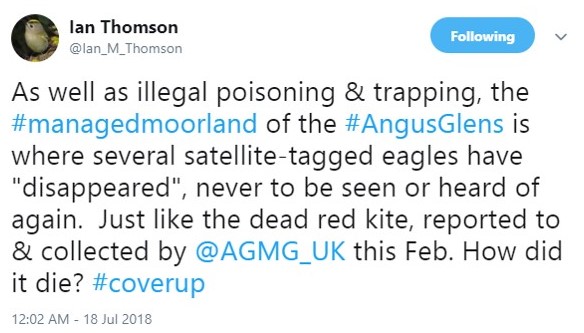
And talking of a lack of transparency, there’s the recent news of a dead red kite that was found by a member of the public on an Angus Glens grouse moor and was reportedly collected by a gamekeeper. Recent questions about this red kite (see here) remain unanswered. Did the gamekeeper submit the corpse for a post mortem so that the cause of death could be established? If so, where was it submitted and what were the findings? If it wasn’t submitted, why not, and where is the corpse now?

But it’s not just disappearing satellite-tagged raptors that provide us with such a clear indication of on-going illegal persecution. You only have to look at the findings of recent regional and national surveys, particularly for golden eagles, hen harriers and peregrines, to see these species continue to remain absent from large numbers of breeding territories on grouse moors in central, eastern and southern Scotland.

What’s that saying? ‘They can hide the bodies, they can hide the tags, but they can’t hide the pattern’ (Dr Hugh Webster).

[‘They’ being the unidentified mystery raptor killers, natch]

Red kite found shot in Yorkshire Dales National Park

Press release from North Yorkshire Police (23 July 2018):

APPEAL FOR INFORMATION AFTER RED KITE FOUND DEAD IN THE YORKSHIRE DALES

Police are appealing for information after a red kite was found dead in the Yorkshire Dales.

The bird was found on Thursday 12 July 2018, at Barden, near to the popular area known as the Strid. Enquiries are ongoing to establish the cause of death.

Sergeant Kevin Kelly, wildlife crime lead for North Yorkshire Police, said: “We have commenced an investigation and aim to establish the circumstances leading to the bird’s death.

It is key to examine whether the bird has flown to the location injured and subsequently died or whether it has been shot near to where it was found. A detailed pathology report will assist us in establishing this.

What we know at this time is that a triage x-ray shows a small piece of shot inside the bird. This will be recovered and forensically tested. We will be working with partner agencies and the Bolton Abbey Estate to establish the facts that will assist an effective investigation.

[Photo of the shot red kite via North Yorkshire Police]

Doug Simpson, Yorkshire Red Kite Co-ordinator, said: “This latest incident brings the total confirmed Yorkshire red kite illegal persecution victims up to 42 since releases began in 1999, thirteen of these birds having been shot.

It is sickening that a small minority of people appear intent on breaking the law by targeting these birds, which have become an integral part of our beautiful North Yorkshire countryside.

Benedict Heyes, from the Bolton Abbey Estate, said: “We were disappointed to be notified by a member of the public that they had found a dead red kite on the Bolton Abbey Estate.

Red kites and other birds of prey are often seen at Bolton Abbey and are enjoyed by many visitors to the Estate. The Estate alerted the authorities and would ask that anyone who has any knowledge or information in relation to the death of this bird to contact North Yorkshire Police, so as to assist them in their investigation.”

Sonya Wiggins, who coordinates Yorkshire Dales Moorland Group, said: “We have been made aware of this incident and fully support a police investigation. At Yorkshire Dales Moorland Group we believe in good practice and accountability, we work closely with the local police and other agencies to tackle wildlife crime.

Killing wild birds is unacceptable and we would ask for anyone with any information to contact the police.”

Anyone with any information is asked to contact North Yorkshire Police on 101, select option 2 and ask for Sgt Kevin Kelly, or email kevin.kelly@northyorkshire.pnn.police.uk

Please quote reference number 12180131874 when passing information.

ENDS

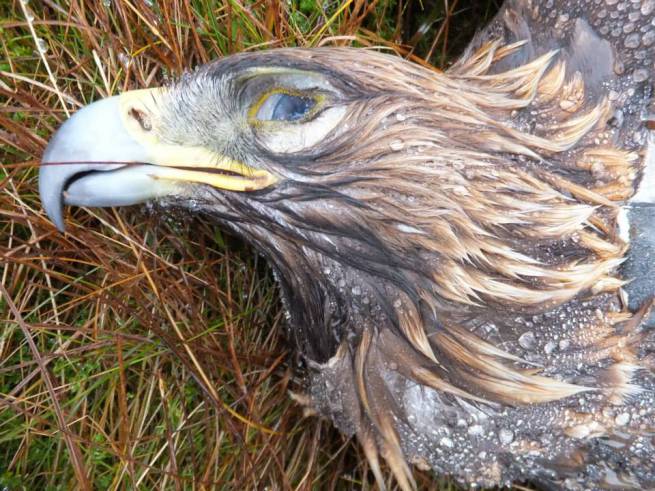
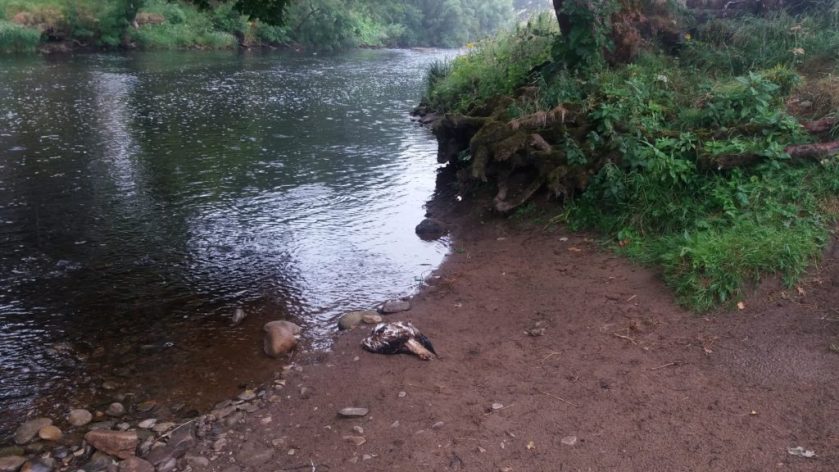
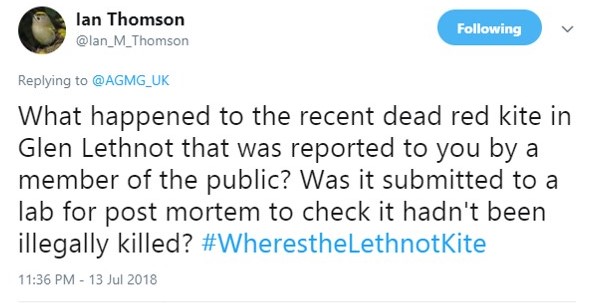
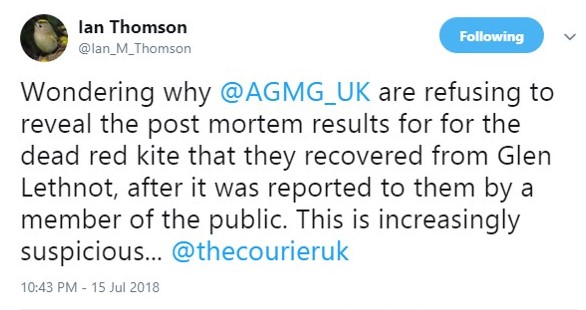
Questions being asked about a dead red kite found in the Angus Glens

A series of questions have been asked of the Angus Glens Moorland Group about a dead red kite that was found by a member of the public in February 2018.

The dead kite was found in Glen Lethnot and reported to the gamekeepers, who apparently then collected the corpse.

What happened next remains a mystery as the Angus Glens Moorland Group is refusing to provide answers to questions posed by Ian Thomson, Head of Investigations at RSPB Scotland.

Why are they being so coy?

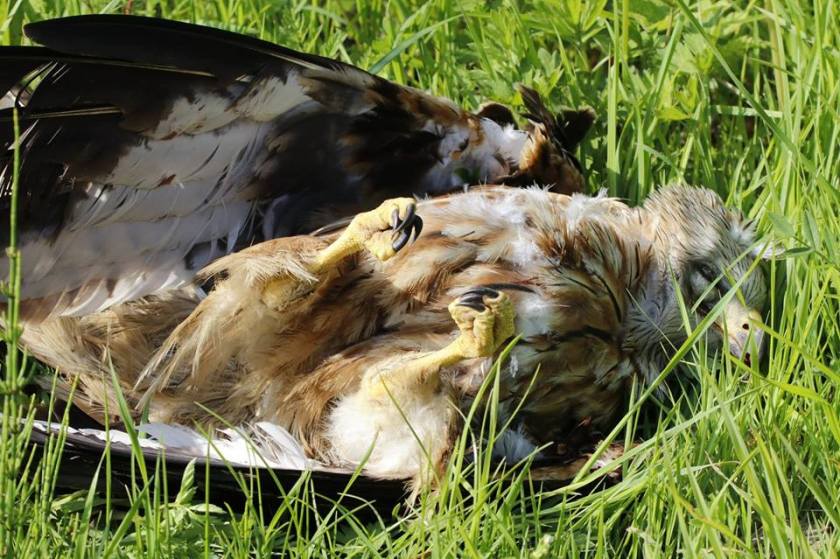
Red kite shot dead in Kent

Back in May there was a report (and several photographs) on social media of a dead red kite that had been found on 9th May 2018 by a member of the public, “10-12ft up in a bush” at Woodchurch, Kent.

We believe this was reported to Natural England who eventually arranged for the corpse to go for a post mortem.

A few days ago there was an update from the member of the public, again on social media, who said this:

Re: red kite I discovered at Woodchurch in May and retrieved. The District Officer phoned today and confirmed the bird had been shot. So sad, they are holding on to the bird and investigating“.

We don’t have any further information.

Thanks to the blog reader who drew our attention to this case.

[Photo of the shot red kite by Ian Stewart]

Red kites found illegally poisoned at nest site

Press release from RSPB, 20 June 2018:

PAIR OF NESTING RED KITES FOUND POISONED IN COUNTY DOWN

RSPB (Northern Ireland) and the Police Service of Northern Ireland (PSNI) are appealing for information after a pair of protected red kites died through illegal poisoning in County Down.

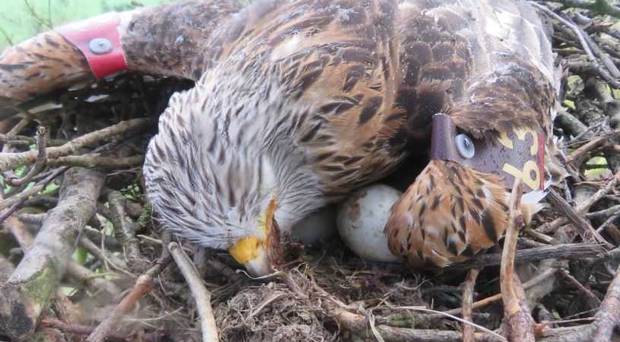
A male bird was found in distress close to a known nest site in the Katesbridge area on April 24. A member of the public alerted RSPB NI but the bird died shortly afterwards. When the RSPB NI red kite project officer attended the scene, she found the female parent bird immobile on the nest – she too was dead. A rescue mission was launched in an attempt to save three orphaned eggs found in the nest beneath the deceased mother.

[Photo by RSPB]

The bodies of the parent birds were collected and taken for toxicology testing by the PSNI. This has now revealed that both birds – known as Blue 21 and Red 63 because of their identifying tags – died from Carbofuran poisoning.

Red kites, along with all birds of prey, are protected in Northern Ireland under the Wildlife (Northern Ireland) Order 1985, as amended by the Wildlife and Natural Environment (NI) Act 2011. Carbofuran is a highly toxic pesticide which has been banned across the EU since 2001 due to its high toxicity towards wildlife and humans.

Red kites mostly hunt within 2.5km of their nest site. The male bird brings food for the incubating female bird, so it is possible that the male bird found a poisoned bait – such as a rabbit – and likely brought this back to the nest to feed the female bird. The dead male’s first partner (Blue 13) also died by poisoning in 2014 in the same area.

Under licence from the Northern Ireland Environment Agency (NIEA), the rescue operation ensured that the three eggs were fostered into two wild red kite nests, alongside other eggs, in the hope of saving them.

In one of the nests two transferred eggs failed as they were found intact (unhatched) during a follow-up inspection. In the other nest – which hosted one adoptive egg alongside two other eggs – one chick was found on the nest. As there were no egg shell remains it’s unknown if the sole chick on this nest was from the donor egg.

A nestcam was installed by RSPB NI to monitor this chick – which was named ‘Solo’ by RSPB NI red kite volunteers. This is the first time staff have been able to monitor behaviour and development as well as share the red kite’s early life with the public and schools participating in the RKites project, a funded red kite education and engagement project. A live stream on the nest is available to view at www.rspb.org.uk/niredkites

PSNI Wildlife Liaison Officer, Emma Meredith, said, “Incidents such as this give rise to concerns, as poisons are generally very dangerous. We would have serious concerns over any poison but particularly over Carbofuran. We are disappointed that we are still dealing with cases involving Carbofuran, an incredibly dangerous substance and one which can kill birds of prey but also a child, family pet or any adult coming into contact with it. We would remind the public that if they discover a bird of prey that they suspect has been poisoned or killed in any other suspicious circumstances to leave the bird/s and/or bait in situ and call the PSNI as soon as possible. If anyone has information about the use of Carbofuran and/or the death of these protected birds then we would be really keen to hear from them. The person responsible needs to be identified to ensure that no further risk is posed to other wildlife, domestic pets, or even humans.”

Claire Barnett, RSPB NI Conservation Team Leader, added: “We are shocked and saddened by what is the loss of a generation of red kites. With only around 20 breeding pairs in Northern Ireland, our red kite population is particularly vulnerable to persecution.

Carbofuran is an illegal and deadly poison and should not be used in our countryside. It is such an incredibly dangerous substance.

We would like to once again make it clear that red kites are mostly scavengers and feed on roadkill and other dead animals they find on their foraging flights. During the breeding season, adults will often hunt young crows, magpies, rats and rabbits. They are no threat to livestock or game.”

Red kites were persecuted to extinction across the island of Ireland 200 years ago. A decade ago this summer, in 2008, the RSPB – along with project partners the Golden Eagle Trust and Welsh Kite Trust – began a reintroduction project that has been successful in encouraging the birds to breed here.

Like all birds of prey in Northern Ireland, red kites are specially protected as a Schedule 1 species under The Wildlife (Northern Ireland) Order 1985 (as amended). As a Schedule 1 bird, red kites are protected by special penalty and their nests are also provided with protection all year under Schedule A1. Those found guilty of persecution could be given a custodial sentence and/or fines of up to £5,000 per offence.

Mark Thomas, Senior Investigations Officer at the RSPB, said: “Carbofuran has a history of being used to kill birds of prey. Like all birds of prey, red kites are protected by law.

There have been 10 confirmed red kite persecution incidents recorded in this area in the last decade. This is not acceptable. We urge anyone with information about this incident to contact the police immediately on 101.”

Claire Barnett added, “We would like to thank communities, landowners and schools across Northern Ireland – particularly in County Down and County Armagh – for their ongoing support for the red kites project. There is always an outpouring of outrage when red kite persecutions are reported. It is so disappointing that a minority of people continue to endanger red kites by using illegal poisons including Carbofuran. But the majority of people here are behind the RSPB in our work to give these remarkable birds of prey a home in Northern Ireland.”

Anyone with information can contact police on the non-emergency number 101 or anonymously via Crimestoppers on 0800 555 111 quoting reference number 802 of 24/4/18.

ENDS

Red kite suffers horrific injuries from illegal gin trap

From Powys County Times, 22 May 2018:

ABERYSTWYTH: ILLEGAL GIN TRAP LEADS TO DEATH OF RED KITE

An RSPCA appeal for information has been launched following the death of a red kite caught by an illegal gin trap.

RSPCA Cymru was alerted after the poor bird of prey was found bleeding, and with broken legs, in the trap on the B4340, near New Cross and Abermadwr on May 7.

The caller who found the bird transferred the animal to a local veterinary practice on Park Avenue, where it was confirmed that the legs had been broken by the trap.

Sadly, the vet was left with no choice but to put the bird to sleep to prevent further suffering.

Gin traps, such as the device used in this incident, are spring-operated and illegal to set and use, although not illegal to own. It is also illegal to set any spring trap in the open or on top of a post.

The RSPCA say they are following a line of inquiry about the placing of the trap – but are calling on the local community in Aberystwyth to get in touch should they have any relevant information.

RSPCA inspector Keith Hogben said: “These gin traps were made illegal to set many years ago and yet shockingly are still being used to catch animals. They are indiscriminate and sadly this red kite is the latest victim.

The potential consequences of these devices for animals and humans are so severe. I shudder to think what could have happened had a toddler, for example, crossed the path of this trap.

We are following a line of inquiry on this incident but are eager for more information to come to light as to the circumstances behind this illegal trap being put down.

The RSPCA’s inspectorate appeal line can be reached on 0300 123 8018, and all calls are treated in confidence.”

ENDS

Red kite shot & blinded in North Pennines raptor persecution blackspot

Press release from RSPB, 21 May 2018:

SEVENTH RED KITE PERSECUTED IN NORTH PENNINES ‘PROBLEM AREA’

The RSPB is appealing for information after a protected red kite was found shot in Country Durham.

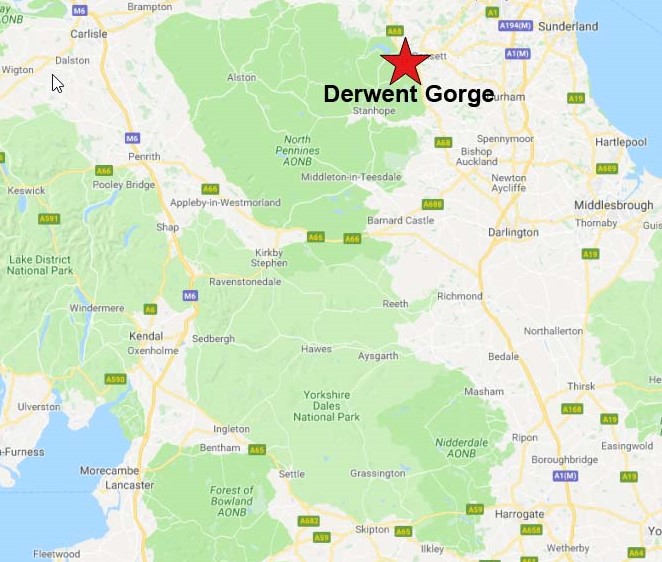
The bird was found alive on 23 April in Derwent Gorge, in the North Pennines AONB, by a member of the public who alerted the group Friends of Red Kites (FoRK). An x-ray by a local vet showed the bird had three shotgun pellets lodged in its head, neck and wing. The bird was cared for but went blind from its injuries and had to be euthanized.

[Photos by Robson & Prescott Vets, Morpeth]

Durham Police visited the area where the bird was found but so far have no leads as to who shot the kite. The RSPB is now appealing to the public for information.

Like all birds of prey, red kites are protected under the Wildlife and Countryside Act 1981 which makes it an offence to deliberately kill or injure a wild bird. Those found to have done so could be given an unlimited fine and/or up to six months in jail.

Since 2010, six kites have been poisoned or shot near Derwent Gorge, including a red kite found poisoned in nearby Muggleswick in 2014.

And in February this year, a rare hen harrier disappeared in suspicious circumstances less than an hours’ drive away from this latest incident. The hen harrier, which was wearing a special satellite tag, suddenly and inexplicably stopped transmitting after it flew over a grouse moor near Middleton-in-Teesdale. [See here]

Jenny Shelton from the RSPB’s Investigations Unit said: “Spring is a crucial time of year when adult kites will be feeding their young, so the death of this bird could have also affected any family it might have been raising. Red kites were almost completely wiped out of the UK until they were reintroduced in the 1980s. This has been a wonderful success, and most of us enjoy watching these impressive birds. But threats like persecution are preventing them from naturally expanding their range and we clearly have a problem area on our hands here. As mainly scavengers, these birds are no risk to anyone. Blasting this bird from the sky was a thoughtless act.”

Jenny added: “We would like to thank Friends of Red Kites and Robson and Prescott Veterinary Hospital in Morpeth who have been a huge help.”

Allan Withrington of Friends of Red Kites said: That anyone could even think about shooting one of these beautiful, graceful birds is beyond my comprehension. We are saddened by yet another wildlife crime and look forward to hearing the results of any investigation.”

If you have any information relating to this incident, call Durham Police on 101 quoting reference number: DHM230420180371.

If you find a wild bird which you suspect has been illegally killed, contact RSPB investigations on 01767 680551 or fill in the online form HERE

ENDS

Well done to the RSPB for putting out this appeal for information. It’s a shame there’s no similar appeal on Durham Constabulary’s website (at least not at the time of writing this blog). Why not?

UPDATE 16.15hrs: We’ve updated the two maps (above) to show the location of Derwent Gorge (as opposed to the nearest town of Shotley Bridge). Derwent Gorge is bang next door to the grouse moor at Muggleswick, and lies within the North Pennines AONB (Area of Outstanding Natural Beauty).

UPDATE 17.00hrs: Well done to the North Pennines AONB for publishing the following statement on their website:

RED KITE KILLED IN NORTH PENNINES

The report of the killing of a protected red kite in the North Pennines Area of Outstanding Beauty (AONB) has come as very distressing news.

Chris Woodley-Stewart, Director of the North Pennines AONB Partnership, said: “We are appalled that someone has committed this despicable crime. Someone must know who is involved and we would urge anyone with any information to come forward. There are so few raptors across the Northern uplands because of this illegal persecution – no one should pretend otherwise.

We met with the police recently to raise awareness of raptor crime and we plan to follow this up. It needs more people to speak out against raptor crime, more resources put into investigation, a commitment to bring prosecutions and stiffer sentences for those found guilty.”

If you have any further information on this incident, please call Durham Police on 101 quoting reference number DHM230420180371 or the confidential Raptor Crime Hotline on 0300 999 0101. All calls are anonymous.

ENDS