
The Game and Wildlife Conservation Trust (GWCT) are advertising a grouse keeper’s training course, to be held in November. Their advert for the training course includes the following statement:
“This highly acclaimed, practical training will take place on working estates in Glen Esk, Angus, where well respected grouse keepers, along with GWCT advisory and research staff, will impart their knowledge based on a wealth of experience“.
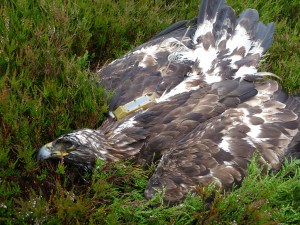 Glen Esk is, of course, where golden eagle ‘Alma’ was found poisoned two years ago (see here). She had been poisoned by Carbofuran. Police raided one of the three sporting estates in Glen Esk where Alma’s body was found (Millden Estate), but no arrests were made. A report in the Brechin Advertiser one month later (see here) included the following statement: “It had previously been confirmed by Tayside Police that the bird “certainly” picked up the poison in the local area“. It is not clear what this ‘certainty’ was based upon. Local residents apparently shared this view though, and Brechin Community Council vice-convenor, David Adam, was reported in the Advertiser article as saying: “I think it is fairly conclusive that the bird was poisoned and that the bird was poisoned in Glenesk“.
It is not known whether the police extended their investigations to the other two sporting estates in Glen Esk – Gannochy Estate and Invermark Estate. As far as anyone can tell, the police investigation is still on-going.
Interesting then, that the GWCT would select Glen Esk as the venue for their ‘highly acclaimed’ grouse keeper’s training course, don’t you think? And also interesting that Scottish Land and Estates and the Scottish Gamekeepers Association should choose to advertise this training course on their websites.
Training course advert on GWCT website here
Training course advert on Scottish Land and Estates website here
Training course advert on SGA website here
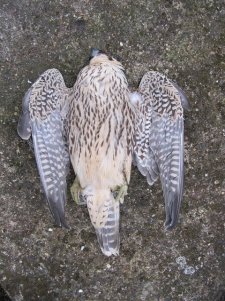 The BBC News website is running a story today about another poisoned peregrine. The young bird was apparently discovered three months ago at Whitecleaves Quarry near Buckfastleigh in Devon. The toxicology results, which have only just been released, indicate the bird was poisoned with the banned pesticides Carbofuran and Aldicarb.
 Well finally, on behalf of the Scottish Government, SASA (Science and Advice for Scottish Agriculture) has published the poisoning figures from the second quarter of 2011 (covering the period from April to June), and guess what? More raptors were illegally poisoned during this period. Seems a bit of a coincidence that these figures have been published four months late and on the very day that people were encouraged to make a Freedom of Information request to SASA to obtain the 2011 poisoning data. Nevertheless, the publication of these data is still welcome and provides us with cold hard facts about the continuing illegal poisoning of our native species.
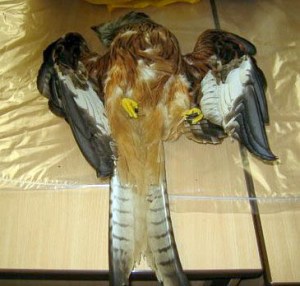 A recent study that revealed how illegal persecution is affecting the growth of a red kite population in Scotland has won a scientific research award.
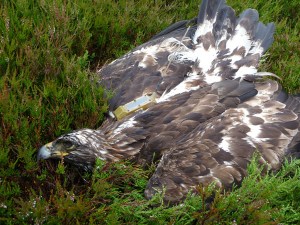 Millden Estate near Brechin, Angus has been put up for sale with a whopping £17.5 million price tag. If the estate is sold as a whole (as opposed to up to 13 Lots), it will become the most expensive Scottish country estate ever sold on the open market, according to Scotland on Sunday.
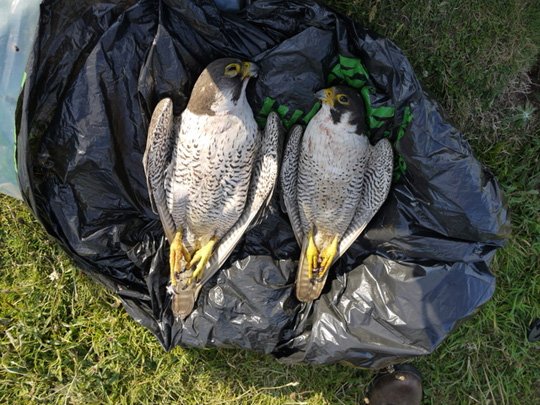 Devon & Cornwall Police, along with the RSPB, have just announced that two peregrines that were found dead on 21 July this year had been poisoned by the banned pesticide Carbofuran. The RSPB is offering a reward of £1000 for information leading to a conviction.
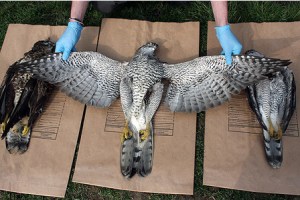 The RSPB has put up a reward of £1,000 for information about the deaths of four goshawks and one buzzard which have been found poisoned in Devon. They were discovered in Forestry Commission woods near to Exeter and had been poisoned with the bannned pesticide Carbofuran.
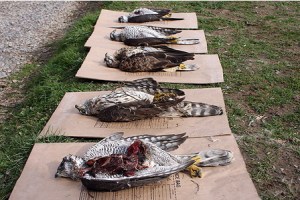 Anyone with information about these crimes is urged to call Crimestoppers, in confidence, on: 0800-555-111, or email Devon & Cornwall Police Wildlife Crime Officer P.C. Josh Marshall directly:
  Raptor Persecution UK