The bird had consumed a banned pesticide which has a history of being used to kill birds of prey.
Red Kites are fully protected by law, and to kill or harm one could result in jail.
The illegal poisoning of birds of prey is a national issue and poses a potentially deadly danger to people, pets and wildlife.
A protected Red Kite endured an ‘agonising death’ after being killed by a banned pesticide, one quarter of a teaspoon of which is enough to kill a human.
RSPB Scotland received a call in April 2024 from a dog walker who had found a red kite dead on the ground near to a popular woodland walking trail, adjacent to hill farm land at Spinningdale, near Dornoch in East Sutherland.
RSPB Investigators notified Police Scotland, collected the bird and sent it for a post-mortem examination and toxicology analysis. The results were consistent with Carbofuran poisoning being the cause of the bird’s death, a pesticide banned for over 20 years.
Police Scotland and partner agencies conducted a search of the area but found no evidence that enabled them to identify a suspect.
It is a crime to kill or attempt to kill a bird of prey, and anyone caught doing so faces a fine or even jail.
The latest Birdcrime report, released last month found there were 159 poisoning incidents involving birds of prey between 2009-2024 in Scotland. In recent years, Carbofuran has become the pesticide most frequently associated with bird of prey persecution.
And of all UK counties, the Highland area had the second highest number of confirmed incidents of raptor persecution during the same 15-year period.
Ian Thomson, RSPB Investigations Manager, said:
“We are very grateful to the person that found this dead kite for reporting it to us. It is appalling that individuals are still using this poison, decades after it was banned, and this bird will have suffered an agonising and horrific death.
Carbofuran is a highly toxic substance and is one of several banned pesticides still used by criminals targeting birds of prey or other protected wildlife. Its possession or use is illegal and placing it out in the open poses a potentially deadly and indiscriminate risk not only to wildlife but to people and pets.
We ask anyone using the area to be vigilant if they find anything suspicious, don’t touch, but do take photos and report to Police Scotland immediately on 101.”
If you notice a dead or injured bird of prey in suspicious circumstances, call Police Scotland on 101 and fill in the RSPB’s online reporting form here.
If you have information about anyone killing birds of prey which you wish to report anonymously, call the RSPB’s confidential Raptor Crime Hotline on 0300 999 0101.
Further to the blog on 30 September 2024 (here), a man attended court yesterday after being summoned in relation to the illegal poisoning of a red kite and two buzzards between 2017 and 2022.
John Bryant, 40, of West Ashby, Horncastle, Lincs appeared at Boston Magistrates Court on 16 October 2024 where he confirmed his name, age and address. He didn’t enter a plea.
The case was continued and Bryant will appear again on 20th November 2024.
NB: As this case is live comments are turned off until criminal proceedings have concluded.
UPDATE 24 November 2024: Lincolnshire man faces trial in relation to poisoned red kite and buzzards (here)
UPDATE 12 March 2025: Lincolnshire gamekeeper guilty of multiple offences in relation to deaths of red kite and buzzards (here)
Statement from Lincolnshire Police, 30 September 2024:
A 40-year-old man has been summoned to court for offences relating to killing or taking birds of prey.
John Bryant, of West Ashby, Horncastle, has been summoned to court following an investigation into reports of three birds of prey, a red kite and two buzzards, being poisoned and killed over a five year period between 2017 and 2022.
He will appear at Boston Magistrates’ Court on 16 October 2024.
ENDS
No further details are available yet.
NB: As this case is live comments are turned off until criminal proceedings have concluded.
White-tailed eagles: First breeding pair confirmed in Northern Ireland in over 150 years
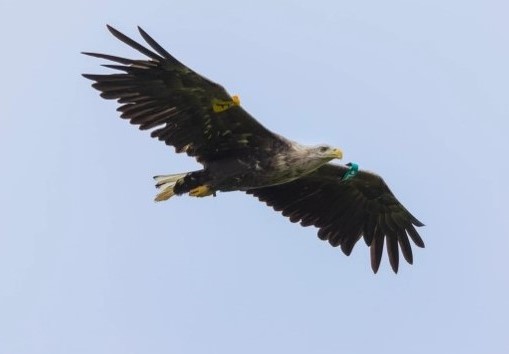
White-tailed Eagles have bred in Northern Ireland for the first time in more than 150 years in Co. Fermanagh.
News of the discovery was welcomed by the Northern Ireland Raptor Study Group (NIRSG) and RSPB.
White-tailed Eagles, a native component of Irish wildlife, were reintroduced to Ireland by the Golden Eagle Trust (GET) and National Parks and Wildlife Service (NPWS) between 2007 and 2011, with the aim of establishing a viable population following extinction from Ireland in the late 19th century.
White-tailed eagle photo by Dr Marc Ruddock
From 2007 to 2011, 100 eagle chicks were brought from Norway and were released in Killarney National Park, Co. Kerry. Phase 2 of the reintroduction, by NPWS, continued in 2020 with more young individuals released at a number of sites across Ireland to bolster the population. Released birds were wing-tagged, with tag colours relating to their year of birth and codes to identify individuals, and many were fitted with satellite tags to provide accurate details of their locations.
The pair that have bred in Northern Ireland are only four years old and were released on the shores of Lough Derg, Co Tipperary in 2020, having been brought from Norway in phase 2 of the Irish reintroduction programme. It is an incredible achievement that this pair of first-time breeders, have successfully fledged one chick. The success of this pioneering couple confirms that the wetlands, woodlands and farmlands of Co. Fermanagh provide ideal habitats for this species.
The White-tailed Eagle, or ‘sea eagle’, is the UK’s largest bird of prey, standing at almost 1 meter tall, with a huge wingspan of up to 2.4 metres and a distinctive white tail, as their name suggests. The wings are very broad, and the birds are often described as a ‘flying barn door’.
Young White-tailed Eagles often roam widely in their first few years of life, before finding a breeding territory and a mate. They are found near open water, either coastal or fresh. They can live to over 20 years of age, and usually begin breeding at 5 years old. They depend on the availability of large, mature trees in undisturbed areas in which to build their nests and good quality foraging and fishing habitats.
Dr Eimear Rooney from NIRSG said “The confirmation of this eagle species breeding in Northern Ireland corrects a multi-generational absence, symbolising the restoration of a once extinct species and highlighting the importance of wetlands, woodlands and farmland habitats on which many of our raptors depend”.
“From reviewing satellite data provided by NPWS we had an idea that the birds were nesting, but with young eagles nothing is guaranteed. I can’t describe the adrenalin rush the moment I saw the chick earlier this year and confirmed that the birds were not only nesting but had successfully reared a chick” she said.
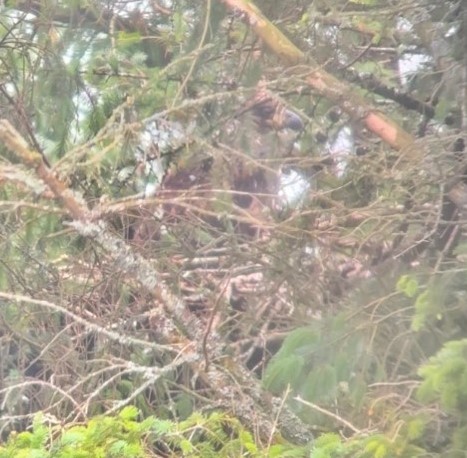
The well camouflaged WTE chick on the nest. Photo: NIRSG
Dean Jones, Investigations Officer from RSPB NI said: “The return of breeding White-tailed eagles to Northern Ireland is a true testament to the power of conservation and really showcases the awe-inspiring resilience and adaptability of our natural world. The poisoning of the two White-tailed eagles in Glenwherry in May 2023 was devastating, however, to have this pair breeding successfully, under the protection of a caring local farmer, really illustrates how humans and birds of prey can exist in harmony.”
Dr Marc Ruddock, from the NIRSG said “We had been anticipating this for a few years and the reintroduction programmes, has resulted in real conservation successes across the Island of Ireland. It’s a great result for the dedication and hard work of many individuals for many years and testament to the resilience of nature and wildlife in its capacity for restoration and renewal if given the space and habitats to thrive.”
Gregory Woulahan, Operations Director from RSPB NI praised the efforts of the local farmer whose actions to keep the site private and minimise disturbance no doubt created the conditions for these young birds to rear their first chick. It is hoped this chick will reach adulthood and return to breed in 4-6 years boosting the population of these birds alongside creating tourism opportunities for the rural economy and the implementation of further efforts to boost and restore spaces for nature.
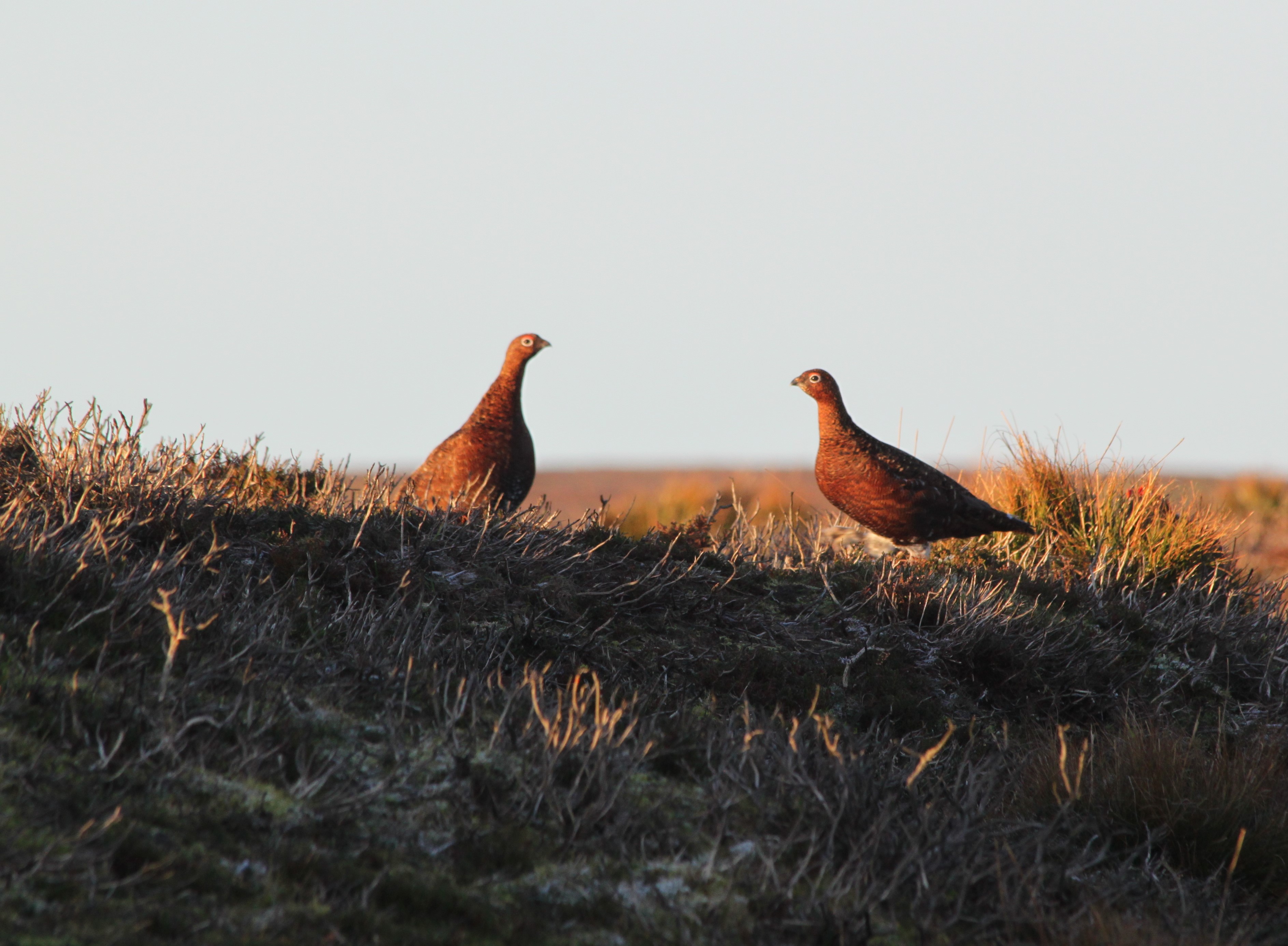
Apparently there won’t be much grouse shooting taking place this year when the season opens on Monday (12th August). According to various reports from the grouse shooting industry, this is due to a combination of factors including a cold wet spring and an extraordinarily high worm burden on many moors.
Red grouse photo by Ruth Tingay
They may not be shooting many red grouse but they’re more than making up for it by shooting themselves in the foot instead, particularly in Scotland.
I’ve read quite a few newspaper articles in the last few days about the so-called Glorious 12th but a couple of them stood out – whoever is advising the shooting organisations on their PR strategy is hanging them out to dry! Not that I’m complaining, if they want to make complete fools of themselves it saves me a job.
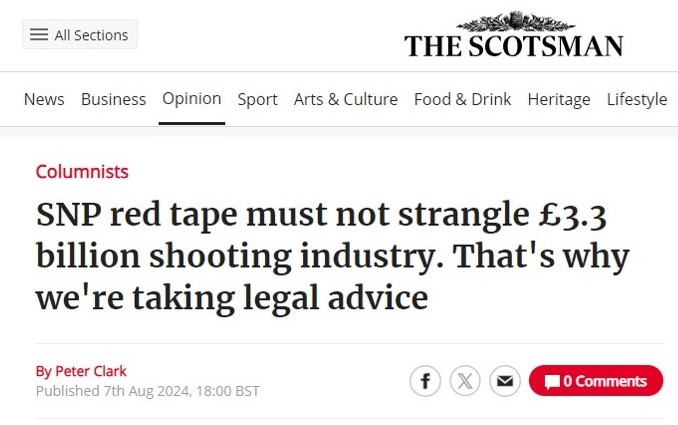
The first article that made me laugh out loud was an opinion piece in TheScotsman by Peter Clark, BASC’s Scotland Director:
I’m not going to reproduce the whole article because it’s too dull – you can read it here if you want to – but I do want to highlight a couple of points.
His opening paragraph goes like this:
“Grouse shooting is crucial to rural upland communities, with the start of the season representing the culmination of a year’s hard work, grit, and determination. Unfortunately, this season doesn’t look as promising as previous ones, with counts looking less positive“.
I wondered if the grit he refers to is the tonnes and tonnes of toxic, medicated grit that grouse moor managers chuck out on the moors, with minimal regulation, to medicate the so-called ‘wild’ red grouse to stop the natural, cyclical population crashes caused by parasites? I somehow doubt it – the industry’s leaders prefer to keep this dodgy practice under the radar.
Peter’s article goes on (and on) about how much shooting is worth to the economy, but predictably he lumps ALL types of shooting together rather than just focusing on grouse shooting, presumably to make grouse shooting look more economically viable than it actually is. It’s a common tactic. He also fails to include in his calculations the economic costs of grouse shooting to society. Again, a common ploy by the defenders of this so-called ‘sport’.
But the real PR disaster comes further down the article where he’s discussing the new grouse moor licences that have been introduced for the first time this year as the Scottish Government’s latest attempt to stop the illegal persecution of birds of prey on grouse moors. Peter writes:
“We clearly communicated to Jim Fairlie, the Scottish Government’s minister for agriculture and connectivity, before the Wildlife Management Bill became an Act that he should pursue amendments to make it more practical.
These proposed adjustments included removing provisions for adding additional game bird species to the shooting licenses, eliminating expanded investigative powers for the Scottish Society for Prevention of Cruelty to Animals, and refining the scope of what are considered to be “relevant offences” under the licencing scheme. These offences include those under wildlife legislation, ranging from the Wildlife and Countryside Act 1981, right through to the new Hunting with Dogs (Scotland) Act 2023. The British Association for Shooting and Conservation (BASC) was clear that the scope of the relevant offences was too broad, given that the sole focus of this licensing regime from its inception was to tackle raptor persecution.
Despite presenting strong evidence of the risks these aspects pose to the sector, our specific proposed changes were not included. While the BASC and other shooting organisations successfully won amendments to the Bill and challenged many aspects of what was originally proposed, ultimately, the shooting community now faces new layers of regulation.
Consequently, BASC is defending its members and seeking legal advice regarding the final version of the licensing scheme, which has now been implemented ahead of the start of the season“.
So let me get this right. Peter seems to be arguing that it’s just not fair that grouse shooting licences could be suspended and/or revoked if offences, other than those relating to raptor persecution, such as badger persecution or the hunting of foxes with more than two dogs, are uncovered on grouse moors!
“BASC is defending its members…” he says. What, by saying that BASC members shouldn’t be sanctioned if these other types of wildlife crime are uncovered??
Is he for real?!!
BASC is not alone in making the industry look ridiculous. In another article, published yesterday in the Guardian (here), BASC, along with industry lobby groups Scottish Land and Estates (SLE) and the Game and Wildlife Conservation Trust (GWCT) are also arguing that the licensable area to which these new regulations apply should be restricted to just the grouse moor area and that’s it’s ‘unnecessary and unfair‘ if the licence applies to other parts of an estate.
Eh? Where’s the logic in that? It’s blindingly obvious that estates would simply restrict their illegal activities to estate land next to the grouse moor, e.g. shooting a sleeping eagle as it roosts in trees on the edge of the moor, thus carefully avoiding culpability and a licence sanction, let alone a criminal prosecution.
The raptor killers have been exploiting this loophole for a long time – the most favoured practice being placing poisoned bait on the tops of fenceposts on an estate’s boundary line, especially at the top of a hill, making it more likely that a poisoned raptor will die further downhill on an adjoining estate and thus putting that neighbouring estate in the frame for the illegal poisoning.
As for the extent of the licence coverage being “unnecessary“, if that were so, why would the shooting organisations be so keen to limit the licence’s geographical extent if they’ve got nothing to hide?
There’s a quote at the end of the Guardian piece from Professor Colin Galbraith, Chair of NatureScot’s Board, discussing the entire coverage of an estate with a licence:
“If they’re not doing anything wrong, why worry about it?“.
POISONED BUZZARD LEADS TO ASHLEY GAME FARM & THE COMPANY’S DIRECTOR PAYING OVER £40,000 IN FINES
The discovery of a poisoned Buzzard next to a poisoned bait led to the search of a gamebird breeding farm in Chulmleigh, Devon conducted by Devon and Cornwall Police in March 2021.
A number of pesticides offences were discovered including the presence of Carbofuran, the same highly toxic chemical found on the poison bait that had killed the Buzzard.
On 18 July 2024 after pleading guilty to multiple pesticide offences Ashley Game Farm Ltd was ordered to pay £40,000 in fines and the company’s Director, Christopher Hodgson, was fined £1,500.
In October 2020, a member of the public discovered a dead Buzzard– a protected species under the Wildlife and Countryside Act 1981 – lying on top of a pheasant carcass by a pheasant release pen, near Hollocombe in Devon, and promptly reported it to Devon and Cornwall Police.
The two birds and a second dead pheasant found nearby were submitted by the police to the Government’s Wildlife Incident Investigation Scheme (WIIS) for examination and toxicology testing. Meat found in the Buzzard’s beak and both pheasant carcasses tested positive for Carbofuran. This evidence confirmed that the Buzzard had died as a result of feeding on the illegally placed poison baits.
In March 2021, following the toxicology results, a search of land, buildings and vehicles led by Devon and Cornwall police, supported by the National Wildlife Crime Unit, Natural England and the RSPB, took place at Ashley Game Farm in Chulmleigh, Devon. During the search significant amounts of prohibited and unauthorised pesticides and veterinary medicines were found stored around the property. A forensic search of two vehicles detected positive traces of the banned pesticide Carbofuran – the same banned pesticide which had been found on the pheasant carcasses and which had caused the Buzzard’s death.
Photo by RSPB Investigations
Ashley Game Farm is a member of the Game Farmers Association and a leading UK supplier of game birds including (Pheasant and Red-legged Partridge) which are sold as young birds to shooting estates across the UK and Europe, where in many cases they are reared and released to be commercially shot.
The insecticide Carbofuran has been banned in the UK since 2001 because of its high toxicity and associated risks. Although the storage and use of any product containing Carbofuran is an offence, it is one of the most commonly abused substances associated with the illegal poisoning of birds of prey, accounting for almost one third of all bird of prey persecution poisoning incidents in England between 2018 and 2022.
The practice of laying poisoned baits to persecute protected birds of prey is often associated with areas managed for gamebird shooting where these birds are perceived by some as a threat to gamebird stocks. Deliberate poisoning has resulted in the death of many species of protected birds of prey over decades. Historic incidents have shown this indiscriminate illegal practice has also resulted in the death of domestic animals and poses significant risks to humans, wildlife and the environment.
On 18 July 2024 at Exeter Magistrates Court, Ashley Game Farm and the Director of the company were charged with the following offences:
Ashley Game Farm:
On or before 26/03/2021 at Ashley Game Farm Limited, namely stored a plant protection product, namely Rivett MAPP 11300, without a valid authorisation or permission granted in accordance with Retained EU Regulation 1107/2009. Contrary to section 24 and 27 of the Plant Protection Products (Sustainable Use) Regulations 2012.
Between 01/10/2020 and 27/03/2021 at Ashley Game Farm Limited, used a plant protection product, namely Carbofuran, in contravention of Article 28 (1) of Retained EU Regs 1107/2009. Contrary to section 24 and 27 of the Plant Protection Products (Sustainable Use) Regulations 2012.
On or before 26/03/2021 at Ashley Game Farm Limited, used a Biocidal product, namely Lodi’s Sapphire Grain otherwise in accordance with the terms and conditions of its authorisation under Article 22 (1) and the labelling and packaging requirements of Article 69. Contrary to section 24 and 27 of the Plant Protection Products (Sustainable Use) Regulations 2012.
On or before 26/03/2021 at Chulmleigh contravened a requirement imposed by a prohibition notice served under section 22 of the Health and Safety at Work etc Act 1974 in that used a Biocidal product, namely Mole Valley Farmers Difenacoum Cut Wheat Rat Bait without authorisation being in force allowing for its use. Contrary to sections 22 and 33(1)(g) of the Health and Safety at Work etc Act 1974.
On or before 26/03/2021 at Chulmleigh in the county of Devon possessed an unauthorised veterinary medicinal product, namely possessed an unauthorised veterinary medical product, namely Dimetridazole (DMZ). Contrary to regulations 26(1), 43(r) and 44(1) of the Veterinary Medicines Regulations 2013.
Christopher Hodgson, Director of Ashley Game Farm:
On or before 26/03/2021 at being a Director of Ashley Game Farm Limited, a body corporate who had committed an offence, stored a plant protection product, namely Rivett MAPP 11300, without a valid authorisation or permission granted in accordance with Retained EU Regulation 1107/2009 and the offence was committed with the consent or connivance, or attributable to the neglect of Christopher Hodgson. Contrary to section 24 and 27 of the Plant Protection Products (Sustainable Use) Regulations 2012.
The company Ashley Game Farm Ltd pleaded guilty to all five charges and was ordered to pay £40,000 in fines and £590 in costs. Christopher Hodgson pleaded guilty to the one offence and was ordered to pay £1,500 in fines and £150 in costs.
Mark Thomas, RSPB Head of Investigations UK: “Yet again the discovery a dead bird of prey and poisoned baits leads to the detection of lethal banned poisons. This is the latest example of highly toxic pesticides being stored and used illegally in connection with the gamebird industry. As past cases have demonstrated these chemicals are extremely hazardous to our wildlife and environment, but also pose a considerable risk to members of the public and domestic animals. In this case, we welcome the significant fines despite not knowing who exactly killed the protected bird of prey.”
Howard Jones, RSPB Senior Investigations Officer: We would like to thank Devon and Cornwall Police, Natural England, NWCU, CPS and Defra. This successful outcome was the result of some incredibly effective partnership working. The fact that Carbofuran is still being found 20 years after it was banned shows the lack of reform, as the law stipulates, being shown by some within the gamebird industry. As this case has shown, individuals and businesses that chose to store and use these types of highly toxic pesticides are taking significant risks and committing serious criminal offences.
Jenny Mashford, Devon and Cornwall Police: “This incident was brought to the police’s attention thanks to a member of the public who identified the poisoned raptor. We carried out a warrant at the defendant’s premises with the assistance of several other agencies including Natural England, the National Wildlife Crime Unit, the RSPB and Defra. It is a very positive outcome in our fight against wildlife crime, of which bird of prey crime is a national wildlife crime priority. We would like to thank all those involved for their hard work and assistance with this case.”
If you notice a dead or injured bird of prey in suspicious circumstances, call the police on 101 and fill in the RSPB’s online reporting form HERE.
If you have information about anyone killing birds of prey which you wish to report anonymously, call the RSPB’s confidential Raptor Crime Hotline on 0300 999 0101.
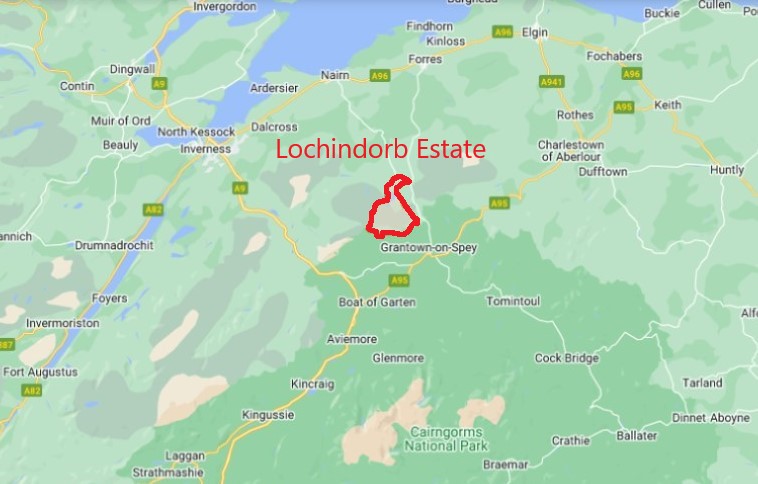
NatureScot has restricted the use of general licences on Lochindorb Estate, near Grantown-on-Spey, for three years.
An RPUK map showing the general boundary of Lochindorb Estate – details provided by Andy Wightman’s Who Owns Scotland website
The decision was made on the basis of evidence provided by Police Scotland of wildlife crime against birds.
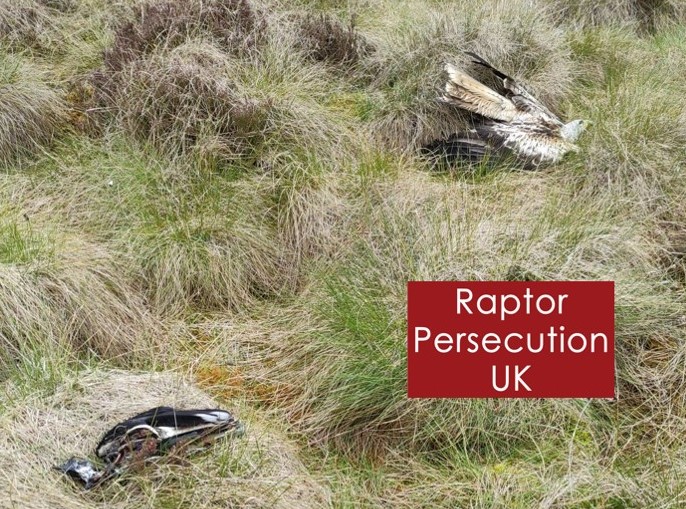
This evidence included a red kite found poisoned with an insecticide in 2021 near to a lapwing bait on land managed at the time by the estate [Ed: here], and a red kite shot on Lochindorb estate in 2023 [Ed: here].
The poisoned red kite and the lapwing used as poisoned bait. Photo by RPUK blog reader
Donald Fraser, NatureScot’s Head of Wildlife Management, said: “We have decided, in discussion with Police Scotland, to suspend the use of general licences on this property for three years until March 2027, given the persecution of red kites which has taken place on Lochindorb Estate and on neighbouring land managed by them at the time of the incident.
“NatureScot is committed to using all the tools we have available to tackle wildlife crime. This measure will help to protect wild birds in the area, while still allowing necessary land management activities to take place.
“We believe this is a proportionate response to protect wild birds in the area and prevent further wildlife crime. We will continue to work closely with Police Scotland and consider information they provide on cases which may warrant restricting general licences.
“The estate may still apply for individual licences; however, these will be subject to enhanced record-keeping and reporting requirements and will be closely monitored to ensure adherence with licence conditions.”
General licences allow landowners or land managers to carry out control of common species of wild birds, such as crows and magpies, to protect crops or livestock, without the need to apply for an individual licence.
In addition to this restriction, there are currently four other restrictions in place in Scotland: on Moy Estate in Highland, Invercauld Estate in the Cairngorms National Park, Lochan Estate in Perthshire and Millden Estate in Angus.
ENDS
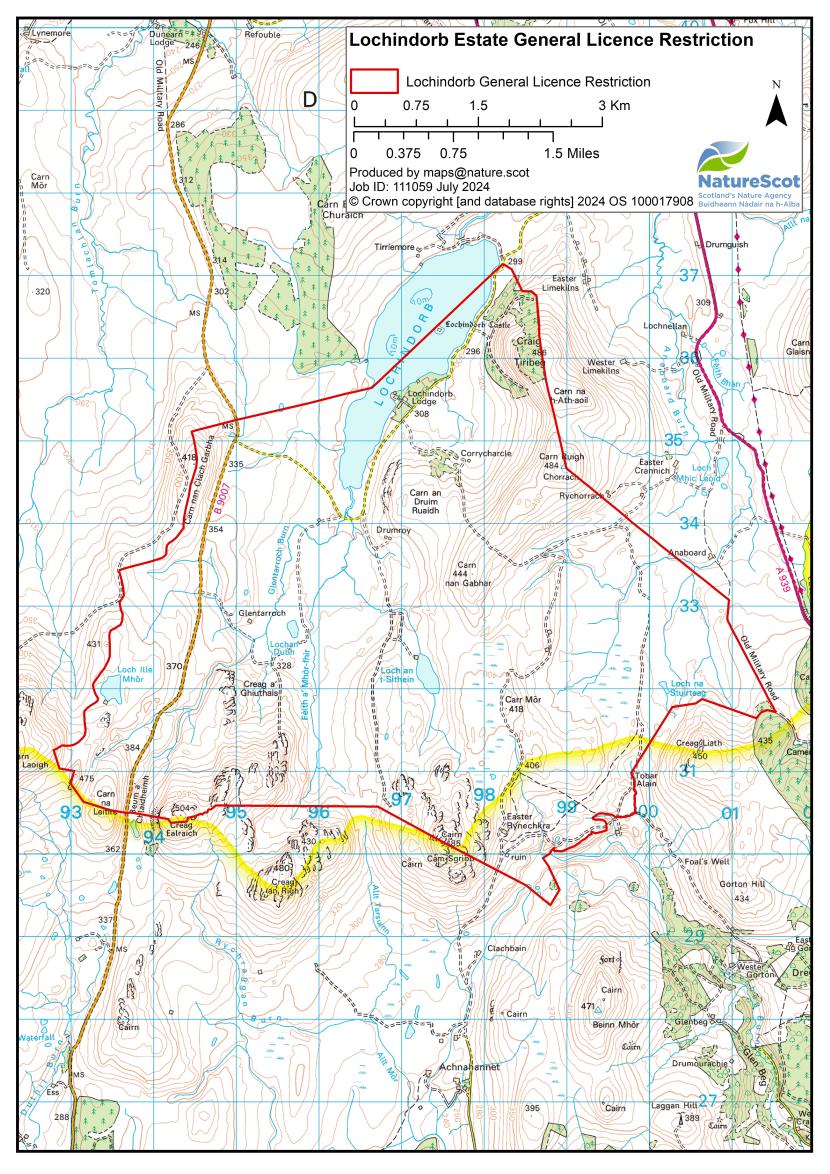
Here is a map from NatureScot showing the area of Lochindorb Estate where the General Licence restriction applies. This restriction prohibits the use of General Licences 01, 02 and 03 on that land from 16th July 2024 up to and including 15th July 2027.
I presume then, that the 56 year old gamekeeper arrested last year as part of the investigation into the shooting of the red kite on Lochindorb Estate has not been charged. If he had, this General Licence restriction would have been delayed until court proceedings had finished.
It’ll also be interesting to see whether this General Licence restriction affects Lochindorb Estate’s ability to apply for a section 16AA grouse shooting licence under the new Wildlife Management & Muirburn Act 2024.
For new readers, this Act was introduced as the Scottish Government’s response to the continued widespread illegal killing of birds of prey on grouse moors. It will work on the basis that all red grouse shooting must now be licensed in Scotland under a section 16AA licence and if, on the civil burden of proof (i.e. the balance of probability) sufficient evidence is found that the licence has been breached (including evidence of illegal raptor persecution), the licence can be withdrawn as a sanction, preventing the shooting of red grouse on a particular estate for a given period.
My guess is that Lochindorb will still be able to apply for a section 16AA grouse shooting licence, even though the estate is now under a 3-year General Licence restriction, because these offences were committed before the new legislation was enacted, so it will be deemed ‘unfair’ to apply the legislation retrospectively.
That will also mean that the other four grouse-shooting estates currently serving a general Licence restriction after evidence of raptor persecution was uncovered on their land (Moy Estate in the Monadhliaths, Invercauld Estate in the Cairngorms National Park, Lochan Estate in Strathbraan and Millden Estate in the Angus Glens) will also be able to apply for a section 16AA licence to shoot red grouse this year.
The Scotsman has published my opinion piece today about the potential impact of the new licensing scheme for grouse shooting in Scotland.
You can read it on The Scotsman website (here) and it’s reproduced below:
I call them ‘The Untouchables’. Those within the grouse-shooting industry who have been getting away with illegally killing golden eagles, and other raptor species such as hen harriers, buzzards and red kites, for decades.
They don’t fear prosecution because there are few people around those remote, privately owned glens to witness the ruthless and systematic poisoning, trapping and shooting of these iconic birds. If the police do come looking, more often than not they’re met with an Omertá-esque wall of silence from those who, with an archaic Victorian mindset, still perceive birds of prey to be a threat to their lucrative red grouse shooting interests.
For a successful prosecution, Police Scotland and the Crown Office must be able to demonstrate “beyond reasonable doubt” that a named individual committed the crime. As an example of how difficult this is, in 2010 a jar full of golden eagle leg rings was found on a mantelpiece during a police raid of a gamekeeper’s house in the Highlands. Each of those unique leg ring numbers could be traced back to an individual eagle.
The gamekeeper couldn’t account for how he came to be in possession of those rings, but the police couldn’t prove that he had killed those eagles and cut off their legs to remove the rings as trophies.
Despite the remains of two red kites, six illegal traps, an illegally trapped hen harrier and poisoned bait also being found on the estate, the gamekeeper was fined a mere £1,500 for being in possession of one dead red kite, that was found mutilated in the back of his estate vehicle.
In another case in 2010, three golden eagles were found poisoned on a grouse-shooting estate in the Highlands over just a few weeks. Even though the police found an enormous cache of the lethal poison – carbofuran – locked in a shed to which the head gamekeeper held a key, they couldn’t demonstrate that he was the person who had laid the poisoned baits that had killed the eagles. This meant he was fined £3,300 for the possession of the banned poison, but wasn’t prosecuted for killing the eagles.
In recent years, researchers have been fitting small satellite tags to young golden eagles which allows us to track their movements across Scotland, minute by minute. Analysis has shown that between 2004 and 2016, almost one third of tagged eagles (41 of 131 birds) ‘disappeared’ in suspicious circumstances, mostly on or next to grouse moors.
Satellite-tagged golden eagle prior to fledging. This eagle was tagged in 2014, ‘disappeared’ on a Strathbraan grouse moor in 2016 and it’s satellite tag was found wrapped in heavy lead sheeting in the River Braan in 2020. Photo by Duncan Orr-Ewing
The lengths the criminals will go to avoid detection were exposed in 2020 when a walker found a satellite tag that had been cut off an eagle, wrapped in heavy lead sheeting – presumably to block the signal – and dumped in the River Braan. The tag’s unique identification number told us it belonged to a young eagle tagged in the Trossachs in 2014. This eagle had disappeared without trace from a Perthshire grouse moor in 2016, in an area where eight other tagged eagles had vanished in similar suspicious circumstances. Nobody has been prosecuted.
The remains of the satellite tag that had been cut off the eagle, wrapped in lead sheeting and dumped in a river. Photo by Ian Thomson, RSPB Scotland
The most recent disappearance of a tagged eagle happened just before Christmas 2023, close to the boundary of a grouse moor in the Moorfoot Hills. ‘Merrick’ was translocated to the area in 2022 as part of the South of Scotland Golden Eagle Project. Her tag data told us she was asleep in a tree immediately before she disappeared. Police found her blood and a few feathers at the scene and concluded she’d been shot. Who shoots a sleeping eagle? Again, no one has been prosecuted.
This situation has persisted for decades because although golden eagles have been afforded legal protection for the last 70 years, to date there hasn’t been a single successful prosecution for killing one. The chances of getting caught and prosecuted have been so low that the risk of committing the crime has been worth taking, over and over again. Until now.
Earlier this year, the Scottish Parliament passed new legislation, the Wildlife Management and Muirburn (Scotland) Act 2024, which introduces a licensing scheme for grouse shooting. For the first time in 170 years, red grouse shooting can now only take place on estates that have been granted a licence to shoot.
How will this stop the slaughtering of golden eagles and other birds of prey on Scotland’s grouse moors? Well, the licence can be revoked for up to five years if there is evidence of wildlife crime on the estate. Significantly, this will be based on the civil burden of proof which has a lower evidential threshold than the criminal burden of proof.
This means that instead of the police having to prove ‘beyond reasonable doubt’ that a named individual was responsible, they now have to prove that it’s based only on the ‘balance of probability’. This is a real game-changer because instead of being perpetually ‘untouchable’, now there are real, tangible consequences for the grouse shooting industry if these crimes continue. Estates will no longer be able to rely on the implausible protestation that ‘a big boy did it and ran away’.
As with any legislation, it will only be effective if it is strongly enforced. The jury’s out on that and we’ll be keeping a close eye on performance, but as the licensing scheme is based on a policy of mistrust, the Scottish Government has sent an unequivocal message to the grouse shooting industry. We all know what’s been going on and the public will no longer tolerate it.
Prominent gamebird breeder Christopher Hodgson, Director of Ashley Game Farm Ltd in Wembworthy, Chulmleigh, Devon appears to have pleaded guilty to multiple offences including the use of the banned pesticide Carbofuran.
Ashley Game Farm Ltd is an exceptionally large breeding facility that, according to its website, ‘specialises in supplying pheasants and partridges to shoots in the west country and all areas of the UK and Europe‘. It claims to have ‘a hatching capacityfor 410,000 eggs per week along with further investment in a second location atTarrington, Hereford‘ and ‘retains around 80,000 chicks at Ashley Game Farm every week‘.
A multi-agency raid was carried out at Ashley Game Farm in March 2021 (here) following the discovery of a poisoned buzzard and poisoned baits in 2020.
Officers from Devon & Cornwall Police, Natural England, National Wildlife Crime Unit and the RSPB recovered a number of substances during the raid that were then sent for expert analysis.
Multi-agency raid in 2021. Photo by RSPB Investigations
This led to charges being laid against Christopher Hodgson as well as Ashley Game Farm Ltd in relation to the alleged use of Carbofuran and the alleged possession, storage and use of various plant protection, veterinary medicine and rodenticide products without authorisation at the game farm (see here).
Despite being banned for use in the EU for over 20 years, Carbofuran remained the ‘gamekeepers poison of choice’ for the illegal killing of raptors in the UK for many years, although in the last few years it has been overtaken by Bendiocarb.
Hodgson was due to appear in court today but information provided by the North and East Devon Magistrates Court indicates he and Ashley Game Farm Ltd have already pleaded guilty and will be sentenced in July.
Here are the details of the offences provided by the court:
Ashely Game Farm:
On or before 26/03/2021 at Ashley Game Farm Limited, namely stored a plant protection product, namely Rivett MAPP 11300, without a valid authorisation or permission granted in accordance with Retained EU Regulation 1107/2009. Contrary to section 24 and 27 of the Plant Protection Products (Sustainable Use) Regulations 2012.
Between 01/10/2020 and 27/03/2021 at Ashley Game Farm Limited, used a plant protection product, namely Carbofuran, in contravention of Article 28 (1) of Retained EU Regs 1107/2009. Contrary to section 24 and 27 of the Plant Protection Products (Sustainable Use) Regulations 2012.
On or before 26/03/2021 at Ashley Game Farm Limited, used a Biocidal product, namely Lodi’s Sapphire Grain otherwise in accordance with the terms and conditions of its authorisation under Article 22 (1) and the labelling and packaging requirements of Article 69. Contrary to section 24 and 27 of the Plant Protection Products (Sustainable Use) Regulations 2012.
On or before 26/03/2021 at Chulmleigh contravened a requirement imposed by a prohibition notice served under section 22 of the Health and Safety at Work etc Act 1974 in that used a Biocidal product, namely Mole Valley Farmers Difenacoum Cut Wheat Rat Bait without authorisation being in force allowing for its use. Contrary to sections 22 and 33(1)(g) of the Health and Safety at Work etc Act 1974.
On or before 26/03/2021 at Chulmleigh in the county of Devon possessed an unauthorised veterinary medicinal product, namely possessed an unauthorised veterinary medical product, namely Dimetridazole (DMZ). Contrary to regulations 26(1), 43(r) and 44(1) of the Veterinary Medicines Regulations 2013.
Christopher Hodgson:
On or before 26/03/2021 being a Director of Ashley Game Farm Limited, a body corporate who had committed an offence, stored a plant protection product, namely Rivett MAPP 11300, without a valid authorisation or permission granted in accordance with Retained EU Regulation 1107/2009 and the offence was committed with the consent or connivance, or attributable to the neglect of Christopher Hodgson. Contrary to section 24 and 27 of the Plant Protection Products (Sustainable Use) Regulations 2012.
Between 01/10/2020 and 27/03/2021 being a Director of Ashley Game Farm Limited, a body corporate who had committed an offence, namely used a plant protection product, namely Carbofuran, in contravention of Article 28 (1) of Retained EU Regulation 1107/2009 and the offence was committed with the consent or connivance, or attributable to the neglect of Christopher Hodgson. Contrary to section 24 and 27 of the Plant Protection Products (Sustainable Use) Regulations 2012.
Ashley Game Farm Ltd displays the logo of the Game Farmers’ Association on its website:
The Game Farmers’ Association (strapline: ‘representing the UK’s game farmers & promoting high standards‘) is one of the eight organisations in the shooting industry’s umbrella partnership, ‘Aim to Sustain‘, a lobbying campaign group aimed at promoting ‘sustainable and responsible’ game shooting. Presumably Christopher Hodgson and Ashley Game Farm Ltd will be expelled as a result of this criminal conviction.
Hodgson will appear in court in Exeter on 18 July 2024 for sentencing.
Well done to Devon & Cornwall Police, National Wildlife Crime Unit, Natural England and the RSPB’s Investigations Team for excellent partnership-working.
UPDATE 20 July 2024: Poisoned buzzard leads to discovery of multiple pesticide offences – Ashley Game Farm & Director Christopher Hodgson fined £40,000+ (here)
The election for the first York and North Yorkshire Mayor will take place on Thursday 2nd May 2024.
Whoever is elected will also take on the role of Police, Fire & Crime Commissioner in North Yorkshire. This is an important role, responsible for holding the Chief Constable to account for an efficient and effective local police service. The Commissioner also sets policing and crime priorities via their plan, and oversees the police budget.
Given the persistent volume of raptor persecution incidents in North Yorkshire, going back many, many years, whoever gets this role can have a significant influence on how these crimes are policed (or not, as in this recent case of a poisoned red kite found dead on Swinton Estate – here).
The list of candidates standing for the position can be viewed here:
One is Keith Tordoff, who I wrote about in 2021 when he was preparing to stand for the role of Police & Crime Commissioner – see here. Keith is an ardent raptor champion and has supported previous campaigns in Nidderdale to catch the notorious raptor (and dog) poisoners on the region’s grouse moors – and has suffered the consequences when his shop was targeted and he also received death threats.
Keith has pledged that if he is elected on 2nd May he intends to establish a steering group within the first 100 days to tackle these wildlife crimes and make sure that North Yorkshire Police are properly resourced to thoroughly investigate crime reports.
The other name that stands out on the list of candidates is Felicity Cunliffe-Lister, a co-Director of Swinton Estate, which has featured many times on this blog, and whose husband, the Earl of Swinton Mark Cunliffe-Lister is the current Chair of the Moorland Association (grouse moor owners’ lobby group) who had the brass neck to appear on Radio 4 last summer and say:
“Clearly, any illegal [hen harrier] persecution is not happening” (unbelievable, but he did say it – see here).
Which of these two candidates do you think is going to address North Yorkshire’s awful reputation for being one of the worst raptor persecution hotspots in the country?
The election takes place on 2nd May 2024. Please ensure you’re eligible to vote – if you’re not already registered, the deadline to register online is midnight on Tues 16th April 2024 (tomorrow night). Register here.
Further details about this election and requirements for voters can be found here.