Police investigate attempted peregrine poisoning

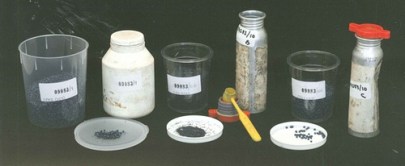
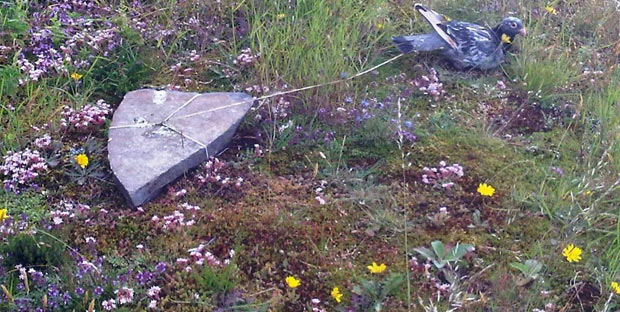
Police are investigating the attempted poisoning of peregrines after the discovery of a live pigeon, covered in poison, was found tethered to a rock at a quarry in North Wales.

Well done to Sgt Rob Taylor, the local Police Wildlife Crime Officer, for highlighting the incident and for warning the public about the danger to walkers and dogs.

The newspaper report suggests this isn’t the first tethered & poisoned pigeon to be used as live bait at this site.

News report in the North Wales Daily Post here

Yet another dead golden eagle: poisoning suspected, again

The Press and Journal is reporting the following story:
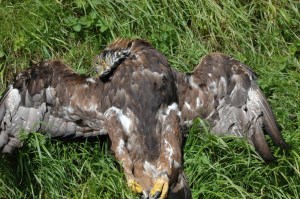
Another dead golden eagle: poisoning suspected.

Poison fears after golden eagle found dead in prime island habitat.

Police are investigating another suspicious golden eagle death- this time in one of the heartlands of the species.

The bird of prey was found at Loch Langabhat on Harris at the end of last month. Scotland’s first year round observatory to allow the public to view golden eagles opened on the island earlier this year.

It is understood that the creature was found by rangers working for the North Harris Trust, which runs the observatory.

The area has one of the highest breeding concentrations of the bird in Europe. About 20 pairs of golden eagles are resident on the island.

A police spokesman said: “We are investigating the death of a golden eagle. Its carcase has been sent for analysis to see if it had been poisoned.”

The same day as the Harris eagle was found, tests confirmed that a golden eagle found dead near Morar in Lochaber had been poisoned.

The Royal Society for the Protection of Birds Scotland said it was the third known poisoning incident in the area in 10 years. Two white tailed sea eagles were previously found poisoned.

The latest death in Lochaber was discovered in March and the results of a post mortem examination have now been released. They show banned pesticides were used.

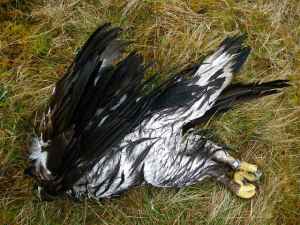
So, if this latest dead golden eagle is found to have been poisoned, it will be the third illegally-killed golden eagle reported in the last three weeks. The first one was the incident we reported on 18 June in the Tayside/Grampian region (see here), which, incidentally, still has not been the subject of a formal press release by either the police or the RSPB. The second one was reported by the RSPB and the police on 28 June and related to a poisoned golden eagle found dead in Lochaber three months earlier (see here) [This is the eagle pictured above].

It seems that ‘someone’ has leaked the story of the Harris dead eagle to the Press and Journal as there doesn’t appear to be any formal press release on any of the other news sites or the Northern Constabulary website. Well done to whoever alerted the P&J. We’ll await the SASA lab tests with interest. It’s quite possible of course that this eagle hasn’t been poisoned, although pesticide-poisoned birds generally exhibit diagnostic signs (like clenched feet and dead insects on the body) – signs with which investigators will be very familiar.

North Harris Eagle Observatory webpage here

Golden eagle poisoned in Lochaber

A golden eagle is poisoned with banned pesticides in Lochaber and the police/RSPB wait for three months before appealing for information. What’s the point? Can anyone explain the purpose of this delay? Even the Scotsman comments on it (here). Can anyone think of another type of crime where these reporting delays are common?

RSPB press release here

Please note: this dead golden eagle is not the same dead golden eagle we reported on the 18 June (see here). We’re still waiting for an official press release about that one. But anyway, that’s two known illegally-killed golden eagles reported in the space of 10 days, and we understand that at least two others have been ‘missing’ since May, according to their sat tag data. Looks like we’re going to have to update our dead eagle page (here).

Devon & Cornwall police issue bird poisoning alert

Devon & Cornwall Police continue their impressive proactive stance against wildlife crime by today issuing a press release to warn the general public to be on the look out for poisoned birds and poisoned baits.

The alert has been issued to the local community in an area with a history of raptor poisoning, including previous attempts to poison peregrines. The public have been warned about the potentially fatal consequences of coming in to contact with the poisons used, and have been reassured that regular police patrols will be undertaken in the area.

We don’t see enough of this sort of proactive approach (although last year West Yorkshire Police did send out a public warning after poisoned bait was discovered – see here, as did Northern Constabulary, see here).

Once again, Police Wildlife Crime Officer PC Josh Marshall deserves huge plaudits for his efforts. Earlier this year Josh was behind a scheme to attach covert cameras at vulnerable raptor nest sites that resulted in catching two men disturbing a peregrine site within 48 hours of installing the equipment (see here). Somebody needs to get him and his enlightened bosses up to Scotland to provide training workshops for every single police force.

See here for the police poisoning alert.

George Monbiot: a journalist who says it like it is

George Monbiot is fast becoming my favourite journalist (and not just because he uses this blog as a source of information!).

In his latest article, due to be published in the Guardian tomorrow but released on his website tonight (see here), Monbiot digs a little deeper inside the #buzzardgate debacle and uncovers some fascinating information.

In addition to #buzzardgate he also discusses the scandalous state of the English hen harrier population. He is one of very few authors willing to state, categorically and without caveats or apologies, that the missing English hen harriers [approx 329 pairs] ‘have been shot or poisoned by grouse-shooting estates’. There’s no dilution or ‘maybes’ or ‘possiblys’ in the name of so-called ‘partnership building’ – English hen harriers have been wiped out by grouse-shooting estates and Monbiot is not afraid to say so.

If you read Monbiot’s biography  (here) you’ll see that the thing he fears is ‘other people’s cowardice’.

We can all learn from him.

Yet another golden eagle mysteriously ‘disappears’

Last month we blogged about the ‘disappearance’ of a satellite-tagged golden eagle (see here). Now 22 days later we’re blogging about another one. Isn’t it strange how many UK satellite-tagged raptors go ‘missing’; not just golden eagles, but white-tailed eagles, hen harriers and red kites too. Wonder how these figures compare with tagged raptors in other parts of the world?

The last signal from the latest young golden eagle (#32857) to go ‘missing’ was received on May 11, just to the north-east of the Cairngorms National Park (see here).

Was it just a satellite tag failure and the eagle is still alive and well? Possibly.  Did it die of natural causes? Possibly. Was it poisoned? Possibly. Was it shot? Possibly. Was it caught inside a crow cage trap and bludgeoned to death? Possibly. Will we ever find out? Possibly. If it is found to have been killed illegally, will the perpetrator be brought to justice? Probably not (see here for the ever-growing list of dead and/or missing eagles in recent years for which nobody has ever been prosecuted).

Somebody asked a question the other day and we’ve still not been able to provide an answer:

What does it take to secure a conviction for killing an eagle in the UK?”.

We’ve heard all the excuses in the book, some valid, some not:

(i) The discovery of a poisoned eagle on a sporting estate isn’t enough to secure a conviction because either it could have been poisoned elsewhere and then flown to die at that location, or, it could have been ‘planted’ on the estate by the anti-game-shooting lobby (according to claims made by various gamekeepers over the years although without any actual evidence).

(ii) The discovery of a poisoned eagle lying next to a poisoned bait on a sporting estate isn’t enough to secure a conviction because it’s virtually impossible to identify which individual gamekeeper laid the bait, especially when they all deny it.

(iii) The discovery of a poisoned eagle and a stash of the same poison found on premises on the same sporting estate, and an admission from an individual gamekeeper that he had sole access to the poison isn’t enough to secure a conviction because….well, we don’t know the answer to that one, you’d have to ask COPFS.

(iv) The discovery of a poisoned eagle and a stash of the same poison found in vehicles and traces of it on knives and gamebags on the same estate isn’t enough to secure a conviction because….we don’t know the answer to that one either – ask COPFS.

(v) What if somebody was filmed laying out a poisoned bait and was then later filmed returning to remove the eagle poisoned by that bait? The film evidence would probably be ruled inadmissable because the cameraman was operating ‘covertly’ (i.e. without the landowner’s permission!).

(vi) What if a gamekeeper was found with a dead eagle in the back of his vehicle, and the eagle had injuries consistent with being caught in an illegal spring trap (e.g. broken legs) and having had its head caved in with a blunt object (e.g. smashed skull)? This wouldn’t be enough to secure a conviction because the keeper would probably claim he had just found the dead bird and was taking it home to report it to the authorities. At best he’d be charged with ‘possession’.

The shocking truth is, there has never been a successful prosecution for the illegal killing of an eagle in the UK, in spite of the sometimes overwhelmingly compelling evidence in some cases. So, just what does it take for someone to be convicted of killing an eagle in the UK?

Glen Orchy poisoner: sentence deferred ’til July

Tom McKellar, a gamekeeper/farmer at Auch Estate in Argyll who was convicted last month of possession of the banned pesticide Carbofuran (see here and here) was due to be sentenced today. Sentencing has now been deferred until 23 July (we don’t yet know the reason for this further delay).

The Carbofuran was discovered at McKellar’s place nearly three years ago in June 2009 during a police raid in connection with the discovery of a poisoned golden eagle at Glen Orchy on 7 June 2009 (see here). Toxicology results showed the dead eagle had been poisoned with Carbofuran. McKellar reportedly admitted during a police interview that he had previously laid out poison baits to kill foxes (see here) but he wasn’t charged with poisoning that golden eagle.

Also discovered during that police raid was a stash of illegal handguns in McKellar’s loft. On conviction at the High Court in Glasgow in December 2010, instead of receiving the mandatory five-year prison term he was given a sentence of 300 hours’ community service (see here).

There is a lot more to the Glen Orchy eagle-poisoning incident than meets the eye but we’re unable to disclose further information until McKellar has been sentenced. Rest assured, we’ll be writing more about this in due course.

Buzz off Benyon, & other news from the murky underworld of raptor persecution

There are no signs of the public’s outrage subsiding over #Buzzardgate. You only have to type in the words ‘buzzard’ and ‘DEFRA’ into a search engine and the strength of feeling against DEFRA’s outlandish plan is almost palpable.

The best article we’ve read, so far, is that written by George Monbiot in the Guardian (here). There’s also a good article by Michael McCarthy in the Independent today, entitled ‘Richard Benyon: The bird-brained minister (see here). Although McCarthy seems to think that the buzzard-nest destroyers will start their shotgun antics as of this Friday (1st June), presumably because that was the proposed start date in DEFRA’s research tender document (see here). However, the buzzard breeding season is well underway and many nests now contain small chicks and the DEFRA ‘study’ suggests that nests will be destroyed during ‘construction’; it doesn’t say anything about destroying active nests containing breeding adults, eggs and/or young (not that that would stop the trigger-happy nest destroyers, of course).

But perhaps the destructive parts of this study won’t start this Friday (if they ever start at all, depending on how loudly we all shout our objections). According to the June edition of ‘Modern Gamekeeping’ (which could just as easily have been called ‘Victorian Gamekeeping’ because nothing seems to have changed except for new bits of kit designed to help the ‘keeper kill more wildlife), the trial’s start date is not that clear:

Though DEFRA insists it is too early to comment on the finer details of the study, it is expected to launch some time this year. A spokesperson said: “The tender for the research project on management techniques to reduce the predation of pheasant poults by buzzards closed yesterday. We will announce the successful bid later in the summer“”.

Modern Gamekeeping isn’t available online (another example of its misnomer) but a photograph of its buzzard trial cover story can be found on Alan Tilmouth’s blog (here). Incidentally, Alan Tilmouth has been one of the most prolific tweeters on this issue and we know he was directly responsible for directing some ‘important’ people to this blog when we led on this story last week, so many thanks Alan, and good luck with your DEFRA FoI request to find out which Northumberland estates are involved; we’re all VERY interested in those results.

Another DEFRA FoI request has been lodged by ‘SWBirdWatch’ which can be followed on the public website ‘What Do They Know?’ (see here).

Since the buzzard trial story hit the news last week, several commentators on various blogs and websites have mentioned that the game-shooting lobby may have shot themselves in the foot over their latest attempt to get rid of raptors, because now the full glare of the spotlight has been turned onto their industry, with mainstream media taking a real interest. Mark Avery’s blog this morning (see here) focuses on some of the questions now being asked by a wider audience where previously they were just being asked by a smaller minority of special-interest groups. All good stuff.

For those who haven’t already done so, there are two main petitions to sign to show your disapproval of the buzzard trial – please, take a minute to sign both of them and let Mr Benyon feel the full force of our discontent:

https://raptorpersecutionscotland.wordpress.com/2012/05/24/add-your-name-to-petition-against-buzzard-management/

http://www.change.org/petitions/minister-for-wildlife-and-biodiversity-defra-stop-the-subsidy-for-buzzard-nest-destruction?utm_medium=facebook&utm_source=share_petition&utm_term=friend_inviter_action_box

In other news, Tom McKellar is due to be sentenced today (he’s the gamekeeper from Glen Orchy who was convicted in April of possessing the banned pesticide Carbofuran, although he didn’t face any charges over the dead golden eagle found at Glen Orchy which had been poisoned by er… Carbofuran – see here). We’ve received some further information about that poisoned eagle and we’ll discuss it once McKellar’s case has ended.

Another hearing opening today concerns the head keeper at Edradynate Estate in Perthshire. More on that case in due course…

Two more sea eagles poisoned in Ireland

And so it continues….

Two more sea eagles have been found poisoned in Ireland, one in County Mayo and one in County Donegal. One of the birds had also been shot.

Article in Irish Examiner here

Article in Mayo Advertiser here

The Director of the Golden Eagle Trust (the group behind the reintroduction of golden eagles, white-tailed eagles and red kites to Ireland) says he fears a pair of nesting golden eagles which have ‘disappeared’  from County Donegal may also have been poisoned (see here).

Red kites found poisoned in Chilterns

The RSPB and Hertfordshire Police are appealing for information following the discovery of two poisoned red kites in the Chilterns.

The first bird was discovered by a member of the public in January 2012, close to a public footpath near the village of Hexton. The second bird was also found by a member of the public, hanging in a bush in March 2012 less than one mile away on the Pegsdon Hill Nature Reserve run by Bedfordshire Wildlife Trust.

Tests have apparently revealed both birds had been poisoned with a highly toxic banned pesticide, although the name of the poison has not been given. On May 2nd, a multi-agency search of the area recovered a number of samples that have been sent for analysis.

The RSPB is offering a £1,000 reward for information leading to a conviction.

It’s interesting to note that neither of these poisoned kites were mentioned in the national press at the time they were discovered, nor is there an explanation for why it took four months from the first discovery for a search to be conducted. There is no mention of this investigation on the Hertfordshire Police website – the only publicity appears to be on the RSPB website. Whilst the investigation and (rather late) publicity is to be welcomed, the chances of anybody being charged for these offences now seem pretty slim.

RSPB news release here