Case against Michael Johnston: part 2

Criminal proceedings against Michael Johnston have continued at Dumfries Sheriff Court.

Johnston, 45, of Eastriggs in Dumfriesshire has been accused of being in possession of the banned poison Strychnine in April 2014, as well as a number of other alleged offences. He has pleaded not guilty.

This case will continue on 24th February 2015.

Previous blog on this case here.

Red kite poisoned in Central Scotland – police decide not to publicise

Police Scotland has failed to publicise the illegal poisoning of a red kite which was found dead in central Scotland last July. That’s July 2014 – six months ago!

The only reason this crime has come to our attention is because it is included in the recently-updated quarterly reports by SASA – the Government agency whose job is to analyse carcasses for poisons.

This kite was killed by ingesting the banned pesticide Carbofuran. There are no other details, other than the carcass was recovered in central Scotland and the case is subject to an on-going police investigation.

Why didn’t Police Scotland issue a press statement? Sure, they might have chosen to delay it for a few weeks for operational purposes, e.g. if they were planning a raid on the premises then they wouldn’t want to alert the potential suspects in advance. But six months on and still silent? That’s pathetic.

It’s this kind of cover-up that plays directly into the hands of those who seek to diminish the extent of raptor persecution. If the public is unaware that these crimes are continuing, they’ll be more likely to believe the lies of certain organisations who keep saying that raptor persecution crimes are occurring with less frequency, and that landowners and gamekeepers have cleaned up their acts. If the public believes that, they are less likely to join in calls for greater enforcement/tougher penalties etc. If MSPs don’t hear about this issue from their constituents, they’ll be less likely to push forward any legislative changes. The end result? The raptor-killing will continue with impunity and the raptor-killing criminals will continue to escape justice.

Police Scotland’s silence does absolutely nothing to inspire public confidence in their ability and willingness to tackle wildlife crime. Perhaps they did investigate and perhaps they’ve charged someone who is now awaiting prosecution. Perhaps they did investigate but didn’t find any evidence to link the crime to an individual. Perhaps they did nothing and the file is gathering dust on someone’s desk. Whatever response they did or didn’t make, given the high level of public interest in these crimes and, in this case especially, the dangerously-high toxicity of the poison (fatal to humans), they should have publicised this incident months ago.

We are also interested in whether any General Licence restrictions have been imposed on the land where the kite was found poisoned. We don’t know whether this land is used for game-shooting but we’d make an educated guess that it is, especially given the type of poison involved – Carbofuran is still the gamekeepers’ ‘poison of choice’.

If you remember, SNH now has the power to restrict the use of General Licences, based on a civil burden of proof (i.e. so not reliant on a criminal conviction) ‘where there is evidence to suggest that a wild bird or birds have been either killed, injured or taken or where there has been an attempt to do so other than in accordance with a licence, or where General Licences are being misused‘ [this is a direct quote from the SNH 2015 General Licences].

This new measure was rolled out in October 2014 (see here) and can be back-dated to any offences that have occurred since 1st January 2014.

During the Scottish Parliament’s RACCE committee hearing on 29th October 2014 (see here), Detective Chief Superintendent Robbie Allan of Police Scotland talked about the implementation of this new measure:

We have set up a structure whereby we will meet SNH on a monthly basis. At that meeting, Police Scotland will inform and notify SNH of any crimes that fit the proposed criteria. SNH will take that information and make an assessment based on it. The first meeting will take place in the first week of November [2014], and it will apply retrospectively to all offences since 1st January [2014].”

So, the first monthly meeting between Police Scotland & SNH was due to take place in early Nov 2014. That’s almost three months ago. This red kite was poisoned in July 2014. It is reasonable to expect, then, that this case has been assessed by SNH and they’ve made a decision whether or not to impose a General Licence restriction.

We just had a look on the SNH website, where it says: ‘Any decision to implement a restriction will be posted on this webpage‘ (see here). Surprise surprise, there isn’t any information about any General Licence restrictions that have been imposed. Does that mean they are not going to impose a restriction for the poisoning of this red kite? Or does it mean they haven’t yet got around to looking at it? Or something else?

Trying to get information from these enforcement bodies is like pulling teeth. Why is it so bloody difficult? Where’s all the ‘accountability’ that they’re so keen on telling us they have but the SSPCA doesn’t have?

Let’s go directly to the Director of Operations at SNH (who makes the ultimate decision on whether a restriction is imposed) and ask him what’s going on with this case and specifically, whether a General Licence restriction has been imposed and if not, why not? Emails to Andrew Bachell: Andrew.Bachell@snh.gov.uk

Red kite photograph by David Tomlinson

Subsidy penalty for Stody Estate?

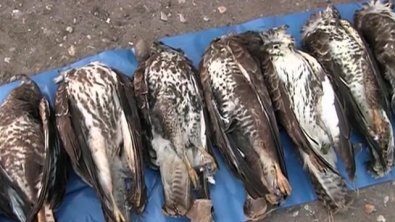
stody buzzardsOn 1st October 2014, gamekeeper Allen Lambert from the Stody Estate in Norfolk was found guilty of poisoning 10 buzzards and one sparrowhawk, which had been found dead on the estate in April 2013. He was also convicted of storing banned pesticides & other items capable of preparing poisoned baits (a ‘poisoner’s kit’), and a firearms offence (see here and here).
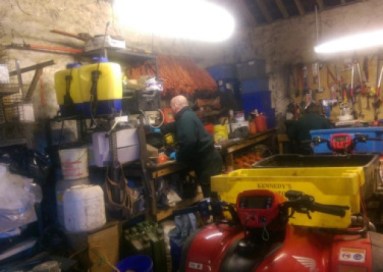
On 6th November 2014, Lambert was sentenced. Even though the magistrate acknowledged that Lambert’s crimes passed the custody threshold, he only received a 10 week suspended sentence for poisoning 11 raptors (suspended for one year), a six week suspended sentence for possession of firearms and nine poisoned buzzards (suspended for one year), and was ordered to pay £930 prosecution costs and an £80 victim surcharge.

On 5th October 2014, we blogged about the millions of pounds worth of subsidies that had been awarded to Stody Estate in recent years (see here) and we encouraged blog readers to contact the Rural Payments Agency (RPA) to ask whether Stody Estate would receive a financial penalty in the form of subsidy withdrawal for being in breach of the terms & conditions of their subsidy-fest.

On 10th October 2014, the RPA responded by saying they would consider what action could be taken against Stody Estate (see here).

Then it all went quiet.

One of our blog readers decided to submit an FoI to the RPA in December 2014, to see what was going on. Here is his letter:

12 DECEMBER 2014

To whom it may concern

I am making this request for information under the Freedom of Information Act.

The information I request relates to the conviction in October 2014 of Mr Allen Lambert, a gamekeeper employed by the Stody Estate, Melton Constable, Norfolk, NR24 2ER for illegally poisoning ten buzzards and a sparrowhawk.

I would be grateful if you could provide me with all the information you hold relating to the following questions:

  1. Whether the RPA consider the illegal poisoning carried out by an employee of the Stody Estate as being in breach of Cross Compliance Statutory Management Requirement 1 – Wild Birds.
  2. Did the RPA investigate any breach of cross compliance at the Stody Estate relating to the illegal poisoning offence and what was the outcome of the investigation.
  3. Whether the RPA has imposed a fine on the Stody Estate’s Single Farm Payment, Environmental Stewardship Payment or any other public subsidy the estate receives and if so, how much.

I look forward to hearing from you.

Yours sincerely

XXXXX XXXXX

On 14th January 2015, the RPA responded with this:

14 JANUARY 2015

Dear XXXXX XXXXX

Re: Freedom of Information – Information Request

Thank you for your request for information dated 12 December 2014 which has been dealt with under Freedom of Information Act 2000 (FoIA).

You have asked:

‘1. Whether the RPA consider the illegal poisoning carried out by an employee of the Stody Estate as being in breach of Cross Compliance Statutory Management Requirement 1 – Wild Birds.’

‘2. Did the RPA investigate any breach of cross compliance at the Stody Estate relating to the illegal poisoning offence and what was the outcome of the investigation.’

‘3. Whether the RPA has imposed a fine on the Stody Estate’s Single Farm Payment, Environmental Stewardship Payment or any other public subsidy the estate receives and if so, how much.’

Having considered your request we regret that we are unable to provide you with any meaningful response as we do not hold any information that answers your questions. However, RPA would like to make clear that it is required to assess cross compliance reductions to CAP subsidy claims based on intent, extent, severity, permanence and repetition of the non-compliance. We can assure you that RPA will take action, including cross compliance reductions to CAP subsidy payments applicable, if this is found to be appropriate.

In order to qualify for most CAP subsidy payments, claimants are required to keep their land in Good Agricultural and Environmental Condition and comply with a set of Statutory Management Requirements (SMRs). This is known as cross compliance. One of the SMRs covers wild birds (SMR 1) and this includes a rule about killing, injuring or taking wild birds.

Further information is published on the GOV.UK website (Page 43 – deals with wild birds).

https://www.gov.uk/government/uploads/system/uploads/attachment_data/file/320833/The_Guide_to_Cross_Compliance_in_England_2014_complete_edition.pdf

If you are not happy with the way we have handled your request, you can ask for an internal review. These requests should be submitted within two months of the date of receipt of the response to your original letter and should be addressed to: Access to Information, Rural Payments Agency, North Gate House, 21-23 Valpy Street, Reading, RG1 1AF.

Yours sincerely

Rural Payments Agency

Not very helpful, is it?

Thanks to the blog reader who followed up with the FoI and shared the response with us. We understand the RPA can expect further FoIs until a satisfactory response is received. Watch this space….

Meanwhile, you might be interested to compare Lambert’s pathetic sentence with that of an anti-badger cull protester. Lambert was given a 10 week suspended sentence and ordered to pay £930 costs for the mass poisoning of protected birds, the illegal storage of banned poisons and a firearms offence. The badger cull protester, who breached the terms of an injunction designed to stop him disrupting badger culls (he filmed someone involved with the cull and stood outside the NFU office wearing a t-shirt that said: ‘FCK NFU’), was given a six month suspended sentence and ordered to pay costs that could amount to £55,000 (see here). The first installment of £25,000 is due on 1st May. A crowd-funding page has been set up for those who want to help – see here.

Police search premises in another poisoning blackspot in Northern Ireland

A few days ago we blogged about a multi-agency raid on premises in the Drumbanagher area of Co Armagh, a notorious buzzard-poisoning blackspot (see here).

It looks like the PSNI is taking raptor persecution very seriously, because on the same day, another search in another poisoning blackspot was also carried out, this time in Co Derry.

The team went to targeted locations in the Magherafelt area where a number of raptor persecution incidents are reported to have taken place, including the Carbofuran-poisoning of a peregrine last July (see here).

Great to see a coordinated, proactive response from the police and partner agencies, and how refreshing to see this response publicised.

Details on the Co Derry search here.

Peregrine photo by Steve Waterhouse

Police search notorious raptor poisoning blackspot

Drumbanagher NI police search Jan 2015Police in Northern Ireland last week joined forces with officers from the Northern Ireland Environment Agency and the Health & Safety Executive (NI) to conduct a search of premises in one of the region’s most notorious raptor- poisoning blackspots.

The search focused on premises in the Drumbanagher area of Co. Armagh following the discovery of a Carbofuran-poisoned buzzard last October. The Drumbanagher/Poyntzpass area is known for its commercial game-shooting interests.

A dead cat was found during the search and has been sent for analysis.

We’ve blogged about this location before. Here’s the list of known (to us) victims:

2006: 1 x poisoned buzzard (type of poison unknown).

2008: 4 x poisoned buzzards (Alphachloralose).

2009: 2 x poisoned red kites (Alphachloralose). One bird survived, the other one didn’t.

2011: 1 x dead buzzard found under a hedge. Too decomposed for analysis.

2011: 3 x dead buzzards, suspected poisoning, but carcasses removed before police attendance. 1 x poisoned magpie (Alphachloralose).

2012: Another poisoned buzzard (Alphachloralose), reportedly the ’36th dead buzzard’ found in this area.

2014: 1 x poisoned buzzard (Carbofuran).

Our previous blogs on this area here and here.

Article on last week’s police search from Farming Life here

Subsidy penalty for convicted vicarious liability landowner

Last month we blogged about the Scottish landowner who was the first to be convicted under the new vicarious liability legislation which came in to force on 1st January 2012.

Ninian Robert Hathorn Johnston Stewart of the Physgill & Glasserton Estates was found guilty of being vicariously liable for the actions of his gamekeeper, Peter Finley Bell, who had laid out a poisoned bait which killed a buzzard. Bell was also found to be in possession of three banned poisons (see here).

The landowner’s conviction was met with mixed feelings. Many of us were pleased to see a successful prosecution in what was a landmark case, but there was widespread disappointment in the derisory fine of just £675.

A number of blog commentators asked whether the landowner would also be hit by a Single Farm Payment penalty for cross compliance breaches. We weren’t able to answer that at the time, although we knew that the use of a banned poison to kill a protected wild bird would certainly merit a penalty.

Well, it turns out that Mr Johnston Stewart was indeed hit with a subsidy penalty. According to his defence agent (David McKie),

He [Johnston Stewart] had already been penalised substantially via a high five-figure deduction to his single farm payment“.

We don’t know what that “high five-figure deduction” was (presumably somewhere between £10,000 – £99,999), nor do we know how it was calculated, nor what percentage it was of his annual subsidy payment. Nevertheless, it’s good to hear that a penalty was imposed so well done to SGRPID (Scottish Government, Rural Payments & Inspections Directorate) for being on the ball.

Wouldn’t it be good if this sort of detail was easily available in the public domain? We’d like to know how these public subsidies are being distributed (or revoked) and it surely has a deterrent value for other landowners who might just be persuaded to take a closer look at what their gamekeepers are up to. A section on this in the Scottish Government’s annual wildlife crime report wouldn’t go amiss….

The face of ‘modern landownership’ in Scotland

This is a belter. Surely inspired by the Gloria Gaynor classic, a Scottish estate owner has erected signs on his land telling the RSPB they’re ‘not welcome’.

Go on now go

Walk out the door

Just turn around now

‘Cause you’re not welcome anymore

John Mackenzie, who owns the massive Gairloch and Conon Estates, said he’d put up the signs because:

It is years of frustration and anger boiling over. Landowners, farmers and gamekeepers have always been an easy target, blamed by the society [RSPB] for the poisoning and shooting of raptors“.

Er, wouldn’t that have something to do with the fact that the majority of those convicted for poisoning and shooting raptors are, erm, gamekeepers working on shooting estates?

He went on to say he was “irritated” to find out that the RSPB had been “driving around looking at things themselves“. How dare they!

Ironically, the Conon Estate is close to the area where 22 raptors were found dead last spring in what has been termed the Ross-shire Massacre – 16 of them confirmed illegally poisoned (still no information on the other six).

Poor old Laird MacKenzie. He knows he can’t stop the RSPB, or anyone else for that matter, accessing his land, but he thought he’d stick up his signs anyway. Bless.

We wonder how his actions fit in with the recently launched Landowners Charter? Prepared by Scottish Land & Estates and published last September, this charter ‘sets out a commitment to the principles and responsibilities of modern landownership in Scotland’. The ‘four pillars’ of this charter are for landowners to be open, inclusive, enabling and responsible.

Not rude, arrogant, intolerant and stupid, then?

Bring on the land reform.

Article in Daily Mail here

Article in Daily Telegraph here

Article on BBC news website here

Come on, Aileen

Aileen McLeod MSPWe didn’t know what to expect from the newly-appointed Environment Minister when she took on her role a little over a month ago. Dr Aileen McLeod’s political experience had been largely focused on European policy work, although she was clearly highly educated and we knew she’d be well advised by the wildlife crime policy officers in Holyrood. Nevertheless, it would inevitably take time for her to achieve the level of insight and knowledge of her predecessor, Paul Wheelhouse MSP, who had the benefit of two years in office and was beginning to achieve considerable momentum against the raptor killers, until he was pushed out to another department in the Cabinet reshuffle in November.

Obviously, the jury is still out on Dr McLeod’s effectiveness and we need to give her a bit of time to get her bearings, although we fully expect her to adopt the Government’s stated intolerance of wildlife crime and to do everything she can to ensure that the raptor killers are brought to justice.

Two recent statements show that she has a thoughtful and measured approach, although we have cause to question a few of her comments.

First off, she has responded to the concerns of the Rural Affairs, Climate Change and Environment (RACCE) Committee, who wrote to her (see here) after taking evidence on wildlife crime from Police Scotland, COPFS and the former Environment Minister.

Here is her response: Environment Minister response to RACCE Committee Dec 2014

On the whole, her response is non-contentious and is pointing in the right direction, but she does say a couple of odd things. On the issue of the detection and prosecution of wildlife crime she says:

Reported crime numbers also reflect not only public awareness of wildlife crime, but also confidence that there will be an appropriate response from the authorities. Police Scotland has worked hard to ensure that consistent structures and resources are in place throughout Scotland and we expect this to produce improved results in wildlife crime reporting“.

We haven’t seen any evidence of this, in fact the complete opposite. We would agree that Police Scotland has been consistent, but not in a good way; consistently poor responses to reports of wildlife crime (with a handful of exceptions) seems to have been the norm for a very long time.

On the subject of the absence of species potentially indicating criminal activity (i.e. the absence of certain raptor species from vast swathes of driven grouse moors) she says:

We know that there may also be other non-criminal explanations for the absence of species. Nevertheless I agree that this would be useful work for the PAW Scotland Science sub-group to take forward“.

What other non-criminal explanations are there for the absence of certain raptor species from driven grouse moors? All the science (and there has been plenty of it, some dating back almost two decades) indicates a direct link to the illegal persecution of raptors on those moors. Sure, natural factors such as habitat, climate, prey availability, predation etc can and do affect the natural distribution of species, but we’re talking about species that have either ‘disappeared’ from their former natural ranges or their breeding attempts in parts of those ranges consistently fail. It’s no coincidence that these areas just happen to be managed as driven grouse moors.

On the subject of increasing the investigatory powers of the SSPCA she says:

I am also aware of the need to carefully balance a number of factors such as resources, accountability and proportionality in coming to a decision on whether to extend further powers to the SSPCA as regards wildlife crime“.

‘Proportionality’ is an interesting word. It suggests that the measure of extending the SSPCA’s powers should be fair, reasonable and appropriate. Who would argue that extending the SSPCA’s powers would be a dis-proportionate response to the rising level of wildlife crime in Scotland and Police Scotland’s inability to cope? Well we already know the answer to that – see here and here. The question is, will the Environment Minister consider it a disproportionate measure? We’ll find out soon enough, although if the last sentence of her letter to the RACCE Committee is anything to go by, she’ll do the right thing:

Tackling wildlife crime is a key priority for the Scottish Government and one that I am keen to take forward robustly in my new role“.

Other statements in her response letter were very encouraging, and we particularly welcome her intention to consider including the locations of illegally placed poison baits and traps on the annual PAW raptor persecution maps. That’s something that we (and others) have been asking for for a long time (e.g. see here).

We were also pleased to see a (diplomatic) dig about Police Scotland’s ridiculous press statement on the cause of the Ross-shire Massacre (here is some background on their idiotic statement, in case you missed it). Dr McLeod says:

Police Scotland’s press release on 24 October was designed to bring about a reduction in speculation that was widespread across social media on this high profile case. I am confident that lessons will have been learned on the need to be very careful with wording of such communications“.

She went a bit further in a recent statement published in the Scottish Farmer (here), where she announced NFU Scotland as a new member of PAW. In that statement she reiterated that the Ross-shire Massacre was the result of criminal activity. In other words, it wasn’t the result of an accidental poisoning.

 So, all in all a good start from her, with just a couple of questionable statements. Come on, Aileen, let’s see what you can deliver in 2015…

First conviction in landmark vicarious liability case

The first ever prosecution under the new vicarious liability legislation concluded today with a conviction at Stranraer Sheriff Court.

Landowner Ninian Robert Hathorn Johnston Stewart pleaded guilty to being vicariously liable for the criminal actions of Glasserton & Physgill Estates’ gamekeeper Peter Bell, who was convicted in 2013 of laying poisoned bait (Carbofuran) which killed a buzzard, and for possession of three banned pesticides (Carbofuran, Strychnine and Alphachloralose). Bell was fined a total of £4,450 (see here). On conviction, Bell was expelled from the Scottish Gamekeepers’ Association and the Glasserton & Physgill Estates were expelled from the landowners’ representative organisation, Scottish Land & Estates.

So, what was the penalty in this landmark vicarious liability conviction? A pathetic £675! We don’t know the full details of Johnston Stewart’s plea, or if there was any mitigation, but nevertheless, a £675 fine is extremely disappointing, especially when you consider that the maximum penalty for this offence is £5,000 and /or a six month prison sentence.

Will a derisory fine of £675 act as a suitable deterrent to others? No, of course not; that’s pocket change to a wealthy landowner. It’s yet another example of why there needs to be a complete overhaul of the penalties for wildlife crime and we look forward to reading Professor Poustie’s review on this issue, which is due to be submitted to the Scottish Government early next year.

What might act as a deterrent is the reputational impact of the conviction, but only if the conviction is widely publicised. We haven’t seen anything in the press, yet. Hopefully some of the journalists who follow this blog will get something out there….

So, although this is a disappointing penalty, the fact that there has been a conviction and thus a demonstration that the legislation works, is to be welcomed. Well done to the Fiscal and all those involved with bringing this case to court.

We now have information on the second vicarious liability prosecution currently going through the system and we’ll be blogging about that one in the new year.

UPDATE 19.15hrs. The following press release has been issued by the Crown Office:

copfs logoFIRST WILDLIFE VICARIOUS LIABILITY CONVICTION IN SCOTLAND

Landowner Ninian Stewart sentenced today after pleading guilty to being vicariously liable for Peter Finley Bells’ crime of poisoning and killing of a wild bird.

Ninian Robert Hathorn Johnston Stewart was convicted at Stranraer Sheriff Court on 23 December 2014 and fined a total of £675 today for four offences under Section 15A(1) and Section 18A(1) and (2) of the Wildlife and Countryside Act 1981. Section 18A(2) makes the accused guilty of the original offence and liable to be punished accordingly.

This is the first prosecution and conviction in Scotland under section 18A of the Wildlife and Countryside Act 1981. This section came into force on 1 January 2012.

Section 18A(2) created a new vicarious liability offence meaning that a person (B), who has shooting rights on or over land, or who manages or controls the exercise of such rights, can be found guilty of a relevant offence(s) committed by a person (A) while acting as the employee or agent of B.

This provision is designed to encourage landowners and employers with varying levels of responsibility in connection with shooting to be diligent and proactive in countering wildlife crime.

Stewart, the landowner of Glasserton & Physgill Estates, was convicted of being vicariously liable for the criminal actions of Glasserton gamekeeper Peter Bell on land owned by Stewart and on which he held the shooting rights.

Bell was a full time Gamekeeper in the employ of Ninian Stewart when he committed the poisoning offence on 23 December 2012 at Glasserton Home Farm. He had laced the carcass of a pheasant baited with Carbofuran and set the bait in a field. A birdwatcher passing the farm saw something flapping in the field and on closer inspection found that it was a common buzzard, lying on the ground, in the last throws of life. Subsequent forensic work showed that the buzzard had died as a result of ingesting the poisoned bait.

Under section 18A(3) it is a defence for B to show that B did not know that the offence(s) was being committed by A, and that B took all reasonable steps and exercised all due diligence to prevent the offence being committed.

In this case, while there was no indication that Mr Stewart instructed the commission of the offences or that he even knew about them being committed, there no evidence that Mr Stewart took any steps to exercise due diligence in respect of shooting on his Estate.

Sara Shaw, Procurator Fiscal, Wildlife and Environment said:

“There is a proactive responsibility placed on those who employ game keepers to run shooting estates, to ensure that is done within the parameters of the law.

“These offences were committed almost a year after the vicarious liability offence (under section 18A of the Wildlife and Countryside Act 1981) was introduced. Mr Stewart had adequate notice and time in which to take advice and put appropriate measures in place.

“Mr Stewart failed in his responsibilities and as a result stands convicted of the killing of a wild bird.

“The law specifically protects wild birds. Those who seek to poison wild birds, or continue to possess stocks of illegal poison, and those who employ or engage the services of such persons and tolerate the commission of these offences, or who do so without taking all reasonable steps and exercising all due diligence to prevent them being committed, can fully expect to be brought to account before the courts.”

ENDS

Notes to Editor

  1. Ninian Robert Hathorn Johnston Stewart (DOB 18/02/1948) of Newton Stewart pleaded guilty on 23 December 2014 at Stranraer Sheriff Court to four offences under the Wildlife and Countryside Act 1981 as below.

(001) on 23rd December 2012 on or in relation to land at Glasserton Home Farm, Whithorn, Newton Stewart, Peter Finley Bell, a person then acting as your employee or agent, did commit a relevant offence as defined by Section 18A(6)(a) of the aftermentioned Act, namely an offence under Section 1(1)(a) of the aftermentioned Act, in that he did intentionally or recklessly kill a wild bird, namely a common buzzard in that he set the carcass of a pheasant baited with poison, namely carbofuran after which said buzzard did ingest said Carbofuran and did poison said buzzard whereby you NINIAN ROBERT HATHORN JOHNSTON STEWART, being a person who has and who manages or controls the exercise of a legal right to kill or take a wild bird on or over that land, are guilty of an offence;

CONTRARY to Section 1(1)(a) and Section 18A(1) and (2) of the Wildlife and Countryside Act 1981 as amended

And it is hereby certified in terms of section 20 of the aforementioned Act that evidence sufficient in the opinion of the prosecutor to warrant proceedings came to his knowledge on 17th July 2013

Charge 1: £150 (reduced from £200)

(002) between 23rd December 2012 and 5th March 2013 both dates inclusive on or in relation to land at Physgill Cottage, Glasserton Home Farm, Whithorn, Newton Stewart, Peter Finley Bell, a person then acting as your employee or agent, did commit a relevant offence as defined by Section 18A(6)(a) of the aftermentioned Act, namely an offence under Section 15A(1) of the aftermentioned Act, in that he did have in his possession a pesticide, namely Carbofuran containing a prescribed ingredient within the terms of the Possession of Pesticides (Scotland) Order 2005/66, Article 2 and the Schedule, namely Carbofuran whereby you NINIAN ROBERT HATHORN JOHNSTON STEWART, being a person who has and who manages or controls the exercise of a legal right to kill or take a wild bird on or over that land, are guilty of an offence; CONTRARY to Section 15A(1) and Section 18A(1) and (2) of the Wildlife and Countryside Act 1981 as amended

And it is hereby certified in terms of section 20 of the aforementioned Act that evidence sufficient in the opinion of the prosecutor to warrant proceedings came to his knowledge on 17th July 2013

Charge 2: £225 (reduced from £300)

(003) on 05 March 2013 on or in relation to land at Physgill Cottage, Glasserton Home Farm, Whithorn, Newton Stewart, Peter Finley Bell, a person then acting as your employee or agent, did commit a relevant offence as defined by Section 18A(6)(a) of the aftermentioned Act, namely an offence under Section 15A(1) of the aftermentioned Act, in that he did have in his possession a pesticide, namely Strychnine containing a prescribed ingredient within the terms of the Possession of Pesticides (Scotland) Order 2005/66, Article 2 and the Schedule, namely Strychnine whereby you NINIAN ROBERT HATHORN JOHNSTON STEWART, being

a person who has and who manages or controls the exercise of a legal right to kill or take a wild bird on or over that land, are guilty of an offence;

CONTRARY to Section 15A(1) and Section 18A(1) and (2) of the Wildlife and Countryside Act 1981 as amended

And it is hereby certified in terms of section 20 of the aforementioned Act that evidence sufficient in the opinion of the prosecutor to warrant proceedings came to his knowledge on 17th July 2013

Charge 3: £75 (reduced from £100)

(004) on 05 March 2013 on or in relation to land at Physgill Cottage, Glasserton Home Farm, Whithorn, Newton Stewart, Peter Finley Bell, a person then acting as your employee or agent, did commit a relevant offence as defined by Section 18A(6)(a) of the aftermentioned Act, namely an offence under Section 15A(1) of the aftermentioned Act, in that he did have in his possession a pesticide, namely alphachloralose containing a prescribed ingredient within the terms of the Possession of Pesticides (Scotland) Order 2005/66, Article 2 and the Schedule, namely alphachloralose whereby you NINIAN ROBERT HATHORN JOHNSTON STEWART, being a person who has and who manages or controls the exercise of a legal right to kill or take a wild bird on or over that land, are guilty of an offence;

CONTRARY to Section 15A(1) and Section 18A(1) and (2) of the Wildlife and Countryside Act 1981 as amended

And it is hereby certified in terms of section 20 of the aforementioned Act that evidence sufficient in the opinion of the prosecutor to warrant proceedings came to his knowledge on 17th July 2013

Charge 4: £225 (reduced from £300)

  1. Peter Finley Bell (DOB 11/02/1951) from Whithorn, Newton Stewart was fined £4,450 on 18 June 2013 after pleading guilty to four charges contrary to the Wildlife and Countryside Act 1981: one contravention of section 1(1)(a) (killing a wild bird) and three contraventions of section 15A (possession of an illegal pesticide). He was fined £2,450 for killing the buzzard (reduced from £3,500 to reflect his plea of guilty); £1,400 for possession of Carbuforan (reduced from £2,000) and £300 on each charge for possession of Strychnine and Alphachloralose (reduced from £500 on each charge).

END

MEDIA COVERAGE

BBC news here

Galloway Gazette names Sheriff Kenneth Robb here

Scottish Land & Estates: an extraordinary statement here. Glasserton & Physgill Estates were expelled from SLE in 2013, following the conviction of gamekeeper Bell (see here). Reading SLE’s defensive response to the conviction of landowner Johnston Stewart, you have to wonder…..

Journal of the Law Society of Scotland here

Scottish Daily Mail here

UPDATE 6th January 2015: Landowner hit with a five-figure subsidy penalty (here)

Ross-shire Massacre: 9 months on

KeystoneCopsIt’s been nine months since 22 raptors (16 red kites + 6 buzzards) were illegally killed in a mass poisoning incident near Conon Bridge, Ross-shire.

Still no word from Police Scotland on the name of the ‘illegally held substance’ that was used to kill these birds.

Still no arrests.

Still no charges.

Still no prosecution.

Still no justice.

Police Scotland’s handling of this investigation continues to astound….

You may remember, back in October, some senior officers from Police Scotland gave evidence on this case to the Parliamentary Rural Affairs, Climate Change & Environment Committee (RACCE). The police were being questioned about their idiotic recent press release which had stated: “These birds were most likely not targeted deliberately but instead were the victims of pest control measures“.

We were particularly interested in what Assistant Chief Constable Malcolm Graham had to say to the RACCE about this press release:

We put out information into the public domain that we thought was going to clarify what we thought our best assessment was, lay behind the intent of the acts that we’re investigating, and from everything that we have done, in combination with a number of other agencies who are active in this field AND WHO SUPPORTED THE PRESS RELEASE THAT WE PUT OUT [Emphasis by RPS], we wanted to say that it didn’t appear that the activity had sought to deliberately target the birds that had been killed“.

We were intrigued about who these “other agencies” were that had supposedly “supported the press release that we put out” because, to be blunt, we didn’t believe ACC Malcolm Graham’s claim.

So in October we encouraged blog readers to email ACC Graham to ask him for clarification on the identity of these “other agencies“. There was no response for six weeks. So last week we encouraged blog readers to consider writing to the Information Commissioner to put in a formal complaint about Police Scotland’s refusal to respond. That prompted the following letter from Police Scotland, sent on 11th December 2014:

Dear XXXXX XXXXX

ACC Graham has asked me to reply to your email on his behalf.

I can confirm that a number of organisations both governmental and non-governmental have assisted the police in this enquiry from the outset. Significantly, both the RSPB Investigations Team and the SSPCA Special Investigations Unit have been involved and offered professional opinions at various times based on their experience of the the killing of birds of prey and the use and impact of poisons.

When drafting the press release these considered opinions along with those given by others were taken in to consideration. The press release reflected the belief at this time that the birds of prey were not the intended target of the illegal poison. However, as stated in the press release the illegal killing of the 16 poisoned birds remains a crime and therefore subject to a criminal investigation.

Regards,

Sergeant Andrew Mavin

Scottish Wildlife Crime Coordinator

Specialist Crime Division

Police Scotland

Glasgow West End Police Office

609-611 Dumbarton Road

Glasgow

G11 6HY

An interesting response, eh? We already know that RSPB Scotland didn’t support the press release (see here), and neither did Environment Minister Paul Wheelhouse (see here). The SSPCA didn’t respond to our queries so we don’t know whether they supported the release or not but we could take an educated guess.

While we wouldn’t go as far as to suggest that Police Scotland gave misleading evidence to a Parliamentary Committee, we would suggest that their evidence (specifically, their claim that “other agencies who supported the press release that we put out“) deserves further scrutiny and we’ll be writing to the RACCE about this.

Meanwhile, we await with interest to see whether the new Cabinet Secretary for Justice, Michael Matheson, responds to MSP Dave Thompson’s request for a review of the police handling of this investigation.

Previous blogs on the Ross-shire Massacre here