Ross-shire Massacre: 18 months on

It’s been 18 months since the corpses of 22 birds of prey (16 red kites and 6 buzzards) were found in a small area around Conon Bridge in the Highlands.

We know that 16 of these birds were illegally poisoned (12 red kites & 4 buzzards). Still no word on the other six victims.

Still no word on the type of poison used, although Police Scotland did eventually admit that it was an “illegally-held poisonous substance” (see here). Carbofuran is suspected by many of us (see here).

The details of this illegal mass poisoning have still been deliberately excluded from the quarterly SASA reports – the Government reports that are supposed to inform us about recent illegal poisoning crimes in Scotland.

Police Scotland still maintains that the birds “were most likely not targeted deliberately but instead were the victims of pest control measures” (see here) – even though they can’t possibly know this unless they have a suspect who has given a full confession.

We’re still waiting to hear whether MSP Dave Thompson’s request, back in November 2014, for a review of Police Scotland’s handling of this investigation will be undertaken (see here).

We’re still waiting to hear when the thousands of pounds worth of reward funds, that many of us donated, will be released by Police Scotland so that RSPB Scotland can redistribute them to support the work of their investigations team (see here).

Two months ago in July 2015 MSP Bill Kidd called on Police Scotland to tell the public more about the investigation (see here). We’re still waiting.

18 months on and still no arrests.

18 months on and still no charges.

18 months on and still no prosecution.

18 months on and still no conviction.

18 months on and still no justice.

18 months on and still no confidence in Police Scotland’s ability to solve this appalling crime.

Previous posts on the Ross-shire Massacre here.

Three more poisoned red kites

WT J 1 as I foundThe following press release has been issued today by FoRK (Friends of Red Kites) –

POISONING OF RED KITES CONDEMNED

Three red kites have been found illegally poisoned in a blow to efforts to re-establish a thriving population across north east England.

One found near a grouse moor died from Carbofuran poisoning despite the use of the chemical being banned in Britain since 2002. The two others were found together and died as a result of poisoning by Aldicarb, a widely-used pesticide which has been implicated in deliberate poisonings elsewhere in Britain.

The bodies of all three were recovered and sent for post-mortem examination after tip-offs from the public.

The three deaths, revealed by Friends of Red Kites (FoRK), the voluntary group set up to protect and monitor the population, brings the region’s total number of known kite casualties from illegal poisoning to ten in recent years.

FoRK has condemned the killings but fears that the known deaths are just the tip of the iceberg and that many more dead birds are never found. It believes that persistent persecution, mainly through illegal poisoned baits, is among factors preventing the birds from spreading from their core Derwent Valley sites.

The bird killed by Carbofuran was found near Edmundbyers, Co Durham. The two others were found at High Spen, Gateshead, and included a wing-tagged female from a nearby breeding site which had produced young for the previous four years.

Previous poisoning involved two kites found dead in Hexhamshire and a breeding pair killed near Whittonstall whose chicks then perished in the nest. Other local kites were found poisoned in Teesdale and Wharfedale, Yorkshire. Another bird, which moved to Scotland, was found poisoned in the Cairngorms. Other kites have been found in suspicious circumstances but have been dead too long for scientific examination.

Allan Withrington, FoRK Kite Welfare Officer, said: “These poisonings are appalling and totally unacceptable. Carbofuran has been illegal in this country for many years but is still apparently the poison of choice of those who illegally put out poisoned baits to target raptors, crows and foxes. 

Leaving poisoned baits in the open is not only illegal but completely indiscriminate as the deaths of many bird and animals, including dogs and cats, has shown over the years.

We will be continuing to do everything possible to expose those responsible and work with the police, farmers, landowners and other conservation organisations to protect the red kites and other species.”

The most recent available figures from the RSPB show that there were 76 confirmed cases of illegal poisoning in Britain in 2013, including 19 from Carbofuran and 5 from Albicarb. Twenty-one red kites were among the victims which also included buzzard, white-tailed eagle, golden eagle and marsh harrier. Raven, magpie, sparrowhawk and even a collared dove also died along with two dogs and two cats.

Britain’s single worst recorded wildlife poisoning incident occurred in April 2014 with red kites being the main victims. 16 kites and six buzzards were found dead near Inverness. Despite a major investigation by Police Scotland and rewards totalling £32,000 being offered no-one has been charged.

ENDS

There are a number of interesting facets to this press release. Firstly, no dates are given for when these birds were found poisoned. We can’t be certain, but the press release may refer to three poisoned kites that were discovered in Co Durham in 2014: two in November 2014 and one in December 2014, according to government statistics. It’s possible that the three kites mentioned in the above press release were poisoned this year, but the published government stats only cover the first quarter of 2015 (up until March) and no poisoned kites in Co Durham are present in those figures. These days we have to wait more than six months to find out what’s actually been going on more recently so if they were poisoned after March 2015 we might find out about it ‘officially’ sometime after Christmas.

The second interesting point about this press release is it has come from FoRK. Here’s how FoRK describe themselves:

The Friends of Red Kites (FoRK) is a constituted, membership-based, community organisation which was formed by volunteers in 2009 to continue to encourage an active interest in the conservation of the red kite population in Gateshead’s Lower Derwent Valley and to continue to monitor their health & welfare.

FoRK is the successor to the funded Northern Kites Project which was responsible for the re-introduction of 94 young red kites in the core area between 2004 – 2009. In 2006 red kites began to breed in the region for the first time after an absence of 170 years.

Interesting then that a voluntary, community-based organisation has issued this press statement, and not the police and not Natural England. Has FoRK issued this press statement because they’re tired of waiting for action by the authorities? Was there a police follow up? Was there a follow up by Natural England? If these three birds were poisoned in November and December 2014, why haven’t the police or Natural England said anything? Could their (apparent) silence / inaction have anything to do with the localities of the poisoned carcasses? Check out the village of Edmundbyers on a Google Earth map – see all those weird rectangular shapes on the hills surrounding the village? They’re the tell-tale muirburn strips (burnt heather) that indicate that this area is dominated by driven grouse moors.

Say no more.

Petition to ban driven grouse shooting – PLEASE SIGN HERE

Friends of Red Kites (FoRK) website here

Edmundbyers


Two Red kites poisoned & shot in Highlands: get your act together, Police Scotland

RK Cawdor poisoned 2014RSPB Scotland has issued a press release about the discovery of two illegally killed red kites in the Highlands. One was found shot on a railway line and the other one was found poisoned on Cawdor Estate (see photo).

The press release is interesting (read it here) but what’s more interesting is what is revealed by reading in between the lines.

Both birds were discovered in 2014. The shot red kite was found near Beauly in June 2014 (probably this one we blogged about in October 2014) and the poisoned red kite was found in September 2014.

The RSPB statement says, “Both of these incidents took place in 2014 and are now being made public as the Police have concluded their enquiries”.

So it takes Police Scotland over a year to disclose an illegally shot red kite and almost a year to disclose an illegally poisoned red kite. They’ve now ‘concluded their enquiries’ without appealing for information from the public and without executing a search under warrant on Cawdor Estate. What exactly did their ‘enquiries’ entail? Sitting around a table, scratching their heads, before deciding to keep both crimes under wraps?

Of course, an investigation in to the circumstances of the shot red kite would be a hide in to nothing – the bird was most probably shot elsewhere and dumped on the railway line to make it look like it had collided with a train. That’s a very difficult crime to detect, although had the Police made an appeal for information at the time the bird was found, there was always a slim chance that someone might have seen something. But no, far easier just to keep quiet and not attract any more embarrassing media coverage so soon after the mass poisoning of 22 kites and buzzards at nearby Conon Bridge (which is still undetected….more on that soon).

However, the ‘investigation’ in to the circumstances of the poisoned red kite that was found on Cawdor Estate just beggars belief. Cawdor Estate is well known as it has been at the centre of alleged wildlife crimes for over two decades. Here are just some of the incidents recorded either on the estate or close to the estate (for which nobody has ever been prosecuted) –

1992: Dead buzzard, magpie and sheep (laced with Strychnine)

1993:  Dead buzzard (poisoned with Alphachloralose) found on Forestry Commission land 100 metres from the boundary of Cawdor Estate.

1994: Three dead buzzards (poisoned with Alphachloralose) and a poisoned rabbit bait

1996: Three poisoned baits found: a hare laced with Alphachloralose, a goat laced with Aldicarb and a widgeon laced with Strychnine.

1996: A hidden pit containing a suspected bird of prey poisoning kit uncovered by investigators three miles from the estate.

1999: A report sent to the Procurator Fiscal alleging that mountain hares were illegally persecuted in snares on the estate.

2000: A second report submitted to the Fiscal claiming mistreatment of hares on the estate.

2001: A dead golden eagle (poisoned with Carbofuran)

2004: A number of illegal gin traps found set around rabbit baits

2004: A dead buzzard (poisoned with Carbofuran)

2005: A dead red kite (poisoned with Carbofuran)

2007: A dead red kite (poisoned with Carbofuran)

2010: Two red kites found poisoned on neighbouring ground close to estate boundary

With a record like this, wouldn’t you expect Police Scotland, on discovery of the latest poisoned red kite, to request a search warrant and head straight for the estate? Wouldn’t that be a logical first step? Why didn’t that happen?

Did the Police actually talk to anybody on Cawdor Estate about this poisoned kite? If you read a quote attributed to Alex Hogg of the SGA (on the BBC news website here), you’d think not. Hogg says:

“This is the first we have heard of any such incidents….”.

Really? Cawdor Estate has very close links to the SGA. Cawdor’s former Head Gamekeeper and later Sporting Manager Roddy Forbes was the inaugural Chairman of the SGA. And further, the SGA’s 2010 Young Gamekeeper of the Year was an employee on Cawdor Estate. That’s indicative of pretty close ties between the estate and the SGA, and yet the SGA claim not to have heard about this crime?

As an aside, Hogg is further quoted: “….We do not know the possible causes [of the birds’ deaths] which makes it difficult to comment further”.

Eh? The causes of death have been established. One kite was shot, the other was poisoned. Why is it ‘difficult to comment further’? A little bit too embarrassing, Alex?

A Police Scotland spokesperson is also quoted in the BBC article:

“Investigating wildlife crime is challenging because of its nature, and the vast areas covered. Police Scotland works closely with partners including the RSPB to tackle wildlife crime, and brings to bear the full range of investigative techniques at its disposal. Our detection rate is increasing. Our aim is to reduce wildlife crime and earlier this year we launched a campaign raising awareness”.

Yes, of course investigating wildlife crime is challenging, nobody disputes that. But sitting on enquiries, hiding them from the public, and not undertaking searches on estates where poisoned birds are discovered is not ‘bringing to bear the full range of investigative techniques’ at their disposal. It’s anything but that.

And what’s this about ‘our detection rate is increasing’? Are there any data to support this claim or are we supposed to just accept the word of a police force under increasing pressure to get its act together?

So what now for Cawdor Estate, almost one year on from the discovery of this poisoned kite? Might it be too much to hope that SNH will issue a General Licence restriction order? Guess we’ll have to wait and see, although that might be a bit embarrassing for SNH given that they have chucked thousands of pounds (of our money!) at Cawdor Estate to help fund their ranger service.

High risk plan to boost golden eagle population in southern Scotland

Peebles August 2007There’s an article on the BBC News website today about a proposal to take golden eagle chicks from the Highlands and release them in southern Scotland in an attempt to boost the tiny, depleted population currently clinging on by its talons (BBC report here).
The timing of this news is suspicious, especially when you learn that the project hasn’t yet been formally approved and thus may or may not happen. The cynical amongst us might view it as yet another piece of spin aimed at portraying the grouse-shooting industry in a favourable light so close to the start of the Inglorious 12th, especially when you see who is involved with the project – more on that later.

There’s no doubt that the southern Scotland golden eagle population is in serious trouble, and has been for many years. We’ve blogged about this previously (here, here). On the face of it then, any attempt to increase the population to its former status should be welcome news. But…..

A basic tenet of any restocking / translocation / restoration / reinforcement / reintroduction (whatever they choose to call this project) is that there should be strong evidence that the threat(s) that caused any previous decline has been identified and removed or sufficiently reduced. This is a standard guideline issued by the IUCN and is part of the criteria used to assess whether such projects can proceed.

One of the biggest constraints on golden eagle population recovery in southern Scotland is persecution. Raptor persecution in southern Scotland has definitely not been removed, nor sufficiently reduced. In the last ten years alone there have been more than 150 confirmed persecution incidents (that figure doesn’t include the ‘probable’ or ‘possible’ cases, nor those that went undiscovered). Just three days ago we were given a sharp reminder of just how current this problem still is when it was announced that a young hen harrier had been found shot dead on a grouse moor in South Lanarkshire (see here). The 2014 SNH-commissioned report on the status of golden eagles in southern Scotland also identified several areas where persecution is an ongoing concern, including the Lowther Hills, the Lammermuirs and the Moorfoots (all driven grouse moor areas – what a surprise), and stated that persecution needed to be brought under control in those regions if golden eagles were to thrive in southern Scotland once again (see SNH report here).

Environment Minister Dr Aileen McLeod acknowledges the persecution issue and in an earlier version of the BBC article this morning she said she will “work hard” to ensure the project is a success. In the latest version of the article, this has been updated with her saying that the persecution of raptors would “not be tolerated under any circumstances“. We’re sure she has good intentions but to be frank, this is just more rhetoric. She (and her predecessors) has been unable to bring persecution under control in other parts of the golden eagle’s range (notably the driven grouse moor regions of central and eastern Scotland – see report here from 2011 and report here from 2014) so why should we think she’ll be able to bring it under control in southern Scotland without bringing in new sanctions?

Having said all that, other high risk projects of a similar nature have been very successful on the whole (think reintroduction of red kites and white-tailed eagles). It’s also abundantly clear that if we wait for the southern Scotland golden eagle population to rebound of its own accord (by natural recruitment of individuals from the more northerly populations) then we’re likely to see the demise of the southern Scotland golden eagle population within a few years. It’s a definite trade off situation.

The one big thing in the project’s favour is that, if it does go ahead, it is likely to be a high profile project. There will be plenty of public interest and, assuming the released birds will be satellite-tracked (and their movements made publicly available and not kept secret), the unlawful killing or ‘mysterious disappearance’ of any of those birds will cause public uproar. This will put a lot of pressure on landowners and their gamekeepers to behave themselves and leave those eagles alone. If they don’t, it may well be the final nail in the coffin for their industry. There have been two very high profile killings of golden eagles in southern Scotland in recent years: an adult female was poisoned in 2007 (see here) and an adult male was shot in 2012 (see here). Ironically, that shot golden eagle was found on Buccleuch Estate, one of the listed project supporters. This is also where hen harrier Annie’s corpse was found.

As well as Buccleuch Estates, another project supporter is Scottish Land and Estates. Their CEO Doug McAdam is quoted as follows in the BBC article:

Landowners value golden eagles, they are one of our most iconic birds and I think people will work hard with us to make this project a success. Often landowners are portrayed as the villain here and against golden eagles and nothing could be further from the truth“.

It’s actually very close to the truth. Yes, there are a handful of landowners who cherish having breeding golden eagles on their land (not least the landowner who provides a home for the one remaining pair in the Borders) but that handful is greatly outnumbered by the vast majority of driven grouse moor owners who employ a zero tolerance policy for golden eagles (and many other raptor species) on their ground. Why else does McAdam think there is a need for conservation intervention to rescue the southern Scotland golden eagle population? How else does McAdam explain the large number of vacant golden eagle territories on grouse moors in central and eastern Scotland? How else can McAdam explain the disproportionate number of satellite-tagged eagles that ‘vanish’ on driven grouse moors? How else does McAdam explain the disproportionate number of poisoned, shot and trapped golden eagles that are found on driven grouse moors?

Let’s hope this restoration project does go ahead and we see an increasingly viable golden eagle population in southern Scotland. We’ll be watching with interest and McAdam and his industry mates can rest assured that if any of those young eagles are illegally killed, we and others will go to town on exposing it to the public.

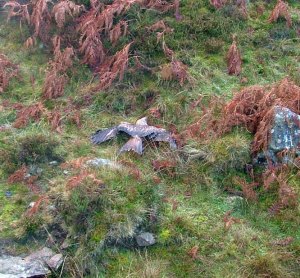
The image above is of the poisoned golden eagle found underneath her nest tree in the Borders in 2007. Nobody has ever been prosecuted for this.

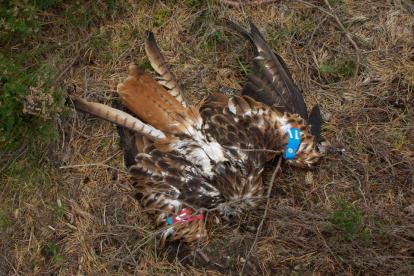
The image below is of the shot golden eagle found on Buccleuch Estate in 2012. He didn’t survive. Nobody has ever been prosecuted for this.

 Wanlock Head GE Oct 2012

Stody Estate subsidy penalties: an update

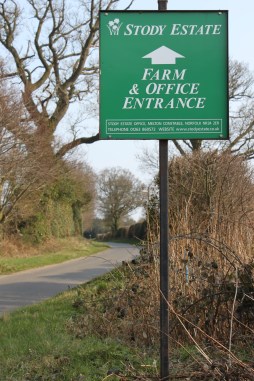
IMG_4752 (2) - CopyOn 1st October 2014, gamekeeper Allen Lambert from the Stody Estate in Norfolk was found guilty of poisoning 10 buzzards and one sparrowhawk, which had been found dead on the estate in April 2013. He was also convicted of storing banned pesticides & other items capable of preparing poisoned baits (a ‘poisoner’s kit’), and a firearms offence (see here and here).
On 6th November 2014, Lambert was sentenced. Even though the magistrate acknowledged that Lambert’s crimes passed the custody threshold, he only received a 10 week suspended sentence for poisoning 11 raptors (suspended for one year), a six week suspended sentence for possession of firearms and nine poisoned buzzards (suspended for one year), and was ordered to pay £930 prosecution costs and an £80 victim surcharge.

On 5th October 2014, we blogged about the millions of pounds worth of subsidies that had been awarded to Stody Estate in recent years (see here) and we encouraged blog readers to contact the Rural Payments Agency (RPA) to ask whether Stody Estate would receive a financial penalty in the form of subsidy withdrawal for being in breach of the terms & conditions of their subsidy-fest.

On 10th October 2014, the RPA responded by saying they would consider what action could be taken against Stody Estate (see here).

Then it all went quiet.

In December 2014, one of our blog readers submitted an FoI to the RPA to ask what was happening. In January 2015, the RPA responded by saying they ‘weren’t able to provide a meaningful response’ but said they would take action if it was found to be appropriate to do so (see here).

Six months on, we thought it was time for an update so an FoI was sent to the RPA to ask whether they had implemented a subsidy penalty. This is their response:

Dear XXXXX XXXXX

Thank you for your email dated 5 July 2015 regarding Stody Estate.

Cross Compliance rules only apply to recipients of Single Payment Scheme or certain Rural Development scheme payment in the year in which a cross compliance breach is found.

The person prosecuted for the offences mentioned in your e-mail is not a recipient of either of these types of payment.  Therefore before RPA can take further action, it will be necessary to determine whether there [sic] a link between this person and a subsidy recipient and, if there is, whether that recipient can be considered liable for the actions of the person who committed the breaches.

Identifying whether the person prosecuted is linked to a subsidy recipient will form a key part of our investigations.

Should you have any further queries please contact us again quoting reference number XXXXX

Regards

Helen Hunter

Customer Service Centre, Operations

END

This is all very interesting. The mass illegal poisoning of birds of prey took place on Stody Estate and a Stody Estate employee, gamekeeper Allen Lambert, was convicted of these crimes and several others. But the Rural Payments Agency is still trying to determine whether there is a link between Lambert and the Stody Estate. Eh?

It’s not very convincing is it?

Perhaps the RPA should have a read of the judge’s comments about the relationship between Lambert and his (now former) employer – see here.

Satellite-tagging golden eagles in Scotland

ge GUARDIAN pics 2015

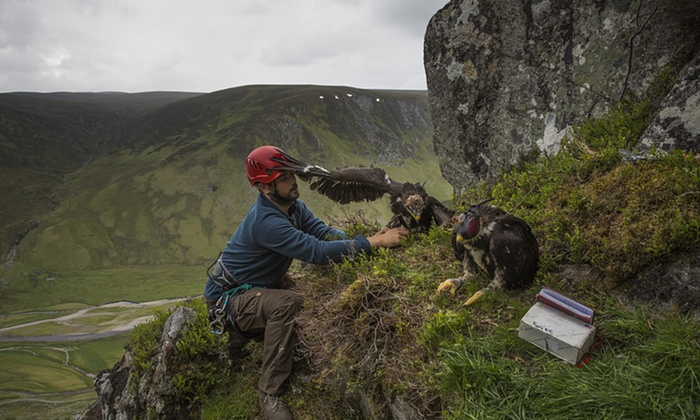
There is a series of absolutely stunning photographs in the Guardian (photographer Dan Kitwood/Getty Images) of golden eagles being satellite-tagged in the Scottish Highlands – see here.

They feature the work of some of the top class fieldworkers from the Scottish Raptor Study Group, notably Justin Grant and Dr Ewan Weston. These two, along with a handful of others, are among the best in the world – they have spent years monitoring, ringing and sat-tagging white-tailed and golden eagles (as well as many other species!), all under licence, and it’s thanks to their expertise and dedication that not only have we learned a lot about the dispersal movements of these iconic species, but we’re also now able to see where many of them are being poisoned, trapped, shot, or simply ‘disappearing’ – see here.

Henry’s tour day 45: Dinnet

Tues 16 June  Copy

Henry called in at Dinnet (Deeside) but would only visit in daylight hours – here’s why.

It’s actually not all that safe in the daytime either – here’s why.

Welcome to the Cairngorms National Park.

Henry’s Tour day 42: Leadhills

Thurs 11th June Copy

Henry went with an armed escort to visit Leadhills in South Lanarkshire.

He looks a bit distressed. Perhaps he was being deafened by the booming gas guns that have recently been deployed on the grouse moors of the Leadhills (Hopetoun) Estate.

Or perhaps he’d just been told about the long list of wildlife crimes that have been discovered in this corner of South Lanarkshire; 46 confirmed since 2003, but only two resulting in successful convictions (2004 – Leadhills Estate gamekeeper convicted of shooting a short-eared owl; 2009 – Leadhills Estate gamekeeper convicted of placing out a poisoned rabbit bait).

Here’s the list, all from Leadhills unless otherwise stated:

2003 April: hen harrier shot [prosecution failed – inadmissible evidence]

2003 April: hen harrier eggs destroyed [prosecution failed – inadmissible evidence]

2004 May: buzzard shot [no prosecution]

2004 May: short-eared owl shot [gamekeeper convicted]

2004 June: buzzard poisoned (Carbofuran) [no prosecution]

2004 June: 4 x poisoned rabbit baits (Carbofuran) [no prosecution]

2004 June: crow poisoned (Carbofuran) [no prosecution]

2004 July: poisoned rabbit bait (Carbofuran) [no prosecution]

2004 July: poisoned rabbit bait (Carbofuran) [no prosecution]

2005 February: poisoned rabbit bait (Carbofuran) [no prosecution]

2005 April: poisoned buzzard (Carbofuran) [no prosecution]

2005 June: poisoned rabbit bait (Carbofuran) [no prosecution]

2005 June: poisoned rabbit bait (Carbofuran) [no prosecution]

2006 February: poisoned buzzard (Carbofuran) [no prosecution]

2006 March: poisoned buzzard (Carbofuran) [no prosecution]

2006 March: poisoned pigeon bait (Carbofuran) [no prosecution]

2006 April: dead buzzard (persecution method unknown) [no prosecution]

2006 May: poisoned rabbit bait (Carbofuran) [no prosecution]

2006 May: poisoned rabbit bait (Carbofuran) [no prosecution]

2006 May: poisoned egg baits (Carbofuran) [no prosecution]

2006 June: poisoned buzzard (Carbofuran) [no prosecution]

2006 June: poisoned raven (Carbofuran) [no prosecution]

2006 June: 6 x poisoned rabbit baits (Carbofuran) [no prosecution]

2006 June: poisoned egg bait (Carbofuran) [no prosecution]

2006 September: 5 x poisoned buzzards (Carbofuran) [no prosecution]

2006 September: poisoned rabbit bait (Carbofuran) [no prosecution]

2006 September: poisoned rabbit bait (Carbofuran) [no prosecution]

2007 March: poisoned buzzard (Carbofuran) [no prosecution]

2007 April: poisoned red kite (Carbofuran) [no prosecution]

2007 May: poisoned buzzard (Carbofuran) [no prosecution]

2008 October: poisoned buzzard (Carbofuran) [listed as ‘Nr Leadhills’] [no prosecution]

2008 October: poisoned rabbit bait (Carbofuran) [listed as ‘Nr Leadhills’] [no prosecution]

2008 November: 3 x poisoned ravens (Carbofuran) [listed as ‘Nr Leadhills’] [no prosecution]

2009 March: poisoned rabbit bait (Carbofuran) [no prosecution]

2009 March: poisoned raven (Carbofuran) [no prosecution]

2009 April: poisoned rabbit bait (Carbofuran) [gamekeeper convicted]

2009 April: poisoned magpie (Carbofuran) [no prosecution]

2009 April: poisoned raven (Carbofuran) [no prosecution]

2010 October: short-eared owl shot [no prosecution]

2011 March: illegally-set clam trap [no prosecution]

2011 December: buzzard shot [no prosecution]

2012 October: golden eagle shot (just over boundary with Buccleuch Estate) [no prosecution]

2013 May: shot otter found on estate [no prosecution]

2013 June: significant cache of pre-prepared poisoned baits found on estate [no prosecution]

2013 August: red kite found shot and critically-injured in Leadhills village [no prosecution]

2014 February: poisoned peregrine (Carbofuran) [‘Nr Leadhills’] [no prosecution]

Word has it from a local informant that a suspected shot raven was found on Leadhills Estate in May 2015. Post-mortem results are awaited.

Just a few weeks ago, we were sent footage of a young man dressed in camouflage who was lying on the moor holding a firearm, looking over at a plastic decoy peregrine which had been placed on top of a small mound. When he realised he’d been spotted, he removed the decoy and took off back down the hill on a quad bike. Can’t imagine who that was or what his intentions might have been.

Now THAT’S a deterrent!

rk poisoned (redkitenet)A farmer in Spain has been found guilty of laying out poisoned baits and poisoning at least 11 red kites, five dogs, six foxes, a cat, a raven, a buzzard and four vultures.

His sentence? Two years in prison, two years disqualification from farming or any other profession relating to animal husbandry (post release), four years disqualification from hunting (post release), a fine of 90,270 Euros plus an additional fine of 28,500 Euros to be used specifically to monitor red kites in the local area for the next three years (see here).

Now THAT’S a deterrent!

Spain is one of several European countries way ahead of the game when it comes to tackling raptor persecution. Amongst other measures, they have a dedicated dog unit that utilises specialist sniffer dogs trained to detect poison and poisoned baits. These dogs are so good they can even detect the location where a poisoned bait has been laid previously but has since been removed. These dog units are not just deployed to a site of a suspected incident; they are routinely deployed to undertake spot checks wherever they want and whatever time they want. There’s none of this ‘you need landowner permission’, or ‘you need a warrant’.

Remember this the next time you hear the Scottish Government or the UK Government say they are tackling raptor persecution and are treating this crime seriously.

Henry’s tour day 39: Moy Estate

Mon 8 June 2015 - Copy

Henry paid a visit to Moy Estate in the Monadliaths.

Regular blog readers will probably remember what was found on Moy Estate in 2010:

  • A dead red kite in the back of a gamekeeper’s vehicle. It had two broken legs and had died as a result of a blow to the head.
  • The remains of a further two dead red kites.
  • A red kite’s severed leg, along with wing tags that had been fitted to a sateliite-tracked red kite, hidden in holes covered with moss.
  • Six illegal baited spring traps set in the open.
  • A trapped hen harrier (still alive) caught in an illegally set spring trap.
  • A poisoned bait.
  • Four leg rings previously fitted to golden eagle chicks found in the possession of a gamekeeper.

A 20-year-old gamekeeper (James Rolfe – straight out of game-keeping college) was charged with possession of the dead red kite and was fined £1,500. No charges were ever brought against anyone for any of the other offences.

Previous blogs on Moy: see here, herehere and here. It’s particularly worth having a look at this, especially in light of recent hen harrier ‘disappearances’ in England. They weren’t necessarily shot (as the grouse-shooting industry keeps telling us) – they could just as easily have been trapped like this (as the grouse-shooting industry keeps forgetting to mention).

The gamekeeper on Moy was convicted four years ago in 2011. Since then, several more satellite-tracked red kites have ‘disappeared’ since their last signals emitted from Moy, and several buzzard and goshawk nests seem to fail each year. It’s quite windy at Moy. It was probably the wind that blew off those rings from the young golden eagles’ legs and blew them straight in to a jar inside the gamekeeper’s house. It was probably the wind that severed the leg of the red kite and then blew it in to a hole on the moor and then blew moss over the hole to cover it. It was probably the wind that blew away the more recent ‘missing’ red kites. It was probably the same wind that blew holes in those buzzard and goshawk nests, too. Still no breeding hen harriers on this estate – yep, must have been blown away.

Word has it that the game management on Moy Estate is being taken over by a sporting agent with whom we’re very familiar. Cue hundreds of thousands of pounds worth of night vision equipment to carry out his particular style of grouse moor management.

Henry left the estate before darkness fell. He lives another day, although he’s still single.