
Environment Minister answers parliamentary questions on mountain hare snaring

Back in early February, following the ‘not guilty’ verdict in the Lochindorb hare snare trial, MSP Christine Grahame posed some parliamentary questions to clarify the legal position regarding the snaring of mountain hares (see here).

Environment Paul Wheelhouse has now answered those questions:

Question S4W-12782: Christine Grahame, Midlothian South, Tweeddale and Lauderdale, Scottish National Party, Date Lodged: 31/01/2013

To ask the Scottish Government how many applications for species licences to use snares to capture mountain hares have been made since 2006; how many have been granted, and for what reasons licences were not granted.

Answered by Paul Wheelhouse (25/02/2013):

Four applications for a licence to snare mountain hares were received between 2006 and June 2011 by the Scottish Government, as the appropriate licensing authority at that time. Two were granted and two were refused.

The applications that were refused did not offer sufficient detail or historical information on populations to allow the Scottish Government to satisfy itself that this proposal would not affect the favourable conservation status of mountain hares and two of the licences were therefore refused.

Following the introduction of the Wildlife and Natural Environment Act 2011, the licensing function was transferred to Scottish Natural Heritage (SNH) in July 2011. SNH has received one application for the snaring of mountain hares, which was granted.

Question S4W-12781: Christine Grahame, Midlothian South, Tweeddale and Lauderdale, Scottish National Party, Date Lodged: 31/01/2013

To ask the Scottish Government what the legal basis is for the licensing regime operated by Scottish Natural Heritage regarding the use of snares to capture mountain hares.

Answered by Paul Wheelhouse (25/02/2013):

Mountain hares are listed on Schedule 3 of the Conservation (Natural Habitats, &c.) Regulations 1994. Scottish Natural Heritage (SNH) considers that snares are non-selective traps and a licence is therefore required under Regulation 44 of the above Regulations.

SNH is, however, aware of the recent case at Inverness Sheriff Court concerning the snaring of mountain hares. SNH will be reviewing its position in light of this case before the end of the close season on 31 July 2013.

Question S4W-12780: Christine Grahame, Midlothian South, Tweeddale and Lauderdale, Scottish National Party, Date Lodged: 31/01/2013

To ask the Scottish Government how it ensures that it complies with the Convention on the Conservation of European Wildlife and Natural Habitats regarding the (a) use of non-selective traps to capture protected species and (b) the reporting requirements under article 9.2.

Answered by Paul Wheelhouse (25/02/2013):

The requirements of the Convention on the Conservation of European Wildlife and Natural Habitats as regards the use of non-selective traps to capture protected species are implemented in Scotland through the Conservation (Natural Habitats, &c.) Regulations 1994. Schedule 3 of these Regulations lists species which may not be taken by specified means including traps which are non-selective according to their principle or their conditions of use, or any method which is indiscriminate and capable of causing its local disappearance or serious disturbance to a population. However, the Regulations allow licences to be granted under certain circumstances to permit the taking of these protected species by these non-selective methods, for example preventing serious damage to growing timber is a commonly used reason.

In order to comply with Article 9.2 of the convention, UK licensing authorities report biennially to the European Commission on the granting of all such licences.
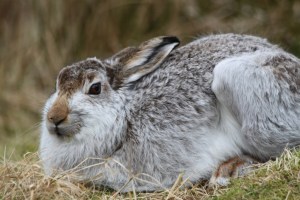
mhare contributedIt’s interesting that SNH will be ‘reviewing its position’ about its licensing regime in light of the Lochindorb verdict. As far as we could tell, the Lochindorb ‘not guilty’ verdict was based on the specific type of snare used at that time (sometimes called a ‘w’ snare, sometimes called an ‘m’ snare, depending on who you’re talking to). That snare was legal in 2009 (at the time the alleged offences took place). During the trial the defence successfully argued that that particular type of snare had never knowingly caught any non-target species. Unfortunately the prosecution was unable to provide any evidence to the contrary. However, that snare-type has since been banned, because under the Snares Scotland Order (2010) it is no longer legal to use a snare in a way that an animal could become partially or wholly suspended.

So, accordingly, as SNH considers the legal snares currently in use as ‘non-selective’ (i.e. they could catch non-target species), surely they won’t be reviewing their licensing policy in favour of allowing hare snaring? We’ll have to wait and see.

We’ll be blogging a bit more about snaring in general, especially as the new snaring legislation comes into force at the end of this month. There’s quite an amusing lead article on the new snaring regs in the latest Modern Gamekeeper rag, with a contribution from everyone’s favourite policy advisor, Bert Burnett of the SGA. More of that later…

Lochindorb hare snare verdict leads to parliamentary questions

mhare contributedThe ‘not guilty’ verdict in the recent Lochindorb hare snare trial (see here) has led to some interesting parliamentary questions being asked.

Libby Anderson (of OneKind) posted the following comment on the blog. It’s a good one so we’re reproducing it here (thanks, Libby!) –

“A disappointing verdict but – while unfortunately there is no written judgment available – it does sound as if the Sheriff took pains to make it clear that this case turned on its own facts and should not be seen as a precedent.

On the “indiscriminate” issue: It may have been stated in court that bycatch is rare – amazing considering the high non-target capture levels recorded in DEFRA’s report on snaring last year, based on “best practice” field trials. But indiscriminate capture surely also refers to capture WITHIN the target population. For example, how can a snare be set to ensure it doesn’t capture a pregnant or lactating female? (Bearing in mind this case dates from before the close seasons were introduced for hares.)

Snares are specifically prohibited for use on mountain hares under the Bern Convention. If a state decides to make an exception to this it must be for good reason, subject to appropriate conditions and returns must be submitted so that the state can report to the COE. Yes, a licensing scheme!

I don’t really understand why there isn’t a strict liability offence of using a snare for the relevant species without a licence. Surely it shouldn’t be left to individuals to decide what the law is about using non-selective traps for protected species? Are industry legal advisers able to judge the population status of a protected species?

ChristineGrahameMSPRPS readers may be interested to see that Christine Grahame MSP [Midlothian South, Tweeddale and Lauderdale, SNP] has lodged some questions which ask the Scottish Gov to clarify current legal position:”

S4W-12780 Christine Grahame: To ask the Scottish Government how it ensures that it complies with the Convention on the Conservation of European Wildlife and Natural Habitats regarding the (a) use of non-selective traps to capture protected species and (b) the reporting requirements under article 9.2.

S4W-12781 Christine Grahame: To ask the Scottish Government what the legal basis is for the licensing regime operated by Scottish Natural Heritage regarding the use of snares to capture mountain hares.

S4W-12782 Christine Grahame: To ask the Scottish Government how many applications for species licences to use snares to capture mountain hares have been made since 2006; how many have been granted, and for what reasons licences were not granted.

The expected answer date is 28 Feb 2013 so we’ll post those when they’re available.

Mountain hare fans might be interested in Andy Howard’s fantastic photographs on his website Highland Nature Images (here).

Implications of the Lochindorb hare snare verdict

The almost four-year long Lochindorb Estate hare snare trial concluded today at Inverness Sheriff Court. The accused, former head gamekeeper and long-time SGA committee member David Taylor was found not guilty of illegally using snares to catch mountain hares on the Lochindorb Estate in 2009.

This has been a lengthy and complex case, seen by many as an important ‘test’ case. For previous blog entries see here, here, here, here, here and here.

The ‘not guilty’ verdict, however, only applies to the particular circumstances of this specific case. On this occasion, at that specific location and at that specific time, the evidence was deemed insufficient to merit a conviction. Sheriff Abercrombie accepted that Taylor was operating within the law and in good faith. This verdict though, does not mean that a future case with a different set of specific circumstances, could not result in a conviction. The verdict does NOT mean that it is legal to snare mountain hares in general terms; only within the terms of this particular case.

One of the key issues was whether a snare could be described as a ‘trap’. The prosecution said yes, the defence argued no. Sheriff Abercrombie deemed that a snare could be described as a trap. This is important for future potential cases.

The defence had also argued that the snares in question (the w-shaped snare) were selective; i.e. that they only caught the target species. Several gamekeepers spoke as defence witnesses and stated that in all their (combined) years of snaring, they’d never caught a non-target species using this snare-type. Whether you believe that or not is up to you – the fact of the matter was that the prosecution could not provide evidence to show that the w-shaped snare was indiscriminate. This should hopefully be a moot point in future cases as the use of the w-shaped snare to trap mountain hares has since become prohibited. Under the Snares Scotland Order (2010), it is no longer legal to use a snare in a way that an animal could become partially or wholly suspended.

The other important issue highlighted by this case was the lack of current scientific understanding of mountain hare population ecology in Scotland. We hope SNH will get their act together and implement an appropriate research and monitoring strategy for what many believe is a keystone species; i.e. one that plays an important role in the survival of other species such as the golden eagle and probably the pine marten.

BBC news article here

SGA statement here

Defence agent’s statement here

Lochindorb hare snare verdict

Former Lochindorb Estate head gamekeeper and SGA Committee Member, David Taylor, has been found not guilty of setting illegal snares to catch mountain hares.

More to follow…

Misleading guff from Scottish Land and Estates

scotsman_logo_200The following letter has appeared in The Scotsman in the continuing ‘debate’ on grouse moor management (see here to read the earlier articles).

“Logan Steele’s letter (14 Jan) which alleges that driven grouse shooting is only viable with the persecution of birds of prey, particularly the hen harrier, is misleading.

First, official statistics demonstrate a clear decline in the number of incidents of raptor persecution.

Second land management for driven grouse shooting delivers a huge benefit for other protected wildlife, especially waders, and sustains employment and communities in remote rural areas. This is something the suggested alternative of walked-up grouse-shooting would not do.

Of particular significance is clear evidence that where grouse and hen habitat and vermin management have declined in some hen harrier “special protection areas”, this has actually resulted in lower harrier populations, as well as declines in other species such as waders.

This is a more complex situation than some make out.

The Langholm Moor Demonstration Project, set up in partnership with the government to bring back driven grouse shooting in the presence of sustainable numbers of hen harriers, is where the best hopes of progress on this issue lie.

Results at Langholm so far are that neither harriers nor grouse have recovered – not what anyone expected, but each year scientific understanding improves and practical solution gets closer.

Making progress will involve compromise on all sides.

Organisations representing grouse moor managers such as SLE are fully behind this process and it is unfortunate that RSPB has pulled out of the mediation process in England. Perhaps Scotland provides the best opportunity to make progress now.  Douglas McAdam, Scottish Land & Estates, Musselburgh”

[Link to the letter here].

And he accuses Logan Steele’s letter as being misleading!

First, which “official statistics demonstrate a clear decline in the number of incidents of raptor persecution” is Doug McAdam referring to? The ones we know of only relate to known poisoning incidents, although they are limited to poisoned birds; they do not include the discovery of poisoned baits and nor do they include suspected poisoning incidents or unreported poisoning incidents. More to the point, they do not relate to other types of raptor persecution, such as shooting, trapping, nest destruction, ‘disappearing’ birds etc. The only statistics that account for all types of raptor persecution incidents are those compiled annually by the RSPB; statistics that have never been accepted by SLE or any other game-shooting organisation.

Second, McAdam says “land management for driven grouse shooting delivers a huge benefit for other protected wildlife, especially waders, and sustains employment and communities in remote rural areas“. Another misleading statement. Land managed for driven grouse shooting is not only bad for protected wildlife (golden eagles, white-tailed eagles, hen harriers, goshawks, red kites, buzzards, peregrines, ravens, pine martens, mountain hares etc etc) but it is catastrophic for other species too (foxes, weasels, stoats, crows etc etc). And that’s without even touching on the landscape-level environmental damage.

McAdam goes on to suggest that “making progress will involve compromise on all sides“. No it won’t. Making progress will depend entirely on whether the grouse-shooting industry will accept that they have to work within the law and put an end to illegal persecution. If they do, all well and good. If they won’t, then they face a direct action campaign to ban driven grouse shooting by those of us who are sick of waiting for the government to act on our behalf. Hollow promises just don’t wash anymore. Time’s up.

McAdam’s penultimate sentence is laughable. He’s trying to suggest that the RSPB are the unreasonable ones in this 20+ year saga, for walking away from the six-year long Hen Harrier Dialogue process (see here). They are definitely not the unreasonable ones – they recognised a sham process and got out. Until SLE start to publicly expel their member estates where raptor persecution is rife (and we all know who they are, and so should McAdam – if he doesn’t, he’s in the wrong job), then the credibility of SLE’s involvement in ‘making progress’ will be viewed with as much contempt as it deserves.

Lochindorb Estate hare snare trial: case continued!

Mountain hare (Photo: Neil McIntyre)We were expecting a verdict yesterday on the Lochindorb Estate hare snare trial, but Sheriff Abercrombie had other ideas.

The case has now been continued until 29 January 2013.

Clearly the sheriff recognises the significance of this test case and wants extra time to consider all the evidence.

Lochindorb Estate hare snare trial: verdict expected today

The long-running hare snare trial is expected to end today if Sheriff Abercrombie has reached a verdict.

We’ve blogged a lot about this case as the verdict could have far-reaching consequences on the way our uplands are managed, with a particular impact on grouse moor management practices.

Earlier posts can be read here (and see links within).

Two weeks ago the court heard the final pieces of evidence from the defence team, which consisted of a string of gamekeepers insisting that the type of snare used in this case is ‘selective’ (i.e. it doesn’t trap any species other than the target species). It must be a magic snare.

Many thanks to the contributor who send us a copy of the Badenoch & Strathspey Herald, dated 22 November 2012, with a summary of the evidence heard in court:

Gamekeepers tell trial of ‘selective’ snares

THREE gamekeepers have given evidence at the trial of a colleague facing allegations of illegal snaring of mountain hares on Lochindorb Estate more than three years ago.

The keepers told Sheriff Ian Abercrombie they had used the type of snare set by David Taylor and caught nothing other than mountain hares.

Former Lochindorb keeper Alexander McConnachie (66), Stuart Kennedy (45), from Tomatin, and Alan Hodgson (54), head keeper at Dalmagarry and a committee member of the Scottish Gamekeepers’ Association with special responsibility for snaring issues, told the trial they had all used the “W”  shaped snare, also known as a bow snare, as a means of controlling mountain hares on high ground on their estates.

David Taylor (65), who recently retired from his role as head keeper at Lochindorb, was charged with setting snares on April 14, 2009 on land at Lochan-t-Sidhie which were indiscriminate in which animals they could catch, contrary to the Conservation (Natural Habitats) Regulations which became law in 1994.

The trial, which started in March, reached its sixth day on Friday [16 Nov 2012] when the evidence was concluded.

Sheriff Abercrombie has agreed to written submissions being provided by both the Crown depute fiscal Iain Smith and the defence agent David McKie.

In evidence, Mr McConnachie said he was head keeper on Lochindorb between 1972 and 1993 before the new legislation came into place. He told the trial that where the snares were set, 1,500 feet above sea level, there were very few other species to be found.

Wildlife expert Hugo Straker (57), a senior adviser with the Game and Wildlife Conservation Trust and an expert on snaring law in Scotland, had earlier told the trial that the snares could be selective depending on how and where they were set. He also differentiated between a trap and a snare. In his opinion he said a trap was a spring-loaded device which can kill or trap an animal live while the snare was a “restraining device” which can kill.

Mr McConnachie told the court snares are never referred to as traps. ‘A trap is a mechanical device’, he said. Often they were concealed in a box to trap the targeted species and for the protection of other mammals. Wire cage traps, known as Larsen traps, were also used to control crows.

He said he used the “bow” snare used by Taylor extensively between 1990 and 1993 on Lochindorb because of the increase in tick of the moor.

Asked if he had ever found other animals caught in the snares he replied: “No, never. They are very selective, very humane and highly visible. I never caught anything else in them”.

He said you would get the occasional fox or roe dear [sic] at that level but it was quite rare to see a golden eagle.

Asked by depute fiscal lain Smith if an animal broke a snare how he would know it was a hare that did this. He said there was always evidence of hare fur nearby if a snare broke.

Mr Hodgson said the snares were perfectly legal at the time but gamekeepers had stopped using them because of this court case. He commented: “I would use them again in a minute. They were a brilliant tool. Easy to carry, easy to set and highly visible”.

Mr Hodgson said foxes and deer avoid them because they have forward vision. However, he said: “Hares have blind spots because their eyes are on the side of their heads, unlike predators”. He said he used them for nine years and never once found another species in them.

The trial was told by Mr Straker that since the alleged offence there had been major changes in law governing the use of snares going through parliament and all snares must have stops so mammals caught are not throttled and can be put down humanely. Everyone using them will require to be trained and certificated by a Scottish Government approved body and, from April next year, every snare will carry the operators certification number.

Police Constable Eric Sharkey (45), a wildlife officer with Northern Constabulary, inspected the site after a tip-off from a member of the public.

Hare snare trial drags on

The hare snare trial, which is trying to establish whether a snare is a ‘trap’ (in legal terms) and if so, whether that trap is selective or non-selective, continued at Inverness Sheriff Court last Friday. The trial is centred on the allegation that a gamekeeper used illegal snares to take or kill mountain hares on Lochindorb Estate. He denies the charge. See here for background info on this landmark case.

The case was continued and is now set to conclude at the end of this month.

Here’s an earlier report by the SSPCA which shows that snares are, amongst other things, indiscriminate. Here’s an earlier scientific report, commissioned by DEFRA and undertaken by the Central Science Lab and GWCT, which shows that snares are, amongst other things, indiscriminate.

Here’s a link to the SSPCA website where they report on today’s conviction of a Scottish farmer (Iain Hugh McFadzean) for causing a badger unneccessary suffering in an illegally set snare. Well done once again to the SSPCA – another successful wildlife crime conviction to their credit. Can’t understand why the Scottish Government is dragging its heels in bringing forward the consultation to increase SSPCA’s powers. Unless of course they’re under pressure from certain groups who want to remain free to commit wildlife crime without being caught…

Hare snare trial continues today

The long-running (since 2009!!) hare snare case continues today at Inverness Sheriff Court.

Two gamekeepers from the Lochindorb Estate were alleged to have set illegal snares to catch mountain hares. Both men had denied the charges and part-way through the trial the charges against one of the gamekeepers were dropped.

This is seen as an important test case to determine whether it is legal to use an “indiscriminate trap” (in this case, does a snare constitute an indiscriminate trap?) to kill mountain hares unless the operator has a specific SNH licence to do so. The outcome of this trial could have far-reaching implications for the way our uplands are managed.

Previous blog entries on this case here, here, here, here, here.

Lochindorb hare snare trial to continue in October

The long-running Lochindorb Estate hare-snaring trial is set to drag on until October (see here, here and here for background to this case).

An important point of law was established during deliberations at Inverness Sheriff Court yesterday – whether a snare could be considered to be a trap. Although this question might sound ridiculous to us (of course a snare is a type of trap – they’re used for the sole purpose of trapping animals, aren’t they?), it was important to establish the legal definition of a snare in this particular case because if a snare wasn’t considered to be a trap, then there would be no case for gamekeeper David Taylor to answer. Anyway, the Sheriff apparently decided that a snare is a trap, and that there was sufficient evidence for the case to be continued in October (the defence had argued that there was insufficient evidence against Taylor).

Northern Times article reporting on yesterday’s court hearing here