Grouse moor management “treats nature with contempt”

Last week saw the widespread media broadcast of a film produced by Lush, OneKind and The League Against Cruel Sports (Scotland) depicting the brutal, military-style mass killing of mountain hares on a number of Scottish grouse moors, filmed in February this year. For those who missed it, here it is again:

Inevitably, public outrage ensued and resulted in First Minister Nicola Sturgeon stating in the Scottish Parliament that these culls are “not acceptable” (see here).

The fall-out continued yesterday with an article by Jim Crumley in The Courier, who wrote about how grouse moor management “treats nature with contempt“.

It’s a brilliant piece, taking apart word by word what he calls an “ill-advised response” to the film from the Scottish Moorland Group’s Director, Tim (Kim) Baynes.

It’s well worth a read, from a journalist who frequently hits the nail on the head when describing the grouse-shooting industry – he’s previously referred to the Scottish Gamekeepers Association as “the UKip of the natural world” (here) and has described sporting estates as “a rural perversion” (here).

In case the article disappears, we’ve produced it below. It’s also worth reading one of the Reader’s Letters, by David Mitchell, (here).

MOUNTAIN HARE SLAUGHTER FILM SHOWS HOW MOORLAND MANAGEMENT TREATS NATURE WITH CONTEMPT

By Jim Crumley (published in The Courier, 3 April 2018)

The reputation of Scotland’s landowners took another hefty blow in the solar plexus in the seven days since I made the case for legislation to protect the red fox from the worst excesses of what passes for land management, after a protest outside the Scottish Parliament about abuse of foxhunting legislation.

This time, it was film of a “cull” of mountain hares so militaristic in its strategy and so devastating in the scale of its slaughter that it would not have looked out of place in a newsreel clip from Syria.

The First Minister, who was suitably horrified like the rest of us – most of the rest of us, of which more anon – said the Scottish Government would explore “all available options to prevent mass culls of mountain hares and one of those options is legislation and a licensing scheme”.

Good. Please do it very, very quickly.

Because as the delay in implementing legal protection for the Tayside beavers demonstrates on a regular basis, the legal vacuum is being filled by men with guns and traps to kill as many as possible in the shortest possible time, and heavy machinery to wreck their dams and lodges.

Just when you thought things could hardly get any worse for the landowning fraternity, widespread screening of the film on television news and online was followed by an ill-advised response to the film by the director of the Scottish Moorland Group.

And just in case you thought the Scottish Moorland Group was a balanced, multi-interest coalition including community associations and nature conservation professionals, membership comprises the chairmen of seven regional groups of moorland owners and managers, and representatives from the Scottish Gamekeepers Association and the Game and Wildlife Conservation Trust. This is a hardcore self-interest group.

So what its director said was this:

This footage has been filmed by animal rights activists who actively campaign against this type of land management and have no interest in managing the balance of species and habitat on Scotland’s heather moor.

Mountain hare management is not only legal but necessary…”

Let’s go through that bit by bit. Firstly, it really doesn’t matter if the footage has been filmed by animal rights activists, the SWI or the Tufty Club.

The fact is that it exists and it is a film of slaughter that demonstrably treats nature with contempt.

Secondly, when it comes to criticising the activists’ level of interest in managing the balance of species and habitat on Scotland’s heather moors, the director is taking the art of pots calling kettles black to previously unplumbed depths.

There is nothing – nothing at all – in the entire repertoire of the landscapes of Scotland that is more hideously imbalanced in its relationship between species and habitat than a grouse moor.

Grouse moors are denuded of natural vegetation other than heather, which is routinely burned and manipulated so that – in theory at least – the moors produce the required harvest of grouse.

[An east Highlands grouse moor, photo by Chris Townsend]

And let’s not be deluded by the industry into thinking that the grouse is treated as anything other than a crop, a crop to be harvested at great expense by rich people with guns. And instead of spraying the crop, the grouse is fed medicated grit.

That is what Scottish moorland management amounts to. Anything that gets in the way of that ambition – anything at all from hares and foxes to eagles and harriers – is the enemy, and is treated as such.

The hare’s problem is not that it savages grouse or eats their eggs (it’s a vegetarian), but rather that it carries a tick, and some people think that increases the presence of the tick in grouse.

There is no evidence to suggest an abundance of hares is bad for grouse numbers, but there is such enthusiasm on estates for shooting hares by the truckload that they do it anyway.

The American wildlife writer and artist David M. Carroll, wrote in his book, Swampwalker’s Journal:

“The term ‘wildlife management’, often used in environmental polemics of the day in reference to human manipulations, is an oxymoron. We should have learned long ago to simply leave the proper space, to respectfully withdraw, and let wildlife manage wildlife.”

In Scotland, the Victorians ushered in new perversions and depravities in the matter of “wildlife management”, but evidence of the chill hand they brought to bear on nature still pervades the air in the 21st Century, still poisons the land with its prejudices, and still calls it wildlife management.

And to return to the SMG director’s response to the hare cull – no, mountain hare management may be legal for the moment, but it is most certainly not necessary.

For thousands of years before the Victorians lost the plot, there were widespread and healthy populations of both mountain hares and red grouse. There just weren’t any grouse moors.

ENDS

Brutal, military style mass killing of mountain hares on Scottish grouse moors

Press release from OneKind / League Against Cruel Sports / Lush (29/3/18):

SHOCKING EXPOSE OF MASS KILLING OF SCOTLAND’S MOUNTAIN HARES

Extraordinary footage from an investigation carried out by OneKind, League Against Cruel Sports and Lush has revealed the brutal, military style mass killing of Scotland’s mountain hares on grouse moors. Campaigners supported by Chris Packham are calling on the Scottish Government to take immediate action and end the killing.

Mountain hare shooting is one of many country sports offered by Scottish game estates, and grouse moor managers also organise culls of the animals in an effort to protect red grouse for sport shooting. Mass killing of mountain hares is just one part of the intensification of grouse moor management in Scotland.

OneKind Director Harry Huyton said:

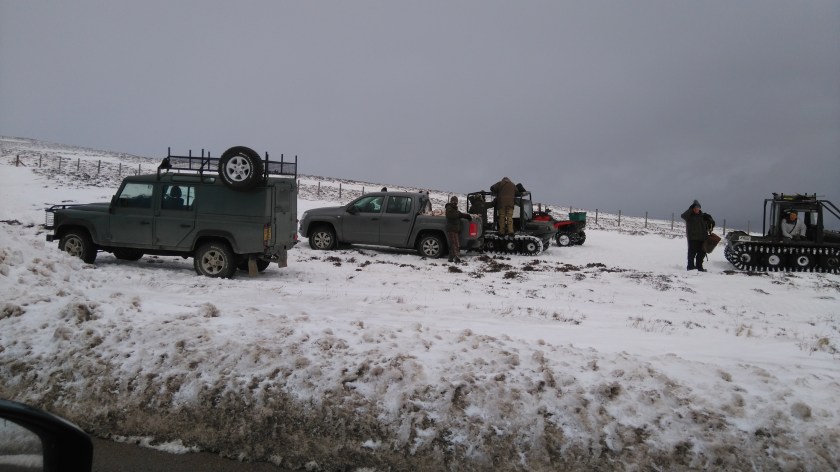
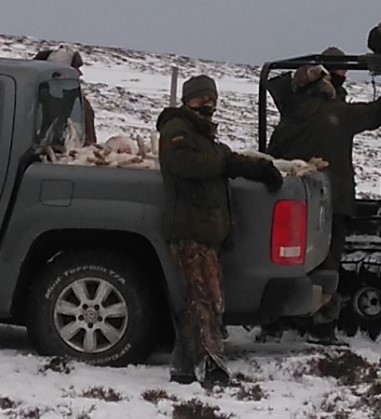
Our investigation has revealed that instead of restraining themselves, as the Scottish Government has asked them to do, some estates seem to be at war with mountain hares. We filmed large groups of armed men moving around the mountains in convoys, killing hares and filling their pick-ups with dead animals as they go. In one particularly harrowing scene a hare is maimed by a gun and then apparently killed by the gunman’s dog, demonstrating the serious suffering caused by themass killing of hares on grouse moors.

These extraordinary scenes of carnage have no place in the Scottish countryside. The voluntary approach has failed, and the Scottish Government must take urgent action if it is to prevent further killing before the open season starts once again in August. We have written an open letter calling for an end to the killing, and I urge everyone who values our wildlife alive rather than dead to sign it“.

Ruth Peacey, naturalist and filmmaker for Lush said: “We knew this was taking place and, although horrific to witness, it was important to gain video footage of these culls to provide evidence to those who doubted. It was the military approach to killing that shocked our team the most, and I hope that all the footage will be used to bring about changes to provide better protection for mountain hares and stop these large-scale culls“.

Chris Packham, conservationist, naturalist and TV presenter said: “It is clear that self-restraint is not preventing large-scale culls of mountain hares on grouse moors and, as such, the law should be changed before we lose another iconic species from our uplands“.

Director of the League Against Cruel Sports Scotland, Robbie Marsland added: “The sickening irony of the mayhem we saw on those mountainsides is that it is done in the hope that it will increase the number of red grouse to be shot for entertainment.

Mass killing of mountain hares is just one part of the intensification of grouse moor management in Scotland. Any animal that appears to threaten the red grouse is targeted by traps and snares or shot. Threatened species like hen harriers are mysteriously absent from some grouse moors. Unplanned tracks and roads scar the hillsides, anti-worming chemicals are left unattended, lead shot pollutes the land and heather is burned off on a landscape scale – all to ensure that one species will thrive. And then that species is shot for entertainment.

No one seems to be quite sure, but it looks like getting on for up to 19% of Scotland is a grouse moor. In the context of a national debate about land reform we believe now is the time to ask if this is how we want our land to be used“.

Mountain hare killing is not monitored in Scotland, however an estimate from an SNH study suggests that 25,000 mountain hares were killed in 2006/7. This is understood to be between 5-14% of the total population. It is thought that approximately 40% of those killed are shot for sport shooting, and 50% as part of organised culls.

The charities are calling on the Scottish Government to impose an all-year round close season on hare shooting until a review by Professor Werrity on the issue concludes.

ENDS

Read and sign OneKind’s open letter calling for an end to the mass killing of mountain hares here

In response to this new footage, a Scottish Government spokesperson has said they are “seeking urgent meetings with relevant stakeholders, while considering all available options for additional protections“.

It’s not clear what the Government hopes to achieve by conducting “urgent meetings”. The grouse moor owners don’t see there’s a problem and as long as the mass culling of hares continues to be a legal pastime, they are obviously going to continue to tell everyone the best way to conserve mountain hares is to shoot them in the face.

However, the following conversation has just taken place in the Scottish Parliament:

Alison Johnstone MSP (Scottish Greens):

New footage of the sickening slaughter of mountain hares is reported by the BBC today. Has the fact that this evidence comes from well regarded animal welfare groups finally convinced the Scottish government that voluntary restraint is sadly lacking on too many shooting estates. When and with whom will the urgent meetings that the government now seeks take place and when will the Scottish government introduce new legal protection for this fabulous, iconic animal?

First Minister Nicola Sturgeon:

I share Alison Johnstone’s concern and anger because its evident in her voice that some of the images that we’re seeing on our screens today there is real public concern and we share the public concern about this iconic species on the Scottish mountains.

Large-scale culling of mountain hares could put the conservation status at risk and that is clearly unacceptable.

I know that the pictures that she refers to will be distressing to many people.

These meetings will take place with all relevant stakeholders, landowner groups, gamekeepers and environmental organisations.

I want to be very clear today that the Government will be exploring all available options to prevent the mass culling of mountain hares and one of those options is of course legislation and a licencing scheme

What we are seeing is not acceptable and that is a very clear message that goes from the government today”.

ENDS

News on Scot Gov’s grouse moor management review & mountain hare culling

In January we blogged about a number of Parliamentary questions lodged by Colin Smyth MSP relating to the Government’s grouse moor management review group and mountain hare culling.

Written responses are as follows:

S5W-14019: Colin Smyth (Scottish Labour, South Scotland) Date lodged: 23/1/2018

To ask the Scottish Government, further to its announcement on 24 November 2017, what progress has been made by the independent group for ensuring grouse moor management practices are sustainable and legally compliant; what the remit of the group is, and what timetable it is working to.

Roseanna Cunningham: The review group has now been established and it met for the first time on 16 January 2018.

The group’s remit is to examine how to ensure that grouse moor management continues to contribute to the rural economy while being environmentally sustainable and compliant with the law. The group will recommend options for regulation, which could include licensing, and other measures which could be put in place without new primary legislation.

The Scottish Government may also refer specific topics to the group that might be considered by it as part of its work.

The group will report to me in Spring 2019.

S5W-14020: Colin Smyth (Scottish Labour, South Scotland) Date lodged: 23/1/2018

To ask the Scottish Government, further to its announcement on 24 November 2017, what plans are in place to engage (a) stakeholders and (b) the public in the work of the independent group for ensuring grouse moor management practices are sustainable and legally compliant.

Roseanna Cunningham: During the review process, the group will engage with, and take advice from, external stakeholders as and when necessary.

A public consultation process may be required following the completion of the review, if any regulatory changes are proposed by the Scottish Government in light of recommendations made by the group.

S5W-14021: Colin Smyth (Scottish Labour, South Scotland) Date lodged: 23/1/2018

To ask the Scottish Government what efforts it has made to prevent large-scale culls of mountain hares this winter.

Roseanna Cunningham: The Scottish Government opposes large-scale culls of mountain hares. There is no current evidence to indicate that large scale culls are taking place but if evidence emerges that points to large-scale culls taking place that could cause significant population declines, locally or nationally, the Scottish Government will consider bringing forward further measures to protect mountain hares. This could include the use of Nature Conservation Orders or giving mountain hares further protection under the Wildlife and Countryside Act 1981.

Recent analyses of available data by Scottish Natural Heritage (SNH) provides no evidence of a national decline in mountain hares. Data from the North East of Scotland suggests there may be local population declines but these are not reflected at a national scale.

On 26 January, SNH published a commissioned report onDeveloping a counting methodology for mountain hares (Lepus timidus) in Scotland’.

Adoption of the recommended counting methodology by land managers will help in developing a better understanding of mountain hare population cycles and trends.

ENDS

On this last question, contrary to what the Scottish Government claims, there is evidence that large scale culls are still taking place (e.g. see this 2017 report from OneKind). Just last week more culling was reported from the Monadhliaths and Aberdeenshire:

For how much longer will the Scottish Government continue to turn a blind eye to this obscene bloodbath taking place on grouse moors across the country?


Parliamentary questions on Scottish Government’s grouse moor management review

Following the announcement on 24 November 2017 that the Scottish Government’s Grouse Moor Management Review Group had been formed (see here), a couple of Parliamentary questions have recently been lodged about how this group will function:

S5W-14019: Colin Smyth (Scottish Labour, South Scotland) Date lodged: 23/1/2018

To ask the Scottish Government, further to its announcement on 24 November 2017, what progress has been made by the independent group for ensuring grouse moor management practices are sustainable and legally compliant; what the remit of the group is, and what timetable it is working to.

Expected answer date: 6/2/2018

S5W-14020: Colin Smyth (Scottish Labour, South Scotland) Date lodged: 23/1/2018

To ask the Scottish Government, further to its announcement on 24 November 2017, what plans are in place to engage (a) stakeholders and (b) the public in the work of the independent group for ensuring grouse moor management practices are sustainable and legally compliant.

Expected answer date: 6/2/2018

Colin Smyth has also lodged another Parliamentary question, related to those above, which is pertinent to this week’s media attention on mountain hare culls on driven grouse moors:

S5W-14021: Colin Smyth (Scottish Labour, South Scotland) Date lodged: 23/1/2018

To ask the Scottish Government what efforts it has made to prevent large-scale culls of mountain hares this winter.

Expected answer date: 6/2/2018

For those who missed it, mountain hare culling featured on Countryfile on Sunday evening (28th Jan), where they filmed a cull on a grouse moor in Strathdon, Aberdeenshire. The programme is available on BBC iPlayer here for 27 days. The name of the estate wasn’t given but there were gamekeepers from Edinglassie Estate and Candacraig Estate. Whoever advised the Grampian Moorland Group that it would be a good idea (presumably to get the public onside) to showcase gamekeepers shooting mountain hares in the face made a big PR blunder. There was a huge backlash on social media and also in the national press (e.g. Daily Mail article here).

The programme also peddled the usual propaganda from the grouse shooting industry, claiming that all the shot hares would be sold for meat, which one of the gamekeepers claimed ‘showed the respect gamekeepers have for hares both in life and death’.

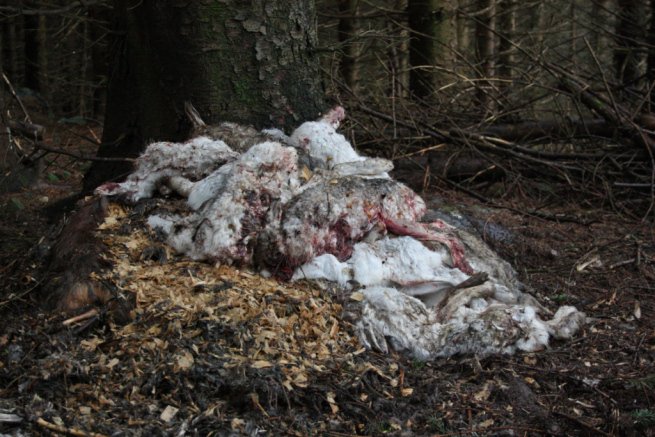
That’s not quite true though, is it? Here’s a pile of shot mountain hares, left to putrefy in a rotting heap on an Angus Glens grouse moor:

Harry Huyton (Director, OneKind) also featured in the programme to give an opposing view on mountain hare culling. He did a good job, and he’s also written an interesting blog about it (here).

The Countryfile episode was designed to coincide with the publication of a new SNH study which examined different methods of counting mountain hares. One of the fundamental arguments against the mass slaughter of mountain hares on grouse moors (apart from the questionable ethics) has been the issue of nobody knowing the status of the mountain hare population and thus the unknown impact these culls are having on the species’ conservation status (although we understand a forthcoming scientific paper, not yet published, will demolish the grouse shooting industry’s claims that the culls have no negative impact). The results of the new SNH study on mountain hare counting methods  can be read here.

UPDATE 13 February 2018: News on Scot Gov’s grouse moor management review & mountain hare culling (here)

Another Parliamentary question on conservation status of mountain hares

Last week we discovered that SNH had reported to the EU Commission in 2013 that the mountain hare was in ‘Favourable Conservation Status’ (see here).

This startling revelation was revealed after a Parliamentary question from Scottish Greens MSP Alison Johnstone. We wanted to know more detail about how SNH had made its assessment, and it seems we’re not the only ones. Alison has submitted a further Parliamentary question, as follows:

Question S5W-12001: Alison Johnstone, Lothian, Scottish Green Party, Date Lodged: 13/10/2017

To ask the Scottish Government, in light of the 2007 assessment regarding an ‘unfavourable/inadequate’ status, for what reason its 2013 Article 17 Habitats Regulations report to the EU Commission assessed the mountain hare population as “favourable”, and whether it will provide a breakdown of the (a) criteria it used and (b) the evidence it received.

Expected answer date 10/11/2017

Kudos to Alison Johnstone MSP!

The grouse-shooting industry has previously said that large scale culls no longer take place. Photographic evidence from the Cairngorms National Park in 2016 suggests otherwise.

Grouse moors are “centres of excellence” for mountain hares, claims deluded industry rep

You’ve got to hand it to Tim (Kim) Baynes, spokesman for the Scottish Moorland Group / Scottish Land & Estates / Gift of Grouse, his ability to spin even the worst of the grouse-shooting industry’s excesses is becoming legendary (e.g. see here, here, here). He’d probably even give Amanda Anderson (Moorland Association) a run for her money in the propaganda game.

In his latest offering, Tim (Kim) argues that managed grouse moors should be seen as a “Centre of Excellence” for mountain hares!

That’ll be the intensively-managed grouse moors that slaughter hundreds, no, thousands of so-called protected mountain hares, just to protect a ridiculously and artificially high number of red grouse which will later be used as live targets, shot for ‘sport’.

Here’s a ‘Centre of Excellence’ for mountain hares, photographed on an Angus Glens estate:

This “Centre of Excellence” nonsense is included in Tim’s (Kim’s) response to the Scottish Parliament’s Public Petitions Committee which is seeking stakeholder commentary on OneKind’s recent petition calling for greater protection of mountain hares.

Here’s Tim’s (Kim’s) submission, on behalf of the Scottish Moorland Group:

 Scottish Land & Estates_Petition PE1664_mountain hare_response

There are other gems within his submission, including an argument that from an animal welfare perspective, the culling of mountain hares is “not fundamentally different” to culling deer. Quite how he reaches this conclusion is a bit of a mystery – aren’t deer carefully stalked for hours and hours, with the shooting party quietly creeping up on a single deer to get close enough for a clean rifle shot without the deer knowing anything about it? Not sure how that equates with hundreds of mountain hares being forced to run uphill, probably terrified and racing for their lives, only to be shot in the face by a line of shotgun-toting ‘sportsmen’ when they reach the top.

As usual, Tim (Kim) misses the whole point of the argument, which isn’t necessarily about whether mountain hares should be managed, but is about the questionable sustainability of large-scale culls on intensively managed driven grouse moors. Nobody disputes that mounatin hares can do very well on these grouse moors – of course they do well, all their natural predators have been removed! But there’s no way that gamekeepers can know the impact of these large culls on the wider mountain hare population, despite Tim’s (Kim’s) unsupported claim that they can, and despite his unsupported claim that “estates have operated voluntary restraint for a long time”.

Nobody knows what impacts these culls are having because there isn’t yet an effective and approved counting method for estimating mountain hare abundance, although Dr Adam Watson’s long-term scientific research on mountain hare abundance on grouse moors in north east Scotland suggests there have been significant declines (his research is due to be submitted for peer-review publication shortly, we understand).

There is currently no requirement for gamekeepers to conduct counts either before or after these culls take place, and no requirement for cull returns to be submitted to SNH, even though SNH has a statutory duty to ensure that any management of this species is undertaken sustainably! At the moment, SNH is relying upon the word of the grouse-shooting industry to assess sustainability, which is astonishing given what is known about the industry’s untrustworthiness on other conservation issues.

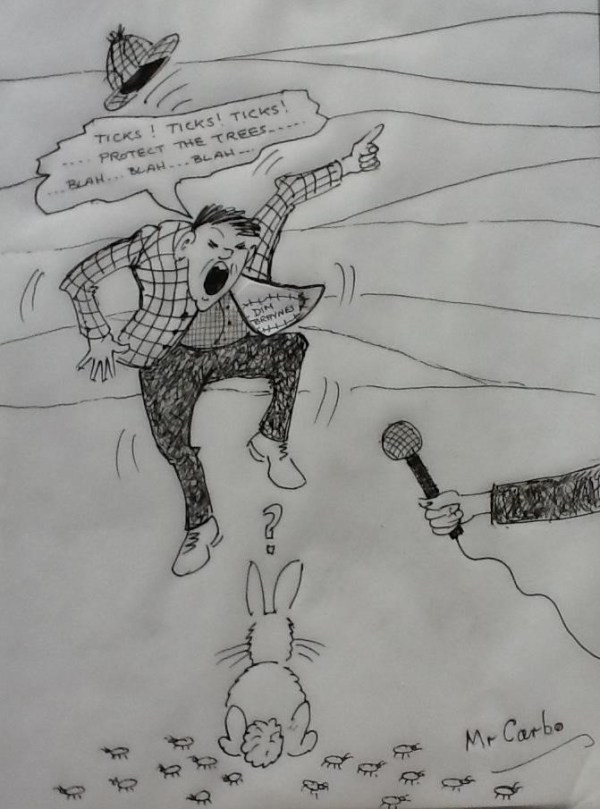
Here’s a topical drawing sent in this week by Mr Carbo:

Green MSP lodges Parliamentary motion calling for moratorium on mountain hare culls

Following the news on Friday that ten conservation and outdoor organisations have renewed a joint call on the Scottish Government to provide greater protection for mountain hares (see here), Scottish Green Party MSP Alison Johnstone has now lodged a Parliamentary motion calling for ‘urgently required’ action:

Motion S5M-08225: Alison Johnstone, Scottish Green Party, Date lodged: 12/10/2017.

That the Parliament acknowledges the concerns of a coalition of 10 conservation and outdoor organisations regarding the poorly-known status of mountain hare in Scotland, which they believe is threatened by heavy culls on intensively-managed grouse moors, and considers that a moratorium on these culls is urgently required.

Parliamentary motions are used by MSPs as a device to initiate debate or propose a course of action. Other MSPs can sign up in support of lodged motions. Motions remain current for six weeks and in order to progress they require support by at least 30 supporters from more than two political parties.

For Scottish blog readers, please consider emailing your MSP to ask them to support this motion. If you’re not sure who your MSP is, you can find out here.

The pressure on the Scottish Government to act on this issue is not going away. Well done Alison Johnstone MSP, well done to those ten conservation/outdoor organisations who have asked, again, for a temporary ban on mountain hare culling, and well done to animal welfare charity OneKind whose petition calling for greater protection of mountain hares is still under consideration by the Parliament’s Petitions Committee.

Photo shows a pile of bloodied mountain hare corpses that were being used as a stink pit on an Angus Glens grouse shooting estate.

Scottish Government under more pressure to protect mountain hares

RSPB press release:

MOUNTAIN HARE CULLS CONTINUE DESPITE A PERIOD OF “VOLUNTARY RESTRAINT” SAYS SCOTTISH WILDLIFE ORGANISATIONS

A coalition of ten environmental and outdoor organisations have repeated their appeal to the Scottish Government to introduce urgent safeguards for mountain hare populations.

The group (1) is asking for a temporary ban on all mountain hare culling on grouse moors until measures are put in place to ensure their numbers can remain at acceptable, sustainable levels.

The Scottish Government has a duty to maintain mountain hare populations in a state of good health, otherwise it may be in breach of its legally binding international obligations for this species. However, mountain hares are now routinely culled on a large scale across many grouse moors in Scotland (2).

In 2014, the coalition warned the Scottish Government that the ‘voluntary restraint’ that was claimed to be in place was unlikely to protect these mammals from wide-scale culls on grouse moors, including in the Cairngorms National Park.

Since then, there have been multiple reports of culls being carried out across the country – suggesting that voluntary restraint has been ignored. These culls are believed to be having a serious negative effect on hare populations. In some areas it has been shown that the culls are leading to severe population declines and potentially even local extinctions.

Duncan Orr-Ewing from RSPB Scotland, said: “The Scottish Government needs to do more to safeguard these iconic species of our upland areas. In 2014 we had serious concerns that the notion of voluntary restraint would be ignored by many in the grouse shooting industry and, with the evidence of culls continuing on many moors over the last three years, it seems that these fears have been well founded.

The start of the mountain hare season has already begun meaning hare populations will continue to be put at risk by unregulated culls that we believe, are resulting in localised disappearance of hare populations. We still do not know what impact these large scale culls are having on mountain hares’ wider conservation status and this could mean that the Scottish Government may be in breach of its legally binding international obligations for this species.

We trust that this issue will also be considered by the forthcoming independently led expert group, announced by the Cabinet Secretary for the Environment at the end of May 2017, which will be looking at how grouse moors can be managed sustainably and within the law.

Susan Davies, Director of Conservation, Scottish Wildlife Trust said: “Mountain hares are an iconic species that act as an indicator of the ecological health of our uplands, and seeing them gives much pleasure to hillwalkers and tourists alike.

“There has been continued and widespread culling throughout the period of voluntary restraint that was called for three years ago to allow research to be carried out. This suggests that some grouse moor managers have no concern for the long-term viability of mountain hare populations.

“We believe that grouse moor managers have a responsibility for this important native species. Lethal control should be halted until there is both accurate information on the number of hares culled, and the true effect of these culls on the health of the hare population is known.”

Alison Johnstone MSP said: “The mountain hare is a true icon of our upland areas and an important part of our natural heritage. The unnecessary and unregulated culling of mountain hares on intensive grouse moors across Scotland is damaging populations of this species beyond recovery. I have previously asked the Cabinet Secretary to ban these culls, at the very least in our National Parks and I support the call from these 10 organisations for the government to do more to safeguard populations of mountain hares and implement a moratorium on culls until work can be carried work to assure those concerned that any necessary mountain hare management can be sustainable.”

Notes for editors:

  1. The organisations which make up the coalition are: RSPB Scotland, Scottish Wildlife Trust, Scottish Raptor Study Group, Badenoch and Strathspey Conservation Group, Cairngorms Campaign, National Trust for Scotland, Royal Zoological Society of Scotland, Mammal Society, John Muir Trust and Mountaineering Scotland.
  2. Mountain hares are protected against unsustainable and indiscriminate killing by the European Union’s Habitats Directive. However, they are now routinely culled on a large scale on many grouse moors. This practice has developed relatively recently, in the belief that it protects red grouse against the tick-borne louping ill virus and so increases the surplus of grouse to be shot at the end of the summer, despite the lack of scientific evidence to support this claim.
  3. The mountain hare is Britain’s only native hare and plays a vital part of the complex ecosystem of Scotland’s uplands and moorlands, including acting as an important source of prey for golden eagles, one of Scotland’s most well-known birds.
  4. Mountain hares are understood to spread very slowly from one area to another, meaning culls may have significant detrimental impacts on local populations.
  5. In December 2014, Scottish Natural Heritage (SNH) along with other partners, announced the beginning of a three year study to trial methods of measuring mountain hare numbers to better inform their monitoring, how to assess their population status, and identify appropriate management measures. As part of this, SNH called for a voluntary restraint of large scale mountain hare culls on grouse moors.

ENDS

It’s great to see continued pressure being placed on the Scottish Government, and we’re especially pleased to see Mountaineering Scotland add its voice.

The Scottish Government (and it’s statutory conservation agency SNH) is exhibiting wilful blindness over this issue. There’s no other explanation for it. The Scottish Government has repeatedly said it does not support mass culls of mountain hares, and three years ago called on grouse moor managers to practice ‘voluntary restraint’ – a request that has been blatantly ignored by the grouse shooting industry, who have denied there is even a need for it (see here). And yet still the Scottish Government has not acted.

We’ve recently discovered that SNH has reported to the EU Commission that the mountain hare has favourable conservation status, despite strong scientific evidence (particularly from Dr Adam Watson) of local population declines. We are waiting for SNH to provide more detail of the scientific evidence it used to make this assessment because frankly, given the paucity of information on population size, we don’t understand how SNH was able to reach this conclusion.

The Scottish Government has committed to investigate the issue of mass hare culling on grouse moors, as part of the independent review of grouse moor management that was announced in May 2017. However, five months on we haven’t seen any sign of progress on this review – as far as we’re aware the panel hasn’t even been named, let alone the actual review getting underway.

Meanwhile, open season on mountain hares has come around again and we can expect to see more unregulated massacres taking place across many driven grouse moors, all in the name of ‘sport’.

Media coverage:

BBC news here

Mammal Society here

Scottish Gamekeepers Association here

Scottish Moorland Group here

Scot Gov says mountain hare has favourable conservation status – but on what evidence?

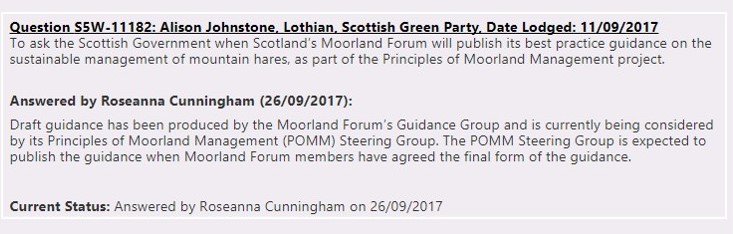
Last month, Alison Johnstone MSP lodged a series of parliamentary questions relating to the conservation status of mountain hares (see here), including this one:

Question S5W-11180: Alison Johnstone, Lothian, Scotish Green Party. Date lodged: 8/9/2017.

To ask the Scottish Government what reports it has made to the EU Commission in the last 10 years regarding the population status of mountain hares, and what summary conclusions these included regarding the species’ health.

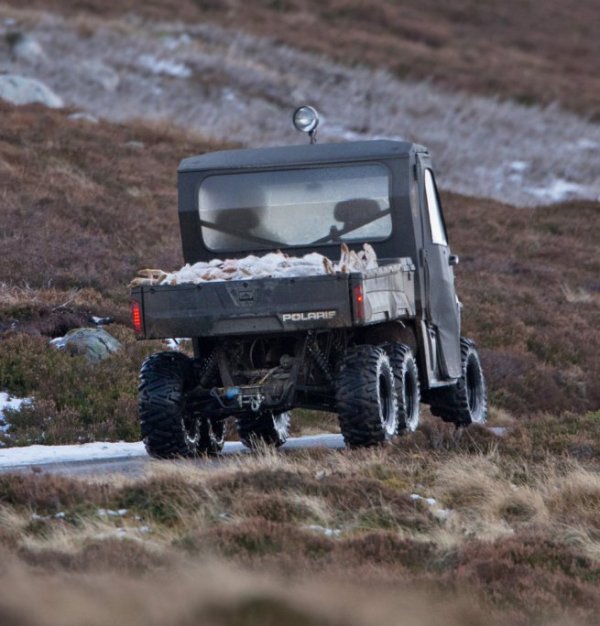
Dead mountain hares being transported on Farr Estate, Feb 2017 (photo by Pete Walkden)

As many of you will know, the mountain hare is listed on Annexe V of the EU Habitats Directive (1992), which requires member states to maintain this species in favourable conservation status. The Scottish Government has a legal obligation to report to the European Commission on the health of the mountain hare population.

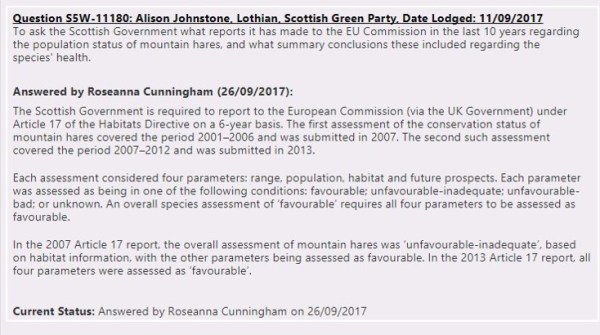
The Scottish Government’s answer to Alison’s parliamentary question is surprising, to say the least:

So, although SNH (the Scottish Government’s statutory conservation advisor) has absolutely no idea what impact the mass culls have on the mountain hare population (because, unbelievably, there is no legal requirement for estates to provide cull return data to SNH outside the close season, and, there isn’t yet an agreed survey method for monitoring mountain hares), and given the on-going concerns about documented mountain hare declines (e.g. see here), the Scottish Government has told the European Commission that mountain hares have a favourable conservation status.

How on earth has SNH reached that conclusion?

What’s missing from this parliamentary answer is any of the required detail needed to understand SNH’s assessment of the mountain hare’s conservation status. For example, what criteria, exactly, did SNH use to assess each of the four parameters (range, population, habitat, and future prospect)? Presumably there’s a certain threshold that must be reached for each individual parameter before the mountain hare can be considered to be in ‘favourable conservation status’? What were those thresholds and what scientific evidence, exactly, did SNH use to determine whether those thresholds had been met?

The answers to Alison’s other parliamentary questions were as follows:

Scottish parliamentary committee considers petition calling for mountain hare protection

Earlier this month Harry Huyton (on behalf of OneKind) presented evidence to the Scottish Parliament’s Public Petitions Committee in support of a petition calling for greater protection for mountain hares.

This petition, signed by over 11,000 people, specifically calls for:

The Scottish Parliament to urge the Scottish Government to introduce greater protection for mountain hares on both animal welfare and conservation grounds, which may include: introducing a three-year moratorium on all mountain hare killing, permitting culls and driven hunts only under licence, and ending all culling and driven hunting of mountain hares within Scotland’s National Parks using a Nature Conservation Order‘.

The full transcript of proceedings can be read here (starts at page 38):

Transcript Public Petitions Committee_14Sept2017

Photo of culled mountain hares being transported on a grouse moor on Farr Estate in February 2017 (photo by Pete Walkden)

It was an interesting discussion and Harry made many good suggestions about how the currently unregulated mass culling of mountain hares on grouse moors could be better regulated, including a fascinating analogy with seal culling. He said:

We have tried to put forward a number of approaches. The other possibility would be a simple extension of the licensing regime. Given that the current regime applies five months of the year, why not just extend it to apply the whole year round? If we ran it for a few years, it would not only result in fewer mountain hares being killed but provide quite essential data on the level to which the species is being controlled.

I point the committee to a similar arrangement that was introduced five years ago for seal killing in Scotland. In that example, the move from unregulated to licensed activity not only resulted in a big reduction in the number of seals killed but brought transparency to the sector. Every three months, SNH publishes the latest data on the number of licences that have been issued and the number of seals that have been killed under licence, and that is essential from a conservation and, indeed, a welfare perspective“.

The Petitions Committee agreed to seek written evidence from several named stakeholders: SNH, Scottish Land & Estates, Scottish Wildlife Trust, James Hutton Institute and GWCT.

As Harry noted in his blog about this evidence session, the responses from some of these organisations is quite predictable – they will not support any change to the status quo (e.g. see responses given back in 2015 when ten conservation organisations called on the Scottish Government to introduce an immediate three-year ban – see here – an action that the Scottish Government ignored).

With that in mind, Harry urges those ten conservation organisations (National Trust for Scotland, John Muir Trust, RSPB Scotland, RSZZ, Highland Foundation for Wildlife, Scottish Wildlife Trust, Scottish Raptor Study Group, The Cairngorms Campaign, the Mammal Society and the Badenoch & Strathspey Conservation Group) to update and republish their earlier joint statement so the Petitions Committee are provided with a more balanced view.

We strongly urge those ten groups to act. Given the comments made by some members of the Petitions Committee about mountain hares (as part of a discussion about Les Wallace’s petition calling for a study on the economic impact of driven grouse shooting), we think the Petitions Committee is quite confused about mountain hare culling.

For example, during the discussion on Les’s petition (starts on page six of this transcript), Petitions Committee Convenor Johann Lamont (Lab) said:

It was interesting to hear last week that the mountain hare is thriving because of grouse“.

Committee member Brian Whittle (Con) said:

Also, having subsequently had a wee look at it, I have found that other environmental issues are driving down the mountain hare population. The planting of spruce and conifers is driving the ferret, weasel and fox populations, which is decimating the hares. There is quite a tension“.

Hmm. Would love to see the scientific paper that demonstrates wild ferrets are decimating mountain hares!

Hopefully the ten conservation organisations can provide the Committee with a more scientifically accurate account of what is happening to mountain hares on driven grouse moors, such as this account by Dr Adam Watson, based on decades of scientific research.