Is SNH about to impose a General Licence restriction on Leadhills Estate?

Last week RSPB Scotland published a blog called ‘Why vicarious liability is failing to have an impact in Scotland‘.

Written by Duncan Orr-Ewing, Head of Species & Land Management, it’s the latest in a series, following on from the excellent blog challenging the Scottish Gamekeepers’ ignorance on satellite tags, written by Ian Thomson, Head of Investigations at RSPB Scotland.

Duncan’s blog is well worth a read. It questions the Crown Office’s recent decision not to prosecute anyone for alleged vicarious liability following the conviction of Scottish gamekeeper Alan Wilson for a series of barbaric wildlife crimes on the Longformacus Estate in the Scottish Borders.

It also considers the potential benefits of having the threat of a vicarious liability prosecution, and how this may have driven down the use of illegal poisons as a method of killing raptors, but been replaced by shooting and trapping methods which are much harder to detect.

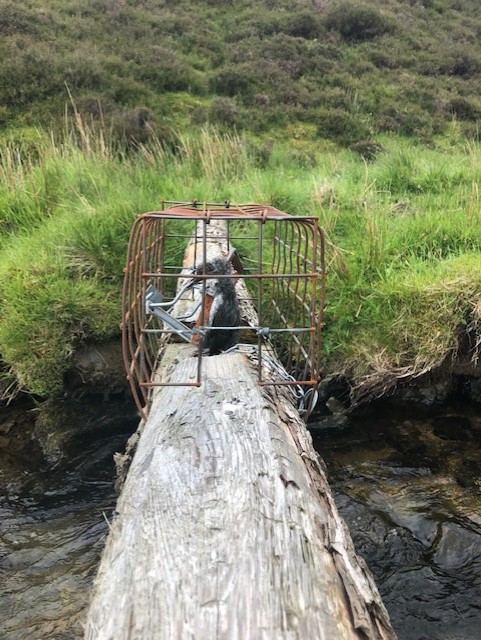
The really interesting part of the blog, as far as we’re concerned, is the section on the Leadhills Estate in South Lanarkshire. Blog readers will recall this is where a male hen harrier was found with an almost severed leg caught in an illegally-set spring trap next to his nest earlier this summer. Despite the heroic efforts of a number of experts, he didn’t survive. The estate denied all knowledge and responsibility and nobody has been charged.

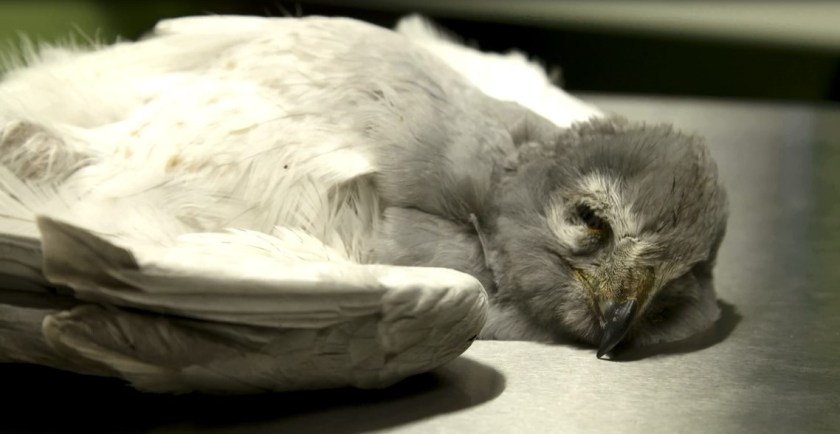
[The trapped hen harrier found on Leadhills Estate. Photo by Scottish Raptor Study Group]
Regular blog readers will know this poor hen harrier is not the only victim reported from the Leadhills Estate. The list is long and goes back more than a decade (e.g. scroll down this page). Duncan’s blog discusses some of the most recent incidents including the witnessed shooting of a hen harrier in May 2017; the witnessed shooting of a short-eared owl just a few weeks later and whose body was recovered; the discovery of a buzzard in 2018 that was found to have been shot twice; and the filmed buzzard that according to the RSPB was likely killed in a crow trap in January 2019.

Nobody has been charged for any of the above, but significantly, Duncan’s blog says this:

“We are advised that only now is an Open General Licence restriction, another sanction in the public authority wildlife crime “toolbox”, to be imposed here”.

SNH has had the power to impose General Licence restrictions since 1 January 2014. This was instigated by former Environment Minister Paul Wheelhouse in response to continuing difficulties of securing criminal prosecutions and was an instruction to SNH to withdraw the use of the General Licence (available for legal predator control) on land where crimes against raptors are believed to have taken place but where there is insufficient evidence to instigate criminal proceedings. The decision to withdraw the licence is based on the civil standard of proof which relates to the balance of probability as opposed to the higher standard of proof required for a criminal conviction.

This measure is not without its limitations, particularly as estates can simply apply for an individual licence instead which allows them to continue predator control activities but under slightly closer scrutiny.

SNH has only imposed four such restrictions since 2014 – a pathetically small figure when we are aware of at least a dozen other cases where a restriction should have been applied. SNH has claimed it is ‘not in the public interest‘ to explain those failures.

We’ve looked on the SNH website to see whether Leadhills Estate has been listed as having a General Licence restriction imposed (SNH does publicise the details when it imposes the restriction) but so far Leadhills Estate is not named. Potentially the estate has been notified and is currently in the period where it may challenge SNH’s decision, as per the framework for a General Licence restriction.

Watch this space.

UPDATE 26 November 2019: SNH imposes General Licence restriction on Leadhills Estate (here)
Scottish Government statement on recent raptor persecution crimes

The Scottish Government has finally made a statement about the recent raptor persecution crimes.

The statement is about as impressive as the one from Leadhills Estate, just shorter but no less pathetic.

It appears to be a forced statement, made after a direct request from a journalist (Sean Bell from CommonSpace) rather than a proactive statement posted on the Government’s website to clarify its position.

Ready for this?

From an unnamed Government spokesperson:

The continued targeting of birds of prey is an extremely serious issue and we strongly condemn all those involved in it. We would urge anyone with information to contact the police. 

We are determined to protect birds of prey and have established an independent group to look at how we can ensure grouse moor management is sustainable and complies with the law. 

The review is due to report later this summer and we will consider fully any recommendations or proposed actions put forward by the group“.

The full article at CommonSpace can be read here.

It’s no wonder it took so long for the Government to say anything. It’s pretty clear from this that it has nothing new to say at all – just the same old rhetoric and platitudes and vague statements that don’t actually amount to anything. At all.

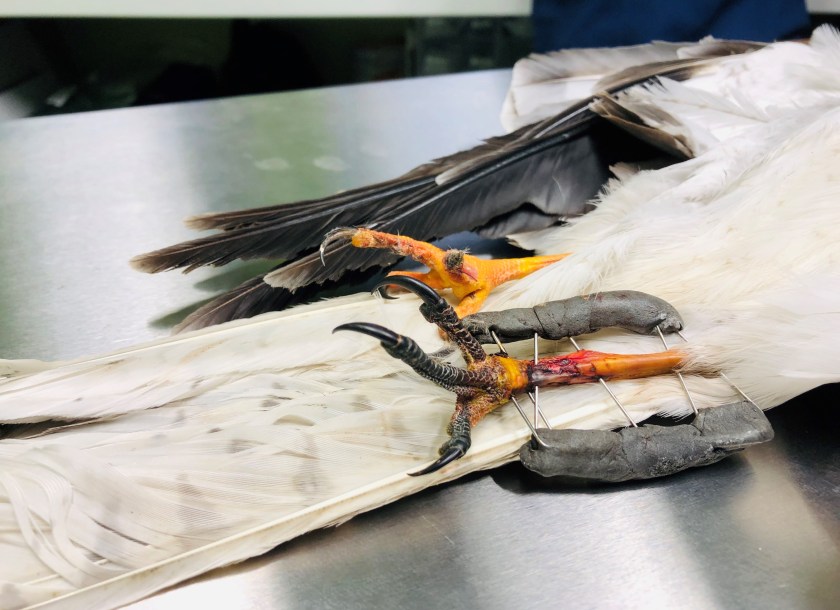
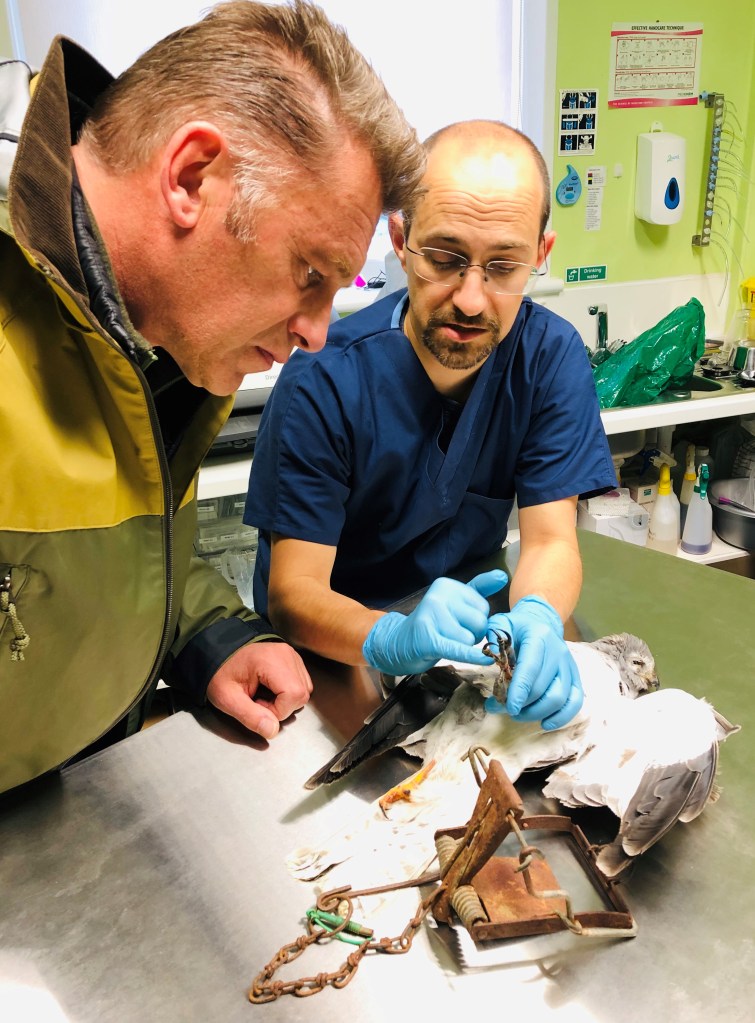
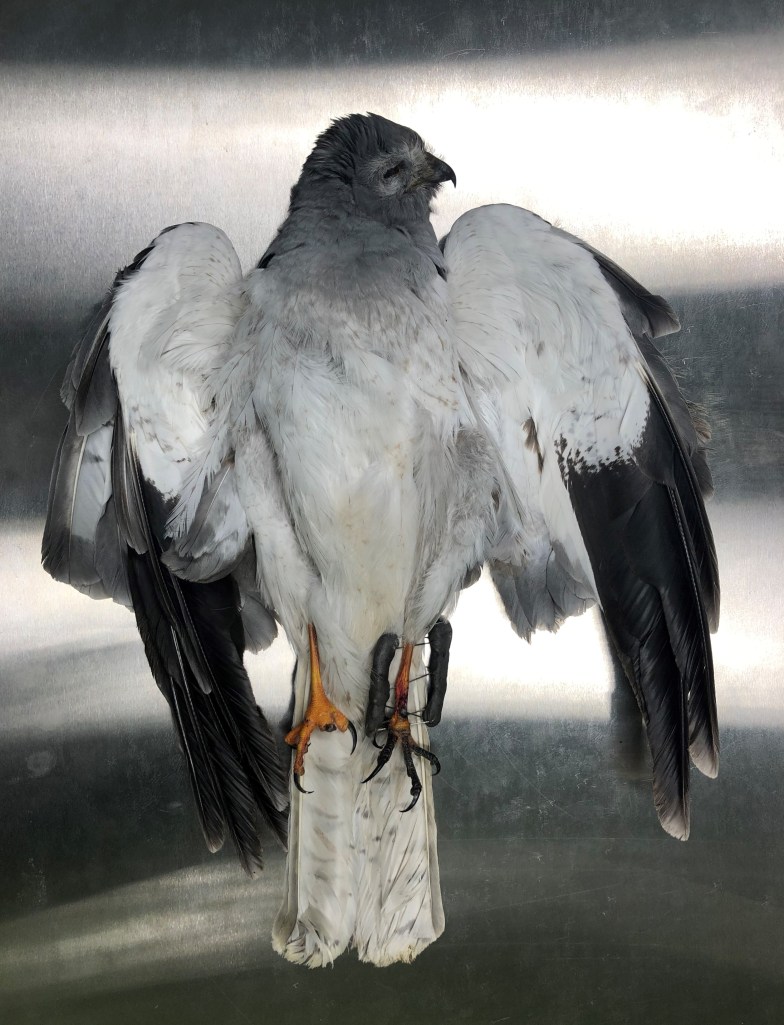
Here’s a stark reminder of the effectiveness the Scottish Government’s so-called ‘determination to protect birds of prey’. The spring-trapped hen harrier. He didn’t make it, despite the very best efforts of specialist vet Romain Pizzi and his team at the Scottish SPCA. [Photo by Ruth Tingay]

How many more victims will there be while we wait for the Scottish Government to actually do something?

Emails (polite ones, please) to the First Minister, Nicola Sturgeon at: firstminister@gov.scot 

Statement from Leadhills Estate on illegally-trapped hen harrier

Here we go folks, it looks like the Leadhills Estate has possibly identified the person(s) responsible for illegally-setting two spring traps at a hen harrier nest and it’s quite possible it’s the same one(s) responsible for the other 50+ raptor persecution crimes recorded in the area since 2003, including the armed masked man on a quad bike who was seen shooting a hen harrier in 2017 and the armed man in a 4×4 who was seen shooting and killing a short-eared owl in 2017. Although obviously not including the two crimes where estate gamekeepers were convicted (one in 2004 and one in 2009).

Phew. Thank god that’s all sorted. There’s no need for grouse moor management to come under any more scrutiny – we just need more police to patrol the area on the look out for ‘bird of prey activists’. Obvs.

The estate where a hen harrier is believed to have been caught in an illegally set trap has said it is not responsible for the bird’s death.

Leadhills Estate said the event is the latest in a series of suspicious activities on its land, much of which has been reported by the estate to police.

A spokesman for the estate said: “We condemn, in the strongest possible terms, all forms of persecution against birds of prey. The manner in which this hen harrier has died is sickening and we want the police to get to the truth of what has happened. We have provided the police with detailed evidence to support their inquiry including evidence of someone we consider to have acted suspiciously on the estate on the date in question.

“Our gamekeepers are trained to the highest level and know their responsibilities under the law and the standards we expect of them.

“The estate has conducted a full investigation into the circumstances of this incident and is satisfied that no one from the estate was involved in the illegal setting of these traps. Employees have been individually interviewed by lawyers. This comes in addition to the full cooperation the estate has offered in the police investigation.”

On the day the hen harrier was found, many estate traps, including fenn traps (the type of trap which the hen harrier was caught in) were removed, stolen or vandalised by an unknown third party or third parties. The damage was photographed and the incidents were reported to the police.

The spokesman continued: “Throughout April and May this year, we reported three separate incidents of theft, vandalism or interference to estate traps to police.

“On the day when the hen harrier was found, Saturday 11 May, legally set cages and traps were checked in the morning without incident. Some of the traps require to be checked on a 24 hour basis and when gamekeepers carried out further checks on Sunday 12 May, they discovered a number of Fenn traps vandalised, a number of traps had been stolen and two crow cages had been damaged with the decoy birds let out.

“This was reported to the police and photographic evidence and grid point references were recorded by the estate.”

Leadhills said it has experienced repeated cases of trap vandalism and other crimes carried out on the estate over many years which have been very difficult for estate staff to cope with.

The estate added that it was under intense scrutiny from third parties and recognised the ongoing controversy surrounding moorland management and bird of prey activists.

The spokesman added: “It is beyond belief that anyone associated with the estate would be both naïve and reckless enough to perpetrate a crime such as this.

“Over recent years, we have had at least three individuals working as raptor monitors on our land and our activity is
scrutinised to an acute level by those who are not sympathetic to grouse moor management. This is in addition to the examination we receive from independent assessors who advise our staff on best practice within the sector.

“There has been no commercial grouse shooting on our land over the past two years and the moors are not being managed to achieve high bags of grouse, as has been claimed.  There is no motive to act outside the law.

“We realise that there is a febrile atmosphere around moorland management, with campaigners in yesterday’s statement highlighting the forthcoming government’s grouse moor review led by Professor Werrity, but it is
important that we make our voice heard on this matter.  We believe that the film made by Chris Packham and others from the Revive coalition has been made with the primary aim of pressurising government to ban grouse shooting and this incident has been used to further that aim without it being subject to the due process of law or to independent scrutiny.  It is yet another case of trial by media.

“Someone killed the hen harrier and we deplore that act, but evidence as to who was responsible seems to have been removed immediately after the incident.  This leaves a very unsatisfactory situation for the estate, for the police, for the public and our politicians to deal with. Leadhills Estate, along with the rest of the grouse management
sector is looking to work constructively with all parties who want to see continuation of the important public benefits of sustainable moorland management.”

ENDS

Hen harrier suffers savage brutality of an illegally-set trap on a Scottish grouse moor

Press release from Chris Packham CBE and Dr Ruth Tingay (RPUK):

An adult male hen harrier has suffered appalling injuries after being caught in a spring trap that had been illegally-set next to its nest on a Scottish grouse moor.

His lower leg was almost severed by the jaws of the trap and despite valiant attempts by a specialist veterinary surgeon to save him, his injuries were too severe and he was later euthanised.

[Photo by Ruth Tingay]

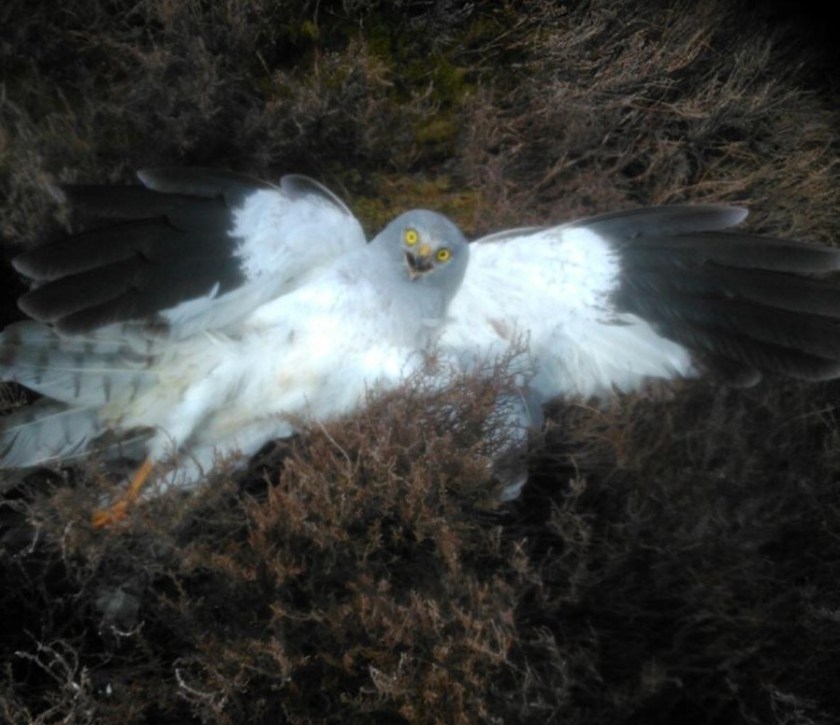
The harrier had been found caught in the trap and in great distress by members of the Scottish Raptor Study Group who were undertaking routine raptor monitoring on the Leadhills Estate in South Lanarkshire on 11th May 2019. A second trap, also illegally-set, had been placed on the harrier’s nearby nest. The nest contained two eggs but there was no sign of the breeding female.

[The trapped hen harrier in distress. Photo by Scottish Raptor Study Group]

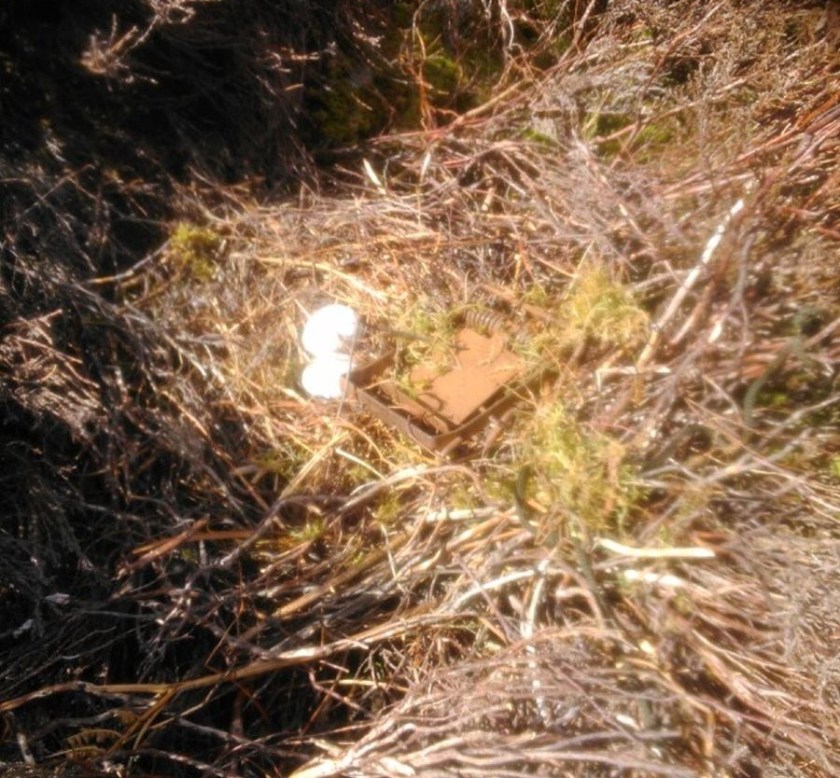
[The second illegally-set trap on the harrier’s nest, next to two eggs. Photo by Scottish Raptor Study Group]

The raptor workers rang the Scottish SPCA for help and the police were informed. The male hen harrier was collected immediately by the SSPCA and taken for veterinary attention. They also removed the traps and the eggs were transferred to an experienced falconer to see if they could be saved.

Specialist veterinary surgeon Romain Pizzi of the Scottish SPCA’s National Wildlife Rescue Centre conducted an intricate operation to reconstruct the harrier’s shattered leg but it had been too badly damaged by the trap so a decision was made to end his suffering and he was put to sleep.

Unfortunately the eggs that had been rescued from the nest didn’t survive either.

[SSPCA veterinary surgeon Romain Pizzi reconstructed the harrier’s smashed leg. Photo by Ruth Tingay]

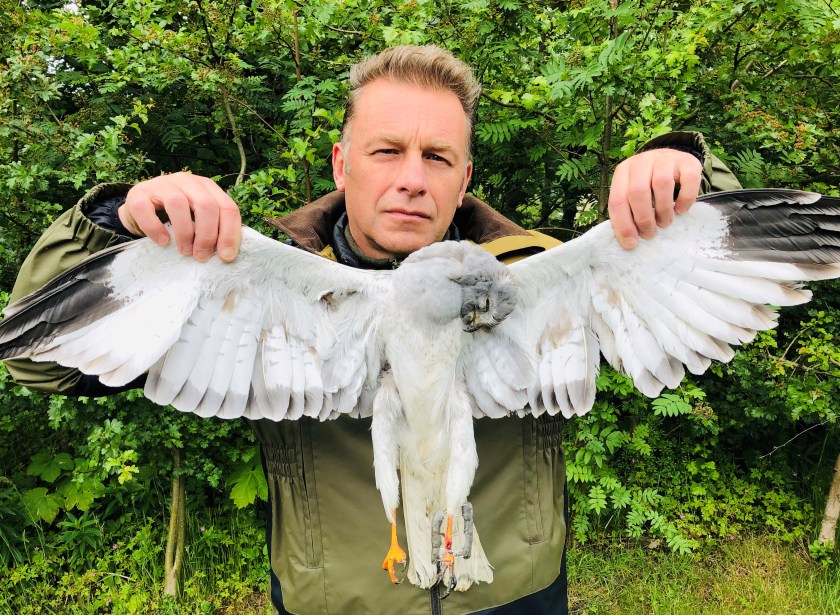
[Specialist vet Romain Pizzi explains to Chris that the force of the trap on this hen harrier’s leg would be similar to the force of a tractor running over a man’s leg. Photo by Ruth Tingay]

Seven weeks later on 4th July Police Scotland led a multi-agency search of Leadhills Estate but found no evidence to connect anyone from the estate with this latest wildlife crime.

This area of South Lanarkshire has been identified as a wildlife crime hotspot for many years. Since 2003 the RSPB has recorded at least 50 confirmed raptor persecution crimes on and close to a number of grouse moors in the region but only two have ever resulted in a successful prosecution; one gamekeeper was convicted in 2004 for shooting an owl and one was convicted in 2009 for setting out poisoned baits.

In 2015 a satellite-tagged hen harrier called Annie was found shot dead on a grouse moor in the area. In 2016 a satellite-tagged hen harrier called Chance disappeared in suspicious circumstances in the area, as did another one called ‘Skylar’ earlier this year.

In 2017 witnesses reported seeing an armed masked man shoot a hen harrier on a grouse moor in this area but the suspect escaped on a quad bike before the police arrived. The bird wasn’t found but a few weeks later witnesses observed an unidentified man shooting a short-eared owl on a grouse moor in the area. The man escaped across the moor in a four-wheel drive vehicle but the owl’s corpse was later retrieved from the heather and a post-mortem confirmed it had been shot. There were no prosecutions.

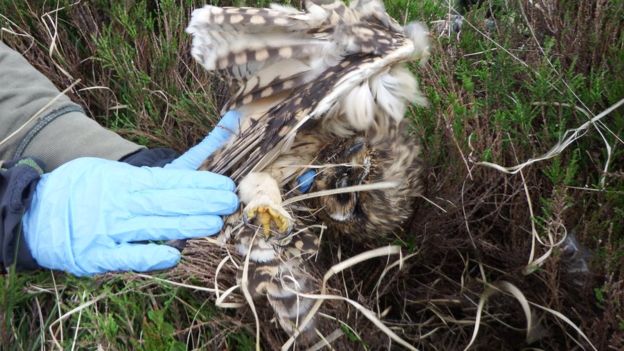
[A shot short-eared owl being retrieved from the grouse moor in 2017. Photo RSPB Scotland]

Following ongoing concerns about the scale of raptor persecution on some driven grouse moors in Scotland, in 2017 the Government commissioned a review of grouse moor management with a view to bringing in a regulatory licensing scheme. The review’s author, Professor Alan Werritty, is due to report within the next few weeks.

Prominent campaigners Chris Packham CBE and Dr Ruth Tingay who writes the Raptor Persecution UK blog have joined forces with other leading experts to produce a video about the savage brutality of this latest incident.

Chris Packham CBE said: “This despicable crime marks a most depressing day for raptor conservation in the UK and undoubtedly the darkest day for the whole shooting industry. It’s out of control, obviously beyond any form of self-regulation, and is tolerant of an utter contempt for the laws which are meant to protect our wildlife. This woeful death zone in South Lanarkshire needs cleaning up and clearing out now. This is 2019, not 1860 and this sickening spectacle has to consign driven grouse shooting to the dustbin”.

Dr Ruth Tingay said: “To be perfectly frank, what has happened here transcends the need to wait for the Werritty Review to report. This is brazen criminality, in broad daylight, conducted by someone secure in the knowledge that a prosecution is highly unlikely. The Scottish Government cannot continue to prevaricate on this issue while our wildlife suffers such barbaric acts. We know what’s going on, we know where it’s going on and the Government has a duty to act. Now.”

Anyone with information about the illegally-set traps found on Leadhills Estate is urged to contact Police Scotland on 101, or the RSPB’s confidential raptor crime hotline 0300 999 0101.

ENDS

With the help of a number of colleagues at Scottish SPCA, RSPB Scotland, OneKind, Revive Coalition, Operation Owl and Andy Wightman MSP and we’ve produced a video about this barbaric crime:

In recent weeks we’ve blogged about the suspicious disappearance of a satellite-tagged hen harrier (Marci) in the Cairngorms National Park (here), the suspicious disappearance of another satellite-tagged hen harrier (Skylar) in South Lanarkshire (here), the illegal poisoning of four geese with a banned pesticide in the Cairngorms National Park (here), the illegal poisoning of at least two red kites in Dumfries & Galloway (here), the discovery of an illegally- spring-trapped hen harrier on a grouse moor in the Strathbraan raven cull area (here), and the suspicious disappearance of two satellite-tagged golden eagles (Adam and Charlie) on the same morning on another grouse moor in the Strathbraan raven cull area (here).

In response to these incidents, the Scottish Government has remained silent.

And now another hen harrier, a species whose killing is supposed to be a national wildlife crime priority, has suffered at the hands of the untouchables.

Will the Scottish Government finally now act?

Please contact the First Minister, Nicola Sturgeon, and let her know (politely, please) that enough is enough.

Emails to: firstminister@gov.scot

Thank you

Even more innocent victims caught in traps set on grouse moors

About a week ago we blogged about the deaths of some birds in some traps that had been set on some grouse moors.

Some of the traps had been set legally, but still caught and killed an innocent Dipper (here) whereas other traps had been set illegally and had caught and killed an innocent tawny owl, as reported by the RSPB Investigations Team (here).

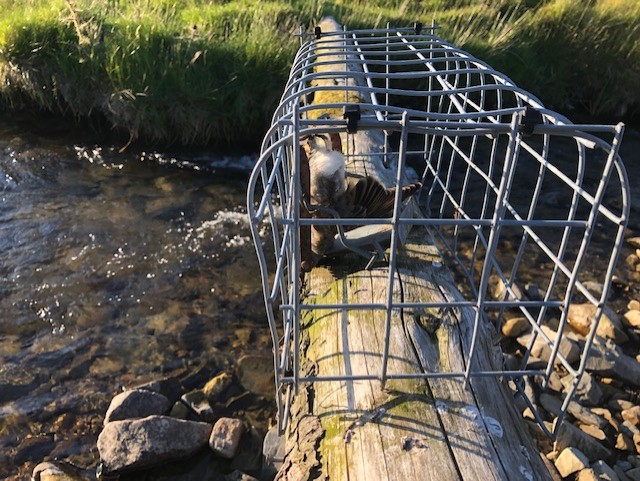
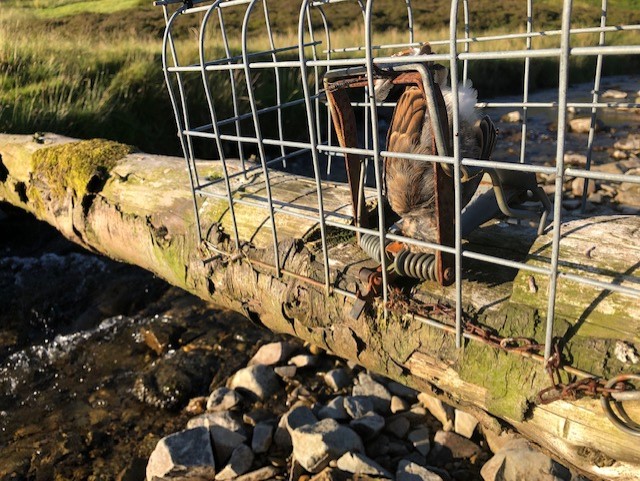
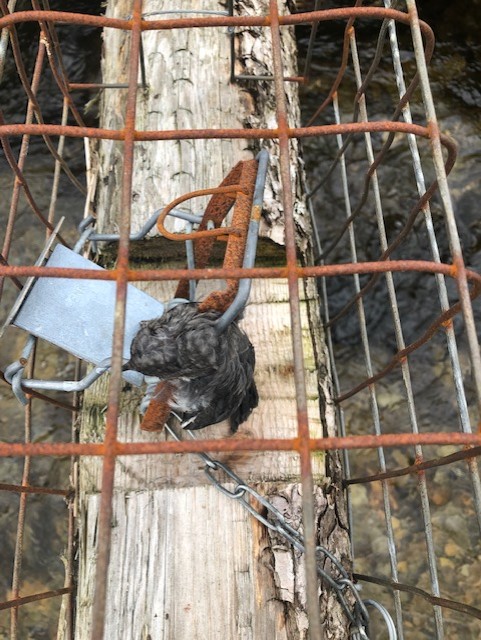
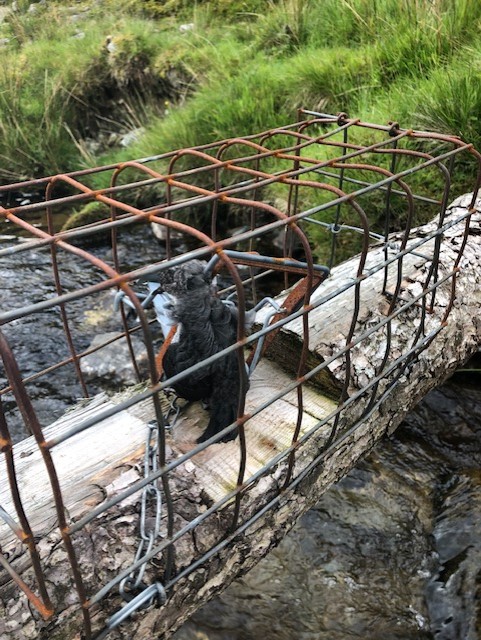
Yesterday, we were sent more images of some different traps that had caught yet more innocent victims. These traps were photographed on the Leadhills (Hopetoun) Estate in South Lanarkshire, and although the traps appear to have been set legally (i.e. the trap has been placed inside a tunnel and the entry holes have been restricted), they have still caught and killed another innocent Dipper and a Wheatear.

As we wrote last week, even though the traps in these photographs appear to have been legally set, and the trap operator has abided by the law, the traps have still caused the deaths of these native species but nobody will be held to account. These deaths are considered acceptable collateral damage, the price our native wildlife has to suffer to enable over-privileged members of the establishment the opportunity to blast to death thousands of game birds later in the year.

There is no legal requirement for grouse shooting estates to monitor, record or report these deaths. The Scottish and Westminster Governments and their statutory conservation advisory agencies (SNH and Natural England) have no clue about how many of these deaths take place on grouse moors each day/week/month/year.

Imagine if we all were setting out traps like this in our back gardens, routinely killing native wildlife without being held to account.

Imagine if you saw these traps set out in your town, killing blackbirds and song thrushes and robins every single day.

For how long do you think we’d get away with it? (Not that anyone with an ounce of decency would want to get away with it).

Now think about how long the grouse shooting industry has been able to get away with this without being challenged/stopped.

More innocent victims caught in traps set on grouse moors

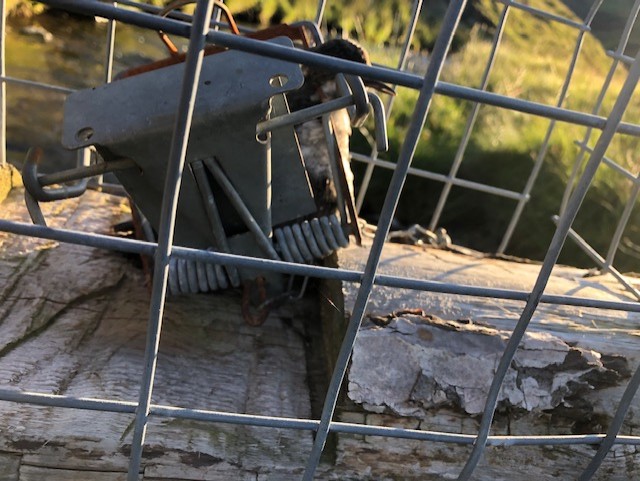
This morning we received the following images from a blog reader showing a young Dipper that had been crushed to death inside a spring trap set across a stream on the Leadhills (Hopetoun) Estate, a grouse shooting estate in South Lanarkshire.

This particular trap looks to be legally-set to catch species such as stoats and weasels. Although there are strong ethical and welfare concerns about the use of these traps to kill these species (and especially the complete lack of monitoring and reporting) what has happened here is perfectly legal. As per the regulations, the trap is covered by an artificial tunnel and the entry holes at both ends have been restricted to reduce the opportunity for non-target species to enter the tunnel and be caught in the trap.

Clearly, the entrances were insufficiently restricted to prevent this bird entering and being killed, but that is in no way a reflection of bad practice by the estate – the trap operator has followed the rules.

There is no legal requirement for grouse shooting estates to monitor, record or report these deaths. The Scottish Government and its statutory conservation advisory agency (SNH) has no clue about how many of these deaths take place on grouse moors each day/week/month/year.

We’ve blogged about this issue many times before. Sometimes it’s obvious that a trap has been set illegally (i.e. when it hasn’t been placed inside a tunnel) and sometimes it’s less obvious but still illegal, for example when little or no effort has been made to restrict the tunnel entrances.

The RSPB has also had concerns about this issue and today has written a blog (here) and released a video (see below) about a number of cases of what appear to be illegally-set traps on various grouse moors in North Yorkshire, South Yorkshire and Bowland, all found this year. The RSPB blog highlights what it says are ongoing inconsistencies in how different police forces respond to such crimes and their subsequent decisions about enforcement action/inaction.

RSPB’s 2017 Birdcrime report documents ongoing illegal raptor persecution

The RSPB published its 2017 Birdcrime Report yesterday. It didn’t contain any surprises – we all know that crimes against birds of prey continued in 2017, and that these were largely associated with game-shooting estates.

The online report can be read here

The very useful appendices (actual data) can be accessed here

The RSPB’s interactive map hub (showing the spatial pattern of raptor crime) can be accessed here

We were particularly interested in the Scotland data, which amounted to just five confirmed, detected raptor persecution crimes. Quite obviously, this is just the tip of a large iceberg and is an indication of just how good the raptor killers have become at hiding the evidence of their crimes rather than an accurate reflection of the extent of ongoing raptor persecution – a fact recently acknowledged by Police Scotland (see here).

We know from the recent national survey results for three iconic species (golden eagle, hen harrier, peregrine) that illegal persecution continues to suppress the populations of all three species in areas where the land is dominated for driven grouse shooting. We also know from the ongoing studies of satellite-tagged golden eagles, white-tailed eagles and hen harriers that these birds continue to ‘vanish’ in the same grouse moor areas. Unfortunately these cases don’t make it in to the official wildlife crime stats although both the police and the Scottish Government have acknowledged that they are indicative of criminality, hence the current Government-commissioned Werritty review in to grouse moor management.

Of the five confirmed cases of illegal raptor persecution in Scotland last year, two were linked to the Leadhills (Hopetoun) Estate in South Lanarkshire – the witnessed shooting of a hen harrier in May 2017 (here) and then a few weeks later the witnessed shooting of a short-eared owl (here). The crumpled body of the shot short-eared owl was retrieved from a ditch the following day and the RSPB sent it off for post mortem, which confirmed it had been shot, causing multiple fractures to its wing, leg, foot, ribs and skull.

[The short-eared owl shot on Leadhills Estate, photo by RSPB]

The police investigated both cases but no prosecutions followed. Earlier this year, a dead buzzard was found at Leadhills and it too had been shot but yet again, nobody was prosecuted (here).

For those familiar with the Leadhills (Hopetoun) Estate this will come as no surprise – there have been over 50 reported cases of raptor persecution crimes on or close to this estate since 2003 and of those, only two have resulted in a conviction (gamekeeper convicted in 2004 for shooting a short-eared owl; gamekeeper convicted in 2009 for laying out a poisoned bait).

This appalling failure to enforce the law was addressed by the then Environment Minister Paul Wheelhouse MSP, who instructed SNH to withdraw the use of the General Licence on estates where there was sufficient evidence to demonstrate raptor persecution crimes had occurred but insufficient evidence to progress a prosecution against a named individual. We’ve waited and waited and waited for SNH to impose a General Licence restriction on the Leadhills (Hopetoun) Estate for these recent shootings but so far, nothing. When we’ve asked SNH for an explanation, it has refused to comment, saying it’s not in the public interest for SNH to explain its decisions.

Meanwhile, Lord Hopetoun continues to serve as the Chair of the Scottish Moorland Group (a sub-group of Scottish Land & Estates) and whose Director, Tim (Kim) Baynes continues to serve on the PAW Scotland Raptor Group – you know the one – the pretend ‘partnership’, chaired by the Scottish Government, set up to tackle the illegal persecution of raptors on driven grouse moors.

SNH wilfully blind to threat of persecution of golden eagles in south Scotland

The project to translocate golden eagles from the Scottish Highlands to south Scotland has finally got underway this year, with news out today that three eagles have been successfully released this year.

There’s an article about it on BBC Scotland (here) including some video footage.

Unbelievably, Professor Des Thompson, Principal Advisor for Biodiversity and Science at SNH, is quoted in both in the video and in the article as follows:

This is the icon of wild Scotland. We are on the threshold of giving something very exciting back to the south of Scotland. Scotland has just over 500 pairs, just two to four breeding pairs in the south of Scotland where they are really struggling.

Young golden eagles are heavily persecuted. A third of them have been killed either through shooting or poisoning.

Down here in the south of Scotland we’ve been able to reassure ourselves persecution is not an issue. It’s just a small fragmented population that needs this helping hand from us. We have been overwhelmed by the support we are getting from landowners and we are reassured these birds are going to be welcome“.

Did he actually just say that? “We’ve been able to reassure ourselves persecution is not an issue“. What, you mean in the same way that SNH reassured itself that the scientific justification for the Strahbraan raven cull was sound?

You couldn’t make this up. Has he switched jobs and is now representing Scottish Land & Estates? He might as well be as this is exactly the line they were trying to spin several years ago (see here).

The south of Scotland is well known for the illegal persecution of raptors, including golden eagles. Only this year a young satellite-tagged golden eagle (Fred) ‘disappeared’ in the Pentland Hills in highly suspicious circumstances (here) in an area where previously a merlin nest had been shot out and breeding ravens had also ‘disappeared’.

[Golden eagle Fred, by Ruth Tingay]

Then there’s Raeshaw Estate, currently operating under a General Licence restriction and an Individual Licence restriction, due to evidence of alleged ongoing raptor persecution (here); there’s a forthcoming prosecution of a gamekeeper in the Borders for a long list of alleged wildlife crime (here); there’s the land managed for driven grouse shooting in South Lanarkshire (close to the golden eagle translocation area) where over 50 confirmed reported incidents of dead raptors and poisoned baits have been recorded since 2003, including a shot golden eagle in 2012 (it didn’t survive, here), the reported shooting of a short-eared owl in 2017 (here), the reported shooting of a hen harrier in 2017 (here), and the reported shooting of a buzzard in 2018 (here); and then there’s been at least four raptor poisonings in south Scotland this year alone (here).

But don’t worry, folks, despite all evidence to the contrary, Professor Thompson is “reassured” that raptor persecution won’t be an issue for these young golden eagles.

Here’s a map from the 2008 Golden Eagle Conservation Framework showing the conservation status of golden eagles in Scotland (red = unfavourable conservation status), overlaid with ten years of raptor persecution data (all species, 2005-2015) gleaned from ‘official’ persecution maps. It doesn’t include data from the last three years. Does it look to you like raptor persecution isn’t an issue in southern Scotland?

We’ve blogged about the South Scotland Golden Eagle Project several times over the years (e.g. here, here, here) and we still have mixed feelings about it. On the one hand the south Scotland golden eagle population is in dire straits, and has been for some time, and urgently needs a boost. Translocating eagles from other parts of the Scottish range seems a decent strategy.

However, fundamental to translocation and reintroduction projects is the need to identify and resolve the underlying cause(s) of the species’ decline in that area. The authorities have not come anywhere near to resolving this issue, either in south Scotland or beyond. The chances remain high that these young eagles will be killed. Having said that, they’re just as likely to be illegally killed further north in Scotland so in that sense, moving them a few hundred km south probably won’t make much difference to their chance of being illegally killed.

At least these three young eagles have been satellite-tagged so their movements can be followed. The question is, if/when each eagle goes off the radar in suspicious circumstances, who will decide whether this news is suppressed or publicised?

We’ll be taking a close interest.

Buzzard found shot dead at Leadhills, south Scotland

From the Carluke Gazette (13/4/18):

POLICE NEED INFO ON BUZZARD THAT WAS SHOT

Police Scotland officers at Lanark are seeking the public’s help as they investigate the shooting of a bird of prey.

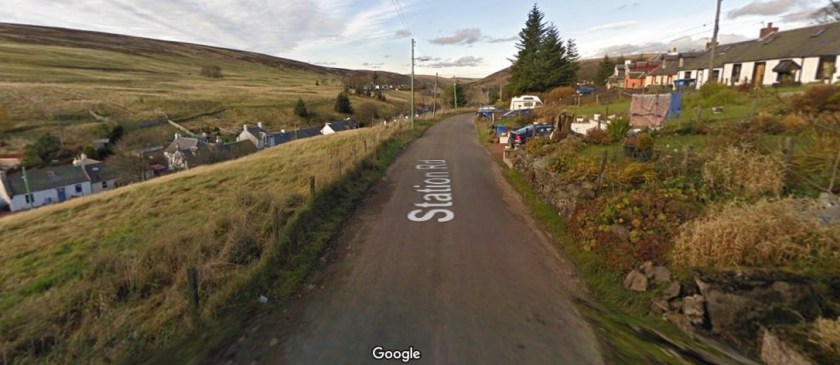
A deceased buzzard was found near to Station Road in Leadhills. Examination of the bird showed that it had likely been shot, had managed to recover, before then being shot a second time and killed.

Officers are seeking witnesses to any shooting activity which is suspicious.

Those with information on the dead bird are urged to contact police on 101, or Crimestoppers on 0800-55511, quoting incident number 0571 of 03/04/18.

ENDS

There is no information about when this buzzard was found dead although a local source advises it was earlier this year.

Here is a photo of Station Road, surrounded on either side by the grouse moors of Leadhills Estate:

Here is the position of Leadhills Estate (and the neighbouring Buccleuch Estate boundary in red dashes) in south Scotland. [Boundary details from Andy Wightman’s Who Owns Scotland website]. It’s in close proximity to the Moffat Hills, the proposed release site for the South Scotland Golden Eagle Project, due to begin later this year.

Leadhills is a notorious raptor persecution hotspot, with over 50 confirmed crimes recorded in the area since 2003. Only two of these have ever resulted in a successful prosecution (gamekeeper convicted in 2004 for shooting a short-eared owl; gamekeeper convicted in 2009 for laying out a poisoned bait).

Last year, witnesses reported the alleged shooting of a hen harrier on Leadhills Estate (here) and the alleged shooting of a short-eared owl (here). We’re not aware of any pending prosecutions in relation to these incidents.

We have been waiting to see whether SNH would impose a General Licence restriction but so far SNH has refused to comment, saying it’s not in the public interest to explain these decisions.

GWCT twisting the truth about hen harrier persecution, again

A few days ago we blogged about a series of letters published in The Times (Scotland) relating to the disappearance of a young satellite-tagged hen harrier Calluna, who recently vanished after visiting a Deeside grouse moor.

Scottish Land & Estates used the incident as an opportunity to falsely accuse the RSPB of not following agreed protocols, presumably in a pathetic attempt to detract attention from the ongoing criminality associated with the driven grouse shooting industry. We’ve come to expect no better from this organisation.

As a follow on from those letters, another industry figure, Andrew Gilruth from the Game & Wildlife Conservation Trust (GWCT), decided to join in and spew out some more fakery, this time in The Times (London edition). Here’s what he wrote, published 7 Sept 2017:

HEN HARRIER HABITAT

Sir,

The RSPB are right to say an organisation must not “ignore facts to suit its narrow agenda” (letter, Sep 5). The most productive location for hen harrier nests, 47 fledged young from 12 nests, was achieved by gamekeepers on Langholm Moor just three years ago. However, their improvement of the moorland habitat and protection of these ground nesting birds from foxes has now ended, because conservationists could not agree on how to also recover grouse numbers. Should hen harrier numbers drop to the two pairs there were before these gamekeepers arrived in 2008, the birds might ask who has the narrowest agenda.

Andrew Gilruth
Director of Communications
Game & Wildlife Conservation Trust

You’ll notice how Andrew’s distraction technique has cleverly moved the story away from the news of Calluna’s suspicious disappearance from a grouse moor and has instead tried to re-focus the story on to how great grouse moors are for hen harriers. Unfortunately for Andrew, choosing the Langholm Moor study as an example to support this theory was not the brightest idea.

Here’s why, succinctly explained in a letter published in The Times (London) today:

ABSENCE OF HARRIERS

Sir,

Andrew Gilruth’s letter (September 7) brings to mind Kipling’s poem ‘If’ for the manner in which it twists the truth to make a trap for fools.

The single and only reason Langholm Moor supported 12 harrier nests that fledged 47 young was that the gamekeepers working on this collaborative demonstration project were under strict instructions not to kill them and operate within the law. It is very telling that no other driven grouse moors in Scotland (or the rest of the UK) can equal this hen harrier population or productivity. What this statistic actually suggests, therefore, is the rampant scale of illegal killing of this majestic bird, given its landscape-wide absence and the lack of breeding success on all other driven grouse moors and which our members, (who are licenced by Scottish Natural Heritage), monitor across Scotland every year.

Logan Steele

Scottish Raptor Study Group (SRSG)

Logan hits the nail on the head. If driven grouse moors are so great for breeding hen harriers, why are we seeing an almost total absence of breeding hen harriers on these moors, year after year after year? Of course, the disgusting truth is already well known.

Andrew Gilruth’s letter has been widely shared on social media by the criminal apologists and has been followed up with other examples of supposedly typical driven grouse moors that have good hen harrier breeding figures this year. Unfortunately, these people are as scientifically illiterate as Andrew Gilruth and have used wholly inappropriate examples to illustrate their (fake) claims, e.g. Leadhills Estate, which had nine hen harrier nests this year, but this estate hasn’t seen any driven grouse shooting for a number of years (see here). There are other claims of “an estate in Perthshire” with 12-15 hen harrier nests this year – the estate hasn’t been named (natch) but they might be referring to Atholl Estate, which these days is a pretty good estate with a sympathetic management approach to breeding raptors, but only offers walked-up grouse shooting, not driven grouse shooting, so any successfull hen harrier nests there this year cannot be attributed to driven grouse moor management. Sorry, trolls, you must try harder.

Anyway, getting back to the actual news, that hen harrier Calluna is the latest in a long, long, long, long line of satellite-tagged raptors that ‘disappear’ after visiting certain driven grouse moors, it’s been a week since the RSPB appealed for information.

We’ve been looking at the social media accounts of various shooting industry organisations to see how much effort these ‘leaders’ have put in to encouraging their members to pass on information to the police. You can probably guess what we found (or didn’t find). That tells its own story about the sincerity and commitment of the industry to rid itself of its dirty criminals. Mark Avery has a pretty good explanation about the industry’s refusal to reform (see here) and Andrew Gilruth’s chronic propaganda patter gives Mark’s theory much credence.