A Hen Harrier Day poem

This poem was delivered at the Hen Harrier Day event at the RSPB’s superb Rainham Marshes reserve yesterday and a number of people have suggested it should be posted on this blog.

[Photo by Alan Shearman from his blog about Rainham Hen Harrier Day 2018]

HEN HARRIER DAY

by Ruth Tingay

2014 is when it all began

Amidst Hurricane Bertha at the Derwent Dam

There was a bloke called Avery and a bloke called Packham

And the Sodden 570, united in passion.


We arrived as strangers but left as friends

Determined to bring the killing to end

To protect our skydancer from the guns and the traps

And the murderous intent of the men in tweed caps


There were only four nests in England that year

The grouse shooters toasting success with a sneer

But to underestimate us was their biggest mistake

We are defiant and strong and we’ll do what it takes


These rallies and banners are just the beginning

There’s a long way to go but we know about winning

They can hurl their abuse and call us all liars

We don’t give a damn ‘cos our bellies have fire


We’ve come a long way since that very first rally

Westminster, the papers, all over the telly

We’ve changed the narrative and people are listening

Grouse shooting no longer all shiny and glistening


We’re exposing their fiction, their greed and their crimes

Their friends in high places all wilfully blind

Nine nests this year and we’re supposed to be pleased

Our hen harrier population, brought to its knees


You can keep your fake partnerships and your grouse-shooting peers

Your Gilruths, Amandas and your crocodile tears

Stuff your brood meddling right up your arse

We know what you’re up to and we know it’s a farce


There’s progress in Scotland and the grousers are fearful

That’s reason enough for us to be cheerful

So raise up your banners, keep singing our song

By standing together we won’t go wrong


END

The event was superbly organised by Lisa Mobley and her team of volunteers. Other speakers included Mark Avery, Natalie Bennett, Martin Harper, Chris Packham and Barry Gardiner MP. The presentations were filmed by PJS Films and can be viewed HERE.

Other Hen Harrier Day events took place on Saturday and there are more being held today, the Inglorious 12th. Find the one closest to you HERE.

[Photo from Hen Harrier Day 2018 at RSPB Rainham Marshes by @RSPBUrban]

“Not what you’d call a bumper harvest” – accurate reporting on hen harrier breeding season by BBC

Well done to BBC Look North for an honest and accurate report on the hen harrier breeding season in Northumberland.

Not what you’d call a bumper harvest“, says the presenter in his introduction, and then from the reporter, “The hen harrier is illegally persecuted by gamekeepers on driven grouse moors who believe the birds cause too much damage to the shooting business“.

What, no lame-brained tra-la-la-ing from Amanda Anderson (Moorland Association) about the number of hen harriers that have popped in through her kitchen window for a coffee and a chat? And no Andrew Gilruth, the GWCT’s very own Stepford Wife, droning on about whatever it is he’s been told to repeat that day?

No, not a word from any of the great pretenders.

There are good contributions from Dr Cathleen Thomas (RSPB Skydancer Project) and Tom Dearnley (Forestry Commission), although Tom was probably a bit optimistic when he said “The birds that fledged this year will go in to the breeding population….”. We doubt that very much; they’ll be lucky to be still alive by Xmas.

Anyway, have a watch of this refreshingly uncontaminated report but you’ll need to be quick as the programme expires at 1.45hrs today (Weds 8th).

You’ll find it on BBC iPlayer (here), starts at 2.32min and runs until 4.22 min.

Hen harrier breeding results demonstrate this species still suppressed by illegal persecution

According to an article in The Times today, the English hen harrier population has been ‘saved’ following a ‘record number’ of successfully fledged birds.

Good grief!

Nine successful nests in a country that has the habitat to support over 300 pairs is NOT, in any way, shape or form, evidence of a species being ‘saved’. What it actually is is a clear indication that the English hen harrier breeding population is still being suppressed as a result of illegal persecution. We blogged a bit about this last week (here) when the 2018 HH breeding results were published and we pointed out that, yet again, there wasn’t one single successful nest on a privately-owned grouse moor.

Here’s the article from today’s Times in full:

We could spend some time dissecting this article but we don’t have time. It is worth highlighting the quote from Philip Merricks though, who says,

Wildlife will only thrive if conservationists work with those who manage the land“.

No, Philip, wildlife (in this case, hen harriers) will only thrive if gamekeepers on grouse moors stop bloody killing them, and if so-called conservationists (Hawk & Owl Trust) stop enabling them to keep getting away with it.

It’s worth looking at the 2018 hen harrier breeding season in context with previous years, just to put things in perspective. Successful hen harrier nests haven’t reached double figures for ten years, and yet we’re expected to believe this is a ‘success’?

We’ve been here many times before – a handful of successful hen harrier nests and along come the persecution apologists to claim it’s a ‘turning point’ and everything’s going to be alright. Here’s something we wrote in 2015 after the so-called ‘good news’ that six nests had been successful. The results from the next two years suggest it was anything but a ‘turning point’.

It’s just pitiful, both the continued poor breeding results and the ridiculous cries of ‘success’ from the grouse shooting industry.

For an alternative view of this year’s hen harrier breeding results, have a read of this article from the Northern England Raptor Forum (NERF). It’s much more honest than anything you’ll see from the persecution deniers.

If you’re as sick to the back teeth as we are of the continued pretence that hen harriers are being ‘saved’ by grouse moor gamekeepers, then come along to a Hen Harrier Day event this weekend and ensure your voice is heard. You’ll find details here.

RSPB satellite tags a shedload of hen harriers

RSPB press release (3 August 2018):

RECORD NUMBER OF HEN HARRIER CHICKS TAGGED THIS YEAR

Over 30 chicks tagged by RSPB Project

An unprecedented number of hen harrier chicks have been fitted with satellite tags this year by the RSPB as part of its EU funded Hen Harrier LIFE project to secure the future of these threatened birds.

So far more than 30 of the young birds have been tagged, the majority of them in Scotland. This is the fourth year in a row that the project has fitted satellite tags on hen harrier chicks. A number of those tagged this year are the offspring of birds tagged in previous years by the project including DeeCee who hatched in Perthshire in 2016.

Hen harriers are one of the UK’s rarest birds and the satellite tags allow the project to follow their movements as they leave the nest, gaining invaluable information on where the birds spend their time. The odds are stacked against hen harrier chicks from the start with survival rates of around 22 per cent in their first two years of life. The tags can reveal information about the cause of death for many of these young birds.

Of the birds tagged in 2017 almost 40 per cent are known to have died from natural causes, in line with these low survival rates. As the tags continue to transmit after a bird has died the remains of many of them were able to be recovered allowing post mortems to be carried out. These showed some to have been predated, while others died of starvation. One bird, Eric who was tagged in Orkney in July 2017, apparently drowned in January.

However, the tags also reveal that over a quarter of last year’s chicks have disappeared in suspicious circumstances. In these cases, transmissions from tags that have been functioning perfectly suddenly stop. The tag of one bird, Calluna, ended transmissions abruptly over a grouse moor a few miles north of Ballater on 12th August last year. Manu and Marc, from the same Borders nest, both disappeared over grouse moors in northern England.

The latest national survey of hen harriers, carried out in 2016, shows that the UK population has declined by 24 per cent since 2004. In Scotland there has been a 57 per cent decline on grouse moors since 2010. The continued illegal persecution of these birds is having a huge detrimental impact on their numbers.

RSPB Scotland is currently awaiting the recommendations of an independent enquiry panel commissioned by the Cabinet Secretary for the Environment Climate Change and Land Reform, Roseanna Cunningham MSP in May 2017, to look into how grouse moors can be managed within the law and explore options for its regulation. The panel was created following the review of satellite tagged golden eagles in Scotland and is expected to report back in Spring 2019.

Dr Cathleen Thomas, Project Manager for the RSPB’s Hen Harrier LIFE project said: “Satellite tagging technology has taught us so much about the movements of hen harriers. We can follow individual stories; from the birds that make huge journeys crossing over seas to those that stay closer to home and only move short distances from where they were hatched. We’ve discovered new nesting places and winter roosting sites, which help us protect the birds when they are at their most vulnerable.

The tags also allow us to investigate where and in what circumstances these hen harrier chicks are lost so we can better understand how to protect them and advocate for licensing of driven grouse shooting. This species is only just holding on in the UK; it’s both heart-breaking and infuriating that year after year many of these chicks disappear in suspicious circumstances. The loss of birds in this way is both needless and senseless and cannot go on. We hope that the recommendations of the enquiry panel here in Scotland will give hen harriers, and other birds of prey, a fair and fighting chance at survival and help stamp out these outdated illegal persecution practices.

The project is grateful for the fantastic support given from members of the Scottish Raptor Study Group and to the many landowners and their staff for their interest and help in assisting to tag so many birds.

From September a selection of this year’s tagged birds will be added to the project website where their travels can be followed along with some of the surviving birds from previous years: www.rspb.org.uk/henharrierlife

ENDS

No successful breeding hen harriers on privately owned grouse moors in England, again

Natural England has today published a press release announcing a pathetic total of nine successful hen harrier nests in England this year, an increase from three nests last year and heralded by NE Chairman Andrew Sells as “truly remarkable” (see here).

No, what’s truly remarkable Andrew is that there are still a conservatively estimated 290 breeding pairs of hen harriers still missing from England, and many more still missing in Scotland!

[Photo from a nest camera, part of the Heads Up for Harriers Project in Scotland]

According to the convoluted NE press statement, which appears to have been written by someone determined to protect the reputation of the hen harrier-killing criminals, four of the successful nests were on National Nature Reserves (i.e. not grouse moors), and five were on grouse moors, although it then says that one of these five wasn’t actually on a grouse moor at all, but was on farmland next door, so that makes four successful nests on grouse moors.

The farmland nest is quite interesting – this is the one that the gamekeeper’s group Yorkshire Dales Moorland Group recently declared as being on a grouse moor, as did the National Gamekeepers Organisation. Not quite accurate, eh chaps? And isn’t the next-door grouse moor at the centre of a prosecution case just now, with a gamekeeper charged with the alleged shooting of raptors on that grouse moor? Ah yes, so it is.

When you look more closely at those four successful nests that were actually located on grouse moors, three of them were on United Utilities-owned land in Bowland, and the other one was on National Trust-owned land in the Peak District (the estate where the previous tenant was recently booted off after a gamekeeper was filmed there poised with his gun next to a hen harrier decoy). New tenants moved in earlier this year and hey presto! A pair of hen harriers is allowed to settle.

So, not a single successful hen harrier nest on a single privately owned grouse moor anywhere in northern England, again.

And yet, incredibly, in a joint press statement today The Moorland Association and the GWCT (the ‘scientists’ behind the ‘completely inadequate’ and ‘seriously flawed’ raven cull ‘study’) are ‘celebrating’ these results and claiming that this ‘success’ is largely down to DEFRA’s ‘revolutionary’ brood meddling licence ‘beginning to work’ (see here).

Eh? Beginning to work? It hasn’t even started as, for yet another year, there haven’t been enough (any!) successfully breeding hen harriers on privately owned grouse moors so no chicks have been available to be brood meddled.

With any luck, there won’t be any brood meddling next year either, as Mark Avery and the RSPB have both been given permission to proceed with their legal challenges in the High Court against brood meddling via a judicial review. Interestingly, Moorland Association Chair Amanda Anderson refers to these legal challenges in the joint press statement as “wasting court time and tax payers money“.

We wonder if she felt the same way about the judicial review brought by the game shooting industry a couple of years ago, challenging Natural England’s decision not to issue buzzard-killing licences to gamekeepers to protect pheasant stocks?

Anyway, we’ll remind her of this quote the next time a prosecution is brought to a thundering halt after a handsomely paid QC has wasted court time arguing about minor legal technicalities to ensure the case collapses against the latest gamekeeper accused of illegal raptor persecution on a grouse moor. We predict we won’t have long to wait….

Meanwhile, many of this year’s hen harrier chicks have been satellite-tagged. A handful by Natural England (so we’ll only have another 15 years to wait for find out their fates) but most of the tagging has been completed by the RSPB’s Hen Harrier LIFE project, so as we approach the start of the grouse-shooting season and head in to September, we can expect a steady stream of reports of the suspicious disappearance of many of this year’s cohort, predominantly on privately owned driven grouse moors.

Angus Glens Moorland Group downplays significance of missing satellite-tagged raptors

There was an article in yesterday’s Courier (here) highlighting the “impoverished” status of wildlife in the Angus Glens.

This claim was made by Ian Thomson (Head of Investigations, RSPB Scotland) and an unnamed investigator from the SSPCA in relation to the number of vacant breeding territories for hen harrier, the number of satellite-tagged raptors that have ‘disappeared’ in the area, and the number of indiscriminate traps laid out to kill wildlife in order to protect red grouse for shooting parties.

Head gamekeeper’s wife Leanne MacLennan, coordinator of the Angus Glens Moorland Group (AGMG) dismissed the claims and made two extraordinary statements. Here’s the first:

There is a welcome sea change in these glens and members of the Angus Glens Moorland Group will continue to move on, if others can’t“.

By claiming that AGMG members (gamekeepers) have “moved on”, she’s surely not suggesting that they had anything to do with the long, long history of illegal raptor persecution for which the Angus Glens have become notorious, is she?

For as long as we can remember, gamekeepers have denied any involvement with any of these crimes (even though banned lethal poisons were found on game bags used by estate staff, according to this article) and nobody has ever been prosecuted for these offences so how can Lianne now claim a “sea change” if she doesn’t know who was responsible for those crimes? It’s a bit odd, isn’t it?

[Photo of golden eagle Fearnan, found poisoned on an Angus Glens grouse moor, photo by RSPB Scotland]

Lianne’s second extraordinary statement was this:

There have been no confirmed incidents of criminality towards protected species in this area for several years, despite attempts at speculation“.

What a fascinating claim.

If the claim is based on the number of raptor corpses found containing lead shot or lethal poison or having horrific injuries consistent with being caught in an illegally-set spring trap, then yes, you might argue that, superficially at least, things appear to have improved.

However, if you’ve got even a moderate understanding of the issue you’ll understand that across the UK, those mystery people who kill raptors on grouse moors have simply changed tactics to avoid detection (less poisoning and more shooting in the dead of night using military grade night vision and thermal imaging equipment) and they’re now much more savvy about hiding the physical evidence of their crimes, in which case you’d treat Lianne’s claim with the contempt it deserves.

What Lianne dismisses as “speculation”, the Scottish Government has accepted as strong evidence of continued raptor persecution. The so-called ‘speculative’ incidents are, of course, the findings of the Government-commissioned review on the fate of satellite-tagged golden eagles, published just last year, which identified the Angus Glens as one of six grouse moor hotspots where satellite-tagged golden eagles keep vanishing. Rather than refering to these findings as ‘speculation’, Cabinet Secretary Roseanna Cunningham refered to them as follows:

The findings of this research are deeply concerning and will give rise to legitimate concerns that high numbers of golden eagles, and other birds of prey, continue to be killed in Scotland each year” (see here).

Here’s a map based on the findings of that report showing the satellite-tagged golden eagles that have either been found illegally killed or have ‘disappeared’ in suspicious circumstances in the Angus Glens. These include two golden eagles that were found poisoned, one that was caught in an illegally-set trap (and then transported and dumped elsewhere overnight), four eagles that have vanished, and one tag that had been cut from an eagle and ‘stabbed’ with a sharp instrument.

The map doesn’t include records of other satellite-tagged raptors that have also ‘disappeared’ in the Angus Glens in recent years, including two red kites and at least one hen harrier, Saorsa, who vanished in February this year.

We suspect that other satellite-tagged raptors may have also vanished in the Angus Glens in the last two years but strangely, nobody wants to talk about it. Our suspicions have been raised by SNH’s responses to various FoI questions about satellite-tagged raptors in the Angus Glens (basically they’re refusing to discuss the issue, even in very broad terms). We will continue to pursue other lines of enquiry to get to the bottom of who’s covering up what, and why.

And talking of a lack of transparency, there’s the recent news of a dead red kite that was found by a member of the public on an Angus Glens grouse moor and was reportedly collected by a gamekeeper. Recent questions about this red kite (see here) remain unanswered. Did the gamekeeper submit the corpse for a post mortem so that the cause of death could be established? If so, where was it submitted and what were the findings? If it wasn’t submitted, why not, and where is the corpse now?

But it’s not just disappearing satellite-tagged raptors that provide us with such a clear indication of on-going illegal persecution. You only have to look at the findings of recent regional and national surveys, particularly for golden eagles, hen harriers and peregrines, to see these species continue to remain absent from large numbers of breeding territories on grouse moors in central, eastern and southern Scotland.

What’s that saying? ‘They can hide the bodies, they can hide the tags, but they can’t hide the pattern’ (Dr Hugh Webster).

[‘They’ being the unidentified mystery raptor killers, natch]

Satellite-tagged hen harrier Lia found dead in suspicious circumstances

The RSPB has reported the suspicious death of yet another satellite-tagged hen harrier.

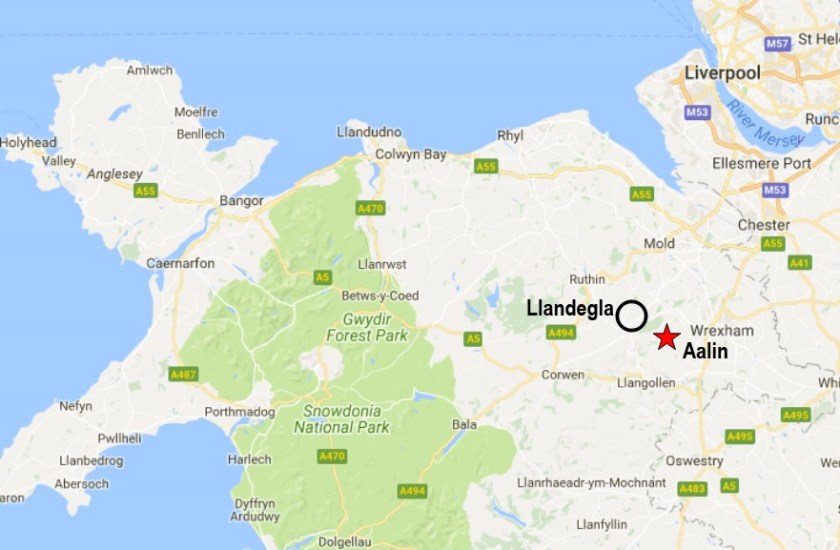
‘Lia’ was tagged at a nest in north Wales in 2017 and after fledging she spent a bit of time in the Brecon Beacons National Park before a brief sojourn to Somerset, and then had returned to settle in mid-Wales.

[Photo of Lia by Guy Anderson]

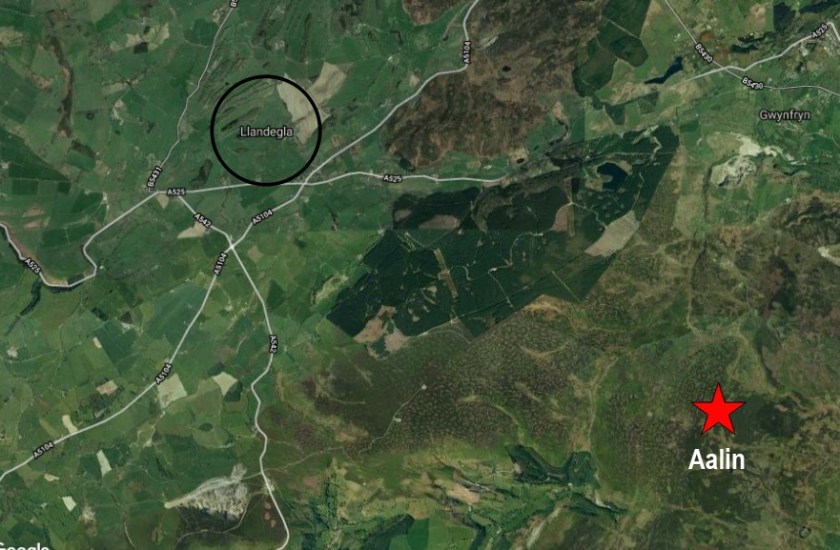
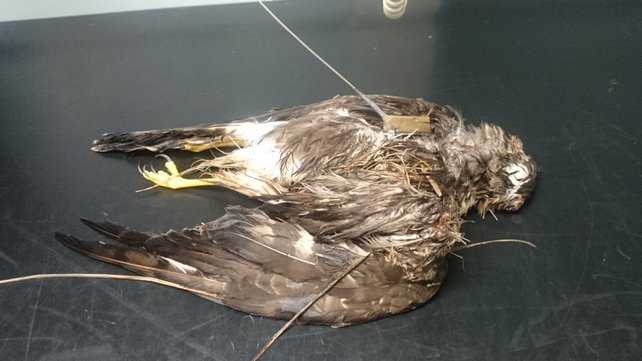
In May this year the engineering data from her tag indicated she was dead and the RSPB located her decomposed corpse in a sheep field near the village of Tylwch, south of Llanidloes, an area with an apparent history of illegal raptor persecution.

[Location map from RSPB]:

Lia’s corpse was sent to the Zoological Society of London for a post mortem. Unfortunately a cause of death couldn’t be established but the vets did detect a fractured tail feather.

[Photo of fractured tail feather, via RSPB]:

ZSL’s post mortem report stated that fractures of this type “have previously been found in a hen harrier proven to have been shot with ammunition (Hopkins et al 2015). No other signs of shooting were detected in this bird“.

The Hopkins et al (2015) paper related to a pioneering forensic examination of Bowland Betty (a hen harrier found shot on a Swinton Estate grouse moor in Yorkshire’s Nidderdale AONB in 2012) that detected a tiny fragment of lead which confirmed she had been shot, confounding the protests of the Countryside Alliance.

Although Lia’s cause of death was inconclusive, Dyfed Powys Police have been treating it as suspicious and are investigating.

For further details of Lia’s demise, please read the RSPB’s latest Skydancer blog here

Hen harrier satellite tag data to be presented in……Vancouver!

Natural England has been using tax payers’ money to fit satellite tags to young hen harriers in England for over ten years.

Since then, there has been a steady stream of reports of those tagged harriers ‘disappearing’ in suspicious circumstances on grouse moors, or being found illegally shot (often on grouse moors), or occasionally dying from natural causes.

We, and several others, have been asking Natural England to release the geographic data for several years because we believe the data will demonstrate a strong link between the locations of ‘disappearing’ hen harriers and land managed for driven grouse shooting (in exactly the same way ‘disappearing’ sat tagged golden eagles have been strongly linked to land managed for grouse shooting). These hen harrier data should be in the public domain, not just because we’ve paid for the data collection, but because these data could provide the evidence we need to apply badly needed pressure on the Government to take action against the criminals within the grouse shooting industry who continue to persecute this species.

However, Natural England has steadfastly refused to release the data, first telling us that the data were part of a PhD study and so couldn’t be released prior to the PhD submission. Then when we found out that the PhD had been abandoned after 11(!) years of ‘study’, NE told us last year that the data wouldn’t be released because an analysis was being undertaken by external academics and would be submitted for peer-review publication in 2018.

We have been highly critical of NE’s refusal to discuss these data and have suggested (here and here) that NE is involved in a massive cover-up to suppress these data to protect the interests of the grouse shooting industry; an industry NE is supporting through its ludicrous hen harrier brood meddling scheme.

Well, after another year of waiting for these data to emerge, it now appears that an analysis has been completed and the findings will be presented at a scientific conference in August……but you’ll have to go to Vancouver to find out the results!

The following is an abstract that has been accepted for presentation at the International Ornithological Congress on 25th August 2018:

Disappointingly, this abstract does not reveal any of the findings but it is interesting to note that Professor Stephen Redpath is listed as a co-author – that’ll be Stephen Redpath who is heavily involved in Natural England’s scandalous hen harrier brood meddling proposal (currently facing two legal challenges, from Mark Avery and the RSPB) and the proposed ‘reintroduction’ of hen harriers to southern England (more on this subject shortly).

If, as we fully expect, the results of this sat tag data analysis do implicate grouse moor management with the suspicious disappearance of hen harriers, that’ll lead to Natural England facing further awkward questions (and perhaps further legal challenges) about how its actions are failing to help the hen harrier (a species it has a statutory duty to protect) and instead how it’s actions are helping to shield the grouse shooting industry criminals from facing justice.

Unfortunately we won’t be in Vancouver to listen to Dr Arj Amar’s presentation (which undoubtedly will be very good), but we know a few who will and we’ll ask them to try and attend this talk and provide us with some details.

We’ll also be asking Natural England to release the findings of this analysis, even if they’re only preliminary results.

Hen harriers breed on grouse moor in Peak District National Park

Press release from the National Trust, 3 July 2018:

Welcome return of the skydancer to the High Peak

One of Britain’s most threatened birds, the hen harrier, has bred on the National Trust’s High Peak Moors in the Peak District National Park, for the first time in four years.

The four chicks are said to be in a ‘healthy condition’ after hatching just a few days ago on land managed by the conservation charity.

[Photo of the 4 hen harrier chicks from National Trust website]


The hen harrier is one of the most special birds of the British uplands and is famed for the adult’s mesmerising and dramatic ‘sky dance’, which the male performs as it seeks to attract a female.

We’re delighted to learn of this nest” said Jon Stewart, the National Trust’s General Manager for the Peak District.

The hen harrier has been one of the most illegally persecuted birds of prey in Britain for many years and we have set out on a mission to work with others to create the conditions for the harrier and other birds of prey to thrive once again in the uplands.

We hope this will be a positive model for improving the fate of our birds of prey and providing the healthy natural environment that so many people care about and want to see”.

In 2013 the Trust published its High Peak Moors Vision, which put at its heart restoring wildlife, including birds of prey, and involving people in the care of the moors.

The conservation charity leases much of its High Peak moorland for grouse shooting and all shooting tenants have signed up to actively supporting the Vision.  As well as the hen harrier, initial signs are promising this year for other species such as the peregrine falcon, merlin and short eared owl.

It is critical the birds are now given the space and security to rear their young without the threat of disturbance or worse.” Jon continued, “The Trust will be working with its partners and tenants to give the birds the best chance of success. We are also working with the RSPB EU-funded Hen Harrier LIFE project to fit satellite tags to the chicks so that we can monitor their movements and learn more to inform the conservation of this very special bird. There is a great sense from everyone closely involved that we want this to work not just for these birds now, but as a symbol for the whole future direction of our uplands.  Uplands that are richer in wildlife and beauty, widely enjoyed and providing huge public benefits.”

ENDS

This is very encouraging news indeed. It’s early days, of course, but the fact the harriers have been ‘allowed’ to settle for a breeding attempt is a vast improvement in this part of the Peak District National Park, where two years ago we reported on an armed gamekeeper using a decoy hen harrier in what was widely believed to be an attempt to attract in, and then shoot, any prospecting hen harriers (see here).

As a direct result of that video footage, the National Trust bowed to public pressure and pulled the lease from the shooting tenant (see here) and earlier this year new tenants were installed on several moors in the area (see here).

Let’s hope these chicks are ‘allowed’ to fledge, without any brood meddling from Natural England, without being stamped on by neighbouring gamekeepers, without the adult male being shot while away hunting, and without the nest receiving any disturbance from well-intentioned birdwatchers.

It’s also good to see that if they do fledge, the chicks will be satellite-tagged by the RSPB’s Hen Harrier LIFE Project and not by Natural England, so we might just get some information about their fate.

British Game Alliance: more greenwash from the shooting industry?

The UK gamebird-shooting industry is in crisis at the moment, with ever-increasing numbers of gamebirds being reared and released (estimated in the region of 50+ million pheasants & red-legged partridge each year) but supply is outstripping demand as game dealers struggle to sell the shot birds for human consumption. This has resulted in the widespread and illegal dumping of shot birds in the countryside (e.g. see here, here, here, here) which is causing serious damage to the reputation of the shooting industry.

Fearing enforced regulation, the shooting industry has come up with ‘the way forward’ and has established an organisation called the British Game Alliance, ‘the official marketing board for the UK game industry’, which, according to the Countryside Alliance, “aims to run a ‘British Game’ assurance scheme to ensure our game meets the highest standards“.

The British Game Alliance’s standards are quite high (see here for what is expected) and apparently compliance with these standards will be regulated and monitored by external auditors.

Sounds good, eh? In principle, yes, but our expectations were low in March 2018 when the Shooting Times revealed some of the individuals involved, including one name that made us laugh out loud given his links to estates with long histories of alleged (and sometimes proven) wildlife crime.

The British Game Alliance was launched with much fanfare and political support in May 2018 and we’ve been watching its website to find out which shoots (and sporting agents) have met the organisation’s ‘shoot standards’ to become listed as an ‘assured’ member. So far, the website hasn’t listed any of its assured members but promises that registered members will be ‘listed soon‘.

However, the British Game Alliance’s twitter feed (@BritishGame) has been more forthcoming. We were scrolling through this morning and were surprised to read this:

A police investigation took place at Wemmergill in 2015 after the discovery of two short-eared owls which had been shot and their corpses shoved inside a pothole (see here). There wasn’t a prosecution.

Another police investigation took place at Wemmergill in February this year following the sudden and explicable ‘disappearance’ of satellite-tagged hen harrier Marc (see here).

Even more surprising to read on the British Game Alliance’s twitter feed was this:

Edradynate Estate will be a familiar name to regular readers of this blog.

It is currently serving a three-year General Licence restriction imposed by SNH following sufficient evidence (substantiated by Police Scotland) that raptor persecution has taken place but insufficient evidence to prosecute a named individual (see here).

Edradynate Estate has been at the centre of investigations for alleged wildlife crime for a very, very long time. It’s well worth reading an earlier summary we wrote (here) which includes some fascinating commentary about the estate by former RSPB Investigator Dave Dick, who claimed as far back as 2004 that the estate was “among the worst in Scotland for wildlife crime“, and commentary by former Police Wildlife Crime Officer Alan Stewart, who said in 2005, “Edraynate Estate has probably the worst record in Scotland for poisoning incidents, going back more than a decade“.

The details involve a disturbingly high number of poisoned birds and poisoned baits that were found over the years, as well as a number of dropped prosecution cases. The most recent dropped prosecution case came just last year, when the Crown Office refused to prosecute an Edradynate gamekeeper for alleged buzzard poisoning, despite Police Scotland urging otherwise (see here).

Despite at least 22 police investigations over several decades (according to Alan Stewart), nobody from Edradynate Estate has ever been successfully prosecuted for any of these alleged wildlife crimes.

And there lies the problem with the British Game Alliance’s shoot standards. If you look at shoot standard #19, ‘Where a shoot or its employees are successfully prosecuted for wildlife crimes, the shoot will be expelled from the BGA and their membership revoked‘.

Given the well-documented difficulties of securing a successful prosecution for wildlife crime, which is an issue even recognised by the Scottish Government, hence the recent introduction of General Licence restrictions, it’s quite clear that some undeserving estates will get the official seal of approval from the British Game Alliance, thus reducing any confidence the public may have had in this well-intentioned scheme.