What you need to know about the satellite tags fitted to the brood meddled hen harriers

Just when you thought the hen harrier brood meddling trial couldn’t be discredited any further…..it turns out that three of the five brood meddled chicks have been fitted with a new, untested type of satellite tag which showed reliability problems right from the start of the trial.

A further five hen harrier chicks, unrelated to the brood meddling trial, were also fitted with these new tags this year (by Natural England), including hen harrier Rosie who was reported ‘missing’ on 17th September (see here) but whose tag started transmitting again three days later (see here).

As far as we are aware, these new tags have not previously been deployed on any harrier species in the UK.

What the actual f….?

It’s anybody’s guess why the project team chose to deploy a new type of tag for the brood meddling trial. The type of tag selected for any animal movement research project will depend on a whole host of things, not least the type of research questions to be addressed by a project (e.g. do you need long-term coarse scale data or do you need shorter-term high resolution data?) but also technical issues such as your study species’ size, weight and ecology as well as tag size, weight and functionality, and there is always the issue of affordability and most definitely reliability.

[A selection of satellite tags on display at the police/researcher satellite tag workshop held earlier this year – photo by Ruth Tingay]

There are a number of tag manufacturers competing in a tight market and competition is high – researchers talk to one another about the tags they’ve been using, the pros and cons of each tag type and which manufacturer’s tags are out performing the others. Tag technology is constantly developing and improving and sometimes researchers will decide to take a risk to test out cutting edge tag technology and novel attachment methods – this is how research advances and methods improve and it’s generally a good thing as long as feedback is widely available to the scientific and technology community from which to learn.

However, if you’re running a politically sensitive research trial where understanding the fate of your study species is crucial (i.e. Natural England’s hen harrier brood meddling trial), and you need to compare survival rates with those of hen harriers tagged in previous years, it is utterly incomprehensible, both politically and scientifically, to elect to try out a new type of tag for that trial because then you have no basis for confidence in the tag’s reliability. It’s completely bonkers!

The hen harrier brood meddling project team agreed to test new tags in the brood meddling trial, apparently for a higher resolution of tracking data. The potential for the tags to fail to provide relevant data was identified as a risk in the Brood Meddling Project Plan and yet still the project team agreed to press on:

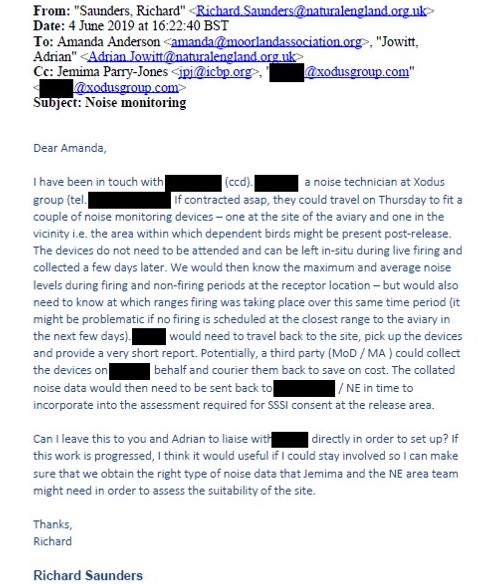
We know from an FoI response that at a project team meeting on 27 August 2019, it was noted that there had been unreliability issues with the tags when the chicks were still in the release aviary (the team thought the aviary’s wire mesh may have caused an issue) but there was still an issue with at least one of the harrier’s tags post-release from the aviary:

We also know that in early September news of the tags’ unreliability had reached the gamekeeping community, as evidenced by this gamekeeper’s post on social media. This is a huge worry. Who told the gamekeepers the tags weren’t functioning properly? Talk about giving them a green light to attack! ‘It’s ok lads, you can shoot the harriers this week ‘cos the tags aren’t working properly so they’ll never know it was you’.

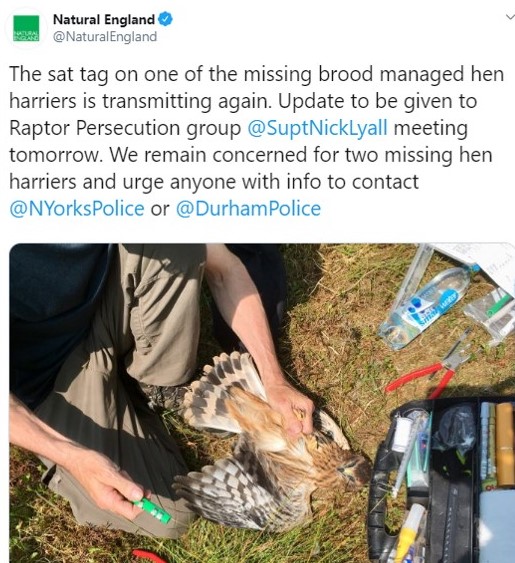
We contacted Natural England to ask whether there was any truth in the claims of tag unreliability and to their credit they responded openly, confirming that two of the tags had been malfunctioning but were now back online, that NE hadn’t been concerned about the harriers because they still had ‘eyes on’ the birds in the field so they knew they were ok, and that NE would be talking to the tag manufacturer to understand the issues.

The issue of tag reliability (or in this case, unreliability), cannot be over-estimated. It’s huge. When these three brood meddled hen harriers, along with HH Rosie, went off the radar in September it was completely reasonable for the public and the police to assume they’d been illegally killed because their disappearances fitted the suspicious circumstances of so many before them (at least 72% of all NE-tagged hen harriers have either been illegally killed or presumed to have been killed on grouse moors, according to authoritative research).

We now know Rosie hadn’t been killed – just that her tag had temporarily stopped, for unknown reasons and for an unknown period of time. Perhaps the tag data have already provided a clue to the cause of this (e.g. low battery voltage) but the project team hasn’t commented so we don’t know.

But what of the still missing three brood meddled hen harriers? Can we be sure they’ve been killed? No, we can’t. It’s highly plausible, of course, but it’s equally plausible, knowing what we now know about these particular tags’ unreliability, that the harriers are actually fine but their tags have just stopped functioning for unknown reasons. Will this uncertainty affect Natural England’s decision to issue another brood meddling licence in January?

This situation is obviously unsatisfactory on many levels, not least for the scientific integrity of the brood meddling trial – it’ll be interesting to hear what the scientific advisory group has to say about all this.

Why didn’t they stick with the tags previously used to monitor hen harrier survival? Sure, like any tag those tags also have constraints but their known reliability is excellent (94%) and of course using the same tag type ensures consistency when trying to compare across studies.

And if you think you’ve heard everything there is to hear about the shambolic brood meddling trial, you’re sadly mistaken…..

Re-discovery of hen harrier Rosie not quite as it’s being portrayed

You’ll recall that satellite-tagged hen harrier Rosie was reported as being the fourth young hen harrier to disappear this autumn, in a vague statement issued by Northumbria Police on 17th October 2019 (see here).

Rosie was not one of the brood meddled hen harriers but was a 2019 bird satellite tagged by Natural England in Northumberland. We were not told the date of her tag’s last transmission nor the location of the tag’s last known position other than ‘near Whittingham’.

Three days later on the evening of 20th October 2019, Supt Nick Lyall tweeted to say “Rosie is alive and well“. It was not reported whether Rosie’s tag had come back online or whether she’d been observed and identified in the field by other means, e.g. the unique code on her leg ring.

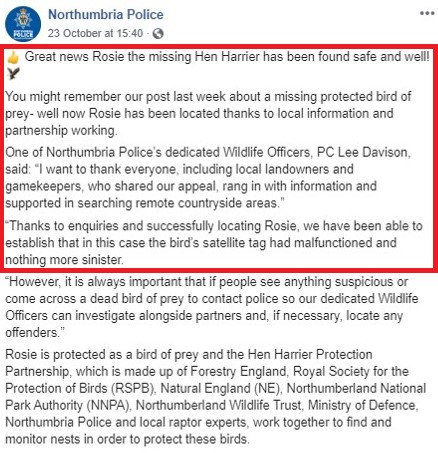
On 23rd October 2019 Northumbria Police posted the following statement on social media:

You’d be forgiven for reading this statement, particularly the part we’ve highlighted in red, and thinking that Rosie’s tag had failed and she was only re-discovered thanks to the extraordinary efforts of local landowners and gamekeepers.

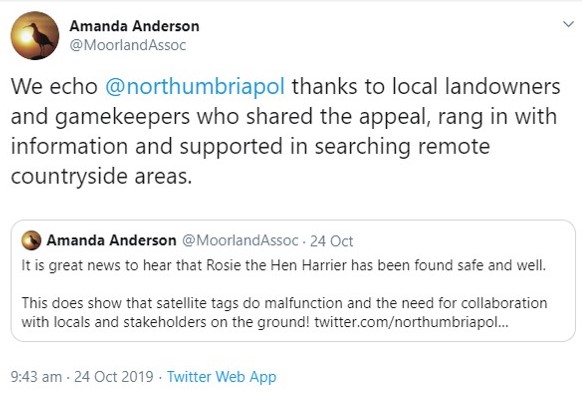
Indeed, Amanda Anderson of the Moorland Association has been quick to exploit this view on her social media accounts:

Isn’t it all fantastic? We don’t need ‘unreliable’ technology to protect this species – we can simply rely on lovely landowners and gamekeepers, working in partnership with the police, and the hen harrier will be kept safe.

The thing is, this version of events is complete bollocks.

When Nick Lyall tweeted that Rosie was ‘alive and well’, we contacted him to ask for more detail. He told us that Rosie’s tag had come back online and that’s how she’d been relocated, and this was ground-truthed by an experienced Natural England fieldworker who confirmed the sighting. (Thanks for being upfront, Nick).

So why the hell is Northumbria Police stating that “Rosie has been located thanks to local information and partnership working” and inferring that she was found thanks to the efforts of local landowners and gamekeepers, when actually she was found because her tag came back online?

Was this police press statement issued with the blessing of Natural England?

And if it wasn’t, why hasn’t Natural England since clarified the details of Rosie’s re-discovery?

What sort of shambles is this? How are we supposed to have any confidence in what we’re being told?

This blurring of the facts isn’t the only issue of concern. We’d like Natural England to be much more upfront about the type of tag Rosie is carrying….and you’ll understand our concern about that when we blog about the tags that were fitted to the brood meddled hen harriers……

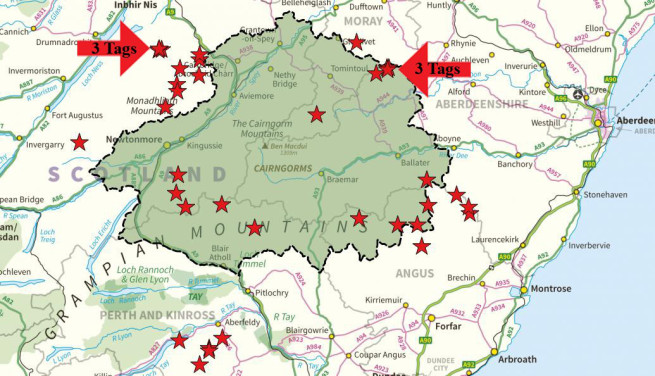
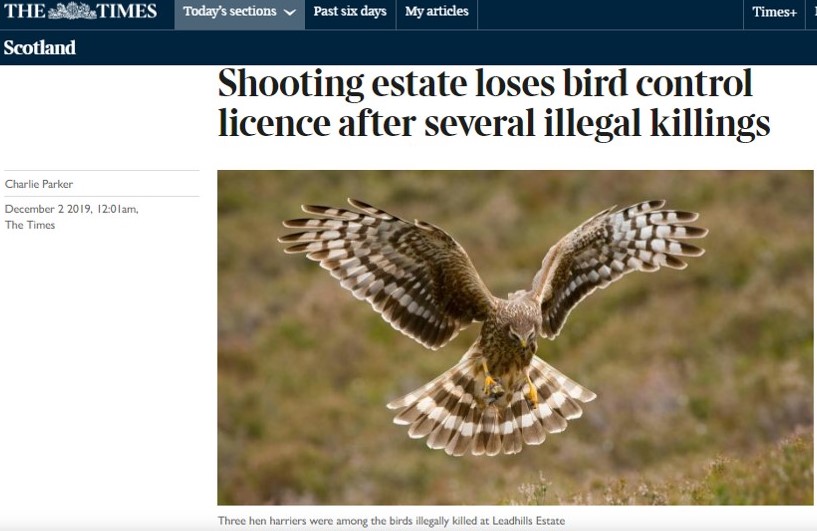
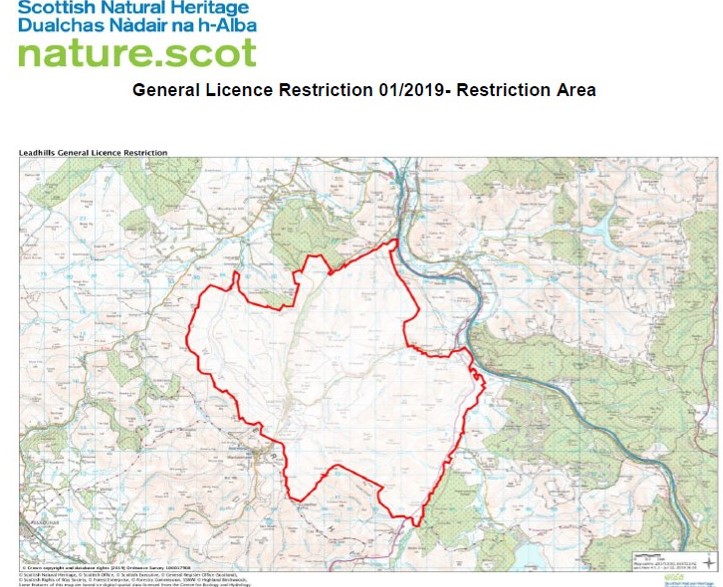
Is SNH about to impose a General Licence restriction on Leadhills Estate?

Last week RSPB Scotland published a blog called ‘Why vicarious liability is failing to have an impact in Scotland‘.

Written by Duncan Orr-Ewing, Head of Species & Land Management, it’s the latest in a series, following on from the excellent blog challenging the Scottish Gamekeepers’ ignorance on satellite tags, written by Ian Thomson, Head of Investigations at RSPB Scotland.

Duncan’s blog is well worth a read. It questions the Crown Office’s recent decision not to prosecute anyone for alleged vicarious liability following the conviction of Scottish gamekeeper Alan Wilson for a series of barbaric wildlife crimes on the Longformacus Estate in the Scottish Borders.

It also considers the potential benefits of having the threat of a vicarious liability prosecution, and how this may have driven down the use of illegal poisons as a method of killing raptors, but been replaced by shooting and trapping methods which are much harder to detect.

The really interesting part of the blog, as far as we’re concerned, is the section on the Leadhills Estate in South Lanarkshire. Blog readers will recall this is where a male hen harrier was found with an almost severed leg caught in an illegally-set spring trap next to his nest earlier this summer. Despite the heroic efforts of a number of experts, he didn’t survive. The estate denied all knowledge and responsibility and nobody has been charged.

[The trapped hen harrier found on Leadhills Estate. Photo by Scottish Raptor Study Group]

Regular blog readers will know this poor hen harrier is not the only victim reported from the Leadhills Estate. The list is long and goes back more than a decade (e.g. scroll down this page). Duncan’s blog discusses some of the most recent incidents including the witnessed shooting of a hen harrier in May 2017; the witnessed shooting of a short-eared owl just a few weeks later and whose body was recovered; the discovery of a buzzard in 2018 that was found to have been shot twice; and the filmed buzzard that according to the RSPB was likely killed in a crow trap in January 2019.

Nobody has been charged for any of the above, but significantly, Duncan’s blog says this:

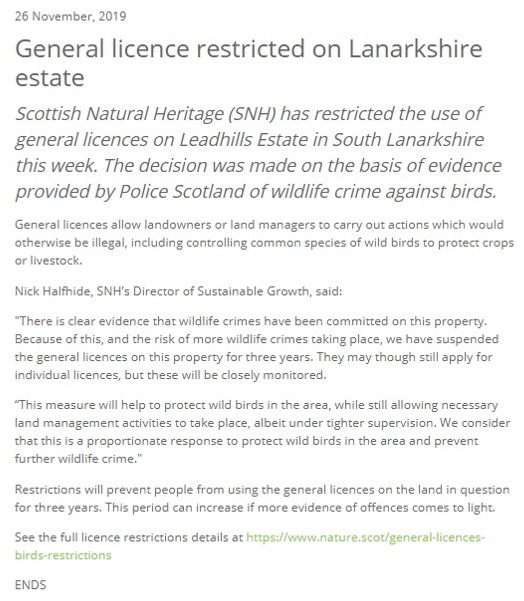
“We are advised that only now is an Open General Licence restriction, another sanction in the public authority wildlife crime “toolbox”, to be imposed here”.

SNH has had the power to impose General Licence restrictions since 1 January 2014. This was instigated by former Environment Minister Paul Wheelhouse in response to continuing difficulties of securing criminal prosecutions and was an instruction to SNH to withdraw the use of the General Licence (available for legal predator control) on land where crimes against raptors are believed to have taken place but where there is insufficient evidence to instigate criminal proceedings. The decision to withdraw the licence is based on the civil standard of proof which relates to the balance of probability as opposed to the higher standard of proof required for a criminal conviction.

This measure is not without its limitations, particularly as estates can simply apply for an individual licence instead which allows them to continue predator control activities but under slightly closer scrutiny.

SNH has only imposed four such restrictions since 2014 – a pathetically small figure when we are aware of at least a dozen other cases where a restriction should have been applied. SNH has claimed it is ‘not in the public interest‘ to explain those failures.

We’ve looked on the SNH website to see whether Leadhills Estate has been listed as having a General Licence restriction imposed (SNH does publicise the details when it imposes the restriction) but so far Leadhills Estate is not named. Potentially the estate has been notified and is currently in the period where it may challenge SNH’s decision, as per the framework for a General Licence restriction.

Watch this space.

UPDATE 26 November 2019: SNH imposes General Licence restriction on Leadhills Estate (here)

Missing hen harrier Rosie reported to be alive and well

Following last Thursday’s news that a fourth satellite tagged hen harrier had ‘disappeared’ this autumn  – one called Rosie who vanished in Northumberland on an unknown date (here), news emerged last night on Supt Nick Lyall’s twitter feed that apparently she is alive and well.

There is no further detail at the moment.

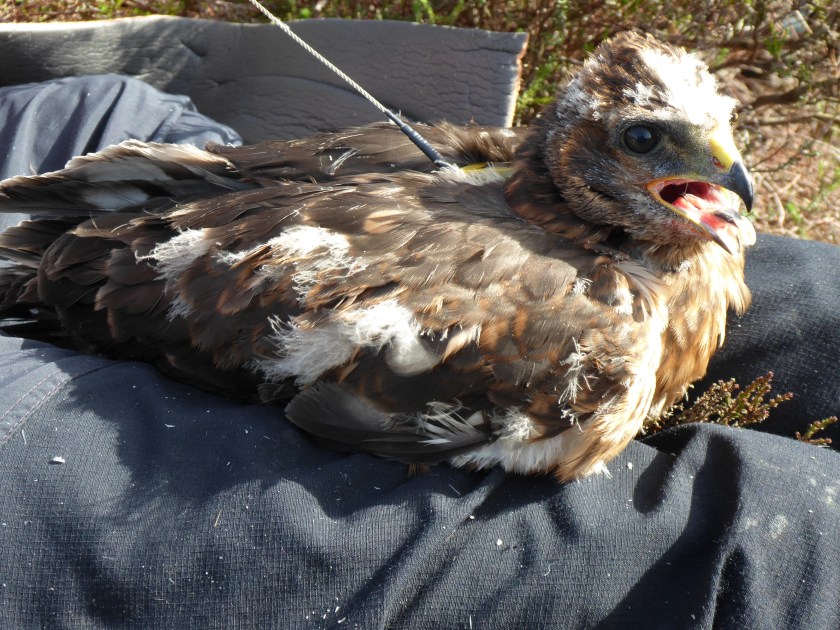
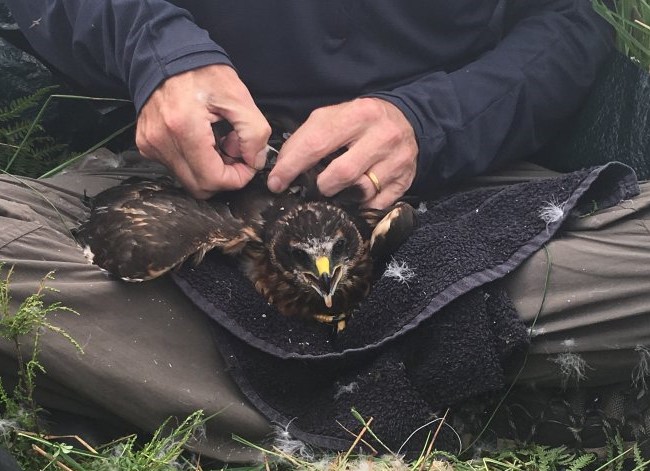
[Hen harrier Rosie, photograph from Natural England]

We’d be very interested to find out from Natural England when, exactly, they called this bird as ‘missing’ (the original appeal for information from Northumbria Police strangely excluded this detail) and for how long the tag was actually offline.

If it was a genuine technical tag malfunction then nobody should be the least bit surprised. Assuming Rosie’s tag is the same type of tag as used in previous years, it’s known to have a 94% reliability rate. We’re aware of only one other hen harrier tag that was listed as a ‘stop no malfunction’ (i.e. a suspicious disappearance) but the bird was identified alive and well several months later (‘Highlander‘, a HH tagged by the RSPB) so if Rosie’s tag has temporarily malfunctioned that’s well within the expected 6% failure rate.

And of course even if this was a genuine tag malfunction it doesn’t change the fact that three of the five brood meddled hen harriers are still missing in suspicious circumstances and that 72% of all hen harriers sat tagged by Natural England have either been illegally killed or have disappeared presumed illegally killed on grouse moors. We’re expecting to see a similar figure from RSPB -tagged harriers when their tag analyses have been completed.

UPDATE 27 October 2019: Re-discovery of hen harrier Rosie not quite as it’s being portrayed (here)

Decision on next Hen Harrier brood meddling licence to ‘take into account the results to date’

Yesterday, before the news that a fourth satellite-tagged hen harrier had vanished in suspicious circumstances this autumn (see here), DEFRA published the following blog:

We’re still waiting to learn from Natural England what, exactly, is the exit strategy for the hen harrier brood meddling trial and specifically, what are the criteria for making that decision?

Well what a relief to learn that the decision on whether to renew the hen harrier brood meddling licence ‘will take into account the results to date‘.

Those ‘results’ will be the suspicious disappearance of three of this year’s five brood meddled hen harriers (we understand the two surviving brood meddled birds have flown off to France) plus the suspicious disappearance of at least one other satellite-tagged hen harrier (Rosie) in recent weeks and there’s absolutely no doubt there’ll be more before this year is out.

The decision whether to renew or not should be easy and it should already have been made. Nobody in their right mind can think that brood meddling has (a) been successful and (b) is in any way helping hen harrier conservation.

But then look at that last paragraph in the DEFRA blog, above. It claims that the ‘ultimate aim’ of the DEFRA Hen Harrier (In)Action Plan, of which brood meddling is a part, is to ‘reduce hen harrier predation of grouse chicks on driven grouse moors……’

Eh?

Why is a Government department (DEFRA) and the statutory conservation agency (Natural England) focusing on protecting excessive numbers of red grouse (that are going to be shot for fun) at the expense of a protected red-listed bird of prey in population free-fall due to illegal killing on aforementioned grouse moors?

Another satellite-tagged hen harrier goes missing – Northumbria Police appeal for info

A fourth young hen harrier has vanished in suspicious circumstances this year.

The first three disappeared in September from moors in County Durham (here) and the Yorkshire Dales National Park (here and here).

The latest one to go, ‘Rosie’ is not believed to be part of Natural England’s outrageous brood meddling trial, but is believed to have hatched at a protected nest site in Northumberland earlier this summer and tagged by Natural England staff.

[Photo from Northumbria Police]

Here is the appeal for information issued by Northumbria Police this afternoon:

Unfortunately it does not say when this hen harrier disappeared nor does it give any more specific location than ‘near Whittingham’. (Come on Northumbria Police, this is basic information).

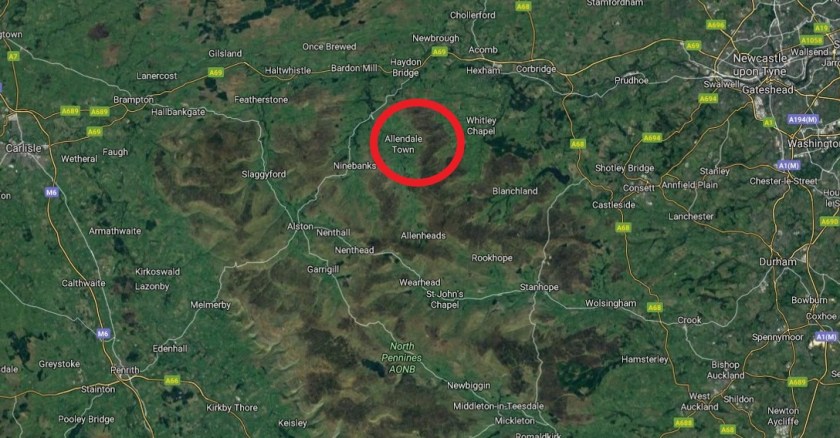
Whittingham is a village and parish just outside the Northumberland National Park, as outlined on these two Google maps:

UPDATE 20 October 2019: 

Sup Nick Lyall has tweeted this evening to say Rosie is alive and well. No further information has been provided.

UPDATE 21 October 2019: Missing hen harrier Rosie reported to be alive and well (here)

UPDATE 27 October 2019: Re-discovery of hen harrier Rosie not quite as it’s being portrayed (here)

Still waiting for Werritty

Autumn is here; Werritty’s report is not.

For new readers, the long anticipated and long overdue Werritty Review is a Government-commissioned report on grouse moor management in Scotland. Environment Cabinet Secretary Roseanna Cunningham commissioned it following the publication of the authoritative, ‘exemplary and thorough‘ Golden Eagle Satellite Tag Review in May 2017, which revealed the magnitude of ongoing raptor persecution on some Scottish grouse moors (read that report here).

The Werritty Review Group was announced in November 2017 and we were told to expect the report by spring 2019.

Spring 2019 came and went, the report didn’t appear, but we were told that Professor Werritty was ill and the report would be delayed by two months (new expected date: June 2019). Fair enough.

June 2019 came and went, the report didn’t appear.

Then we heard it would arrive in July 2019.

July 2019 came and went, the report didn’t appear then we heard from Professor Werritty himself that it’d be submitted ‘during the summer‘.

At the end of July, in response to public fury about on-going illegal raptor persecution on Scottish grouse moors, a Government spokesperson told us the report ‘was due in the next few weeks’ (see here).

It’s now mid-October and the report still hasn’t appeared. According to Environment Cabinet Secretary Roseanna Cunningham, writing to an MSP in response to a query about the publication date by a constituent (and blog reader!), the report is “expected within the next couple of weeks“!!

To be perfectly frank, events this year have overtaken whatever recommendations Professor Werritty might suggest – the discovery of this spring-trapped hen harrier on a grouse moor in Perthshire, this spring-trapped hen harrier caught next to his nest on a grouse moor in South Lanarkshire, this spring-trapped golden eagle photographed flying above a grouse moor in Royal Deeside, and the suspicious disappearance of two more satellite-tagged golden eagles from a grouse moor in Perthshire have demonstrated that we now need a radical approach to bring this to an end.

Nevertheless, we’re still keen to see the Werritty report appear because until it does, the Scottish Government has the perfect excuse, that it has used repeatedly since May 2017 when the review was first commissioned, to do absolutely naff all to tackle these ongoing serious organised crimes.

It is right and sensible that Scottish Government should wait for that report“, says Roseanna Cunningham. How can it possibly be “right” or “sensible” that the Government should continue to sit on its hands and watch these atrocities taking place, suggesting it’s powerless to act?


3rd brood meddled hen harrier ‘disappears’ in suspicious circumstances

Following the news that two of this year’s five brood meddled hen harriers had ‘vanished’ on grouse moors in the north of England in September 2019 (one in County Durham here and one in the Yorkshire Dales National Park here), we now learn that a third harrier has disappeared, also in the Yorkshire Dales National Park.

[Hen harrier photo by Laurie Campbell]

Here’s the press release from North Yorkshire Police, published today:

Second satellite-tagged hen harrier goes missing in North Yorkshire

Police appealing for information about whereabouts of hen harrier

North Yorkshire Police is appealing for information after another satellite-tagged hen harrier has gone missing in the region just weeks after another one also stopped transmitting a signal.

The hen harrier is a young female bird tagged at the release site in the Yorkshire Dales on 30 July 2019 as part of the hen harrier brood management scheme. The bird has not been named and is known to the Natural England monitoring team as 183703.

It is known from satellite tag data that the bird had the bird stayed in the Hawes area since her release, with one excursion to the Sedbergh area on 16 September, then south to the West Pennine Moors near Horwich 17-19 September before returning to land near Semerwater where she had remained for at least a fortnight.

The last transmission from the bird’s satellite tag was received on the 29 September on Thornton Rust moor, 3.37km east of Semerwater, but the bird could have flown on for some distance since the last transmission.

Since then no further transmissions have been received from the tag. Natural England field staff have carried out checks with a hand-held scanner and monitored the area with no findings and North Yorkshire Police have also searched the area with colleagues from the Yorkshire Dales National Park Ranger team, as well as making extensive local enquiries.

The bird is a juvenile female, brown in colour and ringed with the BTO ring number FJ48404.

This appeal for information sadly follows the disappearance of another satellite-tagged hen harrier in the area, this one a juvenile male known as 183704 who was last known to be in the area of Askrigg Common on 19 September.

At this time North Yorkshire Police are keen to locate both birds safe and well, but if found deceased the birds can be subject to post mortem to establish if the cause of death was from natural causes or if criminal activity was involved.

If you find the bird or have any information please contact North Yorkshire Police on 101 and quote reference number 12190186540.

ENDS

Here is an RPUK map showing the approximate last known locations of the three brood meddled satellite-tagged hen harriers that have ‘disappeared’ this year: 1 = the HH that vanished on 9th September; 2 = the HH that vanished on 19th September; 3 = the HH that vanished on 29th September:

Here is an RPUK map showing the approximate last known locations of the two brood meddled hen harriers that have disappeared on moors in the Yorkshire Dales National Park:

So within weeks of those five brood meddled hen harriers being released back in to the uplands of northern England, three of them (60%) have disappeared without a trace.

This isn’t unusual nor is it unexpected – we know from authoritative research published earlier this year that 72% of young satellite-tagged hen harriers will disappear in suspicious circumstances on grouse moors in northern England, probably having been killed illegally.

What this is, though, is a bloody joke. This brood meddling ‘trial’, sanctioned by DEFRA and carried out by Natural England, in cahoots with the very industry responsible for the species’ catastrophic decline in England, is supposed to test whether those people responsible for killing hen harriers illegally would stop if the chicks were brood meddled (removed from the grouse moor in June at the critical grouse-rearing stage and then returned to the wild in August). We all knew this wouldn’t work because we know that young hen harriers are killed routinely during the grouse shooting season, and especially in September and October and yet still DEFRA, Natural England and their grouse shooting mates pressed ahead.

No doubt we’ll now have to endure more bollocks from Natural England, DEFRA, the Moorland Association and all the rest of the persecution deniers, pretending that nothing’s going on, everything’s fine and isn’t the grouse shooting industry doing great things for conservation.

What we will be doing is asking Natural England, again, what its exit strategy is for the hen harrier brood meddling trial and when will it implement it? We’ve asked several times, including at direct face to face meetings with senior staff, most recently last week. We were promised an answer – we haven’t had it yet.

Well done and thank you, North Yorkshire Police, for publishing a relatively swift appeal for information and for including enough detail to make it useful. And also for not including any grouse shooting propaganda in the appeal this time, in contrast to a previous appeal for info.

RSPB challenges misinformation about satellite tags

This is an excellent blog written by Ian Thomson, Head of Investigations at RSPB Scotland, countering the misinformation (that’s being kind) about satellite tags that is being touted by some in the game shooting industry.

We’ll be writing more on this shortly.

We’ve reproduced Ian’s blog here:

Challenging misinformation about satellite tags

RSPB Scotland’s Head of Investigations Ian Thomson outlines our thoughts on claims made accompanying the launch of a petition regarding satellite tags fitted to raptor species.

One of the greatest conservation tools to emerge in recent years has been satellite-tagging technology. Whether following the journeys of migrating cuckoos or shedding light on the dangers facing UK birds of prey, these tiny pieces of technology are becoming increasingly valuable in the conservationist’s mission to save nature.

As you read this, satellite tags are helping scientists monitor a handful of recently released captive-reared white-rumped vultures in Nepal after the species almost went extinct. It allowed the finding of a turtle dove nest in Suffolk this August, crucial for a species which has declined in the UK by 97% since 1970. Another tag’s data led us to the body of a hen harrier, Rannoch, lying in the heather, her leg caught in an illegal spring trap on a Perthshire grouse moor.

[Hen harrier Rannoch was fitted with a satellite tag at a nest in Perthshire in summer 2017]

A couple of weeks ago the Scottish Gamekeepers Association (SGA), lodged a petition “calling on the Scottish Parliament to urge the Scottish Government to introduce independent monitoring of satellite tags fitted to raptor species, to assist the police and courts in potential wildlife crime cases and to provide data transparency.”

The Scottish Parliament Information Centre (SPICe) briefing about the petition gives a rounded picture of the context.

However, the supporting information provided by the SGA to support their petition contains misleading information which appears to be part of an ongoing and concerted attempt to undermine the credibility of these scientifically-approved tags and the integrity of those monitoring them.

In recent years, various statements the SGA have made in the media (eg. as discussed here) are symptomatic of an organisation in complete denial about the extent of raptor persecution and it’s association with grouse moor management. Indeed, every story about a dead or disappeared satellite-tagged bird of prey on a grouse moor is met with denials, obfuscation or conspiracy theories.

[Rannoch was killed by an illegal trap on a grouse moor in November 2018. Had she not been tagged, this crime would have remained undiscovered]

The RSPB has been involved in the fitting of satellite transmitters, using experienced, trained and licenced taggers, to a wide variety of birds of prey and other species, both in the UK and abroad, for the last 15 years. As a key adviser and contributor to a number of high-profile conservation research projects involving the tagging of bird species across the world, we thought it important to share our experience to put the SGA’s claims into context.

In the UK, all tagging projects require approval from the independent British Trust for Ornithology (BTO)’s Special Methods Panel, who rigorously scrutinise all such proposals on behalf of the UK statutory conservation agencies, including SNH in Scotland, to check their scientific validity and that the welfare of the birds tagged is ensured. The BTO’s process also ensures all projects meet Home Office requirements.

All practitioners must demonstrate experience and capability to undertake this work and this is heavily scrutinised by the Special Methods Panel. Most of those involved with this technique are experienced bird ringers and handlers. An annual licence return is supplied to the BTO by all satellite practitioners for their records, and this is a condition of receiving further licences in the future.

The RSPB also has considerable experience in monitoring the data coming from our own transmitters and in working closely with other individuals and organisations involved in similar projects, notably with regard to development of tag technology, sharing good practice and the analysis of satellite tag data.

We lead on police training on the interpretation of tag data, recently attending key events in Perthshire and Yorkshire in 2019 to ensure that the police and officers from the National Wildlife Crime Unit are equipped to carry out independent scrutiny of tag data. We have also helped ensure that, where satellite-tagged birds of prey are suspected of being illegally killed, relevant tag data is provided to investigating officers as required.

We have assisted the police in numerous follow-up investigations where tagged birds have been illegally killed or have been suspected to have been victims of criminality – as with Rannoch, mentioned above.

In 2017, the government-commissioned review of the fates of satellite-tagged golden eagles concluded that almost a third of young tagged eagles “disappeared (presumably died) under suspicious circumstances” and that “areas managed as grouse moors were strongly associated with the disappearance of many of the tagged eagles”. This independently peer-reviewed study was underpinned by data from tags that researchers from RSPB and several other organisations and agencies had fitted to Scottish golden eagles, and is key evidence that scientifically highlights the ongoing problem of raptor persecution on Scotland’s grouse moors.

Satellite transmitters, all fitted as part of projects licensed by the BTO, have revolutionised the study of bird ecology. They have proved invaluable research tools in understanding the movements of birds, from Asian vultures to English turtle doves, Welsh hen harriers and Scottish golden eagles. They have allowed us to identify important migration staging areas, key nest and roost site locations, allowing us to further protect these birds. They have also allowed recovery of dead birds, enabling post-mortem examinations to take place and identify causes of death which would otherwise remain a mystery. Indeed, they are shining a very bright light on those areas of upland Scotland where raptor persecution continues unabated.

It is unfortunate that the SGA, which has consistently attempted to undermine the veracity of tag data, has also refused to take part in meetings of the partnership for action against wildlife crime (PAW Scotland) since the government’s satellite-tag review was published. Had it done so, perhaps many of the inaccurate statements contained in the briefing document, or in their recent members’ magazine, prepared to accompany the petition would not have appeared.  One can only question their motives.

ENDS

UPDATE 1st July 2022: Scottish Parliament sees sense and closes SGA’s petition seeking ‘Independent monitoring of satellite tags fitted to raptors’ (here).

Legal challenge against hen harrier brood meddling goes back to court

Fantastic news!

Mark Avery is going back to the Royal Courts of Justice in London after being given permission by the Appeal Court to challenge an earlier court decision that hen harrier brood meddling is legal.

[Back to the High Court for Mark and his brilliant legal team. Photo by Ruth Tingay]

The RSPB has also been given permission to appeal.

As Mark explains on his blog today (here), details of the exact grounds for an appeal have not yet been given, nor has a court date, although according to this public notice record it should be before 6th July 2020!

I wonder how many more brood meddled hen harrier chicks will have vanished in suspicious circumstances by then? Two of them disappeared within weeks of being released from captivity back in to the uplands this year: one on a grouse moor in County Durham on 9th Sept (here) and one ten days later on a grouse moor in the Yorkshire Dales National Park on 19 Sept (here).

We don’t know what’s happened to either of them, although an informed and educated guess would suggest they’ve both been illegally killed, exposing the sheer stupidity and futility of the brood meddling scheme.

Well done Mark and the RSPB for continuing the fight.