Further to last week’s news that Scottish gamekeeper and convicted sex offender Russell Mason had pleaded guilty to battering a trapped Goshawk to death on a shooting estate in Perthshire, in addition to firearms offences (see here), I’ve been looking to see how the game-shooting industry has responded to this latest conviction of a member of its community.
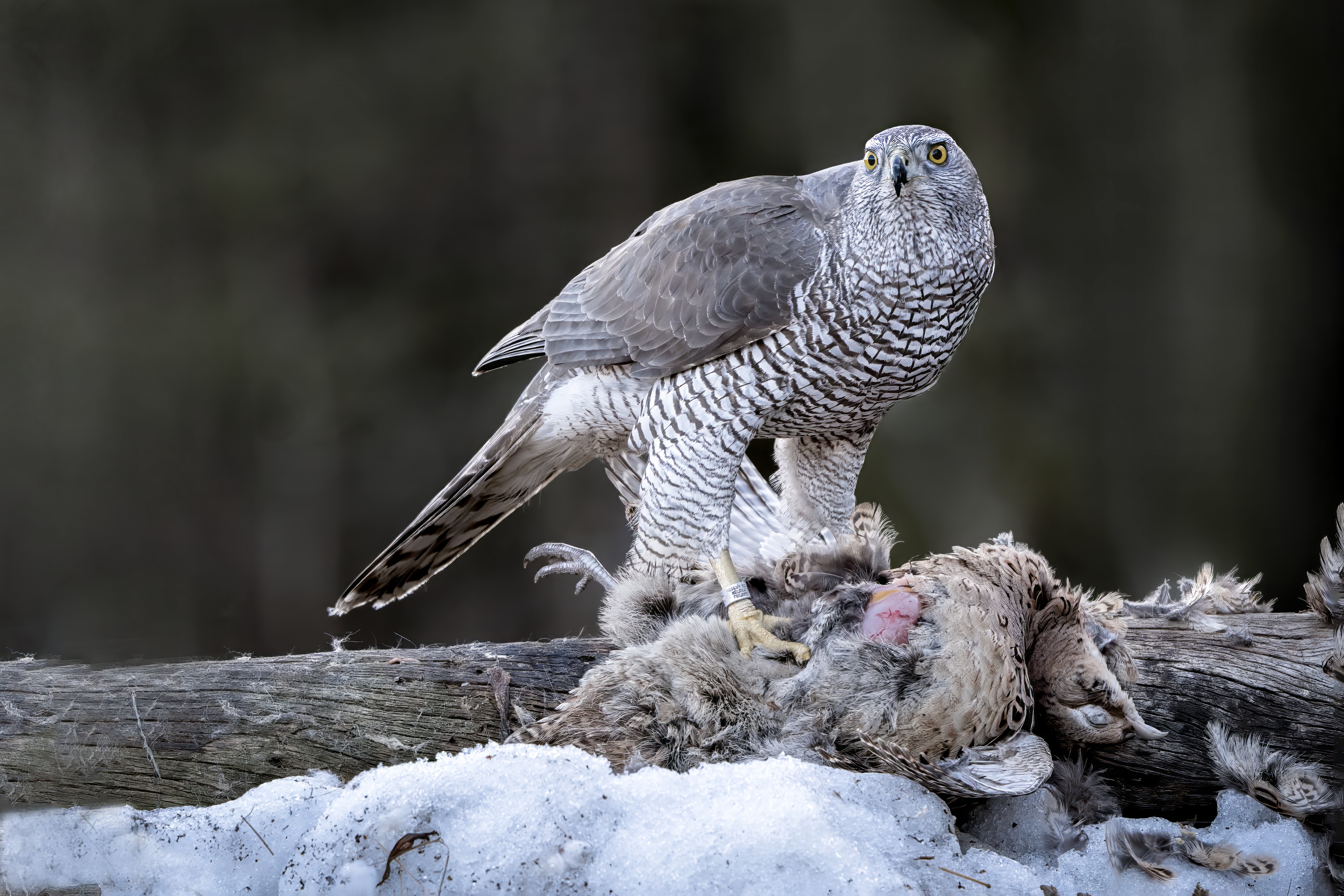
Goshawk with Pheasant. Photo by Ronnie Gilbert
You’ll recall that this is the game-shooting industry whose organisations routinely state they have a ‘zero tolerance’ policy towards raptor persecution, and many of them are members of the Partnership for Action Against Wildlife Crime (PAW) Raptor Group, in which case you’d think they’d be quick to condemn this latest crime, and reassure the public that if Mason and/or the estate was a member of any of these organisations they’ve now been expelled, right?
Six days on from Mason’s conviction, here’s how those shooting organisations have responded to the news:
Scottish Gamekeepers Association – silence
Scottish Land & Estates – silence
Scottish Association for Country Sports – silence
British Association for Shooting & Conservation – silence
Countryside Alliance – silence
Game & Wildlife Conservation Trust – silence
Perhaps they’re all waiting for Mason to be sentenced next month before they denounce his criminal activities? Although I can’t think of any reasonable argument for a delay.
Or perhaps they’ll wait for the inevitable public revulsion when the RSPB publishes the video nasty showing Mason bludgeoning the Goshawk to death, before they bother to comment?
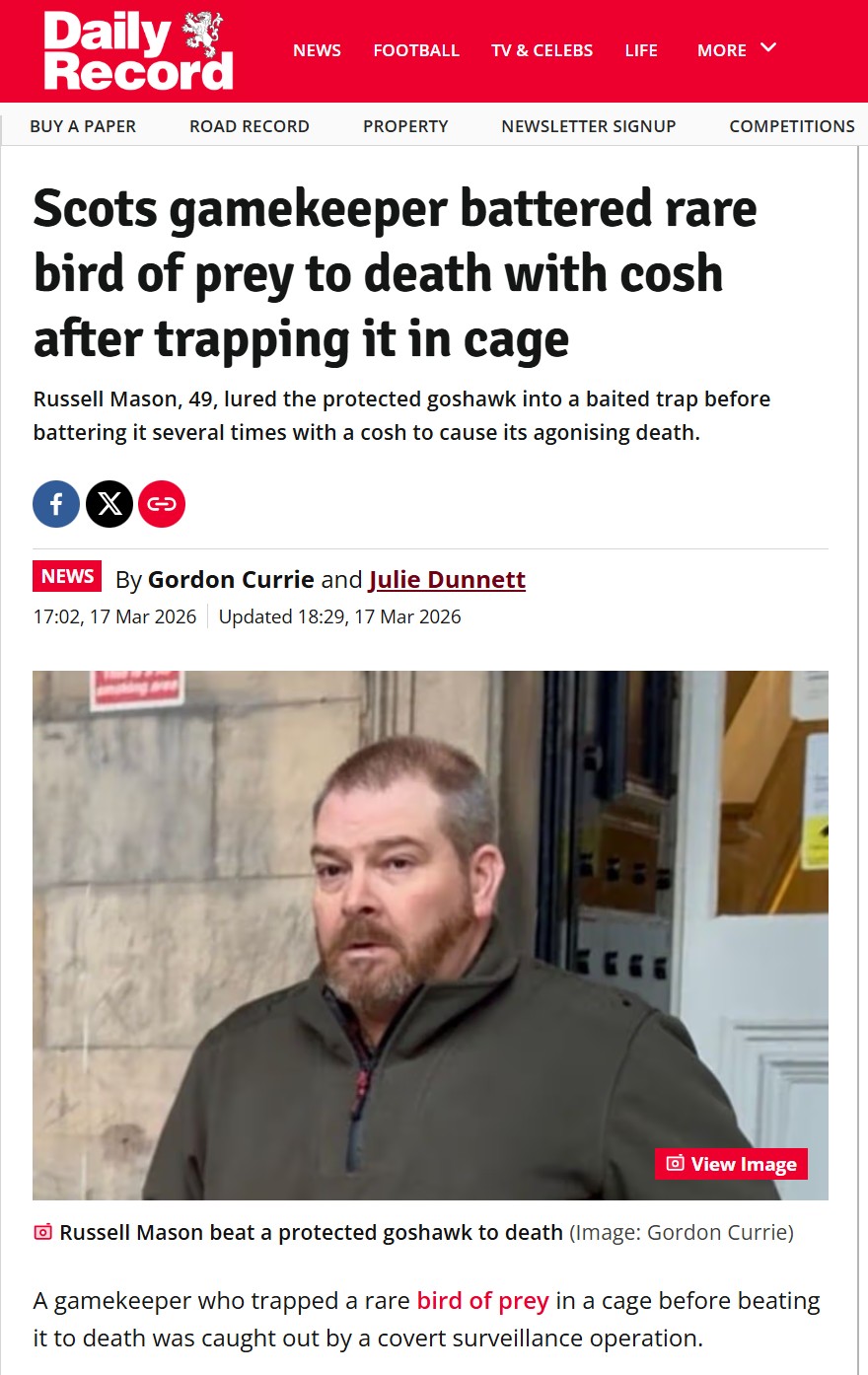
Further to yesterday’s news that Scottish gamekeeper Russell Mason, 49, had pleaded guilty to battering a trapped Goshawk to death on a shooting estate in Perthshire (see here), the Daily Record has published more detail about this case, which is quite disturbing.
The article is reproduced below in case this URL is broken/removed at a later date.
Russell Mason, 49, lured the protected goshawk into a baited trap before battering it several times with a cosh to cause its agonising death.
He was also found to have left nearly 200 rounds of live ammunition lying around in his bedroom and unsecured within his Polaris Ranger vehicle.
Fiscal depute Karon Rollo told Perth Sheriff Court: “Goshawks are rare birds of prey. They hunt birds and small animals. They have a wingspan of up to four feet and weigh between two and three pounds.
“They were persecuted to extinction in Scotland in the last century, but have been reintroduced, with now around 100 breeding pairs in existence.
“A crow cage trap was visited by RSPB staff on 9 January 2024. At the time this trap was set, it had a meat bait, and the door was chained and padlocked shut.
“It had a sign on the trap stating that the Scottish Government pays the estate to catch carrion crows from 1 March to 30 June to increase the chick survival rates for conservation-listed bird species.
“To continue observations and continue with this research, it was decided to install a continuous recording static camera covering this crow cage trap“.
She said RSPB staff visited the camera several times to review the captured footage and became aware of a male visiting the trap on 12 February 2024.
“At this time there was a goshawk and a crow in the trap,” Ms Rollo said. “The male opened and entered the trap. After entering he used a hand-held net to capture the goshawk and put it to the ground.
“He then struck the bird six times with a cosh. He placed the bird into a carrier bag, rolled it up and put the package under his arm.
“He left the trap, placed the net in the back of the vehicle and the bag in the cab. He locked the trap and drove off“.
The prosecutor said: “The male was identified from the footage by police officers, who knew him as being gamekeeper Russell Mason. The crow cage trap number related to the accused.
“Footage on other dates, including him putting a decoy bird in the trap, confirmed his identity. An avian vet specialising in raptors was shown the footage.
“He opined that the goshawk looked healthy and was exhibiting the normal behaviour of a captured raptor. Goshawks, in his experience, as ‘particularly flighty and stressy birds’ and this one was no exception.
“He describes it as showing a man beating a goshawk to death with a cudgel with the bird having been first netted within a crow cage trap.
“He states there were six blows to the body, which may have caused broken wings or rib fractures during the trauma, and that it was quite obviously not killed outright with one blow.
“He is of the view that it is extremely unlikely that it would have been lying passively in the net and therefore there is a high possibility that it would have sustained painful fractures and injuries before dying“.
A search of Mason’s cottage found unsecured ammunition, along with clothes matching those seen on the CCTV footage. A bag and cosh were found in his vehicle.
The bag was analysed and found to have goshawk DNA on it. The search team recovered 195 illegally stored rounds of ammunition.
Mason admitted intentionally or recklessly killing a goshawk on 12 February 2024 by seizing it with a net before repeatedly striking it with a cosh on Cochrage Moor, Bridge of Cally, Perthshire.
He also admitted breaching the terms of his firearms certificate by failing to store ammunition securely.
Sentence on Mason was deferred for the preparation of social work reports until next month by Sheriff Alison McKay and he was granted bail.
Mason was previously placed on the sex offenders register after being spotted carrying out a solo sex act in his car by a resident of a sheltered housing complex.
He was spotted by an elderly woman with his trousers down as he sat in the car beside a path used by children to walk to and from school.
When officers told Mason they were at the scene to investigate reports of someone masturbating in a car, he said: “That was me.”
Mason admitted carrying out an act of public indecency outside the sheltered housing complex in Harriet Court, Blairgowrie, and was placed on the register for a year.
ENDS
A reminder – sentencing for Mason’s latest convictions (wildlife crime & firearms offences) has been deferred until 24 April 2026 for background reports.
UPDATE 23 March 2026: Game-shooting industry’s response to the recent conviction of Perthshire gamekeeper Russell Mason (here)
A Scottish gamekeeper has pleaded guilty to killing a Goshawk after he battered it to death after it was caught inside a Crow cage trap on a shooting estate in Perthshire.
At Perth Sheriff Court this morning, on what should have been the opening day of a criminal trial, gamekeeper Russell Mason, 49, changed his plea to guilty in relation to the charge that he had killed a Goshawk on Cochrage Moor (Muir), believed to be part of the Milton of Drimmie and Strone estate near Blairgowrie, on 12 February 2024 (see here for background to this case).
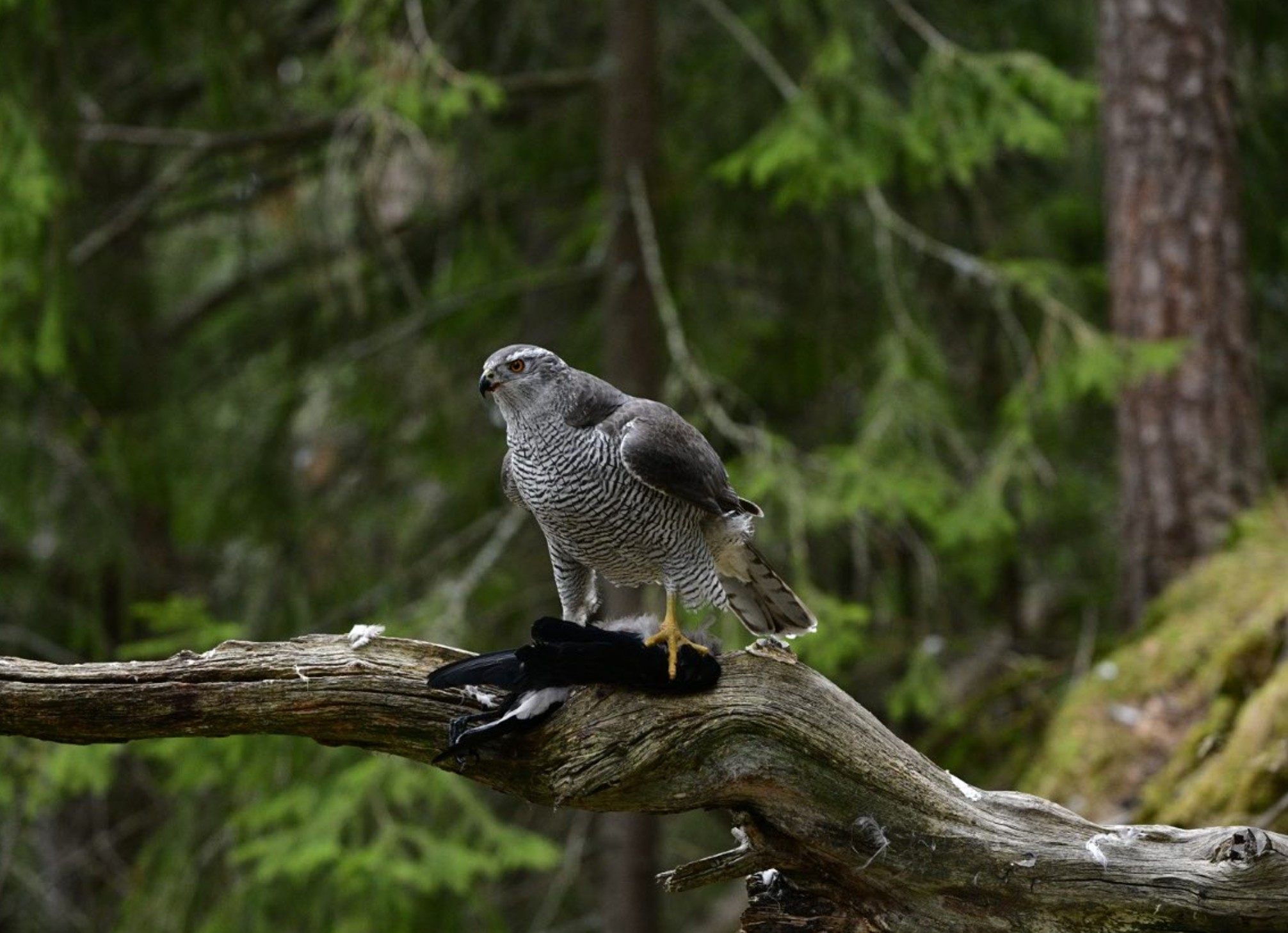
Goshawk with a Crow. Photo by Ronnie Gilbert
The court was shown a six-minute video of Mason killing the Goshawk – the footage had been filmed covertly by the RSPB’s Investigations Team and was crucial to providing the Crown Office with sufficient evidence to prosecute.
Mason also pleaded guilty to various firearms offences but it is believed that charges relating to alleged snaring offences were dropped, probably as part of a plea bargain.
The court heard that Mason has a previous conviction (the details were not discussed) and sentencing was deferred until 24 April 2026 for background reports. The Sheriff mentioned that a ‘restriction of liberty order’ may be considered. This is a direct alternative to a custodial sentence and usually involves electronic monitoring/tagging.
I expect the RSPB will publish its gruesome footage once sentencing is complete.
Congratulations to Police Scotland, RSPB, Scottish SPCA and the Crown Office & Fiscal Service for an exemplary investigation and prosecution. This is what effective partnership-working looks like.
Incidentally, this is the third successful conviction for raptor persecution in as many months where covert video evidence provided by the RSPB has been pivotal to the case.
The other two cases so far this year were:
12 January 2026, Scarborough Magistrates’ Court: gamekeeper Thomas Munday pleaded guilty to battering to death a Buzzard that had been caught inside a Crow cage trap on a Pheasant shoot at Hovingham, North Yorkshire (here)
and
29 January 2026, York Magistrates’ Court: gamekeeper Racster Dingwall pleaded guilty to conspiring to kill a Hen Harrier as it came in to roost on a grouse moor on the Conistone & Grassington Estate in the Yorkshire Dales National Park (here).
Many of you will be aware of the game-shooting industry’s recently ramped-up efforts to try to discredit and smear the reputations of RSPB Investigations Team members; these three convictions shouldn’t leave you in any doubt of the industry’s motivation.
Without the skill and expertise of the RSPB’s ability to capture such covert footage, these criminals would have escaped justice and the game-shooting industry’s claims of respectability and adherence to the law would go unchallenged. It’s as simple as that.
We can expect more news on the repercussions of today’s conviction in due course – i.e. was Mason a member of the Scottish Gamekeepers’ Association? Was he a member of the Tayside & Central Regional Moorland Group? (certainly someone with the same name and affiliation has previously signed an official letter to the Scottish Parliament about snaring regulations). Will NatureScot impose a three-year General Licence restriction on this estate? Is the estate a member of the landowners’ lobby group, Scottish Land & Estates? And will there be a prosecution for alleged vicarious liability?
NB: As legal proceedings have now concluded, comments are open on this case, with the usual caveat that offensive/libellous posts will not be published.
UPDATE 18 March 2026: Convicted Scottish gamekeeper Russell Mason – more disturbing details about this case (here)
UPDATE 23 March 2026: Game-shooting industry’s response to the recent conviction of Perthshire gamekeeper Russell Mason (here)
A trial is due to begin tomorrow (Tuesday 17 March 2026) at Perth Sheriff Court for a Scottish gamekeeper accused of killing a Goshawk on a Perthshire shooting estate.
The alleged incident took place on 12 February 2024 on a shooting estate near Blairgowrie.
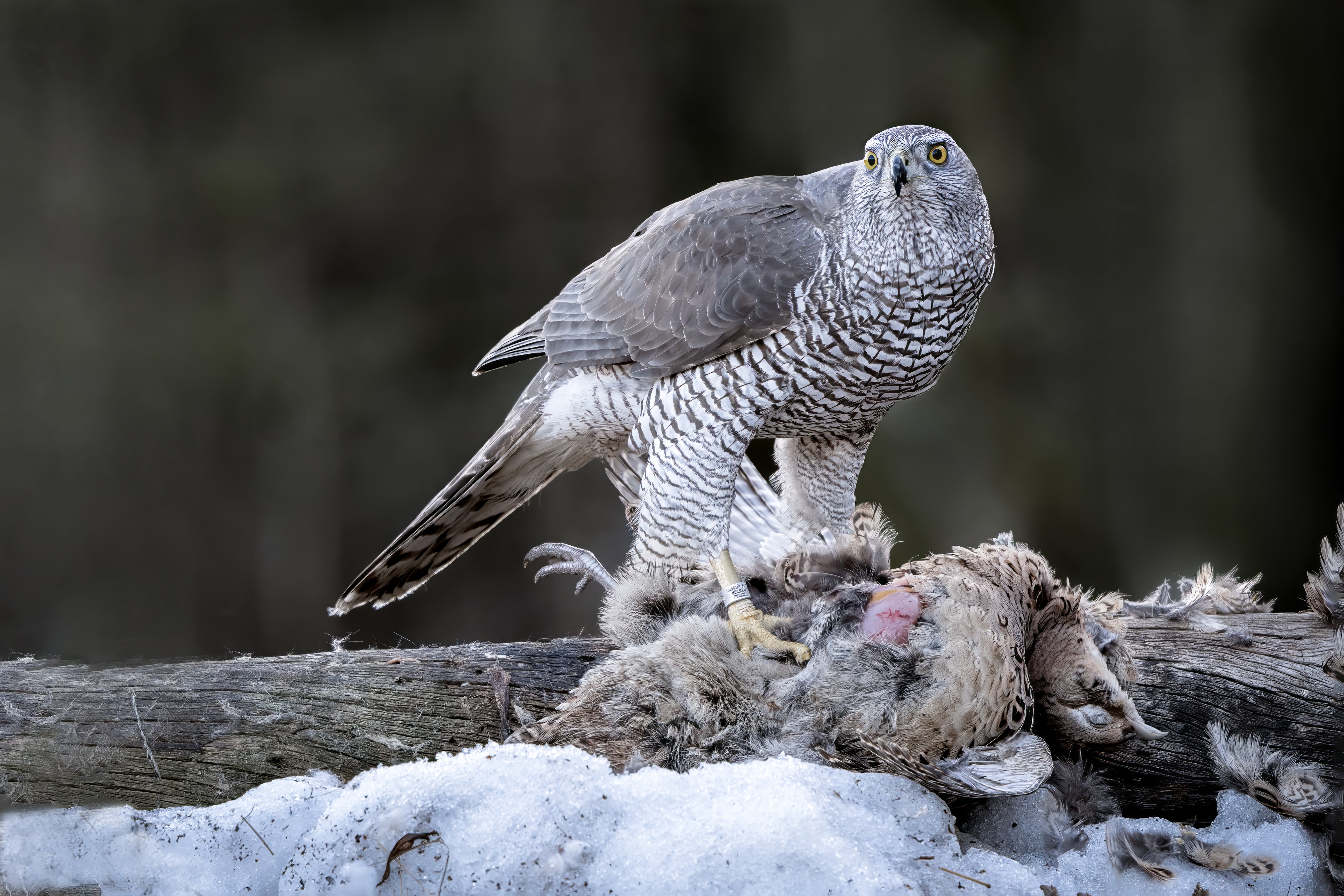
Goshawk with a Pheasant. Photo by Ronnie Gilbert.
Police Scotland, with the assistance of partners from the RSPB and Scottish SPCA, executed a search warrant on the estate on 29 February 2024, leading to the arrest of a 47-year-old gamekeeper and subsequent charge (see here).
He has pleaded not guilty.
The trial was due to start on 11 November 2025 but it didn’t call due to another trial over-running (see here).
NB: As this case is live, comments are turned off until legal proceedings have ended.
UPDATE 17 March 2026: Scottish gamekeeper Russell Mason pleads guilty to battering a Goshawk to death on shooting estate in Perthshire (here)
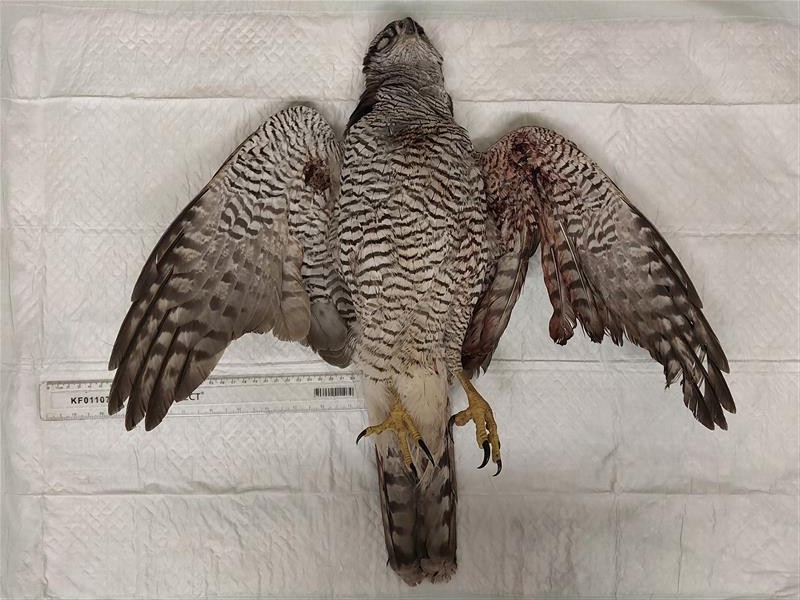
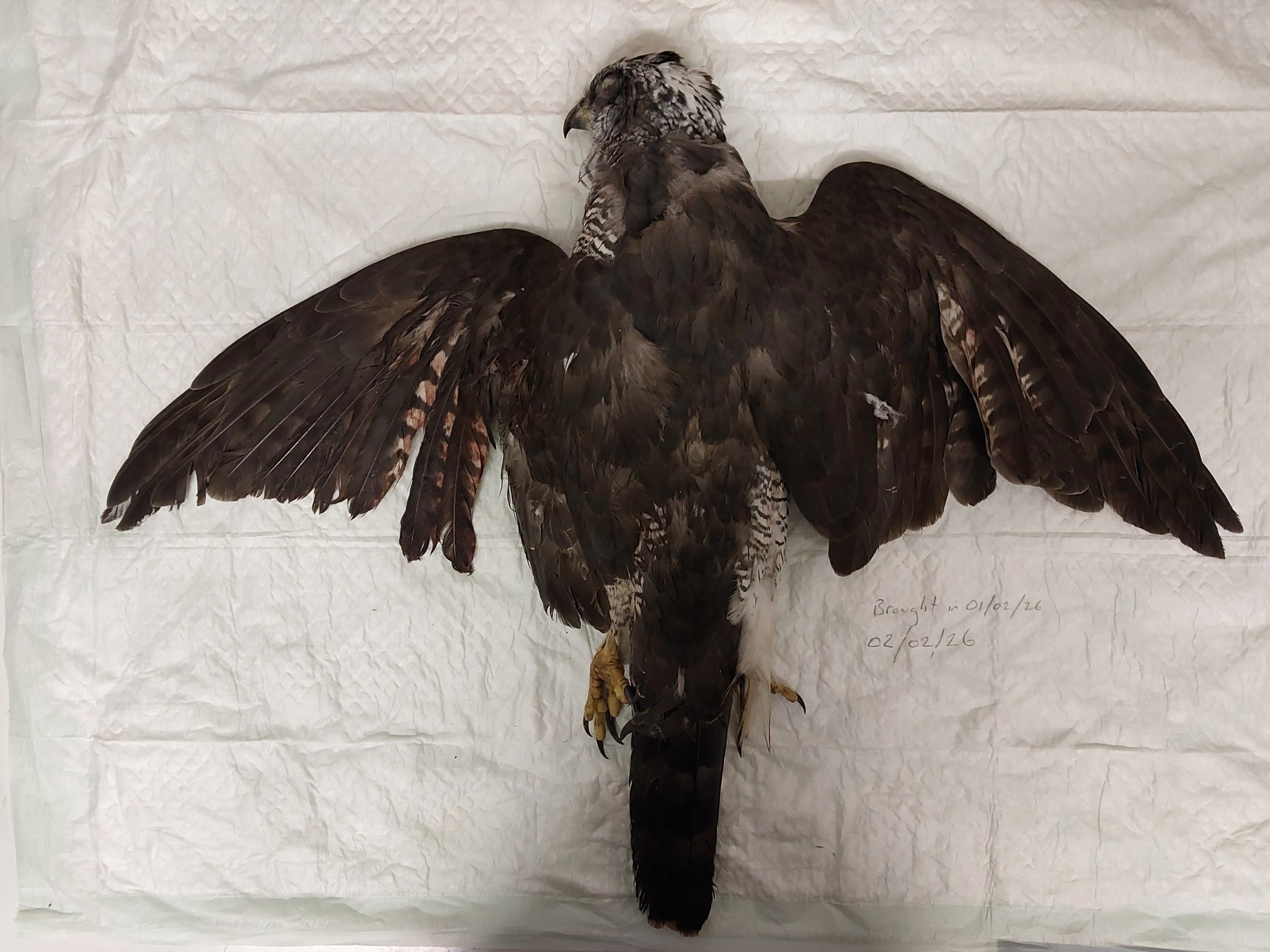
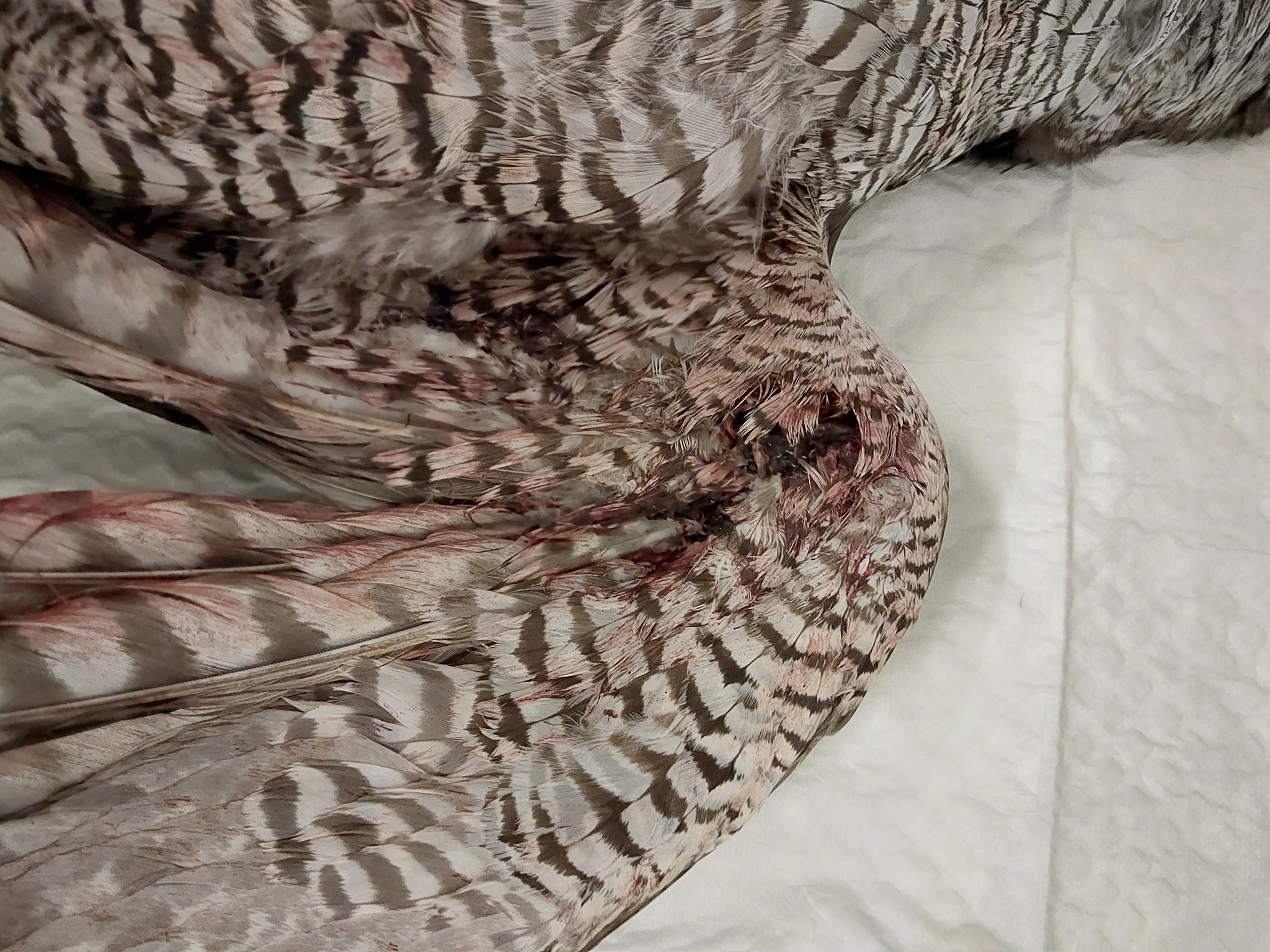
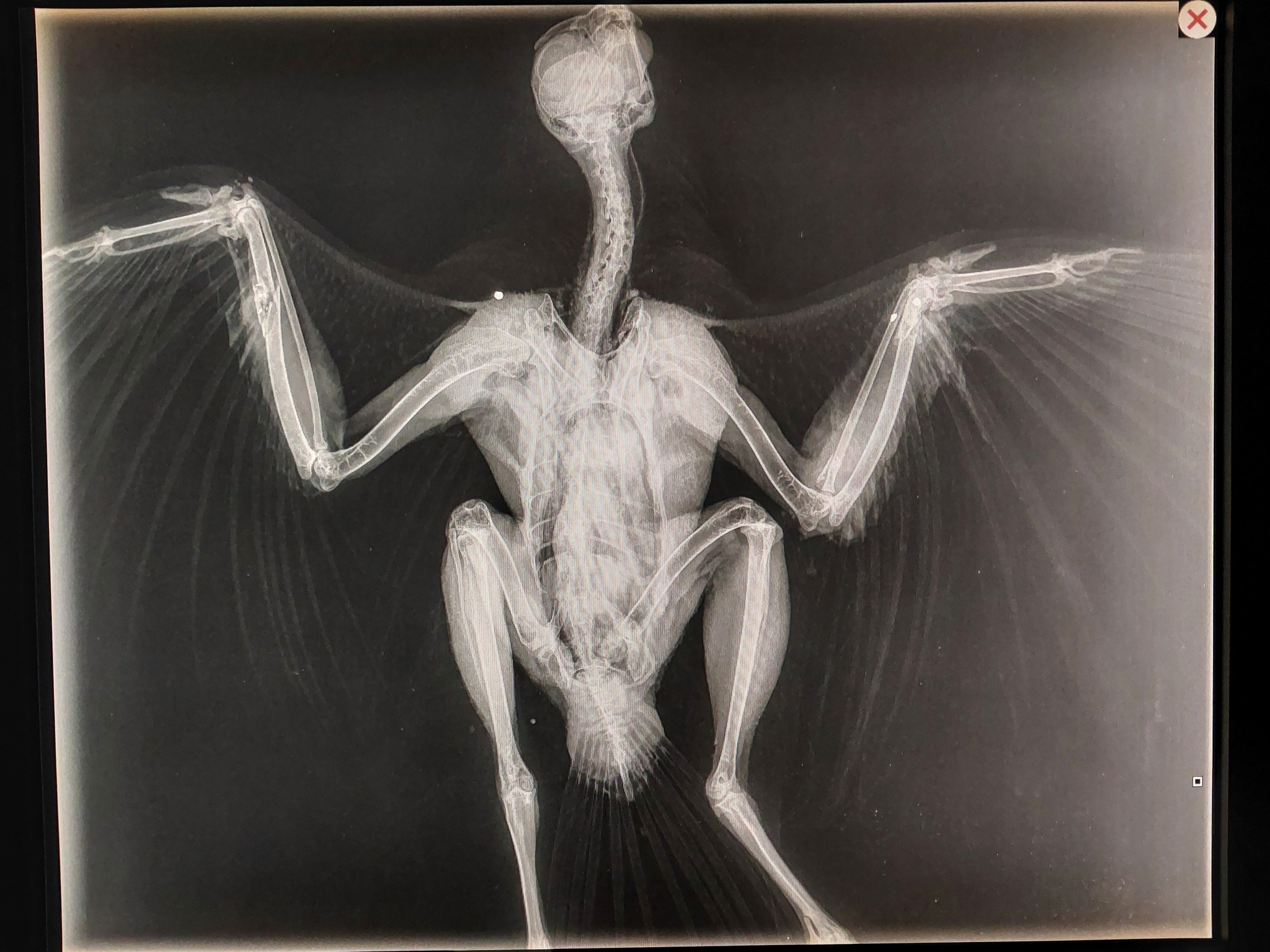
Derbyshire Police’s Rural Crime Team has issued an appeal for information after the discovery of a critically-injured Goshawk, which had to be euthanised due to the extent of its injuries.
The injured Goshawk was found by a member of the public near Stanton Hall, Stanton by Dale, in south east Derbyshire on Saturday 31 January 2026. A veterinary examination and x-ray revealed the bird had been shot with a shotgun and sustained a right wing fracture, a left wing fracture and a suspected left ulna fracture near the elbow.
Given these injuries, it is likely the Goshawk wasn’t capable of long distance flight from the location where it was shot.
Photographs via Derbyshire Police Rural Crime Team:
The Police are asking the public whether they saw anyone with a gun in the area, whether gunshots were heard, and whether anyone saw any suspicious behaviour.
Anyone with information is asked to call the police on 101 and quote incident number 26*68719.
Press release from Police Scotland (1 December 2025):
APPEAL FOR INFORMATION AFTER BIRD OF PREY SHOT IN ABERDEENSHIRE
Officers are appealing for information after a bird of prey was shot in Aberdeenshire.
On Saturday, 8 November, 2025, a member of the public found an injured goshawk in the Whiterashes area.
The bird was recovered with the help of the Wild Arc Wildlife Rescue Centre but died before arriving at a vet.
Following further enquiries, it was established that the bird had been shot.
Goshawk with a crow. Photo by Ronnie Gilbert
Constable Ann Ashman, of the Wildlife Crime Unit, said: “Goshawks are protected under the Wildlife and Countryside Act, and it is illegal to kill any protected species.
“Our enquiries are ongoing and we are working with our partner agencies to establish the full circumstances of this incident.
“I would appeal to anyone with any information that may assist our investigation to contact us. Your information could be vital in establishing what has happened.
“If you were in the Whiterashes area that day and saw anything suspicious – or have any information about shooting activity in the area – please contact us.
“Anyone with information is asked to contact Police Scotland on 101, quoting incident number 1942 of 8 November.”
A trial begins today at Perth Sheriff Court for a Scottish gamekeeper accused of killing a Goshawk on a Perthshire shooting estate.
The alleged incident took place on 12 February 2024 on a shooting estate near Blairgowrie.
Goshawk with a Pheasant. Photo by Ronnie Gilbert.
Police Scotland, with the assistance of partners from the RSPB and Scottish SPCA, executed a search warrant on the estate on 29 February 2024, leading to the arrest of a 47-year-old gamekeeper and subsequent charge (see here).
He has pleaded not guilty.
NB: As this case is live, comments are turned off until legal proceedings have ended.
UPDATE 12 November 2025: Trial of Scottish gamekeeper accused of killing Goshawk now delayed until March 2026 (here)
The BBC’s Highland Cops programme has entered its third series and episode 2 features the police investigation in to an active Goshawk nest that had been shot out on a sporting estate near Kingussie, on the western side of the Cairngorms National Park.
This investigation took place in June 2024 – see here for the police’s appeal for information at the time.
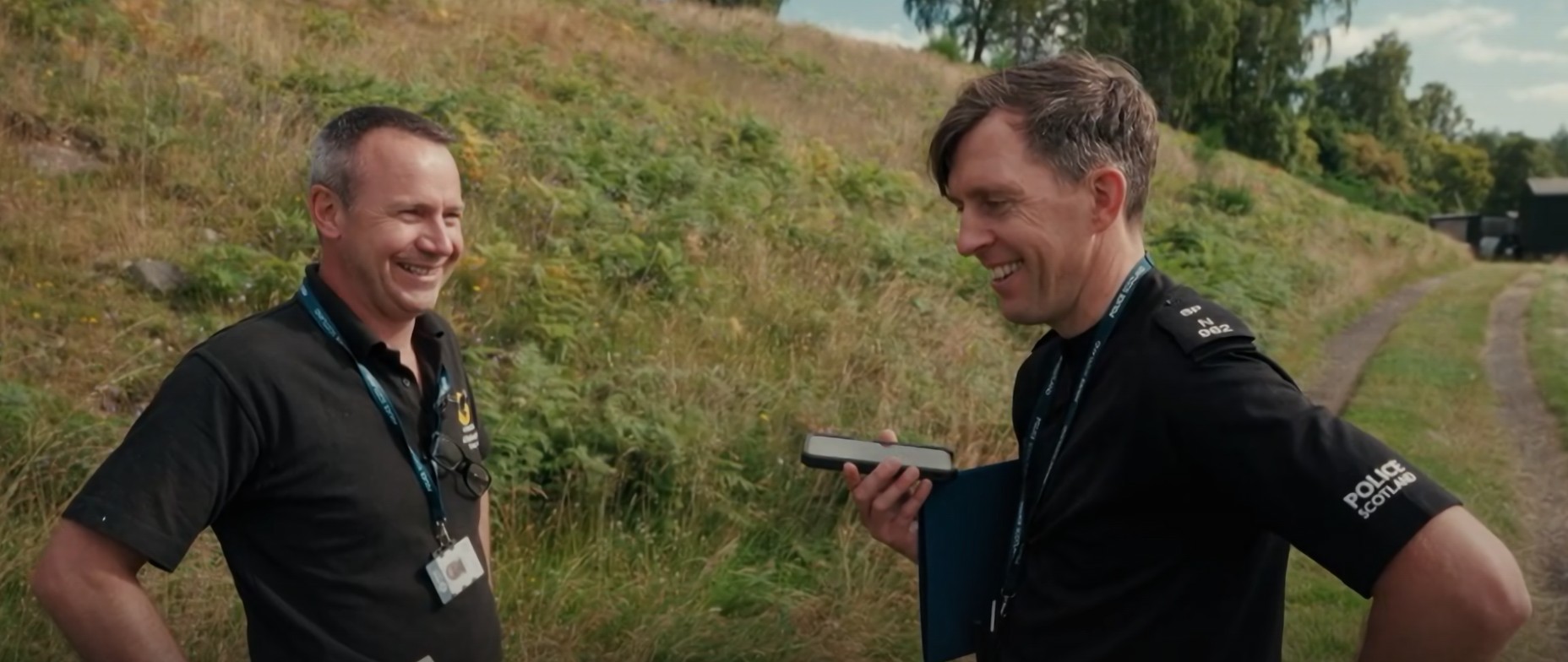
Screengrab from BBC Highland Cops programme
Officers had received a report of the active Goshawk nest being found abandoned in suspicious circumstances in a forest near Loch Gynack, and the programme follows experienced wildlife crime officer PC Dan Sutherland throughout his investigation.
The commentary from Dan is excellent – he speaks calmly and with authority about the link between illegal raptor persecution and gamebird shooting estates, and how the criminals have been getting away with their crimes for so long. That’s not opinion or conjecture, it’s based on factual evidence, and I applaud him for being prepared to say it on camera, knowing full well that it will attract vicious retaliation from some within the gamebird shooting industry, including, I have no doubt, official letters to his superior officers demanding punitive action against him.
Dan visits the abandoned Goshawk nest where he finds empty shotgun cartridges at the base of the tree and a shotgun wad is found lodged in the bottom of the nest.
The nest is removed for forensic examination, along with several nearby tree branches. They’re taken to the Kincraig Wildlife Highland Park for x-rays, which reveal a large number of shotgun pellets:
As Dan says, the evidence is damning.
He then teams up with PC Gavin Ross from the National Wildlife Crime Unit (NWCU) and they set out to visit all the people who legally own shotguns in the area, to either rule them out of the enquiry or to see if they can provide assistance.
The first person they visit is a gamekeeper who lives on the estate. They knock at his house and a woman speaks to them through a crack in the door, telling them he’s not in. As the officers leave to go and visit the next person on their list, Dan gets a phone call from a solicitor who tells him that none of his clients will be talking to the police without him being present.
“It’s the nature of the beast”, says Dan.
Dan and Gavin comment to one another that the speed of the solicitor’s phone call is probably some kind of record – coming in less than ten minutes after they’d knocked on the gamekeeper’s door. Their wry smiles tell you this is a common occurrence and was not unexpected. It puts a halt to their investigation until they can organise a time to meet with the shotgun owners and their legal representative.
PC Gavin Ross & PC Dan Sutherland take a call from the gamekeeper’s solicitor (screengrab from BBC Highland Cops).
If someone had shot out a Goshawk nest on my land, potentially killing any adults or chicks present on the nest, and the police knocked on the door to see if I could assist, I’d be welcoming them in with open arms, breaking out the tea and posh biscuits and offering up all the assistance I could muster to help them find the culprit, especially if there was evidence that armed criminals had been active on my property. I certainly wouldn’t be calling in my attack dog solicitor to warn off the cops. Why would I?
At the end of the programme there’s an update on the case – the police did meet with the shotgun owners and their solicitor. The text on the screen says:
‘However, with no new leads the case has been closed‘.
I guess it was probably the usual ‘no comment’ interviews, then.
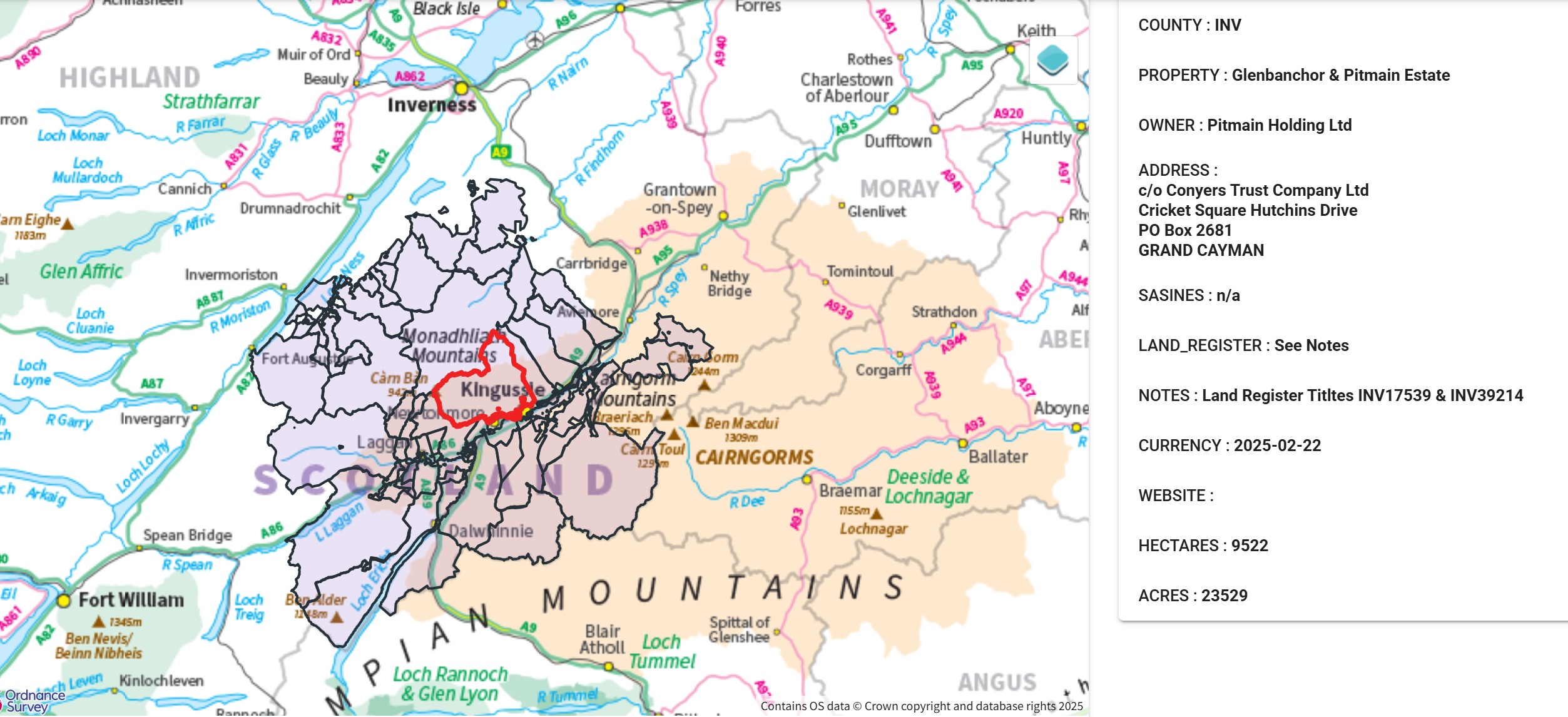
According to Andy Wightman’s excellent Who Owns Scotland website, Loch Gynack is situated on the Glenbanchor & Pitmain Estate, whose owner, Pitmain Holding Ltd, is registered in Grand Cayman:
It’s not the first time a police investigation has taken place there in relation to suspected wildlife crime. In 2019, four Greylag Geese were found poisoned at Loch Gynack – toxicology results showed they’d ingested the banned pesticide Carbofuran, so dangerous that it’s an offence to even possess this chemical in Scotland, let alone use it.
The birds had been found by estate workers who reported the incident to the police. There wasn’t any information about whether poisoned bait had been discovered and so no information about where they’d come in to contact with the Carbofuran, although given how fast-acting it is and the fact the geese were found dead together in one place, I’d think it unlikely they’d been poisoned far away.
Nobody was charged and the estate was not subject to a General Licence restriction.
Back to the Goshawk case…
The police were first notified about the abandoned Goshawk nest on 8 June 2024. This was after the enactment of the Wildlife Management & Muirburn (Scotland) Act 2024 on 30 April 2024, which introduced a licence for grouse shooting in Scotland.
I don’t know whether the Glenbanchor & Pitmain Estate applied for a grouse shooting licence in 2024. I don’t even know if they still shoot Red Grouse there (they certainly have done previously – e.g. see here and here) or whether they’ve switched to Red-legged Partridges and Pheasants as alternative quarry due to low grouse stocks, in which case they’d be exempt from needing a grouse shooting licence because the Scottish Government refused to include the shooting of RLPs and Pheasants as part of the requirement for a grouse shooting licence, despite being warned about this massive loophole.
It would be interesting to know whether (a) Pitmain Estate did apply for a grouse shooting licence in 2024, (b) if so, did NatureScot grant them a licence even though this wildlife crime investigation was ongoing, and (c) if the estate does have a five-year grouse shooting licence, will the licence be withdrawn following this incident or was the Goshawk nest beyond the area where the licence applicant indicated Red Grouse are ‘taken or shot’ (yet another loophole)?
Aside from the questions around a potential grouse shooting licence, I’ve been interested in whether NatureScot would impose a General Licence restriction following the police investigation in to the shot out Goshawk nest.
In June this year I submitted an FoI to NatureScot to ask about the status of any pending General Licence restriction decisions. My main focus was on the case concerning a Golden Eagle called ‘Merrick’ who had been shot and killed whilst she was sleeping in the Scottish Borders in October 2023.
You’ll already know that NatureScot has still not made a decision on whether to impose a General Licence restriction as a result of that crime, two years after it happened (see here).
But as well as asking about the Merrick case, I also asked how many other cases were pending.
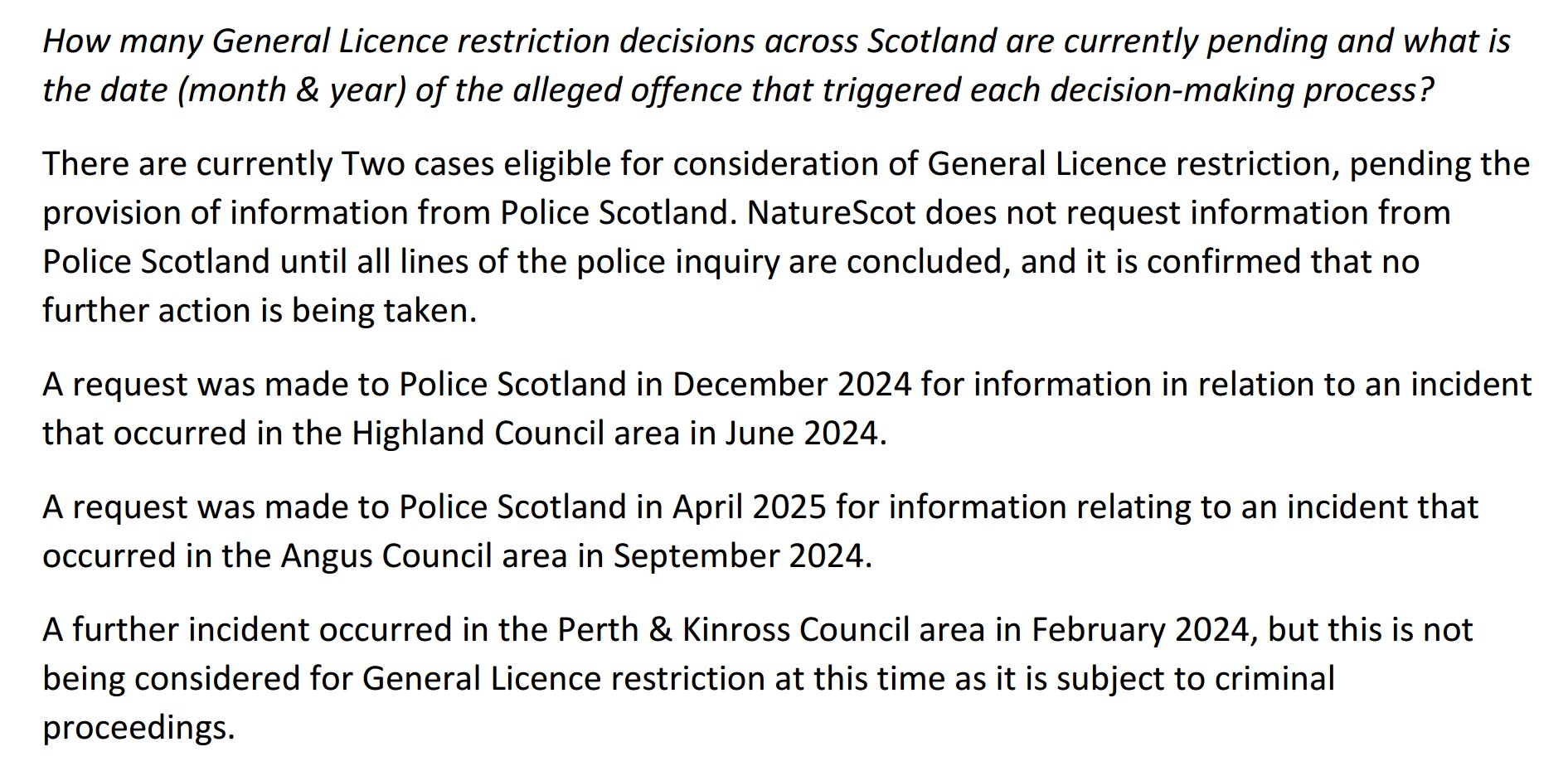
NatureScot wrote back to me in July and said this:
You can see that the case involving the shot out Goshawk nest is included on the list (‘an incident that occurred in the Highland Council area in June 2024‘).
NatureScot says it asked Police Scotland in December 2024 for the information package NS would need to begin the process of considering whether to impose a General Licence restriction.
Seven months on, in July 2025 when NatureScot responded to my FoI, Police Scotland hadn’t provided the information to NatureScot.
The Highland Cops programme demonstrates the evidential difficulties faced by the police when investigating suspected wildlife crimes, particularly those that take place on privately-owned gamebird shooting estates, and the lengths the police will go to to find out who was responsible. It was the very reason that the Scottish Parliament introduced grouse shoot licensing as part of the Wildlife Management & Muirburn (Scotland) Act 2024.
The efforts made by PC Dan Sutherland and his colleagues were exemplary in this case. But someone, somewhere, has dropped the ball in the later stages of the enforcement process by not providing an information package in a timely manner. That’s just not good enough.
The Highland Cops episode (series 3, episode 2) is available on the BBC iPlayer here. It’s well worth an hour of your time.
The alleged incident took place on 12 February 2024 on a shooting estate near Blairgowrie.
Police Scotland, with the assistance of partners from the RSPB and Scottish SPCA, executed a search warrant on the estate on 29 February 2024, leading to the arrest of a 47-year-old gamekeeper and subsequent charge (see here).
The gamekeeper has pleaded not guilty and his trial was due to begin next Monday (22 September 2025).
It’s now been put back until November 2025.
NB: As this case is live, comments are turned off until legal proceedings have ended.
UPDATE 11 November 2025: Trial begins today for Scottish gamekeeper accused of killing a Goshawk on a Perthshire shooting estate (here)





 Raptor Persecution UK