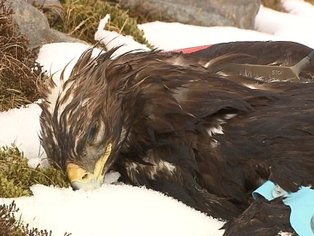
Yet another golden eagle mysteriously ‘disappears’

Last month we blogged about the ‘disappearance’ of a satellite-tagged golden eagle (see here). Now 22 days later we’re blogging about another one. Isn’t it strange how many UK satellite-tagged raptors go ‘missing’; not just golden eagles, but white-tailed eagles, hen harriers and red kites too. Wonder how these figures compare with tagged raptors in other parts of the world?

The last signal from the latest young golden eagle (#32857) to go ‘missing’ was received on May 11, just to the north-east of the Cairngorms National Park (see here).

Was it just a satellite tag failure and the eagle is still alive and well? Possibly.  Did it die of natural causes? Possibly. Was it poisoned? Possibly. Was it shot? Possibly. Was it caught inside a crow cage trap and bludgeoned to death? Possibly. Will we ever find out? Possibly. If it is found to have been killed illegally, will the perpetrator be brought to justice? Probably not (see here for the ever-growing list of dead and/or missing eagles in recent years for which nobody has ever been prosecuted).

Somebody asked a question the other day and we’ve still not been able to provide an answer:

What does it take to secure a conviction for killing an eagle in the UK?”.

We’ve heard all the excuses in the book, some valid, some not:

(i) The discovery of a poisoned eagle on a sporting estate isn’t enough to secure a conviction because either it could have been poisoned elsewhere and then flown to die at that location, or, it could have been ‘planted’ on the estate by the anti-game-shooting lobby (according to claims made by various gamekeepers over the years although without any actual evidence).

(ii) The discovery of a poisoned eagle lying next to a poisoned bait on a sporting estate isn’t enough to secure a conviction because it’s virtually impossible to identify which individual gamekeeper laid the bait, especially when they all deny it.

(iii) The discovery of a poisoned eagle and a stash of the same poison found on premises on the same sporting estate, and an admission from an individual gamekeeper that he had sole access to the poison isn’t enough to secure a conviction because….well, we don’t know the answer to that one, you’d have to ask COPFS.

(iv) The discovery of a poisoned eagle and a stash of the same poison found in vehicles and traces of it on knives and gamebags on the same estate isn’t enough to secure a conviction because….we don’t know the answer to that one either – ask COPFS.

(v) What if somebody was filmed laying out a poisoned bait and was then later filmed returning to remove the eagle poisoned by that bait? The film evidence would probably be ruled inadmissable because the cameraman was operating ‘covertly’ (i.e. without the landowner’s permission!).

(vi) What if a gamekeeper was found with a dead eagle in the back of his vehicle, and the eagle had injuries consistent with being caught in an illegal spring trap (e.g. broken legs) and having had its head caved in with a blunt object (e.g. smashed skull)? This wouldn’t be enough to secure a conviction because the keeper would probably claim he had just found the dead bird and was taking it home to report it to the authorities. At best he’d be charged with ‘possession’.

The shocking truth is, there has never been a successful prosecution for the illegal killing of an eagle in the UK, in spite of the sometimes overwhelmingly compelling evidence in some cases. So, just what does it take for someone to be convicted of killing an eagle in the UK?

Glen Orchy poisoner: sentence deferred ’til July

Tom McKellar, a gamekeeper/farmer at Auch Estate in Argyll who was convicted last month of possession of the banned pesticide Carbofuran (see here and here) was due to be sentenced today. Sentencing has now been deferred until 23 July (we don’t yet know the reason for this further delay).

The Carbofuran was discovered at McKellar’s place nearly three years ago in June 2009 during a police raid in connection with the discovery of a poisoned golden eagle at Glen Orchy on 7 June 2009 (see here). Toxicology results showed the dead eagle had been poisoned with Carbofuran. McKellar reportedly admitted during a police interview that he had previously laid out poison baits to kill foxes (see here) but he wasn’t charged with poisoning that golden eagle.

Also discovered during that police raid was a stash of illegal handguns in McKellar’s loft. On conviction at the High Court in Glasgow in December 2010, instead of receiving the mandatory five-year prison term he was given a sentence of 300 hours’ community service (see here).

There is a lot more to the Glen Orchy eagle-poisoning incident than meets the eye but we’re unable to disclose further information until McKellar has been sentenced. Rest assured, we’ll be writing more about this in due course.

Buzz off Benyon, & other news from the murky underworld of raptor persecution

There are no signs of the public’s outrage subsiding over #Buzzardgate. You only have to type in the words ‘buzzard’ and ‘DEFRA’ into a search engine and the strength of feeling against DEFRA’s outlandish plan is almost palpable.

The best article we’ve read, so far, is that written by George Monbiot in the Guardian (here). There’s also a good article by Michael McCarthy in the Independent today, entitled ‘Richard Benyon: The bird-brained minister (see here). Although McCarthy seems to think that the buzzard-nest destroyers will start their shotgun antics as of this Friday (1st June), presumably because that was the proposed start date in DEFRA’s research tender document (see here). However, the buzzard breeding season is well underway and many nests now contain small chicks and the DEFRA ‘study’ suggests that nests will be destroyed during ‘construction’; it doesn’t say anything about destroying active nests containing breeding adults, eggs and/or young (not that that would stop the trigger-happy nest destroyers, of course).

But perhaps the destructive parts of this study won’t start this Friday (if they ever start at all, depending on how loudly we all shout our objections). According to the June edition of ‘Modern Gamekeeping’ (which could just as easily have been called ‘Victorian Gamekeeping’ because nothing seems to have changed except for new bits of kit designed to help the ‘keeper kill more wildlife), the trial’s start date is not that clear:

Though DEFRA insists it is too early to comment on the finer details of the study, it is expected to launch some time this year. A spokesperson said: “The tender for the research project on management techniques to reduce the predation of pheasant poults by buzzards closed yesterday. We will announce the successful bid later in the summer“”.

Modern Gamekeeping isn’t available online (another example of its misnomer) but a photograph of its buzzard trial cover story can be found on Alan Tilmouth’s blog (here). Incidentally, Alan Tilmouth has been one of the most prolific tweeters on this issue and we know he was directly responsible for directing some ‘important’ people to this blog when we led on this story last week, so many thanks Alan, and good luck with your DEFRA FoI request to find out which Northumberland estates are involved; we’re all VERY interested in those results.

Another DEFRA FoI request has been lodged by ‘SWBirdWatch’ which can be followed on the public website ‘What Do They Know?’ (see here).

Since the buzzard trial story hit the news last week, several commentators on various blogs and websites have mentioned that the game-shooting lobby may have shot themselves in the foot over their latest attempt to get rid of raptors, because now the full glare of the spotlight has been turned onto their industry, with mainstream media taking a real interest. Mark Avery’s blog this morning (see here) focuses on some of the questions now being asked by a wider audience where previously they were just being asked by a smaller minority of special-interest groups. All good stuff.

For those who haven’t already done so, there are two main petitions to sign to show your disapproval of the buzzard trial – please, take a minute to sign both of them and let Mr Benyon feel the full force of our discontent:

https://raptorpersecutionscotland.wordpress.com/2012/05/24/add-your-name-to-petition-against-buzzard-management/

http://www.change.org/petitions/minister-for-wildlife-and-biodiversity-defra-stop-the-subsidy-for-buzzard-nest-destruction?utm_medium=facebook&utm_source=share_petition&utm_term=friend_inviter_action_box

In other news, Tom McKellar is due to be sentenced today (he’s the gamekeeper from Glen Orchy who was convicted in April of possessing the banned pesticide Carbofuran, although he didn’t face any charges over the dead golden eagle found at Glen Orchy which had been poisoned by er… Carbofuran – see here). We’ve received some further information about that poisoned eagle and we’ll discuss it once McKellar’s case has ended.

Another hearing opening today concerns the head keeper at Edradynate Estate in Perthshire. More on that case in due course…

Crow traps: what you should know part 2

Following on from our earlier blog – Crow traps: what you should know part 1 (here)

The following information concerns the use of crow cage traps in Scotland; they are also used in other parts of the UK although the terms of use differ slightly (see here for information on their use in England, here for Wales and here for Northern Ireland).

What is a crow trap and why should we be concerned about them?

There are various types of animal traps in use in the countryside but the two we focus on in this article are the ‘ladder’ and ‘funnel’ crow cage traps. These are large, walk-in traps usually constructed with a wooden frame and wire mesh netting. A decoy bird (often a carrion crow but certain other decoy species are also permitted) is placed inside the trap to attract corvids or other target species. Birds that are attracted to the trap can enter via the roof, either through the horizontal slots of the ‘ladder’ or via a ‘funnel’. Once inside the trap it is virtually impossible for the birds to escape unaided. These trapped birds are usually destined to certain death at the hands of the trap operator who is legally authorised to kill them, subject to certain conditions (discussed in Part 3). In some rare circumstances, raptor workers deploy temporary crow cage traps to capture buzzards for marking projects, such as wing-tagging etc. Obviously these buzzards are released as soon as they’ve been marked; they aren’t killed by the trap operator!

There are many concerns surrounding the use of crow cage traps (some we’ll discuss below) but the over-riding concern is the indiscriminate nature of these traps, which means that species other than the target species can be, and often are, caught by gamekeepers, e.g. buzzards, goshawks, golden eagles etc. It is not illegal to (accidentally) trap these non-target species, but it is an offence for the trap operator not to release them, unharmed, at the earliest opportunity. More on this in Part 3.

Crow trap use is governed by a general licence, issued annually by Scottish Natural Heritage (see here). These licences are issued for the purpose of either (a) the conservation of wild birds, (b) to prevent serious damage to livestock, foodstuffs for livestock, crops, vegetables and fruit, and (c) to protect public health, public safety and prevent the spread of disease. Trap operators need not ‘apply’ for an individual licence, hence the name ‘general’ licence. Each general licence is subject to strict conditions (discussed in Part 3). If the trap operator complies with all the conditions of the general licence then the use of the crow trap is legal. However, in practice some of these conditions are ambiguous at best, and this is recognised by SNH who undertake regular consultations aimed at clarifying the terms of use (e.g. see here for their latest consultation plans).

Before we get in to the nitty gritty of how to recognise a legal trap from an illegal trap it’s worth mentioning that the RSPB (and other groups such as OneKind) has long campaigned for a more thorough review of the legal framework concerning these general licences for crow traps, particularly in relation to potential breaches of European legislation, including the EC Birds Directive. For anyone interested in the RSPB’s position, this document from 2007 (here) is informative.

Other concerns include the fact that there isn’t any effective monitoring of the impact these traps have on both target and non-target species. Crow traps are in use across Scotland year-round but are especially associated with upland grouse moors. It isn’t known exactly how many crow traps are in operation in Scotland but a conservative estimate would be in the hundreds, but probably nearer the thousands. There is currently no requirement for trap operators to record and/or report the number of target and non-target species caught and killed inside a trap (and even if there was such a requirement, who would believe the submitted figures? No gamekeeper is going to admit to illegally killing a protected species!). So how can the regulatory body (SNH) monitor the impact of crow trap use when they haven’t got a clue just how many traps are in use and how many birds and of what species are being killed each year? The follow-on question is, how can these general licences still be issued when the regulatory body cannot justify, in quantifiable terms, the need for lethal control measures?

Some may argue that there is now a record of the number of traps in use because recent changes to the general licences now require that a sign is attached to each trap with a unique identifying code issued by the local police force. However, this unique code is not assigned to an individual trap or to an individual trap operator, but rather to a landowner (or occupier) such as a sporting estate or a farm. This means that an estate owner can use the same code for multiple traps on his/her land (e.g. they may have just one trap or they may have 50+ traps depending on the size of the estate); the point is that the authorities do not have any means of knowing how many traps are in use on a particular estate because they only issue one code per estate.

From a law enforcement perspective, this use of a single identifying code for multiple traps makes it almost impossible to prosecute an individual for illegal use of the trap. For example, if a golden eagle is found dead inside a trap, and it’s obviously been there for a long time, then an offence has probably been committed (because traps must be checked at least once in every 24 hour period – see Part 3). Investigators may attend the scene but find that the trap is located on a large estate that employs multiple gamekeepers. None of the gamekeepers admit responsibility, so how does the investigator identify the individual responsible? A prosecution cannot commence unless an individual suspect is identified. It’s the same loophole we’ve seen used so many times when poisoned bait has been found on a large estate; nobody admits responsibility for laying the bait and thus the perpetrator(s) escape justice. It is only when the trap is located on a smaller estate where a single gamekeeper is employed that there is any chance of a prosecution.

Talking of loopholes….we’ve touched on this briefly in previous posts….in 2008 a new condition was added to the terms of use of the general licences. That new condition was that anyone who had a previous wildlife crime conviction was not allowed to use the general licence unless their conviction was considered ‘spent’, i.e. after five years from conviction. (Although even if you did have a recent conviction you could still apply for use of the licence and each case would be considered on merit, so it’s not quite the draconian condition that some imply). However, in 2009 the condition (of being banned for five years) was modified and we don’t recall any consultation about the insertion of this modification! The new modification says that you can still use the general licence if the sentence you received for your wildlife crime was an ‘admonishment’. Talk about a get-out clause! You might think this modification was quite reasonable, after all, an admonishment (effectively a telling off) is only given for minor offences, right? WRONG!!! Because there aren’t any mandatory sentences for wildlife crime offences in Scotland, a sheriff can choose a sentence at will (within the boundaries of sentencing limits at a Sheriff court, of course). In 2010, a sheriff imposed an admonishment on Graham Kerr, a gamekeeper on the Redmyre Estate, for possession of the banned pesticides Carbofuran and Alphachloralose (see here). The maximum penalty available was a £5000 fine and/or a six month prison term, reflecting the gravity of this type of offence. Had Kerr not also been handed a £400 fine for shooting a buzzard on the Redmyre Estate, his admonishment would have allowed him to continue using the general licence to operate a crow cage trap. In our opinion this is outrageous. What’s the point of having a condition of a five-year ban for a wildlife criminal if that condition is modified based on the whim of a sheriff’s sentencing choice rather than the nature of the actual criminal offence committed? It’s total nonsense. Why was this modification added to the terms of the general licence and who instigated its inclusion in 2009 and who approved it? Was anyone given the opportunity to object to its inclusion? Perhaps a Freedom of Information request is called for here…

This leads on to another concern…who is actually monitoring the trap operators? How do we know that someone with a recent criminal conviction (who was given a stronger sentence than an admonishment) is not still operating a crow cage trap? We know that many estates don’t sack their gamekeepers following a wildlife crime conviction, and we know of at least one estate where a previously convicted gamekeeper (guilty of raptor persecution) is now employed as a ‘gardener’!!

The potential for the misuse of crow traps is well known amongst raptor workers.  Previous reports on this issue have been produced by the RSPB (e.g. see here). Although this 2004 report is now fairly dated and some of the report’s recommendations have since been implemented, there is still a great deal of concern that crow traps are still being deliberately used to target raptor species, particularly buzzards and goshawks and in some areas, golden eagles.

So what can we do about it? In Part 3 we’ll explain the basics of what makes a crow cage trap legal, what makes one illegal, and the blurred line in between the two. We’ll also explain what members of the public should and shouldn’t do if you find a crow trap that you suspect is being operated illegally.

Another golden eagle mysteriously ‘disappears’

Thanks to Dave (contributor) for highlighting this one:

http://www.raptortrack.org/category/golden-eagle/angus-26/

Another poisoned raptor, another well-kept secret?

Last week we blogged about Des Thompson’s presentation at the Scottish Wildlife Crime Conference (see here). Here’s a reminder of what he had to say about Northern Constabulary and the problem of red kite persecution in northern Scotland:

So 40% of the dead, just over 100 red kites were poisoned in north of Scotland, without poisoning we should have had 300 plus birds, poisoning of red kites in the north of Scotland is attracting a lot of criticism nationally, and we now know the location of the hotspots problem areas where red kites have been found, poisoned, and we’re working closely with the police to tackle this. And I want to put on record here how grateful we are to Northern Constabulary, er, senior staff at Northern Constabulary for meeting with us to discuss the scientific issues and for taking forward the very ambitious programme of work to tackle this problem“.

So what is this “very ambitious programme of work” and why is it that Northern Constabulary appear to need persuasion to carry out what is its statutory duty to investigate wildlife crime?

If you look at the Force’s website you’ll see that they have 13 police Wildlife Crime Officers (see here) who are overseen by a Force Wildlife Crime Coordinator, Chief Inspector Matthew Reiss. The website also includes a ‘statement of intent’ in relation to tackling wildlife crime and the Force says it is committed to tackling wildlife crime (see here). Further, Chief Inspector Reiss is on record (according to Highland News) as saying Northern Constabulary treats wildlife crime “extremely seriously” (reported here after the convictions of Skibo Estate and Moy Estate employees for wildlife crime offences).

All sounds very convincing and reassuring, doesn’t it? Why is it then that Northern Constabulary has remained tight-lipped about the discovery, 15 months ago, of a poisoned red kite allegedly found on moorland at the boundary of Skibo Estate? We have been told that the satellite-tagged kite was allegedly found in February 2011. SASA documents show that only one red kite from the Highland region was tested in February 2011  and  it had been poisoned by Alphachloralose and was the subject of on ongoing police investigation (SASA ref #11020, see here).

Was there any publicity about this bird? We think we might have remembered if there had been, but we checked back to Northern Constabulary’s archived news items on their website for the month of February 2011 in case we’d missed it – but no, plenty on there about theft of handbags and damage to tractors but not a whisper about the discovery of a poisoned red kite.

Was there a police raid on the surrounding properties where this bird was allegedly found poisoned? If it was found at this location, and given that this is one of the supposed ‘hotspot’ areas for raptor poisoning (three golden eagles and a sparrowhawk found poisoned in 2010 – no convictions; a staked-out poison-laced grouse bait found in 2010 – no convictions) wouldn’t a police raid be the obvious first step in an investigation?

So is that it? No further action? If we hadn’t received a tip-off would it ever have come to light? Where was the RSPB in all of this? Did they know that one of their satellite-tagged kites had allegedly been found poisoned? If they did, why wasn’t the incident publicised? Where was SNH and PAW Scotland in all of this? Did they know that one of the satellite-tagged kites that they’d helped fund had allegedly been found poisoned? Where was their publicity? Where was the NWCU in all of this? Were they notified? Was this alleged incident the trigger for setting up the meeting with senior staff at Northern Constabulary to discuss the red kite persecution ‘science’?

This is the second time in the last few weeks that Northern Constabulary has been at the centre of allegations of secrecy and cover-up when it comes to wildlife crime (see here for earlier report on the suspected shooting and decapitation of a white-tailed eagle on Skye that went unpublicised). How many more incidents are there left to be uncovered? To be fair, Northern Constabulary does sometimes get it right, with current ongoing court cases including the alleged hare snaring at Lochindorb (here) and alleged egg theft (here), but ‘sometimes’ just isn’t good enough. Nobody’s suggesting these investigations are easy – we’ve all seen how difficult it can be to get COPFS to agree to a prosecution – but Northern Constabulary (and others) don’t help themselves when they choose not to publicise, or sometimes even investigate these alleged crimes.

How about everyone stops all the politically-motivated soundbites about commitment and very ambitious work programmes and just focuses on getting the basics right?

21 eagles, 6 years, 0 prosecutions

Ever since that poisoned golden eagle was found in Glen Orchy in June 2009, we’ve been assured by the authorities (including in an email from a spokeswoman of the former Environment Minister, Roseanna Cunningham) that, despite our concerns to the contrary, the alleged wildlife crime uncovered that day was being ‘dealt with’.

We’ve had to wait for almost three years to find out that, according to a statement in The Herald attributed to RSPB investigator Ian Thomson, nobody has been charged with poisoning that golden eagle (see Herald article here).

It’s just the latest in a long line (21 eagles in six years!) of both confirmed and suspected eagle deaths for which nobody has ever been prosecuted.

In fairness, some of the 21 examples shown below may not be a result of criminal behaviour (i.e. the bodies of seven of the eagles listed have never been recovered so foul play, whilst suspected, cannot be verified, but neither can it be ruled out). However, there have been 14 confirmed eagle deaths (13 poisoned and one shot), that we know about, for which nobody has been charged. There are probably more confirmed deaths that we don’t know about because for some reason, some confirmed deaths are not being publicly reported. And without a shadow of a doubt, there are other deaths that are attributable to criminal behaviour that never see the light of day.

Here’s the list of the ones we do know about:

MAY 2006: A dead adult golden eagle was found on the Dinnet & Kinord Estate, near Ballater, Aberdeenshire. Tests revealed it had been poisoned by the illegal pesticide, Carbofuran. Grampian Police launched an investigation. Five years and 11 months later, nobody has been prosecuted.


JUNE 2006: A dead golden eagle was found on Glen Feshie Estate in the Cairngorms. Tests revealed it had been poisoned by the illegal pesticide, Carbofuran. Northern Constabulary launched an investigation. Five years and ten months later, nobody has been prosecuted.


AUGUST 2007: A dead adult female golden eagle was found on an estate near Peebles in the Borders. She was half of the last known breeding pair of golden eagles in the region. Tests revealed she had been poisoned by the illegal pesticide, Carbofuran. Lothian & Borders Police launched an investigation. Four years and eight months later, nobody has been prosecuted.


AUTUMN 2007: Tayside Police received a detailed tip-off that a young male white-tailed eagle (known as ‘Bird N’) had allegedly been shot on an estate in Angus. The timing and location included in the tip-off coincided with the timing and location of the last-known radio signal of this bird. Four and a half years later, the bird has not been seen again. With no body, an investigation isn’t possible.


MAY 2008: A one year old male white-tailed eagle hatched on Mull in 2007 and known as ‘White G’ was found dead on the Glenquoich Estate, Angus. Tests revealed he had been poisoned by an unusual concoction of pesticides that included Carbofuran, Bendiocarb and Isofenphos. A police search in the area also revealed a poisoned buzzard, a baited mountain hare and 32 pieces of poisoned venison baits placed on top of fenceposts on the neighbouring Glenogil Estate. Laboratory tests revealed the baited mountain hare and the 32 poisoned venison baits contained the same unusual concoction of highly toxic chemicals that had killed the white-tailed eagle, ‘White G’. Three years and 11 months later, nobody has been prosecuted.


JUNE 2009: An adult golden eagle was found dead at Glen Orchy, Argyll, close to the West Highland Way. Tests revealed it had been poisoned by the illegal pesticide, Carbofuran. Strathclyde Police launched a multi-agency investigation. Two years and ten months later (April 2012), Tom McKellar pled guilty to possession of Carbofuran stored in premises at Auch Estate, Bridge of Orchy. Nobody has been prosecuted for poisoning the golden eagle.


JULY 2009: A two year old female golden eagle known as ‘Alma’ was found dead on the Millden Estate, Angus. Tests revealed she had been poisoned by the illegal pesticide, Carbofuran. Alma was a well-known eagle  – born on the Glen Feshie Estate in 2007, she was being satellite-tracked and her movements followed by the general public on the internet. Tayside Police launched an investigation. Two years and nine months later, nobody has been prosecuted.


AUGUST 2009: A young white-tailed eagle was found dead on Glenogil Estate, Angus. Tests revealed it had been poisoned by the illegal pesticide, Carbofuran. Tayside Police were criticized in the national press for not releasing a press statement about this incident until January 2010. Two years and 8 months later, nobody has been prosecuted.


MAY 2010: Three dead golden eagles were found on or close to Skibo Estate, Sutherland. Tests revealed they had been poisoned; two with Carbofuran and one with Aldicarb. Northern Constabulary launched a multi-agency investigation. One year later (May 2011), Sporting Manager Dean Barr pled guilty to possession of 10.5 kg of Carbofuran stored in premises at Skibo Estate. One year and 11 months later, nobody has been prosecuted for poisoning the three golden eagles.


JUNE 2010: Leg rings with unique identification numbers that had previously been fitted to the legs of four young golden eagles in nests across Scotland were found in the possession of gamekeeper James Rolfe, during a multi-agency investigation into alleged raptor persecution at Moy Estate, near Inverness. It is not clear how he came to be in possession of the rings. The bodies of the eagles from which the rings had been removed were not found. No further action was taken in relation to the discovery.

JUNE 2010: A golden eagle and a white-tailed eagle were found dead on an estate near Farr, Inverness-shire. Tests revealed they had been poisoned by the illegal pesticide, Carbofuran. Northern Constabulary apparently did not search the property until July 2011. One year and ten months later, nobody has been prosecuted.


DECEMBER 2010: A decomposing carcass of a white-tailed eagle was found and photographed on Logie (Lochindorb) Estate, Morayshire. It was reported to Northern Constabulary. By the time the police arrived to collect it, the carcass had disappeared. The police said they couldn’t investigate further without the body.


MARCH 2011: The body of a young golden eagle was discovered on North Glenbuchat Estate, Aberdeenshire. Tests revealed it had been poisoned by the illegal pesticide, Carbofuran. Grampian Police launched an investigation and raided the property in May 2011. One year and one month later, we are not aware of any pending prosecutions.


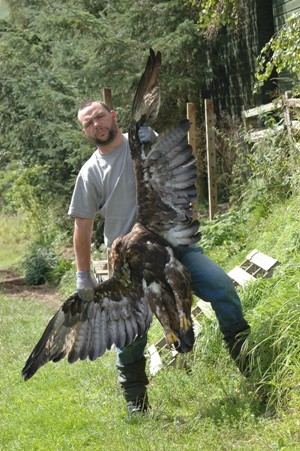
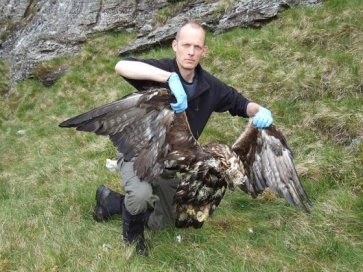
APRIL 2011: The body of a white-tailed eagle was found at the base of cliffs on Skye. The person who discovered it (a professional medic) considered it to have been freshly shot with a rifle, decapitated with a sharp implement and thrown from the cliff top. He took photographs and alerted Northern Constabulary and RSPB. There was a delay of two weeks before the now probably decomposed carcass was collected. A post-mortem was inconclusive. This incident was not made public until one year later after a tip off to this blog. We are not aware of any pending prosecutions.


NOVEMBER 2011: The signal from a satellite-tracked young golden eagle (hatched in 2010) stopped functioning when she was at a location in the Monadhliaths, a well-known raptor persecution black spot in the Highlands. Her last known location was checked by researchers but there was no sign of the bird. Another ‘disappearance’ in suspicious circumstances or a technical malfunction of the satellite transmitter?

Glen Orchy poisoner has “brilliant” character references, says Sheriff

More and more news reports are emerging following the conviction yesterday of Tom McKellar of Auch Estate for possession of Carbofuran.

Some of these reports have mentioned the poisoned golden eagle that led to the discovery of the illegal stash of banned poison at McKellar’s house, and some of them haven’t. One recent report, published today in the Daily Record (here) does mention the golden eagle. It also includes a comment from McKellar’s defence lawyer, David McKie (sound familiar??) who is reported to have said that McKellar was pleading guilty to possessing the poison but not to killing an eagle.

It is looking more and more likely that McKellar was not charged with poisoning this eagle, which perhaps explains why the COPFS press release yesterday (here) didn’t even hint at the presence of a Carbofuran-poisoned eagle found in the locality. Does anyone else find this omission strange, especially when the press release contained quotes said to be from specialist wildlife crime prosecutor, Kate Fleming:

The possession of Carbofuran is illegal. It’s use as a poison can lead to the indiscriminate poisoning of wildlife…”

Er, poisoned golden eagle found nearby, poisoned by Carbofuran. Illegal stash of Carbofuran found at McKellar’s place, some of it reportedly found inside a gamebag in his home porch (RSPB news here), and an admission (according to the BBC – here) that he’d laid out poisoned baits. No connection and not worth commenting on then, Kate? We’ll be writing more on the role of COPFS in this case a bit later on.

Also included in the Daily Record article was the following sentence:

‘Mr McKie handed a sheaf of glowing testimonials on his client’s character to Sheriff Douglas Small, who conceded they were “brilliant”‘.

However, he also said the offence [of possession] was “a serious matter” and he had to consider all options before sentencing.

Big, big day in court (part 5): Glen Orchy golden eagle

Here we go….

Tom McKellar, previously reported as being a gamekeeper (see link below for his earlier conviction for possession of illegal guns) but currently reported as being a farmer, has today pleaded guilty at Oban Sheriff Court to being in possession of the illegal pesticide Carbofuran.

This poison stash was discovered during a multi-agency raid on McKellar’s house in June 2009, where investigators found three separate containers of Carbofuran as well as traces of it in a syringe.

McKellar reportedly admitted during a police interview that he had, “in the past”, placed the poison out on laced meat to kill foxes.

Sentencing was deferred until 29 May 2012 for background reports.

McKellar had previously been charged for the illegal possession of two handguns, kept in his attic, that came to the attention of the police during the raid. On conviction, instead of receiving the mandatory five year jail sentence, he was given just 300 hours of community service (see here).

What has not been mentioned in the press (so far), is that McKellar’s house was raided after the discovery of a poisoned golden eagle, reportedly found with the body of a fox and a sheep carcass at Glen Orchy in June 2009 (see here and here). Toxicology tests reportedly detected Carbofuran on all three animals, although interestingly, only the golden eagle results appear in the official SASA results table; the sheep and the fox results are only mentioned in the RSPB’s 2009 report.

Does today’s reporting mean that McKellar, or anyone else, has not been charged with poisoning the golden eagle?

Rest assured, this is not the last we will be writing about this case…

COPFS press release here

STV article here

2012 wildlife crime conference: Charlie Everitt (NWCU)

The 2012 annual police wildlife crime conference took place a couple of weeks ago. Quite a few of this year’s presentations were relevant to raptor persecution so we’ll be commenting on these in due course. To start off the series we’ll focus on what Charlie Everitt had to say. Charlie is the Scottish Investigative Support Officer at the UK National Wildlife Crime Unit (NWCU). See here for more details.

Charlie Everitt: Update on Raptor Persecution

Scottish Raptor Persecution Priority Delivery Group, and that’s a mouthful, erm, has been concentrating more on poisonings just at the moment, and also on processes so that we can get things right in order to take things forward for core purposes. Consequently we’re just finishing off and hoping to sign off at the next meeting an evidence gathering protocol. Now this is guidance and best practice for organisations who are likely to come across raptor persecution victims, er, giving advice and guidance on who they should contact, how the, er, any carcasses should be recovered and where they should be handed in to, so it’s giving best practice in order to maximise our chances for convictions in court so we get the process right. So that should be signed off, er, at the next meeting.” [See here for a previous blog about an earlier draft of this protocol. We haven’t seen the final version yet but look forward to seeing it in the near future].

“And similarly we’re looking at, er, another protocol with regards to satellite tagged birds, and this is a case where we have birds that have been satellite tagged and maybe the tag, er, stops giving off a signal, erm, or the signal remains stationary, just a protocol as to what we should do, er, in order to take the next step in order to recover the satellite and to investigate what’s happened. So just to make sure that we are lawful in what we are doing. So that’s a protocol as well that should get signed off very soon.

And the third angle, and it’s taking up a fair bit of time, is looking at a very new approach to the whole raptor, erm, raptor persecution issue. Now I can’t really say a great deal more on this at the minute, it’s in its early stages of development just now but when it is it will be put through tests and if it is fit for purpose it will be rolled out and, erm, yes you’ll all be made well aware of it when it does emerge.

We’ve also been looking to the use of science to try and benefit from what science can deliver to us. Now the science of course can back up intelligence and information crucially and the science has been used to good effect when combined with information and intelligence in a presentation to Northern Constabulary last year about the red kites on the Black Isle and their failure to manage to expand from there. So I think that was a good example of just how the two can sit together.” [Eh?]

“The Raptor Study Group of course do a lot of good work with regards to monitoring, erm, raptors and are able to work out where black holes might appear where we should have raptors and where there might not be some. Now there might be good reason for these black holes appearing, [no shit, Sherlock!] er, but what it does do, as I say, when you mix the intelligence and information with the science we get the fuller picture of what might be happening on the land there.

And the final thing we’re looking at doing is to ensure that we can capture all the information from the Raptor Study Group because they’re the people who are out on the land and if they do have any snippets of information we want to make sure that we capture all that intelligence and information in the National Wildlife Crime Unit through the five X five X five system, so that’s, er, er, another area which I’m looking to address very soon.

Now we’ve had some prosecutions, er, either concluded, erm, or, er, occurring during 2011, er, just run through some for you just as an update. In May a shoot manager in Skibo was fined £3,300 for possessing 10.5 kilograms of carbofuran, er, that was the biggest haul we’ve ever recovered in Scotland. And also in May last year a keeper from Moy was fined £1,500 for the possession of a dead red kite. On in October a ‘keeper from Huntly was fined £250 for the illegal use of a cage trap and possession of an illegally trapped buzzard. In November two photographers from London and Norwich were fined £600 and £500 respectively for recklessly disturbing a pair of white-tailed sea eagles at a nest in Mull. In January of this year a former gamekeeper from Biggar was ordered to carry out 100 hours of community service for poisoning four buzzards with alphachloralose and this is a guy who had been convicted before back in 2008. And also in January of this year a, er, another keeper from Lamington was fined £635 for possession of carbofuran. Now for me I think that’s a really good return for one year’s worth of work, er, and there used to be years when we only got two or three convictions in a year, now we have a good number and, er, I think buried inside all of those results is excellent partnership working which I think we must recognise with all our partner agencies.”

[We believe it’s misleading to use these cases as an indicator of success. What Charlie failed to mention is that in some of these cases (Skibo, Moy and Lamington) the only successful charges related to ‘possession’. Nobody was actually charged for poisoning the raptors that were found at each of these sites (and in the Moy case, there were also other offences that related to the illegal use of spring traps, for which nobody was charged). It looks like the Crown Office has gone for the minimum charge possible (i.e. possession) just to secure a conviction. To put this in context, it would be like claiming a success if someone had gone on a killing rampage using a car but was only convicted for not having any road tax. One of the other cases mentioned (Biggar – i.e. David Whitefield from Cullter Allers Farm, who already had a previous conviction for wildlife crime) was given a pathetic 100 hours community service order for poisoning four buzzards! Not good enough and certainly not an indication of ‘a really good return for one year’s worth of work’].

“The 2011 poisoning figures as the Minister suggested was significantly down, er, er, which is great news and very, very welcome to us to hear. Erm, all I’ll say is let’s see if we can continue that downward trend for the next three to five years and actually, and then, erm, solidify into a trend so that we do have this downward movement in poisonings but very grateful for anything where we have a drop in poisonings and that is, erm, excellent news.”

[Charlie failed to distinguish between reported poisoning incidents and actual poisoning incidents. There’s quite a difference and this should put the 2011 poisoning figures into context. He also failed to acknowledge the other methods of illegal killing and their impact on the overall issue of raptor persecution in Scotland. See here for previous blog on this].

“The hotspot maps meantime continue to help the police to focus their attention and, erm, identify where the areas need to be for resources to be deployed.

Now a few years back Lothian & Borders police had a pesticides dog that was able to sniff out carbofuran but it was very quickly withdrawn after there were some health and safety concerns. Well I’ve been having this chat with some of the dog handlers across Lothian & Borders and, er, they have told me that that dog is now available again for any searches, er, which Scotland want to undertake with regards to carbofuran. So that’s I think a positive move they’ve managed to sort out any health and safety issues there and just to put a little bit of context into that, Spain now have 15 dogs that can sniff out carbofuran and other poisons. Carbofuran poisoning has dropped by 40% since the early 2000s so we can think about the impact of the dogs.”

[Again, Charlie has only given half the story here. Yes, in parts of southern Spain (but not all!) the number of reported poisoning incidents has dropped by 40% since sniffer dogs were employed from 2004 onwards. However, crucially, there has also been a concurrent effort to increase enforcement against the poisoners. This includes the use of fines that have a real deterrent (up to €200,000 [~£167,000!]) as well as prison sentences; the temporary closure of the hunting area where poison has been detected; the suspension of hunting rights where the hunting methods are considered to have an unsustainable effect on natural resources; the employment of specialised units (x 3, containing 18 dogs) to patrol areas for the detection of poison – these patrols include ‘emergency inspections’ after poison has been reported, as well as ‘routine inspections’ of hotspots where the use of poison is suspected; and the use of three toxicology labs for poison testing. This is particularly interesting as when poison has not been detected in the first lab, but the use of poison is still suspected based on forensic evidence found at the crime scene (e.g. presence of certain insects), then the carcass/bait is submitted to one of two other labs that use more powerful techniques. In 2010, poison was detected in 38% of these carcasses/baits even though it was undetected at the first lab.

So yes, Charlie, the use of one single sniffer dog in Scotland is a positive move, but without the wider enforcement measures as outlined above, we’d be exceptionally naïve to expect that what has been achieved in parts of southern Spain will be replicated here in Scotland].

“Vicarious liability is also, erm, very much in discussion at the moment and I think last year I described myself as being cautiously optimistic about it. Well this year I’m very optimistic about it, er, with all the work that has been going on, er, behind the scenes and, er, what I would say is that this is not something that is just going to be a case of well we can’t get the person who has put out the poison so let’s just go and charge the landowner, this is going to require a lot of work, er, by any police forces looking into it, er, and looking to, to, er, look at charges of vicarious liability. The industry have also looked into it and have indeed a number of organisations in order to understand what they need to do to fulfil their obligations and that is to be welcomed because it does give us a minimum standard across the, er, industries which is as I say very, very welcomed.

So I was interested in the Minister’s comment as well that, erm, I got the impression that he wasn’t really looking for many prosecutions from this, erm, he was hoping that this would sort of be a Sword of Damocles if anybody was to continue poisoning so, er, I think with some of the work that’s been going on in the Raptor Priority Delivery Group that I think that is a very realistic possibility that we will get things sorted before we ever have to resort to vicarious liability.

One final thing, well another thing I’d just like to, er, just bring to your attention is a egg collector who was, lived down in London, erm, and his house was searched, a number of eggs removed including some golden eagle and osprey, erm, eggs which had been taken from Scotland. The CPS did some work, er, with one of the partner organisations and sought an ASBO against him and although he’s currently in jail, when he re-emerges he will not be allowed to enter Scotland during the nesting season for the next ten years. Now that’s a very powerful piece of legislation and a powerful condition to put on him and it’s something which I’ve asked for them to see if we can get hold of the paperwork to look at the procedure to see if we can do some, mirror something like that up in Scotland because it’s not just for, erm, for egg collecting that this is relevant, I can see other angles of hare coursing, er, deer coursing and the like so, er, that is going to be an interesting development to see what how it transpires.

Finally on the raptor persecution side, these are the guys who make up the Scottish Raptor Persecution Priority Delivery Group. Now there have been articles that are out in the public domain where we actually have organisations, people from organisations that are representative of the group, trying to drive wedges in against other organisations which, er, are in that group as well, which is often very disruptive and really doesn’t help us with the trying to take the full raptor persecution debate forward. What I would say to you is that if you do have an issue which you would like to discuss in, er, er, in an appropriate forum, rather than having a, er, er, a rant shall I say for a better word in, er, other media, here is a foum which you could bring this to through your representative in order to get a good full informed debate amongst all the organisations that need to be consulted in it. So that’s what I’d urge you to do if you do have any issues and you want to bring forward then please do not hesitate to contact them through your, through your representative.” [We think this rebuke was aimed at the Scottish Gamekeepers Association who recently published an article that suggested raptor workers could be laundering eggs and chicks on the black market – see here for previous blog on that].