
 Un-fucking-believable. Yes, it’s a swear word but that’s the least of our concerns. Read what follows and you’ll be swearing in anger too…
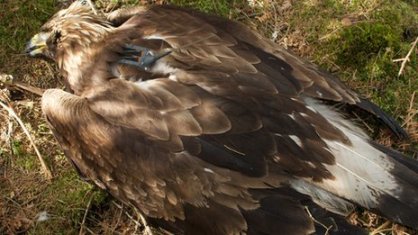
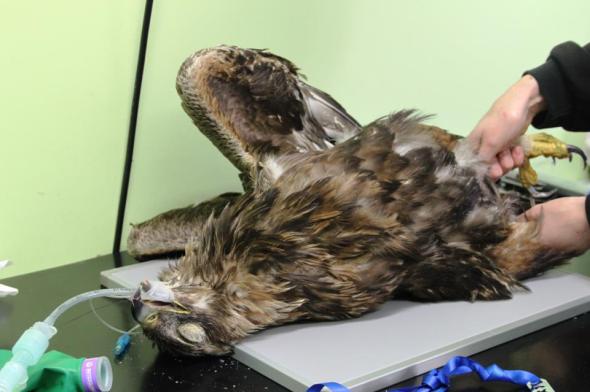
The Environment Minister has responded to a letter sent to him by one of our readers (Dave Adam) concerning the appalling death of that golden eagle back in May (see here for details of that bird’s demise). This is the eagle whose satellite transmitter showed the bird went down on a grouse moor in Glen Esk, Angus for 15 hours (an area where another golden eagle had previously been found poisoned in 2009, oh, and a buzzard was also found poisoned there in 2008 although that wasn’t publicised at the time) and then this eagle miraculously moved to a layby in Aberdeen, in the middle of the night, where it was found dead several days later with two broken legs – injuries consistent with being caught in a leg-hold trap. Yes, THAT eagle. According to the Minister, this scenario may not have been the result of criminal activity.
Dave Adam has posted the Minister’s response letter in the comments section of the original post (thank you) but it’s far too important for it to remain there, hence the decision to publish it here.
Here it is in full:
Thank you for your letter of the 25 September 2012 to the Minister for Environment and Climate Change, Mr Paul Wheelhouse. I have been asked to respond.
I agree that the media reports were a terrible story of the suffering of a young golden eagle. The reports may suggest that the circumstances of this incident were suggestive of an offence however there is no hard evidence and it remains possible that there is an alternative explanation. It is therefore inappropriate for me to comment.
The unlawful killing of any raptors has no place in today’s Scotland and we will continue to work hard to eradicate this criminal activity. We believe that the partnership approach with the Partnership for Action Against Wildlife Crime (PAW) Scotland, is bringing the reduction in bird of prey poisoning that can be seen in the statistics in recent years. However we are not complacent and if there is evidence of a switch to other methods of persecution we will take action to bear down on those methods.
The Scottish Government recognises that game shooting generates significant income and employment in our rural economy, often in areas where there are few alternative opportunities. However it is important that these businesses operate within the law, and the Scottish Government recognises that most such businesses do so. However where there appear to be conflicts for example between raptors and highly-intensive grouse moor management, we believe that an approach of seeking to improve the effectiveness of law enforcement while working with partner organisations to isolate those persisting with illegal practices is the best way forward.
Scottish police have a clear focus on tackling wildlife crime cases. Law enforcement’s role in tackling wildlife crime was reviewed by Her Majesty’s Inspectorate of Constabulary Scotland in 2008, and there was a follow-up review in 2009. As a result there are officers with wildlife crime duties in every police force area and a consistent and professional approach from senior officers.
It is frustrating that it is difficult to detect, prosecute and convict those responsible for wildlife crimes. However while it easy to make suppositions about circumstances of an apparent offence as reported in the media, wildlife crime must be subject to the same standard of proof as any other crime. Police and prosecutors also apply the same stringent procedure for dealing with wildlife crime as for any other sort of crime.
You say that the golden eagle population is threatened by illegal persecution. The Golden Eagle Conservation Framework published by SNH in 2008 did identify persecution in eastern Scotland and food shortages in the west as threats to the birds’ conservation status. It is difficult to estimate the amount of illegal persecution, but we recognise that in the longer term the best measure of success in dealing with raptor persecution will be when vacant golden eagle territories, as identified in the Framework document, are re-occupied.
K. Hunter, Policy Officer, Scottish Government.
Like we said at the top, un-fucking-believable. Especially coming a day after we learn that another golden eagle was the target of criminal activity on a grouse moor, this time being found shot and critically injured and left to die.
What did we say yesterday about needing a strong response from government, and not the usual platitudes about ‘partnership working’?
The question is, what are we going to do about it? And by ‘we’, that means all of us. Angry? You’d better believe it.
If you want to tell him how angry you are, and why (because it obviously needs spelling out) here’s his email address again: ministerforenvironment@scotland.gsi.gov.uk
When you’ve done that, send a copy to Alex Salmond: FirstMinister@scotland.gsi.gov.uk
These politicians HAVE to understand that we’re not tolerating this any longer.
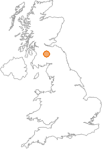 Information from local sources indicate that the bird was discovered on the Buccleuch Estate, very close to the boundary with Leadhills Estate, just to the north of Wanlockhead (see map below – our thanks to Andy Wightman [
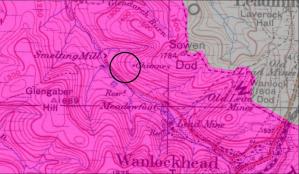 The area where the eagle was found is managed as a driven grouse moor, as is the land immediately on the other side of the estate’s border. It’s been reported that Leadhills Sporting Ltd leases land on Buccleuch Estate (see
 MAY 2006: A dead adult golden eagle was found on the Dinnet & Kinord Estate, near Ballater, Aberdeenshire. Tests revealed it had been poisoned by the illegal pesticide, Carbofuran. Grampian Police launched an investigation. Six years and 4 months later, nobody has been prosecuted.
 JUNE 2006: A dead golden eagle was found on Glen Feshie Estate in the Cairngorms. Tests revealed it had been poisoned by the illegal pesticide, Carbofuran. Northern Constabulary launched an investigation. Six years and 3 months later, nobody has been prosecuted.
 AUTUMN 2007: Tayside Police received a detailed tip-off that a young male white-tailed eagle (known as ‘Bird N’) had allegedly been shot on an estate in Angus. The timing and location included in the tip-off coincided with the timing and location of the last-known radio signal of this bird. Five years later, the bird has not been seen again. With no body, an investigation isn’t possible.
 MAY 2008: A one year old male white-tailed eagle hatched on Mull in 2007 and known as ‘White G’ was found dead on the Glenquoich Estate, Angus. Tests revealed he had been poisoned by an unusual concoction of pesticides that included Carbofuran, Bendiocarb and Isofenphos. A police search in the area also revealed a poisoned buzzard, a baited mountain hare and 32 pieces of poisoned venison baits placed on top of fenceposts on the neighbouring Glenogil Estate. Laboratory tests revealed the baited mountain hare and the 32 poisoned venison baits contained the same unusual concoction of highly toxic chemicals that had killed the white-tailed eagle, ‘White G’. Four years and 4 months later, nobody has been prosecuted.
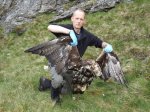 JUNE 2009: An adult golden eagle was found dead at Glen Orchy, Argyll, close to the West Highland Way. Tests revealed it had been poisoned by the illegal pesticide, Carbofuran. Strathclyde Police launched a multi-agency investigation. Three years and 3 months later, estate employee Tom McKellar pled guilty to possession of Carbofuran stored in premises at Auch Estate, Bridge of Orchy and he was fined £1,200. Nobody has been prosecuted for poisoning the golden eagle.
 JULY 2009: A two year old female golden eagle known as ‘Alma’ was found dead on the Millden Estate, Angus. Tests revealed she had been poisoned by the illegal pesticide, Carbofuran. Alma was a well-known eagle – born on the Glen Feshie Estate in 2007, she was being satellite-tracked and her movements followed by the general public on the internet. Tayside Police launched an investigation. Three years and 2 months later, nobody has been prosecuted.
 AUGUST 2009: A young white-tailed eagle was found dead on Glenogil Estate, Angus. Tests revealed it had been poisoned by the illegal pesticide, Carbofuran. Tayside Police were criticized in the national press for not releasing a press statement about this incident until January 2010. Three years and 1 month later, nobody has been prosecuted.
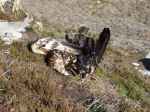 MAY 2010: Three dead golden eagles were found on or close to Skibo Estate, Sutherland. Tests revealed they had been poisoned; two with Carbofuran and one with Aldicarb. Northern Constabulary launched a multi-agency investigation. One year later (May 2011), Sporting Manager Dean Barr pled guilty to possession of 10.5 kg of Carbofuran stored in premises at Skibo Estate. Two years and 4 months later, nobody has been prosecuted for poisoning the three golden eagles.
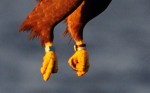 JUNE 2010: Leg rings with unique identification numbers that had previously been fitted to the legs of four young golden eagles in nests across Scotland were found in the possession of gamekeeper James Rolfe, during a multi-agency investigation into alleged raptor persecution at Moy Estate, near Inverness. It is not clear how he came to be in possession of the rings. The bodies of the eagles from which the rings had been removed were not found. No further action was taken in relation to the discovery.
 JUNE 2010: A golden eagle and a white-tailed eagle were found dead on Farr Estate, Inverness-shire. Tests revealed they had been poisoned by the illegal pesticide, Carbofuran. Northern Constabulary apparently did not search the property until July 2011. Two years and 3 months later, nobody has been prosecuted.
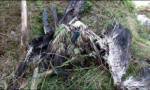 DECEMBER 2010: A decomposing carcass of a white-tailed eagle was found and photographed on Logie (Lochindorb) Estate, Morayshire. It was reported to Northern Constabulary. By the time the police arrived to collect it, the carcass had disappeared. The police said they couldn’t investigate further without the body.
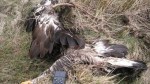 MARCH 2011: The body of a young golden eagle was discovered on North Glenbuchat Estate, Aberdeenshire. Tests revealed it had been poisoned by the illegal pesticide, Carbofuran. Grampian Police launched an investigation and raided the property in May 2011. One year and 4 months later, we are not aware of any pending prosecutions.
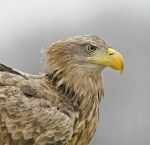 APRIL 2011: The body of a white-tailed eagle was found at the base of cliffs on Skye. The person who discovered it (a professional medic) considered it to have been freshly shot with a rifle, decapitated with a sharp implement and thrown from the cliff top. He took photographs and alerted Northern Constabulary and RSPB. There was a delay of two weeks before the now probably decomposed carcass was collected. A post-mortem was inconclusive. This incident was not made public until one year later after a tip off to this blog. We are not aware of any pending prosecutions.
 NOVEMBER 2011: The signal from a satellite-tracked young golden eagle (hatched in 2010) stopped functioning when she was at a location in the Monadhliaths, a well-known raptor persecution black spot in the Highlands. Her last known location was checked by researchers but there was no sign of the bird. Another technical malfunction of a satellite transmitter or another ‘disappearance’ in suspicious circumstances?
 MARCH 2012: The body of a young golden eagle being tracked by satellite was discovered in Lochaber. Tests revealed it had been poisoned with the banned pesticides Aldicarb and Bendiocarb. Information about this incident was not made public until three months later. As far as we are aware nobody is being prosecuted for poisoning this bird.
 MARCH 2012: The signal from a satellite-tracked young golden eagle (hatched in 2011) stopped functioning when the bird was in the eastern glens, a well-known raptor persecution blackspot. Another technical malfunction of a satellite transmitter or another ‘disappearance’ in suspicious circumstances?
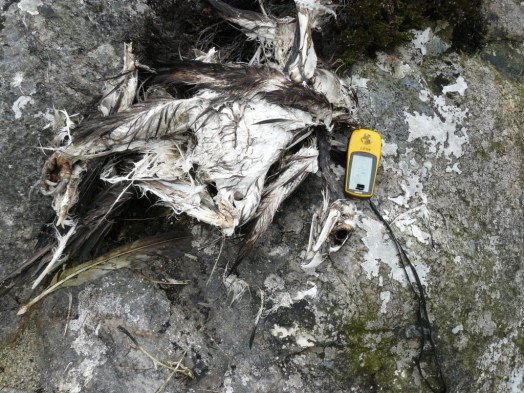
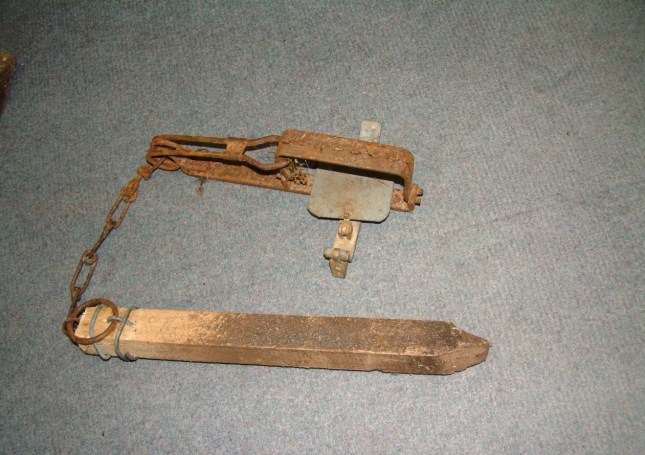
 MAY 2012: The dead body of a young satellite-tracked golden eagle (hatched in 2011) was discovered near a lay-by in Aboyne, Aberdeenshire. The data from its satellite tag & the injuries the bird had when found (2 broken legs) suggests it had been caught in an illegal trap in the Angus glens and then removed, under cover of darkness, to be dumped in another area where it was left to die, probably a slow and agonising death. Information on this incident is only released almost five months later, by the RSPB. It appears the police failed to properly investigate this incident as no search warrants were issued. As far as we are aware, nobody is being prosecuted for killing this bird.
 MAY/JUNE 2012: The signal from a young satellite-tracked golden eagle stopped functioning when the bird was north-east of the Cairngorms National Park. Another technical malfunction of a satellite transmitter or another ‘disappearance’ in suspicious circumstances?
 Way back in June, we blogged about a golden eagle that had been found dead in suspicious circumstances in Grampian in May (see
 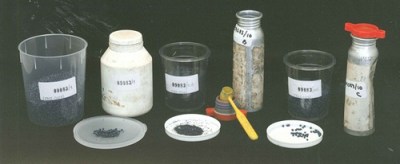 Last Friday, Tom McKellar, an employee of Auch Estate, an Argyll sporting estate in Bridge of Orchy, was convicted of possessing the illegal poison Carbofuran and was fined £1,200 (see
  Based on these suspicions, we blogged about the case in January 2011, and suggested that no charges were being brought against anyone for poisoning that eagle. We also encouraged readers to contact the Scottish Government to complain. Many did, and all hell let loose. The Scottish Government responded by saying that the firearms offences were being dealt with separately, at a court with a higher authority than a Sheriff Court, and that the wildlife offences were still ‘being dealt with’. A well-known prosecutor threatened us, indirectly, with legal action. For what? Expressing an opinion? As it turns out, we were right all along, nobody has been prosecuted for poisoning that golden eagle, although we’ve had to wait for over three years to have this confirmed.
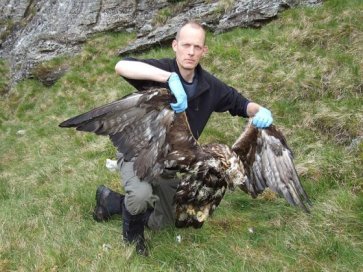 So, three years and three months later, the infamous Glen Orchy case has concluded. Tom McKellar, previously described as a gamekeeper but curiously now described as a farmer, has been fined £1,200 for possessing the banned pesticide, Carbofuran.
 Raptor Persecution UK